



Pifithrin-α, p-Nitro, Cyclic
Based on 4 publication(s) in Google Scholar
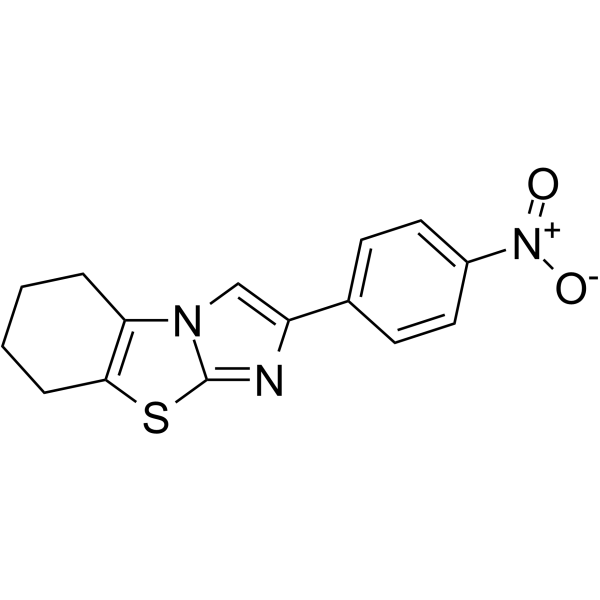
Pifithrin-α, p-Nitro, Cyclic (PFN-α) is cell-permeable and active-form p53 inhibitor. Pifithrin-α, p-Nitro, Cyclic is one order magnitude more active than Pifithrin-α in protecting cortical neurons exposed to Etoposide (ED50=30 nM). Pifithrin-α, p-Nitro, Cyclic behaves as a p53 posttranscriptional activity inhibitor. Pifithrin-α, p-Nitro, Cyclic do not prevent p53 phosphorylation on the S15 residue.
Nur für Forschungszwecke. Wir verkaufen nicht an Patienten.
- Reinheit : 99.37%
- CAS. Nr.: 60477-38-5
- Formel: C15H13N3O2S
- Molecular Weight:299.35
-
Speicherung:
-20°C, stored under nitrogen
* In solvent : -80°C, 2 years; -20°C, 1 year (stored under nitrogen)

To place orders, for customer services and technical support, please contact: MedChemExpress USA
Tel: 609-228-6898 E-mail: [email protected] [email protected]


-
 Biologische Aktivität
-
Chemical Information
-
Lösungsmittel & Löslichkeit
- Protokoll
- Reinheit & Dokumentation
- Verweise
-
 Help & FAQs


-
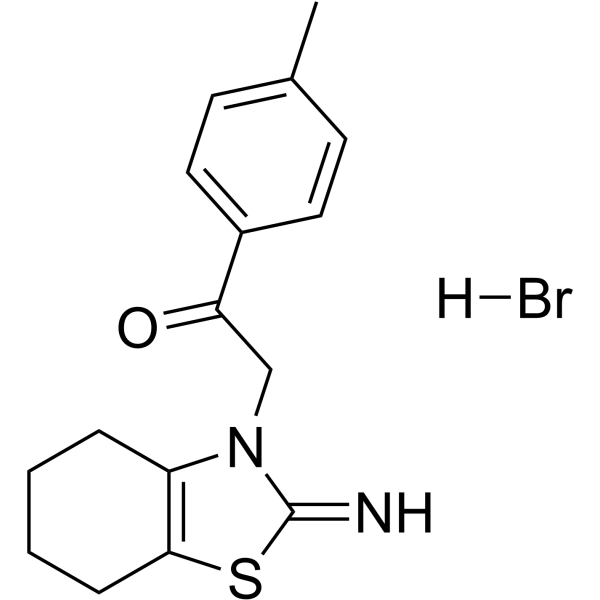
HY-15484
Pifithrin-α hydrobromidep53 Inhibitor -
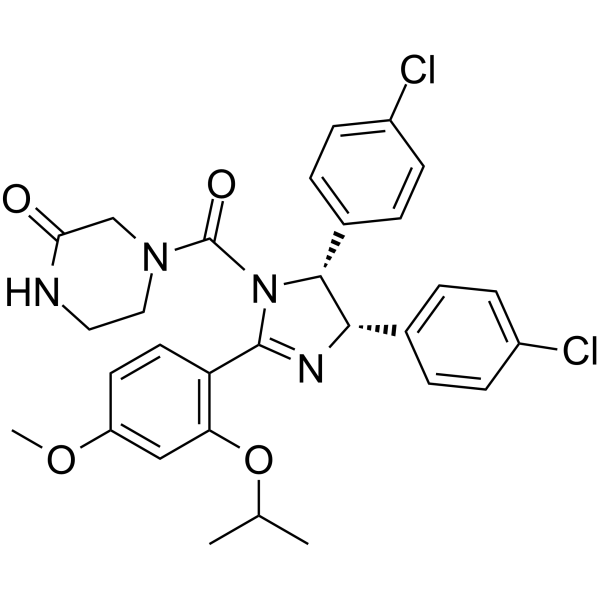
HY-10029
Nutlin-3aMDM2 Antagonist -
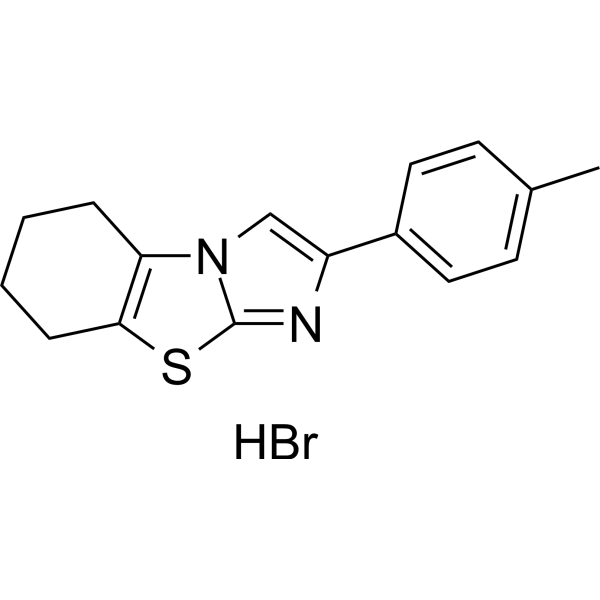
HY-16702A
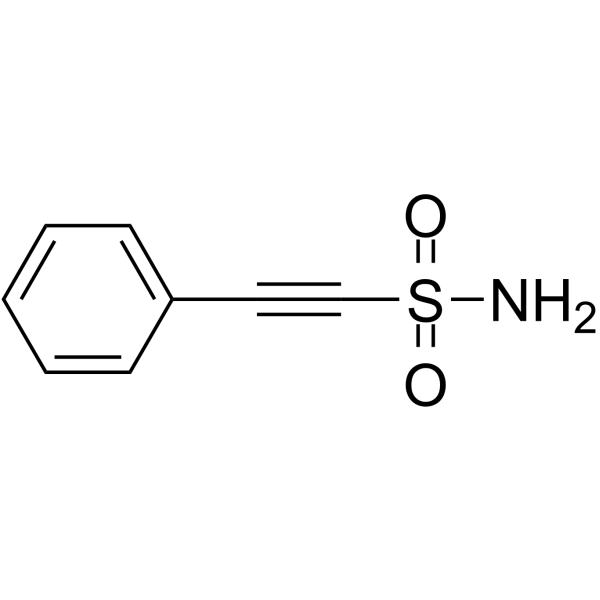
Pifithrin-β hydrobromideMDM-2/p53 p53 Inhibitor -
HY-10940
Pifithrin-μp53 and HSP70 Inhibitor -
HY-130437
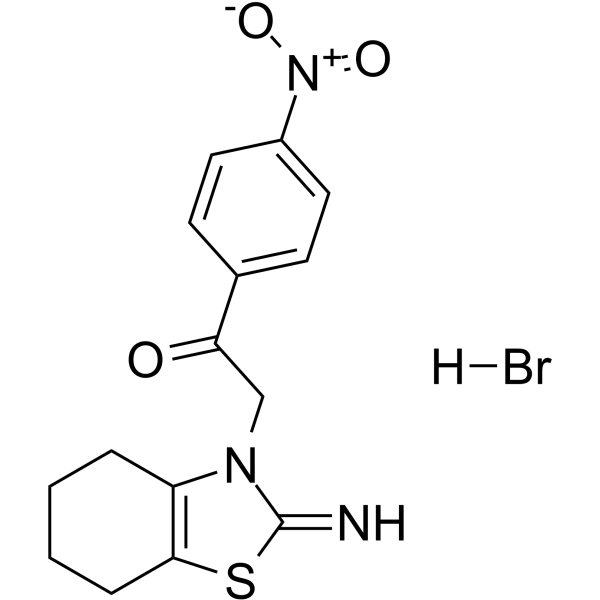
p-nitro-Pifithrin-αp53 Inhibitor -
HY-122578
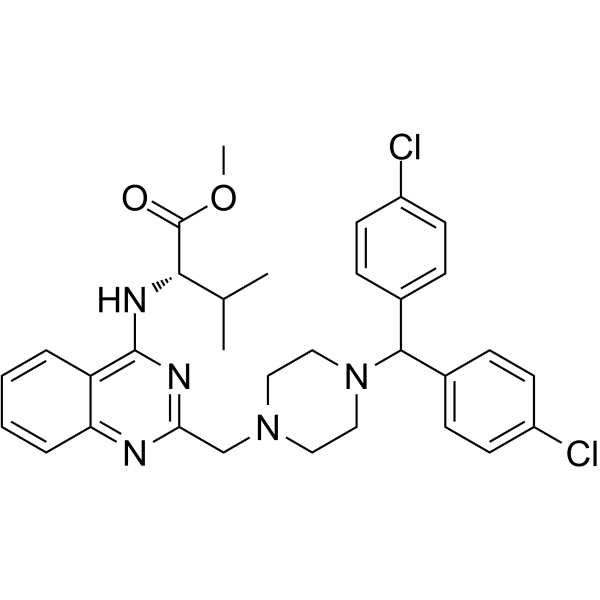
P53R3p53 Reactivator -
HY-18634
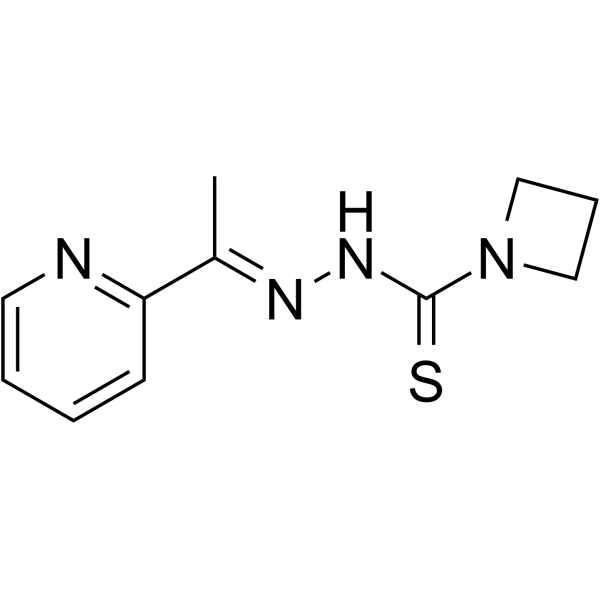
NSC319726MDM-2/p53 p53 Activator -
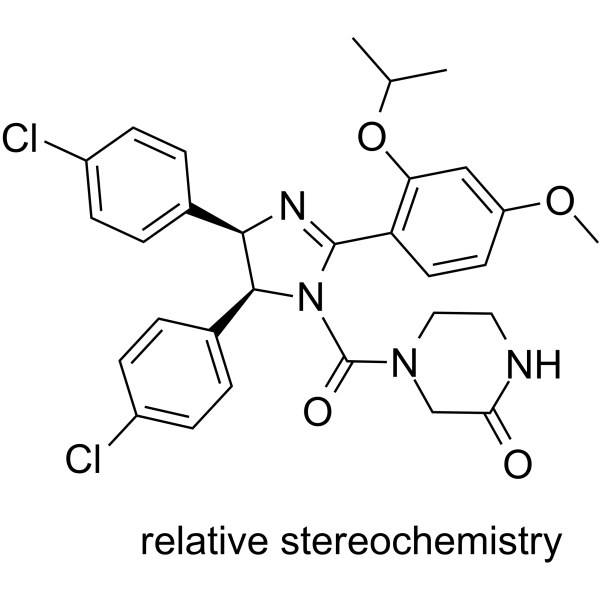
HY-50696
Nutlin-3p53-MDM2 Inhibitor -
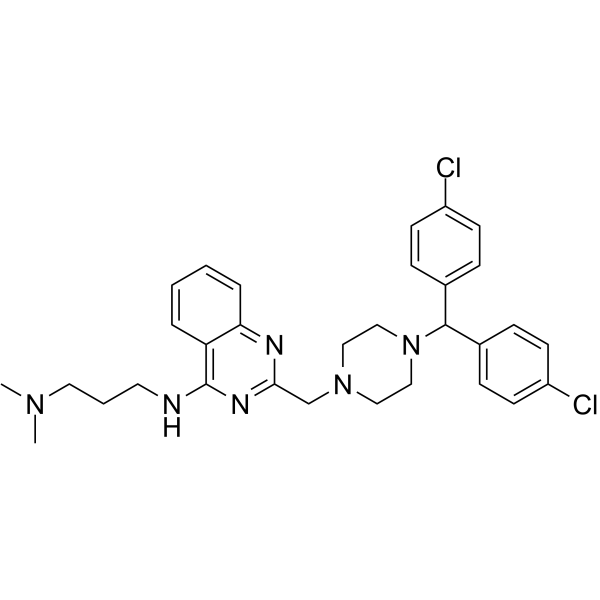
HY-110088
SCH529074P53 Activator -
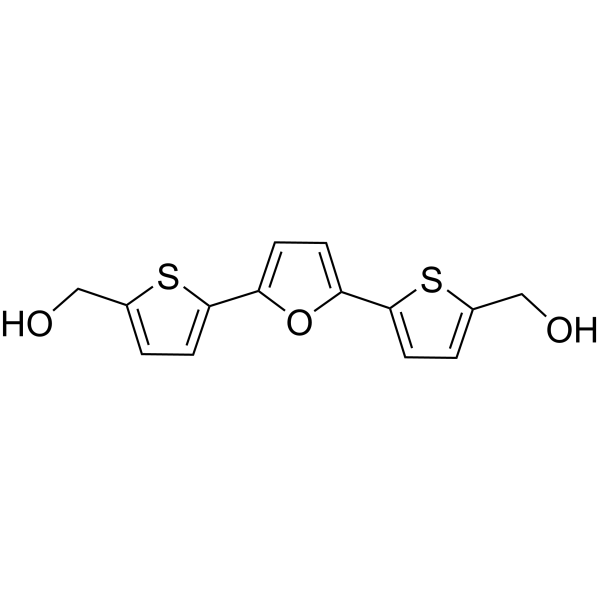
HY-13424
RITAp53-HDM-2 Interaction Inhibitor -
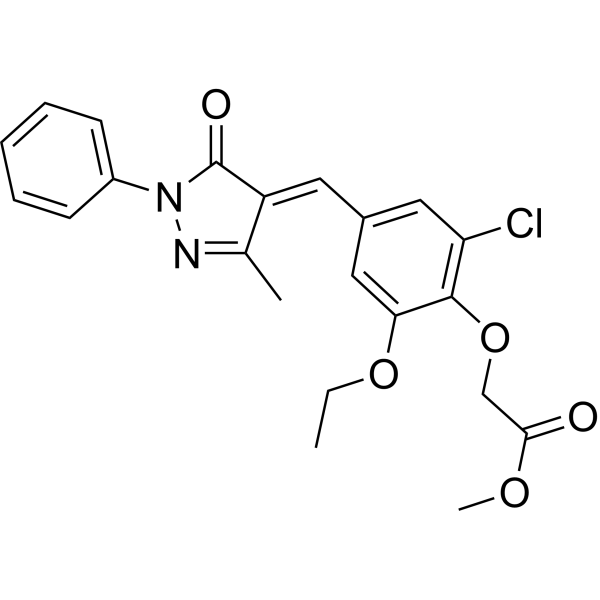
HY-16664
SJ-172550MDM-2/p53 MDM2 Inhibitor -
HY-10959
RG7112MDM2 Antagonist
Publications Citing Use of MedChemExpress (MCE) Pifithrin-α, p-Nitro, Cyclic
More

Biologische Aktivität
Beschreibung
Cellular Effect
|
Cell Line

|
Type | Value | Description | References |
|---|---|---|---|---|
| Cortical neurone | ED50 |
30 nM
Compound: 4b
|
Inhibition of etoposide-induced death of mouse E15.5 cortical neurones
Inhibition of etoposide-induced death of mouse E15.5 cortical neurones
|
[PMID: 16759106] |
In Vitro
Pifithrin-α, p-Nitro, Cyclic (PFN-α) efficiently blocks p53-triggered cell death and p21/WAF1 expression in cortical neurons exposed to etoposide at concentrations one order magnitude lower than that in PFT-α[1].
MedChemExpress (MCE) has not independently confirmed the accuracy of these methods. They are for reference only. Further protocols information, click here.
In Vivo
Pifithrin-α, p-Nitro, Cyclic shows the half-life (t1/2) of 6 hours (when incubated in biological conditions)[1].
MedChemExpress (MCE) has not independently confirmed the accuracy of these methods. They are for reference only.


Chemical Information
-
CAS. Nr. 60477-38-5
-
Appearance Solid
-
Molecular Weight 299.35
-
Formel C15H13N3O2S
-
Color Light yellow to yellow
-
SMILES
O=[N+]([O-])C1=CC=C(C2=CN3C(SC4=C3CCCC4)=N2)C=C1
-
Synonyms
PFN-α
-
Versand
Room temperature in continental US; may vary elsewhere.
-
Speicherung
-20°C, stored under nitrogen
* In solvent : -80°C, 2 years; -20°C, 1 year (stored under nitrogen)


Publications (4)
-
Journal Impact Factor
-
Most Recent
-
Phytomedicine
JinLiDa granules alleviates cardiac hypertrophy and inflammation in diabetic cardiomyopathy by regulating TP53. [Abstract]2024 Jul 25:130:155659. PMID: 38759318 -
Antioxidants (Basel)
Flt3 Activation Mitigates Mitochondrial Fragmentation and Heart Dysfunction through Rebalanced L-OPA1 Processing by Hindering the Interaction between Acetylated p53 and PHB2 in Cardiac Remodeling. [Abstract]2023 Aug 22;12(9):1657. PMID: 37759959 -
Biomolecules
High-Intensity Focused Ultrasound Decreases Subcutaneous Fat Tissue Thickness by Increasing Apoptosis and Autophagy. [Abstract]2023 Feb 18;13(2):392. PMID: 36830763 -
FASEB J
Activation of FMS-like tyrosine kinase 3 protects against isoprenaline-induced cardiac hypertrophy by improving autophagy and mitochondrial dynamics. [Abstract]2022 Dec;36(12):e22672. PMID: 36440960


Lösungsmittel & Löslichkeit
In Vitro:
DMF : 12.5 mg/mL (41.76 mM; Need ultrasonic)
DMSO : 5 mg/mL (16.70 mM; Need ultrasonic; Hygroscopic DMSO has a significant impact on the solubility of product, please use newly opened DMSO)
Please refer to the solubility information to select the appropriate solvent. Once prepared, please aliquot and store the solution to prevent product inactivation from repeated freeze-thaw cycles.
Storage method and period of stock solution: -80°C, 2 years; -20°C, 1 year (stored under nitrogen). When stored at -80°C, please use it within 2 years. When stored at -20°C, please use it within 1 year.
Please refer to the solubility information to select the appropriate solvent. Once prepared, please aliquot and store the solution to prevent product inactivation from repeated freeze-thaw cycles.
Storage method and period of stock solution: -80°C, 2 years; -20°C, 1 year (stored under nitrogen). When stored at -80°C, please use it within 2 years. When stored at -20°C, please use it within 1 year.
Konzentration (Stammlösung) × Volumen (Stammlösung) = Konzentration (Ziellösung) × Volumen (Ziellösung)

Protokoll
-
Kinase activity and phosphorylation assays
Kinase activity assays measure the ability of kinases to transfer phosphate groups from ATP to specific substrates, while phosphorylation assays detect the presence and levels of phosphorylated proteins. Common methods include radiolabeled ATP incorporation (e. g. ,), ADP release detection via bioluminescence (e. g. ,[3]), enzyme-linked immunosorbent assays (ELISA) for phospho-specific epitopes (e. g. ,[6]), and microtiter-based formats for high-throughput screening (e. g. ,[8]). The ADP-Glo assay quantifies kinase activity by measuring ADP produced during phosphorylation using a luciferase-based system. Radiometric assays involve autoradiography or scintillation counting after incorporation of 32P-labeled ATP into substrate proteins. ELISA-based approaches rely on phospho-specific antibodies to detect activated kinases in cell lysates or purified samples.
-
Western Blot
Western blotting (WB) is a commonly used experimental method in molecular biology, biochemistry, and immunogenetics for identifying and quantifying target proteins. It combines gel electrophoresis with immunoassay, enabling researchers to analyze protein expression, post-translational modifications, and molecular weight.
-
Primary Embryonic Cortical Neuron Culture
Primary embryonic cortical neuron culture isolates cortical tissue from prenatal rodents, dissociates it into single cells, and maintains neurons in vitro so that neurite extension, neuronal marker expression, synapse formation, survival, and treatment responses can be examined outside the intact brain.
-
Protocol for Kinase activity and phosphorylation assays
Kinase activity assays measure transfer of phosphate from ATP to a protein or peptide substrate, generating phosphorylated substrate, ADP, or incorporated radiolabeled phosphate as the readout; phosphorylation assays measure site-specific phosphorylation in cells or tissues as a proxy for kinase-pathway activation, inhibition, or substrate regulation. Phosphorylation can be detected by phospho-specific Western blot, immunoprecipitation kinase assay, phospho-immunofluorescence, phospho-flow cytometry, luminescent ADP detection, radiolabeled ATP incorporation, or reporter-based pathway assays, and these readouts can be applied to cancer cells, primary neurons, mouse tumors, organoids, inflammatory macrophages, ferroptosis studies, and mitophagy studies when the kinase target is biologically relevant.


Reinheit & Dokumentation
-
Data Sheet (275 KB)
-
SDS (252 KB)
- English - EN (252 KB)
- Français - FR (252 KB)
- Deutsch - DE (252 KB)
- Norwegian - NO (252 KB)
- Español - ES (252 KB)
- Swedish - SV (252 KB)
- Italian - IT (252 KB)
- Korean - KR (252 KB)
- Portuguese - PT (252 KB)
-
Handling Instructions (2659 KB)
Verweise
[1]. Pietrancosta N, et al. Imino-tetrahydro-benzothiazole derivatives as p53 inhibitors: discovery of a highly potent in vivo inhibitor and its action mechanism. J Med Chem. 2006 Jun 15;49(12):3645-52. [Content Brief]
[2]. Dinca EB, et al. p53 Small-molecule inhibitor enhances temozolomide cytotoxic activity against intracranial glioblastoma xenografts. Cancer Res. 2008 Dec 15;68(24):10034-9. [Content Brief]


Complete Stock Solution Preparation Table
Please refer to the solubility information to select the appropriate solvent. Once prepared, please aliquot and store the solution to prevent product inactivation from repeated freeze-thaw cycles.
Storage method and period of stock solution: -80°C, 2 years; -20°C, 1 year (stored under nitrogen). When stored at -80°C, please use it within 2 years. When stored at -20°C, please use it within 1 year.
| Optional Solvent | Concentration Solvent Mass | 1 mg | 5 mg | 10 mg | 25 mg |
|---|---|---|---|---|---|
| DMSO / DMF | 1 mM | 3.3406 mL | 16.7029 mL | 33.4057 mL | 83.5143 mL |
| 5 mM | 0.6681 mL | 3.3406 mL | 6.6811 mL | 16.7029 mL | |
| 10 mM | 0.3341 mL | 1.6703 mL | 3.3406 mL | 8.3514 mL | |
| 15 mM | 0.2227 mL | 1.1135 mL | 2.2270 mL | 5.5676 mL | |
| DMF | 20 mM | 0.1670 mL | 0.8351 mL | 1.6703 mL | 4.1757 mL |
| 25 mM | 0.1336 mL | 0.6681 mL | 1.3362 mL | 3.3406 mL | |
| 30 mM | 0.1114 mL | 0.5568 mL | 1.1135 mL | 2.7838 mL | |
| 40 mM | 0.0835 mL | 0.4176 mL | 0.8351 mL | 2.0879 mL |


Pifithrin-α, p-Nitro, Cyclic Related Classifications
HY-123076 Related Classifications
 Powered by Bioz