14 Results for "

BIN3

" in MedChemExpress (MCE) Product Catalog:
Products (14)

14 Results for "BIN3" in MCE Product Catalog:

Cat. No.: HY-15133
CAS No.: 809272-64-8
Purity:  99.35%
Target:  

Phosphatase

Research Areas:  

Metabolic Disease Cancer

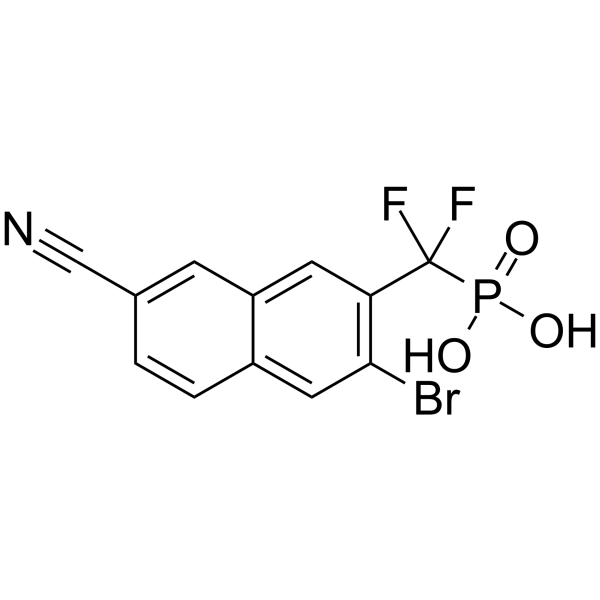
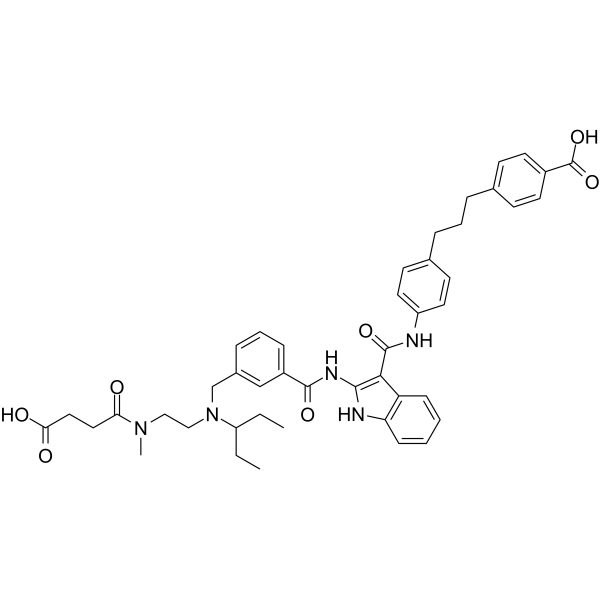
PTP1B-IN-3 is a potent and orally active PTP1B inhibitor with IC50s of 120 nM for both PTP1B and TCPTP. PTP1B-IN-3 has antidiabetic and anticancer effects .
loading...
    loading...
Cat. No.: HY-D2988
CAS No.: 3086791-47-8
BIN-3 is a novel near-infrared fluorescent probe. BIN-3 has excellent biocompatibility, no cytotoxicity, and no hemolysis. BIN-3 can be used for highly sensitive and selective imaging of drug-resistant bacterial infections expressing β-lactam enzymes in live mice .
loading...
    loading...
Cat. No.: HY-RS01506
Research Areas:  

Others

BIN3 Human Pre-designed siRNA Set A contains three designed siRNAs for BIN3 gene (Human), as well as a negative control, a positive control, and a FAM-labeled negative control.

loading...
    loading...
Cat. No.: HY-147605
CAS No.: 2760669-74-5
Target:  

Complement System

Research Areas:  

Inflammation/Immunology

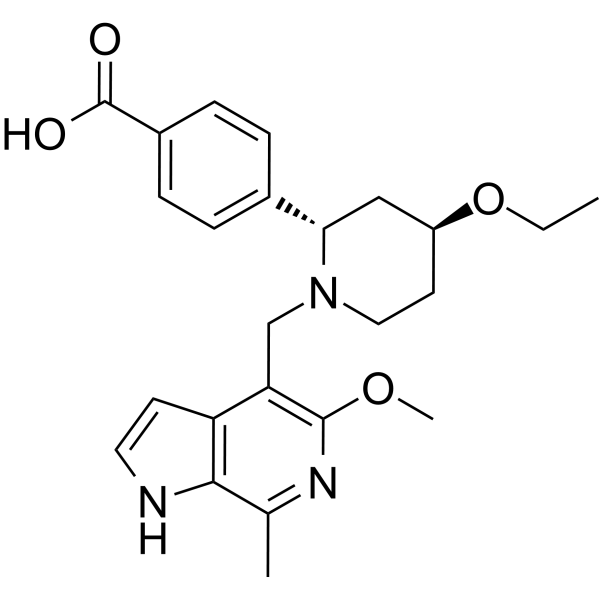
Factor B-IN-3 (Example 3 target compound) is a potent complement factor B inhibitor. Factor B-IN-3 can be used for the research of diseases related to inflammation and immunity .
loading...
    loading...
Cat. No.: HY-149379
CAS No.: 2412834-56-9
Research Areas:  

Infection

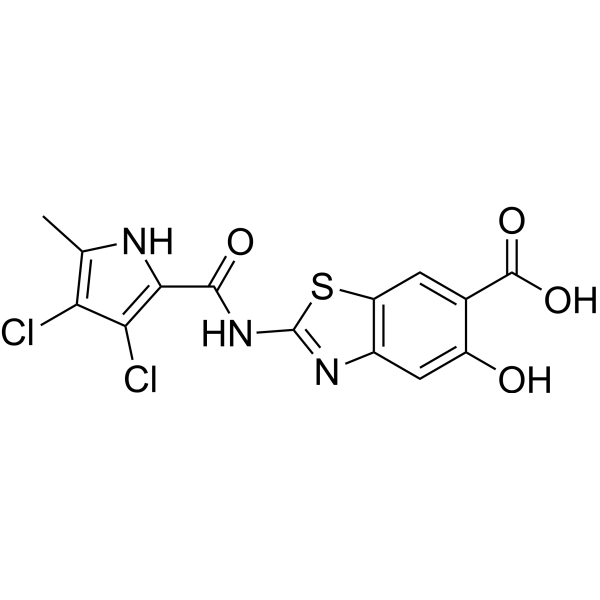
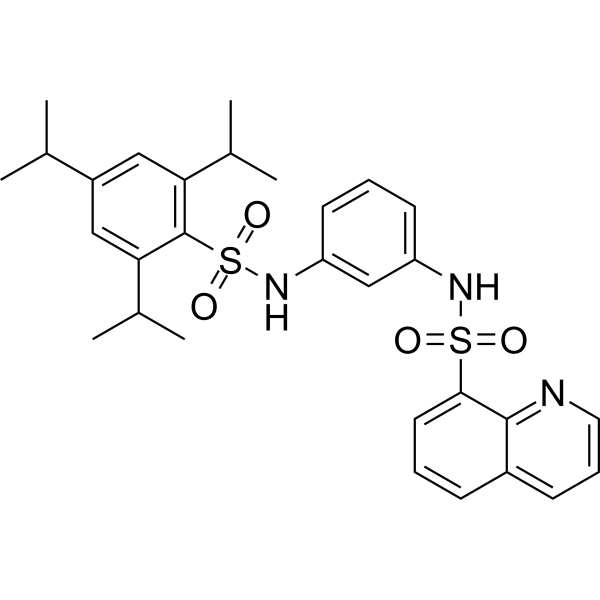
DNA gyrase B-IN-3 (Compound A) is a bacterial DNA gyrase B inhibitor (IC50: < 10 nM). DNA gyrase B-IN-3 has antibacterial activity against gram-positive strains .
loading...
    loading...
Cat. No.: HY-151885
Dual AChE-MAO B-IN-3 (compound C10) is a potent dual AChE/MAO-B inhibitior, with IC50 values of 0.58 and 0.41 μM, respectively. Dual AChE-MAO B-IN-3 is a dual-binding inhibitor bound to both the catalytic anionic site and peripheral anionic site of AChE. Dual AChE-MAO B-IN-3 can be used for Alzheimer’s disease (AD) research .
loading...
    loading...
Cat. No.: HY-139600
CAS No.: 1966933-87-8
Target:  

Histone Demethylase

Research Areas:  

Cancer

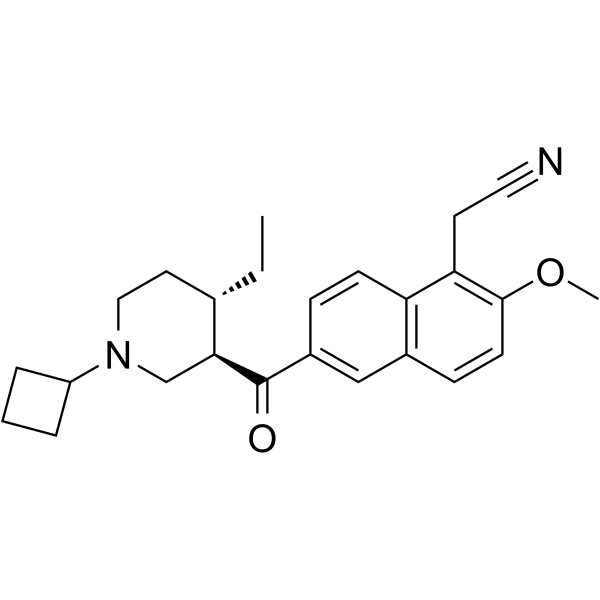
KDM2B-IN-3 is a histone demethylase KDM2B inhibitor extracted from patent WO2016112284A1, compound 183c. KDM2B-IN-3 can be used for the research of cancer .
loading...
    loading...
Cat. No.: HY-P88763
Synonyms: MGC14978

Host:  

Mouse

Application:  

IHC-P, ICC/IF, FC

Reactivity:  

Human, Dog, Monkey, Mouse, Rat

loading...
    loading...
Cat. No.: HY-P88763A
Synonyms: MGC14978

Host:  

Mouse

Application:  

IHC-P, ICC/IF, FC

Reactivity:  

Human, Dog, Monkey, Mouse, Rat

loading...
    loading...
Cat. No.: HY-147830
CAS No.: 2819779-01-4
Purity:  99.37%
Research Areas:  

Inflammation/Immunology

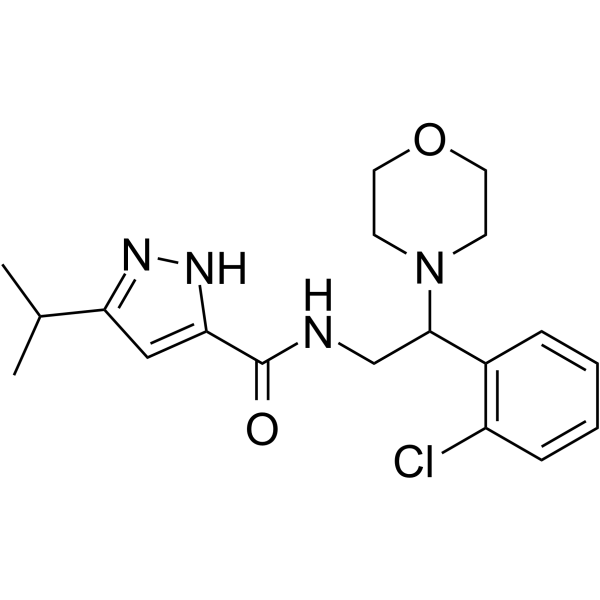
PDE4B-IN-3 is a potent PDE4B inhibitor with an IC50 of 0.94 μM. PDE4B-IN-3 has anti-inflammatory activities .
loading...
    loading...
Cat. No.: HY-15133A
CAS No.: 2702673-78-5
Purity:  ≥95.0%
Target:  

Phosphatase

Research Areas:  

Metabolic Disease Cancer

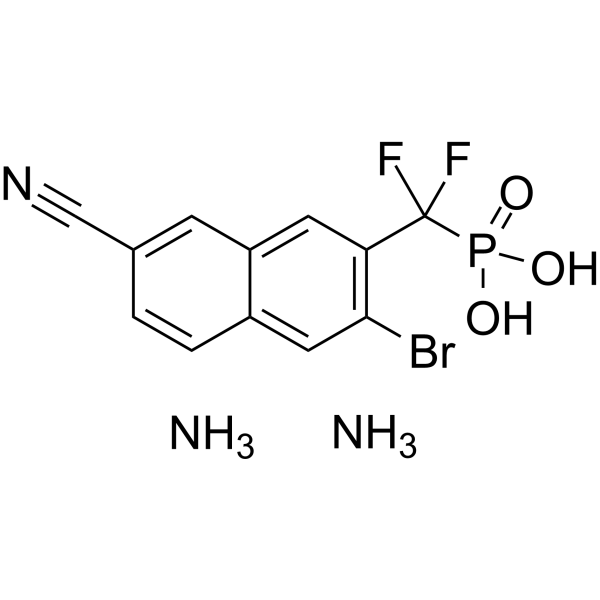
PTP1B-IN-3 diammonium is a potent and orally active PTP1B inhibitor with IC50s of 120 nM for both PTP1B and TCPTP. PTP1B-IN-3 diammonium has antidiabetic and anticancer effects .
loading...
    loading...
Cat. No.: HY-146670
CAS No.: 1385101-10-9
Target:  

Histone Demethylase

Research Areas:  

Cancer

KDM5B-IN-3 (Compound 5) is a histone lysine specific demethylase 5B (KDM5B/JARID1B) inhibitor with an IC50 of 9.32 μM. KDM5B-IN-3 can be used for the research of gastric cancer .
loading...
    loading...
Cat. No.: HY-146429
CAS No.: 2227443-66-3
Target:  

Sodium Channel

Research Areas:  

Metabolic Disease

NaPi2b-IN-3 (compound 5) is a potent sodium-dependent transport protein 2b (SLC34A2, NaPi2b) inhibitor with IC50s of 71 nM and 28 nM for human NaPi2b and rat NaPi2b, respectively. NaPi2b-IN-3 can be used for researching hyperphosphatemia .
loading...
    loading...
Cat. No.: HY-184717
Target:  

Atg4 Autophagy

Research Areas:  

Cancer

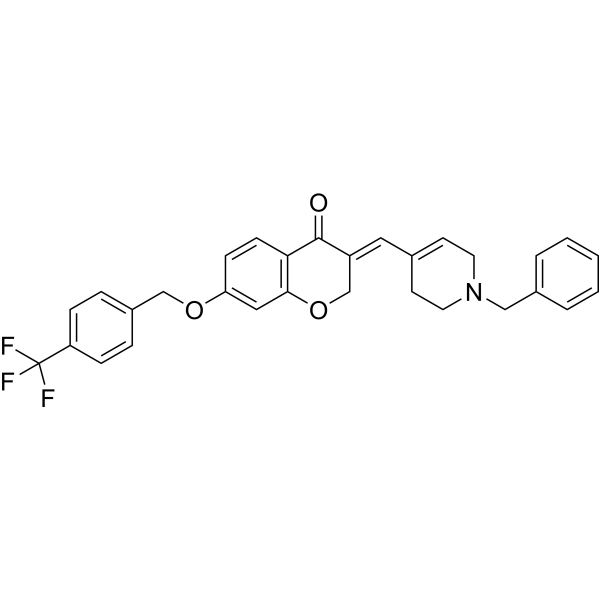
Atg4B-IN-3 (compound a25) is a ATG4B inhibitor with a Kd value of 18.01 nM against the human target. Atg4B-IN-3 stably regulates the closed conformation of the loop, prevents substrates from accessing the catalytic site Cys74, and thereby inhibits the proteolytic activity of ATG4B. Atg4B-IN-3 blocks autophagic flux, reduces LC3-II levels, promotes p62 accumulation, disrupts autophagy homeostasis and enhances cell death. Atg4B-IN-3 inhibits cell proliferation, migration and clonogenic survival capacity. Atg4B-IN-3 can be used in studies related to esophageal squamous cell carcinoma .
loading...
    loading...
  • 1

