1. Search Result
Search Result
Results for "

Benzalkonium

" in MedChemExpress (MCE) Product Catalog:

16

Inhibitors & Agonists

2

Biochemical Assay Reagents

1

Natural
Products

6

Isotope-Labeled Compounds

1

Oligonucleotides

Cat. No. Product Name Target Research Areas Chemical Structure
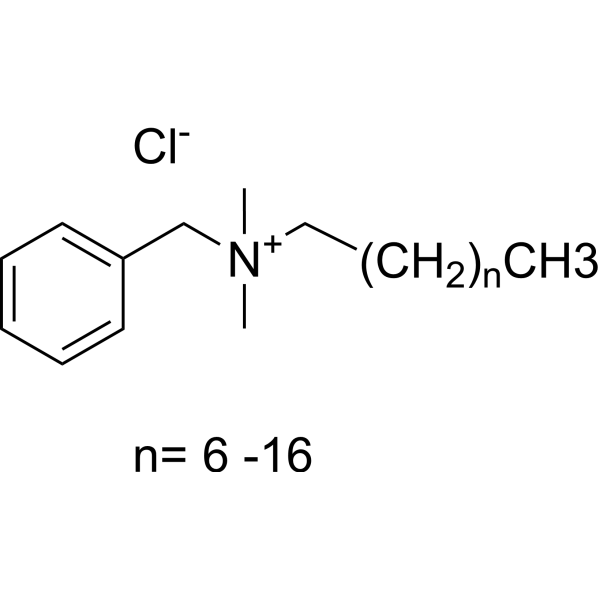
  • HY-B2232
    Benzalkonium chloride (51% in water)
    2 Publications Verification

    Alkyldimethylbenzylammonium chloride

    Bacterial Biochemical Assay Reagents Infection
    Benzalkonium (Alkyldimethylbenzylammonium) chloride (51% in water) is a quaternary ammonium preservative, cationic surfactant, and antimicrobial (Antimicrobial) agent. Benzalkonium chloride (51% in water) is toxic .
    Benzalkonium chloride (51% in water)
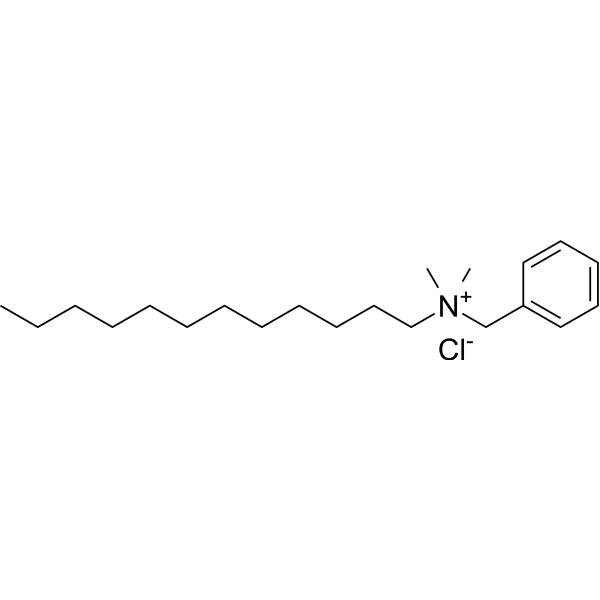
  • HY-B1549

    Dimethylbenzyllaurylammonium chloride

    Environmental Pollutants Biochemical Assay Reagents Others
    Lauryl benzalkonium chloride (Dimethylbenzyllaurylammonium chloride) is a cationic surfactant .
    Lauryl benzalkonium chloride
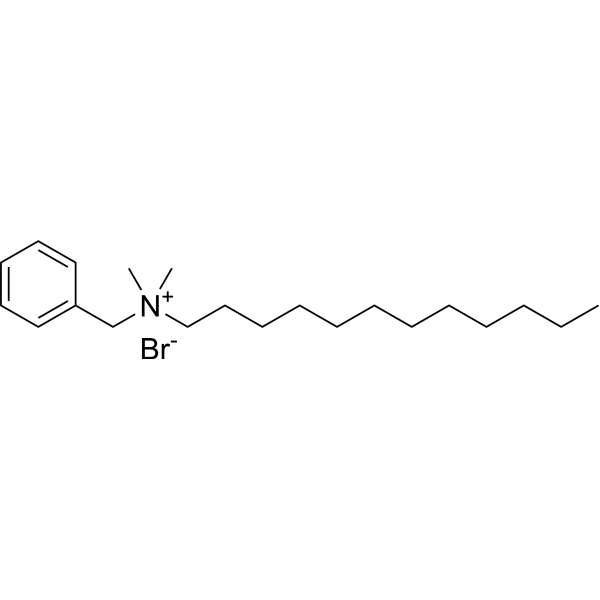
  • HY-W099594

    Benzyldimethyldodecylammonium bromide

    Environmental Pollutants Biochemical Assay Reagents Others
    N-Benzyl-N, N-dimethyldodecan-1-aminium bromide, also known as Benzalkonium Chloride (BAC), is a quaternary ammonium compound widely used as an antimicrobial and surfactant in various industries. BAC is commonly used as a disinfectant and antiseptic in a variety of products including hand sanitizers, disinfectant wipes and eye drops. Its ability to kill bacteria, viruses and fungi makes it an effective tool in preventing the spread of infection. BAC is also used as a preservative and disinfectant in the food industry. It is added to food packaging and processing equipment to prevent the growth of microorganisms and increase the shelf life of foods. Additionally, BACs are found in many household products such as cleaning solutions, fabric softeners and personal care products. Its surfactant properties allow it to be used to reduce surface tension and increase the effectiveness of cleaning agents. Although BAC has many uses, ingestion or exposure to high concentrations of BAC can cause skin irritation and other adverse effects.
    Benzalkonium bromide
  • HY-113404

    Tyrosinase Dopamine Receptor Neurological Disease
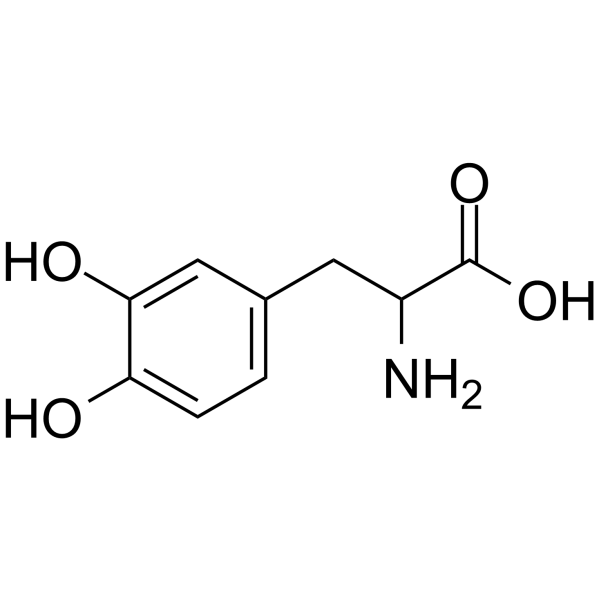
    DL-Dopa is a dopamine precursor. It serves as a substrate for Mushroom Tyrosinase, which oxidizes it to dopaquinone, an intermediate in the DOPA-melanin polymerization process, and this reaction can be detected at 475 nm. DL-Dopa also forms synergistic hydrophobic and π-π stacking interactions with cationic surfactants. Its binding to cetylpyridinium chloride (HY-B1464) is stronger and exhibits better thermodynamic stability than its binding to benzalkonium chloride (HY-B2232). DL-Dopa can compensate for dopamine depletion in the brain and is applicable to research related to Parkinson's disease .
    DL-Dopa
  • HY-127032

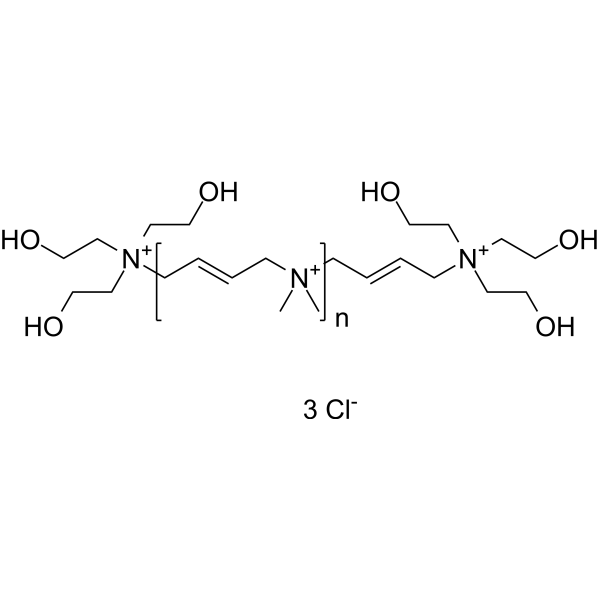
    Polidronium chloride

    Biochemical Assay Reagents Infection
    Polyquaternium-1 (Polidronium chloride; PQ-1) is an antimicrobial preservative and an activator of NF-κB. Polyquaternium-1 targets bacterial cell membranes, commonly used in ophthalmic surgery. Polyquaternium-1 adsorbs to the surface of microbial membranes through its polycationic properties, destroying membrane integrity and inducing potassium ion leakage, leading to bacterial death. Polyquaternium-1 exerts antimicrobial effects at a concentration of 0.001% and has low toxicity to mammalian cells. Polyquaternium-1 can be used to prepare products such as glaucoma eye drops (Travoprost preparations containing PQ-1), artificial tears, and contact lens solutions to reduce the ocular surface toxicity of traditional preservatives such as benzalkonium chloride (HY-B2232) .
    Polyquaternium-1
  • HY-Y0532
    N-Chlorosuccinimide
    1 Publications Verification

    Succinchlorimide

    Environmental Pollutants Bacterial Infection
    N-Chlorosuccinimide is a five-membered N-containing heterocyclic molecule. N-Chlorosuccinimide is a versatile reagent and can be used for different types of reactions, such as aliphatic and aromatic chlorination. N-Chlorosuccinimide can enhance the antimicrobial effect of Benzalkonium chloride (HY-B2232) on biofilm Pseudomonas aeruginosa .
    N-Chlorosuccinimide
  • HY-Y0532R

    Bacterial Reference Standards Infection
    N-Chlorosuccinimide is a five-membered N-containing heterocyclic molecule. N-Chlorosuccinimide is a versatile reagent and can be used for different types of reactions, such as aliphatic and aromatic chlorination. N-Chlorosuccinimide can enhance the antimicrobial effect of Benzalkonium chloride (HY-B2232) on biofilm Pseudomonas aeruginosa .
    N-Chlorosuccinimide (Standard)
  • HY-B1549R

    Dimethylbenzyllaurylammonium chloride (Standard)

    Biochemical Assay Reagents Reference Standards Others
    Lauryl benzalkonium (chloride) (Standard) is the analytical standard of Lauryl benzalkonium (chloride). This product is intended for research and analytical applications. Lauryl benzalkonium chloride is a cationic surfactant .
    Lauryl benzalkonium chloride (Standard)
  • HY-B1549S

    Dimethylaurylbenzylammonium-d7 chloride

    Isotope-Labeled Compounds Others
    Lauryl benzalkonium-d7 (Dimethylaurylbenzylammonium-d7) chloride is the deuterium labeled Lauryl benzalkonium chloride. Lauryl benzalkonium chloride is a cationic surfactant .
    Lauryl benzalkonium-d7 chloride
  • HY-143784S

    Isotope-Labeled Compounds Others
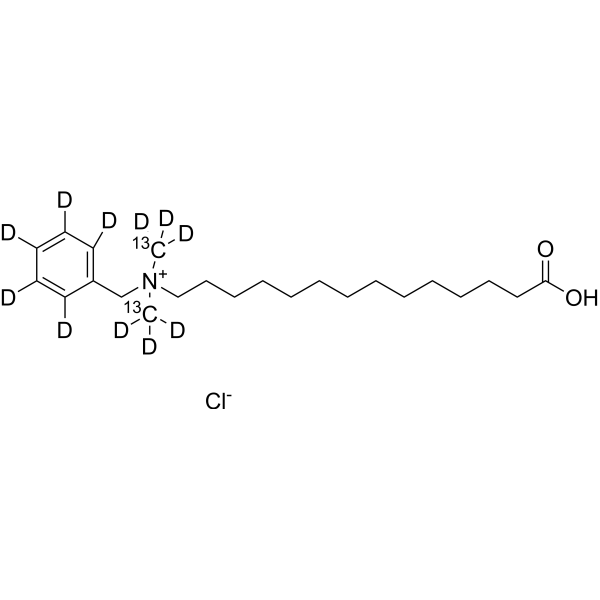
    C14 Benzalkonium-1 acid- 13C2,d11 (chloride) is the deuterium and 13C labeled C14 Benzalkonium-1 acid chloride .
    C14 Benzalkonium-1 acid-13C2,d11 chloride
  • HY-143860S

    Isotope-Labeled Compounds Others
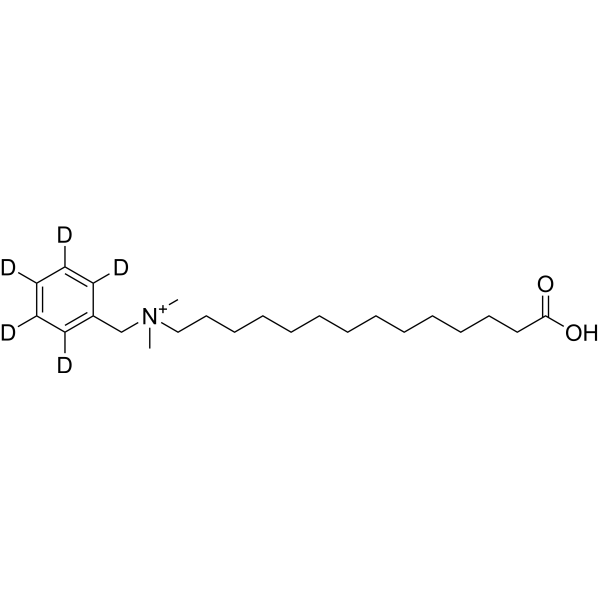
    C14 Benzalkonium chloride -1 acid-d5 is the deuterium labeled C14 Benzalkonium chloride -1 acid .
    C14 Benzalkonium chloride -1 acid-d5
  • HY-144927S

    Isotope-Labeled Compounds Others
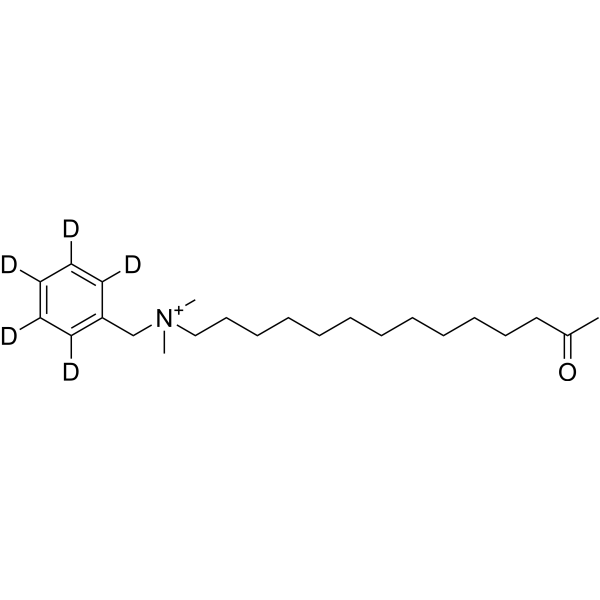
    C14 Benzalkonium chloride -1 ketone-d5 is the deuterium labeled C14 Benzalkonium chloride -1 ketone .
    C14 Benzalkonium chloride -1 ketone-d5
  • HY-W724343

    Dimethylbenzyllaurylammonium-d5 chloride

    Isotope-Labeled Compounds Biochemical Assay Reagents Others
    Lauryl benzalkonium-d5 chloride (Dimethylbenzyllaurylammonium-d5 chloride) is the deuterium labeled Lauryl benzalkonium chloride (HY-B1549). Lauryl benzalkonium (Dimethylbenzyllaurylammonium) chloride is a cationic surfactant that may produce some irritant contact dermatitis (ICD) to the skin .
    Lauryl benzalkonium-d5 chloride
  • HY-W016760

    4-Fluorobenzamidine hydrochloride

    Biochemical Assay Reagents Others
    4-Fluorobenzimidamide (4-Fluorobenzamidine) hydrochloride is a modified form of benzalkonium chloride.
    4-Fluorobenzimidamide hydrochloride
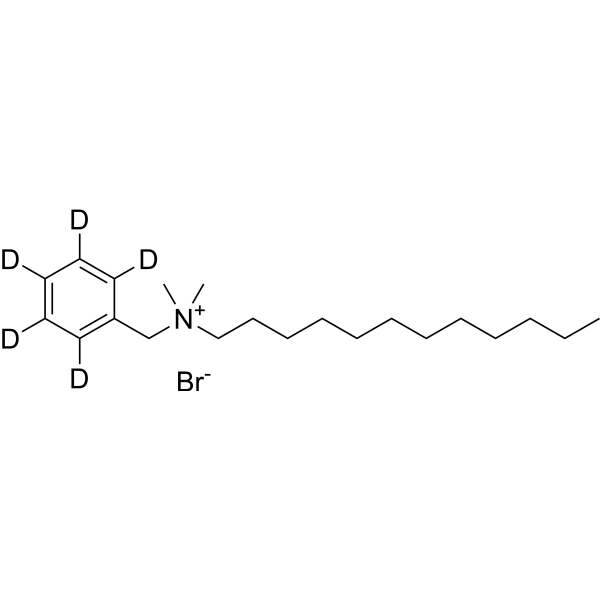
  • HY-W099594S

    Benzyldimethyldodecylammonium-d5 bromide

    Isotope-Labeled Compounds Others
    Benzyldodecyldimethylammonium-d5 (bromide) is the deuterium labeled Benzyldodecyldimethylammonium bromide .
    Benzalkonium-d5 bromide
  • HY-B2232A
    Benzalkonium chloride (solid)
    2 Publications Verification

    Alkyldimethylbenzylammonium chloride (solid)

    Biochemical Assay Reagents Bacterial Infection
    Benzalkonium chloride (solid) (Alkyldimethylbenzylammonium chloride (solid)) is a quaternary ammonium preservative, cationic surfactant, and antimicrobial (Antimicrobial) agent. Benzalkonium chloride (solid) is toxic .
    Benzalkonium chloride (solid)

Inquiry Online

Your information is safe with us. * Required Fields.

Salutation


Country or Region *

Applicant Name *


Organization Name *

Department *


Email Address *


Product Name *

Cat. No.


Requested quantity *

Phone Number *


Remarks

Inquiry Online

Inquiry Information

Product Name:
Cat. No.:
Quantity:
MCE Japan Authorized Agent:

