1. Search Result
Search Result
Results for "

Carvacrol

" in MedChemExpress (MCE) Product Catalog:

8

Inhibitors & Agonists

1

Biochemical Assay Reagents

5

Natural
Products

Cat. No. Product Name Target Research Areas Chemical Structure
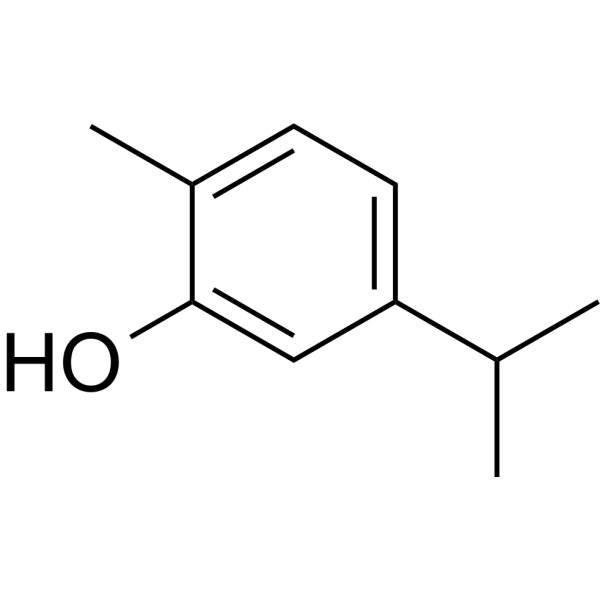
  • HY-N0711
    Carvacrol
    5+ Cited Publications

    Cymophenol

    Environmental Pollutants Apoptosis Endogenous Metabolite Notch Fungal Bacterial Infection Neurological Disease Inflammation/Immunology Cancer
    Carvacrol is an orally active and blood-brain barrier-permeable monoterpenic phenol that can be extract from an abundant number of aromatic plants, including thyme and oregano, possessing antioxidant, antibacterial, antifungal, anticancer, anti-inflammatory, hepatoprotective, spasmolytic, and vasorelaxant properties. Carvacrol also causes cell cycle arrest in G0/G1, downregulates Notch-1, and Jagged-1, and induces apoptosis. Carvacrol is used in low concentrations as a food flavoring ingredient and preservative, as well as a fragrance ingredient in cosmetic formulations .
    Carvacrol
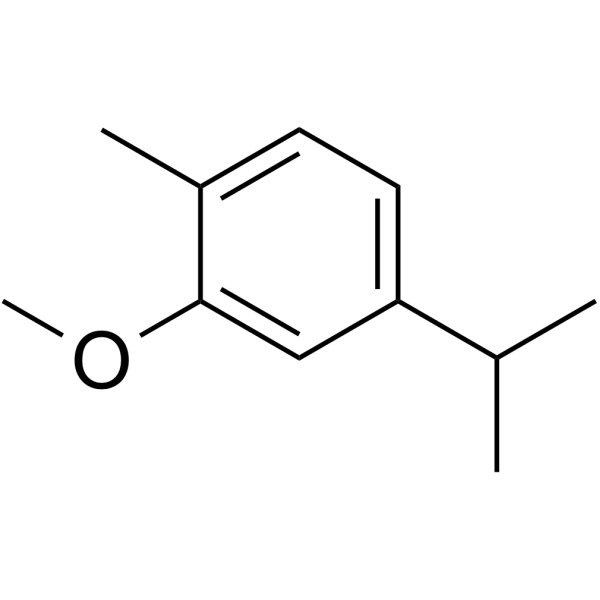
  • HY-W049970

    Environmental Pollutants Bacterial Infection
    Carvacrol methyl ether is a carvacrol derivative isolated from plant essential oils. Carvacrol methyl ether essentially lost its antibacterial activity, exhibiting only a weak inhibitory effect on Saccharomyces cerevisiae at the highest tested concentration of 3 g/L .
    Carvacrol methyl ether
  • HY-175005

    Keap1-Nrf2 PPAR Interleukin Related Metabolic Disease Inflammation/Immunology
    CF-Carvacrol is an orally active lipid-lowering agent synthesized by merging the pharmacophores of Carvacrol (HY-N0711) and Clofibric acid (HY-B1415). CF-Carvacrol has a good affinity for PPAR-α. CF-Carvacrol has significant hypolipidemic activity and may exert antioxidant and anti-inflammatory activity by activating the Nrf2/HO-1 signaling pathway to reduce liver injury. CF-Carvacrol can be used for the study of CF-induced liver damage .
    CF-Carvacrol
  • HY-N0711R

    Cymophenol (Standard)

    Reference Standards Notch Apoptosis Fungal Endogenous Metabolite Bacterial Infection Inflammation/Immunology Cancer
    Carvacrol (Standard) is the analytical standard of Carvacrol. This product is intended for research and analytical applications. Carvacrol is an orally active and blood-brain barrier-permeable monoterpenic phenol that can be extract from an abundant number of aromatic plants, including thyme and oregano, possessing antioxidant, antibacterial, antifungal, anticancer, anti-inflammatory, hepatoprotective, spasmolytic, and vasorelaxant properties. Carvacrol also causes cell cycle arrest in G0/G1, downregulates Notch-1, and Jagged-1, and induces apoptosis. Carvacrol is used in low concentrations as a food flavoring ingredient and preservative, as well as a fragrance ingredient in cosmetic formulations .
    Carvacrol (Standard)
  • HY-W049970R

    Reference Standards Bacterial Infection
    Carvacrol methyl ether (Standard) is the analytical standard of Carvacrol methyl ether (HY-W049970). This product is intended for research and analytical applications. Carvacrol methyl ether is a carvacrol derivative isolated from plant essential oils. Carvacrol methyl ether essentially lost its antibacterial activity, exhibiting only a weak inhibitory effect on Saccharomyces cerevisiae at the highest tested concentration of 3 g/L .
    Carvacrol methyl ether (Standard)
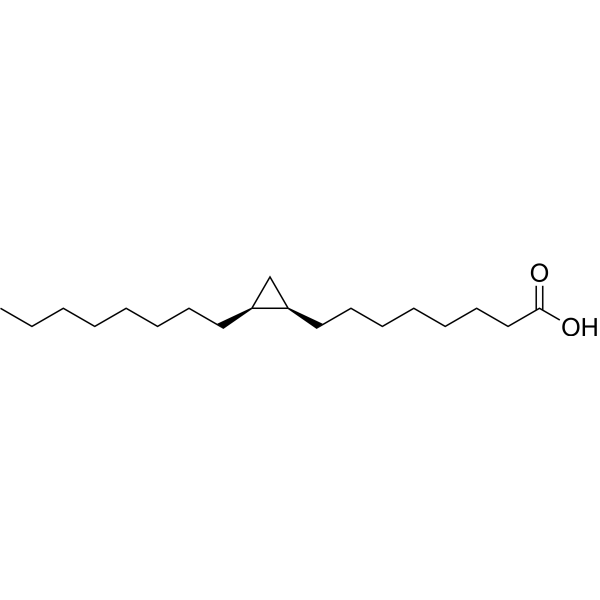
  • HY-W127485

    Biochemical Assay Reagents Others
    cis-9,10-Methyleneoctadecanoic acid is a cyclopropane fatty acid that has been found in bacteria and in the digestive glands of P. globosa. It is a component of the cell membrane of Staphylococcus aureus, and levels were reduced after treatment with carvacrol. cis-9,10-Methyleneoctadecanoic acid is secreted by H. pylori and enhances histamine- and dibutyryl cAMP-stimulated acid secretion in isolated guinea pig parietal cells. It also activates protein kinase C (PKC) in a calcium-dependent manner.
    cis-9,10-Methyleneoctadecanoic Acid
  • HY-168120

    Others Cardiovascular Disease
    Carvacrol-C4-3-hydroxybenzoic acid (compund 6) has significant cardioprotective activity and good computational ADMET properties.
    Carvacrol-C4-3-hydroxybenzoic acid
  • HY-N18678

    Bacterial Infection Inflammation/Immunology Cancer
    Origanum vulgare extract is highly regarded for its rich content of various bioactive compounds, including carvacrol, thymol, rosmarinic acid, and other phenolic compounds, which have antioxidant, antibacterial, anti-inflammatory, and anticancer effects.
    Origanum vulgare extract

Inquiry Online

Your information is safe with us. * Required Fields.

Salutation


Country or Region *

Applicant Name *


Organization Name *

Department *


Email Address *


Product Name *

Cat. No.


Requested quantity *

Phone Number *


Remarks

Inquiry Online

Inquiry Information

Product Name:
Cat. No.:
Quantity:
MCE Japan Authorized Agent:

