7 Results for "

Early Afterdepolarization

" in MedChemExpress (MCE) Product Catalog:
Products (7)

7 Results for "Early Afterdepolarization" in MCE Product Catalog:

1
1 Cited Publications
Cat. No.: HY-P1604
CAS No.: 60748-45-0
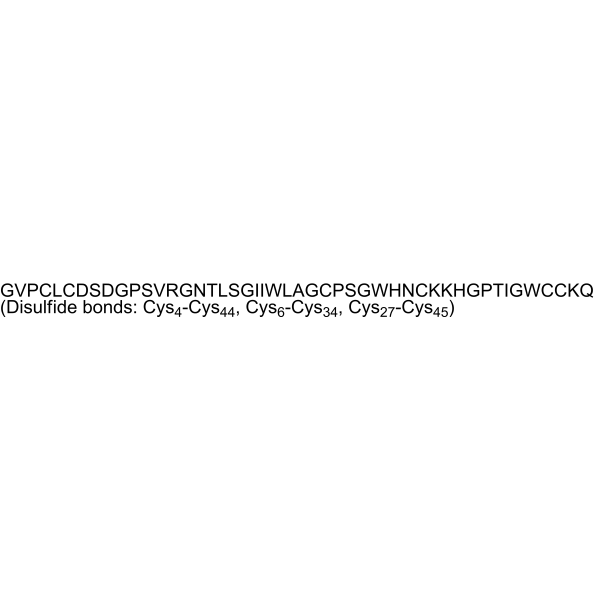
ATX-II is a selective sodium channel modulator toxin. ATX-II enhances late sodium current, prevents full sodium channel inactivation, and generates persistent current fractions. ATX-II has pro-arrhythmic effect. ATX-II slows intrinsic heart rate, prolongs QT interval and sinus node recovery time, and causes sinus pauses and arrests. ATX-II can be used for the research of atrial fibrillation, long QT syndrome, and long QT3 syndrome .
loading...
    loading...
1
1 Cited Publications
Cat. No.: HY-P1604A
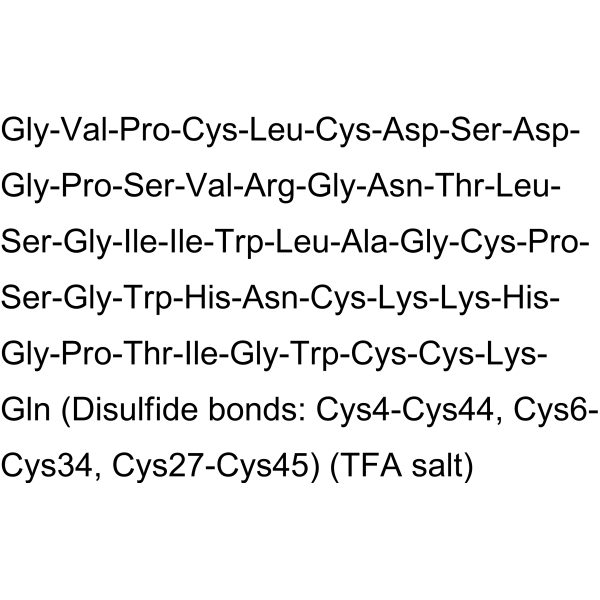
ATX-II TFA is a selective sodium channel modulator toxin. ATX-II TFA enhances late sodium current, prevents full sodium channel inactivation, and generates persistent current fractions. ATX-II TFA has pro-arrhythmic effect. ATX-II TFA slows intrinsic heart rate, prolongs QT interval and sinus node recovery time, and causes sinus pauses and arrests. ATX-II TFA can be used for the research of atrial fibrillation, long QT syndrome, and long QT3 syndrome .
loading...
    loading...
Cat. No.: HY-108591
CAS No.: 103342-82-1
Purity:  99.67%
Synonyms: R-L3
Target:  

Potassium Channel

Research Areas:  

Cardiovascular Disease

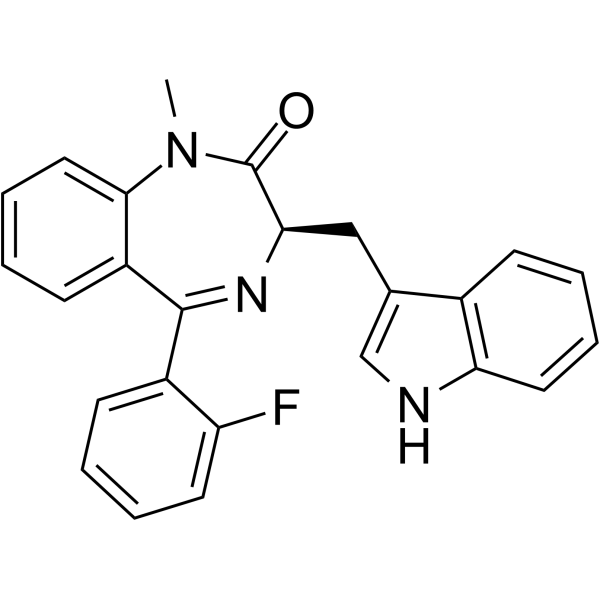
L-364,373 (R-L3) is a voltage-gated Kv7.1 (KCNQ1)/mink channels activator. L-364,373 activates Iks (slow delayed rectifier potassium current) and shortens action potential duration in guinea pig cardiac myocytes, and suppresses early afterdepolarizations in rabbit ventricular myocytes .
loading...
    loading...
Cat. No.: HY-137986
CAS No.: 1821638-43-0
Purity:  98.9%
Target:  

Potassium Channel

Research Areas:  

Inflammation/Immunology

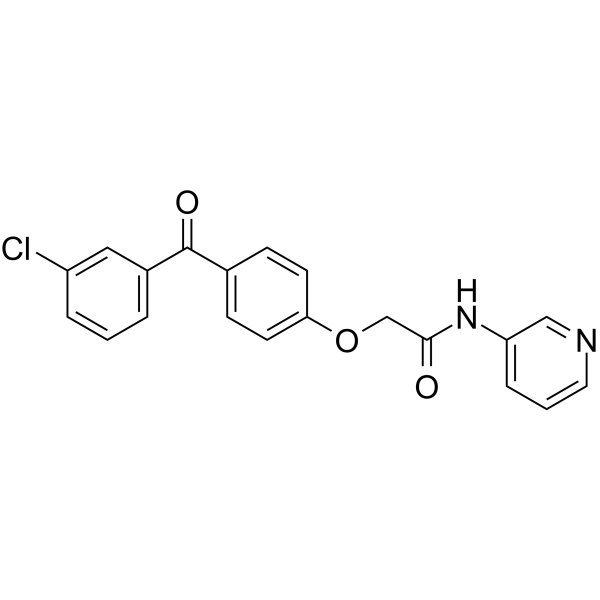
LUF7244 is a selective allosteric modulator of Kv11.1 channels. LUF7244 inhibits early afterdepolarizations. LUF7244 can be used for anti-arrhythmia research .
loading...
    loading...
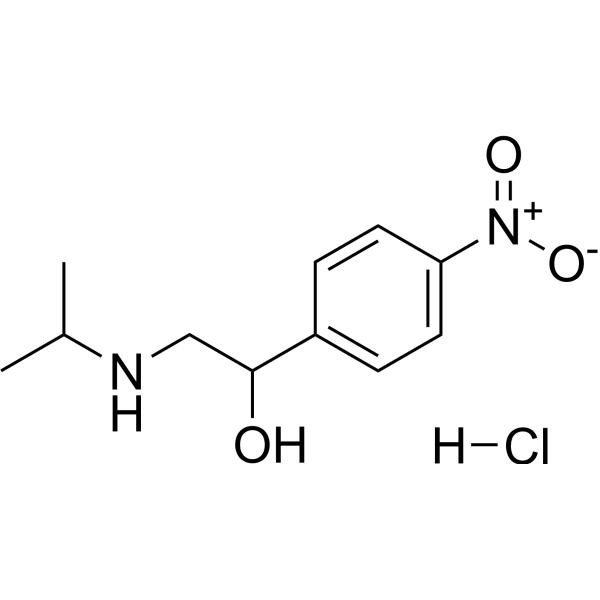
Cat. No.: HY-100952
CAS No.: 5704-60-9
Purity:  99.93%
Target:  

Adrenergic Receptor

Research Areas:  

Cardiovascular Disease

Nifenalol hydrochloride is a β-adrenergic receptor antagonist. Nifenalol hydrochloride induces the Early Afterdepolarization (EAD) effect. EAD is a phenomenon in cardiac electrophysiology that usually occurs during an action potential in ventricular muscle cells and can lead to arrhythmia. The EAD effect of Nifenalol hydrochloride can be blocked by Tetrodotoxin. Nifenalol hydrochloride is used in the study of conditions such as irregular heartbeat or high blood pressure .
loading...
    loading...
Cat. No.: HY-108163
CAS No.: 179258-59-4
Research Areas:  

Cardiovascular Disease

SB-237376 (free base) is a potassium and calcium channel blocker. SB-237376 (free base) can inhibit the rapidly activating delayed rectifier potassium current I(Kr) (IC50 is 0.42 μM), and at high concentrations, it blocks the L-type calcium current I(Ca,L). In the rabbit ventricular model, SB-237376 (free base) can induce early afterdepolarizations (EADs) at a concentration of 3 µM. Compared to other IKr inhibitors such as dl-sotalol, SB-237376 has a lower proarrhythmic risk. SB-237376 (free base) holds potential for research in the field of arrhythmia-related diseases .
loading...
    loading...
Cat. No.: HY-108591R
CAS No.: 103342-82-1
Synonyms: R-L3 (Standard)
L-364,373 (Standard) is the analytical standard of L-364,373 (HY-108591). This product is intended for research and analytical applications. L-364,373 (R-L3) is a voltage-gated Kv7.1 (KCNQ1)/mink channels activator. L-364,373 activates Iks (slow delayed rectifier potassium current) and shortens action potential duration in guinea pig cardiac myocytes, and suppresses early afterdepolarizations in rabbit ventricular myocytes .
loading...
    loading...

