9 Results for "

Fluoroethylnormemantine

" in MedChemExpress (MCE) Product Catalog:
Products (9)

9 Results for "Fluoroethylnormemantine" in MCE Product Catalog:

Cat. No.: HY-139048
CAS No.: 1639210-26-6
Purity:  ≥98.0%
Target:  

iGluR

Research Areas:  

Neurological Disease

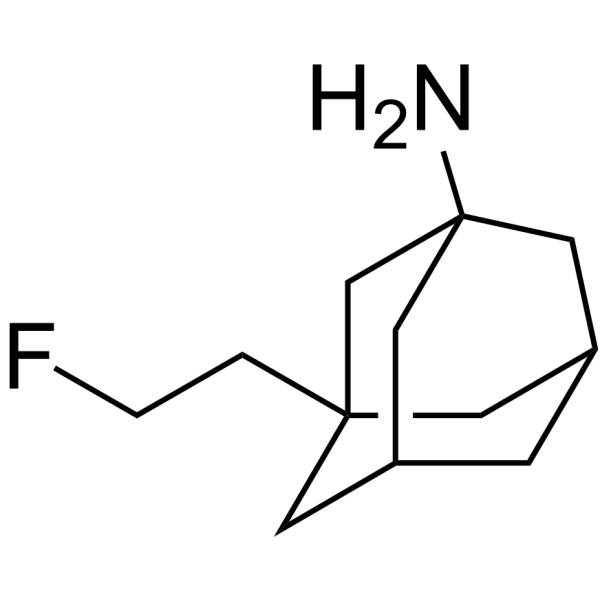
Fluoroethylnormemantine, a derivative of Memantine, is an antagonist of the N-methyl-D-aspartate (NMDA) receptor. [ 18F]-Fluoroethylnormemantine can be used as a positron emission tomography (PET) tracer. Fluoroethylnormemantine exhibits anti-amnesic, neuroprotective, antidepressant-like and fear-attenuating effects .
loading...
    loading...
Cat. No.: HY-134124
CAS No.: 92614-59-0
Purity:  95.8%
Research Areas:  

Metabolic Disease

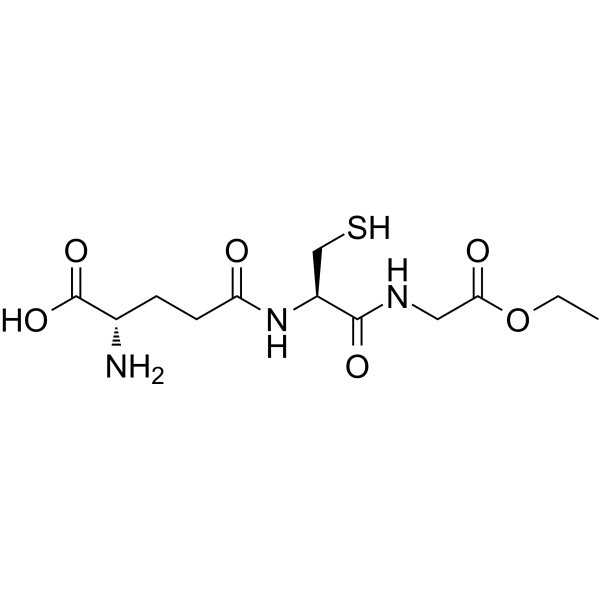
Glutathione ethyl ester is a cell-permeable GSH donor and provides an efficient supply of GSH to the oocyte. Glutathione ethyl ester shows positive effect on the in vitro production of embryos by enhancement of the antioxidative defense .
loading...
    loading...
Cat. No.: HY-P5372A
Research Areas:  

Cancer

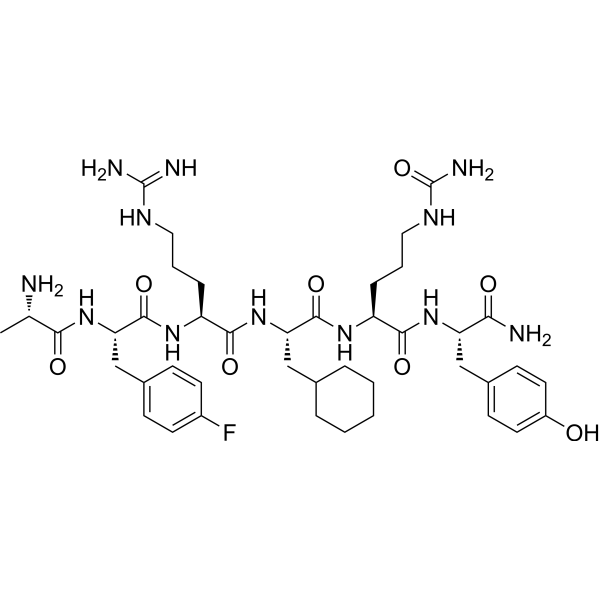
Ala-parafluoroPhe-Arg-Cha-Cit-Tyr-NH2 TFA, a bioactive peptide, is a selective Protease activating receptor 1 (PAR-1) agonist over PAR-2. PAR-1 belongs to a subfamily of G-protein coupled receptors and is known to mediate the cellular effects of thrombin. In addition to its varied cellular effects of thrombin, PAR-1 has also been shown to coordinate with PAR-4 and regulate thrombin-induced hepatocellular carcinoma harboring thrombin formation within the tumor environment classified as 'coagulation type' .
loading...
    loading...
Cat. No.: HY-P3066
CAS No.: 77453-01-1
Synonyms: d(CH2)5Tyr(Et)VAVP
Target:  

Vasopressin Receptor

Research Areas:  

Metabolic Disease

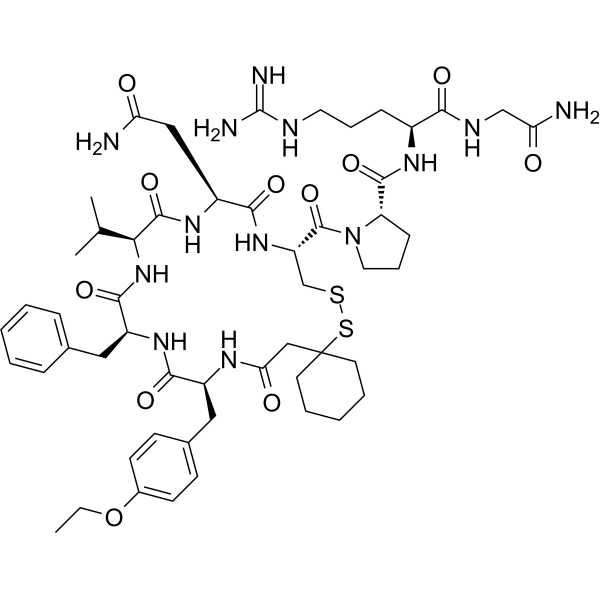
SKF 100398 (d(CH2)5Tyr(Et)VAVP), an arginine vasopressin (AVP) analogue, is a specific antagonist of the antidiuretic effect of exogenous and endogenous AVP .
loading...
    loading...
Cat. No.: HY-139048A
CAS No.: 1639210-25-5
Purity:  ≥98.0%
Target:  

iGluR

Research Areas:  

Neurological Disease

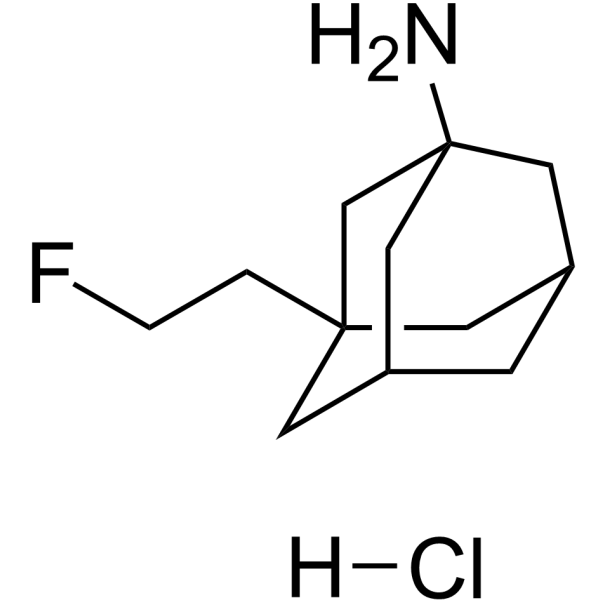
Fluoroethylnormemantine hydrochloride, a derivative of Memantine, is an antagonist of the N-methyl-D-aspartate (NMDA) receptor. [ 18F]-Fluoroethylnormemantine hydrochloride can be used as a positron emission tomography (PET) tracer. Fluoroethylnormemantine hydrochloride exhibits anti-amnesic, neuroprotective, antidepressant-like and fear-attenuating effects .
loading...
    loading...
Cat. No.: HY-P10828
CAS No.: 1260620-30-1
Target:  

Virus Protease

Research Areas:  

Infection Inflammation/Immunology

MAPI is a polypeptide irreversible 3C cysteine protease (SV3CP) inhibitor. MAPI inhibits SV3CP by covalently binding its C-terminal Michael-acceptor extension to the active site thiol of SV3CP Cys 139. MAPI is promising for research of noroviruses infection .
loading...
    loading...
Cat. No.: HY-P5373
CAS No.: 237409-87-9
Target:  

Peptides

Research Areas:  

Others

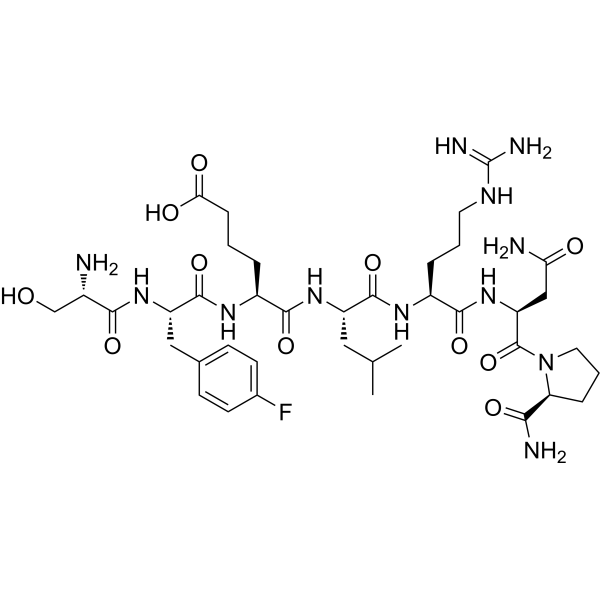
Ser-parafluoroPhe-Aad-Leu-Arg-Asn-Pro-NH2 is a biological active peptide. (Structure-activity studies of thrombin receptor-tethered ligand SFLLRNP have revealed the importance of the Phe-2-phenyl group in receptor recognition and the replacement of the Phe-2 by para-fluorophenylalanine [(p-F)Phe] was found to enhance its activity)
loading...
    loading...
Cat. No.: HY-P5372
CAS No.: 211190-38-4
Research Areas:  

Cancer

Ala-parafluoroPhe-Arg-Cha-Cit-Tyr-NH2, a bioactive peptide, is a selective Protease activating receptor 1 (PAR-1) agonist over PAR-2. PAR-1 belongs to a subfamily of G-protein coupled receptors and is known to mediate the cellular effects of thrombin. In addition to its varied cellular effects of thrombin, PAR-1 has also been shown to coordinate with PAR-4 and regulate thrombin-induced hepatocellular carcinoma harboring thrombin formation within the tumor environment classified as 'coagulation type' .
loading...
    loading...
Cat. No.: HY-P4756
CAS No.: 282725-67-1
Target:  

Peptides

Research Areas:  

Others

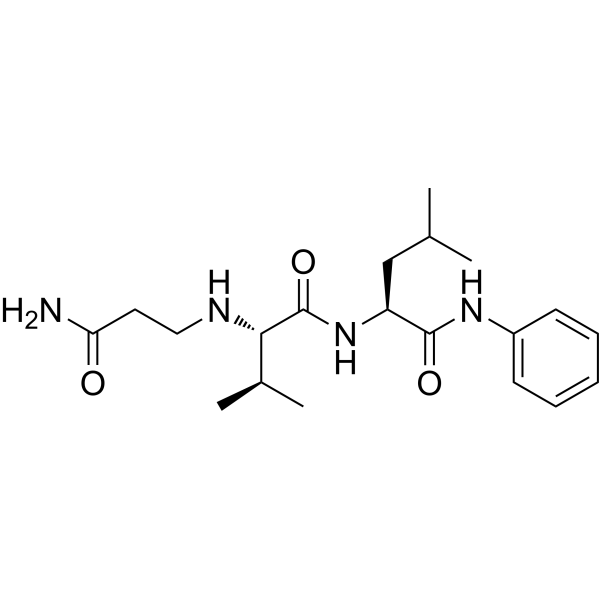
N-(2-Carbamoyl-ethyl)-Val-Leu-anilide is a polypeptide that can be found by peptide screening. Peptide screening is a research tool that pools active peptides primarily by immunoassay. Peptide screening can be used for protein interaction, functional analysis, epitope screening, especially in the field of agent research and development .
loading...
    loading...

