29 Results for "

GATOR1

" in MedChemExpress (MCE) Product Catalog:
Products (29)

29 Results for "GATOR1" in MCE Product Catalog:

1
1 Cited Publications
Cat. No.: HY-100809
CAS No.: 6027-91-4
Purity:  99.73%
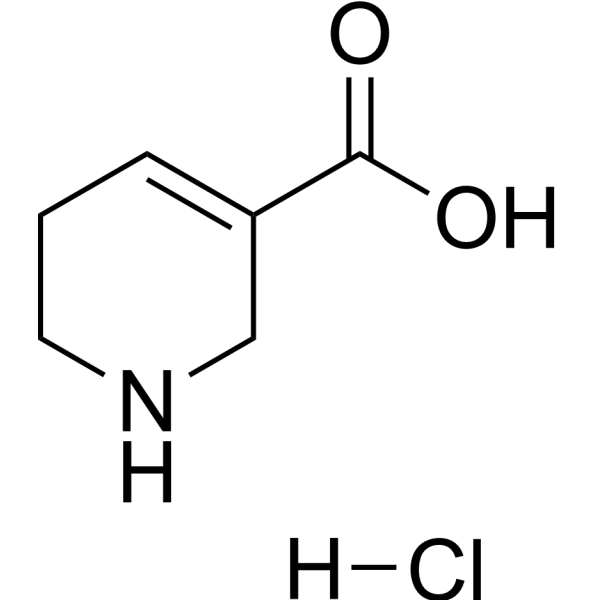
Guvacine hydrochloride is an alkaloid from the nut of Areca catechu, acts as an inhibitor of GABA transporter, and dispalys modest selectivity for cloned GABA transporters with IC50s of 14 μM (human GAT-1), 39 μM (rat GAT-1), 58 μM (rat GAT-2), 119 μM (human GAT-3), 378 μM (rat GAT-3), and 1870 μM (human BGT-3).
1
1 Cited Publications
Cat. No.: HY-N2482A
CAS No.: 6027-92-5
Target:  

GABA Receptor

Research Areas:  

Neurological Disease

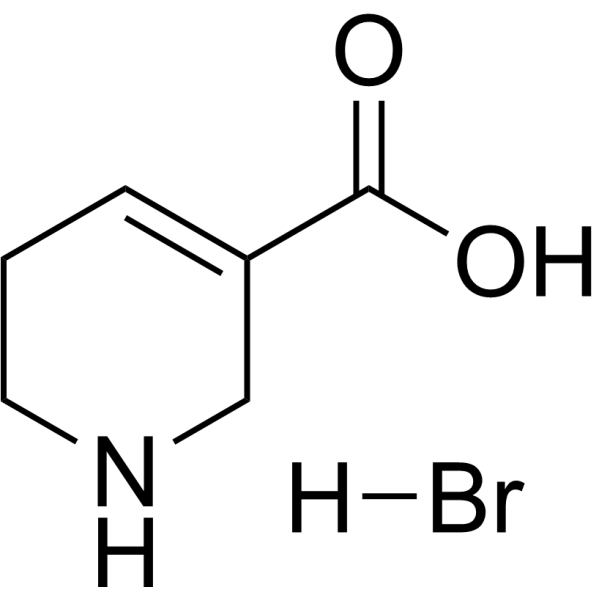
Guvacine hydrobromide, an alkaloid found in the nut of Areca catechu, is a potent GABA uptakp inhibitor. Guvacine hydrobromide inhibits rat GAT-1, rat GAT-2 and rat GAT-3 with IC50 values of 39 μM, 58 μM and 378 μM, respectively [1].
Cat. No.: HY-B0696A
CAS No.: 145821-59-6
Synonyms: NO050328 hydrochloride; NO328 hydrochloride; TGB hydrochloride
Target:  

GABA Receptor

Research Areas:  

Neurological Disease

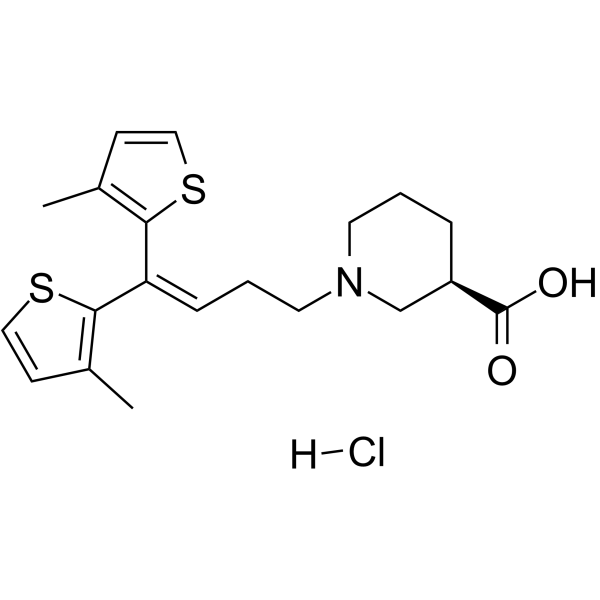
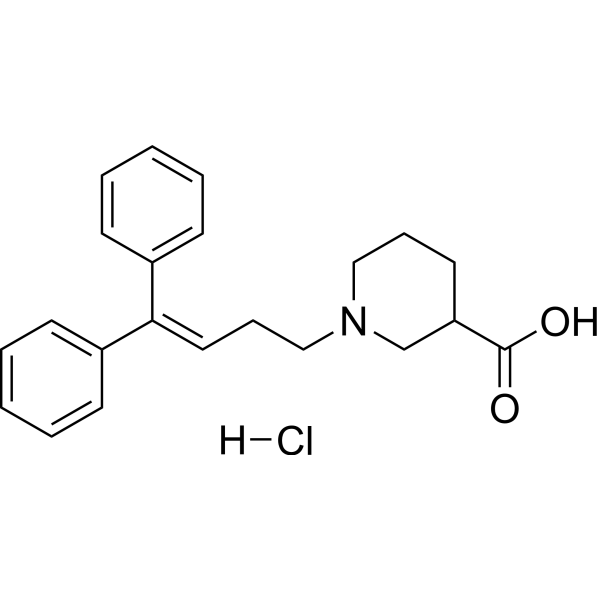
Tiagabine hydrochloride (NO050328; NO328; TGB) is an orally active, highly selective, and reversible GAT-1 inhibitor and anticonvulsant that crosses the blood-brain barrier. By blocking the reuptake of GABA in neurons and glial cells, tiagabine increases extracellular GABA levels to enhance inhibitory signal transduction, thereby exerting multiple activities such as anticonvulsant, neuroprotective, and antioxidant effects. Tiagabine hydrochloride exhibits linear pharmacokinetic properties. Although it is metabolized by CYP3A and has a high protein binding rate, it carries a low risk of cognitive impairment. Tiagabine hydrochloride is widely used in research on related diseases including epilepsy (including refractory partial seizures), alcohol withdrawal symptoms, and Huntington's disease [1] .
Cat. No.: HY-B0696
CAS No.: 115103-54-3
Synonyms: NO050328; NO328; TGB
Target:  

GABA Receptor

Research Areas:  

Neurological Disease

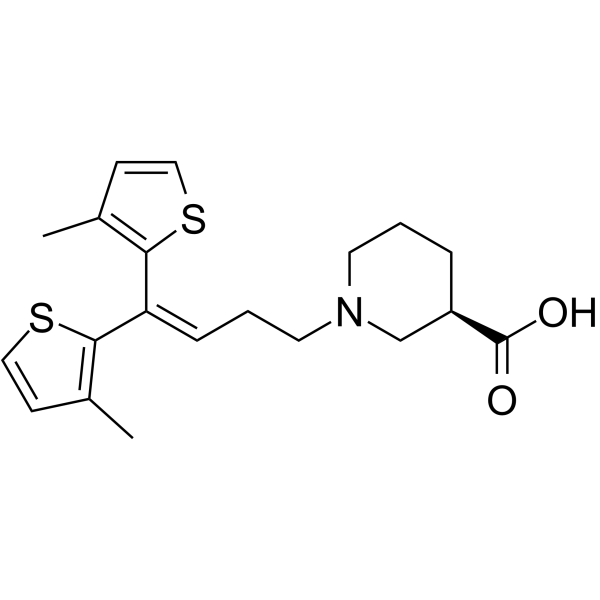
Tiagabine (NO050328; NO328; TGB) is an orally active, highly selective, and reversible GAT-1 inhibitor and anticonvulsant that crosses the blood-brain barrier. By blocking the reuptake of GABA in neurons and glial cells, tiagabine increases extracellular GABA levels to enhance inhibitory signal transduction, thereby exerting multiple activities such as anticonvulsant, neuroprotective, and antioxidant effects. Tiagabine exhibits linear pharmacokinetic properties. Although it is metabolized by CYP3A and has a high protein binding rate, it carries a low risk of cognitive impairment. Tiagabine is widely used in research on related diseases including epilepsy (including refractory partial seizures), alcohol withdrawal symptoms, and Huntington's disease [1] .
Cat. No.: HY-100228A
CAS No.: 85375-15-1
Purity:  99.70%
Synonyms: d,l-SKF89976A hydrochloride
Target:  

GABA Receptor

Research Areas:  

Neurological Disease

SKF89976A hydrochloride is a selective GABA transporter (GAT-1) inhibitor with IC50s of 0.28 μM, 137.34 μM and 202.8 μM for GAT-1, GAT-2 and GAT-3 in CHO cells, respectively.
Cat. No.: HY-103506
CAS No.: 145645-62-1
Purity:  99.76%
Synonyms: NO-711 hydrochloride
Target:  

GABA Receptor

Research Areas:  

Neurological Disease

NNC-711 (NO-711 hydrochloride) is a potent and selective inhibitor of GAT-1 (GABA transporter 1) with IC50 values of 0.04, 0.38, 171, 1700, 349, 622 μM for human GAT-1, rat GAT-1, rGAT-2, hGAT-3, rGAT-3, hBGT-3, respectively. NNC-711 has anticonvulsant and analgesic effect in vivo and exhibits cognition-enhancing activity [1] .
Cat. No.: HY-103534
CAS No.: 110283-66-4
Purity:  99.60%
Target:  

GABA Receptor

Research Areas:  

Neurological Disease

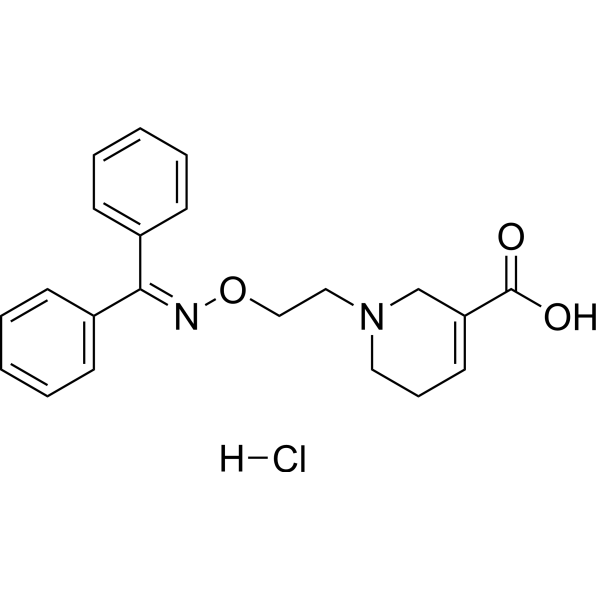
CI-966 hydrochloride is a potent, selective, orally active and brain-penetrant inhibitor of the GABA transporter GAT-1, with IC50s of 0.26 μM and 1.2 μM for hGAT-1, rGAT-1, respectively. CI-966 hydrochloride shows more than 200-fold selectivity over GAT-2, GAT-3, and BGT-3. CI-966 hydrochloride exhibits anticonvulsant and neuroprotective activities [1] .
Cat. No.: HY-124285
CAS No.: 185444-92-2
Purity:  ≥95.0%
Target:  

GABA Receptor

Research Areas:  

Others

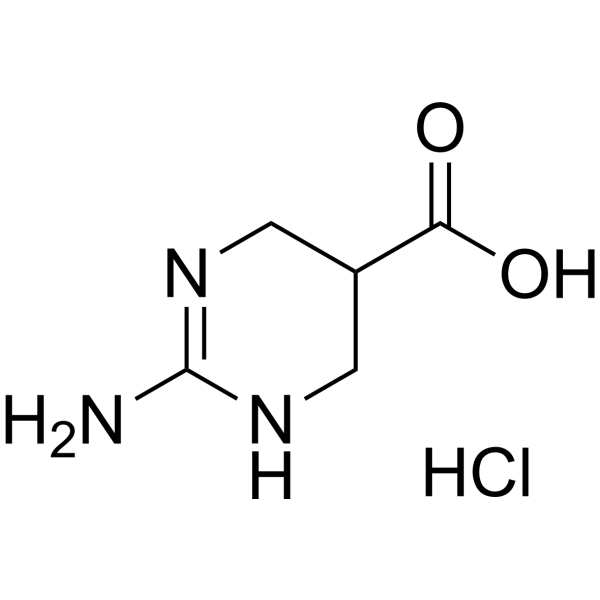
ATPCA hydrochloride is a selective radioactive substrate for BGT1 over GAT1/GAT3 [1].
Cat. No.: HY-N2482
CAS No.: 498-96-4
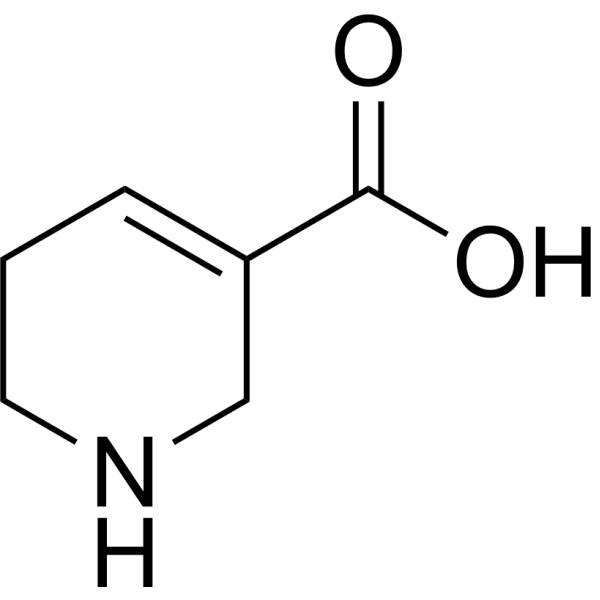
Guvacine, an alkaloid found in the nut of Areca catechu, is a potent GABA uptakp inhibitor. Guvacine inhibits rat GAT-1, rat GAT-2 and rat GAT-3 with IC50 values of 39 μM, 58 μM and 378 μM, respectively [1].
Cat. No.: HY-155238
CAS No.: 1520073-91-9
Target:  

GABA Receptor

Research Areas:  

Neurological Disease

E2730 is a noncompetitive but selective inhibitor of gamma-aminobutyric acid (GABA) transporter 1 (GAT1) with orally available and antiepileptic activity. E2730-mediated GAT1 inhibition is positively correlated with environmental GABA levels and selectively inhibits GAT1-mediated GABA uptake. E2730 (5-50 mg/kg; po) in rat amygdala ignition model, and in mouse cornea ignition (5-50 mg/kg), drug resistance 6Hz-44mA has demonstrated in vivo efficacy in models of psychomotor epilepsy (5-50 mg/kg), fragile X syndrome (2.5-300 mg/kg), and Dravet syndrome (10 mg/kg, 20 mg/kg) [1].
Cat. No.: HY-B0696B
CAS No.: 145821-57-4
Synonyms: NO050328 hydrochloride hydrate; NO328 hydrochloride hydrate; TGB hydrochloride hydrate
Target:  

GABA Receptor

Research Areas:  

Neurological Disease

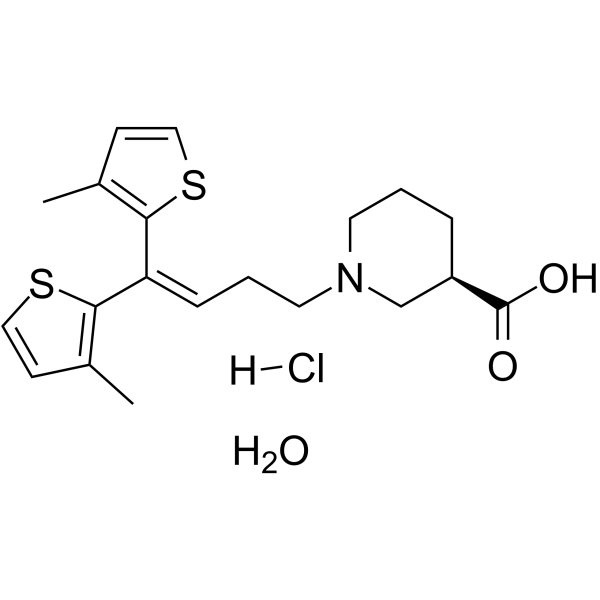
Tiagabine (NO050328; NO328; TGB) hydrochloride hydrate is an orally active, highly selective, and reversible GAT-1 inhibitor and anticonvulsant that crosses the blood-brain barrier. By blocking the reuptake of GABA in neurons and glial cells, tiagabine increases extracellular GABA levels to enhance inhibitory signal transduction, thereby exerting multiple activities such as anticonvulsant, neuroprotective, and antioxidant effects. Tiagabine hydrochloride hydrate exhibits linear pharmacokinetic properties. Although it is metabolized by CYP3A and has a high protein binding rate, it carries a low risk of cognitive impairment. Tiagabine hydrochloride hydrate is widely used in research on related diseases including epilepsy (including refractory partial seizures), alcohol withdrawal symptoms, and Huntington's disease [1] .
Cat. No.: HY-118931
CAS No.: 684645-54-3
Target:  

GABA Receptor

Research Areas:  

Neurological Disease

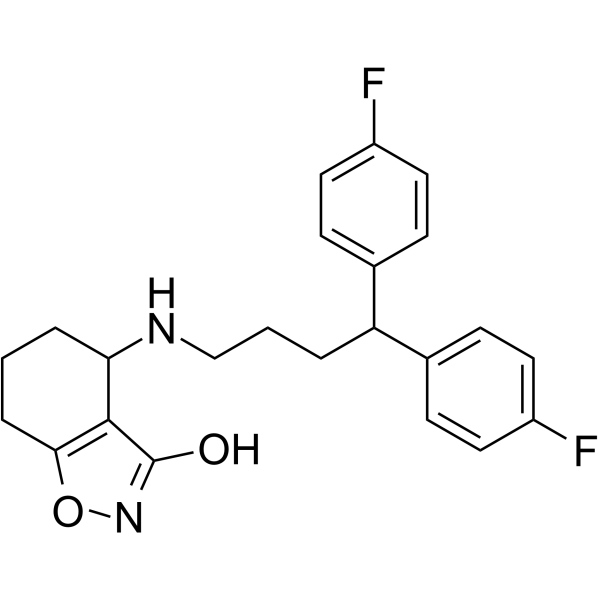
EF-1502 is a potent and selective GABA transporter inhibitor with GAT1 and BGT1 inhibitory activity. EF-1502 produces a synergistic anti-epileptic effect when used in combination with Tiagabine (HY-B0696), a compound used to suppress epileptic seizures. The dosing combination of EF-1502 exhibited reduced anti-epileptic efficacy and dyskinesia when used with THIP (HY-10232). The mechanism of EF-1502 differs significantly from Tiagabine, suggesting a unique role in the inhibitory strategy [1].
Cat. No.: HY-100228
CAS No.: 85375-85-5
Target:  

GABA Receptor

Research Areas:  

Neurological Disease

SKF89976A is a selective GABA transporter (GAT-1) inhibitor with IC50s of 0.28 μM, 137.34 μM and 202.8 μM for GAT-1, GAT-2 and GAT-3 in CHO cells, respectively.
Cat. No.: HY-RS01307
Research Areas:  

Others

B3GAT1 Human Pre-designed siRNA Set A contains three designed siRNAs for B3GAT1 gene (Human), as well as a negative control, a positive control, and a FAM-labeled negative control.

Cat. No.: HY-RS01326
Research Areas:  

Others

B4GAT1 Human Pre-designed siRNA Set A contains three designed siRNAs for B4GAT1 gene (Human), as well as a negative control, a positive control, and a FAM-labeled negative control.

Cat. No.: HY-118207
CAS No.: 770688-66-9
Target:  

GABA Receptor

Research Areas:  

Cancer

LU-32-176B, a GABA transporter 1(GAT1) selective inhibitor, is found to exert a synergistic anticonvulsant action with GAT2 transport inhibitor EF1502. LU-32-176B inhibits neurons, astrocytes and mGAT1 with the IC50 values of 2μM, 1μM, 4μM, respectively [1] .
Cat. No.: HY-123240
CAS No.: 110283-79-9
Target:  

GABA Receptor

Research Areas:  

Neurological Disease

CI-966 is a potent, selective, orally active and brain-penetrant inhibitor of the GABA transporter GAT-1, with IC50s of 0.26 μM and 1.2 μM for hGAT-1, rGAT-1, respectively. CI-966 shows more than 200-fold selectivity over GAT-2, GAT-3, and BGT-3. CI-966 exhibits anticonvulsant and neuroprotective activities [1] .
Cat. No.: HY-B0696AR
CAS No.: 145821-59-6
Synonyms: NO050328 hydrochloride (Standard); NO328 hydrochloride (Standard); TGB hydrochloride (Standard)
Research Areas:  

Neurological Disease

Tiagabine (hydrochloride) (Standard) is the analytical standard of Tiagabine (hydrochloride). This product is intended for research and analytical applications. Tiagabine hydrochloride (NO050328; NO328; TGB) is an orally active, highly selective, and reversible GAT-1 inhibitor and anticonvulsant that crosses the blood-brain barrier. By blocking the reuptake of GABA in neurons and glial cells, tiagabine increases extracellular GABA levels to enhance inhibitory signal transduction, thereby exerting multiple activities such as anticonvulsant, neuroprotective, and antioxidant effects. Tiagabine hydrochloride exhibits linear pharmacokinetic properties. Although it is metabolized by CYP3A and has a high protein binding rate, it carries a low risk of cognitive impairment. Tiagabine hydrochloride is widely used in research on related diseases including epilepsy (including refractory partial seizures), alcohol withdrawal symptoms, and Huntington's disease [1] .
Cat. No.: HY-B0696AS
Synonyms: NO050328-d4 hydrochloride; NO328-d4 hydrochloride; TGB-d4 hydrochloride
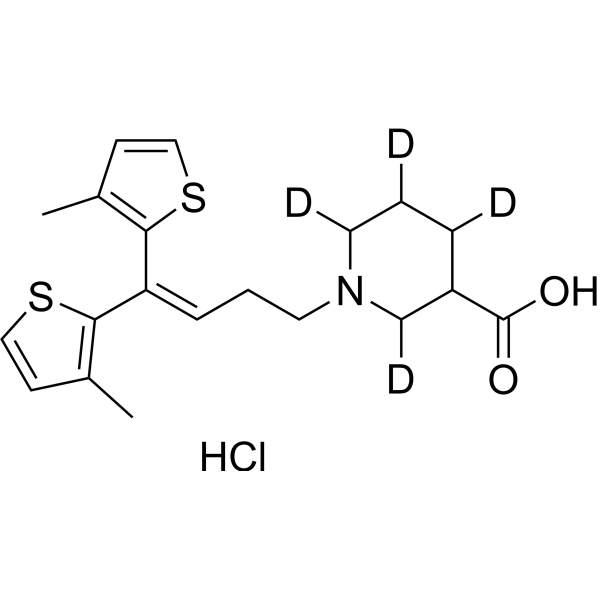
Tiagabine-d4 hydrochloride is deuterated labeled Tiagabine hydrochloride (HY-B0696A). Tiagabine hydrochloride (NO050328; NO328; TGB) is an orally active, highly selective, and reversible GAT-1 inhibitor and anticonvulsant that crosses the blood-brain barrier. By blocking the reuptake of GABA in neurons and glial cells, tiagabine increases extracellular GABA levels to enhance inhibitory signal transduction, thereby exerting multiple activities such as anticonvulsant, neuroprotective, and antioxidant effects. Tiagabine hydrochloride exhibits linear pharmacokinetic properties. Although it is metabolized by CYP3A and has a high protein binding rate, it carries a low risk of cognitive impairment. Tiagabine hydrochloride is widely used in research on related diseases including epilepsy (including refractory partial seizures), alcohol withdrawal symptoms, and Huntington's disease [1] .
Cat. No.: HY-B0696S
CAS No.: 1217672-34-8
Synonyms: NO050328-d6; NO328-d6; TGB-d6
Tiagabine-d6 (NO050328-d6) is deuterium labeled Tiagabine. Tiagabine (NO050328; NO328; TGB) is an orally active, highly selective, and reversible GAT-1 inhibitor and anticonvulsant that crosses the blood-brain barrier. By blocking the reuptake of GABA in neurons and glial cells, tiagabine increases extracellular GABA levels to enhance inhibitory signal transduction, thereby exerting multiple activities such as anticonvulsant, neuroprotective, and antioxidant effects. Tiagabine exhibits linear pharmacokinetic properties. Although it is metabolized by CYP3A and has a high protein binding rate, it carries a low risk of cognitive impairment. Tiagabine is widely used in research on related diseases including epilepsy (including refractory partial seizures), alcohol withdrawal symptoms, and Huntington's disease [1] .

