22 Results for "

Hydroxamates

" in MedChemExpress (MCE) Product Catalog:
Products (22)

22 Results for "Hydroxamates" in MCE Product Catalog:

2
2 Cited Publications
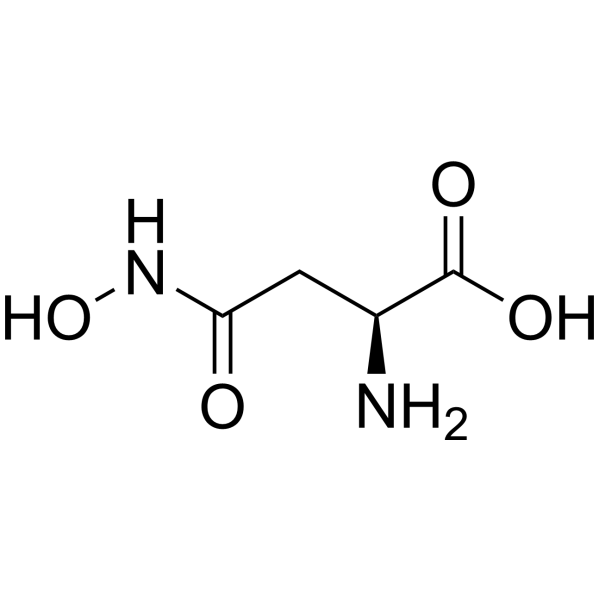
Cat. No.: HY-134450
CAS No.: 1955-68-6
Purity:  ≥98.0%
Research Areas:  

Others

L-Aspartic acid β-hydroxamate is an aspartic acid derivative .
2
2 Cited Publications
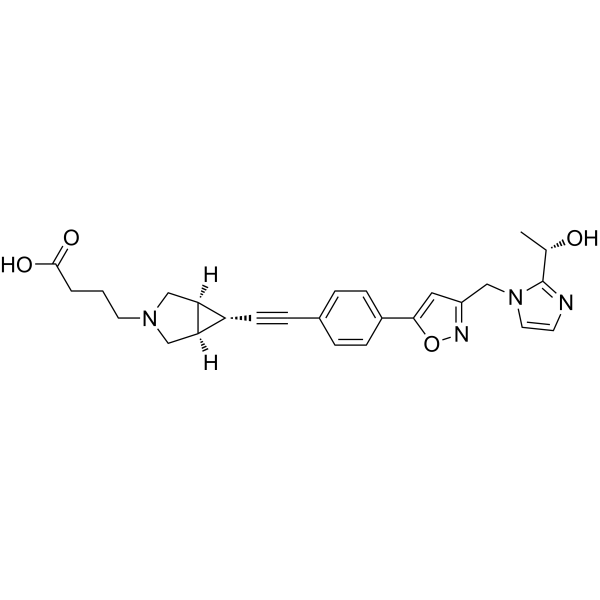
Cat. No.: HY-131981
CAS No.: 2427584-96-9
Purity:  99.86%
Target:  

Bacterial

Research Areas:  

Infection Cardiovascular Disease

TP0586532 is a non-hydroxamate LpxC inhibitor (IC50=0.101 μM). TP0586532 as a compound with a low cardiovascular risk that is effective against K. pneumoniae, including resistant strains . TP0586532 is a click chemistry reagent, it contains an Alkyne group and can undergo copper-catalyzed azide-alkyne cycloaddition (CuAAc) with molecules containing Azide groups.
1
1 Cited Publications
Cat. No.: HY-10293
CAS No.: 791828-58-5
Purity:  99.44%
Synonyms: INCB007839; INCB7839
Target:  

MMP

Research Areas:  

Cancer

Aderbasib (INCB007839) is a potent, orally active and target specific low nanomolar hydroxamate-based inhibitor of ADAM10 and ADAM17. Aderbasib exhibits robust antineoplastic activity and can be used for cancer research, including diffuse large B-cell non-Hodgkin lymphoma, HER2 + breast cancer, gliomas, et al .
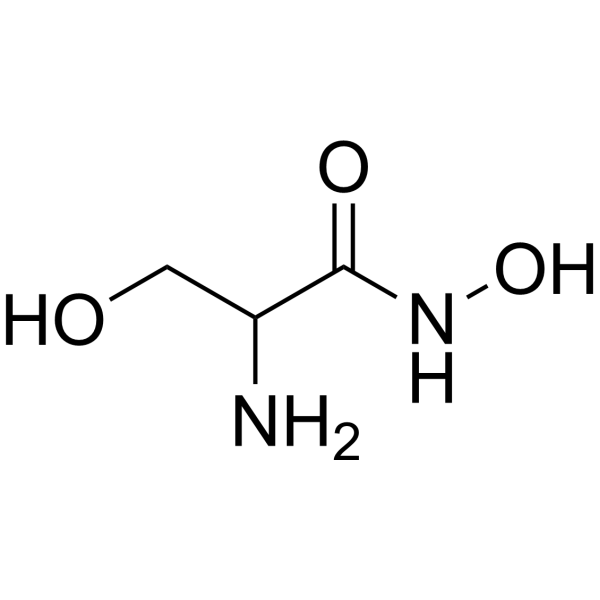
Cat. No.: HY-131894
CAS No.: 55779-32-3
Purity:  95.34%
Research Areas:  

Others

DL-Serine hydroxamate is a serine derivative .
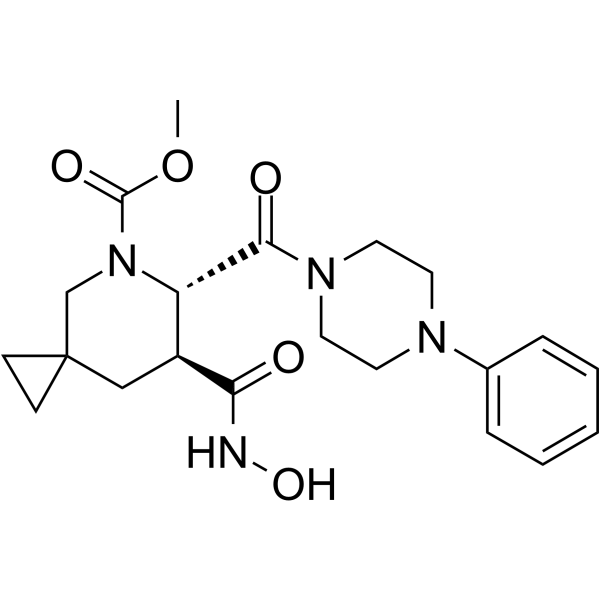
Cat. No.: HY-160822
CAS No.: 920289-29-8
Synonyms: PF-5212371
Target:  

ADAMTS MMP

Research Areas:  

Inflammation/Immunology

AGG-523 (PF-5212371) is an orally active, reversible, non-hydroxamate, zinc-binding selective inhibitor of ADAMTS4 and ADAMTS5 with IC50 of <0.03 and 0.04 μM. AGG-523 also inhibits MMP-2, -8, 12 activity AGG-523 attenuates release of aggrecanase-generated ARG-aggrecan fragments into synovial fluid, reduces surgery-induced ARG-aggrecan release in rat joint models, and inhibits aggrecanase activity to slow cartilage degradation. AGG-523 can be used for the research of osteoarthritis .
Cat. No.: HY-W001857
CAS No.: 7377-03-9
Synonyms: N-Hydroxyoctanamide; Caprylhydroxamic acid
Research Areas:  

Others

Octanohydroxamic acid (N-Hydroxyoctanamide; Caprylhydroxamic acid) can be used as an extractant for alkaloids, which are used in pharmaceutical and natural product research. Octanohydroxamic acid may also be involved in the inhibition of certain enzymes, such as hydroxamate hydrolases.
Cat. No.: HY-161305
CAS No.: 2243575-79-1
Target:  

HDAC

Research Areas:  

Metabolic Disease Cancer

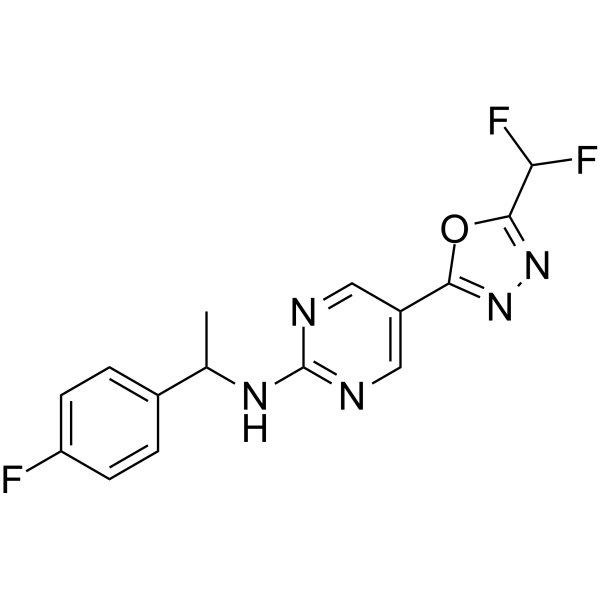
SE-7552, a 2-(difluoromethyl)-1,3,4-oxadiazole (DFMO) derivative, is an orally active, highly selective, non-hydroxamate HDAC6 inhibitor with an IC50 of 33 nM. SE-7552 is greater than 850-fold selectivity versus all other known HDAC isozymes. SE-7552 is capable of blocking multiple myeloma growth in vivo. SE-7552 acts as an anti-obesity agent in diet-induced obese mice .
Cat. No.: HY-P1997
CAS No.: 34787-28-5
Synonyms: Desferrichrome; DFC; N-Desferriferrichrome
Research Areas:  

Others

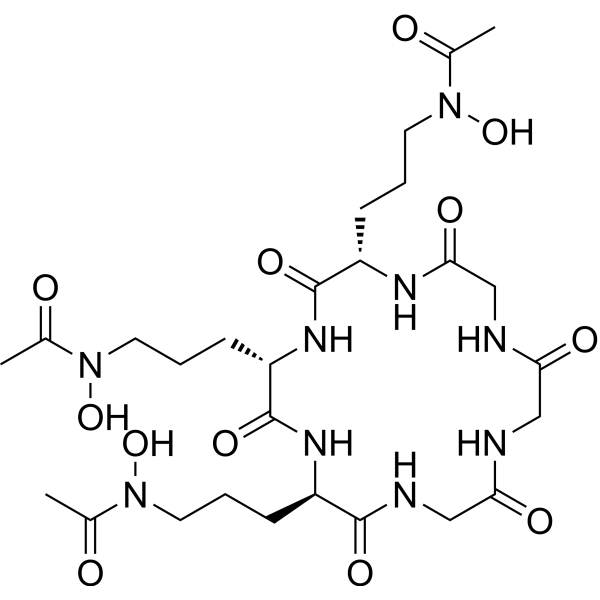
Ferrichrome is a hydroxamate siderophore produced by various fungi, including U. sphaerogena, that facilitates iron chelation and uptake by these organisms. It can be used as a heterosiderophore by bacteria, including Pseudomonas aeruginosa and Vibrio parahaemolyticus. Ferrichrome (0.8 μM) inhibits concanavalin A-induced proliferation of mouse spleen monocytes and reduces the number of concanavalin A-stimulated CD4+ T cells expressing IL-2 receptor. It also inhibits the heme-catalyzed oxidation of LDL by hydrogen peroxide in a concentration-dependent manner.
Cat. No.: HY-172734
CAS No.: 2919723-66-1
Target:  

Bacterial

Research Areas:  

Infection

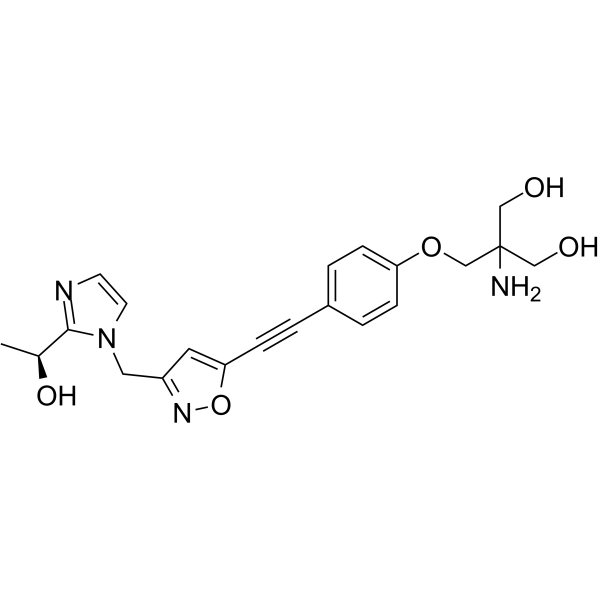
FG-2101 is a selective and orally active non-hydroxamate LpxC inhibitor with an IC50 of ~1 nM. FG-2101 exhibits exquisite selectivity over other bacterial and human metalloenzymes. FG-2101 can be used for the study of Gram-negative bacteria infections including drug-resistant strains .
Cat. No.: HY-129580
CAS No.: 133705-27-8
Category:  

Microorganisms Antibiotics

Target:  

Bacterial Fungal

Nannochelin B is a novel citrate-hydroxamate siderophore with a growth-inhibitory activity against some bacteria and fungi .
Cat. No.: HY-175176
CAS No.: 3038691-85-6
HDAC1/6-IN-3 is a potent HDAC inhibitor. HDAC1/6-IN-3 shows excellent inhibitory activities against HDAC1 (IC50 = 1.1 nM) and HDAC6 (IC50 = 2.7 nM). HDAC1/6-IN-3 significantly arrests HepG2 cells at the G0/G1 phase and induces apoptosis and pyroptosis. HDAC1/6-IN-3 exhibits significant antitumor activity in the HepG2 xenograft mode. HDAC1/6-IN-3 can be used for the study of cancers such as liver cancer, lung cancer, colon cancer and breast cancer .
Cat. No.: HY-131907
CAS No.: 2253951-38-9
Target:  

Bacterial

Research Areas:  

Infection

LpxC-IN-5 is a potent non-hydroxamate LpxC (UDP-3-O-acyl-N-acetylglucosamine deacetylase) inhibitor with an IC50 of 20 nM. LpxC-IN-5 shows antibacterial activity against E. coli ATCC25922, P. aeruginosa ATCC27853, K. pneumoniae ATCC13883 and P. aeruginosa 5567 with MIC of 16, 4, 64, and 4 μg/mL, respectively .
Cat. No.: HY-129767
CAS No.: 2368900-35-8
Research Areas:  

Cancer

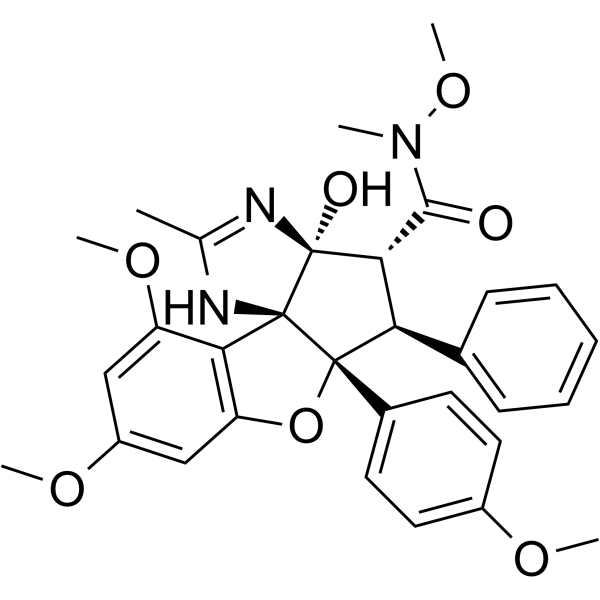
CMLD012612 is an amidino-rocaglate containing a hydroxamate group and is a potent eukaryotic initiation factor 4A (eIF4A) inhibitor. CMLD012612 inhibits cell translation and is cytotoxic to NIH/3T3 cells with an IC50 value of 2 nM. CMLD012612 inhibits eukaryotic translation initiation by modifying the behavior of the RNA helicase (eIF4A) and possesses potent anti-neoplastic activity .
Cat. No.: HY-174803
CAS No.: 2416914-29-7
WMJ-J-09 is an HDAC inhibitor with IC50 values of 7.5 nM (HDAC1), 21.3 nM (HDAC2), 18.4 nM (HDAC3), 90.9 nM (HDAC8), 3.9 nM (HDAC6) and 8715.7 nM (HDAC4). WMJ-J-09 blocks the cell cycle and induces apoptosis in cancer cells. WMJ-J-09 induces cancer cell death through the LKB1-AMPK-p38MAPK-p63-survivin signaling cascade.WMJ-J-09 inhibits HDAC enzyme activity, leading to acetylation of key proteins and thereby regulating cancer cell death. WMJ-J-09 can be used in HCT116 cells and FaDu cells research[1][2].
Cat. No.: HY-CE01798
Synonyms: Glutamine hydroxamate-coenzyme A
Research Areas:  

Metabolic Disease

Glutamine-hydroxamate-CoA (Glutamine hydroxamate-coenzyme A) is a coenzyme A derivative .
Cat. No.: HY-135599
CAS No.: 25125-92-2
Target:  

Bacterial

Research Areas:  

Infection

Lysine hydroxamate is an amino acid hydroxamate that inhibits the growth of Escherichia coli K-12. Of the other amino acid hydroxamates tested, only L-lysine hydroxamate reduced the growth rate. The inhibition of growth by L-serine hydroxamate could be rapidly reversed by adding L-serine to the bacterial culture or by removing the analog by filtration. This reversal was specific for L-serine. L-alanine, glycine, or adenine had no effect on the inhibited culture. There was no evidence for active transport of the analog.
Cat. No.: HY-118661
CAS No.: 934618-96-9
Target:  

Aminopeptidase

Research Areas:  

Others

BDM14471 is a selective inhibitor of hydroxamate aminopeptidase M1 (PfAM1), with the IC50 of 6 nM .
Cat. No.: HY-133160
CAS No.: 106132-78-9
Synonyms: VPA-HA
Target:  

Drug Derivative

Research Areas:  

Neurological Disease

Valproic acid hydroxamate (VPA-HA) has shown anticonvulsant activity in a mouse neural tube defect model, without any teratogenic effects .
Cat. No.: HY-159586
Target:  

Tyrosinase

Research Areas:  

Cancer

Tyrosinase-IN-32 (compound 11) is a hydroxamate-based alkaloid and a mushroom tyrosinase inhibitor. Tyrosinase-IN-32 has antioxidant activity and can be isolated from black pepper (Piper nigrum L.) .
Cat. No.: HY-W703549
Synonyms: INCB007839-d3; INCB7839-d3
Aderbasib-d3 (INCB007839-d3) is deuterium labeled Aderbasib. Aderbasib (INCB007839) is a potent, orally active and target specific low nanomolar hydroxamate-based inhibitor of ADAM10 and ADAM17. Aderbasib exhibits robust antineoplastic activity and can be used for cancer research, including diffuse large B-cell non-Hodgkin lymphoma, HER2 +?breast cancer, gliomas, et al .

