

1. Search Result
Search Result
Results for "

Lymph node metastasis

" in MedChemExpress (MCE) Product Catalog:

8

Inhibitors & Agonists

1

Peptides

1

Inhibitory Antibodies

1

Natural
Products

3

Oligonucleotides

Cat. No. Product Name Target Research Areas Chemical Structure
  • HY-153482

    Small Interfering RNA (siRNA) Cancer
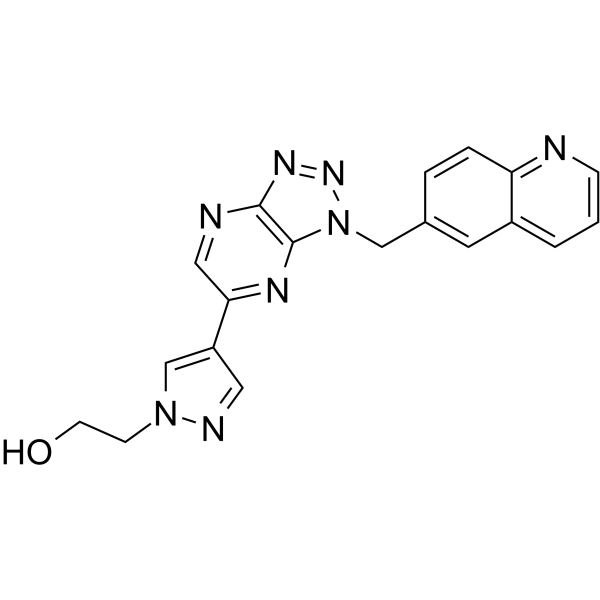
    ATU027 is a siRNA, which silences expression of protein kinase N3 (PKN3) in the vascular endothelium. ATU027 has previously been shown to inhibit local tumor invasion as well as lymph node and pulmonary metastasis in mouse cancer models.
    ATU027
  • HY-P11026

    DOTA-PEG4-TMVP1446

    VEGFR Cancer
    DOTA-TMVP1446 is a VEGFR-3 targeting peptide. DOTA-TMVP1446 labeled with 68Ga accurately detectes the status of lymph node metastasis, even in micrometastatic tumors, in the B16-F10 tumor mice model. DOTA-TMVP1446 can be used as a radiotracer for cancer-metastatic sentinel lymph nodes (m-SLN) imaging .
    DOTA-TMVP1446
  • HY-153482A

    Small Interfering RNA (siRNA) Cancer
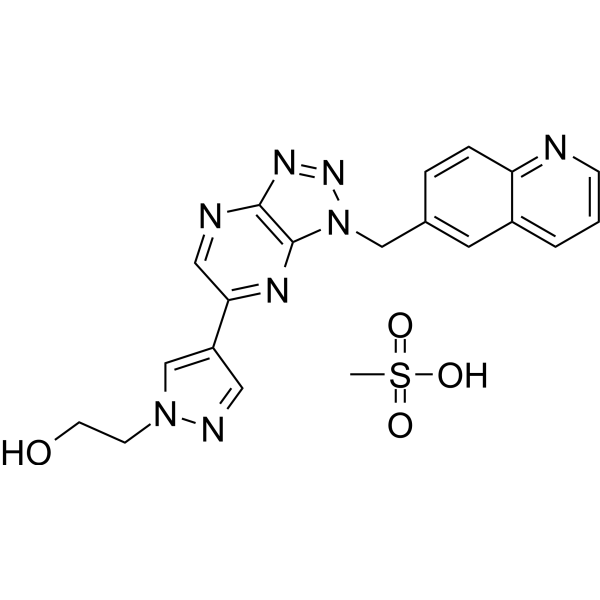
    ATU027 sodium is a siRNA, which silences expression of protein kinase N3 (PKN3) in the vascular endothelium. ATU027 sodium has previously been shown to inhibit local tumor invasion as well as lymph node and pulmonary metastasis in mouse cancer models.
    ATU027 sodium
  • HY-118487A

    Endogenous Metabolite Cancer
    OB-24 free base is a compound that potently and selectively inhibits heme oxygenase 1 (HO-1) and has the potential to inhibit advanced prostate cancer. OB-24 significantly reduces protein carbonylation and the formation of reactive oxygen species by selectively inhibiting HO-1 activity in prostate cancer cells. OB-24 significantly inhibited cell proliferation in vitro and inhibited tumor growth and lymph node and lung metastasis in vivo. OB-24 exhibits powerful synergy when used in combination with Taxol .
    OB-24 free base
  • HY-N2692

    Bacterial Cancer
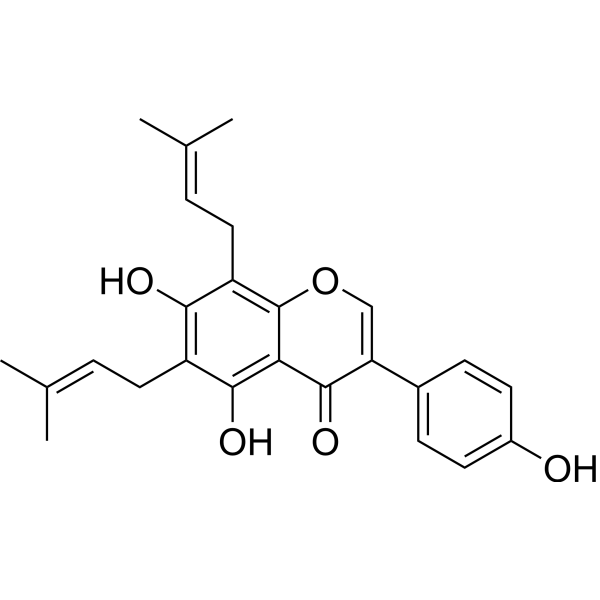
    6,8-Diprenylgenistein is an isoflavone compound isolated from Cudrania tricuspidata. 6,8-Diprenylgenistein has antimicrobial and anti-obesity activity. 6,8-Diprenylgenistein inhibits the proliferation, migration and tubular formation of HLMEC induced by recombinant human vascular endothelial growth factor-A. 6,8-Diprenylgenistein can be used to study new therapeutic drugs for the prevention and treatment of oral cancer metastasis .
    6,8-Diprenylgenistein
  • HY-160049

    Nucleoside Antimetabolite/Analog Biochemical Assay Reagents Cancer
    BC15 aptamer sodium is an ssDNA aptamer targeting the intracellular protein hnRNP A1, which is highly expressed in cancerous liver tissue. BC15 aptamer sodium specifically recognizes breast cancer cells and can be used to detect cancer cells in other pathological types of breast cancer tissue .
    BC15 aptamer sodium
  • HY-160740

    Others Cancer
    Antitumor agent-148 (Example 1) is an anti-cancer agent. Antitumor agent-148 effectively inhibits the growth, migration and invasion of cancer cells. Antitumor agent-148 significantly inhibits the lymphatic metastasis of breast cancer cells in mouse models. Antitumor agent-148 can be used for the study of malignant tumors such as breast cancer, lung cancer and gastric cancer .
    Antitumor agent-148
  • HY-P991744

    CXCR Cancer
    Anti-Mouse CXCR4 Antibody is a monoclonal antibody that specifically recognizes murine CXCR4 (C-X-C chemokine receptor 4), also known as fusin or CD184. CXCR4 is a seven-transmembrane G protein–coupled receptor whose principal endogenous ligand is CXCL12 (stromal cell–derived factor-1α, SDF-1α) and is widely expressed in hematopoietic cells, endothelial cells, neurons, as well as embryonic and adult stem cells. The CXCR4–CXCL12 signaling axis activates multiple downstream pathways, including ERK1/2, Ras, p38 MAPK, PLC/MAPK, and SAPK/JNK, thereby regulating cell survival, proliferation, migration, and stemness maintenance. Aberrant overexpression of CXCR4 is closely associated with poor prognosis and metastasis in various cancers, with CXCR4-positive tumor cells preferentially home to CXCL12-rich tissues such as the liver, bone marrow, lung, and lymph nodes. Accordingly, CXCR4 and its CXCL12-related antagonists emerge as attractive targets for experimental anticancer therapy. Anti-Mouse CXCR4 Antibody is generated using a cell-based immunization and screening strategy and exhibits high affinity for both endogenous and exogenous murine CXCR4. Anti-Mouse CXCR4 Antibody can be used for thestudy of chronic lymphocytic leukemia and multiple myeloma .
    Anti-Mouse CXCR4 Antibody (Cx4Mab-1)

Inquiry Online

Your information is safe with us. * Required Fields.

Salutation


Country or Region *

Applicant Name *


Organization Name *

Department *


Email Address *


Product Name *

Cat. No.


Requested quantity *

Phone Number *


Remarks

Inquiry Online

Inquiry Information

Product Name:
Cat. No.:
Quantity:
MCE Japan Authorized Agent:

