Search Result
Results for "
N0830
" in MedChemExpress (MCE) Product Catalog:
5
Biochemical Assay Reagents
30
Isotope-Labeled Compounds
| Cat. No. |
Product Name |
Target |
Research Areas |
Chemical Structure |
-
- HY-N0830
-
-
-
- HY-N0830B
-
|
|
Environmental Pollutants
Endogenous Metabolite
HSP
|
Cancer
|
|
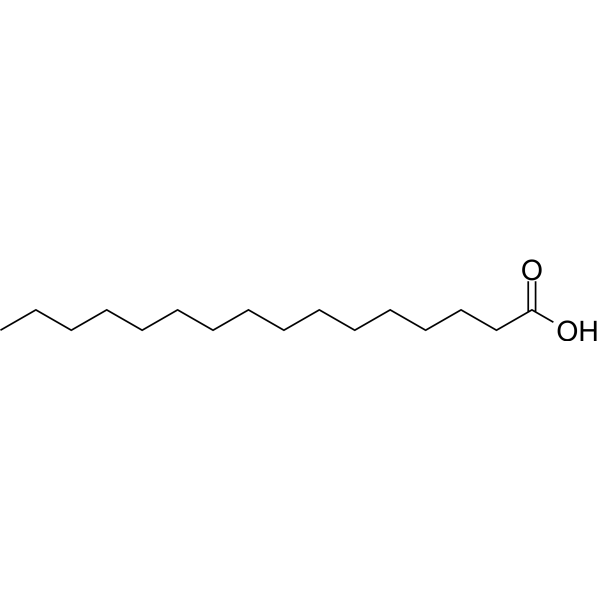
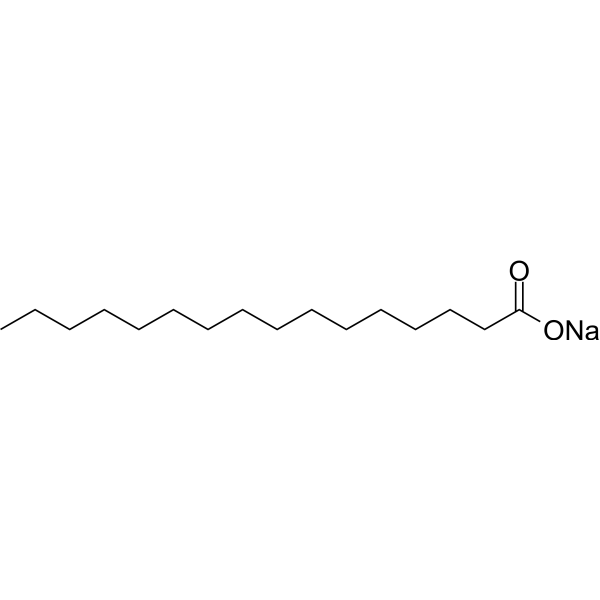
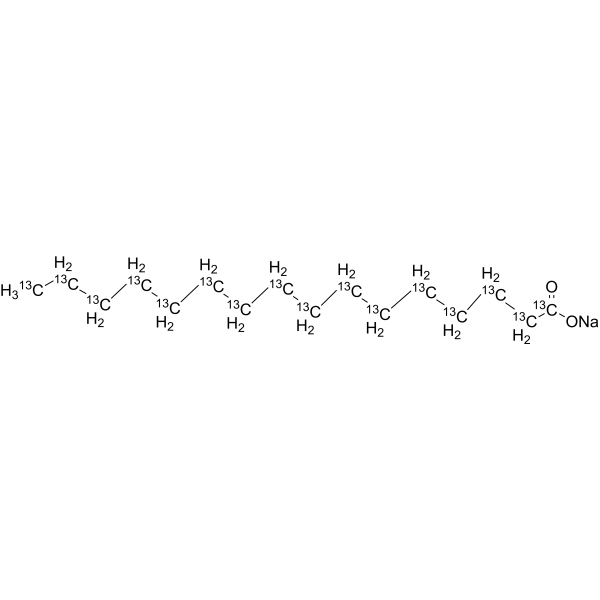
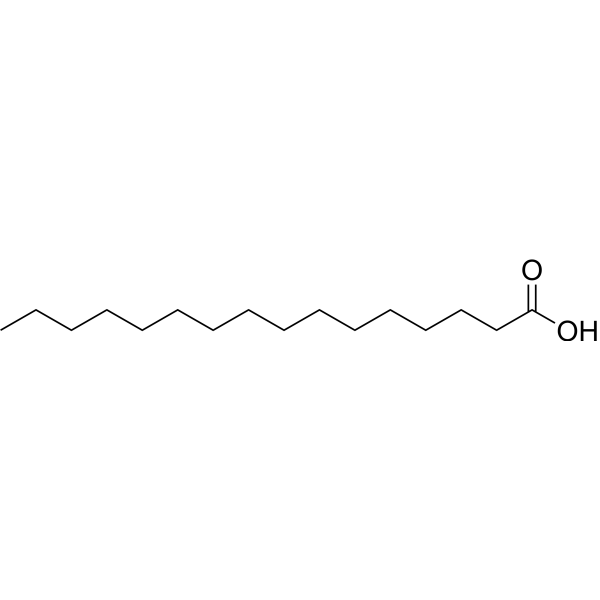
Palmitic acid sodium is a long-chain saturated fatty acid commonly found in both animals and plants. Palmitic acid sodium can induce the expression of glucose-regulated protein 78 (GRP78) and CCAAT/enhancer binding protein homologous protein (CHOP) in in mouse granulosa cells. Palmitic acid sodium is used to establish a cell steatosis model .
|
-
-
- HY-N0830S6
-
-
-
- HY-N0830S9
-
-
-
- HY-N0830S2
-
-
-
- HY-N0830S5
-
-
-
- HY-N0830R
-
-
-
- HY-N0830S3
-
|
|
HSP
|
Cardiovascular Disease
Neurological Disease
Metabolic Disease
Cancer
|
|
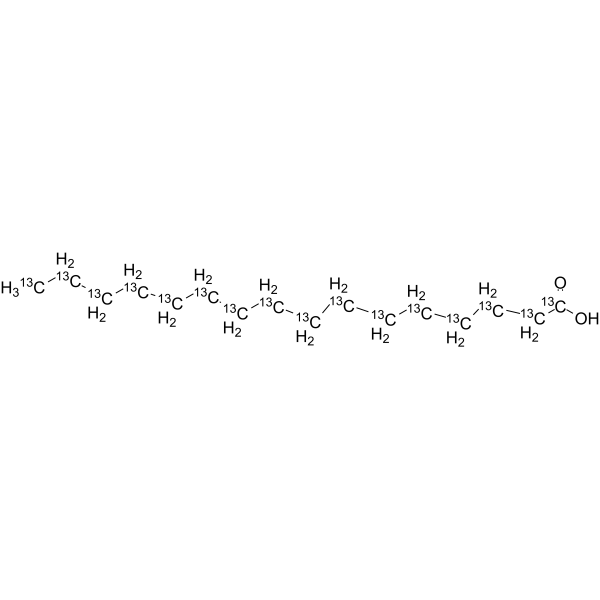
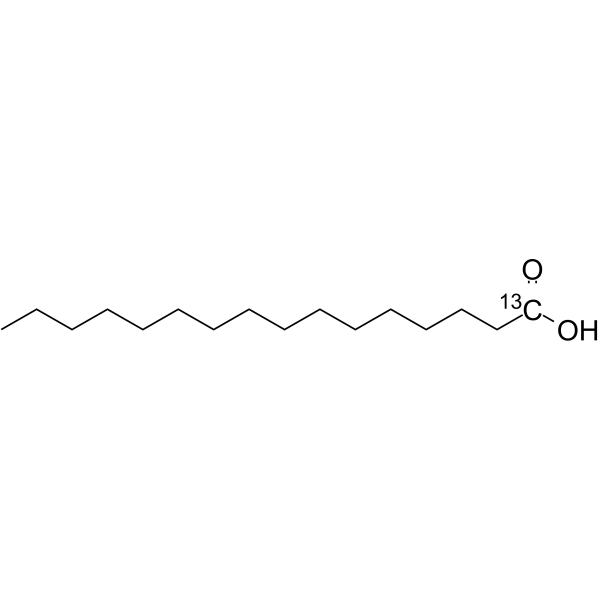
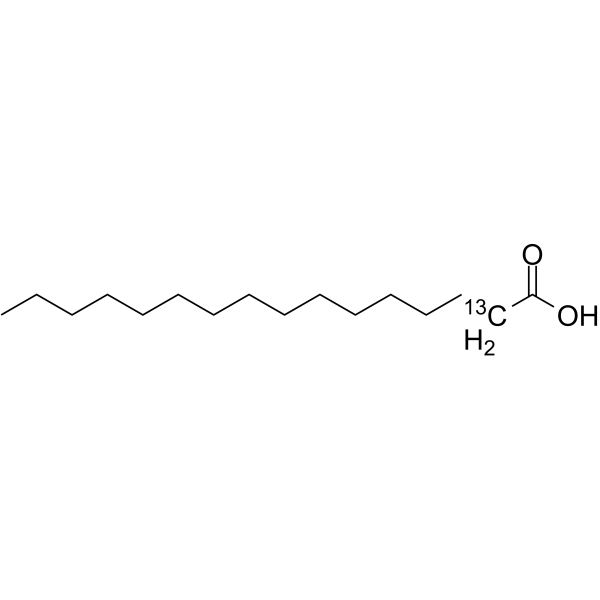
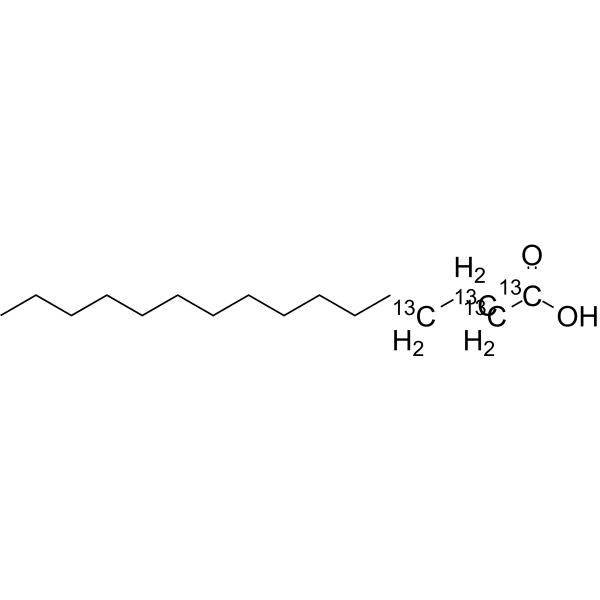
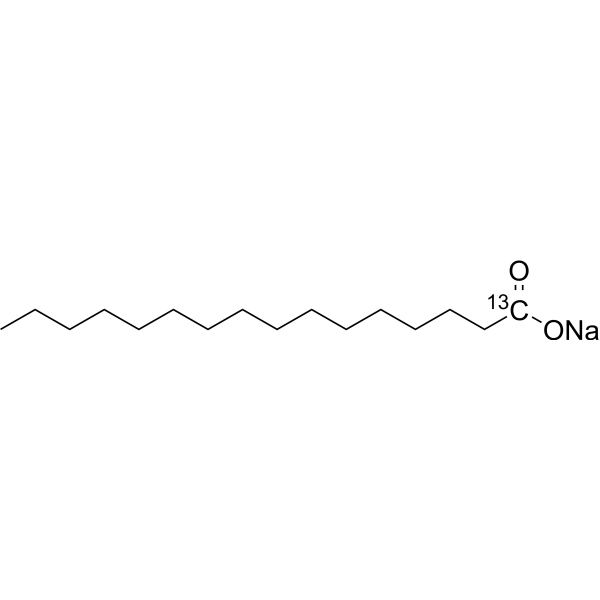
Palmitic acid-1- 13C is the 13C-labeled Palmitic acid. Palmitic acid is a long-chain saturated fatty acid commonly found in both animals and plants. Palmitic acid can induce the expression of glucose-regulated protein 78 (GRP78) and CCAAT/enhancer binding protein homologous protein (CHOP) in in mouse granulosa cells .
|
-
-
- HY-N0830S4
-
|
|
HSP
|
Cardiovascular Disease
Neurological Disease
Metabolic Disease
Cancer
|
|
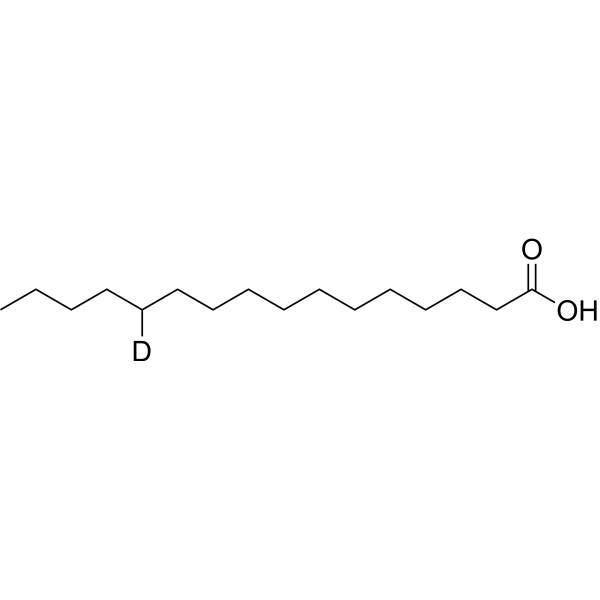
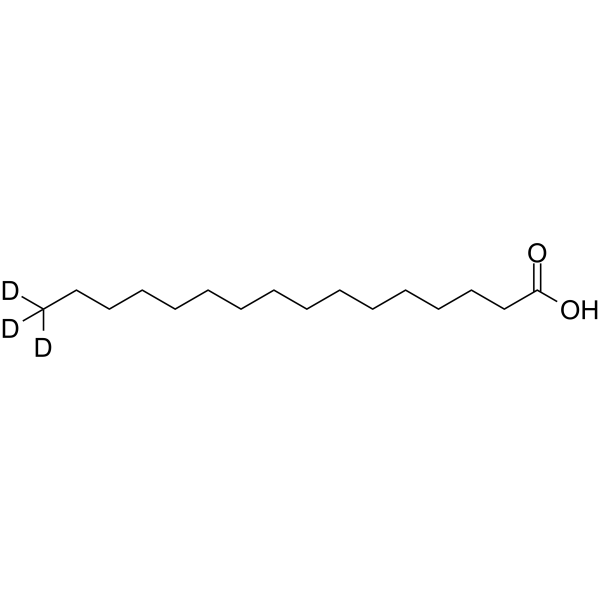
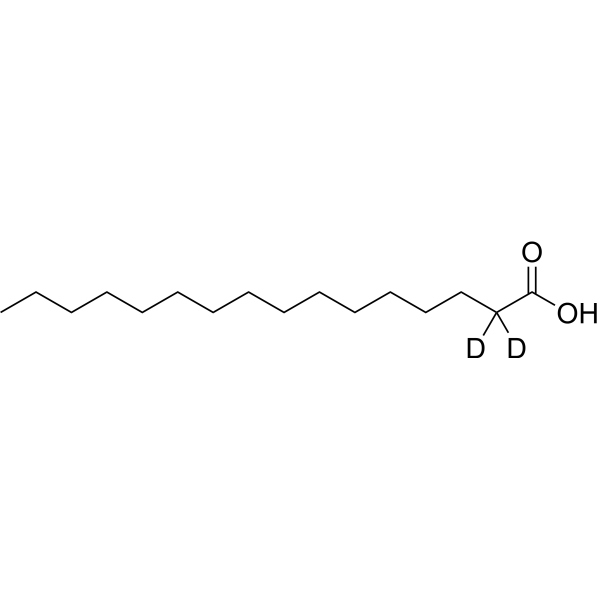
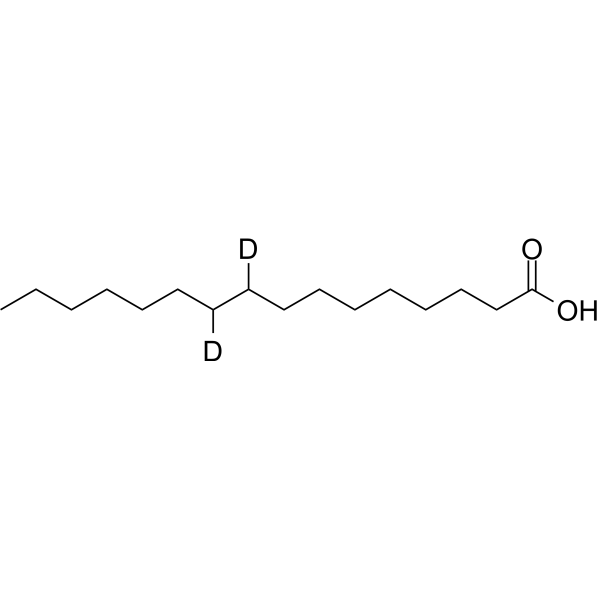
Palmitic acid-d2 is the deuterium labeled Palmitic acid. Palmitic acid is a long-chain saturated fatty acid commonly found in both animals and plants. Palmitic acid can induce the expression of glucose-regulated protein 78 (GRP78) and CCAAT/enhancer binding protein homologous protein (CHOP) in in mouse granulosa cells .
|
-
-
- HY-N0830S7
-
|
|
HSP
|
Cardiovascular Disease
Neurological Disease
Metabolic Disease
Cancer
|
|
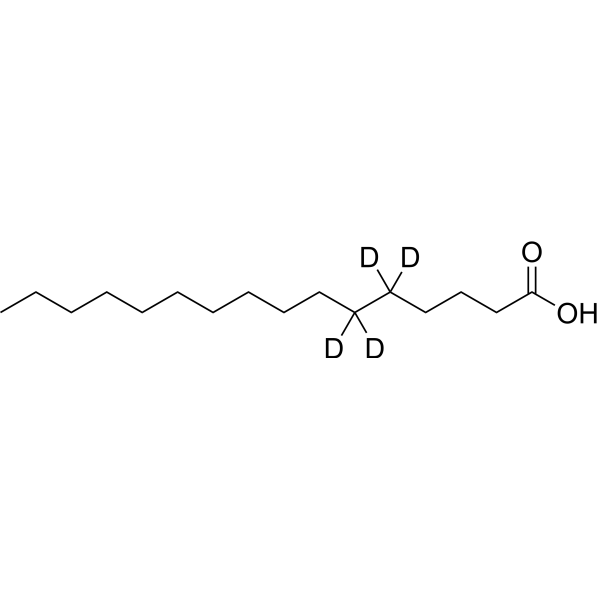
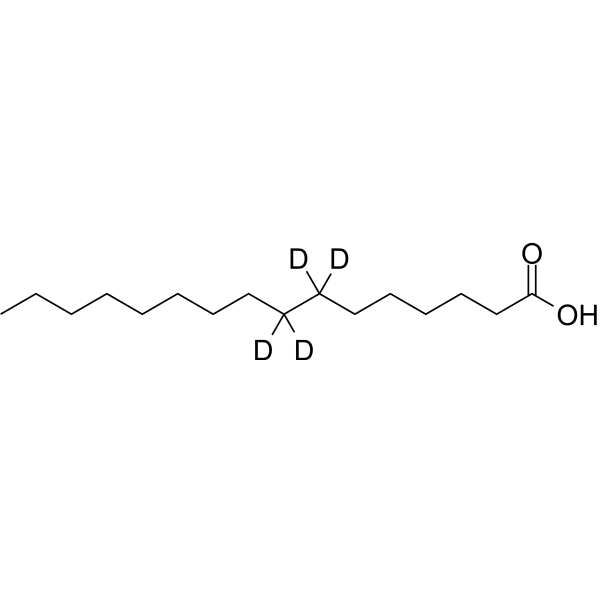
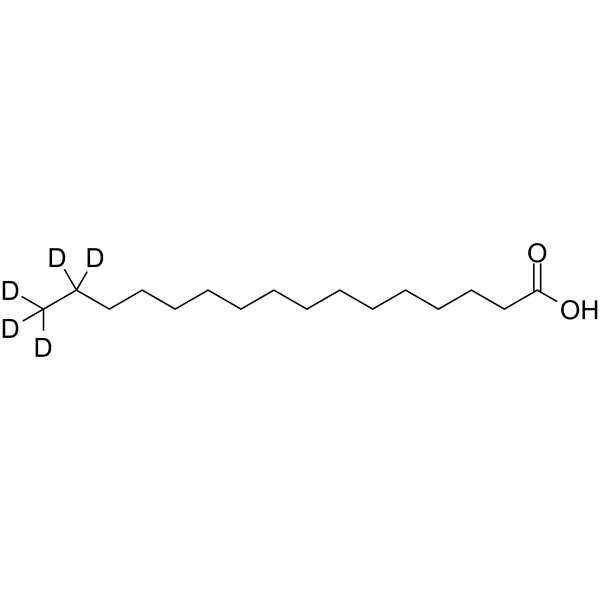
Palmitic acid-d4 is the deuterium labeled Palmitic acid. Palmitic acid is a long-chain saturated fatty acid commonly found in both animals and plants. Palmitic acid can induce the expression of glucose-regulated protein 78 (GRP78) and CCAAT/enhancer binding protein homologous protein (CHOP) in in mouse granulosa cells .
|
-
-
- HY-N0830S
-
-
-
- HY-N0830BS
-
-
-
- HY-N0830A
-
|
|
HSP
Endogenous Metabolite
|
Cardiovascular Disease
Neurological Disease
Metabolic Disease
|
|
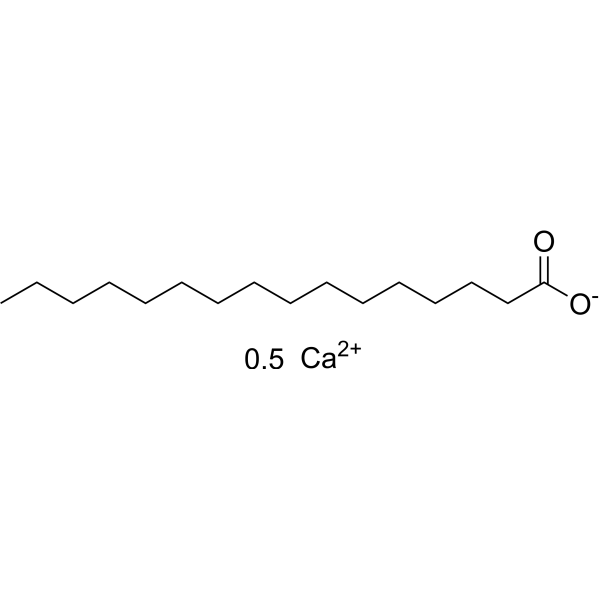
Palmitic acid calcium is a long-chain saturated fatty acid commonly found in both animals and plants. PA can induce the expression of glucose-regulated protein 78 (GRP78) and CCAAT/enhancer binding protein homologous protein (CHOP) in in mouse granulosa cells. Palmitic acid calcium is used to establish a cell steatosis model .
|
-
-
- HY-N0830S1
-
-
-
- HY-N0830S8
-
-
-
- HY-N0830BS1
-
-
-
- HY-N0830S18
-
|
|
Isotope-Labeled Compounds
HSP
Endogenous Metabolite
|
Metabolic Disease
|
|
Palmitic acid-d is the deuterium labeled Palmitic acid. Palmitic acid is a long-chain saturated fatty acid commonly found in both animals and plants. PA can induce the expression of glucose-regulated protein 78 (GRP78) and CCAAT/enhancer binding protein homologous protein (CHOP) in in mouse granulosa cells .
|
-
-
- HY-N0830S10
-
-
-
- HY-N0830S12
-
|
|
HSP
Endogenous Metabolite
|
Cancer
|
|
Palmitic acid-d4-1 is the deuterium labeled Palmitic acid. Palmitic acid is a long-chain saturated fatty acid commonly found in both animals and plants. PA can induce the expression of glucose-regulated protein 78 (GRP78) and CCAAT/enhancer binding protein homologous protein (CHOP) in in mouse granulosa cells .
|
-
-
- HY-N0830BS3
-
-
-
- HY-N0830S19
-
|
|
Isotope-Labeled Compounds
HSP
Endogenous Metabolite
|
Metabolic Disease
|
|
Palmitic acid-d2-5 is the deuterium labeled Palmitic acid. Palmitic acid is a long-chain saturated fatty acid commonly found in both animals and plants. PA can induce the expression of glucose-regulated protein 78 (GRP78) and CCAAT/enhancer binding protein homologous protein (CHOP) in in mouse granulosa cells .
|
-
-
- HY-N0830S22
-
-
-
- HY-N0830S21
-
|
|
Isotope-Labeled Compounds
HSP
Endogenous Metabolite
|
Metabolic Disease
|
|
Palmitic acid-d5 is the deuterium labeled Palmitic acid. Palmitic acid is a long-chain saturated fatty acid commonly found in both animals and plants. PA can induce the expression of glucose-regulated protein 78 (GRP78) and CCAAT/enhancer binding protein homologous protein (CHOP) in in mouse granulosa cells .
|
-
-
- HY-N0830S16
-
|
|
Isotope-Labeled Compounds
HSP
Endogenous Metabolite
|
Cancer
|
|
Palmitic acid-d2-3 is the deuterium labeled Palmitic acid. Palmitic acid is a long-chain saturated fatty acid commonly found in both animals and plants. PA can induce the expression of glucose-regulated protein 78 (GRP78) and CCAAT/enhancer binding protein homologous protein (CHOP) in in mouse granulosa cells .
|
-
-
- HY-N0830BS2
-
-
-
- HY-N0830S11
-
-
-
- HY-N0830S17
-
|
|
Isotope-Labeled Compounds
HSP
Endogenous Metabolite
|
Metabolic Disease
|
|
Palmitic acid-d2-4 is the deuterium labeled Palmitic acid. Palmitic acid is a long-chain saturated fatty acid commonly found in both animals and plants. PA can induce the expression of glucose-regulated protein 78 (GRP78) and CCAAT/enhancer binding protein homologous protein (CHOP) in in mouse granulosa cells .
|
-
-
- HY-N0830S15
-
|
|
Isotope-Labeled Compounds
HSP
Endogenous Metabolite
|
Cancer
|
|
Palmitic acid-d2-2 is the deuterium labeled Palmitic acid. Palmitic acid is a long-chain saturated fatty acid commonly found in both animals and plants. PA can induce the expression of glucose-regulated protein 78 (GRP78) and CCAAT/enhancer binding protein homologous protein (CHOP) in in mouse granulosa cells .
|
-
-
- HY-N0830S14
-
|
|
Isotope-Labeled Compounds
HSP
Endogenous Metabolite
|
Inflammation/Immunology
|
|
Palmitic acid-d17 is the deuterium labeled Palmitic acid. Palmitic acid is a long-chain saturated fatty acid commonly found in both animals and plants. PA can induce the expression of glucose-regulated protein 78 (GRP78) and CCAAT/enhancer binding protein homologous protein (CHOP) in in mouse granulosa cells .
|
-
-
- HY-N0830S13
-
|
|
Isotope-Labeled Compounds
HSP
Endogenous Metabolite
|
Metabolic Disease
|
|
Palmitic acid-d4-2 is the deuterium labeled Palmitic acid. Palmitic acid is a long-chain saturated fatty acid commonly found in both animals and plants. PA can induce the expression of glucose-regulated protein 78 (GRP78) and CCAAT/enhancer binding protein homologous protein (CHOP) in in mouse granulosa cells .
|
-
-
- HY-N0830S20
-
|
|
Isotope-Labeled Compounds
HSP
Endogenous Metabolite
|
Metabolic Disease
|
|
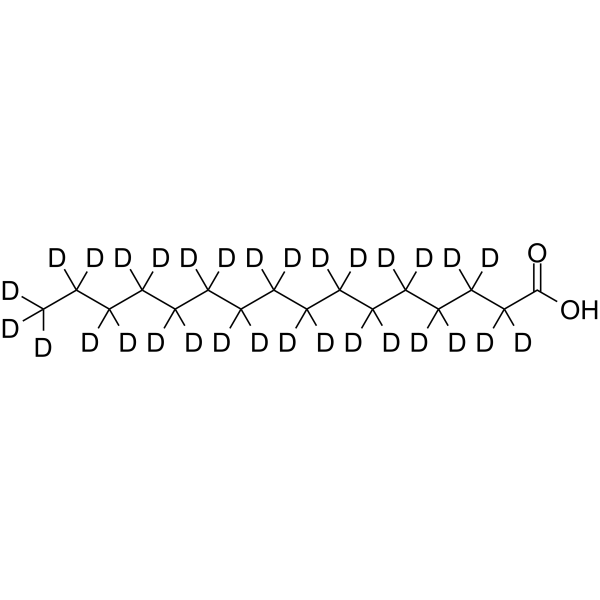
Palmitic acid-d9 is the deuterium labeled Palmitic acid. Palmitic acid is a long-chain saturated fatty acid commonly found in both animals and plants. PA can induce the expression of glucose-regulated protein 78 (GRP78) and CCAAT/enhancer binding protein homologous protein (CHOP) in in mouse granulosa cells .
|
-
-
- HY-B0075
-
-
-
- HY-D1736
-
|
|
Fluorescent Dye
|
Others
|
|
BODIPY FL-C16 is a BODIPY-labeled analog of Palmitic acid (HY-N0830), which serves as a fluorescent lipid tracer. BODIPY FL-C16 also acts as a ligand for liver fatty acid-binding protein (L-FABP) and intestinal fatty acid-binding protein (I-FABP) , with Kd values of 270 nM and 330 nM, respectively. BODIPY FL-C16 is rapidly taken up by cells, and after metabolic conversion to phospholipids, it is incorporated into the membrane structures of intracellular organelles and extracellular vesicles .
|
-
-
- HY-B0075S1
-
-
-
- HY-13467
-
AM-1638
3 Publications Verification
|
Free Fatty Acid Receptor
|
Metabolic Disease
|
|
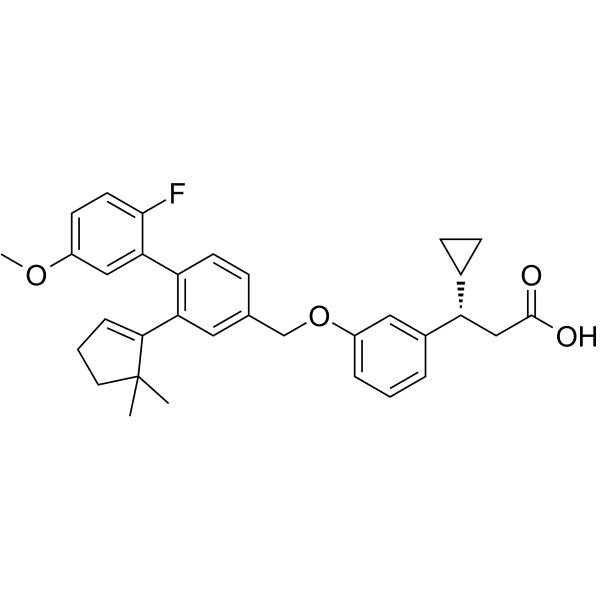
AM-1638 is an orally active full agonist of GPR40 (EC50: 0.16 μM). AM-1638 increases the expression of antioxidant molecules (HO-1 and NQO-1). AM1638 blocks Palmitate (HY-N0830)-mediated superoxide production and ER stress. AM-1638 has antidiabetic activity and improves glycemic control in BDF mice with diet-induced obesity (DIO). AM-1638 demonstrates excellent oral bioavailability (mouse, >100%; rat, 72%; and cyno, 71%) .
|
-
-
- HY-168375
-
|
|
Fluorescent Dye
|
Metabolic Disease
|
|
BODIPY-Palmitate is a fluorescently labeled palmitic acid (HY-N0830), with excitation/emission maxima at 488/508 nm. BODIPY-Palmitate can be used to detect fatty acid uptake and metabolism .
|
-
-
- HY-B1599
-
|
|
Bacterial
Antibiotic
|
Infection
|
|
Chloramphenicol palmitate is an orally active prodrug of Chloramphenicol (HY-B0239), obtained from the esterification reaction between the agent and Palmitic acid (HY-N0830). Chloramphenicol palmitate is rapidly and completely hydrolyzed by intestinal esterase, releasing Chloramphenicol. Chloramphenicol is an orally effective broad-spectrum antibiotic .
|
-
-
- HY-B0075R
-
|
N-Acetyl-5-methoxytryptamine (standard); Melatonin
|
Reference Standards
Melatonin Receptor
Autophagy
Mitophagy
Endogenous Metabolite
Apoptosis
|
Neurological Disease
Inflammation/Immunology
Cancer
|
|
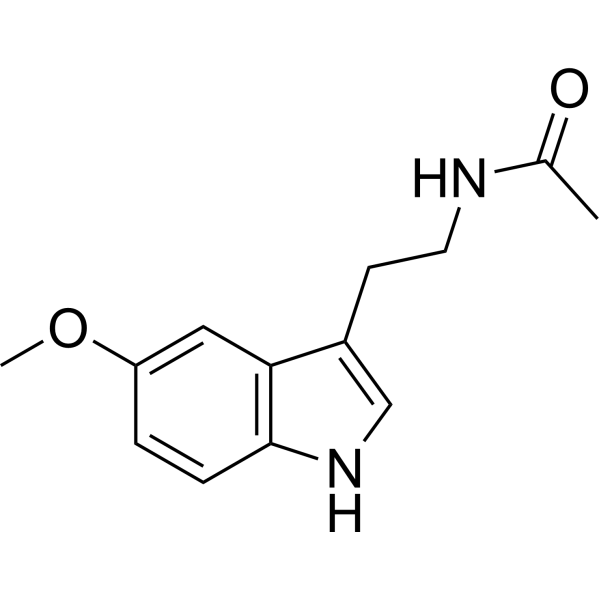
Melatonin (Standard) is the analytical standard of Melatonin. This product is intended for research and analytical applications. Melatonin is a hormone made by the pineal gland that can activates melatonin receptor. Melatonin plays a role in sleep and possesses important antioxidative and anti-inflammatory properties . Melatonin is a novel selective ATF-6 inhibitor and induces human hepatoma cell apoptosis through COX-2 downregulation . Melatonin attenuates palmitic acid-induced (HY-N0830) mouse granulosa cells apoptosis via endoplasmic reticulum stress .
|
-
-
- HY-148009
-
|
16:0-18:1 Cardiolipin sodium
|
Biochemical Assay Reagents
|
Others
|
|
Cardiolipin (16:0/18:1/16:0/18:1) (16:0-18:1 Cardiolipin) sodium is a di-saturated mitochondrial-specific anionic phospholipid sodium salt containing the long-chain fatty acid palmitic acid (HY-N0830) and the monounsaturated fatty acid oleic acid (HY-N1446). Cardiolipin (16:0/18:1/16:0/18:1) sodium undergoes in-source fragmentation via diglyceride (DG)-H2O fragment formation and (DG-H2O) fragment loss pathways. Cardiolipin (16:0/18:1/16:0/18:1) sodium can be used in the synthesis of lipid nanodiscs for application in in situ mass spectrometry .
|
-
-
- HY-B0075S2
-
-
-
- HY-169794
-
|
|
DNA/RNA Synthesis
|
Others
|
|
N-Palmitoyl-phenylalanine is an N-acyl amide that contains the long-chain saturated fatty acid Palmitic acid (HY-N0830) conjugated via an amide bond to the essential amino acid L-Phenylalanine (HY-N0215). N-Palmitoyl-phenylalanine inhibits pre-mRNA splicing in HeLa cell nuclear lysates (IC50 > 400 μM) but has no splicing activity in intact HeLa cells .
|
-
-
- HY-161321
-
|
|
Phosphatase
Insulin Receptor
Akt
|
Metabolic Disease
|
|
PTP1B-IN-24 (Compound 9) is a reversible PTP1B inhibitor with an IC50 value of 1.4 μM, and PTP1B-IN-24 can enhance the thermal stability of PTP1B. PTP1B-IN-24 can restore PA- (HY-N0830) induced insulin resistance by increasing the phosphorylation levels of IRS1 and AKT .
|
-
-
- HY-115707
-
|
16:0/0:0/18:3-DG; DG(16:0/0:0/18:3); 1-Palmitin-3-Linolenin
|
Others
|
Others
|
|
1-Palmitoyl-3-Linolenoyl-rac-glycerol (16:0/0:0/18:3-DG) is a diacylglycerol containing palmitic acid (HY-N0830) and α-linolenic acid (HY-N0728) at the sn-1 and sn-3 positions, respectively. It has been found in the peel and pulp of unripe Dwarf Cavendish bananas.
|
-
-
- HY-N15884
-
-
-
- HY-N15888
-
|
|
Fluorescent Dye
|
Others
|
|
Palmitic acid-lissamine rhodamine is a lissamine rhodamine-labeled Palmitic acid (HY-N0830).
|
-
-
- HY-N7399
-
|
|
Environmental Pollutants
|
Others
|
|
Dipalmitin is an active product that can be extracted from root tuber of Typhonium giganteum Engl. Dipalmitin is a diacylglycerol that contains the saturated 16-carbon fatty acid Palmitic acid (HY-N0830) at two positions .
|
-
-
- HY-W710399
-
|
DG(16:0/0:0/18:0); 1-Palmitin-3-Stearin
|
Endogenous Metabolite
|
Metabolic Disease
|
|
1-Palmitoyl-3-stearoyl-rac-glycerol is a diacylglycerol that contains palmitic acid (HY-N0830) at the sn-1 position and stearic acid (HY-B2219) at the sn-3 position. It has been found in palm-based diacylglycerols produced from palm stearin, palm mid fraction, palm oil, and palm olein, as well as in wheat bran and brewer’s spent grain extracts.
|
-
-
- HY-W740434
-
-
-
- HY-170641
-
-
-
- HY-170631
-
|
|
Biochemical Assay Reagents
|
Metabolic Disease
|
|
1,2-Dielaidoyl-3-palmitoyl-rac-glycerol is a triacylglycerol that contains Elaidic acid (HY-113016) in the sn-1 and sn-2 positions and Palmitic acid (HY-N0830) in the sn-3 position.
|
-
- HY-168386
-
|
|
Endogenous Metabolite
|
Others
|
|
1,2-Dipalmitoyl-3-Myristoyl-rac-glycerol is a triacylglycerol in which palmitic acid (HY-N0830) is located at the sn-1 and sn-2 positions, and myristic acid (HY-N2041) is at the sn-3 position. It can be found in bovine milk fat .
|
-
- HY-168639
-
|
|
Mitochondrial Metabolism
AMPK
|
Metabolic Disease
|
|
AP39 prodrug 1 (Compound M1) is a mitochondria-targeted H2S prodrug. AP39 prodrug 1 induces ROS-dependent mild mitochondrial uncoupling, activating mitochondria-associated AMPK to suppress Palmitic acid (PA) (HY-N0830)-induced lipid deposition in hepatocytes .
|
-
- HY-168391
-
|
|
Biochemical Assay Reagents
|
Others
|
|
1-Lauroyl-2-oleoyl-3-palmitoyl-rac-glycerol is a triacylglycerol with Lauric acid (HY-Y0366), Oleic acid (HY-N1446), and Palmitic acid (HY-N0830) at the sn-1, sn-2 and sn-3 positions, respectively .
|
-
- HY-157741
-
|
|
Lipase
|
Others
|
|
1-Myristoyl-2-oleoyl-3-palmitoyl-rac-glycerol (MOP) is a triacylglycerol containing myristic acid (HY-N2041), oleic acid (HY-N1446) and palmitic acid (HY-N0830) at the sn-1, sn-2 and sn-3 positions, respectively .
|
-
- HY-W879031
-
|
|
Biochemical Assay Reagents
|
Others
|
|
Endo-BCN-PEG4-Palmitic is a PEG derivative containing an endo-BCN cycloalkyne structure, a tetraethylene glycol (PEG4) linker, and a Palmitic acid (HY-N0830) fatty acid group. Endo-BCN-PEG4-Palmitic can be used for drug delivery, surface modification, and click chemistry reactions .
|
-
- HY-158948
-
|
1-Palmitin-2-vaccenate-3-butyrin; 1-Palmitoyl-2-cis-vaccenoyl-3-butyroyl-rac-glycerol; TG(16:0/18:1(11Z)/4:0)
|
Biochemical Assay Reagents
|
Metabolic Disease
|
|
1-Palmitoyl-2-11(Z)-octadecenoyl-3-butyroyl-rac-glycerol (1-Palmitin-2-vaccenate-3-butyrin) is a triacylglycerol that contains Palmitic acid (HY-N0830), cis-Vaccenic acid (HY-113427A), and Butyric acid (HY-B0350).
|
-
- HY-168780
-
|
|
Endogenous Metabolite
|
Others
|
|
1-Palmitoyl-2-arachidoyl-3-oleoyl-rac-glycerol is a triacylglycerol. 1-Palmitoyl-2-arachidoyl-3-oleoyl-rac-glycerol contains Palmitic acid (HY-N0830), Arachidonic acid (HY-109590), and Oleic acid (HY-N1446) at sn-1, sn-2, and sn-3 locations, respectively .
|
-
- HY-B1599R
-
|
|
Reference Standards
Bacterial
Antibiotic
|
Infection
|
|
Chloramphenicol palmitate (Standard) is the analytical standard of Chloramphenicol palmitate (HY-B1599). This product is intended for research and analytical applications. Chloramphenicol palmitate is an orally active prodrug of Chloramphenicol (HY-B0239), obtained from the esterification reaction between the agent and Palmitic acid (HY-N0830). Chloramphenicol palmitate is rapidly and completely hydrolyzed by intestinal esterase, releasing Chloramphenicol. Chloramphenicol is an orally effective broad-spectrum antibiotic .
|
-
- HY-168393
-
|
1,3-Palmitin-2-stearin
|
Endogenous Metabolite
|
Metabolic Disease
|
|
1,3-Dipalmitoyl-2-stearoyl glycerol (1,3-Palmitin-2-stearin) is a triacylglycerol in which palmitic acid (HY-N0830) is located at the sn-1 and sn-3 positions, and stearic acid (HY-B2219) is at the sn-2 position. The levels of 1,3-Dipalmitoyl-2-stearoyl glycerol are associated with energy depletion caused by reduced food intake in rats .
|
-
- HY-168394
-
|
1,2-Palmitin-3-stearin
|
Endogenous Metabolite
|
Others
|
|
1,2-Dipalmitoyl-3-stearoyl-rac-glycerol (1,2-Palmitin-3-stearin) is a triacylglycerol found in ostrich and emu oils as well as cow milk fat. The sn-1 and sn-2 positions of 1,2-Dipalmitoyl-3-stearoyl-rac-glycerol contain palmitic acid (HY-N0830), and the sn-3 position contains stearic acid (HY-B2219) .
|
-
- HY-113027R
-
|
|
Reference Standards
Endogenous Metabolite
|
Others
|
|
Melatonin (Standard) is the analytical standard of Melatonin. This product is intended for research and analytical applications. Melatonin is a hormone made by the pineal gland that can activates melatonin receptor. Melatonin plays a role in sleep and possesses important antioxidative and anti-inflammatory properties . Melatonin is a novel selective ATF-6 inhibitor and induces human hepatoma cell apoptosis through COX-2 downregulation . Melatonin attenuates palmitic acid-induced (HY-N0830) mouse granulosa cells apoptosis via endoplasmic reticulum stress .
|
-
- HY-145540
-
|
1,2-Palmitin-3-caprylin
|
Biochemical Assay Reagents
|
Metabolic Disease
|
|
1,2-Dipalmitoyl-3-Octanoyl-rac-glycerol is a triacylglycerol containing palmitic acid (HY-N0830) at the sn-1 and sn-2 positions and octanoic acid (HY-41417) at the sn-3 position. Palmitic acid is a long-chain saturated fatty acid commonly found in both animals and plants. PA can induce the expression of glucose-regulated protein 78 (GRP78) and CCAAT/enhancer binding protein homologous protein (CHOP) in in mouse granulosa cells. Octanoic acid is an oily liquid with a slightly unpleasant rancid taste and used commercially in the production of esters used in perfumery and also in the manufacture of dyes. Octanoic acid is also a tremor-suppressing agent .
|
-
- HY-168371
-
|
|
Scavenger Receptor Class B type I (SR-BI)
|
Metabolic Disease
|
|
1-Palmitoyl-2-13(S)-HODE-sn-glycero-3-PC (13-HODE-PC) is an oxidized phospholipid that contains Palmitic acid (HY-N0830) and 13(S)-HODE (HY-113884B) at the sn-1 and sn-2 positions, respectively. 1-Palmitoyl-2-13(S)-HODE-sn-glycero-3-PC has the ability to compete for the binding of 125I-NO2-LDL (5 g/mL) to CD36-transfected 293 cells, with the IC50 of > 200 μM .
|
-
- HY-145504
-
|
1,2-Palmitin-3-Linoelaidin
|
Biochemical Assay Reagents
|
Metabolic Disease
|
|
12-Dipalmitoyl-3-Linoelaidoyl-rac-glycerol is a triacylglycerol containing palmitic acid (HY-N0830) at the sn-1 and sn-2 positions and linoelaidic acid (HY-W071746) at the sn-3 position. Palmitic acid is a long-chain saturated fatty acid commonly found in both animals and plants. Palmitic acid can induce the expression of glucose-regulated protein 78 (GRP78) and CCAAT/enhancer binding protein homologous protein (CHOP) in in mouse granulosa cells. Linolelaidic acid, an omega-6 trans fatty acid, acts as a source of energy. Linolelaidic acid is an essential nutrient, adding in enteral, parenteral, and infant formulas. Linolelaidic acid can be used for heart diseases research .
|
-
- HY-N16465
-
|
|
Apoptosis
Reactive Oxygen Species (ROS)
STAT
|
Inflammation/Immunology
|
|
Cinnamtannin D1 is an orally active polyphenolic compound with immunosuppressive activity. Cinnamtannin D1 regulates the balance of Th17/Treg cells by inhibiting AHR expression. Cinnamtannin D1 reduces apoptosis and ROS in INS-1 cells and primary cultured murine islets induced by Palmitic acid (PA) (HY-N0830). Cinnamtannin D1 reduces Th17 cell differentiation via downregulating p-STAT3/RORγt and promotes Treg cell differentiation via upregulating p-STAT5/Foxp3. Cinnamtannin D1 exerts excellent anti-arthritic efficacy in collagen-induced arthritis (CIA) model of mice. Cinnamtannin D1 can be used for the study of rheumatoid arthritis (RA) .
|
-
- HY-170626
-
-
- HY-W585948
-
-
- HY-W699369
-
-
- HY-179548
-
|
|
Drug Derivative
|
Others
|
|
Photoclick palmitic acid is a derivative of the long-chain saturated fatty acid palmitic acid (HY-N0830). The photoclick-type long-chain saturated fatty acid has been used as a probe for studying protein lipidation .
|
-
- HY-170635
-
|
|
Biochemical Assay Reagents
|
Metabolic Disease
|
|
1-Palmitoyl-3-arachidoyl-rac-glycerol is a diacylglycerol that contains Palmitic acid (HY-N0830) at the sn-1 position and Arachidic acid (HY-W004260) at the sn-3 position
|
-
- HY-165006
-
-
- HY-170625
-
-
- HY-175110
-
|
|
Drug Derivative
|
Others
|
|
1,3-Dipalmitoyl-2-arachidonoyl-sn-glycerol is a triacylglycerol containing Palmitic acid (HY-N0830) at the sn-1 and sn-3 positions and Arachidonic acid (HY-109590) at the sn-2 position.
|
-
- HY-168796
-
|
|
Biochemical Assay Reagents
|
Metabolic Disease
|
|
1-Palmitoyl-2-13(S)-HpODE-sn-glycero-3-PC is a phospholipid that contains Palmitic acid (HY-N0830) and 13(S)-HpODE (HY-110406) at the sn-1 and sn-2 positions, respectively.
|
-
- HY-158964
-
|
1-Palmitin-2-olein-3-linolenin; TG(16:0/18:1/18:3)
|
Biochemical Assay Reagents
|
Metabolic Disease
|
|
1-Palmitoyl-2-oleoyl-3-linolenoyl-rac-glycerol (1-Palmitin-2-olein-3-linolenin) is a triacylglycerol that contains Palmitic acid (HY-N0830), Oleic acid (HY-N1446), and α-Linolenic acid (HY-N0728).
|
-
- HY-W770204
-
-
- HY-158949
-
|
1-Palmitolein-2-(11Z)-octadecenoin-3-olein; 1-Palmitoyl-2-cis-vaccenoyl-3-oleoyl-rac-glycerol; TG(16:0/18:1(11Z)/18:1(9Z))
|
Biochemical Assay Reagents
|
Metabolic Disease
|
|
1-Palmitoyl-2-11(Z)-octadecenoyl-3-oleoyl-rac-glycerol (1-Palmitolein-2-(11Z)-octadecenoin-3-olein) is a triacylglycerol that contains Palmitic acid (HY-N0830), cis-Vaccenic acid (HY-113427A), and Oleic acid (HY-N1446).
|
-
- HY-W704597
-
|
1-Palmitin-2-Olein-3-Stearin; TG(16:0/18:1/18:0)
|
Endogenous Metabolite
|
Metabolic Disease
|
|
1-Palmitoyl-2-oleoyl-3-stearoyl-rac-glycerol is a triacylglycerol that contains palmitic acid (HY-N0830) at the sn-1 position, oleic acid (HY-N1446) at the sn-2 position, and stearic acid (HY-B2219) at the sn-3 position. It is one of the primary triacylglycerols found in cocoa butter.
|
-
- HY-170623
-
|
|
Biochemical Assay Reagents
|
Metabolic Disease
|
|
1-Palmitoyl-2-stearoyl-3-butyryl-rac-glycerol is a triacylglycerol containing Palmitic acid (HY-N0830), Stearic acid (HY-B2219), and Butyric acid (HY-B0350) at the sn-1, sn-2, and sn-3 positions, respectively. It has been used to determine the stereospecificity and typoselectivity of lipases.1
|
-
- HY-W710440
-
|
1,2-Stearin-3-palmitin; TG(18:0/18:0/16:0)
|
Endogenous Metabolite
|
Others
|
|
1,2-Distearoyl-3-palmitoyl-rac-glycerol is a triglyceride found in cocoa butter, lard, and cod liver oil. 1,2-Distearoyl-3-palmitoyl-rac-glycerol is formed by combining the glycerol skeleton with Stearic acid (HY-B2219) (sn-1 and sn-2 positions) and Palmitic acid (sn-3 positions) (HY-N0830) .
|
-
- HY-W010667
-
|
1,3-Dipalmitoyl-2-oleoylglycerol; ?1,3-Palmitin-2-Olein; TG(16:0/18:1/16:0)
|
Endogenous Metabolite
|
Metabolic Disease
|
|
1,3-Dipalmitoyl-2-oleoyl glycerol (1,3-Palmitin-2-Olein; TG(16:0/18:1/16:0)) is a triacylglycerol that contains palmitic acid (HY-N0830) at the sn-1 and sn-3 positions and oleic acid (HY-N1446) at the sn-2 position. It has been found in cocoa butter, Chinese tallow butter, and the palm stearin fraction of palm oil.
|
-
- HY-DY1102
-
|
|
Fluorescent Dye
|
Others
|
BODIPY FL-C16 (solution) is a BODIPY-labeled analog of Palmitic acid (HY-N0830), which serves as a fluorescent lipid tracer. BODIPY FL-C16 (solution) also acts as a ligand for liver fatty acid-binding protein (L-FABP) and intestinal fatty acid-binding protein (I-FABP) , with Kd values of 270 nM and 330 nM, respectively. BODIPY FL-C16 (solution) is rapidly taken up by cells, and after metabolic conversion to phospholipids, it is incorporated into the membrane structures of intracellular organelles and extracellular vesicles . Solvent and concentration: DMSO: 5 mM
|
-
| Cat. No. |
Product Name |
Type |
-
- HY-D1736
-
|
|
Fluorescent Dyes
|
|
BODIPY FL-C16 is a BODIPY-labeled analog of Palmitic acid (HY-N0830), which serves as a fluorescent lipid tracer. BODIPY FL-C16 also acts as a ligand for liver fatty acid-binding protein (L-FABP) and intestinal fatty acid-binding protein (I-FABP) , with Kd values of 270 nM and 330 nM, respectively. BODIPY FL-C16 is rapidly taken up by cells, and after metabolic conversion to phospholipids, it is incorporated into the membrane structures of intracellular organelles and extracellular vesicles .
|
-
- HY-DY1102
-
|
|
Fluorescent Dyes
|
BODIPY FL-C16 (solution) is a BODIPY-labeled analog of Palmitic acid (HY-N0830), which serves as a fluorescent lipid tracer. BODIPY FL-C16 (solution) also acts as a ligand for liver fatty acid-binding protein (L-FABP) and intestinal fatty acid-binding protein (I-FABP) , with Kd values of 270 nM and 330 nM, respectively. BODIPY FL-C16 (solution) is rapidly taken up by cells, and after metabolic conversion to phospholipids, it is incorporated into the membrane structures of intracellular organelles and extracellular vesicles . Solvent and concentration: DMSO: 5 mM
|
| Cat. No. |
Product Name |
Type |
-
- HY-N0830B
-
|
|
Biochemical Assay Reagents
|
|
Palmitic acid sodium is a long-chain saturated fatty acid commonly found in both animals and plants. Palmitic acid sodium can induce the expression of glucose-regulated protein 78 (GRP78) and CCAAT/enhancer binding protein homologous protein (CHOP) in in mouse granulosa cells. Palmitic acid sodium is used to establish a cell steatosis model .
|
-
- HY-W740434
-
-
- HY-W879031
-
|
|
Biochemical Assay Reagents
|
|
Endo-BCN-PEG4-Palmitic is a PEG derivative containing an endo-BCN cycloalkyne structure, a tetraethylene glycol (PEG4) linker, and a Palmitic acid (HY-N0830) fatty acid group. Endo-BCN-PEG4-Palmitic can be used for drug delivery, surface modification, and click chemistry reactions .
|
-
- HY-W585948
-
|
|
Biochemical Assay Reagents
|
|
1-Palmitoyl-2-oleoyl-rac-glycerol is a diacylglycerol containing Palmitic acid (HY-N0830) and Oleic acid (HY-N1446).
|
-
- HY-W699369
-
|
|
Biochemical Assay Reagents
|
|
1-Palmitoyl-3-O-benzyl-rac-glycerol is a diacylglycerol that contains Palmitic acid (HY-N0830) and Oleic acid (HY-N1446).
|
| Cat. No. |
Product Name |
Category |
Target |
Chemical Structure |
| Cat. No. |
Product Name |
Chemical Structure |
| Cat. No. |
Product Name |
|
Classification |
-
- HY-148009
-
|
16:0-18:1 Cardiolipin sodium
|
|
Phospholipids
|
|
Cardiolipin (16:0/18:1/16:0/18:1) (16:0-18:1 Cardiolipin) sodium is a di-saturated mitochondrial-specific anionic phospholipid sodium salt containing the long-chain fatty acid palmitic acid (HY-N0830) and the monounsaturated fatty acid oleic acid (HY-N1446). Cardiolipin (16:0/18:1/16:0/18:1) sodium undergoes in-source fragmentation via diglyceride (DG)-H2O fragment formation and (DG-H2O) fragment loss pathways. Cardiolipin (16:0/18:1/16:0/18:1) sodium can be used in the synthesis of lipid nanodiscs for application in in situ mass spectrometry .
|
-
- HY-169794
-
|
|
|
Cationic Lipids
|
|
N-Palmitoyl-phenylalanine is an N-acyl amide that contains the long-chain saturated fatty acid Palmitic acid (HY-N0830) conjugated via an amide bond to the essential amino acid L-Phenylalanine (HY-N0215). N-Palmitoyl-phenylalanine inhibits pre-mRNA splicing in HeLa cell nuclear lysates (IC50 > 400 μM) but has no splicing activity in intact HeLa cells .
|
Your information is safe with us. * Required Fields.
Inquiry Information
- Product Name:
- Cat. No.:
- Quantity:
- MCE Japan Authorized Agent:

