



Palmitic acid-13C16
Based on 3 publication(s) in Google Scholar
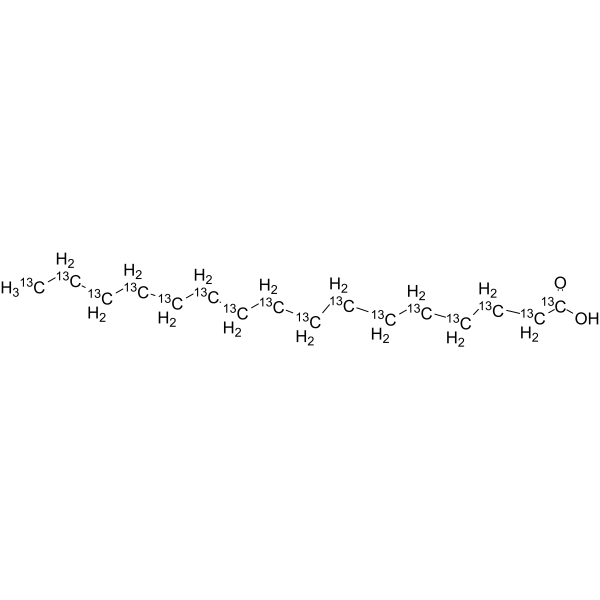
Palmitic acid-13C16 is the 13C-labeled Palmitic acid. Palmitic acid is a long-chain saturated fatty acid commonly found in both animals and plants. PA can induce the expression of glucose-regulated protein 78 (GRP78) and CCAAT/enhancer binding protein homologous protein (CHOP) in in mouse granulosa cells.
For research use only. We do not sell to patients.
- Purity : 99.72%
- CAS No.: 56599-85-0
- Formula: 13C16H32O2
- Molecular Weight:272.31
-
Storage:Powder -20°C, 3 years , 4°C, 2 years ; In solvent -80°C, 6 months , -20°C, 1 month

To place orders, for customer services and technical support, please contact: MedChemExpress USA
Tel: 609-228-6898 E-mail: [email protected] [email protected]


-
 Biological Activity
-
Chemical Information
-
Solvent & Solubility
- Protocols
- Purity & Documentation
- References
-
 Help & FAQs


-
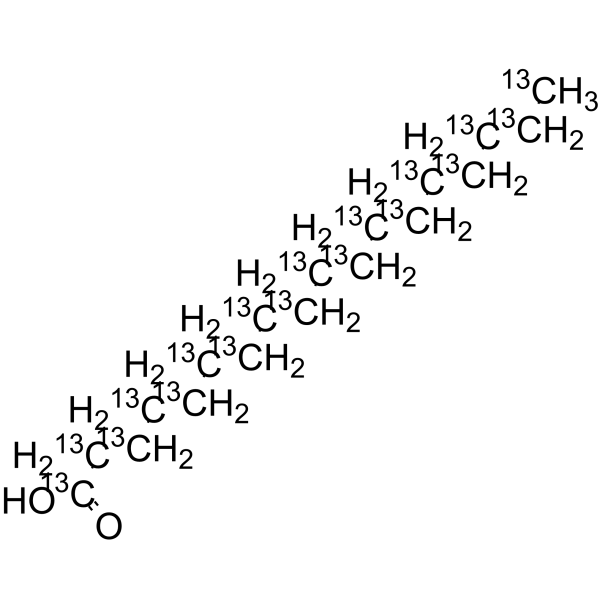
HY-B2219S2
Stearic acid-13C18Stable Isotope -
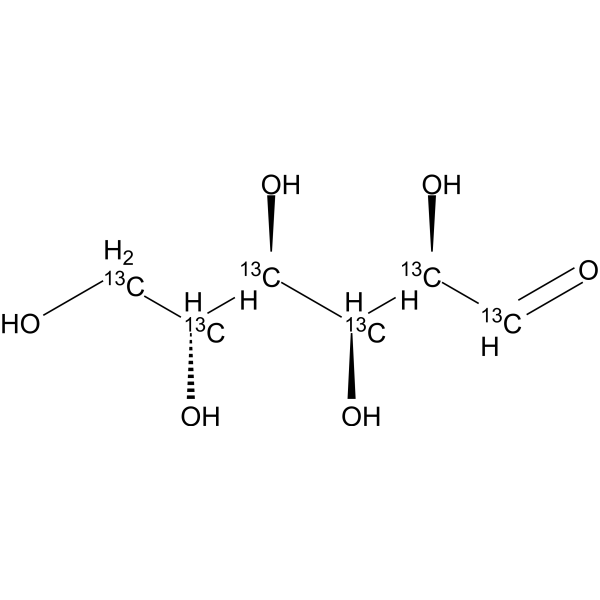
HY-B0389A
D-Glucose-13C6Endogenous Metabolite -
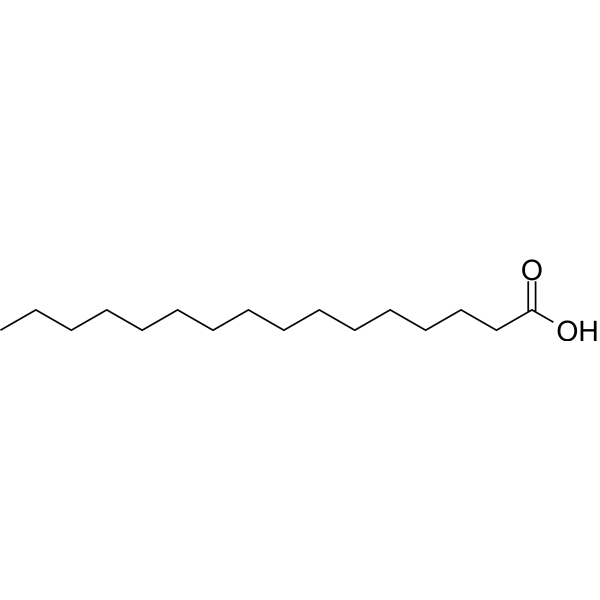
HY-N0830
Palmitic acidEndogenous Metabolite -
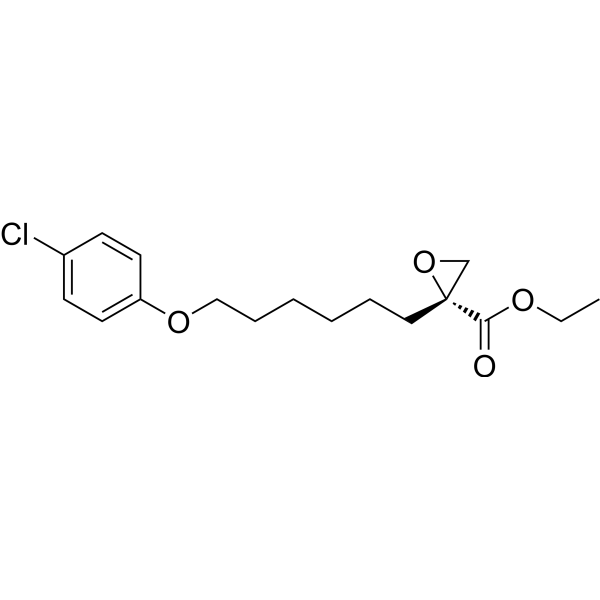
HY-50202
EtomoxirCPT1a Inhibitor -

HY-D0842A
BSA Protein (Low Endotoxin,Fatty acid free)Oligonucleotide-binding Protein -
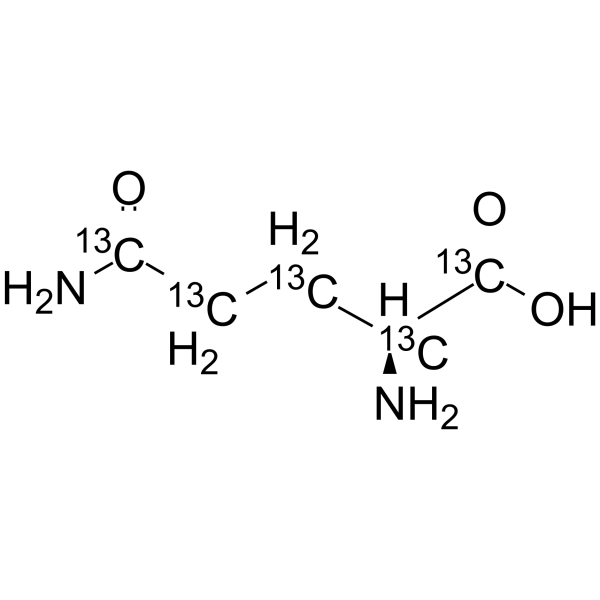
HY-N0390S1
L-Glutamine-13C5Stable Isotope -
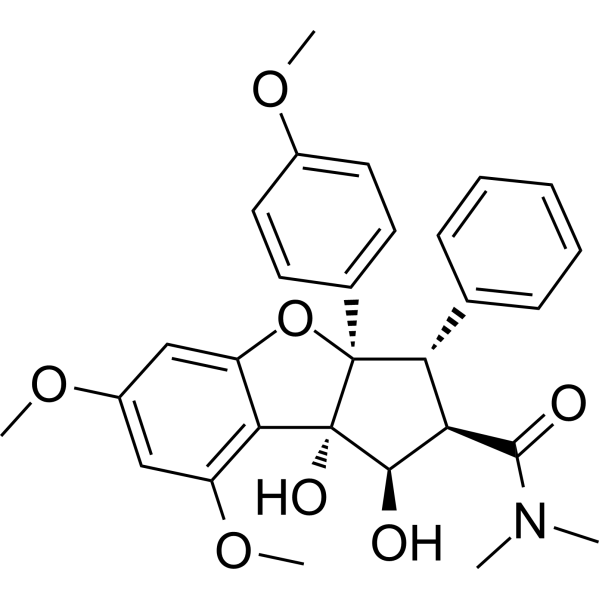
HY-19356
RocaglamideNF-κB Inhibitor -
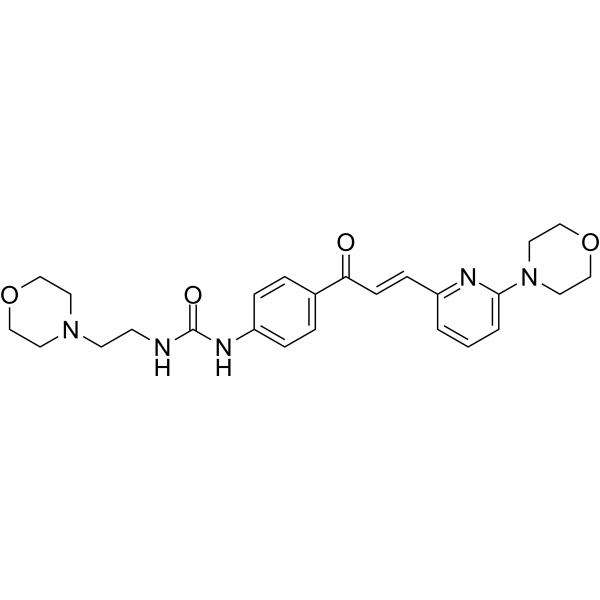
HY-101712
TRC051384HSP70 Inducer -
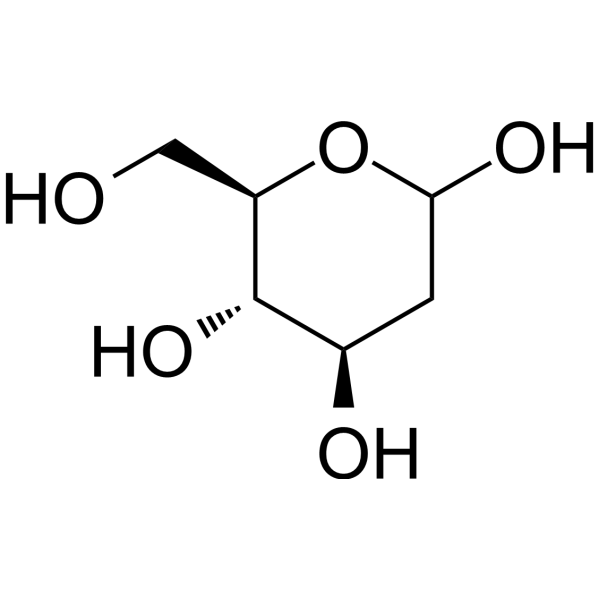
HY-13966
2-Deoxy-D-glucoseGlycolysis Inhibitor -
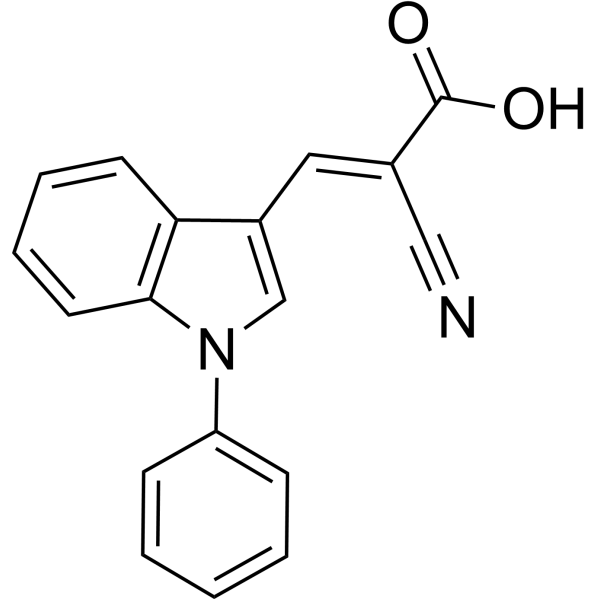
HY-15475
UK-5099Mitochondrial Pyruvate Carrier Inhibitor -
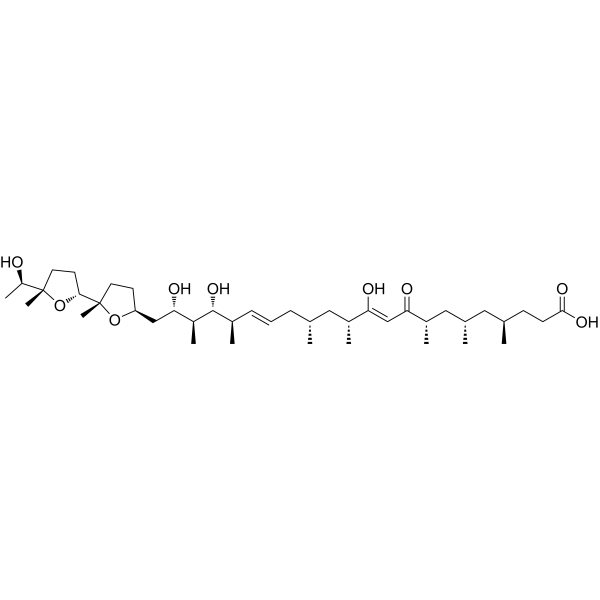
HY-13434
IonomycinCalcium Ionophore -
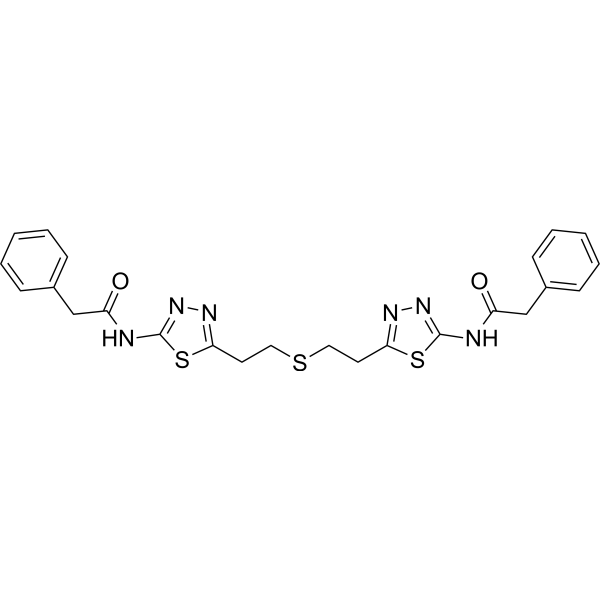
HY-12683
BPTESGlutaminase Inhibitor
Publications Citing Use of MedChemExpress (MCE) Palmitic acid-13C16
More Customer Validation & Images

-
Bio/Physico-chemical Assay
All Endogenous Metabolite Isoforms
More

Biological Activity
Description
In Vitro
Stable heavy isotopes of hydrogen, carbon, and other elements have been incorporated into drug molecules, largely as tracers for quantitation during the drug development process. Deuteration has gained attention because of its potential to affect the pharmacokinetic and metabolic profiles of drugs[1].
MedChemExpress (MCE) has not independently confirmed the accuracy of these methods. They are for reference only.
Application
1. This compound can be used as a tracer
2. This compound can be used as an internal standard for quantitative analysis by NMR, GC-MS, or LC-MS.


Chemical Information
-
CAS No. 56599-85-0
-
Unlabeled CAS 57-10-3
-
Appearance Solid
-
Molecular Weight 272.31
-
Formula 13C16H32O2
-
Color White to off-white
-
SMILES
[13CH3][13CH2][13CH2][13CH2][13CH2][13CH2][13CH2][13CH2][13CH2][13CH2][13CH2][13CH2][13CH2][13CH2][13CH2][13C](O)=O
-
Shipping
Room temperature in continental US; may vary elsewhere.
-
Storage
Powder -20°C 3 years 4°C 2 years In solvent -80°C 6 months -20°C 1 month


Publications (3)
-
Journal Impact Factor
-
Most Recent
-
Nat Commun
Lipid droplets sequester palmitic acid to disrupt endothelial ciliation and exacerbate atherosclerosis in male mice. [Abstract]2024 Sep 27;15(1):8273. PMID: 39333556
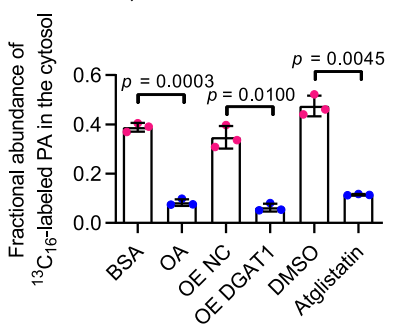
Palmitic acid-13C16 purchased from MedChemExpress. Usage Cited in: Nat Commun. 2024 Sep 27;15(1):8273. [Abstract]
LC-MS analysis showed the abundance fraction of 13C16-labeled Palmitic acid (200 μM; 24 h) in the cytosol of HUVECs treated with the following method.
-
Sci Adv
2024 Oct 25;10(43):eado5887. PMID: 39454000 -
Cell Death Differ
Deficiency of thiosulfate sulfurtransferase mediates the dysfunction of renal tubular mitochondrial fatty acid oxidation in diabetic kidney disease. [Abstract]2024 Dec;31(12):1636-1649. PMID: 39169174


Solvent & Solubility
In Vitro:
DMSO : 100 mg/mL (367.23 mM; Need ultrasonic; Hygroscopic DMSO has a significant impact on the solubility of product, please use newly opened DMSO)
Ethanol : 20 mg/mL (73.45 mM; Need ultrasonic)
Please refer to the solubility information to select the appropriate solvent. Once prepared, please aliquot and store the solution to prevent product inactivation from repeated freeze-thaw cycles.
Storage method and period of stock solution: -80°C, 6 months; -20°C, 1 month. When stored at -80°C, please use it within 6 months. When stored at -20°C, please use it within 1 month.
Please refer to the solubility information to select the appropriate solvent. Once prepared, please aliquot and store the solution to prevent product inactivation from repeated freeze-thaw cycles.
Storage method and period of stock solution: -80°C, 6 months; -20°C, 1 month. When stored at -80°C, please use it within 6 months. When stored at -20°C, please use it within 1 month.
Concentration (start) × Volume (start) = Concentration (final) × Volume (final)
In Vivo:
Select the appropriate dissolution method based on your experimental animal and administration route.
- For the following dissolution methods, please ensure to first prepare a clear stock solution using an In Vitro approach and then sequentially add co-solvents:
- To ensure reliable experimental results, the clarified stock solution can be appropriately stored based on storage conditions. As for the working solution for In Vivo experiments, it is recommended to prepare freshly and use it on the same day.
- The percentages shown for the solvents indicate their volumetric ratio in the final prepared solution. If precipitation or phase separation occurs during preparation, heat and/or sonication can be used to aid dissolution.
Add each solvent one by one: 10% DMSO 40% PEG300 5% Tween-80 45% Saline
Solubility: ≥ 2.5 mg/mL (9.18 mM); Clear solution
This protocol yields a clear solution of ≥ 2.5 mg/mL (saturation unknown).
Taking 1 mL working solution as an example, add 100 μL DMSO stock solution (25.0 mg/mL) to 400 μL PEG300, and mix evenly; then add 50 μL Tween-80 and mix evenly; then add 450 μL Saline to adjust the volume to 1 mL.
Preparation of Saline: Dissolve 0.9 g sodium chloride in ddH₂O and dilute to 100 mL to obtain a clear Saline solution.
In Vivo Dissolution Calculator
Please enter the basic information of animal experiments:
-
-
-
-
Recommended: Prepare an additional quantity of animals to account for potential losses during experiments.
Please enter your animal formula composition:
-
%DMSO +
Recommended: Keep the proportion of DMSO in working solution below 2% if your animal is weak.
-
%+
-
+%Tween-80 + +
-
%Saline +
The co-solvents required include: DMSO, . All of co-solvents are available by MedChemExpress (MCE). , Tween 80. All of co-solvents are available by MedChemExpress (MCE).
Working solution concentration: 0.22 mg/mL
Method for preparing stock solution: mg drug dissolved in μL DMSO. Stock solution concentration: mg/mL.
1. Take μL DMSO stock solution;
2. Add μL .
μL , mix evenly;
3. Then add μL Tween 80, mix evenly;
4. Then add μL
Please ensure that the stock solution in the first step is dissolved to a clear state, and add co-solvents in sequence. You can use ultrasonic heating (ultrasonic cleaner, recommended frequency 20-40 kHz), vortexing, etc. to assist dissolution.


Purity & Documentation
-
Data Sheet (270 KB)
-
SDS (394 KB)
- English - EN (394 KB)
- Français - FR (394 KB)
- Deutsch - DE (394 KB)
- Norwegian - NO (394 KB)
- Español - ES (394 KB)
- Swedish - SV (394 KB)
- Italian - IT (394 KB)
- Korean - KR (394 KB)
- Portuguese - PT (394 KB)
-
Handling Instructions (2659 KB)
References
[1]. Russak EM, et al. Impact of Deuterium Substitution on the Pharmacokinetics of Pharmaceuticals. Ann Pharmacother. 2019;53(2):211-216. [Content Brief]
[2]. Harada H, et al. Antitumor activity of palmitic acid found as a selective cytotoxic substance in a marine red alga. Anticancer Res. 2002 Sep-Oct;22(5):2587-90. [Content Brief]


Complete Stock Solution Preparation Table
Please refer to the solubility information to select the appropriate solvent. Once prepared, please aliquot and store the solution to prevent product inactivation from repeated freeze-thaw cycles.
Storage method and period of stock solution: -80°C, 6 months; -20°C, 1 month. When stored at -80°C, please use it within 6 months. When stored at -20°C, please use it within 1 month.
| Optional Solvent | Concentration Solvent Mass | 1 mg | 5 mg | 10 mg | 25 mg |
|---|---|---|---|---|---|
| Ethanol / DMSO | 1 mM | 3.6723 mL | 18.3614 mL | 36.7229 mL | 91.8071 mL |
| 5 mM | 0.7345 mL | 3.6723 mL | 7.3446 mL | 18.3614 mL | |
| 10 mM | 0.3672 mL | 1.8361 mL | 3.6723 mL | 9.1807 mL | |
| 15 mM | 0.2448 mL | 1.2241 mL | 2.4482 mL | 6.1205 mL | |
| 20 mM | 0.1836 mL | 0.9181 mL | 1.8361 mL | 4.5904 mL | |
| 25 mM | 0.1469 mL | 0.7345 mL | 1.4689 mL | 3.6723 mL | |
| 30 mM | 0.1224 mL | 0.6120 mL | 1.2241 mL | 3.0602 mL | |
| 40 mM | 0.0918 mL | 0.4590 mL | 0.9181 mL | 2.2952 mL | |
| 50 mM | 0.0734 mL | 0.3672 mL | 0.7345 mL | 1.8361 mL | |
| 60 mM | 0.0612 mL | 0.3060 mL | 0.6120 mL | 1.5301 mL | |
| DMSO | 80 mM | 0.0459 mL | 0.2295 mL | 0.4590 mL | 1.1476 mL |
| 100 mM | 0.0367 mL | 0.1836 mL | 0.3672 mL | 0.9181 mL |


Palmitic acid-13C16 Related Classifications
HY-N0830S6 Related Classifications
 Powered by Bioz