Search Result
Results for "
PEG derivative
" in MedChemExpress (MCE) Product Catalog:
1013
Inhibitors & Agonists
820
Biochemical Assay Reagents
| Cat. No. |
Product Name |
Target |
Research Areas |
Chemical Structure |
- HY-W1048603C
-
-
- HY-174264B
-
-
- HY-174264C
-
-
- HY-W1123940
-
-
- HY-W440699
-
|
|
Biochemical Assay Reagents
|
Others
|
|
Cholesterol-PEG3400-acid is a cholesterol PEG derivative that can form micelles through molecular self-assembly and has a longer half-life in vivo. Cholesterol-PEG3400-acid can be used in drug delivery research .
|
-
- HY-W440700
-
|
|
Biochemical Assay Reagents
|
Others
|
|
Cholesterol-PEG5000-acid is a cholesterol PEG derivative that can form micelles through molecular self-assembly and has a longer half-life in vivo. Cholesterol-PEG5000-acid can be used in drug delivery research .
|
-
- HY-166993
-
|
|
Biochemical Assay Reagents
|
Others
|
|
Cy5-PEG5000-methyltetrazine is a PEG derivative that modulates the release of drugs from microparticle systems for parenteral administration. Cy5-PEG5000-methyltetrazine can be used in drug delivery studies .
|
-
- HY-W591914
-
|
|
Biochemical Assay Reagents
|
Others
|
|
Cholesterol-PEG5000-methoxy is a cholesterol PEG derivative that can form micelles through molecular self-assembly and has a longer half-life in vivo. Cholesterol-PEG5000-methoxy can be used in drug delivery research .
|
-
- HY-W440726
-
|
|
Biochemical Assay Reagents
|
Others
|
|
Cholesterol-PEG1000-Vinylsulfone is a cholesterol PEG derivative that can form micelles through molecular self-assembly and has a longer half-life in vivo. Cholesterol-PEG1000-Vinylsulfone can be used in drug delivery research .
|
-
- HY-W440728
-
|
|
Biochemical Assay Reagents
|
Others
|
|
Cholesterol-PEG3400-Vinylsulfone is a cholesterol PEG derivative that can form micelles through molecular self-assembly and has a longer half-life in vivo. Cholesterol-PEG3400-Vinylsulfone can be used in drug delivery research .
|
-
- HY-W440717
-
|
|
Biochemical Assay Reagents
|
Others
|
|
Cholesterol-PEG5000-Folate is a cholesterol PEG derivative that can form micelles through molecular self-assembly and has a longer half-life in vivo. Cholesterol-PEG5000-Folate can be used in drug delivery research .
|
-
- HY-W440716
-
|
|
Biochemical Assay Reagents
|
Others
|
|
Cholesterol-PEG3400-Folate is a cholesterol PEG derivative that can form micelles through molecular self-assembly and has a longer half-life in vivo. Cholesterol-PEG3400-Folate can be used in drug delivery research .
|
-
- HY-W440725
-
|
|
Biochemical Assay Reagents
|
Others
|
|
Cholesterol-PEG5000-Thiol is a cholesterol PEG derivative that can form micelles through molecular self-assembly and has a longer half-life in vivo. Cholesterol-PEG5000-Thiol can be used in drug delivery research .
|
-
- HY-W440713
-
|
|
Biochemical Assay Reagents
|
Others
|
|
Cholesterol-PEG5000-Biotin is a cholesterol PEG derivative that can form micelles through molecular self-assembly and has a longer half-life in vivo. Cholesterol-PEG5000-Biotin can be used in drug delivery research .
|
-
- HY-W440709
-
|
|
Biochemical Assay Reagents
|
Others
|
|
Cholesterol-PEG10000-alcohol is a cholesterol PEG derivative that can form micelles through molecular self-assembly and has a longer half-life in vivo. Cholesterol-PEG10000-alcohol can be used in drug delivery research .
|
-
- HY-W440729
-
|
|
Biochemical Assay Reagents
|
Others
|
|
Cholesterol-PEG5000-Vinylsulfone is a cholesterol PEG derivative that can form micelles through molecular self-assembly and has a longer half-life in vivo. Cholesterol-PEG5000-Vinylsulfone can be used in drug delivery research .
|
-
- HY-166999
-
|
m-PEG20000-VS
|
Biochemical Assay Reagents
|
Others
|
|
m-PEG20000-Vinylsulfone (m-PEG20000-VS) is a PEG derivative that modulates the release of drugs from microparticle systems for parenteral administration. m-PEG20000-Vinylsulfone can be used in drug delivery studies .
|
-
- HY-167068
-
|
Azide-Polysarcosine150
|
Biochemical Assay Reagents
|
Others
|
|
Azide-pSar150 (Azide-Polysarcosine150) is a pSar-lipid derivative. Azide-pSar150 is a hydrophilic alternative to PEG and can be used in drug delivery research .
|
-
- HY-167066
-
|
DSPE-Polysarcosine150
|
Biochemical Assay Reagents
|
Others
|
|
DSPE-pSar150 (DSPE-Polysarcosine150) is a pSar-lipid derivative. DSPE-pSar150 is a hydrophilic alternative to PEG and can be used in drug delivery research .
|
-
- HY-167412
-
|
|
Biochemical Assay Reagents
|
Others
|
|
PLLA5000-PEG2000-FOL is a polylactic acid derivative. Polylactic acid derivatives have strong binding affinity to folate receptors and clear biodegradability. PLLA5000-PEG2000-FOL can be used in drug delivery research .
|
-
- HY-167415
-
|
|
Biochemical Assay Reagents
|
Others
|
|
PLLA10000-PEG5000-FOL is a polylactic acid derivative. Polylactic acid derivatives have strong binding affinity to folate receptors and clear biodegradability. PLLA10000-PEG5000-FOL can be used in drug delivery research .
|
-
- HY-167413
-
|
|
Biochemical Assay Reagents
|
Others
|
|
PLLA20000-PEG5000-FOL is a polylactic acid derivative. Polylactic acid derivatives have strong binding affinity to folate receptors and clear biodegradability. PLLA20000-PEG5000-FOL can be used in drug delivery research .
|
-
- HY-167411
-
|
|
Biochemical Assay Reagents
|
Others
|
|
PLLA5000-PEG5000-FOL is a polylactic acid derivative. Polylactic acid derivatives have strong binding affinity to folate receptors and clear biodegradability. PLLA5000-PEG5000-FOL can be used in drug delivery research .
|
-
- HY-167416
-
|
|
Biochemical Assay Reagents
|
Others
|
|
PLLA10000-PEG2000-FOL is a polylactic acid derivative. Polylactic acid derivatives have strong binding affinity to folate receptors and clear biodegradability. PLLA10000-PEG2000-FOL can be used in drug delivery research .
|
-
- HY-167414
-
|
|
Biochemical Assay Reagents
|
Others
|
|
PLLA20000-PEG2000-FOL is a polylactic acid derivative. Polylactic acid derivatives have strong binding affinity to folate receptors and clear biodegradability. PLLA20000-PEG2000-FOL can be used in drug delivery research .
|
-
- HY-W190871
-
-
- HY-W1120356A
-
-
- HY-W190830
-
-
- HY-W1048828H
-
-
- HY-W1048508B
-
-
- HY-W1048509B
-
-
- HY-W1048828J
-
-
- HY-W1048509A
-
-
- HY-W1048828E
-
-
- HY-W1048508A
-
-
- HY-W1048509D
-
-
- HY-W1048508D
-
-
- HY-W1048603D
-
-
- HY-W1048855B
-
-
- HY-W1048603H
-
-
- HY-W1048603A
-
-
- HY-W1123934D
-
-
- HY-W1123940C
-
-
- HY-W788246
-
-
- HY-W1123934C
-
-
- HY-W1123940D
-
-
- HY-W1123934
-
-
- HY-W1123934B
-
-
- HY-W1123940B
-
-
- HY-174264A
-
-
- HY-179205B
-
|
|
Biochemical Assay Reagents
|
Others
|
|
PLA5000-PEG3400-MAL is a PEG derivative with a maleimide group at the end. PLA5000-PEG3400-MAL can be used for drug delivery .
|
-
- HY-179198C
-
|
|
Biochemical Assay Reagents
|
Others
|
|
PLA2000-PEG5000-MAL is a PEG derivative with a maleimide group at the end. PLA2000-PEG5000-MAL can be used for drug delivery .
|
-
- HY-179206C
-
|
|
Biochemical Assay Reagents
|
Others
|
|
PLA10000-PEG5000-MAL is a PEG derivative with a maleimide group at the end. PLA10000-PEG5000-MAL can be used for drug delivery .
|
-
- HY-179198A
-
|
|
Biochemical Assay Reagents
|
Others
|
|
PLA2000-PEG2000-MAL is a PEG derivative with a maleimide group at the end. PLA2000-PEG2000-MAL can be used for drug delivery .
|
-
- HY-179205
-
|
|
Biochemical Assay Reagents
|
Others
|
|
PLA5000-PEG1000-MAL is a PEG derivative with a maleimide group at the end. PLA5000-PEG1000-MAL can be used for drug delivery .
|
-
- HY-179205C
-
|
|
Biochemical Assay Reagents
|
Others
|
|
PLA5000-PEG5000-MAL is a PEG derivative with a maleimide group at the end. PLA5000-PEG5000-MAL can be used for drug delivery .
|
-
- HY-179198
-
|
|
Biochemical Assay Reagents
|
Others
|
|
PLA2000-PEG1000-MAL is a PEG derivative with a maleimide group at the end. PLA2000-PEG1000-MAL can be used for drug delivery .
|
-
- HY-179206B
-
|
|
Biochemical Assay Reagents
|
Others
|
|
PLA10000-PEG3400-MAL is a PEG derivative with a maleimide group at the end. PLA10000-PEG3400-MAL can be used for drug delivery .
|
-
- HY-179206
-
|
|
Biochemical Assay Reagents
|
Others
|
|
PLA10000-PEG1000-MAL is a PEG derivative with a maleimide group at the end. PLA10000-PEG1000-MAL can be used for drug delivery .
|
-
- HY-179206A
-
|
|
Biochemical Assay Reagents
|
Others
|
|
PLA10000-PEG2000-MAL is a PEG derivative with a maleimide group at the end. PLA10000-PEG2000-MAL can be used for drug delivery .
|
-
- HY-179205A
-
|
|
Biochemical Assay Reagents
|
Others
|
|
PLA5000-PEG2000-MAL is a PEG derivative with a maleimide group at the end. PLA5000-PEG2000-MAL can be used for drug delivery .
|
-
- HY-179198B
-
|
|
Biochemical Assay Reagents
|
Others
|
|
PLA2000-PEG3400-MAL is a PEG derivative with a maleimide group at the end. PLA2000-PEG3400-MAL can be used for drug delivery .
|
-
- HY-W190805
-
-
- HY-W190756
-
-
- HY-W190791
-
-
- HY-140509
-
-
- HY-W789061
-
-
- HY-W042449
-
-
- HY-W876254
-
-
- HY-W047691
-
-
- HY-W1048511
-
|
2-Arm PEG5000-Amine
|
Biochemical Assay Reagents
|
Others
|
|
2-Arm PEG5000-NH2 (2-Arm PEG5000-Amine) is a multi-arm PEG derivative that can be used for peptide modification and drug delivery .
|
-
- HY-W1048511A
-
|
2-Arm PEG20000-Amine
|
Biochemical Assay Reagents
|
Others
|
|
2-Arm PEG20000-NH2 (2-Arm PEG20000-Amine) is a multi-arm PEG derivative that can be used for peptide modification and drug delivery .
|
-
- HY-W1048511C
-
|
2-Arm PEG10000-Amine
|
Biochemical Assay Reagents
|
Others
|
|
2-Arm PEG10000-NH2 (2-Arm PEG10000-Amine) is a multi-arm PEG derivative that can be used for peptide modification and drug delivery .
|
-
- HY-W1048511B
-
|
2-Arm PEG40000-Amine
|
Biochemical Assay Reagents
|
Others
|
|
2-Arm PEG40000-NH2 (2-Arm PEG40000-Amine) is a multi-arm PEG derivative that can be used for peptide modification and drug delivery .
|
-
- HY-W1048508C
-
-
- HY-174928C
-
|
|
Biochemical Assay Reagents
|
Others
|
|
HO-PEG5000-AS is a PEG derivative with a hydroxyl (OH) functional group and a thioacetate (AS) and can be used for drug delivery.
|
-
- HY-174928
-
|
|
Biochemical Assay Reagents
|
Others
|
|
HO-PEG1000-AS is a PEG derivative with a hydroxyl (OH) functional group and a thioacetate (AS) and can be used for drug delivery.
|
-
- HY-174928B
-
|
|
Biochemical Assay Reagents
|
Others
|
|
HO-PEG3400-AS is a PEG derivative with a hydroxyl (OH) functional group and a thioacetate (AS) and can be used for drug delivery.
|
-
- HY-174928A
-
|
|
Biochemical Assay Reagents
|
Others
|
|
HO-PEG2000-AS is a PEG derivative with a hydroxyl (OH) functional group and a thioacetate (AS) and can be used for drug delivery.
|
-
- HY-174885C
-
|
|
Biochemical Assay Reagents
|
Others
|
|
Acrylate-PEG5000-Maleimide is a PEG derivative containing an acrylate functional group, a PEG chain, and a maleimide group, which can be used for drug delivery .
|
-
- HY-174885
-
|
|
Biochemical Assay Reagents
|
Others
|
|
Acrylate-PEG1000-Maleimide is a PEG derivative containing an acrylate functional group, a PEG chain, and a maleimide group, which can be used for drug delivery .
|
-
- HY-174914
-
|
|
Biochemical Assay Reagents
|
Others
|
|
Biotin-PEG4-mal is a PEG derivative composed of Biotin, 4 PEG units and Maleimide. Biotin can form a stable non-covalent bond with streptavidin.
|
-
- HY-W796380
-
|
Acryloyl-PEG3-OH
|
Biochemical Assay Reagents
|
Others
|
|
Allyl-PEG3-OH (Acryloyl-PEG3-OH) is a PEG derivative with a hydroxyl (OH) functional group that can be used for drug delivery.
|
-
- HY-174885B
-
|
|
Biochemical Assay Reagents
|
Others
|
|
Acrylate-PEG3400-Maleimide is a PEG derivative containing an acrylate functional group, a PEG chain, and a maleimide group, which can be used for drug delivery .
|
-
- HY-174885A
-
|
|
Biochemical Assay Reagents
|
Others
|
|
Acrylate-PEG2000-Maleimide is a PEG derivative containing an acrylate functional group, a PEG chain, and a maleimide group, which can be used for drug delivery .
|
-
- HY-174938
-
|
|
Biochemical Assay Reagents
|
Others
|
|
Biotin-PEG3-Iodoacetamide is a PEG derivative composed of Biotin, 3 PEG units, and Iodoacetamide. Biotin can form a stable non-covalent bond with streptavidin.
|
-
- HY-W1048510B
-
|
|
Biochemical Assay Reagents
|
Others
|
|
2-Arm PEG20000-Mal is a multi-arm PEG derivative with maleimide groups at each end of the 2 arms. 2-Arm PEG20000-Mal can be used for drug delivery .
|
-
- HY-W1048510A
-
|
|
Biochemical Assay Reagents
|
Others
|
|
2-Arm PEG10000-Mal is a multi-arm PEG derivative with maleimide groups at each end of the 2 arms. 2-Arm PEG10000-Mal can be used for drug delivery .
|
-
- HY-W1048605
-
|
|
Biochemical Assay Reagents
|
Others
|
|
8-Arm PEG5000-Mal is a multi-arm PEG derivative with maleimide groups at each end of the eight arms. 8-Arm PEG5000-Mal can be used for drug delivery .
|
-
- HY-W1048605C
-
|
|
Biochemical Assay Reagents
|
Others
|
|
8-Arm PEG40000-Mal is a multi-arm PEG derivative with maleimide groups at each end of the eight arms. 8-Arm PEG40000-Mal can be used for drug delivery .
|
-
- HY-W1048510C
-
|
|
Biochemical Assay Reagents
|
Others
|
|
2-Arm PEG40000-Mal is a multi-arm PEG derivative with maleimide groups at each end of the 2 arms. 2-Arm PEG40000-Mal can be used for drug delivery .
|
-
- HY-W1048510D
-
|
|
Biochemical Assay Reagents
|
Others
|
|
2-Arm PEG5000-Mal is a multi-arm PEG derivative with maleimide groups at each end of the two arms. 2-Arm PEG5000-Mal can be used for drug delivery .
|
-
- HY-W1048605B
-
|
|
Biochemical Assay Reagents
|
Others
|
|
8-Arm PEG10000-Mal is a multi-arm PEG derivative with maleimide groups at each end of the eight arms. 8-Arm PEG10000-Mal can be used for drug delivery .
|
-
- HY-W1048605A
-
|
|
Biochemical Assay Reagents
|
Others
|
|
8-Arm PEG20000-Mal is a multi-arm PEG derivative with maleimide groups at each end of the eight arms. 8-Arm PEG20000-Mal can be used for drug delivery .
|
-
- HY-W190749A
-
|
|
Biochemical Assay Reagents
|
Others
|
|
Aminooxy-PEG5-acid is an aminooxy PEG derivative that can be used for aldehyde or ketone reactions. Aminooxy-PEG1-acid can be used for drug delivery .
|
-
- HY-W190749
-
|
|
Biochemical Assay Reagents
|
Others
|
|
Aminooxy-PEG1-acid is an aminooxy PEG derivative that can be used for aldehyde or ketone reactions. Aminooxy-PEG1-acid can be used for drug delivery .
|
-
- HY-141345A
-
|
AcS-PEG7-t-Butyl ester
|
Biochemical Assay Reagents
|
Others
|
|
S-Acetyl-PEG7-Boc (AcS-PEG7-t-Butyl ester) is a PEG derivative that can be used in drug delivery and other research .
|
-
- HY-141345C
-
|
AcS-PEG8-t-Butyl ester
|
Biochemical Assay Reagents
|
Others
|
|
S-Acetyl-PEG8-Boc (AcS-PEG8-t-Butyl ester) is a PEG derivative that can be used in drug delivery and other research .
|
-
- HY-141345B
-
|
AcS-PEG12-t-Butyl ester
|
Biochemical Assay Reagents
|
Others
|
|
S-Acetyl-PEG12-Boc (AcS-PEG12-t-Butyl ester) is a PEG derivative that can be used in drug delivery and other research .
|
-
- HY-W796277
-
|
|
Biochemical Assay Reagents
|
Others
|
|
Dde Biotin-PEG4 is a PEG derivative composed of Biotin, 5 PEG units, and Dde protecting group. Biotin can form a stable non-covalent bond with streptavidin.
|
-
- HY-W190751
-
-
- HY-W190751C
-
-
- HY-W190754
-
-
- HY-W190751B
-
-
- HY-W1120392
-
-
- HY-W190751A
-
-
- HY-W141944
-
-
- HY-W1048861B
-
|
4-Arm PEG10000-N3
|
Biochemical Assay Reagents
|
Others
|
|
4-Arm PEG10000-Azide (4-Arm PEG10000-N3) is a multi-arm PEG derivative with an azide group at each end of four arms attached to a pentaerythritol core .
|
-
- HY-W1048861C
-
|
4-Arm PEG20000-N3
|
Biochemical Assay Reagents
|
Others
|
|
4-Arm PEG20000-Azide (4-Arm PEG20000-N3) is a multi-arm PEG derivative with an azide group at each end of four arms attached to a pentaerythritol core .
|
-
- HY-W1048861D
-
|
4-Arm PEG40000-N3
|
Biochemical Assay Reagents
|
Others
|
|
4-Arm PEG40000-Azide (4-Arm PEG40000-N3) is a multi-arm PEG derivative with an azide group at each end of four arms attached to a pentaerythritol core .
|
-
- HY-W1048861A
-
|
4-Arm PEG5000-N3
|
Biochemical Assay Reagents
|
Others
|
|
4-Arm PEG5000-Azide (4-Arm PEG5000-N3) is a multi-arm PEG derivative with an azide group at each end of four arms attached to a pentaerythritol core .
|
-
- HY-174902A
-
-
- HY-140946
-
|
|
Fluorescent Dye
|
Others
|
|
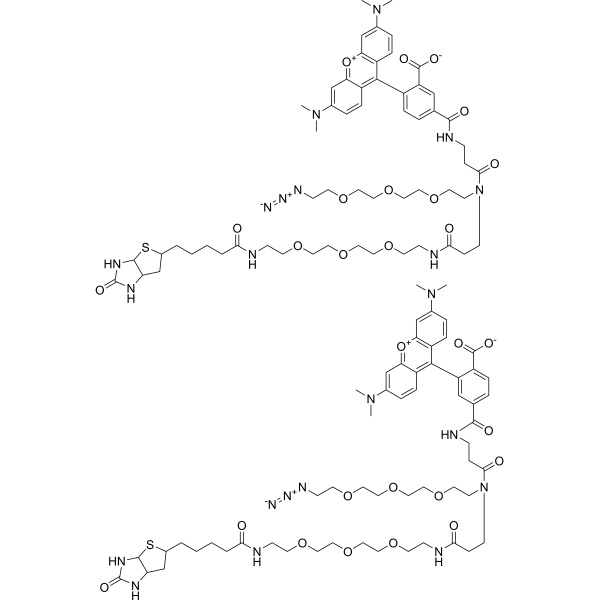
TAMRA-PEG3-biotin is a dye derivative of TAMRA (HY-135640) containing 3 PEG units. TAMRA-PEG3-biotin is tagged with biotin.
|
-
- HY-174915
-
|
|
Biochemical Assay Reagents
|
Others
|
|
Biotin-PEG7-OH is a PEG derivative composed of Biotin, 7 PEG units and a hydroxyl (-OH) group. Biotin can form a stable non-covalent bond with streptavidin.
|
-
- HY-W190908B
-
|
|
Biochemical Assay Reagents
|
Others
|
|
Desthiobiotin-PEG6-NHS ester is a PEG derivative composed of desthiobiotin, 6 PEG units, and NHS ester. NHS ester can be conjugated to amino acids or other molecules containing amino groups.
|
-
- HY-W190908C
-
|
|
Biochemical Assay Reagents
|
Others
|
|
Desthiobiotin-PEG12-NHS ester is a PEG derivative composed of desthiobiotin, 12 PEG units, and NHS ester. NHS ester can be conjugated to amino acids or other molecules containing amino groups.
|
-
- HY-W1120833
-
-
- HY-174902E
-
-
- HY-174902H
-
-
- HY-174902D
-
-
- HY-174902
-
-
- HY-174902C
-
-
- HY-W190908A
-
|
|
Biochemical Assay Reagents
|
Others
|
|
Desthiobiotin-PEG4-NHS ester is a PEG derivative composed of desthiobiotin, 4 PEG units, and NHS ester. NHS ester can be conjugated to amino acids or other molecules containing amino groups.
|
-
- HY-174902B
-
-
- HY-W1048527A
-
|
8-Arm PEG20000-Thiol
|
Biochemical Assay Reagents
|
Others
|
|
8-Arm PEG20000-SH (8-Arm PEG20000-Thiol) is a multi-arm PEG derivative with thiol groups at each end of the eight arms. 8-Arm PEG20000-SH can be used for drug delivery .
|
-
- HY-W1048527
-
|
8-Arm PEG5000-Thiol
|
Biochemical Assay Reagents
|
Others
|
|
8-Arm PEG5000-SH (8-Arm PEG5000-Thiol) is a multi-arm PEG derivative with thiol groups at each end of the eight arms. 8-Arm PEG5000-SH can be used for drug delivery .
|
-
- HY-W1048527B
-
|
8-Arm PEG40000-Thiol
|
Biochemical Assay Reagents
|
Others
|
|
8-Arm PEG40000-SH (8-Arm PEG40000-Thiol) is a multi-arm PEG derivative with thiol groups at each end of the eight arms. 8-Arm PEG40000-SH can be used for drug delivery .
|
-
- HY-W1048527C
-
|
8-Arm PEG10000-Thiol
|
Biochemical Assay Reagents
|
Others
|
|
8-Arm PEG10000-SH (8-Arm PEG10000-Thiol) is a multi-arm PEG derivative with thiol groups at each end of the eight arms. 8-Arm PEG10000-SH can be used for drug delivery .
|
-
- HY-179207A
-
|
|
Biochemical Assay Reagents
|
Others
|
|
6-arm PEG600-NCO is a multi-arm PEG derivative that can be used to modify proteins, peptides and other materials. 6-arm PEG600-NCO can be used for peptide modification and drug delivery.
|
-
- HY-179207E
-
|
|
Biochemical Assay Reagents
|
Others
|
|
6-arm PEG5000-NCO is a multi-arm PEG derivative that can be used to modify proteins, peptides and other materials. 6-arm PEG5000-NCO can be used for peptide modification and drug delivery.
|
-
- HY-179207C
-
|
|
Biochemical Assay Reagents
|
Others
|
|
6-arm PEG2000-NCO is a multi-arm PEG derivative that can be used to modify proteins, peptides and other materials. 6-arm PEG2000-NCO can be used for peptide modification and drug delivery.
|
-
- HY-179207
-
|
|
Biochemical Assay Reagents
|
Others
|
|
6-arm PEG400-NCO is a multi-arm PEG derivative that can be used to modify proteins, peptides and other materials. 6-arm PEG400-NCO can be used for peptide modification and drug delivery.
|
-
- HY-179207B
-
|
|
Biochemical Assay Reagents
|
Others
|
|
6-arm PEG1000-NCO is a multi-arm PEG derivative that can be used to modify proteins, peptides and other materials. 6-arm PEG1000-NCO can be used for peptide modification and drug delivery.
|
-
- HY-179207D
-
|
|
Biochemical Assay Reagents
|
Others
|
|
6-arm PEG3400-NCO is a multi-arm PEG derivative that can be used to modify proteins, peptides and other materials. 6-arm PEG3400-NCO can be used for peptide modification and drug delivery.
|
-
- HY-179207H
-
|
|
Biochemical Assay Reagents
|
Others
|
|
6-arm PEG10000-NCO is a multi-arm PEG derivative that can be used to modify proteins, peptides and other materials. 6-arm PEG10000-NCO can be used for peptide modification and drug delivery.
|
-
- HY-174951
-
-
- HY-W1048855D
-
-
- HY-W1048855C
-
-
- HY-174901C
-
|
|
Biochemical Assay Reagents
|
Others
|
|
DSPE-PEG5000-Furan is a lipid-containing PEG derivative that can be used to form micelles as nanoparticles for drug delivery .
|
-
- HY-174901B
-
|
|
Biochemical Assay Reagents
|
Others
|
|
DSPE-PEG3400-Furan is a lipid-containing PEG derivative that can be used to form micelles as nanoparticles for drug delivery .
|
-
- HY-174950
-
|
|
Biochemical Assay Reagents
|
Others
|
|
DSPE-PEG1000-Pyrene is a lipid-containing PEG derivative that can be used to form micelles as nanoparticles for drug delivery .
|
-
- HY-174951B
-
-
- HY-174950C
-
|
|
Biochemical Assay Reagents
|
Others
|
|
DSPE-PEG5000-Pyrene is a lipid-containing PEG derivative that can be used to form micelles as nanoparticles for drug delivery .
|
-
- HY-174952C
-
-
- HY-174919
-
|
|
Biochemical Assay Reagents
|
Others
|
|
Br-PEG10-OH is a PEG derivative with a hydroxyl (OH) functional group and thioacetate (AS) and can be used for drug delivery .
|
-
- HY-174952A
-
-
- HY-174952H
-
-
- HY-174952
-
-
- HY-174950B
-
|
|
Biochemical Assay Reagents
|
Others
|
|
DSPE-PEG3400-Pyrene is a lipid-containing PEG derivative that can be used to form micelles as nanoparticles for drug delivery .
|
-
- HY-174952E
-
-
- HY-174951A
-
-
- HY-174951C
-
-
- HY-174952B
-
-
- HY-174901A
-
|
|
Biochemical Assay Reagents
|
Others
|
|
DSPE-PEG2000-Furan is a lipid-containing PEG derivative that can be used to form micelles as nanoparticles for drug delivery .
|
-
- HY-174950A
-
|
|
Biochemical Assay Reagents
|
Others
|
|
DSPE-PEG2000-Pyrene is a lipid-containing PEG derivative that can be used to form micelles as nanoparticles for drug delivery .
|
-
- HY-174952D
-
-
- HY-174901
-
|
|
Biochemical Assay Reagents
|
Others
|
|
DSPE-PEG1000-Furan is a lipid-containing PEG derivative that can be used to form micelles as nanoparticles for drug delivery .
|
-
- HY-167410
-
|
|
Biochemical Assay Reagents
|
Others
|
|
PLLA10000-PEG2000-ALK is a polylactic acid derivative that can form micelles in water. PLLA10000-PEG2000-ALK can be used in drug delivery research .
|
-
- HY-D2892E
-
|
|
Fluorescent Dye
|
Others
|
|
Rhodamine-PEG5000 a fluorescent PEG derivative composed of Rhodamine B (HY-Y0016) and PEG. Rhodamine-PEG5000 can be used for fluorescent labeling and imaging (Ex/Em=546/610 nm) .
|
-
- HY-167405
-
|
|
Biochemical Assay Reagents
|
Others
|
|
PLLA1000-PEG3000-ALK is a polylactic acid derivative that can form micelles in water. PLLA1000-PEG3000-ALK can be used in drug delivery research .
|
-
- HY-167388
-
|
|
Biochemical Assay Reagents
|
Others
|
|
PLLA5000-PEG5000-ALK is a polylactic acid derivative that can form micelles in water. PLLA5000-PEG5000-ALK can be used in drug delivery research .
|
-
- HY-D2892A
-
|
|
Fluorescent Dye
|
Others
|
|
Rhodamine-PEG550 a fluorescent PEG derivative composed of Rhodamine B (HY-Y0016) and PEG. Rhodamine-PEG550 can be used for fluorescent labeling and imaging (Ex/Em=546/610 nm) .
|
-
- HY-167408
-
|
|
Biochemical Assay Reagents
|
Others
|
|
PLLA10000-PEG5000-ALK is a polylactic acid derivative that can form micelles in water. PLLA10000-PEG5000-ALK can be used in drug delivery research .
|
-
- HY-D2892B
-
|
|
Fluorescent Dye
|
Others
|
|
Rhodamine-PEG750 a fluorescent PEG derivative composed of Rhodamine B (HY-Y0016) and PEG. Rhodamine-PEG750 can be used for fluorescent labeling and imaging (Ex/Em=546/610 nm) .
|
-
- HY-167409
-
|
|
Biochemical Assay Reagents
|
Others
|
|
PLLA10000-PEG3000-ALK is a polylactic acid derivative that can form micelles in water. PLLA10000-PEG3000-ALK can be used in drug delivery research .
|
-
- HY-167404
-
|
|
Biochemical Assay Reagents
|
Others
|
|
PLLA1000-PEG5000-ALK is a polylactic acid derivative that can form micelles in water. PLLA1000-PEG5000-ALK can be used in drug delivery research .
|
-
- HY-D2892H
-
|
|
Fluorescent Dye
|
Others
|
|
Rhodamine-PEG10000 a fluorescent PEG derivative composed of Rhodamine B (HY-Y0016) and PEG. Rhodamine-PEG10000 can be used for fluorescent labeling and imaging (Ex/Em=546/610 nm) .
|
-
- HY-167392
-
|
|
Biochemical Assay Reagents
|
Others
|
|
PLLA4000-PEG5000-ALK is a polylactic acid derivative that can form micelles in water. PLLA4000-PEG5000-ALK can be used in drug delivery research .
|
-
- HY-167394
-
|
|
Biochemical Assay Reagents
|
Others
|
|
PLLA4000-PEG2000-ALK is a polylactic acid derivative that can form micelles in water. PLLA4000-PEG2000-ALK can be used in drug delivery research .
|
-
- HY-167391
-
|
|
Biochemical Assay Reagents
|
Others
|
|
PLLA5000-PEG1000-ALK is a polylactic acid derivative that can form micelles in water. PLLA5000-PEG1000-ALK can be used in drug delivery research .
|
-
- HY-167400
-
|
|
Biochemical Assay Reagents
|
Others
|
|
PLLA2000-PEG5000-ALK is a polylactic acid derivative that can form micelles in water. PLLA2000-PEG5000-ALK can be used in drug delivery research .
|
-
- HY-167403
-
|
|
Biochemical Assay Reagents
|
Others
|
|
PLLA2000-PEG1000-ALK is a polylactic acid derivative that can form micelles in water. PLLA2000-PEG1000-ALK can be used in drug delivery research .
|
-
- HY-D2892D
-
|
|
Fluorescent Dye
|
Others
|
|
Rhodamine-PEG2000 a fluorescent PEG derivative composed of Rhodamine B (HY-Y0016) and PEG. Rhodamine-PEG2000 can be used for fluorescent labeling and imaging (Ex/Em=546/610 nm) .
|
-
- HY-167393
-
|
|
Biochemical Assay Reagents
|
Others
|
|
PLLA4000-PEG3000-ALK is a polylactic acid derivative that can form micelles in water. PLLA4000-PEG3000-ALK can be used in drug delivery research .
|
-
- HY-D2892J
-
|
|
Fluorescent Dye
|
Others
|
|
Rhodamine-PEG20000 a fluorescent PEG derivative composed of Rhodamine B (HY-Y0016) and PEG. Rhodamine-PEG20000 can be used for fluorescent labeling and imaging (Ex/Em=546/610 nm) .
|
-
- HY-167389
-
|
|
Biochemical Assay Reagents
|
Others
|
|
PLLA5000-PEG3000-ALK is a polylactic acid derivative that can form micelles in water. PLLA5000-PEG3000-ALK can be used in drug delivery research .
|
-
- HY-167390
-
|
|
Biochemical Assay Reagents
|
Others
|
|
PLLA5000-PEG2000-ALK is a polylactic acid derivative that can form micelles in water. PLLA5000-PEG2000-ALK can be used in drug delivery research .
|
-
- HY-167402
-
|
|
Biochemical Assay Reagents
|
Others
|
|
PLLA2000-PEG2000-ALK is a polylactic acid derivative that can form micelles in water. PLLA2000-PEG2000-ALK can be used in drug delivery research .
|
-
- HY-167396
-
|
|
Biochemical Assay Reagents
|
Others
|
|
PLLA3000-PEG5000-ALK is a polylactic acid derivative that can form micelles in water. PLLA3000-PEG5000-ALK can be used in drug delivery research .
|
-
- HY-167407
-
|
|
Biochemical Assay Reagents
|
Others
|
|
PLLA1000-PEG1000-ALK is a polylactic acid derivative that can form micelles in water. PLLA1000-PEG1000-ALK can be used in drug delivery research .
|
-
- HY-167401
-
|
|
Biochemical Assay Reagents
|
Others
|
|
PLLA2000-PEG3000-ALK is a polylactic acid derivative that can form micelles in water. PLLA2000-PEG3000-ALK can be used in drug delivery research .
|
-
- HY-D2892C
-
|
|
Fluorescent Dye
|
Others
|
|
Rhodamine-PEG1000 a fluorescent PEG derivative composed of Rhodamine B (HY-Y0016) and PEG. Rhodamine-PEG1000 can be used for fluorescent labeling and imaging (Ex/Em=546/610 nm) .
|
-
- HY-167395
-
|
|
Biochemical Assay Reagents
|
Others
|
|
PLLA4000-PEG1000-ALK is a polylactic acid derivative that can form micelles in water. PLLA4000-PEG1000-ALK can be used in drug delivery research .
|
-
- HY-167398
-
|
|
Biochemical Assay Reagents
|
Others
|
|
PLLA3000-PEG2000-ALK is a polylactic acid derivative that can form micelles in water. PLLA3000-PEG2000-ALK can be used in drug delivery research .
|
-
- HY-D2892
-
|
|
Fluorescent Dye
|
Others
|
|
Rhodamine-PEG350 a fluorescent PEG derivative composed of Rhodamine B (HY-Y0016) and PEG. Rhodamine-PEG350 can be used for fluorescent labeling and imaging (Ex/Em=546/610 nm) .
|
-
- HY-167406
-
|
|
Biochemical Assay Reagents
|
Others
|
|
PLLA1000-PEG2000-ALK is a polylactic acid derivative that can form micelles in water. PLLA1000-PEG2000-ALK can be used in drug delivery research .
|
-
- HY-167397
-
|
|
Biochemical Assay Reagents
|
Others
|
|
PLLA3000-PEG3000-ALK is a polylactic acid derivative that can form micelles in water. PLLA3000-PEG3000-ALK can be used in drug delivery research .
|
-
- HY-167399
-
|
|
Biochemical Assay Reagents
|
Others
|
|
PLLA3000-PEG1000-ALK is a polylactic acid derivative that can form micelles in water. PLLA3000-PEG1000-ALK can be used in drug delivery research .
|
-
- HY-174884A
-
|
|
Biochemical Assay Reagents
|
Others
|
|
Acrylate-PEG1000-Biotin is a PEG derivative that contains an acrylate functional group, a PEG chain, and a biotin group. The biotin group can be used for specific binding to streptavidin, etc .
|
-
- HY-174884C
-
|
|
Biochemical Assay Reagents
|
Others
|
|
Acrylate-PEG3400-Biotin is a PEG derivative that contains an acrylate functional group, a PEG chain, and a biotin group. The biotin group can be used for specific binding to streptavidin, etc .
|
-
- HY-W190793
-
|
HO-PEG8-COOMe
|
Biochemical Assay Reagents
|
Others
|
|
Hydroxy-PEG8-C2-methyl ester (HO-PEG8-COOMe) is a PEG derivative that can be used for drug delivery and other research .
|
-
- HY-174884
-
|
|
Biochemical Assay Reagents
|
Others
|
|
Acrylate-PEG5000-Biotin is a PEG derivative that contains an acrylate functional group, a PEG chain, and a biotin group. The biotin group can be used for specific binding to streptavidin, etc .
|
-
- HY-174884B
-
|
|
Biochemical Assay Reagents
|
Others
|
|
Acrylate-PEG2000-Biotin is a PEG derivative that contains an acrylate functional group, a PEG chain, and a biotin group. The biotin group can be used for specific binding to streptavidin, etc .
|
-
- HY-140656F
-
|
|
Fluorescent Dye
|
Others
|
|
Biotin-PEG20000-Biotin is a biotin labeled PEG derivative. Biotin is an enzyme co-factor, can be used for labeling protein; PEG is a hydrophilic and water-soluble polymer with low toxicity.
|
-
- HY-174959H
-
-
- HY-174959C
-
-
- HY-174959B
-
-
- HY-W838953
-
-
- HY-174959
-
-
- HY-W440698
-
|
|
Liposome
|
Cancer
|
|
Cholesterol-PEG2000-Acid is a polydisperse PEG derivative which can be used to create liposome as drug carrier for delivering therapeutic agents into tissues.
|
-
- HY-174959D
-
-
- HY-174959E
-
-
- HY-174959A
-
-
- HY-W1123933D
-
|
CLS-PEG3400-CLS
|
Biochemical Assay Reagents
|
Others
|
|
Cholesterol-PEG3400-Cholesterol (CLS-PEG3400-CLS) is a cholesterol-modified PEG derivative. Cholesterol-PEG3400-Cholesterol can be combined with liposomes to form nanolipid carriers for drug delivery .
|
-
- HY-W1123933H
-
|
CLS-PEG10000-CLS
|
Biochemical Assay Reagents
|
Others
|
|
Cholesterol-PEG10000-Cholesterol (CLS-PEG10000-CLS) is a cholesterol-modified PEG derivative. Cholesterol-PEG10000-Cholesterol can be combined with liposomes to form nanolipid carriers for drug delivery .
|
-
- HY-W1123933A
-
|
CLS-PEG600-CLS
|
Biochemical Assay Reagents
|
Others
|
|
Cholesterol-PEG600-Cholesterol (CLS-PEG600-CLS) is a cholesterol-modified PEG derivative. Cholesterol-PEG600-Cholesterol can be combined with liposomes to form nanolipid carriers for drug delivery .
|
-
- HY-W1123933B
-
|
CLS-PEG1000-CLS
|
Biochemical Assay Reagents
|
Others
|
|
Cholesterol-PEG1000-Cholesterol (CLS-PEG1000-CLS) is a cholesterol-modified PEG derivative. Cholesterol-PEG1000-Cholesterol can be combined with liposomes to form nanolipid carriers for drug delivery .
|
-
- HY-W1123933C
-
|
CLS-PEG2000-CLS
|
Biochemical Assay Reagents
|
Others
|
|
Cholesterol-PEG2000-Cholesterol (CLS-PEG2000-CLS) is a cholesterol-modified PEG derivative. Cholesterol-PEG2000-Cholesterol can be combined with liposomes to form nanolipid carriers for drug delivery .
|
-
- HY-W1123933
-
|
CLS-PEG400-CLS
|
Biochemical Assay Reagents
|
Others
|
|
Cholesterol-PEG400-Cholesterol (CLS-PEG400-CLS) is a cholesterol-modified PEG derivative. Cholesterol-PEG400-Cholesterol can be combined with liposomes to form nanolipid carriers for drug delivery .
|
-
- HY-W1123933E
-
|
CLS-PEG5000-CLS
|
Biochemical Assay Reagents
|
Others
|
|
Cholesterol-PEG5000-Cholesterol (CLS-PEG5000-CLS) is a cholesterol-modified PEG derivative. Cholesterol-PEG5000-Cholesterol can be combined with liposomes to form nanolipid carriers for drug delivery .
|
-
- HY-W440718C
-
|
|
Biochemical Assay Reagents
|
Others
|
|
Cholesterol-PEG10000-Mal is a PEG derivative composed of Cholesterol, PEG units and Maleimide (HY-W007324). Maleimide forms a stable thioether bond with sulfhydryl (-SH) groups .
|
-
- HY-P3502B
-
|
|
Complement System
|
Inflammation/Immunology
|
|
Zilucoplan (PEG2) is a Zilucoplan (HY-P3502) derivative, where the linker section replaces PEG24 by PEG2. Zilucoplan is a potent complement component 5 (C5) inhibitor .
|
-
- HY-N16237
-
|
|
Biochemical Assay Reagents
|
Others
|
|
Chol-PEG1000-maleimide is a PEG derivative composed of Cholesterol, PEG units and Maleimide (HY-W007324). Maleimide forms a stable thioether bond with sulfhydryl (-SH) groups .
|
-
- HY-N16290
-
|
|
Biochemical Assay Reagents
|
Others
|
|
Chol-PEG2000-maleimide is a PEG derivative composed of Cholesterol, PEG units and Maleimide (HY-W007324). Maleimide forms a stable thioether bond with sulfhydryl (-SH) groups .
|
-
- HY-W1048574J
-
|
OHC-PEG40000-carboxyl
|
Biochemical Assay Reagents
|
Others
|
|
OHC-PEG40000-COOH (OHC-PEG40000-carboxyl) is a PEG derivative with a linear heteroterminal bifunctional structure of aldehyde and carboxylic acid groups. OHC-PEG40000-COOH can be used for drug delivery .
|
-
- HY-W1048574H
-
|
OHC-PEG1000-carboxyl
|
Biochemical Assay Reagents
|
Others
|
|
OHC-PEG1000-COOH (OHC-PEG1000-carboxyl) is a PEG derivative with a linear heteroterminal bifunctional structure of aldehyde and carboxylic acid groups. OHC-PEG1000-COOH can be used for drug delivery .
|
-
- HY-W1048574I
-
|
OHC-PEG3400-carboxyl
|
Biochemical Assay Reagents
|
Others
|
|
OHC-PEG3400-COOH (OHC-PEG3400-carboxyl) is a PEG derivative with a linear heteroterminal bifunctional structure of aldehyde and carboxylic acid groups. OHC-PEG3400-COOH can be used for drug delivery .
|
-
- HY-W1048574A
-
|
OHC-PEG2000-carboxyl
|
Biochemical Assay Reagents
|
Others
|
|
OHC-PEG2000-COOH (OHC-PEG2000-carboxyl) is a PEG derivative with a linear heteroterminal bifunctional structure of aldehyde and carboxylic acid groups. OHC-PEG2000-COOH can be used for drug delivery .
|
-
- HY-W1048574E
-
|
OHC-PEG20000-carboxyl
|
Biochemical Assay Reagents
|
Others
|
|
OHC-PEG20000-COOH (OHC-PEG20000-carboxyl) is a PEG derivative with a linear heteroterminal bifunctional structure of aldehyde and carboxylic acid groups. OHC-PEG20000-COOH can be used for drug delivery .
|
-
- HY-W1048574D
-
|
OHC-PEG10000-carboxyl
|
Biochemical Assay Reagents
|
Others
|
|
OHC-PEG10000-COOH (OHC-PEG10000-carboxyl) is a PEG derivative with a linear heteroterminal bifunctional structure of aldehyde and carboxylic acid groups. OHC-PEG10000-COOH can be used for drug delivery .
|
-
- HY-W1048574C
-
|
OHC-PEG5000-carboxyl
|
Biochemical Assay Reagents
|
Others
|
|
OHC-PEG5000-COOH (OHC-PEG5000-carboxyl) is a PEG derivative with a linear heteroterminal bifunctional structure of aldehyde and carboxylic acid groups. OHC-PEG5000-COOH can be used for drug delivery .
|
-
- HY-172353
-
-
- HY-W1111591
-
|
mPEG350-Hydroxy; Polyethylene glycol monomethyl ether 350
|
Biochemical Assay Reagents
|
Others
|
|
m-PEG350-OH (mPEG350-Hydroxy) is a derivative of polyethylene glycol (PEG) that can be used for drug delivery .
|
-
- HY-W588715D
-
|
|
Biochemical Assay Reagents
|
Others
|
|
Acid-PEG6-NHS ester is a PEG derivative composed of NHS ester, which can be conjugated to amino acids or other molecules containing amino groups.
|
-
- HY-W588715A
-
|
|
Biochemical Assay Reagents
|
Others
|
|
Acid-PEG2-NHS ester is a PEG derivative composed of NHS ester, which can be conjugated to amino acids or other molecules containing amino groups.
|
-
- HY-174895
-
|
|
Biochemical Assay Reagents
|
Others
|
|
Propargyl-PEG12-NHS ester is a PEG derivative composed of NHS ester, which can be conjugated to amino acids or other molecules containing amino groups.
|
-
- HY-W588715C
-
|
|
Biochemical Assay Reagents
|
Others
|
|
Acid-PEG1-NHS ester is a PEG derivative composed of NHS ester, which can be conjugated to amino acids or other molecules containing amino groups.
|
-
- HY-W588715
-
|
|
Biochemical Assay Reagents
|
Others
|
|
Acid-PEG8-NHS ester is a PEG derivative composed of NHS ester, which can be conjugated to amino acids or other molecules containing amino groups.
|
-
- HY-174889
-
|
|
Biochemical Assay Reagents
|
Others
|
|
Acetal-PEG18-NHS is a PEG derivative composed of NHS ester, which can be conjugated to amino acids or other molecules containing amino groups.
|
-
- HY-W588715B
-
|
|
Biochemical Assay Reagents
|
Others
|
|
Acid-PEG12-NHS ester is a PEG derivative composed of NHS ester, which can be conjugated to amino acids or other molecules containing amino groups.
|
-
- HY-W879004
-
|
|
Biochemical Assay Reagents
|
Others
|
|
m-PEG16-NHS ester is a PEG derivative composed of an NHS ester that can be conjugated to amino acids or other molecules containing amino groups .
|
-
- HY-W127558
-
|
|
Amyloid-β
|
Neurological Disease
|
|
Cholesterol-PEG 600 is a synthetic cholesterol derivative and also a Aβ (1-42) binder. Cholesterol-PEG 600 promotes the fibrillogenesis of Aβ (1-42). Cholesterol-PEG 600 is applicable to the research of Alzheimer's disease .
|
-
- HY-174953D
-
|
|
Biochemical Assay Reagents
|
Others
|
|
TPP-PEG10000-Mal is a PEG derivative composed of triphenyl phosphate (TPP), PEG units, and Maleimide (HY-W007324). Maleimide forms a stable thioether bond with sulfhydryl (-SH) groups .
|
-
- HY-174953A
-
|
|
Biochemical Assay Reagents
|
Others
|
|
TPP-PEG2000-Mal is a PEG derivative composed of triphenyl phosphate (TPP), PEG units, and Maleimide (HY-W007324). Maleimide forms a stable thioether bond with sulfhydryl (-SH) groups .
|
-
- HY-140535
-
|
|
Biochemical Assay Reagents
|
Others
|
|
Boc-NH-Bis(acid-PEG1-m) is a PEG derivative contains carboxylic acid moieties. Boc-NH-Bis(acid-PEG1-m) can be conjugated with amine containing molecule .
|
-
- HY-174953
-
|
|
Biochemical Assay Reagents
|
Others
|
|
TPP-PEG1000-Mal is a PEG derivative composed of triphenyl phosphate (TPP), PEG units, and Maleimide (HY-W007324). Maleimide forms a stable thioether bond with sulfhydryl (-SH) groups .
|
-
- HY-174953B
-
|
|
Biochemical Assay Reagents
|
Others
|
|
TPP-PEG3400-Mal is a PEG derivative composed of triphenyl phosphate (TPP), PEG units, and Maleimide (HY-W007324). Maleimide forms a stable thioether bond with sulfhydryl (-SH) groups .
|
-
- HY-174953C
-
|
|
Biochemical Assay Reagents
|
Others
|
|
TPP-PEG5000-Mal is a PEG derivative composed of triphenyl phosphate (TPP), PEG units, and Maleimide (HY-W007324). Maleimide forms a stable thioether bond with sulfhydryl (-SH) groups .
|
-
- HY-144011
-
|
|
Liposome
|
Others
|
|
DSPE-PEG-Cyanur ammonium is a PEG derivative containing cyanur functional group. DSPE-PEG-Cyanur ammonium can be used for PEGylation of protein under mild basic conditions. DSPE-PEG-Cyanur ammonium can be used for nanostructured lipid carrier .
|
-
- HY-W1048860B
-
|
|
Biochemical Assay Reagents
|
Others
|
|
4-Arm PEG10000-alkyne is a multi-arm PEG derivative with alkynyl groups at each end of four arms attached to a pentaerythritol core. PEG alkyne can be used for PEGylation via copper-catalyzed click chemistry with azides .
|
-
- HY-W1048860D
-
|
|
Biochemical Assay Reagents
|
Others
|
|
4-Arm PEG40000-alkyne is a multi-arm PEG derivative with alkynyl groups at each end of four arms attached to a pentaerythritol core. PEG alkyne can be used for PEGylation via copper-catalyzed click chemistry with azides .
|
-
- HY-W1048860A
-
|
|
Biochemical Assay Reagents
|
Others
|
|
4-Arm PEG5000-alkyne is a multi-arm PEG derivative with alkynyl groups at each end of four arms attached to a pentaerythritol core. PEG alkyne can be used for PEGylation via copper-catalyzed click chemistry with azides .
|
-
- HY-W1048860C
-
|
|
Biochemical Assay Reagents
|
Others
|
|
4-Arm PEG20000-alkyne is a multi-arm PEG derivative with alkynyl groups at each end of four arms attached to a pentaerythritol core. PEG alkyne can be used for PEGylation via copper-catalyzed click chemistry with azides .
|
-
- HY-176879
-
|
|
Drug Derivative
Bacterial
|
Infection
|
|
NHS-PEG2000-Mannose is an NHS-PEG-Mannose containing PEG2000. NHS-PEG-Mannose is a D-mannose derivative and linker. NHS-PEG-Mannose can bind to phage coat proteins via amino-carboxyl reaction to form mannose-modified phage (Man-phage) .
|
-
- HY-W1052262D
-
|
|
Biochemical Assay Reagents
|
Others
|
|
Silane-PEG1000-Mal is a PEG derivative that can be used to modify proteins, peptides and other materials. Silane-PEG1000-Mal can be used for peptide modification and drug delivery .
|
-
- HY-W1052262B
-
|
|
Biochemical Assay Reagents
|
Others
|
|
Silane-PEG5000-Mal is a PEG derivative that can be used to modify proteins, peptides and other materials. Silane-PEG5000-Mal can be used for peptide modification and drug delivery .
|
-
- HY-W1052262C
-
|
|
Biochemical Assay Reagents
|
Others
|
|
Silane-PEG10000-Mal is a PEG derivative that can be used to modify proteins, peptides and other materials. Silane-PEG10000-Mal can be used for peptide modification and drug delivery .
|
-
- HY-W1052262A
-
|
|
Biochemical Assay Reagents
|
Others
|
|
Silane-PEG3400-Mal is a PEG derivative that can be used to modify proteins, peptides and other materials. Silane-PEG3400-Mal can be used for peptide modification and drug delivery .
|
-
- HY-W1052262
-
|
|
Biochemical Assay Reagents
|
Others
|
|
Silane-PEG2000-Mal is a PEG derivative that can be used to modify proteins, peptides and other materials. Silane-PEG2000-Mal can be used for peptide modification and drug delivery .
|
-
- HY-126908A
-
|
|
Biochemical Assay Reagents
|
Others
|
|
Tetrazine-Ph-PEG17-NHS ester is a PEG derivative composed of NHS ester, which can be conjugated to amino acids or other molecules containing amino groups.
|
-
- HY-174910D
-
-
- HY-174910H
-
-
- HY-W591384
-
|
|
Biochemical Assay Reagents
|
Others
|
|
Boc-NH-PEG12-NHS ester is a PEG derivative composed of NHS ester, which can be conjugated to amino acids or other molecules containing amino groups.
|
-
- HY-174910E
-
-
- HY-174910
-
-
- HY-174910A
-
-
- HY-N15903
-
|
|
Biochemical Assay Reagents
|
Others
|
|
DSPE-PEG2k-tri Mannose ammonium is a trimannose-DSPE-conjugated PEG derivative that can be used to synthesize lipid nanoparticles for drug delivery.
|
-
- HY-174910C
-
-
- HY-174910B
-
-
- HY-167445
-
|
|
Biochemical Assay Reagents
|
Others
|
|
PLLA5000-PEG2000-N3 is a polylactic acid derivative used for encapsulating hydrophobic drugs. PLLA5000-PEG2000-N3 can be used in drug delivery research .
|
-
- HY-W1049124A
-
|
|
Liposome
|
Cancer
|
|
PEG5000-C-DMG is a PEGylated derivative of 1,2-Dimyristoyl-sn-glycerol (HY-128468). PEG5000-C-DMG can be combined with other lipids to form lipid nanoparticles (LNPs) for the delivery of siRNA .
|
-
- HY-167449
-
|
|
Biochemical Assay Reagents
|
Others
|
|
PLLA4000-PEG2000-N3 is a polylactic acid derivative used for encapsulating hydrophobic drugs. PLLA4000-PEG2000-N3 can be used in drug delivery research .
|
-
- HY-167462
-
|
|
Biochemical Assay Reagents
|
Others
|
|
PLLA1000-PEG1000-N3 is a polylactic acid derivative used for encapsulating hydrophobic drugs. PLLA1000-PEG1000-N3 can be used in drug delivery research .
|
-
- HY-167459
-
|
|
Biochemical Assay Reagents
|
Others
|
|
PLLA1000-PEG5000-N3 is a polylactic acid derivative used for encapsulating hydrophobic drugs. PLLA1000-PEG5000-N3 can be used in drug delivery research .
|
-
- HY-167485
-
|
|
Biochemical Assay Reagents
|
Others
|
|
PLLA1000-PEG5000-RhB is a terminal rhodamine-labeled polylactic acid derivative. PLLA1000-PEG5000-RhB can be used to label nanomicelles for real-time monitoring of drug release in vivo .
|
-
- HY-167492
-
|
|
Biochemical Assay Reagents
|
Others
|
|
PLLA10000-PEG1000-RhB is a terminal rhodamine-labeled polylactic acid derivative. PLLA10000-PEG1000-RhB can be used to label nanomicelles for real-time monitoring of drug release in vivo .
|
-
- HY-167451
-
|
|
Biochemical Assay Reagents
|
Others
|
|
PLLA3000-PEG5000-N3 is a polylactic acid derivative used for encapsulating hydrophobic drugs. PLLA3000-PEG5000-N3 can be used in drug delivery research .
|
-
- HY-167447
-
|
|
Biochemical Assay Reagents
|
Others
|
|
PLLA4000-PEG5000-N3 is a polylactic acid derivative used for encapsulating hydrophobic drugs. PLLA4000-PEG5000-N3 can be used in drug delivery research .
|
-
- HY-167453
-
|
|
Biochemical Assay Reagents
|
Others
|
|
PLLA3000-PEG2000-N3 is a polylactic acid derivative used for encapsulating hydrophobic drugs. PLLA3000-PEG2000-N3 can be used in drug delivery research .
|
-
- HY-167482
-
|
|
Biochemical Assay Reagents
|
Others
|
|
PLLA2000-PEG3000-RhB is a terminal rhodamine-labeled polylactic acid derivative. PLLA2000-PEG3000-RhB can be used to label nanomicelles for real-time monitoring of drug release in vivo .
|
-
- HY-167464
-
|
|
Biochemical Assay Reagents
|
Others
|
|
PLLA10000-PEG3000-N3 is a polylactic acid derivative used for encapsulating hydrophobic drugs. PLLA10000-PEG3000-N3 can be used in drug delivery research .
|
-
- HY-167444
-
|
|
Biochemical Assay Reagents
|
Others
|
|
PLLA5000-PEG3000-N3 is a polylactic acid derivative used for encapsulating hydrophobic drugs. PLLA5000-PEG3000-N3 can be used in drug delivery research .
|
-
- HY-167463
-
|
|
Biochemical Assay Reagents
|
Others
|
|
PLLA10000-PEG5000-N3 is a polylactic acid derivative used for encapsulating hydrophobic drugs. PLLA10000-PEG5000-N3 can be used in drug delivery research .
|
-
- HY-167480
-
|
|
Biochemical Assay Reagents
|
Others
|
|
PLLA3000-PEG1000-RhB is a terminal rhodamine-labeled polylactic acid derivative. PLLA3000-PEG1000-RhB can be used to label nanomicelles for real-time monitoring of drug release in vivo .
|
-
- HY-167491
-
|
|
Biochemical Assay Reagents
|
Others
|
|
PLLA10000-PEG2000-RhB is a terminal rhodamine-labeled polylactic acid derivative. PLLA10000-PEG2000-RhB can be used to label nanomicelles for real-time monitoring of drug release in vivo .
|
-
- HY-167461
-
|
|
Biochemical Assay Reagents
|
Others
|
|
PLLA1000-PEG2000-N3 is a polylactic acid derivative used for encapsulating hydrophobic drugs. PLLA1000-PEG2000-N3 can be used in drug delivery research .
|
-
- HY-167488
-
|
|
Biochemical Assay Reagents
|
Others
|
|
PLLA1000-PEG1000-RhB is a terminal rhodamine-labeled polylactic acid derivative. PLLA1000-PEG1000-RhB can be used to label nanomicelles for real-time monitoring of drug release in vivo .
|
-
- HY-167486
-
|
|
Biochemical Assay Reagents
|
Others
|
|
PLLA1000-PEG3000-RhB is a terminal rhodamine-labeled polylactic acid derivative. PLLA1000-PEG3000-RhB can be used to label nanomicelles for real-time monitoring of drug release in vivo .
|
-
- HY-167450
-
|
|
Biochemical Assay Reagents
|
Others
|
|
PLLA4000-PEG1000-N3 is a polylactic acid derivative used for encapsulating hydrophobic drugs. PLLA4000-PEG1000-N3 can be used in drug delivery research .
|
-
- HY-167458
-
|
|
Biochemical Assay Reagents
|
Others
|
|
PLLA2000-PEG1000-N3 is a polylactic acid derivative used for encapsulating hydrophobic drugs. PLLA2000-PEG1000-N3 can be used in drug delivery research .
|
-
- HY-167490
-
|
|
Biochemical Assay Reagents
|
Others
|
|
PLLA10000-PEG3000-RhB is a terminal rhodamine-labeled polylactic acid derivative. PLLA10000-PEG3000-RhB can be used to label nanomicelles for real-time monitoring of drug release in vivo .
|
-
- HY-167454
-
|
|
Biochemical Assay Reagents
|
Others
|
|
PLLA3000-PEG1000-N3 is a polylactic acid derivative used for encapsulating hydrophobic drugs. PLLA3000-PEG1000-N3 can be used in drug delivery research .
|
-
- HY-167484
-
|
|
Biochemical Assay Reagents
|
Others
|
|
PLLA2000-PEG1000-RhB is a terminal rhodamine-labeled polylactic acid derivative. PLLA2000-PEG1000-RhB can be used to label nanomicelles for real-time monitoring of drug release in vivo .
|
-
- HY-167456
-
|
|
Biochemical Assay Reagents
|
Others
|
|
PLLA2000-PEG3000-N3 is a polylactic acid derivative used for encapsulating hydrophobic drugs. PLLA2000-PEG3000-N3 can be used in drug delivery research .
|
-
- HY-167443
-
|
|
Biochemical Assay Reagents
|
Others
|
|
PLLA5000-PEG5000-N3 is a polylactic acid derivative used for encapsulating hydrophobic drugs. PLLA5000-PEG5000-N3 can be used in drug delivery research .
|
-
- HY-167487
-
|
|
Biochemical Assay Reagents
|
Others
|
|
PLLA1000-PEG2000-RhB is a terminal rhodamine-labeled polylactic acid derivative. PLLA1000-PEG2000-RhB can be used to label nanomicelles for real-time monitoring of drug release in vivo .
|
-
- HY-167465
-
|
|
Biochemical Assay Reagents
|
Others
|
|
PLLA10000-PEG2000-N3 is a polylactic acid derivative used for encapsulating hydrophobic drugs. PLLA10000-PEG2000-N3 can be used in drug delivery research .
|
-
- HY-167483
-
|
|
Biochemical Assay Reagents
|
Others
|
|
PLLA2000-PEG2000-RhB is a terminal rhodamine-labeled polylactic acid derivative. PLLA2000-PEG2000-RhB can be used to label nanomicelles for real-time monitoring of drug release in vivo .
|
-
- HY-167452
-
|
|
Biochemical Assay Reagents
|
Others
|
|
PLLA3000-PEG3000-N3 is a polylactic acid derivative used for encapsulating hydrophobic drugs. PLLA3000-PEG3000-N3 can be used in drug delivery research .
|
-
- HY-167457
-
|
|
Biochemical Assay Reagents
|
Others
|
|
PLLA2000-PEG2000-N3 is a polylactic acid derivative used for encapsulating hydrophobic drugs. PLLA2000-PEG2000-N3 can be used in drug delivery research .
|
-
- HY-167489
-
|
|
Biochemical Assay Reagents
|
Others
|
|
PLLA10000-PEG5000-RhB is a terminal rhodamine-labeled polylactic acid derivative. PLLA10000-PEG5000-RhB can be used to label nanomicelles for real-time monitoring of drug release in vivo .
|
-
- HY-167466
-
|
|
Biochemical Assay Reagents
|
Others
|
|
PLLA10000-PEG1000-N3 is a polylactic acid derivative used for encapsulating hydrophobic drugs. PLLA10000-PEG1000-N3 can be used in drug delivery research .
|
-
- HY-167481
-
|
|
Biochemical Assay Reagents
|
Others
|
|
PLLA2000-PEG5000-RhB is a terminal rhodamine-labeled polylactic acid derivative. PLLA2000-PEG5000-RhB can be used to label nanomicelles for real-time monitoring of drug release in vivo .
|
-
- HY-167455
-
|
|
Biochemical Assay Reagents
|
Others
|
|
PLLA2000-PEG5000-N3 is a polylactic acid derivative used for encapsulating hydrophobic drugs. PLLA2000-PEG5000-N3 can be used in drug delivery research .
|
-
- HY-167460
-
|
|
Biochemical Assay Reagents
|
Others
|
|
PLLA1000-PEG3000-N3 is a polylactic acid derivative used for encapsulating hydrophobic drugs. PLLA1000-PEG3000-N3 can be used in drug delivery research .
|
-
- HY-167446
-
|
|
Biochemical Assay Reagents
|
Others
|
|
PLLA5000-PEG1000-N3 is a polylactic acid derivative used for encapsulating hydrophobic drugs. PLLA5000-PEG1000-N3 can be used in drug delivery research .
|
-
- HY-167448
-
|
|
Biochemical Assay Reagents
|
Others
|
|
PLLA4000-PEG3000-N3 is a polylactic acid derivative used for encapsulating hydrophobic drugs. PLLA4000-PEG3000-N3 can be used in drug delivery research .
|
-
- HY-D2105
-
|
|
Fluorescent Dye
|
Others
|
|
TAMRA-PEG3-NHS is a dye derivative of TAMRA (HY-135640) containing 3 PEG units. TAMRA-PEG3-NHS contains NHS groups that react with ammonia to form ester bonds.
|
-
- HY-D2106
-
|
|
Fluorescent Dye
|
Others
|
|
TAMRA-PEG4-NHS is a dye derivative of TAMRA (HY-135640) containing 4 PEG units. TAMRA-PEG4-NHS contains NHS groups that react with ammonia to form ester bonds.
|
-
- HY-174930
-
|
|
Biochemical Assay Reagents
|
Others
|
|
Amino-PEG41-alcohol is a PEG derivative consisting of an alcohol, PEG unit and an amino group. The amino group can react with other chemical groups (such as carboxyl, aldehyde, etc.) to form stable chemical bonds .
|
-
- HY-D2107
-
|
|
Fluorescent Dye
|
Others
|
|
TAMRA-PEG8-NHS is a dye derivative of TAMRA (HY-135640) containing 8 PEG units. TAMRA-PEG8-NHS contains NHS groups that react with ammonia to form ester bonds.
|
-
- HY-174963C
-
|
|
Biochemical Assay Reagents
|
Others
|
|
DBCO-PEG2000-OH is a PEG derivative composed of DBCO, PEG, and hydroxyl groups. DBCO-PEG2000-OH contains a DBCO group that can undergo strain-promoted alkyne-azide cycloaddition (SPAAC) with molecules containing Azide groups .
|
-
- HY-167335
-
|
|
Biochemical Assay Reagents
|
Others
|
|
PLLA1000-PEG3000-SPDP is a polylactic acid derivative that can form micelles in water and the SPDP moiety can react with thiols. PLLA1000-PEG3000-SPDP can be used in drug delivery research .
|
-
- HY-167306
-
|
|
Biochemical Assay Reagents
|
Others
|
|
PLLA2000-PEG5000-Thiol is a polylactic acid derivative that forms micelles in water and initiates biodegradation by attacking ester bonds through hydrolysis. PLLA2000-PEG5000-Thiol can be used in drug delivery research .
|
-
- HY-167299
-
|
|
Biochemical Assay Reagents
|
Others
|
|
PLLA4000-PEG3000-Thiol is a polylactic acid derivative that forms micelles in water and initiates biodegradation by attacking ester bonds through hydrolysis. PLLA4000-PEG3000-Thiol can be used in drug delivery research .
|
-
- HY-167338
-
|
|
Biochemical Assay Reagents
|
Others
|
|
PLLA10000-PEG5000-SPDP is a polylactic acid derivative that can form micelles in water and the SPDP moiety can react with thiols. PLLA10000-PEG5000-SPDP can be used in drug delivery research .
|
-
- HY-168399
-
|
|
Liposome
|
Cancer
|
|
PEG(2000)-C-DMG is a PEGylated derivative of 1,2-Dimyristoyl-sn-glycerol (HY-128468). PEG(2000)-C-DMG can be used in combination with other lipids in the formation of lipid nanoparticles (LNPs) for the delivery of siRNA .
|
-
- HY-W1123950E
-
|
|
Biochemical Assay Reagents
|
Others
|
|
8-Arm-PEG5000-Cholesterol is a PEG derivative that attaches cholesterol (Cholesterol) to the end of eight-arm polyethylene glycol (8-Arm PEG). 8-Arm-PEG5000-Cholesterol can be used for drug delivery .
|
-
- HY-174963
-
|
|
Biochemical Assay Reagents
|
Others
|
|
DBCO-PEG400-OH is a PEG derivative composed of DBCO, PEG, and hydroxyl groups. DBCO-PEG400-OH contains a DBCO group that can undergo strain-promoted alkyne-azide cycloaddition (SPAAC) with molecules containing Azide groups .
|
-
- HY-167341
-
|
|
Biochemical Assay Reagents
|
Others
|
|
PLLA10000-PEG1000-SPDP is a polylactic acid derivative that can form micelles in water and the SPDP moiety can react with thiols. PLLA10000-PEG1000-SPDP can be used in drug delivery research .
|
-
- HY-167295
-
|
|
Biochemical Assay Reagents
|
Others
|
|
PLLA5000-PEG3000-Thiol is a polylactic acid derivative that forms micelles in water and initiates biodegradation by attacking ester bonds through hydrolysis. PLLA5000-PEG3000-Thiol can be used in drug delivery research .
|
-
- HY-167311
-
|
|
Biochemical Assay Reagents
|
Others
|
|
PLLA1000-PEG3000-Thiol is a polylactic acid derivative that forms micelles in water and initiates biodegradation by attacking ester bonds through hydrolysis. PLLA1000-PEG3000-Thiol can be used in drug delivery research .
|
-
- HY-167316
-
|
|
Biochemical Assay Reagents
|
Others
|
|
PLLA10000-PEG2000-Thiol is a polylactic acid derivative that forms micelles in water and initiates biodegradation by attacking ester bonds through hydrolysis. PLLA10000-PEG2000-Thiol can be used in drug delivery research .
|
-
- HY-167336
-
|
|
Biochemical Assay Reagents
|
Others
|
|
PLLA1000-PEG2000-SPDP is a polylactic acid derivative that can form micelles in water and the SPDP moiety can react with thiols. PLLA1000-PEG2000-SPDP can be used in drug delivery research .
|
-
- HY-167305
-
|
|
Biochemical Assay Reagents
|
Others
|
|
PLLA3000-PEG1000-Thiol is a polylactic acid derivative that forms micelles in water and initiates biodegradation by attacking ester bonds through hydrolysis. PLLA3000-PEG1000-Thiol can be used in drug delivery research .
|
-
- HY-167324
-
|
|
Biochemical Assay Reagents
|
Others
|
|
PLLA4000-PEG2000-SPDP is a polylactic acid derivative that can form micelles in water and the SPDP moiety can react with thiols. PLLA4000-PEG2000-SPDP can be used in drug delivery research .
|
-
- HY-167333
-
|
|
Biochemical Assay Reagents
|
Others
|
|
PLLA2000-PEG1000-SPDP is a polylactic acid derivative that can form micelles in water and the SPDP moiety can react with thiols. PLLA2000-PEG1000-SPDP can be used in drug delivery research .
|
-
- HY-167304
-
|
|
Biochemical Assay Reagents
|
Others
|
|
PLLA3000-PEG2000-Thiol is a polylactic acid derivative that forms micelles in water and initiates biodegradation by attacking ester bonds through hydrolysis. PLLA3000-PEG2000-Thiol can be used in drug delivery research .
|
-
- HY-167301
-
|
|
Biochemical Assay Reagents
|
Others
|
|
PLLA4000-PEG1000-Thiol is a polylactic acid derivative that forms micelles in water and initiates biodegradation by attacking ester bonds through hydrolysis. PLLA4000-PEG1000-Thiol can be used in drug delivery research .
|
-
- HY-174963D
-
|
|
Biochemical Assay Reagents
|
Others
|
|
DBCO-PEG3400-OH is a PEG derivative composed of DBCO, PEG, and hydroxyl groups. DBCO-PEG3400-OH contains a DBCO group that can undergo strain-promoted alkyne-azide cycloaddition (SPAAC) with molecules containing Azide groups .
|
-
- HY-167331
-
|
|
Biochemical Assay Reagents
|
Others
|
|
PLLA2000-PEG3000-SPDP is a polylactic acid derivative that can form micelles in water and the SPDP moiety can react with thiols. PLLA2000-PEG3000-SPDP can be used in drug delivery research .
|
-
- HY-W1123950D
-
|
|
Biochemical Assay Reagents
|
Others
|
|
8-Arm-PEG3400-Cholesterol is a PEG derivative that attaches cholesterol (Cholesterol) to the end of eight-arm polyethylene glycol (8-Arm PEG). 8-Arm-PEG3400-Cholesterol can be used for drug delivery .
|
-
- HY-167332
-
|
|
Biochemical Assay Reagents
|
Others
|
|
PLLA2000-PEG2000-SPDP is a polylactic acid derivative that can form micelles in water and the SPDP moiety can react with thiols. PLLA2000-PEG2000-SPDP can be used in drug delivery research .
|
-
- HY-167309
-
|
|
Biochemical Assay Reagents
|
Others
|
|
PLLA2000-PEG1000-Thiol is a polylactic acid derivative that forms micelles in water and initiates biodegradation by attacking ester bonds through hydrolysis. PLLA2000-PEG1000-Thiol can be used in drug delivery research .
|
-
- HY-167296
-
|
|
Biochemical Assay Reagents
|
Others
|
|
PLLA5000-PEG2000-Thiol is a polylactic acid derivative that forms micelles in water and initiates biodegradation by attacking ester bonds through hydrolysis. PLLA5000-PEG2000-Thiol can be used in drug delivery research .
|
-
- HY-174963E
-
|
|
Biochemical Assay Reagents
|
Others
|
|
DBCO-PEG5000-OH is a PEG derivative composed of DBCO, PEG, and hydroxyl groups. DBCO-PEG5000-OH contains a DBCO group that can undergo strain-promoted alkyne-azide cycloaddition (SPAAC) with molecules containing Azide groups .
|
-
- HY-167321
-
|
|
Biochemical Assay Reagents
|
Others
|
|
PLLA5000-PEG1000-SPDP is a polylactic acid derivative that can form micelles in water and the SPDP moiety can react with thiols. PLLA5000-PEG1000-SPDP can be used in drug delivery research .
|
-
- HY-W1123950A
-
|
|
Biochemical Assay Reagents
|
Others
|
|
8-Arm-PEG600-Cholesterol is a PEG derivative that attaches cholesterol (Cholesterol) to the end of eight-arm polyethylene glycol (8-Arm PEG). 8-Arm-PEG600-Cholesterol can be used for drug delivery .
|
-
- HY-167328
-
|
|
Biochemical Assay Reagents
|
Others
|
|
PLLA3000-PEG2000-SPDP is a polylactic acid derivative that can form micelles in water and the SPDP moiety can react with thiols. PLLA3000-PEG2000-SPDP can be used in drug delivery research .
|
-
- HY-167297
-
|
|
Biochemical Assay Reagents
|
Others
|
|
PLLA5000-PEG1000-Thiol is a polylactic acid derivative that forms micelles in water and initiates biodegradation by attacking ester bonds through hydrolysis. PLLA5000-PEG1000-Thiol can be used in drug delivery research .
|
-
- HY-W1123950C
-
|
|
Biochemical Assay Reagents
|
Others
|
|
8-Arm-PEG2000-Cholesterol is a PEG derivative that attaches cholesterol (Cholesterol) to the end of eight-arm polyethylene glycol (8-Arm PEG). 8-Arm-PEG2000-Cholesterol can be used for drug delivery .
|
-
- HY-174963A
-
|
|
Biochemical Assay Reagents
|
Others
|
|
DBCO-PEG600-OH is a PEG derivative composed of DBCO, PEG, and hydroxyl groups. DBCO-PEG600-OH contains a DBCO group that can undergo strain-promoted alkyne-azide cycloaddition (SPAAC) with molecules containing Azide groups .
|
-
- HY-167300
-
|
|
Biochemical Assay Reagents
|
Others
|
|
PLLA4000-PEG2000-Thiol is a polylactic acid derivative that forms micelles in water and initiates biodegradation by attacking ester bonds through hydrolysis. PLLA4000-PEG2000-Thiol can be used in drug delivery research .
|
-
- HY-167320
-
|
|
Biochemical Assay Reagents
|
Others
|
|
PLLA5000-PEG2000-SPDP is a polylactic acid derivative that can form micelles in water and the SPDP moiety can react with thiols. PLLA5000-PEG2000-SPDP can be used in drug delivery research .
|
-
- HY-167315
-
|
|
Biochemical Assay Reagents
|
Others
|
|
PLLA10000-PEG3000-Thiol is a polylactic acid derivative that forms micelles in water and initiates biodegradation by attacking ester bonds through hydrolysis. PLLA10000-PEG3000-Thiol can be used in drug delivery research .
|
-
- HY-167317
-
|
|
Biochemical Assay Reagents
|
Others
|
|
PLLA10000-PEG1000-Thiol is a polylactic acid derivative that forms micelles in water and initiates biodegradation by attacking ester bonds through hydrolysis. PLLA10000-PEG1000-Thiol can be used in drug delivery research .
|
-
- HY-167303
-
|
|
Biochemical Assay Reagents
|
Others
|
|
PLLA3000-PEG3000-Thiol is a polylactic acid derivative that forms micelles in water and initiates biodegradation by attacking ester bonds through hydrolysis. PLLA3000-PEG3000-Thiol can be used in drug delivery research .
|
-
- HY-174963H
-
|
|
Biochemical Assay Reagents
|
Others
|
|
DBCO-PEG10000-OH is a PEG derivative composed of DBCO, PEG, and hydroxyl groups. DBCO-PEG10000-OH contains a DBCO group that can undergo strain-promoted alkyne-azide cycloaddition (SPAAC) with molecules containing Azide groups .
|
-
- HY-167327
-
|
|
Biochemical Assay Reagents
|
Others
|
|
PLLA3000-PEG3000-SPDP is a polylactic acid derivative that can form micelles in water and the SPDP moiety can react with thiols. PLLA3000-PEG3000-SPDP can be used in drug delivery research .
|
-
- HY-W1123950B
-
|
|
Biochemical Assay Reagents
|
Others
|
|
8-Arm-PEG1000-Cholesterol is a PEG derivative that attaches cholesterol (Cholesterol) to the end of eight-arm polyethylene glycol (8-Arm PEG). 8-Arm-PEG1000-Cholesterol can be used for drug delivery .
|
-
- HY-174963B
-
|
|
Biochemical Assay Reagents
|
Others
|
|
DBCO-PEG1000-OH is a PEG derivative composed of DBCO, PEG, and hydroxyl groups. DBCO-PEG1000-OH contains a DBCO group that can undergo strain-promoted alkyne-azide cycloaddition (SPAAC) with molecules containing Azide groups .
|
-
- HY-167314
-
|
|
Biochemical Assay Reagents
|
Others
|
|
PLLA10000-PEG5000-Thiol is a polylactic acid derivative that forms micelles in water and initiates biodegradation by attacking ester bonds through hydrolysis. PLLA10000-PEG5000-Thiol can be used in drug delivery research .
|
-
- HY-167326
-
|
|
Biochemical Assay Reagents
|
Others
|
|
PLLA3000-PEG5000-SPDP is a polylactic acid derivative that can form micelles in water and the SPDP moiety can react with thiols. PLLA3000-PEG5000-SPDP can be used in drug delivery research .
|
-
- HY-167334
-
|
|
Biochemical Assay Reagents
|
Others
|
|
PLLA1000-PEG5000-SPDP is a polylactic acid derivative that can form micelles in water and the SPDP moiety can react with thiols. PLLA1000-PEG5000-SPDP can be used in drug delivery research .
|
-
- HY-167312
-
|
|
Biochemical Assay Reagents
|
Others
|
|
PLLA1000-PEG2000-Thiol is a polylactic acid derivative that forms micelles in water and initiates biodegradation by attacking ester bonds through hydrolysis. PLLA1000-PEG2000-Thiol can be used in drug delivery research .
|
-
- HY-167318
-
|
|
Biochemical Assay Reagents
|
Others
|
|
PLLA5000-PEG5000-SPDP is a polylactic acid derivative that can form micelles in water and the SPDP moiety can react with thiols. PLLA5000-PEG5000-SPDP can be used in drug delivery research .
|
-
- HY-167308
-
|
|
Biochemical Assay Reagents
|
Others
|
|
PLLA2000-PEG2000-Thiol is a polylactic acid derivative that forms micelles in water and initiates biodegradation by attacking ester bonds through hydrolysis. PLLA2000-PEG2000-Thiol can be used in drug delivery research .
|
-
- HY-167294
-
|
|
Biochemical Assay Reagents
|
Others
|
|
PLLA5000-PEG5000-Thiol is a polylactic acid derivative that forms micelles in water and initiates biodegradation by attacking ester bonds through hydrolysis. PLLA5000-PEG5000-Thiol can be used in drug delivery research .
|
-
- HY-167323
-
|
|
Biochemical Assay Reagents
|
Others
|
|
PLLA4000-PEG3000-SPDP is a polylactic acid derivative that can form micelles in water and the SPDP moiety can react with thiols. PLLA4000-PEG3000-SPDP can be used in drug delivery research .
|
-
- HY-167322
-
|
|
Biochemical Assay Reagents
|
Others
|
|
PLLA4000-PEG5000-SPDP is a polylactic acid derivative that can form micelles in water and the SPDP moiety can react with thiols. PLLA4000-PEG5000-SPDP can be used in drug delivery research .
|
-
- HY-167302
-
|
|
Biochemical Assay Reagents
|
Others
|
|
PLLA3000-PEG5000-Thiol is a polylactic acid derivative that forms micelles in water and initiates biodegradation by attacking ester bonds through hydrolysis. PLLA3000-PEG5000-Thiol can be used in drug delivery research .
|
-
- HY-167310
-
|
|
Biochemical Assay Reagents
|
Others
|
|
PLLA1000-PEG5000-Thiol is a polylactic acid derivative that forms micelles in water and initiates biodegradation by attacking ester bonds through hydrolysis. PLLA1000-PEG5000-Thiol can be used in drug delivery research .
|
-
- HY-167298
-
|
|
Biochemical Assay Reagents
|
Others
|
|
PLLA4000-PEG5000-Thiol is a polylactic acid derivative that forms micelles in water and initiates biodegradation by attacking ester bonds through hydrolysis. PLLA4000-PEG5000-Thiol can be used in drug delivery research .
|
-
- HY-167339
-
|
|
Biochemical Assay Reagents
|
Others
|
|
PLLA10000-PEG3000-SPDP is a polylactic acid derivative that can form micelles in water and the SPDP moiety can react with thiols. PLLA10000-PEG3000-SPDP can be used in drug delivery research .
|
-
- HY-167330
-
|
|
Biochemical Assay Reagents
|
Others
|
|
PLLA2000-PEG5000-SPDP is a polylactic acid derivative that can form micelles in water and the SPDP moiety can react with thiols. PLLA2000-PEG5000-SPDP can be used in drug delivery research .
|
-
- HY-167325
-
|
|
Biochemical Assay Reagents
|
Others
|
|
PLLA4000-PEG1000-SPDP is a polylactic acid derivative that can form micelles in water and the SPDP moiety can react with thiols. PLLA4000-PEG1000-SPDP can be used in drug delivery research .
|
-
- HY-167307
-
|
|
Biochemical Assay Reagents
|
Others
|
|
PLLA2000-PEG3000-Thiol is a polylactic acid derivative that forms micelles in water and initiates biodegradation by attacking ester bonds through hydrolysis. PLLA2000-PEG3000-Thiol can be used in drug delivery research .
|
-
- HY-W1123950
-
|
|
Biochemical Assay Reagents
|
Others
|
|
8-Arm-PEG400-Cholesterol is a PEG derivative that attaches cholesterol (Cholesterol) to the end of eight-arm polyethylene glycol (8-Arm PEG). 8-Arm-PEG400-Cholesterol can be used for drug delivery .
|
-
- HY-167313
-
|
|
Biochemical Assay Reagents
|
Others
|
|
PLLA1000-PEG1000-Thiol is a polylactic acid derivative that forms micelles in water and initiates biodegradation by attacking ester bonds through hydrolysis. PLLA1000-PEG1000-Thiol can be used in drug delivery research .
|
-
- HY-167340
-
|
|
Biochemical Assay Reagents
|
Others
|
|
PLLA10000-PEG2000-SPDP is a polylactic acid derivative that can form micelles in water and the SPDP moiety can react with thiols. PLLA10000-PEG2000-SPDP can be used in drug delivery research .
|
-
- HY-167337
-
|
|
Biochemical Assay Reagents
|
Others
|
|
PLLA1000-PEG1000-SPDP is a polylactic acid derivative that can form micelles in water and the SPDP moiety can react with thiols. PLLA1000-PEG1000-SPDP can be used in drug delivery research .
|
-
- HY-167319
-
|
|
Biochemical Assay Reagents
|
Others
|
|
PLLA5000-PEG3000-SPDP is a polylactic acid derivative that can form micelles in water and the SPDP moiety can react with thiols. PLLA5000-PEG3000-SPDP can be used in drug delivery research .
|
-
- HY-W1123950H
-
|
|
Biochemical Assay Reagents
|
Others
|
|
8-Arm-PEG10000-Cholesterol is a PEG derivative that attaches cholesterol (Cholesterol) to the end of eight-arm polyethylene glycol (8-Arm PEG). 8-Arm-PEG10000-Cholesterol can be used for drug delivery .
|
-
- HY-167329
-
|
|
Biochemical Assay Reagents
|
Others
|
|
PLLA3000-PEG1000-SPDP is a polylactic acid derivative that can form micelles in water and the SPDP moiety can react with thiols. PLLA3000-PEG1000-SPDP can be used in drug delivery research .
|
-
- HY-174956H
-
|
|
Biochemical Assay Reagents
|
Others
|
|
6-Arm-PEG10000-Biotin is a PEG derivative containing a biotin group. Biotin can form a stable non-covalent bond with streptavidin .
|
-
- HY-W591913
-
|
|
Liposome
|
Cancer
|
|
Cholesterol-PEG2000-methoxy is a PEG derivative which self-assembles in water to form micelle-like structure. The cholesterol tail can be used to encapsulate hydrophobic drugs while the PEG chain ehances the water solubility of the micelles.
|
-
- HY-W451415
-
|
|
Biochemical Assay Reagents
|
Others
|
|
NHS-PEG-NHS is a derivative of activated polyethylene glycol (PEG) that can modify functional groups on protein surfaces via covalent binding. NHS-PEG-NHS serves as a bioconjugation modification reagent for modifying proteins, enzymes, peptides and antibodies .
|
-
- HY-W440888B
-
|
|
Biochemical Assay Reagents
|
Others
|
|
DSPE-PEG3400-Folate is a PEG derivative containing folic acid. DSPE-PEG-Folate has a targeting effect and bind to folate receptors in cancer cells. DSPE-PEG-Folate form micelles/lipid bilayer and can be used to targeted drug delivery system research .
|
-
- HY-W440888A
-
|
|
Biochemical Assay Reagents
|
Others
|
|
DSPE-PEG1000-Folate is a PEG derivative containing folic acid. DSPE-PEG-Folate has a targeting effect and bind to folate receptors in cancer cells. DSPE-PEG-Folate form micelles/lipid bilayer and can be used to targeted drug delivery system research .
|
-
- HY-W440888C
-
|
|
Biochemical Assay Reagents
|
Others
|
|
DSPE-PEG5000-Folate is a PEG derivative containing folic acid. DSPE-PEG-Folate has a targeting effect and bind to folate receptors in cancer cells. DSPE-PEG-Folate form micelles/lipid bilayer and can be used to targeted drug delivery system research .
|
-
- HY-167384
-
|
|
Biochemical Assay Reagents
|
Others
|
|
PLLA1000-PEG1000-BIO is a polylactic acid derivative that can form micelles in water. In addition, PLLA1000-PEG1000-BIO can bind tightly to avidin or streptavidin for protein labeling. PLLA1000-PEG1000-BIO can be used in drug delivery research .
|
-
- HY-167376
-
|
|
Biochemical Assay Reagents
|
Others
|
|
PLLA3000-PEG5000-BIO is a polylactic acid derivative that can form micelles in water. In addition, PLLA3000-PEG5000-BIO can bind tightly to avidin or streptavidin for protein labeling. PLLA3000-PEG5000-BIO can be used in drug delivery research .
|
-
- HY-167373
-
|
|
Biochemical Assay Reagents
|
Others
|
|
PLLA4000-PEG5000-BIO is a polylactic acid derivative that can form micelles in water. In addition, PLLA4000-PEG5000-BIO can bind tightly to avidin or streptavidin for protein labeling. PLLA4000-PEG5000-BIO can be used in drug delivery research .
|
-
- HY-167379
-
|
|
Biochemical Assay Reagents
|
Others
|
|
PLLA2000-PEG5000-BIO is a polylactic acid derivative that can form micelles in water. In addition, PLLA2000-PEG5000-BIO can bind tightly to avidin or streptavidin for protein labeling. PLLA2000-PEG5000-BIO can be used in drug delivery research .
|
-
- HY-167381
-
|
|
Biochemical Assay Reagents
|
Others
|
|
PLLA2000-PEG1000-BIO is a polylactic acid derivative that can form micelles in water. In addition, PLLA2000-PEG1000-BIO can bind tightly to avidin or streptavidin for protein labeling. PLLA2000-PEG1000-BIO can be used in drug delivery research .
|
-
- HY-167372
-
|
|
Biochemical Assay Reagents
|
Others
|
|
PLLA5000-PEG1000-BIO is a polylactic acid derivative that can form micelles in water. In addition, PLLA5000-PEG1000-BIO can bind tightly to avidin or streptavidin for protein labeling. PLLA5000-PEG1000-BIO can be used in drug delivery research .
|
-
- HY-167377
-
|
|
Biochemical Assay Reagents
|
Others
|
|
PLLA3000-PEG2000-BIO is a polylactic acid derivative that can form micelles in water. In addition, PLLA3000-PEG2000-BIO can bind tightly to avidin or streptavidin for protein labeling. PLLA3000-PEG2000-BIO can be used in drug delivery research .
|
-
- HY-167380
-
|
|
Biochemical Assay Reagents
|
Others
|
|
PLLA2000-PEG2000-BIO is a polylactic acid derivative that can form micelles in water. In addition, PLLA2000-PEG2000-BIO can bind tightly to avidin or streptavidin for protein labeling. PLLA2000-PEG2000-BIO can be used in drug delivery research .
|
-
- HY-167378
-
|
|
Biochemical Assay Reagents
|
Others
|
|
PLLA3000-PEG1000-BIO is a polylactic acid derivative that can form micelles in water. In addition, PLLA3000-PEG1000-BIO can bind tightly to avidin or streptavidin for protein labeling. PLLA3000-PEG1000-BIO can be used in drug delivery research .
|
-
- HY-167383
-
|
|
Biochemical Assay Reagents
|
Others
|
|
PLLA1000-PEG2000-BIO is a polylactic acid derivative that can form micelles in water. In addition, PLLA1000-PEG2000-BIO can bind tightly to avidin or streptavidin for protein labeling. PLLA1000-PEG2000-BIO can be used in drug delivery research .
|
-
- HY-167385
-
|
|
Biochemical Assay Reagents
|
Others
|
|
PLLA10000-PEG5000-BIO is a polylactic acid derivative that can form micelles in water. In addition, PLLA10000-PEG5000-BIO can bind tightly to avidin or streptavidin for protein labeling. PLLA10000-PEG5000-BIO can be used in drug delivery research .
|
-
- HY-167370
-
|
|
Biochemical Assay Reagents
|
Others
|
|
PLLA5000-PEG5000-BIO is a polylactic acid derivative that can form micelles in water. In addition, PLLA5000-PEG5000-BIO can bind tightly to avidin or streptavidin for protein labeling. PLLA5000-PEG5000-BIO can be used in drug delivery research .
|
-
- HY-167374
-
|
|
Biochemical Assay Reagents
|
Others
|
|
PLLA4000-PEG2000-BIO is a polylactic acid derivative that can form micelles in water. In addition, PLLA4000-PEG2000-BIO can bind tightly to avidin or streptavidin for protein labeling. PLLA4000-PEG2000-BIO can be used in drug delivery research .
|
-
- HY-167387
-
|
|
Biochemical Assay Reagents
|
Others
|
|
PLLA10000-PEG1000-BIO is a polylactic acid derivative that can form micelles in water. In addition, PLLA10000-PEG1000-BIO can bind tightly to avidin or streptavidin for protein labeling. PLLA10000-PEG1000-BIO can be used in drug delivery research .
|
-
- HY-167386
-
|
|
Biochemical Assay Reagents
|
Others
|
|
PLLA10000-PEG2000-BIO is a polylactic acid derivative that can form micelles in water. In addition, PLLA10000-PEG2000-BIO can bind tightly to avidin or streptavidin for protein labeling. PLLA10000-PEG2000-BIO can be used in drug delivery research .
|
-
- HY-167375
-
|
|
Biochemical Assay Reagents
|
Others
|
|
PLLA4000-PEG1000-BIO is a polylactic acid derivative that can form micelles in water. In addition, PLLA4000-PEG1000-BIO can bind tightly to avidin or streptavidin for protein labeling. PLLA4000-PEG1000-BIO can be used in drug delivery research .
|
-
- HY-167371
-
|
|
Biochemical Assay Reagents
|
Others
|
|
PLLA5000-PEG2000-BIO is a polylactic acid derivative that can form micelles in water. In addition, PLLA5000-PEG2000-BIO can bind tightly to avidin or streptavidin for protein labeling. PLLA5000-PEG2000-BIO can be used in drug delivery research .
|
-
- HY-167428
-
|
|
Biochemical Assay Reagents
|
Others
|
|
PLLA3000-PEG1000-NH2 is a block copolymer based on polylactic acid derivatives that can self-assemble in water. PLLA3000-PEG1000-NH2 can be used in drug delivery research .
|
-
- HY-167425
-
|
|
Biochemical Assay Reagents
|
Others
|
|
PLLA3000-PEG5000-NH2 is a block copolymer based on polylactic acid derivatives that can self-assemble in water. PLLA3000-PEG5000-NH2 can be used in drug delivery research .
|
-
- HY-167427
-
|
|
Biochemical Assay Reagents
|
Others
|
|
PLLA3000-PEG2000-NH2 is a block copolymer based on polylactic acid derivatives that can self-assemble in water. PLLA3000-PEG2000-NH2 can be used in drug delivery research .
|
-
- HY-167440
-
|
|
Biochemical Assay Reagents
|
Others
|
|
PLLA10000-PEG3000-NH2 is a block copolymer based on polylactic acid derivatives that can self-assemble in water. PLLA10000-PEG3000-NH2 can be used in drug delivery research .
|
-
- HY-167441
-
|
|
Biochemical Assay Reagents
|
Others
|
|
PLLA10000-PEG2000-NH2 is a block copolymer based on polylactic acid derivatives that can self-assemble in water. PLLA10000-PEG2000-NH2 can be used in drug delivery research .
|
-
- HY-167424
-
|
|
Biochemical Assay Reagents
|
Others
|
|
PLLA4000-PEG1000-NH2 is a block copolymer based on polylactic acid derivatives that can self-assemble in water. PLLA4000-PEG1000-NH2 can be used in drug delivery research .
|
-
- HY-167421
-
|
|
Biochemical Assay Reagents
|
Others
|
|
PLLA4000-PEG5000-NH2 is a block copolymer based on polylactic acid derivatives that can self-assemble in water. PLLA4000-PEG5000-NH2 can be used in drug delivery research .
|
-
- HY-167437
-
|
|
Biochemical Assay Reagents
|
Others
|
|
PLLA1000-PEG2000-NH2 is a block copolymer based on polylactic acid derivatives that can self-assemble in water. PLLA1000-PEG2000-NH2 can be used in drug delivery research .
|
-
- HY-167433
-
|
|
Biochemical Assay Reagents
|
Others
|
|
PLLA2000-PEG1000-NH2 is a block copolymer based on polylactic acid derivatives that can self-assemble in water. PLLA2000-PEG1000-NH2 can be used in drug delivery research .
|
-
- HY-167420
-
|
|
Biochemical Assay Reagents
|
Others
|
|
PLLA5000-PEG1000-NH2 is a block copolymer based on polylactic acid derivatives that can self-assemble in water. PLLA5000-PEG1000-NH2 can be used in drug delivery research .
|
-
- HY-167431
-
|
|
Biochemical Assay Reagents
|
Others
|
|
PLLA2000-PEG3000-NH2 is a block copolymer based on polylactic acid derivatives that can self-assemble in water. PLLA2000-PEG3000-NH2 can be used in drug delivery research .
|
-
- HY-167439
-
|
|
Biochemical Assay Reagents
|
Others
|
|
PLLA10000-PEG5000-NH2 is a block copolymer based on polylactic acid derivatives that can self-assemble in water. PLLA10000-PEG5000-NH2 can be used in drug delivery research .
|
-
- HY-167435
-
|
|
Biochemical Assay Reagents
|
Others
|
|
PLLA1000-PEG5000-NH2 is a block copolymer based on polylactic acid derivatives that can self-assemble in water. PLLA1000-PEG5000-NH2 can be used in drug delivery research .
|
-
- HY-144009
-
|
|
Liposome
|
Cancer
|
|
DSPE-PEG-Folate, MW 3350 is a PEG derivative containing folic acid. DSPE-PEG-Folate has a targeting effect and bind to folate receptors in cancer cells. DSPE-PEG-Folate form micelles/lipid bilayer and can be used to targeted drug delivery system research .
|
-
- HY-167438
-
|
|
Biochemical Assay Reagents
|
Others
|
|
PLLA1000-PEG1000-NH2 is a block copolymer based on polylactic acid derivatives that can self-assemble in water. PLLA1000-PEG1000-NH2 can be used in drug delivery research .
|
-
- HY-167442
-
|
|
Biochemical Assay Reagents
|
Others
|
|
PLLA10000-PEG1000-NH2 is a block copolymer based on polylactic acid derivatives that can self-assemble in water. PLLA10000-PEG1000-NH2 can be used in drug delivery research .
|
-
- HY-167434
-
|
|
Biochemical Assay Reagents
|
Others
|
|
PLLA20000-PEG5000-NH2 is a block copolymer based on polylactic acid derivatives that can self-assemble in water. PLLA20000-PEG5000-NH2 can be used in drug delivery research .
|
-
- HY-167419
-
|
|
Biochemical Assay Reagents
|
Others
|
|
PLLA5000-PEG2000-NH2 is a block copolymer based on polylactic acid derivatives that can self-assemble in water. PLLA5000-PEG2000-NH2 can be used in drug delivery research .
|
-
- HY-167430
-
|
|
Biochemical Assay Reagents
|
Others
|
|
PLLA2000-PEG5000-NH2 is a block copolymer based on polylactic acid derivatives that can self-assemble in water. PLLA2000-PEG5000-NH2 can be used in drug delivery research .
|
-
- HY-167423
-
|
|
Biochemical Assay Reagents
|
Others
|
|
PLLA4000-PEG2000-NH2 is a block copolymer based on polylactic acid derivatives that can self-assemble in water. PLLA4000-PEG2000-NH2 can be used in drug delivery research .
|
-
- HY-167418
-
|
|
Biochemical Assay Reagents
|
Others
|
|
PLLA5000-PEG3000-NH2 is a block copolymer based on polylactic acid derivatives that can self-assemble in water. PLLA5000-PEG3000-NH2 can be used in drug delivery research .
|
-
- HY-167436
-
|
|
Biochemical Assay Reagents
|
Others
|
|
PLLA1000-PEG3000-NH2 is a block copolymer based on polylactic acid derivatives that can self-assemble in water. PLLA1000-PEG3000-NH2 can be used in drug delivery research .
|
-
- HY-167432
-
|
|
Biochemical Assay Reagents
|
Others
|
|
PLLA2000-PEG2000-NH2 is a block copolymer based on polylactic acid derivatives that can self-assemble in water. PLLA2000-PEG2000-NH2 can be used in drug delivery research .
|
-
- HY-167426
-
|
|
Biochemical Assay Reagents
|
Others
|
|
PLLA3000-PEG3000-NH2 is a block copolymer based on polylactic acid derivatives that can self-assemble in water. PLLA3000-PEG3000-NH2 can be used in drug delivery research .
|
-
- HY-167429
-
|
|
Biochemical Assay Reagents
|
Others
|
|
PLLA30000-PEG5000-NH2 is a block copolymer based on polylactic acid derivatives that can self-assemble in water. PLLA30000-PEG5000-NH2 can be used in drug delivery research .
|
-
- HY-167422
-
|
|
Biochemical Assay Reagents
|
Others
|
|
PLLA4000-PEG3000-NH2 is a block copolymer based on polylactic acid derivatives that can self-assemble in water. PLLA4000-PEG3000-NH2 can be used in drug delivery research .
|
-
- HY-167417
-
|
|
Biochemical Assay Reagents
|
Others
|
|
PLLA5000-PEG5000-NH2 is a block copolymer based on polylactic acid derivatives that can self-assemble in water. PLLA5000-PEG5000-NH2 can be used in drug delivery research .
|
-
- HY-W1048849D
-
|
4-Arm PEG40000-thiol
|
Biochemical Assay Reagents
|
Others
|
|
4-Arm PEG40000-SH (4-Arm PEG40000-thiol) is a multi-arm PEG derivative with thiol groups at each end of the four arms. The reactive free thiol, SH or sulfhydryl groups react selectively with maleimide and transition metal surfaces including gold and silver .
|
-
- HY-W1048849A
-
|
4-Arm PEG5000-thiol
|
Biochemical Assay Reagents
|
Others
|
|
4-Arm PEG5000-SH (4-Arm PEG5000-thiol) is a multi-arm PEG derivative with thiol groups at each end of the four arms. The reactive free thiol, SH or sulfhydryl groups react selectively with maleimide and transition metal surfaces including gold and silver .
|
-
- HY-W1048849C
-
|
4-Arm PEG20000-thiol
|
Biochemical Assay Reagents
|
Others
|
|
4-Arm PEG20000-SH (4-Arm PEG20000-thiol) is a multi-arm PEG derivative with thiol groups at each end of the four arms. The reactive free thiol, SH or sulfhydryl groups react selectively with maleimide and transition metal surfaces including gold and silver .
|
-
- HY-D2103
-
|
|
Fluorescent Dye
|
Others
|
|
TAMRA-PEG3-Maleimide is a dye derivative of TAMRA (HY-135640) containing 3 PEG units. TAMRA-PEG3-Maleimide contains maleimide groups that react with thiol groups to form covalent bonds.
|
-
- HY-174932
-
|
|
Biochemical Assay Reagents
|
Others
|
|
Amino-PEG18-t-butyl ester is a PEG derivative consisting of t-butyl ester, PEG unit and an amino group (Amine). The amino group can react with other chemical groups (such as carboxyl, aldehyde, etc.) to form stable chemical bonds.
|
-
- HY-W190745
-
|
|
Biochemical Assay Reagents
|
Others
|
|
DNP-PEG8-NHS ester is a PEG derivative that contains DNP (2,4-dinitroaniline), eight PEG units, and NHS ester. NHS ester can covalently bind to molecules with amino groups (such as proteins, antibodies, etc.). DNP-PEG8-NHS ester can be used for drug delivery.
|
-
- HY-W190745A
-
|
|
Biochemical Assay Reagents
|
Others
|
|
DNP-PEG2-NHS ester is a PEG derivative that contains DNP (2,4-dinitroaniline), two PEG units, and NHS ester. NHS ester can covalently bind to molecules with amino groups (such as proteins, antibodies, etc.). DNP-PEG2-NHS ester can be used for drug delivery.
|
-
- HY-174934
-
|
|
Biochemical Assay Reagents
|
Others
|
|
TCO-PEG3400-DBCO is a PEG derivative consisting of DBCO, PEG units, and trans-cyclooctene (TCO). TCO-PEG3400-DBCO contains a DBCO group and can undergo a strain-promoted alkyne-azide cycloaddition reaction (SPAAC) with molecules containing an azide group .
|
-
- HY-W190745B
-
|
|
Biochemical Assay Reagents
|
Others
|
|
DNP-PEG3-NHS ester is a PEG derivative that contains DNP (2,4-dinitroaniline), three PEG units, and NHS ester. NHS ester can covalently bind to molecules with amino groups (such as proteins, antibodies, etc.). DNP-PEG3-NHS ester can be used for drug delivery.
|
-
- HY-174941
-
|
|
Biochemical Assay Reagents
|
Others
|
|
Mal-PEG18-acid is a PEG derivative modified with maleimide groups. Maleimide is a functional group that can undergo Michael addition reaction with sulfhydryl (–SH) groups and can be used for bioconjugation.
|
-
- HY-174971A
-
|
|
Biochemical Assay Reagents
|
Others
|
|
4-Arm-PEG5000-Silane is a silane-modified PEG derivative that can be used to modify glass, silicon or other surfaces by reacting hydroxyl groups with ethoxy (methoxy) silane. PEG can inhibit nonspecific surface binding .
|
-
- HY-D2104
-
|
|
Fluorescent Dye
|
Others
|
|
TAMRA-PEG7-Maleimide is a dye derivative of TAMRA (HY-135640) containing 7 PEG units. TAMRA-PEG7-Maleimide contains a maleimide group that can react with a thiol group to form a covalent bond.
|
-
- HY-W1123943A
-
|
|
Biochemical Assay Reagents
|
Others
|
|
8-Arm-PEG600-Biotin is a multiarmed PEG derivative with biotin at each terminal of the eight arms. 8-Arm-PEG600-Biotin is for PEGylation by binding to streptavidin and avidin with high affinity and specificity .
|
-
- HY-W1123943
-
|
|
Biochemical Assay Reagents
|
Others
|
|
8-Arm-PEG400-Biotin is a multiarmed PEG derivative with biotin at each terminal of the eight arms. 8-Arm-PEG400-Biotin is for PEGylation by binding to streptavidin and avidin with high affinity and specificity .
|
-
- HY-174971C
-
|
|
Biochemical Assay Reagents
|
Others
|
|
4-Arm-PEG20000-Silane is a silane-modified PEG derivative that can be used to modify glass, silicon or other surfaces by reacting hydroxyl groups with ethoxy (methoxy) silane. PEG can inhibit nonspecific surface binding .
|
-
- HY-W1123943B
-
|
|
Biochemical Assay Reagents
|
Others
|
|
8-Arm-PEG1000-Biotin is a multiarmed PEG derivative with biotin at each terminal of the eight arms. 8-Arm-PEG1000-Biotin is for PEGylation by binding to streptavidin and avidin with high affinity and specificity .
|
-
- HY-174971
-
|
|
Biochemical Assay Reagents
|
Others
|
|
4-Arm-PEG2000-Silane is a silane-modified PEG derivative that can be used to modify glass, silicon or other surfaces by reacting hydroxyl groups with ethoxy (methoxy) silane. PEG can inhibit nonspecific surface binding .
|
-
- HY-D2110
-
|
|
Fluorescent Dye
|
Others
|
|
TAMRA-PEG8-COOH is a dye derivative of TAMRA (HY-135640) containing 8 PEG units. TAMRA-PEG8-COOH contains carboxyl groups, which can condense ammonia to form covalent bonds.
|
-
- HY-174958E
-
|
|
Biochemical Assay Reagents
|
Others
|
|
6-Arm-PEG5000-Silane is a silane-modified PEG derivative that can be used to modify glass, silicon or other surfaces by reacting hydroxyl groups with ethoxy (methoxy) silane. PEG can inhibit nonspecific surface binding .
|
-
- HY-174958
-
|
|
Biochemical Assay Reagents
|
Others
|
|
6-Arm-PEG400-Silane is a silane-modified PEG derivative that can be used to modify glass, silicon or other surfaces by reacting hydroxyl groups with ethoxy (methoxy) silane. PEG can inhibit nonspecific surface binding .
|
-
- HY-174971B
-
|
|
Biochemical Assay Reagents
|
Others
|
|
4-Arm-PEG10000-Silane is a silane-modified PEG derivative that can be used to modify glass, silicon or other surfaces by reacting hydroxyl groups with ethoxy (methoxy) silane. PEG can inhibit nonspecific surface binding .
|
-
- HY-174958C
-
|
|
Biochemical Assay Reagents
|
Others
|
|
6-Arm-PEG2000-Silane is a silane-modified PEG derivative that can be used to modify glass, silicon or other surfaces by reacting hydroxyl groups with ethoxy (methoxy) silane. PEG can inhibit nonspecific surface binding .
|
-
- HY-D2109
-
|
|
Fluorescent Dye
|
Others
|
|
TAMRA-PEG4-COOH is a dye derivative of TAMRA (HY-135640) containing 4 PEG units. TAMRA-PEG4-COOH contains carboxyl groups, which can condense ammonia to form covalent bonds.
|
-
- HY-W190932
-
|
|
Fluorescent Dye
|
Others
|
|
TAMRA-PEG2-Maleimide is a dye derivative of TAMRA (HY-135640) containing 4 PEG units. TAMRA-PEG2-Maleimide contains a maleimide group that can react with a thiol group to form a covalent bond.
|
-
- HY-174958B
-
|
|
Biochemical Assay Reagents
|
Others
|
|
6-Arm-PEG1000-Silane is a silane-modified PEG derivative that can be used to modify glass, silicon or other surfaces by reacting hydroxyl groups with ethoxy (methoxy) silane. PEG can inhibit nonspecific surface binding .
|
-
- HY-D2108
-
|
|
Fluorescent Dye
|
Others
|
|
TAMRA-PEG3-COOH is a dye derivative of TAMRA (HY-135640) containing 3 PEG units. TAMRA-PEG3-COOH contains carboxyl groups, which can condense ammonia to form covalent bonds.
|
-
- HY-W1123943H
-
|
|
Biochemical Assay Reagents
|
Others
|
|
8-Arm-PEG10000-Biotin is a multiarmed PEG derivative with biotin at each terminal of the eight arms. 8-Arm-PEG10000-Biotin is for PEGylation by binding to streptavidin and avidin with high affinity and specificity .
|
-
- HY-174958D
-
|
|
Biochemical Assay Reagents
|
Others
|
|
6-Arm-PEG3400-Silane is a silane-modified PEG derivative that can be used to modify glass, silicon or other surfaces by reacting hydroxyl groups with ethoxy (methoxy) silane. PEG can inhibit nonspecific surface binding .
|
-
- HY-W1123943E
-
|
|
Biochemical Assay Reagents
|
Others
|
|
8-Arm-PEG5000-Biotin is a multiarmed PEG derivative with biotin at each terminal of the eight arms. 8-Arm-PEG5000-Biotin is for PEGylation by binding to streptavidin and avidin with high affinity and specificity .
|
-
- HY-174958H
-
|
|
Biochemical Assay Reagents
|
Others
|
|
6-Arm-PEG10000-Silane is a silane-modified PEG derivative that can be used to modify glass, silicon or other surfaces by reacting hydroxyl groups with ethoxy (methoxy) silane. PEG can inhibit nonspecific surface binding .
|
-
- HY-174958A
-
|
|
Biochemical Assay Reagents
|
Others
|
|
6-Arm-PEG600-Silane is a silane-modified PEG derivative that can be used to modify glass, silicon or other surfaces by reacting hydroxyl groups with ethoxy (methoxy) silane. PEG can inhibit nonspecific surface binding .
|
-
- HY-W1123943D
-
|
|
Biochemical Assay Reagents
|
Others
|
|
8-Arm-PEG3400-Biotin is a multiarmed PEG derivative with biotin at each terminal of the eight arms. 8-Arm-PEG3400-Biotin is for PEGylation by binding to streptavidin and avidin with high affinity and specificity .
|
-
- HY-W1123943C
-
|
|
Biochemical Assay Reagents
|
Others
|
|
8-Arm-PEG2000-Biotin is a multiarmed PEG derivative with biotin at each terminal of the eight arms. 8-Arm-PEG2000-Biotin is for PEGylation by binding to streptavidin and avidin with high affinity and specificity .
|
-
- HY-W804458
-
-
- HY-147207D
-
|
|
Liposome
|
Others
|
|
Phospholipid-PEG10000-Biotin is a phospholipid PEG derivative that has a biotin and a phospholipid bridged by a linear PEG linker. Phospholipid-PEG10000-Biotin can interact with avidinylated antibodies. Phospholipid-PEG10000-Biotin can be used to modify liposome and cells surface, and pancreatic islets for cell transplantation .
|
-
- HY-W1052910B
-
|
|
Biochemical Assay Reagents
|
Others
|
|
8-Arm-PEG40000-Alkyne is an eight-arm PEG derivative. The core structure of 8-Arm-PEG40000-Alkyne consists of eight PEG chains, each modified at the end with an alkyne group. 8-Arm-PEG40000-Alkyne can be used for bioconjugation and drug delivery.
|
-
- HY-W1052067
-
|
|
Biochemical Assay Reagents
|
Others
|
|
8-Arm-PEG20000-DBCO is a eight-armed PEG derivative. The core structure of 8-Arm-PEG20000-DBCO consists of eight PEG chains, each modified at the end with a diphenylcyclooctyne (DBCO) group. 8-Arm-PEG20000-DBCO can be used for bioconjugation and drug delivery.
|
-
- HY-W1052921
-
|
|
Biochemical Assay Reagents
|
Others
|
|
4-Arm-PEG2000-Acrylamide is a four-armed PEG derivative. The core structure of 4-Arm-PEG2000-Acrylamide consists of four PEG chains, each modified with an acrylamide group at its end. 4-Arm-PEG2000-Acrylamide can be used for bioconjugation and drug delivery.
|
-
- HY-182838
-
|
8-Arm-PEG10000-DF
|
Biochemical Assay Reagents
|
Others
|
|
8-Arm-PEG10000-Benzaldehyde is a eight-armed PEG derivative. The core structure of 8-Arm-PEG10000-Benzaldehyde consists of eight PEG chains, each modified at the end with a benzaldehyde group. 8-Arm-PEG10000-Benzaldehyde can be used for bioconjugation and drug delivery.
|
-
- HY-W1052067A
-
|
|
Biochemical Assay Reagents
|
Others
|
|
8-Arm-PEG40000-DBCO is a eight-armed PEG derivative. The core structure of 8-Arm-PEG40000-DBCO consists of eight PEG chains, each modified at the end with a diphenylcyclooctyne (DBCO) group. 8-Arm-PEG40000-DBCO can be used for bioconjugation and drug delivery.
|
-
- HY-W1053027
-
|
|
Biochemical Assay Reagents
|
Others
|
|
4-Arm-PEG10000-DBCO is a four-armed PEG derivative. The core structure of 4-Arm-PEG10000-DBCO consists of four PEG chains, each modified at the end with a diphenylcyclooctyne (DBCO) group. 4-Arm-PEG10000-DBCO can be used for bioconjugation and drug delivery.
|
-
- HY-W1048515E
-
|
|
Biochemical Assay Reagents
|
Others
|
|
4-Arm-PEG5000-Benzaldehyde is a four-armed PEG derivative. The core structure of 4-Arm-PEG5000-Benzaldehyde consists of four PEG chains, each modified at the end with a benzaldehyde group. 4-Arm-PEG5000-Benzaldehyde can be used for bioconjugation and drug delivery.
|
-
- HY-W1052067C
-
|
|
Biochemical Assay Reagents
|
Others
|
|
8-Arm-PEG10000-DBCO is a eight-armed PEG derivative. The core structure of 8-Arm-PEG10000-DBCO consists of eight PEG chains, each modified at the end with a diphenylcyclooctyne (DBCO) group. 8-Arm-PEG10000-DBCO can be used for bioconjugation and drug delivery.
|
-
- HY-W1052921C
-
|
|
Biochemical Assay Reagents
|
Others
|
|
4-Arm-PEG5000-Acrylamide is a four-armed PEG derivative. The core structure of 4-Arm-PEG5000-Acrylamide consists of four PEG chains, each modified with an acrylamide group at its end. 4-Arm-PEG5000-Acrylamide can be used for bioconjugation and drug delivery.
|
-
- HY-W1053027B
-
|
|
Biochemical Assay Reagents
|
Others
|
|
4-Arm-PEG2000-DBCO is a four-armed PEG derivative. The core structure of 4-Arm-PEG2000-DBCO consists of four PEG chains, each modified at the end with a diphenylcyclooctyne (DBCO) group. 4-Arm-PEG2000-DBCO can be used for bioconjugation and drug delivery.
|
-
- HY-W1053027A
-
|
|
Biochemical Assay Reagents
|
Others
|
|
4-Arm-PEG20000-DBCO is a four-armed PEG derivative. The core structure of 4-Arm-PEG20000-DBCO consists of four PEG chains, each modified at the end with a diphenylcyclooctyne (DBCO) group. 4-Arm-PEG20000-DBCO can be used for bioconjugation and drug delivery.
|
-
- HY-W1048515A
-
|
|
Biochemical Assay Reagents
|
Others
|
|
4-Arm-PEG10000-Benzaldehyde is a four-armed PEG derivative. The core structure of 4-Arm-PEG10000-Benzaldehyde consists of four PEG chains, each modified at the end with a benzaldehyde group. 4-Arm-PEG10000-Benzaldehyde can be used for bioconjugation and drug delivery.
|
-
- HY-W1052910
-
|
|
Biochemical Assay Reagents
|
Others
|
|
8-Arm-PEG10000-Alkyne is an eight-arm PEG derivative. The core structure of 8-Arm-PEG10000-Alkyne consists of eight PEG chains, each modified at the end with an alkyne group. 8-Arm-PEG10000-Alkyne can be used for bioconjugation and drug delivery.
|
-
- HY-W1048695E
-
|
|
Biochemical Assay Reagents
|
Others
|
|
4-Arm-PEG2000-Norbornene is a four-armed PEG derivative. The core structure of 4-Arm-PEG2000-Norbornene consists of four PEG chains, each modified at the end with norbornene molecules. 4-Arm-PEG2000-Norbornene can be used for bioconjugation and drug delivery.
|
-
- HY-147207B
-
|
|
Liposome
|
Others
|
|
Phospholipid-PEG3400-Biotin is a phospholipid PEG derivative that has a biotin and a phospholipid bridged by a linear PEG linker. Phospholipid-PEG3400-Biotin can interact with avidinylated antibodies. Phospholipid-PEG3400-Biotin can be used to modify liposome and cells surface, and pancreatic islets for cell transplantation .
|
-
- HY-W1052910A
-
|
|
Biochemical Assay Reagents
|
Others
|
|
8-Arm-PEG20000-Alkyne is an eight-arm PEG derivative. The core structure of 8-Arm-PEG20000-Alkyne consists of eight PEG chains, each modified at the end with an alkyne group. 8-Arm-PEG20000-Alkyne can be used for bioconjugation and drug delivery.
|
-
- HY-W1048515D
-
|
|
Biochemical Assay Reagents
|
Others
|
|
4-Arm-PEG2000-Benzaldehyde is a four-armed PEG derivative. The core structure of 4-Arm-PEG2000-Benzaldehyde consists of four PEG chains, each modified at the end with a benzaldehyde group. 4-Arm-PEG2000-Benzaldehyde can be used for bioconjugation and drug delivery.
|
-
- HY-W1048695A
-
|
|
Biochemical Assay Reagents
|
Others
|
|
4-Arm-PEG5000-Norbornene is a four-armed PEG derivative. The core structure of 4-Arm-PEG5000-Norbornene consists of four PEG chains, each modified at the end with norbornene molecules. 4-Arm-PEG5000-Norbornene can be used for bioconjugation and drug delivery.
|
-
- HY-182838A
-
|
8-Arm-PEG20000-DF
|
Biochemical Assay Reagents
|
Others
|
|
8-Arm-PEG20000-Benzaldehyde is a eight-armed PEG derivative. The core structure of 8-Arm-PEG20000-Benzaldehyde consists of eight PEG chains, each modified at the end with a benzaldehyde group. 8-Arm-PEG20000-Benzaldehyde can be used for bioconjugation and drug delivery.
|
-
- HY-182835C
-
|
|
Biochemical Assay Reagents
|
Others
|
|
4-Arm-PEG20000-Isocyanate is a four-armed PEG derivative. The core structure of 4-Arm-PEG20000-Isocyanate consists of four PEG chains, each modified at the end with an isocyanate group. 4-Arm-PEG20000-Isocyanate can be used for bioconjugation and drug delivery.
|
-
- HY-182835B
-
|
|
Biochemical Assay Reagents
|
Others
|
|
4-Arm-PEG10000-Isocyanate is a four-armed PEG derivative. The core structure of 4-Arm-PEG10000-Isocyanate consists of four PEG chains, each modified at the end with an isocyanate group. 4-Arm-PEG10000-Isocyanate can be used for bioconjugation and drug delivery.
|
-
- HY-W1052921A
-
|
|
Biochemical Assay Reagents
|
Others
|
|
4-Arm-PEG10000-Acrylamide is a four-armed PEG derivative. The core structure of 4-Arm-PEG10000-Acrylamide consists of four PEG chains, each modified with an acrylamide group at its end. 4-Arm-PEG10000-Acrylamide can be used for bioconjugation and drug delivery.
|
-
- HY-W1052921B
-
|
|
Biochemical Assay Reagents
|
Others
|
|
4-Arm-PEG20000-Acrylamide is a four-armed PEG derivative. The core structure of 4-Arm-PEG20000-Acrylamide consists of four PEG chains, each modified with an acrylamide group at its end. 4-Arm-PEG20000-Acrylamide can be used for bioconjugation and drug delivery.
|
-
- HY-182838B
-
|
8-Arm-PEG40000-DF
|
Biochemical Assay Reagents
|
Others
|
|
8-Arm-PEG40000-Benzaldehyde is a eight-armed PEG derivative. The core structure of 8-Arm-PEG40000-Benzaldehyde consists of eight PEG chains, each modified at the end with a benzaldehyde group. 8-Arm-PEG40000-Benzaldehyde can be used for bioconjugation and drug delivery.
|
-
- HY-182840A
-
|
|
Biochemical Assay Reagents
|
Others
|
|
8-Arm-PEG20000-Norbornene is a eight-armed PEG derivative. The core structure of 8-Arm-PEG20000-Norbornene consists of eight PEG chains, each modified at the end with norbornene molecules. 8-Arm-PEG20000-Norbornene can be used for bioconjugation and drug delivery.
|
-
- HY-W1053027C
-
|
|
Biochemical Assay Reagents
|
Others
|
|
4-Arm-PEG5000-DBCO is a four-armed PEG derivative. The core structure of 4-Arm-PEG5000-DBCO consists of four PEG chains, each modified at the end with a diphenylcyclooctyne (DBCO) group. 4-Arm-PEG5000-DBCO can be used for bioconjugation and drug delivery.
|
-
- HY-182840
-
|
|
Biochemical Assay Reagents
|
Others
|
|
8-Arm-PEG10000-Norbornene is a eight-armed PEG derivative. The core structure of 8-Arm-PEG10000-Norbornene consists of eight PEG chains, each modified at the end with norbornene molecules. 8-Arm-PEG10000-Norbornene can be used for bioconjugation and drug delivery.
|
-
- HY-W1048515B
-
|
|
Biochemical Assay Reagents
|
Others
|
|
4-Arm-PEG20000-Benzaldehyde is a four-armed PEG derivative. The core structure of 4-Arm-PEG20000-Benzaldehyde consists of four PEG chains, each modified at the end with a benzaldehyde group. 4-Arm-PEG20000-Benzaldehyde can be used for bioconjugation and drug delivery.
|
-
- HY-W1048695C
-
|
|
Biochemical Assay Reagents
|
Others
|
|
4-Arm-PEG20000-Norbornene is a four-armed PEG derivative. The core structure of 4-Arm-PEG20000-Norbornene consists of four PEG chains, each modified at the end with norbornene molecules. 4-Arm-PEG20000-Norbornene can be used for bioconjugation and drug delivery.
|
-
- HY-182840B
-
|
|
Biochemical Assay Reagents
|
Others
|
|
8-Arm-PEG40000-Norbornene is a eight-armed PEG derivative. The core structure of 8-Arm-PEG40000-Norbornene consists of eight PEG chains, each modified at the end with norbornene molecules. 8-Arm-PEG40000-Norbornene can be used for bioconjugation and drug delivery.
|
-
- HY-147207E
-
|
|
Liposome
|
Others
|
|
Phospholipid-PEG20000-Biotin is a phospholipid PEG derivative that has a biotin and a phospholipid bridged by a linear PEG linker. Phospholipid-PEG20000-Biotin can interact with avidinylated antibodies. Phospholipid-PEG20000-Biotin can be used to modify liposome and cells surface, and pancreatic islets for cell transplantation .
|
-
- HY-W1048695B
-
|
|
Biochemical Assay Reagents
|
Others
|
|
4-Arm-PEG10000-Norbornene is a four-armed PEG derivative. The core structure of 4-Arm-PEG10000-Norbornene consists of four PEG chains, each modified at the end with norbornene molecules. 4-Arm-PEG10000-Norbornene can be used for bioconjugation and drug delivery.
|
-
- HY-147207
-
|
|
Liposome
|
Others
|
|
Phospholipid-PEG1000-Biotin is a phospholipid PEG derivative that has a biotin and a phospholipid bridged by a linear PEG linker. Phospholipid-PEG1000-Biotin can interact with avidinylated antibodies. Phospholipid-PEG1000-Biotin can be used to modify liposome and cells surface, and pancreatic islets for cell transplantation .
|
-
- HY-167036C
-
|
|
Biochemical Assay Reagents
|
Others
|
|
DMG-PEG5000-Mal is a PEG derivative composed of N,N-Dimethylglycine (DMG), PEG units and Maleimide (HY-W007324). Maleimide forms a stable thioether bond with sulfhydryl (-SH) groups. DMG-PEG5000-Mal can be used for drug delivery .
|
-
- HY-174965H
-
|
DBCO-PEG10000-Thiol
|
Biochemical Assay Reagents
|
Others
|
|
DBCO-PEG10000-SH (DBCO-PEG10000-Thiol) is a DBCO-modified PEG derivative. DBCO-PEG10000-SH contains a DBCO group and can undergo a strain-promoted alkyne-azide cycloaddition reaction (SPAAC) with molecules containing an azide group .
|
-
- HY-W190984A
-
|
|
Biochemical Assay Reagents
|
Others
|
|
Desthiobiotin-PEG1-alkyne is a PEG derivative composed of desthiobiotin, 1 PEG unit and alkyne. Desthiobiotin-PEG1-alkyne is a click chemistry reagent. It contains an alkyne group and can undergo copper-catalyzed azide-alkyne cycloaddition reaction (CuAAc) with molecules containing an azide group.
|
-
- HY-174912D
-
|
|
Biochemical Assay Reagents
|
Others
|
|
DBCO-PEG3400-LA is a PEG derivative consisting of DBCO, PEG units, and Lipoic Acid (HY-18733). DBCO-PEG3400-LA contains a DBCO group and can undergo a strain-promoted alkyne-azide cycloaddition reaction (SPAAC) with molecules containing an azide group .
|
-
- HY-174912B
-
|
|
Biochemical Assay Reagents
|
Others
|
|
DBCO-PEG1000-LA is a PEG derivative consisting of DBCO, PEG units, and Lipoic Acid (HY-18733). DBCO-PEG1000-LA contains a DBCO group and can undergo a strain-promoted alkyne-azide cycloaddition reaction (SPAAC) with molecules containing an azide group .
|
-
- HY-174965D
-
|
DBCO-PEG3400-Thiol
|
Biochemical Assay Reagents
|
Others
|
|
DBCO-PEG3400-SH (DBCO-PEG3400-Thiol) is a DBCO-modified PEG derivative. DBCO-PEG3400-SH contains a DBCO group and can undergo a strain-promoted alkyne-azide cycloaddition reaction (SPAAC) with molecules containing an azide group .
|
-
- HY-174912
-
|
|
Biochemical Assay Reagents
|
Others
|
|
DBCO-PEG400-LA is a PEG derivative consisting of DBCO, PEG units, and Lipoic Acid (HY-18733). DBCO-PEG400-LA contains a DBCO group and can undergo a strain-promoted alkyne-azide cycloaddition reaction (SPAAC) with molecules containing an azide group .
|
-
- HY-167036A
-
|
|
Biochemical Assay Reagents
|
Others
|
|
DMG-PEG1000-Mal is a PEG derivative composed of N,N-Dimethylglycine (DMG), PEG units and Maleimide (HY-W007324). Maleimide forms a stable thioether bond with sulfhydryl (-SH) groups. DMG-PEG1000-Mal can be used for drug delivery .
|
-
- HY-174912A
-
|
|
Biochemical Assay Reagents
|
Others
|
|
DBCO-PEG600-LA is a PEG derivative consisting of DBCO, PEG units, and Lipoic Acid (HY-18733). DBCO-PEG600-LA contains a DBCO group and can undergo a strain-promoted alkyne-azide cycloaddition reaction (SPAAC) with molecules containing an azide group .
|
-
- HY-174912H
-
|
|
Biochemical Assay Reagents
|
Others
|
|
DBCO-PEG10000-LA is a PEG derivative consisting of DBCO, PEG units, and Lipoic Acid (HY-18733). DBCO-PEG10000-LA contains a DBCO group and can undergo a strain-promoted alkyne-azide cycloaddition reaction (SPAAC) with molecules containing an azide group .
|
-
- HY-174965B
-
|
DBCO-PEG1000-Thiol
|
Biochemical Assay Reagents
|
Others
|
|
DBCO-PEG1000-SH (DBCO-PEG1000-Thiol) is a DBCO-modified PEG derivative. DBCO-PEG1000-SH contains a DBCO group and can undergo a strain-promoted alkyne-azide cycloaddition reaction (SPAAC) with molecules containing an azide group .
|
-
- HY-167036D
-
|
|
Biochemical Assay Reagents
|
Others
|
|
DMG-PEG10000-Mal is a PEG derivative composed of N,N-Dimethylglycine (DMG), PEG units and Maleimide (HY-W007324). Maleimide forms a stable thioether bond with sulfhydryl (-SH) groups. DMG-PEG10000-Mal can be used for drug delivery .
|
-
- HY-174912E
-
|
|
Biochemical Assay Reagents
|
Others
|
|
DBCO-PEG5000-LA is a PEG derivative consisting of DBCO, PEG units, and Lipoic Acid (HY-18733). DBCO-PEG5000-LA contains a DBCO group and can undergo a strain-promoted alkyne-azide cycloaddition reaction (SPAAC) with molecules containing an azide group .
|
-
- HY-167036B
-
|
|
Biochemical Assay Reagents
|
Others
|
|
DMG-PEG3400-Mal is a PEG derivative composed of N,N-Dimethylglycine (DMG), PEG units and Maleimide (HY-W007324). Maleimide forms a stable thioether bond with sulfhydryl (-SH) groups. DMG-PEG3400-Mal can be used for drug delivery .
|
-
- HY-174912C
-
|
|
Biochemical Assay Reagents
|
Others
|
|
DBCO-PEG2000-LA is a PEG derivative consisting of DBCO, PEG units, and Lipoic Acid (HY-18733). DBCO-PEG2000-LA contains a DBCO group and can undergo a strain-promoted alkyne-azide cycloaddition reaction (SPAAC) with molecules containing an azide group .
|
-
- HY-174892B
-
|
|
Biochemical Assay Reagents
|
Others
|
|
Biotin-PEG20-NHS ester is a PEG derivative composed of Biotin, 20 PEG units, and NHS ester. Biotin can form a stable non-covalent bond with streptavidin. NHS ester can bind to amino acids or other molecules containing amino groups .
|
-
- HY-174892A
-
|
|
Biochemical Assay Reagents
|
Others
|
|
Biotin-PEG32-NHS ester is a PEG derivative composed of Biotin, 32 PEG units, and NHS ester. Biotin can form a stable non-covalent bond with streptavidin. NHS ester can bind to amino acids or other molecules containing amino groups .
|
-
- HY-D2523
-
|
|
Folate Receptor (FR)
Fluorescent Dye
|
|
|
Cy3-PEG2000-FA is a fluorescent folate-PEG derivative with excitation/emission wavelengths of ~550 nm/~570 nm. Cy3-PEG2000-FA can be readily traced by its intense red fluorescent signal. Cy3-PEG2000-FA can be used for cell imaging, folate receptor targeting and detection.
|
-
- HY-167357
-
|
|
Biochemical Assay Reagents
|
Others
|
|
PLLA3000-PEG1000-PLLA3000 is an amphiphilic triblock polymer based on polylactic acid derivatives that improves the specificity and cell affinity of PLA-based biomaterials. PLLA3000-PEG1000-PLLA3000 can be used in drug delivery research .
|
-
- HY-167118
-
|
|
Biochemical Assay Reagents
|
Others
|
|
PLLA5000-PEG6000-PLLA5000 is an amphiphilic triblock polymer based on polylactic acid derivatives that improves the specificity and cell affinity of PLA-based biomaterials. PLLA5000-PEG6000-PLLA5000 can be used in drug delivery research .
|
-
- HY-167343
-
|
|
Biochemical Assay Reagents
|
Others
|
|
PLLA5000-PEG3000-PLLA5000 is an amphiphilic triblock polymer based on polylactic acid derivatives that improves the specificity and cell affinity of PLA-based biomaterials. PLLA5000-PEG3000-PLLA5000 can be used in drug delivery research .
|
-
- HY-167363
-
|
|
Biochemical Assay Reagents
|
Others
|
|
PLLA2000-PEG1000-PLLA2000 is an amphiphilic triblock polymer based on polylactic acid derivatives that improves the specificity and cell affinity of PLA-based biomaterials. PLLA2000-PEG1000-PLLA2000 can be used in drug delivery research .
|
-
- HY-167137
-
|
|
Biochemical Assay Reagents
|
Others
|
|
PLLA6000-PEG6000-PLLA6000 is an amphiphilic triblock polymer based on polylactic acid derivatives that improves the specificity and cell affinity of PLA-based biomaterials. PLLA6000-PEG6000-PLLA6000 can be used in drug delivery research .
|
-
- HY-167352
-
|
|
Biochemical Assay Reagents
|
Others
|
|
PLLA3000-PEG8000-PLLA3000 is an amphiphilic triblock polymer based on polylactic acid derivatives that improves the specificity and cell affinity of PLA-based biomaterials. PLLA3000-PEG8000-PLLA3000 can be used in drug delivery research .
|
-
- HY-167128
-
|
|
Biochemical Assay Reagents
|
Others
|
|
PLLA8000-PEG8000-PLLA8000 is an amphiphilic triblock polymer based on polylactic acid derivatives that improves the specificity and cell affinity of PLA-based biomaterials. PLLA8000-PEG8000-PLLA8000 can be used in drug delivery research .
|
-
- HY-167132
-
|
|
Biochemical Assay Reagents
|
Others
|
|
PLLA6000-PEG4000-PLLA6000 is an amphiphilic triblock polymer based on polylactic acid derivatives that improves the specificity and cell affinity of PLA-based biomaterials. PLLA6000-PEG4000-PLLA6000 can be used in drug delivery research .
|
-
- HY-167356
-
|
|
Biochemical Assay Reagents
|
Others
|
|
PLLA3000-PEG2000-PLLA3000 is an amphiphilic triblock polymer based on polylactic acid derivatives that improves the specificity and cell affinity of PLA-based biomaterials. PLLA3000-PEG2000-PLLA3000 can be used in drug delivery research .
|
-
- HY-167139
-
|
|
Biochemical Assay Reagents
|
Others
|
|
PLLA8000-PEG1000-PLLA8000 is an amphiphilic triblock polymer based on polylactic acid derivatives that improves the specificity and cell affinity of PLA-based biomaterials. PLLA8000-PEG1000-PLLA8000 can be used in drug delivery research .
|
-
- HY-167360
-
|
|
Biochemical Assay Reagents
|
Others
|
|
PLLA2000-PEG4000-PLLA2000 is an amphiphilic triblock polymer based on polylactic acid derivatives that improves the specificity and cell affinity of PLA-based biomaterials. PLLA2000-PEG4000-PLLA2000 can be used in drug delivery research .
|
-
- HY-167126
-
|
|
Biochemical Assay Reagents
|
Others
|
|
PLLA6000-PEG3000-PLLA6000 is an amphiphilic triblock polymer based on polylactic acid derivatives that improves the specificity and cell affinity of PLA-based biomaterials. PLLA6000-PEG3000-PLLA6000 can be used in drug delivery research .
|
-
- HY-167365
-
|
|
Biochemical Assay Reagents
|
Others
|
|
PLLA1000-PEG6000-PLLA1000 is an amphiphilic triblock polymer based on polylactic acid derivatives that improves the specificity and cell affinity of PLA-based biomaterials. PLLA1000-PEG6000-PLLA1000 can be used in drug delivery research .
|
-
- HY-167345
-
|
|
Biochemical Assay Reagents
|
Others
|
|
PLLA5000-PEG1000-PLLA5000 is an amphiphilic triblock polymer based on polylactic acid derivatives that improves the specificity and cell affinity of PLA-based biomaterials. PLLA5000-PEG1000-PLLA5000 can be used in drug delivery research .
|
-
- HY-167353
-
|
|
Biochemical Assay Reagents
|
Others
|
|
PLLA3000-PEG6000-PLLA3000 is an amphiphilic triblock polymer based on polylactic acid derivatives that improves the specificity and cell affinity of PLA-based biomaterials. PLLA3000-PEG6000-PLLA3000 can be used in drug delivery research .
|
-
- HY-167350
-
|
|
Biochemical Assay Reagents
|
Others
|
|
PLLA4000-PEG2000-PLLA4000 is an amphiphilic triblock polymer based on polylactic acid derivatives that improves the specificity and cell affinity of PLA-based biomaterials. PLLA4000-PEG2000-PLLA4000 can be used in drug delivery research .
|
-
- HY-167134
-
|
|
Biochemical Assay Reagents
|
Others
|
|
PLLA8000-PEG4000-PLLA8000 is an amphiphilic triblock polymer based on polylactic acid derivatives that improves the specificity and cell affinity of PLA-based biomaterials. PLLA8000-PEG4000-PLLA8000 can be used in drug delivery research .
|
-
- HY-167120
-
|
|
Biochemical Assay Reagents
|
Others
|
|
PLLA6000-PEG1000-PLLA6000 is an amphiphilic triblock polymer based on polylactic acid derivatives that improves the specificity and cell affinity of PLA-based biomaterials. PLLA6000-PEG1000-PLLA6000 can be used in drug delivery research .
|
-
- HY-167358
-
|
|
Biochemical Assay Reagents
|
Others
|
|
PLLA2000-PEG8000-PLLA2000 is an amphiphilic triblock polymer based on polylactic acid derivatives that improves the specificity and cell affinity of PLA-based biomaterials. PLLA2000-PEG8000-PLLA2000 can be used in drug delivery research .
|
-
- HY-W440890
-
|
|
Liposome
|
Cancer
|
|
DSPE-PEG-Folate, MW 5000 is a PEG derivative containing folic acid. DSPE-PEG-Folate, MW 5000 has a targeting effect and bind to folate receptors in cancer cells. DSPE-PEG-Folate, MW 5000 form micelles/lipid bilayer and can be used to targeted drug delivery system research .
|
-
- HY-167367
-
|
|
Biochemical Assay Reagents
|
Others
|
|
PLLA1000-PEG3000-PLLA1000 is an amphiphilic triblock polymer based on polylactic acid derivatives that improves the specificity and cell affinity of PLA-based biomaterials. PLLA1000-PEG3000-PLLA1000 can be used in drug delivery research .
|
-
- HY-167344
-
|
|
Biochemical Assay Reagents
|
Others
|
|
PLLA5000-PEG2000-PLLA5000 is an amphiphilic triblock polymer based on polylactic acid derivatives that improves the specificity and cell affinity of PLA-based biomaterials. PLLA5000-PEG2000-PLLA5000 can be used in drug delivery research .
|
-
- HY-167349
-
|
|
Biochemical Assay Reagents
|
Others
|
|
PLLA4000-PEG3000-PLLA4000 is an amphiphilic triblock polymer based on polylactic acid derivatives that improves the specificity and cell affinity of PLA-based biomaterials. PLLA4000-PEG3000-PLLA4000 can be used in drug delivery research .
|
-
- HY-167364
-
|
|
Biochemical Assay Reagents
|
Others
|
|
PLLA1000-PEG8000-PLLA1000 is an amphiphilic triblock polymer based on polylactic acid derivatives that improves the specificity and cell affinity of PLA-based biomaterials. PLLA1000-PEG8000-PLLA1000 can be used in drug delivery research .
|
-
- HY-167124
-
|
|
Biochemical Assay Reagents
|
Others
|
|
PLLA6000-PEG2000-PLLA6000 is an amphiphilic triblock polymer based on polylactic acid derivatives that improves the specificity and cell affinity of PLA-based biomaterials. PLLA6000-PEG2000-PLLA6000 can be used in drug delivery research .
|
-
- HY-167369
-
|
|
Biochemical Assay Reagents
|
Others
|
|
PLLA1000-PEG1000-PLLA1000 is an amphiphilic triblock polymer based on polylactic acid derivatives that improves the specificity and cell affinity of PLA-based biomaterials. PLLA1000-PEG1000-PLLA1000 can be used in drug delivery research .
|
-
- HY-167366
-
|
|
Biochemical Assay Reagents
|
Others
|
|
PLLA1000-PEG4000-PLLA1000 is an amphiphilic triblock polymer based on polylactic acid derivatives that improves the specificity and cell affinity of PLA-based biomaterials. PLLA1000-PEG4000-PLLA1000 can be used in drug delivery research .
|
-
- HY-167361
-
|
|
Biochemical Assay Reagents
|
Others
|
|
PLLA2000-PEG3000-PLLA2000 is an amphiphilic triblock polymer based on polylactic acid derivatives that improves the specificity and cell affinity of PLA-based biomaterials. PLLA2000-PEG3000-PLLA2000 can be used in drug delivery research .
|
-
- HY-167346
-
|
|
Biochemical Assay Reagents
|
Others
|
|
PLLA4000-PEG8000-PLLA4000 is an amphiphilic triblock polymer based on polylactic acid derivatives that improves the specificity and cell affinity of PLA-based biomaterials. PLLA4000-PEG8000-PLLA4000 can be used in drug delivery research .
|
-
- HY-167359
-
|
|
Biochemical Assay Reagents
|
Others
|
|
PLLA2000-PEG6000-PLLA2000 is an amphiphilic triblock polymer based on polylactic acid derivatives that improves the specificity and cell affinity of PLA-based biomaterials. PLLA2000-PEG6000-PLLA2000 can be used in drug delivery research .
|
-
- HY-167351
-
|
|
Biochemical Assay Reagents
|
Others
|
|
PLLA4000-PEG1000-PLLA4000 is an amphiphilic triblock polymer based on polylactic acid derivatives that improves the specificity and cell affinity of PLA-based biomaterials. PLLA4000-PEG1000-PLLA4000 can be used in drug delivery research .
|
-
- HY-167130
-
|
|
Biochemical Assay Reagents
|
Others
|
|
PLLA8000-PEG6000-PLLA8000 is an amphiphilic triblock polymer based on polylactic acid derivatives that improves the specificity and cell affinity of PLA-based biomaterials. PLLA8000-PEG6000-PLLA8000 can be used in drug delivery research .
|
-
- HY-167354
-
|
|
Biochemical Assay Reagents
|
Others
|
|
PLLA3000-PEG4000-PLLA3000 is an amphiphilic triblock polymer based on polylactic acid derivatives that improves the specificity and cell affinity of PLA-based biomaterials. PLLA3000-PEG4000-PLLA3000 can be used in drug delivery research .
|
-
- HY-167342
-
|
|
Biochemical Assay Reagents
|
Others
|
|
PLLA5000-PEG4000-PLLA5000 is an amphiphilic triblock polymer based on polylactic acid derivatives that improves the specificity and cell affinity of PLA-based biomaterials. PLLA5000-PEG4000-PLLA5000 can be used in drug delivery research .
|
-
- HY-167140
-
|
|
Biochemical Assay Reagents
|
Others
|
|
PLLA6000-PEG8000-PLLA6000 is an amphiphilic triblock polymer based on polylactic acid derivatives that improves the specificity and cell affinity of PLA-based biomaterials. PLLA6000-PEG8000-PLLA6000 can be used in drug delivery research .
|
-
- HY-167355
-
|
|
Biochemical Assay Reagents
|
Others
|
|
PLLA3000-PEG3000-PLLA3000 is an amphiphilic triblock polymer based on polylactic acid derivatives that improves the specificity and cell affinity of PLA-based biomaterials. PLLA3000-PEG3000-PLLA3000 can be used in drug delivery research .
|
-
- HY-167362
-
|
|
Biochemical Assay Reagents
|
Others
|
|
PLLA2000-PEG2000-PLLA2000 is an amphiphilic triblock polymer based on polylactic acid derivatives that improves the specificity and cell affinity of PLA-based biomaterials. PLLA2000-PEG2000-PLLA2000 can be used in drug delivery research .
|
-
- HY-167119
-
|
|
Biochemical Assay Reagents
|
Others
|
|
PLLA5000-PEG8000-PLLA5000 is an amphiphilic triblock polymer based on polylactic acid derivatives that improves the specificity and cell affinity of PLA-based biomaterials. PLLA5000-PEG8000-PLLA5000 can be used in drug delivery research .
|
-
- HY-167347
-
|
|
Biochemical Assay Reagents
|
Others
|
|
PLLA4000-PEG6000-PLLA4000 is an amphiphilic triblock polymer based on polylactic acid derivatives that improves the specificity and cell affinity of PLA-based biomaterials. PLLA4000-PEG6000-PLLA4000 can be used in drug delivery research .
|
-
- HY-167368
-
|
|
Biochemical Assay Reagents
|
Others
|
|
PLLA1000-PEG2000-PLLA1000 is an amphiphilic triblock polymer based on polylactic acid derivatives that improves the specificity and cell affinity of PLA-based biomaterials. PLLA1000-PEG2000-PLLA1000 can be used in drug delivery research .
|
-
- HY-167138
-
|
|
Biochemical Assay Reagents
|
Others
|
|
PLLA8000-PEG2000-PLLA8000 is an amphiphilic triblock polymer based on polylactic acid derivatives that improves the specificity and cell affinity of PLA-based biomaterials. PLLA8000-PEG2000-PLLA8000 can be used in drug delivery research .
|
-
- HY-167348
-
|
|
Biochemical Assay Reagents
|
Others
|
|
PLLA4000-PEG4000-PLLA4000 is an amphiphilic triblock polymer based on polylactic acid derivatives that improves the specificity and cell affinity of PLA-based biomaterials. PLLA4000-PEG4000-PLLA4000 can be used in drug delivery research .
|
-
- HY-167136
-
|
|
Biochemical Assay Reagents
|
Others
|
|
PLLA8000-PEG3000-PLLA8000 is an amphiphilic triblock polymer based on polylactic acid derivatives that improves the specificity and cell affinity of PLA-based biomaterials. PLLA8000-PEG3000-PLLA8000 can be used in drug delivery research .
|
-
- HY-29501
-
|
SH-PEG2-NH2
|
Biochemical Assay Reagents
|
Others
|
|
Thiol-PEG2-NH2 (SH-PEG2-NH2) is a PEG derivative consisting of a thiol (-SH), 2 PEG units, and NH2. Thiol is a highly reactive chemical group that can react specifically with a variety of molecules to form stable covalent bonds.
|
-
- HY-D2139
-
|
|
Fluorescent Dye
|
Others
|
|
Cy3-PEG3-Alkyne is a dye derivative of Cyanine 3 (Cy3) (HY-D0822) containing 3 PEG units. Cy3-PEG3-Alkyne contains Alkyne groups and can undergo copper-catalyzed azide-alkyne cycloaddition (CuAAc) with molecules containing Azide groups.
|
-
- HY-W1048525B
-
|
8-Arm PEG40000-Amine
|
Biochemical Assay Reagents
|
Others
|
|
8-Arm PEG40000-NH2 (8-Arm PEG40000-Amine) is a multi-arm PEG derivative with amino groups at each end of the eight arms. The reactive primary amine or NH2 groups can react rapidly with activated carboxylic acids such as NHS esters to form stable amide bonds .
|
-
- HY-D2141
-
|
|
Fluorescent Dye
|
Others
|
|
Cy3-PEG8-Alkyne is a dye derivative of Cyanine 3 (Cy3) (HY-D0822) containing 8 PEG units. Cy3-PEG8-Alkyne contains Alkyne groups and can undergo copper-catalyzed azide-alkyne cycloaddition (CuAAc) with molecules containing Azide groups.
|
-
- HY-D2140
-
|
|
Fluorescent Dye
|
Others
|
|
Cy3-PEG4-Alkyne is a dye derivative of Cyanine 3 (Cy3) (HY-D0822) containing 4 PEG units. Cy3-PEG4-Alkyne contains Alkyne groups and can undergo copper-catalyzed azide-alkyne cycloaddition (CuAAc) with molecules containing Azide groups.
|
-
- HY-W1048526
-
|
8-Arm PEG5000-amine HCL salt
|
Biochemical Assay Reagents
|
Others
|
|
8-Arm PEG5000-NH2 (8-Arm PEG5000-amine) HCL is a multi-arm PEG derivative with amino groups at each end of the eight arms. The reactive primary amine or NH2 groups can react rapidly with activated carboxylic acids such as NHS esters to form stable amide bonds .
|
-
- HY-W1048526C
-
|
8-Arm PEG10000-amine HCL salt
|
Biochemical Assay Reagents
|
Others
|
|
8-Arm PEG10000-NH2 (8-Arm PEG10000-amine) HCL is a multi-arm PEG derivative with amino groups at each end of the eight arms. The reactive primary amine or NH2 groups can react rapidly with activated carboxylic acids such as NHS esters to form stable amide bonds .
|
-
- HY-W1048525C
-
|
8-Arm PEG10000-Amine
|
Biochemical Assay Reagents
|
Others
|
|
8-Arm PEG10000-NH2 (8-Arm PEG10000-Amine) is a multi-arm PEG derivative with amino groups at each end of the eight arms. The reactive primary amine or NH2 groups can react rapidly with activated carboxylic acids such as NHS esters to form stable amide bonds .
|
-
- HY-W1048526B
-
|
8-Arm PEG40000-amine HCL salt
|
Biochemical Assay Reagents
|
Others
|
|
8-Arm PEG40000-NH2 (8-Arm PEG40000-amine) HCL is a multi-arm PEG derivative with amino groups at each end of the eight arms. The reactive primary amine or NH2 groups can react rapidly with activated carboxylic acids such as NHS esters to form stable amide bonds .
|
-
- HY-W1048526A
-
|
8-Arm PEG20000-amine HCL salt
|
Biochemical Assay Reagents
|
Others
|
|
8-Arm PEG20000-NH2 (8-Arm PEG20000-amine) HCL is a multi-arm PEG derivative with amino groups at each end of the eight arms. The reactive primary amine or NH2 groups can react rapidly with activated carboxylic acids such as NHS esters to form stable amide bonds .
|
-
- HY-W1048525
-
|
8-Arm PEG5000-Amine
|
Biochemical Assay Reagents
|
Others
|
|
8-Arm PEG5000-NH2 (8-Arm PEG5000-Amine) is a multi-arm PEG derivative with amino groups at each end of the eight arms. The reactive primary amine or NH2 groups can react rapidly with activated carboxylic acids such as NHS esters to form stable amide bonds .
|
-
- HY-W1048525A
-
|
8-Arm PEG20000-Amine
|
Biochemical Assay Reagents
|
Others
|
|
8-Arm PEG20000-NH2 (8-Arm PEG20000-Amine) is a multi-arm PEG derivative with amino groups at each end of the eight arms. The reactive primary amine or NH2 groups can react rapidly with activated carboxylic acids such as NHS esters to form stable amide bonds .
|
-
- HY-174809A
-
|
|
Biochemical Assay Reagents
|
Others
|
|
6-Arm-PEG600-Mal is a PEG derivative modified with Maleimide (HY-W007324), which forms a stable thioether bond with sulfhydryl (-SH). PEG modification can improve solubility and stability and reduce the immunogenicity of proteins and peptides .
|
-
- HY-174809E
-
|
|
Biochemical Assay Reagents
|
Others
|
|
6-Arm-PEG5000-Mal is a PEG derivative modified with Maleimide (HY-W007324), which forms a stable thioether bond with sulfhydryl (-SH). PEG modification can improve solubility and stability and reduce the immunogenicity of proteins and peptides .
|
-
- HY-174809H
-
|
|
Biochemical Assay Reagents
|
Others
|
|
6-Arm-PEG10000-Mal is a PEG derivative modified with Maleimide (HY-W007324), which forms a stable thioether bond with sulfhydryl (-SH). PEG modification can improve solubility and stability and reduce the immunogenicity of proteins and peptides .
|
-
- HY-174809
-
|
|
Biochemical Assay Reagents
|
Others
|
|
6-Arm-PEG400-Mal is a PEG derivative modified with Maleimide (HY-W007324), which forms a stable thioether bond with sulfhydryl (-SH). PEG modification can improve solubility and stability and reduce the immunogenicity of proteins and peptides .
|
-
- HY-174809C
-
|
|
Biochemical Assay Reagents
|
Others
|
|
6-Arm-PEG2000-Mal is a PEG derivative modified with Maleimide (HY-W007324), which forms a stable thioether bond with sulfhydryl (-SH). PEG modification can improve solubility and stability and reduce the immunogenicity of proteins and peptides .
|
-
- HY-174809D
-
|
|
Biochemical Assay Reagents
|
Others
|
|
6-Arm-PEG3400-Mal is a PEG derivative modified with Maleimide (HY-W007324), which forms a stable thioether bond with sulfhydryl (-SH). PEG modification can improve solubility and stability and reduce the immunogenicity of proteins and peptides .
|
-
- HY-154801
-
|
|
Biochemical Assay Reagents
|
Others
|
|
Biotin-PEG3-CONH-Ph-CF3-diazirine is a biotin labeled PEG3 derivative. Biotin-PEG3-CONH-Ph-CF3-diazirine can be used for protein labeling .
|
-
- HY-174809B
-
|
|
Biochemical Assay Reagents
|
Others
|
|
6-Arm-PEG1000-Mal is a PEG derivative modified with Maleimide (HY-W007324), which forms a stable thioether bond with sulfhydryl (-SH). PEG modification can improve solubility and stability and reduce the immunogenicity of proteins and peptides .
|
-
- HY-W190740
-
-
- HY-W591489B
-
-
- HY-W591489
-
-
- HY-W591489C
-
-
- HY-W591489A
-
-
- HY-W110331A
-
-
- HY-W1052238
-
|
8-Arm-PEG10000-ACA
|
Biochemical Assay Reagents
|
Others
|
|
8-Arm-PEG10000-Acrylamide (8-Arm-PEG10000-ACA) is a eight-armed PEG derivative. The core structure of 8-Arm-PEG10000-Acrylamide consists of eight PEG chains, each modified with an acrylamide group at its end. 8-Arm-PEG10000-Acrylamide can be used for bioconjugation and drug delivery.
|
-
- HY-W1048872C
-
|
4-Arm-PEG20000-HZ
|
Biochemical Assay Reagents
|
Others
|
|
4-Arm-PEG20000-Hydrazide (4-Arm-PEG20000-HZ) is a four-arm PEG derivative. The core structure of 4-Arm-PEG20000-Hydrazide consists of four PEG chains, each modified at the end with a hydrazide group. 4-Arm-PEG20000-Hydrazide can be used for bioconjugation and drug delivery.
|
-
- HY-W1048872A
-
|
4-Arm-PEG5000-HZ
|
Biochemical Assay Reagents
|
Others
|
|
4-Arm-PEG5000-Hydrazide (4-Arm-PEG5000-HZ) is a four-arm PEG derivative. The core structure of 4-Arm-PEG5000-Hydrazide consists of four PEG chains, each modified at the end with a hydrazide group. 4-Arm-PEG5000-Hydrazide can be used for bioconjugation and drug delivery.
|
-
- HY-W1048872E
-
|
4-Arm-PEG2000-HZ
|
Biochemical Assay Reagents
|
Others
|
|
4-Arm-PEG2000-Hydrazide (4-Arm-PEG2000-HZ) is a four-arm PEG derivative. The core structure of 4-Arm-PEG2000-Hydrazide consists of four PEG chains, each modified at the end with a hydrazide group. 4-Arm-PEG2000-Hydrazide can be used for bioconjugation and drug delivery.
|
-
- HY-W1052238B
-
|
8-Arm-PEG40000-ACA
|
Biochemical Assay Reagents
|
Others
|
|
8-Arm-PEG40000-Acrylamide (8-Arm-PEG40000-ACA) is a eight-armed PEG derivative. The core structure of 8-Arm-PEG40000-Acrylamide consists of eight PEG chains, each modified with an acrylamide group at its end. 8-Arm-PEG40000-Acrylamide can be used for bioconjugation and drug delivery.
|
-
- HY-W1048872B
-
|
4-Arm-PEG10000-HZ
|
Biochemical Assay Reagents
|
Others
|
|
4-Arm-PEG10000-Hydrazide (4-Arm-PEG10000-HZ) is a four-arm PEG derivative. The core structure of 4-Arm-PEG10000-Hydrazide consists of four PEG chains, each modified at the end with a hydrazide group. 4-Arm-PEG10000-Hydrazide can be used for bioconjugation and drug delivery.
|
-
- HY-W1052238A
-
|
8-Arm-PEG20000-ACA
|
Biochemical Assay Reagents
|
Others
|
|
8-Arm-PEG20000-Acrylamide (8-Arm-PEG20000-ACA) is a eight-armed PEG derivative. The core structure of 8-Arm-PEG20000-Acrylamide consists of eight PEG chains, each modified with an acrylamide group at its end. 8-Arm-PEG20000-Acrylamide can be used for bioconjugation and drug delivery.
|
-
- HY-140020
-
|
|
Biochemical Assay Reagents
|
Others
|
|
Propargyl-PEG10-acid is a PEG derivative containing a propargyl group with a terminal carboxylic acid. Propargyl-PEG10-acid is a click chemistry reagent, it contains an Alkyne group and can undergo copper-catalyzed azide-alkyne cycloaddition (CuAAc) with molecules containing Azide groups.
|
-
- HY-W588706
-
|
|
Biochemical Assay Reagents
|
Others
|
|
Tetrazine-PEG5-SS-NHS ester is a heterobifunctional crosslinking agent, a PEG derivative composed of NHS ester. NHS ester can bind to amino acids or other amino-containing molecules. Tetrazine-PEG5-SS-NHS ester is used in bioconjugation, bioorthogonal chemistry, and delivery.
|
-
- HY-W441016
-
|
|
Liposome
|
Others
|
|
DSPE-PEG5000-NHS is a PEG-modified phospholipid derivative that can be used to prepare liposomes. DSPE-PEG5000-NHS is commonly employed as a linker molecule for the surface modification of liposomes to confer targeting capabilities. DSPE-PEG5000-NHS can be used in the study of drug delivery .
|
-
- HY-182834
-
|
|
Biochemical Assay Reagents
|
Others
|
|
4-Arm-PEG2000-Dopamine is a four-armed PEG derivative. Its core structure consists of four PEG chains, each terminal of which is modified with dopamine (DA) molecules. 4-Arm-PEG2000-Dopamine is used for surface modification, functional hydrogel preparation, and composite material construction.
|
-
- HY-W591618D
-
|
4-Arm-PEG3400-Mal
|
Biochemical Assay Reagents
|
Others
|
|
4-Arm-PEG3400-Maleimide (4-Arm-PEG3400-Mal) is a PEG derivative modified with Maleimide (HY-W007324), which forms a stable thioether bond with sulfhydryl (-SH). PEG modification can improve solubility and stability and reduce the immunogenicity of proteins and peptides .
|
-
- HY-W879031
-
|
|
Biochemical Assay Reagents
|
Others
|
|
Endo-BCN-PEG4-Palmitic is a PEG derivative containing an endo-BCN cycloalkyne structure, a tetraethylene glycol (PEG4) linker, and a Palmitic acid (HY-N0830) fatty acid group. Endo-BCN-PEG4-Palmitic can be used for drug delivery, surface modification, and click chemistry reactions .
|
-
- HY-W591618B
-
|
4-Arm-PEG600-Mal
|
Biochemical Assay Reagents
|
Others
|
|
4-Arm-PEG600-Maleimide (4-Arm-PEG600-Mal) is a PEG derivative modified with Maleimide (HY-W007324), which forms a stable thioether bond with sulfhydryl (-SH). PEG modification can improve solubility and stability and reduce the immunogenicity of proteins and peptides .
|
-
- HY-W441012
-
|
|
Liposome
|
Others
|
|
DSPE-PEG600-NHS is a PEG-modified phospholipid derivative that can be used to prepare liposomes. DSPE-PEG600-NHS is commonly employed as a linker molecule for the surface modification of liposomes to confer targeting capabilities. DSPE-PEG600-NHS can be used in the study of drug delivery .
|
-
- HY-182834A
-
|
|
Biochemical Assay Reagents
|
Others
|
|
4-Arm-PEG5000-Dopamine is a four-armed PEG derivative. Its core structure consists of four PEG chains, each terminal of which is modified with dopamine (DA) molecules. 4-Arm-PEG5000-Dopamine is used for surface modification, functional hydrogel preparation, and composite material construction.
|
-
- HY-W441014
-
|
|
Liposome
|
Others
|
|
DSPE-PEG2000-NHS is a PEG-modified phospholipid derivative that can be used to prepare liposomes. DSPE-PEG2000-NHS is commonly employed as a linker molecule for the surface modification of liposomes to confer targeting capabilities. DSPE-PEG2000-NHS can be used in the study of drug delivery .
|
-
- HY-182834B
-
|
|
Biochemical Assay Reagents
|
Others
|
|
4-Arm-PEG10000-Dopamine is a four-armed PEG derivative. Its core structure consists of four PEG chains, each terminal of which is modified with dopamine (DA) molecules. 4-Arm-PEG10000-Dopamine is used for surface modification, functional hydrogel preparation, and composite material construction.
|
-
- HY-182834C
-
|
|
Biochemical Assay Reagents
|
Others
|
|
4-Arm-PEG20000-Dopamine is a four-armed PEG derivative. Its core structure consists of four PEG chains, each terminal of which is modified with dopamine (DA) molecules. 4-Arm-PEG20000-Dopamine is used for surface modification, functional hydrogel preparation, and composite material construction.
|
-
- HY-W591465
-
|
4-Arm-PEG2000-Mal
|
Biochemical Assay Reagents
|
Others
|
|
4-Arm-PEG2000-Maleimide (4-Arm-PEG2000-Mal) is a PEG derivative modified with Maleimide (HY-W007324), which forms a stable thioether bond with sulfhydryl (-SH). PEG modification can improve solubility and stability and reduce the immunogenicity of proteins and peptides .
|
-
- HY-W591618A
-
|
4-Arm-PEG400-Mal
|
Biochemical Assay Reagents
|
Others
|
|
4-Arm-PEG400-Maleimide (4-Arm-PEG400-Mal) is a PEG derivative modified with Maleimide (HY-W007324), which forms a stable thioether bond with sulfhydryl (-SH). PEG modification can improve solubility and stability and reduce the immunogenicity of proteins and peptides .
|
-
- HY-W591618C
-
|
4-Arm-PEG1000-Mal
|
Biochemical Assay Reagents
|
Others
|
|
4-Arm-PEG1000-Maleimide (4-Arm-PEG1000-Mal) is a PEG derivative modified with Maleimide (HY-W007324), which forms a stable thioether bond with sulfhydryl (-SH). PEG modification can improve solubility and stability and reduce the immunogenicity of proteins and peptides .
|
-
- HY-W441013
-
|
|
Liposome
|
Others
|
|
DSPE-PEG1000-NHS is a PEG-modified phospholipid derivative that can be used to prepare liposomes. DSPE-PEG1000-NHS is commonly employed as a linker molecule for the surface modification of liposomes to confer targeting capabilities. DSPE-PEG1000-NHS can be used in the study of drug delivery .
|
-
- HY-155324
-
|
|
Fluorescent Dye
|
Others
|
|
Cy3-PEG7-TCO is a dye derivative of Cyanine 3 (Cy3) (HY-D0822) containing 7 PEG units. Cy3-PEG7-TCO can use its own TCO group to perform an inverse electron demand Diels-Alder reaction (iEDDA) with molecules with Tetrazine groups.
|
-
- HY-D2546
-
|
|
Fluorescent Dye
|
Others
|
|
Cy5-PEG2000-biotin is a polyethylene glycol derivative containing Cy5 (HY-D0821) fluorescent dye and polyethylene glycol (PEG) and a Biotin. Biotin can bind with high affinity to streptavidin or avidin. Cy5-PEG2000-biotin plays an important role in the specific capture and detection of biomolecules.
|
-
- HY-D2547
-
|
|
Fluorescent Dye
|
Others
|
|
Cy5-PEG5000-biotin is a polyethylene glycol derivative containing Cy5 (HY-D0821) fluorescent dye and polyethylene glycol (PEG) and a Biotin. Biotin can bind with high affinity to streptavidin or avidin. Cy5-PEG5000-biotin plays an important role in the specific capture and detection of biomolecules.
|
-
- HY-D2134
-
|
|
Fluorescent Dye
|
Others
|
|
Cy5-PEG3-Tetrazin is a dye derivative of Cyanine 5 (Cy5) (HY-D0821) containing 3 PEG units. Cy5-PEG3-Tetrazin contains a Tetrazine group that can undergo an inverse electron demand Diels-Alder reaction (iEDDA) with molecules containing TCO groups.
|
-
- HY-155323
-
|
|
Fluorescent Dye
|
Others
|
|
Cy3-PEG3-TCO is a dye derivative of Cyanine 3 (Cy3) (HY-D0822) containing 3 PEG units. Cy3-PEG3-TCO can use its own TCO group to perform an inverse electron demand Diels-Alder reaction (iEDDA) with molecules with Tetrazine groups.
|
-
- HY-155322
-
|
|
Fluorescent Dye
|
Others
|
|
Cy3-PEG2-TCO is a dye derivative of Cyanine 3 (Cy3) (HY-D0822) containing 2 PEG units. Cy3-PEG2-TCO can use its own TCO group to perform an inverse electron demand Diels-Alder reaction (iEDDA) with molecules with Tetrazine groups.
|
-
- HY-D2519
-
|
|
Fluorescent Dye
|
Others
|
|
Cy3-PEG2000-biotin is a polyethylene glycol derivative containing Cy3 (HY-D0822) fluorescent dye and polyethylene glycol (PEG) and a Biotin. Biotin can bind with high affinity to streptavidin or avidin. Cy3-PEG2000-biotin plays an important role in the specific capture and detection of biomolecules .
|
-
- HY-D2144
-
|
|
Fluorescent Dye
|
Others
|
|
Cy5-PEG7-TCO is a dye derivative of Cyanine 5 (Cy5) (HY-D0821) containing 7 PEG units. Cy5-PEG7-TCO utilizes its own TCO group to undergo an inverse electron demand Diels-Alder reaction (iEDDA) with molecules bearing Tetrazine groups.
|
-
- HY-D2520
-
|
|
Fluorescent Dye
|
Others
|
|
Cy3-PEG5000-biotin is a polyethylene glycol derivative containing Cy3 (HY-D0822) fluorescent dye and polyethylene glycol (PEG) and a Biotin. Biotin can bind with high affinity to streptavidin or avidin. Cy3-PEG5000-biotin plays an important role in the specific capture and detection of biomolecules .
|
-
- HY-D2159
-
|
|
Fluorescent Dye
|
Others
|
|
Cy5-PEG8-Tetrazin is a dye derivative of Cyanine 5 (Cy5) (HY-D0821) containing 7 PEG units. Cy5-PEG8-Tetrazin contains a Tetrazine group that can undergo an inverse electron demand Diels-Alder reaction (iEDDA) with molecules containing TCO groups.
|
-
- HY-D2143
-
|
|
Fluorescent Dye
|
Others
|
|
Cy5-PEG3-TCO is a dye derivative of Cyanine 5 (Cy5) (HY-D0821) containing 3 PEG units. Cy5-PEG3-TCO utilizes its own TCO group to undergo an inverse electron demand Diels-Alder reaction (iEDDA) with molecules bearing Tetrazine groups.
|
-
- HY-160916
-
|
|
Drug Intermediate
|
Others
|
|
N3-PEG8-Oxydiacetamide-Phe-Lys(MMT)-PAB-PNP (compound 18) is a pharmaceutical synthesis intermediate for the SN-38 (HY-13704) derivative .
|
-
- HY-W591986A
-
|
|
Biochemical Assay Reagents
|
Others
|
|
HO-PEG2000-NH2 is a polyethylene glycol derivative containing an amino group. HO-PEG2000-NH2 can be used in biochemical research .
|
-
- HY-W190746
-
|
|
Biochemical Assay Reagents
|
Others
|
|
Mal-PEG1-Mal is a PEG derivative with maleimide groups at both ends. Maleimide is a functional group that can undergo Michael addition reactions with sulfhydryl groups (–SH) and can be used for bioconjugation .
|
-
- HY-W190755
-
|
|
Biochemical Assay Reagents
|
Others
|
|
Mal-PEG4-Mal is a PEG derivative with maleimide groups at both ends. Maleimide is a functional group that can undergo Michael addition reactions with sulfhydryl groups (–SH) and can be used for bioconjugation .
|
-
- HY-114661
-
|
|
PROTAC Linkers
|
Cancer
|
|
m-PEG4-Tos is a derivative of silybin ethers, extracted from patent CN105037337A (compound III-b). m-PEG4-Tos is a PEG-based PROTAC linker can be used in the synthesis of Silymarin (HY-W043277) .
|
-
- HY-W588728
-
|
|
Biochemical Assay Reagents
|
Others
|
|
DBCO-PEG8-amine is a PEG derivative consisting of DBCO, PEG units and an amino group (Amine). Maleimide forms a stable thioether bond with sulfhydryl (-SH). The amino group can react with other chemical groups (such as carboxyl, aldehyde, etc.) to form stable chemical bonds.
|
-
- HY-W588736
-
|
|
Biochemical Assay Reagents
|
Others
|
|
DBCO-PEG23-amine is a PEG derivative consisting of DBCO, PEG units and an amino group (Amine). Maleimide forms a stable thioether bond with sulfhydryl (-SH). The amino group can react with other chemical groups (such as carboxyl, aldehyde, etc.) to form stable chemical bonds.
|
-
- HY-135090
-
|
|
PROTAC Linkers
|
Cancer
|
|
Tos-PEG8-m is a derivative of silybin ethers, extracted from patent CN105037337A (compound III-d). Tos-PEG8-m is a PEG-based PROTAC linker can be used in the synthesis of Silymarin (HY-W043277) .
|
-
- HY-W590593A
-
-
- HY-W590593B
-
-
- HY-D2510
-
|
|
Fluorescent Dye
|
Cancer
|
|
Cy3-PEG2000-SH (Cy3-PEG-Thiol) is a near infrared fluorescent labeling reagent that combines Cy3 fluorescent dye, polyethylene glycol (PEG) and sulfhydryl (SH) polyethylene glycol derivatives, and is suitable for molecular coupling. Cy3-PEG2000-SH is absorbed at 550nm and has high solubility and end-group substitution rate .
|
-
- HY-182837
-
|
8-Arm-PEG10000-AC
|
Biochemical Assay Reagents
|
Others
|
|
8-Arm-PEG10000-Acrylate (8-Arm-PEG10000-AC) is an eight-arm PEG derivative. The core structure of 8-Arm-PEG10000-Acrylate consists of eight PEG chains, each modified at the end with an acrylate (acrylate) group. 8-Arm-PEG10000-Acrylate can be used for research on hydrogel preparation and drug delivery.
|
-
- HY-D2513
-
|
|
Fluorescent Dye
|
Cancer
|
|
Cy3-PEG10000-SH (Cy3-PEG-Thiol) is a near infrared fluorescent labeling reagent that combines Cy3 fluorescent dye, polyethylene glycol (PEG) and sulfhydryl (SH) polyethylene glycol derivatives, and is suitable for molecular coupling. Cy3-PEG10000-SH is absorbed at 550nm and has high solubility and end-group substitution rate .
|
-
- HY-182837A
-
|
8-Arm-PEG20000-AC
|
Biochemical Assay Reagents
|
Others
|
|
8-Arm-PEG20000-Acrylate (8-Arm-PEG20000-AC) is an eight-arm PEG derivative. The core structure of 8-Arm-PEG20000-Acrylate consists of eight PEG chains, each modified at the end with an acrylate (acrylate) group. 8-Arm-PEG20000-Acrylate can be used for research on hydrogel preparation and drug delivery.
|
-
- HY-W1052890A
-
|
4-Arm-PEG5000-SPDP
|
Biochemical Assay Reagents
|
Others
|
|
4-Arm-PEG5000-OPSS (4-Arm-PEG5000-SPDP) is a four-armed PEG derivative. The core structure of 4-Arm-PEG5000-OPSS consists of four PEG chains, each modified at the end with an o-dithiopyridine (OPSS) group. 4-Arm-PEG5000-OPSS can be used for bioconjugation and drug delivery.
|
-
- HY-W1052890
-
|
4-Arm-PEG2000-SPDP
|
Biochemical Assay Reagents
|
Others
|
|
4-Arm-PEG2000-OPSS (4-Arm-PEG2000-SPDP) is a four-armed PEG derivative. The core structure of 4-Arm-PEG2000-OPSS consists of four PEG chains, each modified at the end with an o-dithiopyridine (OPSS) group. 4-Arm-PEG2000-OPSS can be used for bioconjugation and drug delivery.
|
-
- HY-W1052890B
-
|
4-Arm-PEG10000-SPDP
|
Biochemical Assay Reagents
|
Others
|
|
4-Arm-PEG10000-OPSS (4-Arm-PEG10000-SPDP) is a four-armed PEG derivative. The core structure of 4-Arm-PEG10000-OPSS consists of four PEG chains, each modified at the end with an o-dithiopyridine (OPSS) group. 4-Arm-PEG10000-OPSS can be used for bioconjugation and drug delivery.
|
-
- HY-W1052890C
-
|
4-Arm-PEG20000-SPDP
|
Biochemical Assay Reagents
|
Others
|
|
4-Arm-PEG20000-OPSS (4-Arm-PEG20000-SPDP) is a four-armed PEG derivative. The core structure of 4-Arm-PEG20000-OPSS consists of four PEG chains, each modified at the end with an o-dithiopyridine (OPSS) group. 4-Arm-PEG20000-OPSS can be used for bioconjugation and drug delivery.
|
-
- HY-D2511
-
|
|
Fluorescent Dye
|
Cancer
|
|
Cy3-PEG3400-SH (Cy3-PEG-Thiol) is a near infrared fluorescent labeling reagent that combines Cy3 fluorescent dye, polyethylene glycol (PEG) and sulfhydryl (SH) polyethylene glycol derivatives, and is suitable for molecular coupling. Cy3-PEG3400-SH is absorbed at 550nm and has high solubility and end-group substitution rate .
|
-
- HY-182837B
-
|
8-Arm-PEG40000-AC
|
Biochemical Assay Reagents
|
Others
|
|
8-Arm-PEG40000-Acrylate (8-Arm-PEG40000-AC) is an eight-arm PEG derivative. The core structure of 8-Arm-PEG40000-Acrylate consists of eight PEG chains, each modified at the end with an acrylate (acrylate) group. 8-Arm-PEG40000-Acrylate can be used for research on hydrogel preparation and drug delivery.
|
-
- HY-W1048661H
-
|
|
Biochemical Assay Reagents
|
Others
|
|
Biotin-PEG3400-maleimide is a PEG derivative consisting of a linear PEG chain with biotin attached to one end and maleimide modified to the other end. Biotin-PEG3400-maleimide anchors drugs or targeting ligands to liposomes or polymer nanocarriers through the maleimide end, and the biotin end is used for in vitro purification or in vivo targeted release .
|
-
- HY-W1123921E
-
|
4-Arm-PEG5000-Folate
|
Biochemical Assay Reagents
|
Others
|
|
4-Arm-PEG5000-FA (4-Arm-PEG5000-Folate) is a PEG derivative with one Folic acid (HY-16637) molecule attached to each end of the PEG chain. Folic acid has a high affinity for folate receptors and can be used for targeted drug delivery to cell membrane receptors .
|
-
- HY-D2984
-
|
SNAP-PEG-NH2
|
Fluorescent Dye
|
Others
|
|
BG-PEG-NH2 is an amine terminated phenylguanine derivative with a polyethylene glycol (PEG) chain. BG-PEG-NH2 is an important building block for synthesizing SNAP tag labeled probes. BG-PEG-NH2 is suitable for coupling reactions in aqueous or buffer solutions, coupling of markers, and labeling of intracellular or cell surface proteins .
|
-
- HY-W1123945
-
|
8-Arm-PEG400-Folate
|
Biochemical Assay Reagents
|
Others
|
|
8-Arm-PEG400-FA (8-Arm-PEG400-Folate) is a PEG derivative with one Folic acid (HY-16637) molecule attached to each end of the PEG chain. Folic acid has a high affinity for folate receptors and can be used for targeted drug delivery to cell membrane receptors .
|
-
- HY-W1123921H
-
|
4-Arm-PEG10000-Folate
|
Biochemical Assay Reagents
|
Others
|
|
4-Arm-PEG10000-FA (4-Arm-PEG10000-Folate) is a PEG derivative with one Folic acid (HY-16637) molecule attached to each end of the PEG chain. Folic acid has a high affinity for folate receptors and can be used for targeted drug delivery to cell membrane receptors .
|
-
- HY-174948B
-
|
NHS-PEG3400-Aldehyde
|
Biochemical Assay Reagents
|
Others
|
|
NHS-PEG3400-CHO (NHS-PEG3400-Aldehyde) is a PEG derivative consisting of an aldehyde group (-CHO), a PEG unit, and an NHS ester. NHS esters can be conjugated to amino acids or other molecules containing amino groups. Aldehyde groups are reactive functional groups that can react with compounds containing amino or hydroxyl groups .
|
-
- HY-W1048661A
-
|
|
Biochemical Assay Reagents
|
Others
|
|
Biotin-PEG5000-maleimide is a PEG derivative consisting of a linear PEG chain with biotin attached to one end and maleimide modified to the other end. Biotin-PEG5000-maleimide anchors drugs or targeting ligands to liposomes or polymer nanocarriers through the maleimide end, and the biotin end is used for in vitro purification or in vivo targeted release .
|
-
- HY-W1123945C
-
|
8-Arm-PEG2000-Folate
|
Biochemical Assay Reagents
|
Others
|
|
8-Arm-PEG2000-FA (8-Arm-PEG2000-Folate) is a PEG derivative with one Folic acid (HY-16637) molecule attached to each end of the PEG chain. Folic acid has a high affinity for folate receptors and can be used for targeted drug delivery to cell membrane receptors .
|
-
- HY-W1123921
-
|
4-Arm-PEG400-folate
|
Biochemical Assay Reagents
|
Others
|
|
4-Arm-PEG400-FA (4-Arm-PEG400-folate) is a PEG derivative with one Folic acid (HY-16637) molecule attached to each end of the PEG chain. Folic acid has a high affinity for folate receptors and can be used for targeted drug delivery to cell membrane receptors .
|
-
- HY-174948
-
|
NHS-PEG1000-Aldehyde
|
Biochemical Assay Reagents
|
Others
|
|
NHS-PEG1000-CHO (NHS-PEG1000-Aldehyde) is a PEG derivative consisting of an aldehyde group (-CHO), a PEG unit, and an NHS ester. NHS esters can be conjugated to amino acids or other molecules containing amino groups. Aldehyde groups are reactive functional groups that can react with compounds containing amino or hydroxyl groups .
|
-
- HY-W1123921A
-
|
4-Arm-PEG600-Folate
|
Biochemical Assay Reagents
|
Others
|
|
4-Arm-PEG600-FA (4-Arm-PEG600-Folate) is a PEG derivative with one Folic acid (HY-16637) molecule attached to each end of the PEG chain. Folic acid has a high affinity for folate receptors and can be used for targeted drug delivery to cell membrane receptors .
|
-
- HY-W1123945E
-
|
8-Arm-PEG5000-Folate
|
Biochemical Assay Reagents
|
Others
|
|
8-Arm-PEG5000-FA (8-Arm-PEG5000-Folate) is a PEG derivative with one Folic acid (HY-16637) molecule attached to each end of the PEG chain. Folic acid has a high affinity for folate receptors and can be used for targeted drug delivery to cell membrane receptors .
|
-
- HY-W1123945A
-
|
8-Arm-PEG600-Folate
|
Biochemical Assay Reagents
|
Others
|
|
8-Arm-PEG600-FA (8-Arm-PEG600-Folate) is a PEG derivative with one Folic acid (HY-16637) molecule attached to each end of the PEG chain. Folic acid has a high affinity for folate receptors and can be used for targeted drug delivery to cell membrane receptors .
|
-
- HY-W1123921C
-
|
4-Arm-PEG2000-Folate
|
Biochemical Assay Reagents
|
Others
|
|
4-Arm-PEG2000-FA (4-Arm-PEG2000-Folate) is a PEG derivative with one Folic acid (HY-16637) molecule attached to each end of the PEG chain. Folic acid has a high affinity for folate receptors and can be used for targeted drug delivery to cell membrane receptors .
|
-
- HY-W1123945H
-
|
8-Arm-PEG10000-Folate
|
Biochemical Assay Reagents
|
Others
|
|
8-Arm-PEG10000-FA (8-Arm-PEG10000-Folate) is a PEG derivative with one Folic acid (HY-16637) molecule attached to each end of the PEG chain. Folic acid has a high affinity for folate receptors and can be used for targeted drug delivery to cell membrane receptors .
|
-
- HY-W1048661
-
|
|
Biochemical Assay Reagents
|
Others
|
|
Biotin-PEG1000-maleimide is a PEG derivative consisting of a linear PEG chain with biotin attached to one end and maleimide modified to the other end. Biotin-PEG1000-maleimide anchors drugs or targeting ligands to liposomes or polymer nanocarriers through the maleimide end, and the biotin end is used for in vitro purification or in vivo targeted release .
|
-
- HY-W1123945D
-
|
8-Arm-PEG3400-Folate
|
Biochemical Assay Reagents
|
Others
|
|
8-Arm-PEG3400-FA (8-Arm-PEG3400-Folate) is a PEG derivative with one Folic acid (HY-16637) molecule attached to each end of the PEG chain. Folic acid has a high affinity for folate receptors and can be used for targeted drug delivery to cell membrane receptors .
|
-
- HY-W1123945B
-
|
8-Arm-PEG1000-Folate
|
Biochemical Assay Reagents
|
Others
|
|
8-Arm-PEG1000-FA (8-Arm-PEG1000-Folate) is a PEG derivative with one Folic acid (HY-16637) molecule attached to each end of the PEG chain. Folic acid has a high affinity for folate receptors and can be used for targeted drug delivery to cell membrane receptors .
|
-
- HY-W1123921B
-
|
4-Arm-PEG1000-Folate
|
Biochemical Assay Reagents
|
Others
|
|
4-Arm-PEG1000-FA (4-Arm-PEG1000-Folate) is a PEG derivative with one Folic acid (HY-16637) molecule attached to each end of the PEG chain. Folic acid has a high affinity for folate receptors and can be used for targeted drug delivery to cell membrane receptors .
|
-
- HY-174948A
-
|
NHS-PEG2000-Aldehyde
|
Biochemical Assay Reagents
|
Others
|
|
NHS-PEG2000-CHO (NHS-PEG2000-Aldehyde) is a PEG derivative consisting of an aldehyde group (-CHO), a PEG unit, and an NHS ester. NHS esters can be conjugated to amino acids or other molecules containing amino groups. Aldehyde groups are reactive functional groups that can react with compounds containing amino or hydroxyl groups .
|
-
- HY-W1048661E
-
|
|
Biochemical Assay Reagents
|
Others
|
|
Biotin-PEG2000-maleimide is a PEG derivative consisting of a linear PEG chain with biotin attached to one end and maleimide modified to the other end. Biotin-PEG2000-maleimide anchors drugs or targeting ligands to liposomes or polymer nanocarriers through the maleimide end, and the biotin end is used for in vitro purification or in vivo targeted release .
|
-
- HY-174948C
-
|
NHS-PEG5000-Aldehyde
|
Biochemical Assay Reagents
|
Others
|
|
NHS-PEG5000-CHO (NHS-PEG5000-Aldehyde) is a PEG derivative consisting of an aldehyde group (-CHO), a PEG unit, and an NHS ester. NHS esters can be conjugated to amino acids or other molecules containing amino groups. Aldehyde groups are reactive functional groups that can react with compounds containing amino or hydroxyl groups .
|
-
- HY-W1123921D
-
|
4-Arm-PEG3400-Folate
|
Biochemical Assay Reagents
|
Others
|
|
4-Arm-PEG3400-FA (4-Arm-PEG3400-Folate) is a PEG derivative with one Folic acid (HY-16637) molecule attached to each end of the PEG chain. Folic acid has a high affinity for folate receptors and can be used for targeted drug delivery to cell membrane receptors .
|
-
- HY-W1048843B
-
|
4-Arm PEG10000-amine
|
Biochemical Assay Reagents
|
Others
|
|
4-Arm PEG10000-NH2 (4-Arm PEG10000-amine) is a multi-arm PEG derivative with amine groups at each end of four arms attached to a pentaerythritol core. The reactive primary amine or NH2 groups can react rapidly with activated carboxylic acids such as NHS esters to form stable amide bonds .
|
-
- HY-W1048843A
-
|
4-Arm PEG5000-amine
|
Biochemical Assay Reagents
|
Others
|
|
4-Arm PEG5000-NH2 (4-Arm PEG5000-amine) is a multi-arm PEG derivative with amine groups at each end of four arms attached to a pentaerythritol core. The reactive primary amine or NH2 groups can react rapidly with activated carboxylic acids such as NHS esters to form stable amide bonds .
|
-
- HY-D2122
-
|
|
Fluorescent Dye
|
Others
|
|
Cy3-PEG2-SCO is a dye derivative of Cyanine 3 (Cy3) (HY-D0822) containing 2 PEG units. Cy3-PEG2-SCO carries a SCO group that can be covalently bound to an amino group. SCO is often used to react with amino acid residues of proteins or peptides, particularly lysine.
|
-
- HY-W1048519B
-
|
4-Arm PEG20000-amine HCL salt
|
Biochemical Assay Reagents
|
Others
|
|
4-Arm PEG20000-NH2 (4-Arm PEG20000-amine) hydrochloride is a multi-arm PEG derivative with amine groups at each end of four arms attached to a pentaerythritol core. The reactive primary amine or NH2 groups can react rapidly with activated carboxylic acids such as NHS esters to form stable amide bonds .
|
-
- HY-140533
-
|
|
Biochemical Assay Reagents
|
Others
|
|
N-(Azido-PEG2)-N-biotin-PEG3-acid is a PEG derivative which contains biotin and carboxylic acid moieties. N-(Azido-PEG2)-N-biotin-PEG3-acid is a click chemistry reagent, it contains an Azide group and can undergo copper-catalyzed azide-alkyne cycloaddition reaction (CuAAc) with molecules containing Alkyne groups .
|
-
- HY-W1048843C
-
|
4-Arm PEG20000-amine
|
Biochemical Assay Reagents
|
Others
|
|
4-Arm PEG20000-NH2 (4-Arm PEG20000-amine) is a multi-arm PEG derivative with amine groups at each end of four arms attached to a pentaerythritol core. The reactive primary amine or NH2 groups can react rapidly with activated carboxylic acids such as NHS esters to form stable amide bonds .
|
-
- HY-W1048519C
-
|
4-Arm PEG40000-amine HCL salt
|
Biochemical Assay Reagents
|
Others
|
|
4-Arm PEG40000-NH2 (4-Arm PEG40000-amine) hydrochloride is a multi-arm PEG derivative with amine groups at each end of four arms attached to a pentaerythritol core. The reactive primary amine or NH2 groups can react rapidly with activated carboxylic acids such as NHS esters to form stable amide bonds .
|
-
- HY-D2158
-
|
|
Fluorescent Dye
|
Others
|
|
Cy5-PEG7-SCO is a dye derivative of Cyanine 5 (Cy5) (HY-D0821) containing 7 PEG units. Cy5-PEG7-SCO has a SCO group that can be covalently bonded to the amino group. SCO is often used to react with amino acid residues of proteins or peptides, particularly lysine.
|
-
- HY-W1048519
-
|
4-Arm PEG5000-amine HCL salt
|
Biochemical Assay Reagents
|
Others
|
|
4-Arm PEG5000-NH2 (4-Arm PEG5000-amine) hydrochloride is a multi-arm PEG derivative with amine groups at each end of four arms attached to a pentaerythritol core. The reactive primary amine or NH2 groups can react rapidly with activated carboxylic acids such as NHS esters to form stable amide bonds .
|
-
- HY-D2152
-
|
|
Fluorescent Dye
|
Others
|
|
Cy5-PEG3-SCO is a dye derivative of Cyanine 5 (Cy5) (HY-D0821) containing 3 PEG units. Cy5-PEG3-SCO has a SCO group that can be covalently bonded to the amino group. SCO is often used to react with amino acid residues of proteins or peptides, particularly lysine.
|
-
- HY-W1048843D
-
|
4-Arm PEG40000-amine
|
Biochemical Assay Reagents
|
Others
|
|
4-Arm PEG40000-NH2 (4-Arm PEG40000-amine) is a multi-arm PEG derivative with amine groups at each end of four arms attached to a pentaerythritol core. The reactive primary amine or NH2 groups can react rapidly with activated carboxylic acids such as NHS esters to form stable amide bonds .
|
-
- HY-W1048519A
-
|
4-Arm PEG10000-amine HCL salt
|
Biochemical Assay Reagents
|
Others
|
|
4-Arm PEG10000-NH2 (4-Arm PEG100000-amine) hydrochloride is a multi-arm PEG derivative with amine groups at each end of four arms attached to a pentaerythritol core. The reactive primary amine or NH2 groups can react rapidly with activated carboxylic acids such as NHS esters to form stable amide bonds .
|
-
- HY-D2153
-
|
|
Fluorescent Dye
|
Others
|
|
Cy5-PEG2-SCO is a dye derivative of Cyanine 5 (Cy5) (HY-D0821) containing 2 PEG units. Cy5-PEG2-SCO has a SCO group that can be covalently bonded to the amino group. SCO is often used to react with amino acid residues of proteins or peptides, particularly lysine.
|
-
- HY-D2124
-
|
|
Fluorescent Dye
|
Others
|
|
Cy3-PEG7-SCO is a dye derivative of Cyanine 3 (Cy3) (HY-D0822) containing 7 PEG units. Cy3-PEG7-SCO has a SCO group that can be covalently bonded to the amino group. SCO is often used to react with amino acid residues of proteins or peptides, particularly lysine.
|
-
- HY-W440719
-
|
|
Liposome
|
Cancer
|
|
Cholesterol-PEG2000-MAL is a PEG derivative and can be used to prepare liposome or nanoparticle due to its ability to self-assemble in water. The maleimide moiety is reactive with thiol molecule to form a covalent thioether bond.
|
-
- HY-W590593
-
|
|
Liposome
|
Cancer
|
|
mPEG-Cholesterol,MW 2000 is a PEG derivative which self-assembles in water to form micelle-like structure. The cholesterol tail can be used to encapsulate hydrophobic drugs while the PEG chain ehances the water solubility of the micelles.
|
-
- HY-174966D
-
|
BOC-NH-PEG3400-Folate
|
Biochemical Assay Reagents
|
Others
|
|
BOC-NH-PEG3400-FA (BOC-NH-PEG3400-Folate) is a PEG derivative modified with Folic acid (HY-16637). Folic acid (-FA) has a high affinity for folate receptors and can be used for cell membrane receptors for targeted drug delivery .
|
-
- HY-D2114
-
|
|
Fluorescent Dye
|
Others
|
|
TAMRA-PEG8-Alkyne is a dye derivative of TAMRA (HY-135640) containing 8 PEG units. TAMRA-PEG8-Alkyne contains Alkyne groups and can undergo copper-catalyzed azide-alkyne cycloaddition (CuAAc) with molecules containing Azide groups.
|
-
- HY-174966E
-
|
BOC-NH-PEG5000-Folate
|
Biochemical Assay Reagents
|
Others
|
|
BOC-NH-PEG5000-FA (BOC-NH-PEG5000-Folate) is a PEG derivative modified with Folic acid (HY-16637). Folic acid (-FA) has a high affinity for folate receptors and can be used for cell membrane receptors for targeted drug delivery .
|
-
- HY-174966C
-
|
BOC-NH-PEG2000-Folate
|
Biochemical Assay Reagents
|
Others
|
|
BOC-NH-PEG2000-FA (BOC-NH-PEG2000-Folate) is a PEG derivative modified with Folic acid (HY-16637). Folic acid (-FA) has a high affinity for folate receptors and can be used for cell membrane receptors for targeted drug delivery .
|
-
- HY-174966B
-
|
BOC-NH-PEG1000-Folate
|
Biochemical Assay Reagents
|
Others
|
|
BOC-NH-PEG1000-FA (BOC-NH-PEG1000-Folate) is a PEG derivative modified with Folic acid (HY-16637). Folic acid (-FA) has a high affinity for folate receptors and can be used for cell membrane receptors for targeted drug delivery .
|
-
- HY-174966
-
|
BOC-NH-PEG400-Folate
|
Biochemical Assay Reagents
|
Others
|
|
BOC-NH-PEG400-FA (BOC-NH-PEG400-Folate) is a PEG derivative modified with Folic acid (HY-16637). Folic acid (-FA) has a high affinity for folate receptors and can be used for cell membrane receptors for targeted drug delivery .
|
-
- HY-W879032
-
|
|
Biochemical Assay Reagents
|
Others
|
|
Endo-BCN-PEG4-Pomalidomide is a PEG derivative composed of BCN, PEG4 and Pomalidomide (HY-10984). The BCN groupis very reactive with azide-tagged molecules. The amino group is reactive with carboxylic acids, activated NHS esters, carbonyls (ketone, aldehyde) etc .
|
-
- HY-D2113
-
|
|
Fluorescent Dye
|
Others
|
|
TAMRA-PEG3-Alkyne is a dye derivative of TAMRA (HY-135640) containing 3 PEG units. TAMRA-PEG3-Alkyne contains Alkyne groups and can undergo copper-catalyzed azide-alkyne cycloaddition (CuAAc) with molecules containing Azide groups.
|
-
- HY-174966H
-
|
BOC-NH-PEG10000-Folate
|
Biochemical Assay Reagents
|
Others
|
|
BOC-NH-PEG10000-FA (BOC-NH-PEG10000-Folate) is a PEG derivative modified with Folic acid (HY-16637). Folic acid (-FA) has a high affinity for folate receptors and can be used for cell membrane receptors for targeted drug delivery .
|
-
- HY-174966A
-
|
BOC-NH-PEG600-Folate
|
Biochemical Assay Reagents
|
Others
|
|
BOC-NH-PEG600-FA (BOC-NH-PEG600-Folate) is a PEG derivative modified with Folic acid (HY-16637). Folic acid (-FA) has a high affinity for folate receptors and can be used for cell membrane receptors for targeted drug delivery .
|
-
- HY-W1048867B
-
|
4-Arm-PEG10000-VS
|
Biochemical Assay Reagents
|
Others
|
|
4-Arm-PEG10000-Vinyl sulfone (4-Arm-PEG10000-VS) is a four-armed PEG derivative. The core structure of 4-Arm-PEG10000-Vinyl sulfone consists of four PEG chains, each modified at the end with a vinyl sulfone (Vinyl sulfone) group. 4-Arm-PEG10000-Vinyl sulfone can be used for bioconjugation and drug delivery.
|
-
- HY-182839A
-
|
8-Arm-PEG20000-MAc
|
Biochemical Assay Reagents
|
Others
|
|
8-Arm-PEG20000-Methyl acrylate (8-Arm-PEG20000-MAc) is an eight-arm PEG derivative. The core structure of 8-Arm-PEG20000-Methyl acrylate consists of eight PEG chains, each modified at the end with a methyl acrylate group. 8-Arm-PEG20000-Methyl acrylate can be used in research on the preparation of hydrogels and drug delivery.
|
-
- HY-W1048867C
-
|
4-Arm-PEG20000-VS
|
Biochemical Assay Reagents
|
Others
|
|
4-Arm-PEG20000-Vinyl sulfone (4-Arm-PEG20000-VS) is a four-armed PEG derivative. The core structure of 4-Arm-PEG20000-Vinyl sulfone consists of four PEG chains, each modified at the end with a vinyl sulfone (Vinyl sulfone) group. 4-Arm-PEG20000-Vinyl sulfone can be used for bioconjugation and drug delivery.
|
-
- HY-W1048867A
-
|
4-Arm-PEG5000-VS
|
Biochemical Assay Reagents
|
Others
|
|
4-Arm-PEG5000-Vinyl sulfone (4-Arm-PEG5000-VS) is a four-armed PEG derivative. The core structure of 4-Arm-PEG5000-Vinyl sulfone consists of four PEG chains, each modified at the end with a vinyl sulfone (Vinyl sulfone) group. 4-Arm-PEG5000-Vinyl sulfone can be used for bioconjugation and drug delivery.
|
-
- HY-W1052829A
-
|
4-Arm-PEG10000-NPC
|
Biochemical Assay Reagents
|
Others
|
|
4-Arm-PEG10000-Nitrophenyl carbonate (4-Arm-PEG10000-NPC) is a four-arm PEG derivative. The core structure of 4-Arm-PEG10000-Nitrophenyl carbonate consists of four PEG chains, each modified at the end with a nitrophenyl carbonate group. 4-Arm-PEG10000-Nitrophenyl carbonate can be used for bioconjugation and drug delivery.
|
-
- HY-182839B
-
|
8-Arm-PEG40000-MAc
|
Biochemical Assay Reagents
|
Others
|
|
8-Arm-PEG40000-Methyl acrylate (8-Arm-PEG40000-MAc) is an eight-arm PEG derivative. The core structure of 8-Arm-PEG40000-Methyl acrylate consists of eight PEG chains, each modified at the end with a methyl acrylate group. 8-Arm-PEG40000-Methyl acrylate can be used in research on the preparation of hydrogels and drug delivery.
|
-
- HY-W1048867
-
|
4-Arm-PEG2000-VS
|
Biochemical Assay Reagents
|
Others
|
|
4-Arm-PEG2000-Vinyl sulfone (4-Arm-PEG2000-VS) is a four-armed PEG derivative. The core structure of 4-Arm-PEG2000-Vinyl sulfone consists of four PEG chains, each modified at the end with a vinyl sulfone (Vinyl sulfone) group. 4-Arm-PEG2000-Vinyl sulfone can be used for bioconjugation and drug delivery.
|
-
- HY-W1052829B
-
|
4-Arm-PEG20000-NPC
|
Biochemical Assay Reagents
|
Others
|
|
4-Arm-PEG20000-Nitrophenyl carbonate (4-Arm-PEG20000-NPC) is a four-arm PEG derivative. The core structure of 4-Arm-PEG20000-Nitrophenyl carbonate consists of four PEG chains, each modified at the end with a nitrophenyl carbonate group. 4-Arm-PEG20000-Nitrophenyl carbonate can be used for bioconjugation and drug delivery.
|
-
- HY-W1052829
-
|
4-Arm-PEG2000-NPC
|
Biochemical Assay Reagents
|
Others
|
|
4-Arm-PEG2000-Nitrophenyl carbonate (4-Arm-PEG2000-NPC) is a four-arm PEG derivative. The core structure of 4-Arm-PEG2000-Nitrophenyl carbonate consists of four PEG chains, each modified at the end with a nitrophenyl carbonate group. 4-Arm-PEG2000-Nitrophenyl carbonate can be used for bioconjugation and drug delivery.
|
-
- HY-182839
-
|
8-Arm-PEG10000-MAc
|
Biochemical Assay Reagents
|
Others
|
|
8-Arm-PEG10000-Methyl acrylate (8-Arm-PEG10000-MAc) is an eight-arm PEG derivative. The core structure of 8-Arm-PEG10000-Methyl acrylate consists of eight PEG chains, each modified at the end with a methyl acrylate group. 8-Arm-PEG10000-Methyl acrylate can be used in research on the preparation of hydrogels and drug delivery.
|
-
- HY-W1052829C
-
|
4-Arm-PEG5000-NPC
|
Biochemical Assay Reagents
|
Others
|
|
4-Arm-PEG5000-Nitrophenyl carbonate (4-Arm-PEG5000-NPC) is a four-arm PEG derivative. The core structure of 4-Arm-PEG5000-Nitrophenyl carbonate consists of four PEG chains, each modified at the end with a nitrophenyl carbonate group. 4-Arm-PEG5000-Nitrophenyl carbonate can be used for bioconjugation and drug delivery.
|
-
- HY-174886
-
-
- HY-174891
-
|
|
Biochemical Assay Reagents
|
Others
|
|
Betiatide-NHS ester is a PEG derivative composed of NHS ester, which can be conjugated to amino acids or other molecules containing amino groups.
|
-
- HY-174921B
-
|
|
Biochemical Assay Reagents
|
Others
|
|
Maleimide-PEG3400-COOH is a PEG derivative composed of Maleimide (HY-W007324), PEG units and carboxyl (-COOH). Carboxyl can easily form a stable amide bond with amino groups or an ester bond with hydroxyl groups. Maleimide forms a stable thioether bond with sulfhydryl (-SH) .
|
-
- HY-174921C
-
|
|
Biochemical Assay Reagents
|
Others
|
|
Maleimide-PEG5000-COOH is a PEG derivative composed of Maleimide (HY-W007324), PEG units and carboxyl (-COOH). Carboxyl can easily form a stable amide bond with amino groups or an ester bond with hydroxyl groups. Maleimide forms a stable thioether bond with sulfhydryl (-SH) .
|
-
- HY-141286
-
|
|
Fluorescent Dye
|
Others
|
|
TAMRA-PEG4-methyltetrazine is a dye derivative of TAMRA (HY-135640) containing 4 PEG units. TAMRA-PEG4-methyltetrazine contains a Tetrazine group that can undergo an inverse electron demand Diels-Alder reaction (iEDDA) with molecules containing TCO groups.
|
-
- HY-141285
-
|
|
Fluorescent Dye
|
Others
|
|
TAMRA-PEG4-tetrazine is a dye derivative of TAMRA (HY-135640) containing 4 PEG units. TAMRA-PEG4-tetrazine contains a Tetrazine group that can undergo an inverse electron demand Diels-Alder reaction (iEDDA) with molecules containing TCO groups.
|
-
- HY-174921
-
|
|
Biochemical Assay Reagents
|
Others
|
|
Maleimide-PEG1000-COOH is a PEG derivative composed of Maleimide (HY-W007324), PEG units and carboxyl (-COOH). Carboxyl can easily form a stable amide bond with amino groups or an ester bond with hydroxyl groups. Maleimide forms a stable thioether bond with sulfhydryl (-SH) .
|
-
- HY-174921A
-
|
|
Biochemical Assay Reagents
|
Others
|
|
Maleimide-PEG2000-COOH is a PEG derivative composed of Maleimide (HY-W007324), PEG units and carboxyl (-COOH). Carboxyl can easily form a stable amide bond with amino groups or an ester bond with hydroxyl groups. Maleimide forms a stable thioether bond with sulfhydryl (-SH) .
|
-
- HY-W440724
-
|
|
Liposome
|
Cancer
|
|
Cholesterol-PEG3400-Thiol is an amphiphatic PEG derivative which forms micelles in water and can be used to prepare liposomes or nanoparticles for drug delivery system. The thiol moiety is reactive with maleimide to form a stable thioether bond.
|
-
- HY-174897
-
|
|
Biochemical Assay Reagents
|
Others
|
|
DSPE-PEG4-NHS ester is a lipid-containing PEG derivative that can be used to form micelles as nanoparticles for drug delivery . NHS esters can be conjugated to amino acids or other molecules containing an amino group.
|
-
- HY-174927E
-
|
DBCO-PEG3400-Mal
|
Biochemical Assay Reagents
|
Others
|
|
DBCO-PEG3400-Maleimide (DBCO-PEG3400-Mal) is a PEG derivative composed of DBCO, PEG units and Maleimide (HY-W007324). Maleimide forms a stable thioether bond with sulfhydryl (-SH) groups. DBCO-PEG3400-Maleimide contains a DBCO group and can undergo strain-promoted alkyne-azide cycloaddition (SPAAC) with molecules containing an azide group .
|
-
- HY-174927B
-
|
DBCO-PEG600-Mal
|
Biochemical Assay Reagents
|
Others
|
|
DBCO-PEG600-Maleimide (DBCO-PEG600-Mal) is a PEG derivative composed of DBCO, PEG units and Maleimide (HY-W007324). Maleimide forms a stable thioether bond with sulfhydryl (-SH) groups. DBCO-PEG600-Maleimide contains a DBCO group and can undergo strain-promoted alkyne-azide cycloaddition (SPAAC) with molecules containing an azide group .
|
-
- HY-D2570
-
|
|
Fluorescent Dye
|
Others
|
|
Cy5.5-PEG5000-Biotin is a polyethylene glycol derivative containing Cy5.5 (HY-D0924) fluorescent dye and polyethylene glycol (PEG) and a Biotin. Biotin can bind with high affinity to streptavidin or avidin. Cy5.5-PEG5000-Biotin plays an important role in the specific capture and detection of biomolecules.
|
-
- HY-174927A
-
|
DBCO-PEG400-Mal
|
Biochemical Assay Reagents
|
Others
|
|
DBCO-PEG400-Maleimide (DBCO-PEG400-Mal) is a PEG derivative composed of DBCO, PEG units and Maleimide (HY-W007324). Maleimide forms a stable thioether bond with sulfhydryl (-SH) groups. DBCO-PEG400-Maleimide contains a DBCO group and can undergo strain-promoted alkyne-azide cycloaddition (SPAAC) with molecules containing an azide group .
|
-
- HY-D2569
-
|
|
Fluorescent Dye
|
Others
|
|
Cy5.5-PEG2000-Biotin is a polyethylene glycol derivative containing Cy5.5 (HY-D0924) fluorescent dye and polyethylene glycol (PEG) and a Biotin. Biotin can bind with high affinity to streptavidin or avidin. Cy5.5-PEG2000-Biotin plays an important role in the specific capture and detection of biomolecules.
|
-
- HY-174927
-
|
DBCO-PEG5000-Mal
|
Biochemical Assay Reagents
|
Others
|
|
DBCO-PEG5000-Maleimide (DBCO-PEG5000-Mal) is a PEG derivative composed of DBCO, PEG units and Maleimide (HY-W007324). Maleimide forms a stable thioether bond with sulfhydryl (-SH) groups. DBCO-PEG5000-Maleimide contains a DBCO group and can undergo strain-promoted alkyne-azide cycloaddition (SPAAC) with molecules containing an azide group .
|
-
- HY-174927D
-
|
DBCO-PEG2000-Mal
|
Biochemical Assay Reagents
|
Others
|
|
DBCO-PEG2000-Maleimide (DBCO-PEG2000-Mal) is a PEG derivative composed of DBCO, PEG units and Maleimide (HY-W007324). Maleimide forms a stable thioether bond with sulfhydryl (-SH) groups. DBCO-PEG2000-Maleimide contains a DBCO group and can undergo strain-promoted alkyne-azide cycloaddition (SPAAC) with molecules containing an azide group .
|
-
- HY-174969C
-
|
|
Biochemical Assay Reagents
|
Others
|
|
Alkyne-PEG5000-Silane is a PEG derivative composed of silane, PEG, and alkynyl groups. Alkyne-PEG5000-Silane is a click chemistry reagent. It contains an Alkyne group, which can undergo copper-catalyzed azide-alkyne cycloaddition reaction (CuAAc) with molecules containing an Azide group. The Silane group enables Alkyne-PEG5000-Silane to modify surfaces such as glass and silicon .
|
-
- HY-174969A
-
|
|
Biochemical Assay Reagents
|
Others
|
|
Alkyne-PEG2000-Silane is a PEG derivative composed of silane, PEG, and alkynyl groups. Alkyne-PEG2000-Silane is a click chemistry reagent. It contains an Alkyne group, which can undergo copper-catalyzed azide-alkyne cycloaddition reaction (CuAAc) with molecules containing an Azide group. The Silane group enables Alkyne-PEG2000-Silane to modify surfaces such as glass and silicon .
|
-
- HY-174927H
-
|
DBCO-PEG10000-Mal
|
Biochemical Assay Reagents
|
Others
|
|
DBCO-PEG10000-Maleimide (DBCO-PEG10000-Mal) is a PEG derivative composed of DBCO, PEG units and Maleimide (HY-W007324). Maleimide forms a stable thioether bond with sulfhydryl (-SH) groups. DBCO-PEG10000-Maleimide contains a DBCO group and can undergo strain-promoted alkyne-azide cycloaddition (SPAAC) with molecules containing an azide group .
|
-
- HY-174969B
-
|
|
Biochemical Assay Reagents
|
Others
|
|
Alkyne-PEG3400-Silane is a PEG derivative composed of silane, PEG, and alkynyl groups. Alkyne-PEG3400-Silane is a click chemistry reagent. It contains an Alkyne group, which can undergo copper-catalyzed azide-alkyne cycloaddition reaction (CuAAc) with molecules containing an Azide group. The Silane group enables Alkyne-PEG3400-Silane to modify surfaces such as glass and silicon .
|
-
- HY-D2147
-
|
|
Fluorescent Dye
|
Others
|
|
Cy5-PEG7-TCO4 is a dye derivative of Cyanine 5 (Cy5) (HY-D0821) containing 7 PEG units. Cy5-PEG7-TCO4 utilizes its own TCO group to undergo an inverse electron demand Diels-Alder reaction (iEDDA) with molecules bearing Tetrazine groups.
|
-
- HY-155325
-
|
|
Fluorescent Dye
|
Others
|
|
Cy3-PEG2-TCO4 is a dye derivative of Cyanine 3 (Cy3) (HY-D0822) containing 2 PEG units. Cy3-PEG2-TCO4 can use its own TCO group to perform the inverse electron demand Diels-Alder reaction (iEDDA) with molecules with Tetrazine groups.
|
-
- HY-D2146
-
|
|
Fluorescent Dye
|
Others
|
|
Cy5-PEG3-TCO4 is a dye derivative of Cyanine 5 (Cy5) (HY-D0821) containing 3 PEG units. Cy5-PEG3-TCO4 utilizes its own TCO group to undergo an inverse electron demand Diels-Alder reaction (iEDDA) with molecules bearing Tetrazine groups.
|
-
- HY-155326
-
|
|
Fluorescent Dye
|
Others
|
|
Cy3-PEG3-TCO4 is a dye derivative of Cyanine 3 (Cy3) (HY-D0822) containing 3 PEG units. Cy3-PEG3-TCO4 can use its own TCO group to perform the inverse electron demand Diels-Alder reaction (iEDDA) with molecules with Tetrazine groups.
|
-
- HY-D2145
-
|
|
Fluorescent Dye
|
Others
|
|
Cy5-PEG2-TCO4 is a dye derivative of Cyanine 5 (Cy5) (HY-D0821) containing 2 PEG units. Cy5-PEG2-TCO4 utilizes its own TCO group to undergo an inverse electron demand Diels-Alder reaction (iEDDA) with molecules bearing Tetrazine groups.
|
-
- HY-174927C
-
|
DBCO-PEG1000-Mal
|
Biochemical Assay Reagents
|
Others
|
|
DBCO-PEG1000-Maleimide (DBCO-PEG1000-Mal) is a PEG derivative composed of DBCO, PEG units and Maleimide (HY-W007324). Maleimide forms a stable thioether bond with sulfhydryl (-SH) groups. DBCO-PEG1000-Maleimide contains a DBCO group and can undergo strain-promoted alkyne-azide cycloaddition (SPAAC) with molecules containing an azide group .
|
-
- HY-174969
-
|
|
Biochemical Assay Reagents
|
Others
|
|
Alkyne-PEG1000-Silane is a PEG derivative composed of silane, PEG, and alkynyl groups. Alkyne-PEG1000-Silane is a click chemistry reagent. It contains an Alkyne group, which can undergo copper-catalyzed azide-alkyne cycloaddition reaction (CuAAc) with molecules containing an Azide group. The Silane group enables Alkyne-PEG1000-Silane to modify surfaces such as glass and silicon .
|
-
- HY-181499
-
|
|
Proteasome
|
Cancer
|
|
RA190-PEG1-NH2 (Compound S16), RA190 (HY-100739) derivative, is a Proteasome ligand. RA190-PEG1-NH2 can be used to synthesis FKBP12 CAP-TAC degrader RAFKBP12 (HY-181498) .
|
-
- HY-174888
-
|
|
Biochemical Assay Reagents
|
Others
|
|
DBCO-PEG16-NHS ester is a PEG derivative consisting of DBCO, PEG units, and NHS ester. NHS ester can bind to amino acids or other molecules containing amino groups. DBCO-PEG16-NHS ester contains a DBCO group and can undergo a strain-promoted alkyne-azide cycloaddition reaction (SPAAC) with molecules containing an azide group .
|
-
- HY-140877
-
|
|
Fluorescent Dye
|
Others
|
|
Dde Biotin-PEG4-TAMRA-PEG4 Alkyne is a dye derivative of TAMRA (HY-135640) modified with a cleavable biotin group. Dde Biotin-PEG4-TAMRA-PEG4 Alkyne contains Alkyne groups that can undergo copper-catalyzed azide-alkyne cycloaddition (CuAAc) with molecules containing Azide groups.
|
-
- HY-141261A
-
|
|
Biochemical Assay Reagents
|
Others
|
|
Methyltetrazine-PEG4-amine hydrochloride is a PEG derivative containing a free amine and a methyltetrazine group. Methyltetrazine-PEG4-amine hydrochloride is a click chemistry reagent, it contains a Tetrazine group that can undergo an inverse electron demand Diels-Alder reaction (iEDDA) with molecules containing TCO groups .
|
-
- HY-156303
-
|
|
Fluorescent Dye
|
Others
|
|
Coumarin-PEG2-TCO is a dye derivative of Coumarin (HY-N0709) containing 2 PEG units. Coumarin-PEG2-TCO utilizes its TCO group to undergo an inverse electron demand Diels-Alder reaction (iEDDA) with molecules bearing Tetrazine groups.
|
-
- HY-141261
-
|
|
Biochemical Assay Reagents
|
Others
|
|
Methyltetrazine-PEG4-amine is a PEG derivative containing a free amine and a methyltetrazine group. Methyltetrazine-PEG4-amine is a click chemistry reagent, it contains a Tetrazine group that can undergo an inverse electron demand Diels-Alder reaction (iEDDA) with molecules containing TCO groups .
|
-
- HY-156309
-
|
|
Fluorescent Dye
|
Others
|
|
Coumarin-PEG8-tetrazine is a dye derivative of Coumarin (HY-N0709) containing 8 PEG units. Coumarin-PEG8-tetrazine contains a Tetrazine group that can undergo an inverse electron demand Diels-Alder reaction (iEDDA) with molecules containing TCO groups.
|
-
- HY-156306
-
|
|
Fluorescent Dye
|
Others
|
|
Coumarin-PEG3-TCO is a dye derivative of Coumarin (HY-N0709) containing 3 PEG units. Coumarin-PEG3-TCO utilizes its TCO group to undergo an inverse electron demand Diels-Alder reaction (iEDDA) with molecules bearing Tetrazine groups.
|
-
- HY-W1123937A
-
|
|
Biochemical Assay Reagents
|
Others
|
|
Biotin-PEG2000-CHO is a biotin-conjugated PEG derivative that can be used to biotinylate biomolecules or other surfaces. Biotin can be easily detected by biotin/streptavidin binding assay and is widely used in molecular targeted detection .
|
-
- HY-W1123937B
-
|
|
Biochemical Assay Reagents
|
Others
|
|
Biotin-PEG3400-CHO is a biotin-conjugated PEG derivative that can be used to biotinylate biomolecules or other surfaces. Biotin can be easily detected by biotin/streptavidin binding assay and is widely used in molecular targeted detection .
|
-
- HY-W1123937
-
|
|
Biochemical Assay Reagents
|
Others
|
|
Biotin-PEG1000-CHO is a biotin-conjugated PEG derivative that can be used to biotinylate biomolecules or other surfaces. Biotin can be easily detected by biotin/streptavidin binding assay and is widely used in molecular targeted detection .
|
-
- HY-W1052466B
-
|
|
Biochemical Assay Reagents
|
Others
|
|
Biotin-PEG400-Biotin is a polyethylene glycol derivative modified with biotin at both ends, and can be used for drug delivery.
|
-
- HY-W1052466D
-
|
|
Biochemical Assay Reagents
|
Others
|
|
Biotin-PEG600-Biotin is a polyethylene glycol derivative modified with biotin at both ends, and can be used for drug delivery.
|
-
- HY-140044
-
|
Propargyl-PEG2-NHMe
|
PROTAC Linkers
|
Cancer
|
|
Propargyl-PEG2-methylamine (Propargyl-PEG2-NHMe) is a PEG derivative containing a propargyl group and methylamine group. Propargyl-PEG2-methylamine is an PROTAC linker used in the synthesis of PROTACs. Propargyl-PEG2-methylamine is a click chemistry reagent, it contains an Alkyne group and can undergo copper-catalyzed azide-alkyne cycloaddition (CuAAc) with molecules containing Azide groups .
|
-
- HY-D2116
-
|
|
Fluorescent Dye
|
Others
|
|
TAMRA-PEG8-Me-Tet is a dye derivative of TAMRA (HY-135640) containing 8 PEG units. TAMRA-PEG8-Me-Tet contains a Tetrazine group that can undergo an inverse electron demand Diels-Alder reaction (iEDDA) with molecules containing TCO groups.
|
-
- HY-174967C
-
|
|
Biochemical Assay Reagents
|
Others
|
|
4-Arm-PEG20000-OH is a PEG derivative with a four-arm structure and a hydroxyl (OH) functional group. 4-Arm-PEG20000-OH reacts with functional groups on biomolecules (such as proteins, peptides, antibodies, etc.) through hydroxyl groups and can be used for drug delivery .
|
-
- HY-174967
-
|
|
Biochemical Assay Reagents
|
Others
|
|
4-Arm-PEG2000-OH is a PEG derivative with a four-arm structure and a hydroxyl (OH) functional group. 4-Arm-PEG2000-OH reacts with functional groups on biomolecules (such as proteins, peptides, antibodies, etc.) through hydroxyl groups and can be used for drug delivery .
|
-
- HY-D2098
-
|
|
Fluorescent Dye
|
Others
|
|
TAMRA-PEG2-NH2 is a dye derivative of TAMRA (HY-135640) containing 4 PEG units. TAMRA-PEG2-NH2 contains NH2 groups, which can undergo condensation reactions with carboxyl groups to form covalent bonds.
|
-
- HY-174967B
-
|
|
Biochemical Assay Reagents
|
Others
|
|
4-Arm-PEG10000-OH is a PEG derivative with a four-arm structure and a hydroxyl (OH) functional group. 4-Arm-PEG10000-OH reacts with functional groups on biomolecules (such as proteins, peptides, antibodies, etc.) through hydroxyl groups and can be used for drug delivery .
|
-
- HY-174916
-
|
|
Biochemical Assay Reagents
|
Others
|
|
Amine-PEG1-Desthiobiotin is a PEG derivative consisting of desthiobiotin, 1 PEG unit, and an amino group (Amine). Desthiobiotin is a biotin analog that has a weak but reversible binding ability to streptavidin or avidin. The amino group is able to react with other chemical groups (such as carboxyl, aldehyde, etc.) to form stable chemical bonds.
|
-
- HY-D2117
-
|
|
Fluorescent Dye
|
Others
|
|
TAMRA-PEG4-Me-Tet is a dye derivative of TAMRA (HY-135640) containing 4 PEG units. TAMRA-PEG8-Me-Tet contains a Tetrazine group that can undergo an inverse electron demand Diels-Alder reaction (iEDDA) with molecules containing TCO groups.
|
-
- HY-D2118
-
|
|
Fluorescent Dye
|
Others
|
|
TAMRA-PEG3-Me-Tet is a dye derivative of TAMRA (HY-135640) containing 3 PEG units. TAMRA-PEG3-Me-Tet contains a Tetrazine group that can undergo an inverse electron demand Diels-Alder reaction (iEDDA) with molecules containing TCO groups.
|
-
- HY-174904
-
|
|
Biochemical Assay Reagents
|
Others
|
|
Dde Biotin-PEG4-COOH is a PEG derivative composed of Biotin, 5 PEG units, and a carboxyl group (-COOH). Biotin can form a stable non-covalent bond with streptavidin. The carboxyl group can easily form a stable amide bond with the amino group, and can also form an ester bond with the hydroxyl group.
|
-
- HY-W1048849B
-
|
4-Arm PEG-thiol (MW 10000)
|
Biochemical Assay Reagents
|
Others
|
|
4-Arm PEG-SH (MW 10000) (4-Arm PEG-thiol (MW 10000)) is a multi-arm PEG derivative with thiol groups at each end of the four arms. The reactive free thiol, SH or sulfhydryl groups react selectively with maleimide and transition metal surfaces including gold and silver .
|
-
- HY-174967A
-
|
|
Biochemical Assay Reagents
|
Others
|
|
4-Arm-PEG5000-OH is a PEG derivative with a four-arm structure and a hydroxyl (OH) functional group. 4-Arm-PEG5000-OH reacts with functional groups on biomolecules (such as proteins, peptides, antibodies, etc.) through hydroxyl groups and can be used for drug delivery .
|
-
- HY-D2101
-
|
|
Fluorescent Dye
|
Others
|
|
TAMRA-PEG3-NH2 is a dye derivative of TAMRA (HY-135640) containing 3 PEG units. TAMRA-PEG3-NH2 contains NH2 groups, which can undergo condensation reactions with carboxyl groups to form covalent bonds.
|
-
- HY-174906
-
|
|
Biochemical Assay Reagents
|
Others
|
|
Bis-PEG1000-COOH is a disubstituted PEG derivative with the same functional group. The carboxylic acid group in Bis-PEG1000-COOH can react with other compounds containing amino, hydroxyl and other functional groups to form stable chemical bonds, which can be used for drug delivery .
|
-
- HY-D2102
-
|
|
Fluorescent Dye
|
Others
|
|
TAMRA-PEG7-NH2 is a dye derivative of TAMRA (HY-135640) containing 7 PEG units. TAMRA-PEG7-NH2 contains NH2 groups, which can undergo condensation reactions with carboxyl groups to form covalent bonds.
|
-
- HY-120666
-
|
|
Fluorescent Dye
|
Others
|
|
TAMRA-PEG4-Alkyne is a dye derivative of TAMRA (HY-135640) containing 4 PEG units. TAMRA-PEG4-Alkyne contains Alkyne groups and can undergo copper-catalyzed azide-alkyne cycloaddition (CuAAc) with molecules containing Azide groups (Ex/Em = 553/575 nm).
|
-
- HY-W190743
-
|
|
Biochemical Assay Reagents
|
Others
|
|
Br-PEG8-OH is a PEG derivative that consists of a bromine atom (Br), eight PEG units, and a hydroxyl group (-OH). The bromine group is a common functional group in chemical reactions and can be used for alkylation reactions, coupling reactions, or the introduction of other functional groups. Br-PEG8-OH can be used as a polymer-based material or as a modifier for biomolecules .
|
-
- HY-W1048549A
-
|
HOOC-PEG2000-Thiol
|
Biochemical Assay Reagents
|
Others
|
|
HOOC-PEG2000-SH (HOOC-PEG2000-Thiol) is a reactive thiol PEG derivative with a terminal carboxyl group. The carboxyl group can react with amine or hydroxyl groups to form a stable amide bond or an unstable ester bond. The PEG linkage between the thiol and carboxyl groups has good water solubility, flexible linker distance and higher stability .
|
-
- HY-W1048549B
-
|
HOOC-PEG3400-Thiol
|
Biochemical Assay Reagents
|
Others
|
|
HOOC-PEG3400-SH (HOOC-PEG3400-Thiol) is a reactive thiol PEG derivative with a terminal carboxyl group. The carboxyl group can react with amine or hydroxyl groups to form a stable amide bond or an unstable ester bond. The PEG linkage between the thiol and carboxyl groups has good water solubility, flexible linker distance and higher stability .
|
-
- HY-W1048549C
-
|
HOOC-PEG5000-Thiol
|
Biochemical Assay Reagents
|
Others
|
|
HOOC-PEG5000-SH (HOOC-PEG5000-Thiol) is a reactive thiol PEG derivative with a terminal carboxyl group. The carboxyl group can react with amine or hydroxyl groups to form a stable amide bond or an unstable ester bond. The PEG linkage between the thiol and carboxyl groups has good water solubility, flexible linker distance and higher stability .
|
-
- HY-W1048549E
-
|
HOOC-PEG20000-Thiol
|
Biochemical Assay Reagents
|
Others
|
|
HOOC-PEG20000-SH (HOOC-PEG20000-Thiol) is a reactive thiol PEG derivative with a terminal carboxyl group. The carboxyl group can react with amine or hydroxyl groups to form a stable amide bond or an unstable ester bond. The PEG linkage between the thiol and carboxyl groups has good water solubility, flexible linker distance and higher stability .
|
-
- HY-W1048549D
-
|
HOOC-PEG10000-Thiol
|
Biochemical Assay Reagents
|
Others
|
|
HOOC-PEG10000-SH (HOOC-PEG10000-Thiol) is a reactive thiol PEG derivative with a terminal carboxyl group. The carboxyl group can react with amine or hydroxyl groups to form a stable amide bond or an unstable ester bond. The PEG linkage between the thiol and carboxyl groups has good water solubility, flexible linker distance and higher stability .
|
-
- HY-W879049
-
|
DBCO-NHCO-PEG3-maleimide
|
Biochemical Assay Reagents
|
Others
|
|
DBCO-PEG3-Maleimide is a PEG derivative consisting of DBCO, PEG units, and Maleimide (HY-W007324). NMaleimide forms a stable thioether bond with sulfhydryl (-SH) groups. DBCO-PEG3-Maleimide contains a DBCO group, which can undergo a strain-promoted alkyne-azide cycloaddition reaction (SPAAC) with molecules containing an azide group .
|
-
- HY-D2448
-
|
|
Fluorescent Dye
|
Cancer
|
|
Cy3-PEG-Thiol (Cy3-PEG-SH) is a near infrared fluorescent labeling reagent that combines Cy3 fluorescent dye, polyethylene glycol (PEG) and sulfhydryl (SH) polyethylene glycol derivatives, and is suitable for molecular coupling. Cy3-PEG-Thiol is absorbed at 550nm and has high solubility and end-group substitution rate .
|
-
- HY-W879036
-
|
|
Biochemical Assay Reagents
|
Others
|
|
DBCO-PEG8-Maleimide is a PEG derivative consisting of DBCO, PEG units, and Maleimide (HY-W007324). NMaleimide forms a stable thioether bond with sulfhydryl (-SH) groups. DBCO-PEG8-Maleimide contains a DBCO group, which can undergo a strain-promoted alkyne-azide cycloaddition reaction (SPAAC) with molecules containing an azide group .
|
-
- HY-155901
-
|
Maleimide-NH-PEG2000-amine TFA
|
Biochemical Assay Reagents
|
Others
|
|
Mal-NH-PEG2000-NH2TFA is a PEG derivative that may be used for thiol PEGylation of protein molecules. Its maleimide group (-Mal) degrades in aqueous media and finds application in drug delivery studies.
|
-
- HY-149620
-
|
|
Fluorescent Dye
|
Others
|
|
Cy5-PEG2-exo-BCN is a dye derivative of Cyanine 5 (Cy5) (HY-D0821) containing 2 PEG units. Cy5-PEG2-exo-BCN contains the lyophilic bidentate macrocyclic ligand BCN, which can further synthesize macrocyclic complexes. In click chemistry, BCN reacts with molecules containing azide groups to form stable triazoles in the absence of catalysts.
|
-
- HY-174933B
-
-
- HY-174933A
-
-
- HY-174933C
-
-
- HY-174933
-
-
- HY-W190877
-
|
SH-PEG1-COOH
|
Biochemical Assay Reagents
|
Others
|
|
Thiol-PEG1-acid (SH-PEG1-COOH) is a PEG derivative consisting of a thiol (-SH), 1 PEG unit, and a carboxyl (-COOH). The thiol is a highly reactive chemical group that can react specifically with a variety of molecules to form stable covalent bonds. The carboxyl group can easily form stable amide bonds with amino groups, and can also form ester bonds with hydroxyl groups.
|
-
- HY-D2530
-
|
|
Fluorescent Dye
|
Others
|
|
Cy5-PEG3400-SH is a fluorescent labeling reagent that combines Cy5 (HY-D0821) fluorescent dye, polyethylene glycol (PEG) and sulfhydryl (SH) derivatives, and is suitable for molecular coupling. SH is highly reactive and can react with a variety of functional groups (such as maleimide) to form stable thioether bonds.
|
-
- HY-D2532
-
|
|
Fluorescent Dye
|
Others
|
|
Cy5-PEG10000-SH is a fluorescent labeling reagent that combines Cy5 (HY-D0821) fluorescent dye, polyethylene glycol (PEG) and sulfhydryl (SH) derivatives, and is suitable for molecular coupling. SH is highly reactive and can react with a variety of functional groups (such as maleimide) to form stable thioether bonds.
|
-
- HY-130442
-
|
|
ADC Linker
PROTAC Linkers
|
Cancer
|
|
Mal-PEG2-acid is a non-cleavable ADC linker used in the synthesis of antibody-drug conjugates (ADCs). Mal-PEG2-acid can be conjugated to Tubulysin (HY-128914) and its derivative cytotoxic molecule . Mal-PEG2-acid is also a PROTAC linker that can be used in the synthesis of PROTACs.
|
-
- HY-D2529
-
|
|
Fluorescent Dye
|
Others
|
|
Cy5-PEG2000-SH is a fluorescent labeling reagent that combines Cy5 (HY-D0821) fluorescent dye, polyethylene glycol (PEG) and sulfhydryl (SH) derivatives, and is suitable for molecular coupling. SH is highly reactive and can react with a variety of functional groups (such as maleimide) to form stable thioether bonds.
|
-
- HY-D2531
-
|
|
Fluorescent Dye
|
Others
|
|
Cy5-PEG5000-SH is a fluorescent labeling reagent that combines Cy5 (HY-D0821) fluorescent dye, polyethylene glycol (PEG) and sulfhydryl (SH) derivatives, and is suitable for molecular coupling. SH is highly reactive and can react with a variety of functional groups (such as maleimide) to form stable thioether bonds.
|
-
- HY-183221
-
|
|
Drug Derivative
|
Cancer
|
|
β-Lac-PEG3-amine is a lactose derivative that can specifically recognize the sugar-binding protein on the surface of cancer cells. β-Lac-PEG3-amine can be used for the research of cancer .
|
-
- HY-W1123937C
-
|
|
Biochemical Assay Reagents
|
Others
|
|
Biotin-PEG-CHO (with a molecular weight of 5000) is a biotin-attached PEG derivative that can be used for biotinylation of biological molecules or other material surfaces. Biotin can be easily detected through the biotin/streptavidin binding test, and is widely used in molecular targeted detection.
|
-
- HY-W440888
-
|
DSPE-PEG2000(2000) Folate
|
Liposome
Folate Receptor (FR)
|
Cancer
|
|
DSPE-PEG2000-Folate (DSPE-PEG2000 Folate) is a folate-containing PEG derivative. DSPE-PEG2000-Folate possesses targeting activity and binds to folate receptors in cancer cells. DSPE-PEG2000-Folate can be post-inserted into preformed liposomal bilayers to prepare folate-targeted liposomal formulations. DSPE-PEG2000-Folate forms micelles/lipid bilayers and can be used in studies of targeted drug delivery systems [2].
|
-
- HY-174931B
-
|
|
Biochemical Assay Reagents
|
Others
|
|
HO-PEG3400-NH-Fmoc is a PEG derivative with an Fmoc protecting group and a hydroxyl (OH) reactive group. Fmoc is a commonly used amino protecting group that protects the amino group from unwanted reactions until it is removed for a specific coupling reaction.
|
-
- HY-180447
-
-
- HY-174931C
-
|
|
Biochemical Assay Reagents
|
Others
|
|
HO-PEG5000-NH-Fmoc is a PEG derivative with an Fmoc protecting group and a hydroxyl (OH) reactive group. Fmoc is a commonly used amino protecting group that protects the amino group from unwanted reactions until it is removed for a specific coupling reaction.
|
-
- HY-174931A
-
|
|
Biochemical Assay Reagents
|
Others
|
|
HO-PEG2000-NH-Fmoc is a PEG derivative with an Fmoc protecting group and a hydroxyl (OH) reactive group. Fmoc is a commonly used amino protecting group that protects the amino group from unwanted reactions until it is removed for a specific coupling reaction.
|
-
- HY-174931
-
|
|
Biochemical Assay Reagents
|
Others
|
|
HO-PEG1000-NH-Fmoc is a PEG derivative with an Fmoc protecting group and a hydroxyl (OH) reactive group. Fmoc is a commonly used amino protecting group that protects the amino group from unwanted reactions until it is removed for a specific coupling reaction.
|
-
- HY-147207C
-
|
|
Liposome
|
Others
|
|
Phospholipid-PEG5000-Biotin is a phospholipid PEG derivative, can be used for modify liposome and cells surface, and pancreatic islets for cell transplantation. Phospholipid is a class of lipid containing a hydrophilic “head” and two hydrophobic “tails”; PEG is a hydrophilic and water-soluble polymer with low toxicity; Biotin is an enzyme co-factor, can be used for labeling protein .
|
-
- HY-D2509
-
|
|
Fluorescent Dye
|
Others
|
|
Cy3-PEG1000-SH is a fluorescent labeling reagent that combines Cy3 (HY-D0822) fluorescent dye, polyethylene glycol (PEG) and sulfhydryl (SH) derivatives, and is suitable for molecular coupling. SH is highly reactive and can react with a variety of functional groups (such as maleimide) to form stable thioether bonds .
|
-
- HY-157745
-
|
mPEG40000-SC; mPEG40000-Succinimidyl ester
|
Biochemical Assay Reagents
|
Others
|
|
m-PEG-NHS ester (mPEG-SC; mPEG-Succinimidyl ester) (MW 40000) is a polyethylene glycol derivative. m-PEG-NHS ester serves as a modifying agent that reacts with free amino groups on the surface of protein or polypeptide molecules to form stable amide bonds, thereby covalently linking PEG chains to biomacromolecules, improving their antigenicity and immunogenicity, and facilitating the preparation of injectable formulations .
|
-
- HY-D2512
-
|
|
Fluorescent Dye
|
Others
|
|
Cy3-PEG5000-SH is a fluorescent labeling reagent that combines Cy3 (HY-D0822) fluorescent dye, polyethylene glycol (PEG) and sulfhydryl (SH) derivatives, and is suitable for molecular coupling. SH is highly reactive and can react with a variety of functional groups (such as maleimide) to form stable thioether bonds .
|
-
- HY-130695
-
|
|
ADC Linker
|
Cancer
|
|
N-(Amino-PEG5)-N-bis(PEG4-acid) is a PEG derivative containing an amino group with two terminal carboxylic acids. The amino group is reactive with carboxylic acids, activated NHS esters. The terminal carboxylic acids can react with primary amine groups in the presence of activators to form a stable amide bond. N-(Amino-PEG5)-N-bis(PEG4-acid) can be useful in the development of antibody drug conjugates (ADCs) .
|
-
- HY-D2120A
-
|
|
Fluorescent Dye
|
Others
|
|
Cy3-PEG3-exo-BCN is a dye derivative of Cyanine 3 (Cy3) (HY-D0822) containing 3 PEG units. Cy3-PEG3-exo-BCN contains the lyophilic bidentate macrocyclic ligand BCN, which can further synthesize macrocyclic complexes. In click chemistry, exo-BCN can react with molecules containing azide groups to form stable triazoles in the absence of catalysts.
|
-
- HY-D2149
-
|
|
Fluorescent Dye
|
Others
|
|
Cy5-PEG7-exo-BCN is a dye derivative of Cyanine 5 (Cy5) (HY-D0821) containing 7 PEG units. Cy5-PEG7-exo-BCN contains the lyophilic bidentate macrocyclic ligand BCN, which can further synthesize macrocyclic complexes. In click chemistry, exo-BCN can react with molecules containing azide groups to form stable triazoles in the absence of catalysts.
|
-
- HY-D2121A
-
|
|
Fluorescent Dye
|
Others
|
|
Cy3-PEG7-exo-BCN is a dye derivative of Cyanine 3 (Cy3) (HY-D0822) containing 7 PEG units. Cy3-PEG7-exo-BCN contains the lyophilic bidentate macrocyclic ligand BCN, which can further synthesize macrocyclic complexes. In click chemistry, exo-BCN can react with molecules containing azide groups to form stable triazoles in the absence of catalysts.
|
-
- HY-D2138
-
|
|
Fluorescent Dye
|
Others
|
|
Cy3-PEG7-Azide is a Cyanine 3 (Cy3) (HY-D0822) dye derivative containing 7 PEG units. Cy3-PEG7-Azide contains an azide group and can undergo copper-catalyzed azide-alkyne cycloaddition (CuAAc) with molecules containing alkyne groups. It can also undergo ring strain-promoted alkyne-azide cycloaddition (SPAAC) with molecules containing DBCO or BCN groups.
|
-
- HY-D2121
-
|
|
Fluorescent Dye
|
Others
|
|
Cy3-PEG7-endo-BCN is a dye derivative of Cyanine 3 (Cy3) (HY-D0822) containing 7 PEG units. Cy3-PEG7-endo-BCN contains the lyophilic bidentate macrocyclic ligand BCN, which can further synthesize macrocyclic complexes. In click chemistry, endo-BCN can react with molecules containing azide groups to form stable triazoles in the absence of catalysts.
|
-
- HY-149618
-
|
|
Fluorescent Dye
|
Others
|
|
Cy5-PEG3-endo-BCN is a derivative of the Cyanine 5 (Cy5) (HY-D0821) dye bearing 3 PEG units. Cy5-PEG3-endo-BCN contains the lyophilic bidentate macrocyclic ligand endo-BCN, which allows for further synthesis of macrocyclic complexes. In click chemistry, endo-BCN forms stable triazoles with azide-containing molecules under catalyst-free conditions .
|
-
- HY-149619
-
|
|
Fluorescent Dye
|
Others
|
|
Cy5-PEG7-endo-BCN is a dye derivative of Cyanine 5 (Cy5) (HY-D0821) containing 7 PEG units. Cy5-PEG7-endo-BCN contains the lyophilic bidentate macrocyclic ligand endo-BCN, which can further synthesize macrocyclic complexes. In click chemistry, endo-BCN can react with molecules containing azide groups to form stable triazoles in the absence of catalysts.
|
-
- HY-D2136
-
|
|
Fluorescent Dye
|
Others
|
|
Cy3-PEG2-Azide is a Cyanine 3 (Cy3) (HY-D0822) dye derivative containing 2 PEG units. Cy3-PEG2-Azide contains an azide group and can undergo copper-catalyzed azide-alkyne cycloaddition (CuAAc) with molecules containing alkyne groups. It can also undergo ring strain-promoted alkyne-azide cycloaddition (SPAAC) with molecules containing DBCO or BCN groups.
|
-
- HY-155327
-
|
|
Fluorescent Dye
|
Others
|
|
Cy3-PEG2-endo-BCN is a dye derivative of Cyanine 3 (Cy3) (HY-D0822) containing 2 PEG units. Cy3-PEG2-endo-BCN contains the lyophilic bidentate macrocyclic ligand endo-BCN, which can further synthesize macrocyclic complexes. In click chemistry, endo-BCN can react with molecules containing azide groups to form stable triazoles in the absence of catalysts.
|
-
- HY-155327A
-
|
|
Fluorescent Dye
|
Others
|
|
Cy3-PEG2-exo-BCN is a dye derivative of Cyanine 3 (Cy3) (HY-D0822) containing 2 PEG units. Cy3-PEG2-exo-BCN contains the lyophilic bidentate macrocyclic ligand BCN, which can further synthesize macrocyclic complexes. In click chemistry, exo-BCN can react with molecules containing azide groups to form stable triazoles in the absence of catalysts.
|
-
- HY-D2137
-
|
|
Fluorescent Dye
|
Others
|
|
Cy3-PEG3-Azide is a Cyanine 3 (Cy3) (HY-D0822) dye derivative containing 3 PEG units. Cy3-PEG3-Azide contains an azide group and can undergo copper-catalyzed azide-alkyne cycloaddition (CuAAc) with molecules containing alkyne groups. It can also undergo ring strain-promoted alkyne-azide cycloaddition (SPAAC) with molecules containing DBCO or BCN groups.
|
-
- HY-D2120
-
|
|
Fluorescent Dye
|
Others
|
|
Cy3-PEG3-endo-BCN is a dye derivative of Cyanine 3 (Cy3) (HY-D0822) containing 3 PEG units. Cy3-PEG3-endo-BCN contains the lyophilic bidentate macrocyclic ligand BCN, which can further synthesize macrocyclic complexes. In click chemistry, endo-BCN can react with molecules containing azide groups to form stable triazoles in the absence of catalysts.
|
-
- HY-170706
-
|
|
Liposome
|
Cancer
|
|
DSPE-PEG (2000)-COOH is a pegylated derivative of 1,2-Distearoyl-sn-glycero-3-phosphorylethanolamine (HY-112530) . DSPE-PEG2000-COOH can form micelles for targeted drug delivery .
|
-
- HY-156882
-
|
|
Drug Derivative
|
Cancer
|
|
Biotin-PEG3-amide-C2-CO-Halofuginone, a kind halofuginone derivative, can be used in the cancer study .
|
-
- HY-W1049091B
-
|
|
Biochemical Assay Reagents
|
Others
|
|
mPEG10000-Alkyne is a PEG derivative. The alkynyl group can react with azide in aqueous solution under the catalysis of monovalent copper. Polyethylene glycol derivatives can increase the solubility and stability of drugs, reduce the immunogenicity of peptides, and have good biocompatibility .
|
-
- HY-W1049091D
-
|
|
Biochemical Assay Reagents
|
Others
|
|
mPEG40000-Alkyne is a PEG derivative. The alkynyl group can react with azide in aqueous solution under the catalysis of monovalent copper. Polyethylene glycol derivatives can increase the solubility and stability of drugs, reduce the immunogenicity of peptides, and have good biocompatibility .
|
-
- HY-W1049091A
-
|
|
Biochemical Assay Reagents
|
Others
|
|
mPEG5000-Alkyne is a PEG derivative. The alkynyl group can react with azide in aqueous solution under the catalysis of monovalent copper. Polyethylene glycol derivatives can increase the solubility and stability of drugs, reduce the immunogenicity of peptides, and have good biocompatibility .
|
-
- HY-W1049105
-
|
|
Biochemical Assay Reagents
|
Others
|
|
mPEG2000-Alkyne is a PEG derivative. The alkynyl group can react with azide in aqueous solution under the catalysis of monovalent copper. Polyethylene glycol derivatives can increase the solubility and stability of drugs, reduce the immunogenicity of peptides, and have good biocompatibility .
|
-
- HY-W1049091
-
|
|
Biochemical Assay Reagents
|
Others
|
|
mPEG1000-Alkyne is a PEG derivative. The alkynyl group can react with azide in aqueous solution under the catalysis of monovalent copper. Polyethylene glycol derivatives can increase the solubility and stability of drugs, reduce the immunogenicity of peptides, and have good biocompatibility .
|
-
- HY-W1049091C
-
|
|
Biochemical Assay Reagents
|
Others
|
|
mPEG20000-Alkyne is a PEG derivative. The alkynyl group can react with azide in aqueous solution under the catalysis of monovalent copper. Polyethylene glycol derivatives can increase the solubility and stability of drugs, reduce the immunogenicity of peptides, and have good biocompatibility .
|
-
- HY-W1049091E
-
|
|
Biochemical Assay Reagents
|
Others
|
|
mPEG3400-Alkyne is a PEG derivative. The alkynyl group can react with azide in aqueous solution under the catalysis of monovalent copper. Polyethylene glycol derivatives can increase the solubility and stability of drugs, reduce the immunogenicity of peptides, and have good biocompatibility .
|
-
- HY-180447A
-
-
- HY-147207A
-
|
|
Liposome
|
Others
|
|
Phospholipid-PEG2000-Biotin is a Biotin labeled phospholipid PEG derivative, can be used for modify liposome and cells surface, and pancreatic islets for cell transplantation. Phospholipid is a class of lipid containing a hydrophilic "head" and two hydrophobic "tails" ; PEG is a hydrophilic and water-soluble polymer with low toxicity; Biotin is an enzyme co-factor, can be used for labeling protein .
|
-
- HY-D2556
-
|
|
Fluorescent Dye
|
Others
|
|
Cy5.5-PEG1000-SH is a fluorescent labeling reagent that combines Cy5.5 (HY-D0924) fluorescent dye, polyethylene glycol (PEG) and sulfhydryl (SH) derivatives, and is suitable for molecular coupling. SH is highly reactive and can react with a variety of functional groups (such as maleimide) to form stable thioether bonds.
|
-
- HY-D2557
-
|
|
Fluorescent Dye
|
Others
|
|
Cy5.5-PEG3400-SH is a fluorescent labeling reagent that combines Cy5.5 (HY-D0924) fluorescent dye, polyethylene glycol (PEG) and sulfhydryl (SH) derivatives, and is suitable for molecular coupling. SH is highly reactive and can react with a variety of functional groups (such as maleimide) to form stable thioether bonds.
|
-
- HY-D2559
-
|
|
Fluorescent Dye
|
Others
|
|
Cy5.5-PEG10000-SH is a fluorescent labeling reagent that combines Cy5.5 (HY-D0924) fluorescent dye, polyethylene glycol (PEG) and sulfhydryl (SH) derivatives, and is suitable for molecular coupling. SH is highly reactive and can react with a variety of functional groups (such as maleimide) to form stable thioether bonds.
|
-
- HY-D2558
-
|
|
Fluorescent Dye
|
Others
|
|
Cy5.5-PEG5000-SH is a fluorescent labeling reagent that combines Cy5.5 (HY-D0924) fluorescent dye, polyethylene glycol (PEG) and sulfhydryl (SH) derivatives, and is suitable for molecular coupling. SH is highly reactive and can react with a variety of functional groups (such as maleimide) to form stable thioether bonds.
|
-
- HY-174924A
-
|
|
Biochemical Assay Reagents
|
Others
|
|
Cholesterol-PEG8-azide is a PEG derivative composed of Cholesterol, 8 PEG units and an azide group. It contains an azide group and can undergo copper-catalyzed azide-alkyne cycloaddition reaction (CuAAc) with molecules containing alkyne groups. It can also undergo ring strain-driven alkyne-azide cycloaddition reaction (SPAAC) with molecules containing DBCO or BCN groups.
|
-
- HY-174924
-
|
|
Biochemical Assay Reagents
|
Others
|
|
Cholesterol-PEG3-azide is a PEG derivative composed of Cholesterol, 3 PEG units and an azide group. It contains an azide group and can undergo copper-catalyzed azide-alkyne cycloaddition reaction (CuAAc) with molecules containing alkyne groups. It can also undergo ring strain-driven alkyne-azide cycloaddition reaction (SPAAC) with molecules containing DBCO or BCN groups.
|
-
- HY-W1048861K
-
|
4-Arm-PEG2000-N3
|
Biochemical Assay Reagents
|
Others
|
|
4-Arm-PEG2000-Azide (4-Arm-PEG2000-N3) is a PEG derivative composed of a PEG unit and an azide group. It contains an azide group and can undergo copper-catalyzed azide-alkyne cycloaddition reaction (CuAAc) with molecules containing alkyne groups. It can also undergo ring strain-driven alkyne-azide cycloaddition reaction (SPAAC) with molecules containing DBCO or BCN groups .
|
-
- HY-155327B
-
|
|
Fluorescent Dye
|
Others
|
|
Cy3-PEG2-endo-BCN bromide is the bromide salt form of Cy3-PEG2-endo-BCN (HY-155327). Cy3-PEG2-endo-BCN bromide is a dye derivative of Cyanine 3 (Cy3) (HY-D0822) containing 2 PEG units. Cy3-PEG2-endo-BCN bromide contains the lyophilic bidentate macrocyclic ligand endo-BCN, which can further synthesize macrocyclic complexes. In click chemistry, endo-BCN can react with molecules containing azide groups to form stable triazoles in the absence of catalysts .
|
-
- HY-174893
-
|
|
Biochemical Assay Reagents
|
Others
|
|
Azido-PEG20-NHS ester is a PEG derivative that can be used for drug delivery and other research. Azido-PEG20-NHS ester is a click chemistry reagent. Azido-PEG20-NHS contains an azide group and can undergo copper-catalyzed azide-alkyne cycloaddition reaction (CuAAc) with molecules containing an alkyne group. Azido-PEG20-NHS can also undergo ring strain driven alkyne-azide cycloaddition (SPAAC) with molecules containing DBCO or BCN groups .
|
-
- HY-125924A
-
|
|
Drug Derivative
|
Cancer
|
|
DSPE-PEG20000-Amine ammonium is an amine derivative of phospholipid-polyethylene glycol, which is used to synthesize solid lipid and thermosensitive liposome nanoparticles for the delivery of anticancer agents. DSPE-PEG20000-Amine ammonium is applicable for cancer research .
|
-
- HY-400145
-
|
|
PROTAC Linkers
|
Others
|
|
mPEG45-Epoxide is a PEG derivative containing polyether units. mPEG45-Epoxide can be used to synthesize PROTAC molecules .
|
-
- HY-W190757
-
|
mPEG14-OH
|
Biochemical Assay Reagents
|
Others
|
|
mPEG14-Alcohol (mPEG14-OH) is a PEG derivative with a hydroxyl (OH) functional group that can be used for drug delivery .
|
-
- HY-W1048843AG
-
|
4-Arm PEG5000-amine
|
Biochemical Assay Reagents
|
Others
|
|
4-Arm PEG5000-NH2 (GMP) (4-Arm PEG5000-amine (GMP)) is 4-Arm PEG-NH2 (HY-W1048843A) produced by using GMP guidelines. GMP small molecules works appropriately as an auxiliary reagent for cell therapy manufacture. 4-Arm PEG5000-NH2 is a multi-arm PEG derivative with amine groups at each end of four arms attached to a pentaerythritol core. The reactive primary amine or NH2 groups can react rapidly with activated carboxylic acids such as NHS esters to form stable amide bonds .
|
-
- HY-174896A
-
|
|
Biochemical Assay Reagents
|
Others
|
|
DSPE-PEG2000-Fmoc is a lipid-containing PEG derivative that can be used to form micelles as nanoparticles for drug delivery . Fmoc is a commonly used amino protecting group that protects the amino group from unwanted reactions until it is removed when a specific coupling reaction is required.
|
-
- HY-174896
-
|
|
Biochemical Assay Reagents
|
Others
|
|
DSPE-PEG1000-Fmoc is a lipid-containing PEG derivative that can be used to form micelles as nanoparticles for drug delivery . Fmoc is a commonly used amino protecting group that protects the amino group from unwanted reactions until it is removed when a specific coupling reaction is required.
|
-
- HY-174896B
-
|
|
Biochemical Assay Reagents
|
Others
|
|
DSPE-PEG3400-Fmoc is a lipid-containing PEG derivative that can be used to form micelles as nanoparticles for drug delivery . Fmoc is a commonly used amino protecting group that protects the amino group from unwanted reactions until it is removed when a specific coupling reaction is required.
|
-
- HY-174896C
-
|
|
Biochemical Assay Reagents
|
Others
|
|
DSPE-PEG5000-Fmoc is a lipid-containing PEG derivative that can be used to form micelles as nanoparticles for drug delivery . Fmoc is a commonly used amino protecting group that protects the amino group from unwanted reactions until it is removed when a specific coupling reaction is required.
|
-
- HY-W020780D
-
|
|
Biochemical Assay Reagents
|
Others
|
|
mPEG40000-Mal is a thiol-reactive PEG derivative that can be used to selectively modify proteins, peptides, or any other surface with available thiol groups .
|
-
- HY-W591469
-
|
|
Biochemical Assay Reagents
|
Others
|
|
mPEG1000-Mal is a thiol-reactive PEG derivative that can be used to selectively modify proteins, peptides, or any other surface with available thiol groups .
|
-
- HY-W190972
-
|
|
Drug Derivative
|
Others
|
|
3-(3-Nitrophenyl)-5-phenyl-1,2,4-oxadiazole is a PEG derivative containing a tert-butyl ester and an azide group .
|
-
- HY-W1048843AGL
-
|
4-Arm PEG5000-amine (GMP Like)
|
Biochemical Assay Reagents
|
Others
|
|
4-Arm PEG5000-NH2 (GMP Like) (4-Arm PEG5000-amine (GMP Like)) is 4-Arm PEG-NH2 (HY-W1048843A) produced by using GMP like guidelines. GMP like small molecules works appropriately as an auxiliary reagent for cell therapy manufacture. 4-Arm PEG5000-NH2 is a multi-arm PEG derivative with amine groups at each end of four arms attached to a pentaerythritol core. The reactive primary amine or NH2 groups can react rapidly with activated carboxylic acids such as NHS esters to form stable amide bonds .
|
-
- HY-D2505
-
|
|
Fluorescent Dye
|
Others
|
|
Cy3-PEG1000-NH2 is a polyethylene glycol derivative containing Cy3 (HY-D0822) fluorescent dye and polyethylene glycol (PEG) and an amino group. The Cy3 fluorophore is commonly used in applications such as immunolabeling, nucleic acid labeling, fluorescence microscopy, and flow cytometry. Cy3 has an emission maximum around 562-570 nm. Cy3-PEG1000-NH2 can be used for fluorescence imaging, fluorescence tracing and fluorescence labeling .
|
-
- HY-D2506
-
|
|
Fluorescent Dye
|
Others
|
|
Cy3-PEG3400-NH2 is a polyethylene glycol derivative containing Cy3 (HY-D0822) fluorescent dye and polyethylene glycol (PEG) and an amino group. The Cy3 fluorophore is commonly used in applications such as immunolabeling, nucleic acid labeling, fluorescence microscopy, and flow cytometry. Cy3 has an emission maximum around 562-570 nm. Cy3-PEG3400-NH2 can be used for fluorescence imaging, fluorescence tracing and fluorescence labeling .
|
-
- HY-140948
-
|
|
Fluorescent Dye
|
Others
|
|
(5,6)TAMRA-PEG3-Azide-PEG3-Desthiobiotin is a dye derivative of TAMRA (HY-135640) containing 3 PEG units. (5,6)TAMRA-PEG3-Azide-PEG3-Desthiobiotin contains an Azide group and can undergo copper-catalyzed azide-alkyne cycloaddition reaction (CuAAc) with molecules containing Alkyne groups. It can also undergo strain-promoted alkyne-azide cycloaddition (SPAAC) reactions with molecules containing DBCO or BCN groups.
|
-
- HY-D2508
-
|
|
Fluorescent Dye
|
Others
|
|
Cy3-PEG10000-NH2 is a polyethylene glycol derivative containing Cy3 (HY-D0822) fluorescent dye and polyethylene glycol (PEG) and an amino group. The Cy3 fluorophore is commonly used in applications such as immunolabeling, nucleic acid labeling, fluorescence microscopy, and flow cytometry. Cy3 has an emission maximum around 562-570 nm. Cy3-PEG10000-NH2 can be used for fluorescence imaging, fluorescence tracing and fluorescence labeling .
|
-
- HY-D2507
-
|
|
Fluorescent Dye
|
Others
|
|
Cy3-PEG5000-NH2 is a polyethylene glycol derivative containing Cy3 (HY-D0822) fluorescent dye and polyethylene glycol (PEG) and an amino group. The Cy3 fluorophore is commonly used in applications such as immunolabeling, nucleic acid labeling, fluorescence microscopy, and flow cytometry. Cy3 has an emission maximum around 562-570 nm. Cy3-PEG5000-NH2 can be used for fluorescence imaging, fluorescence tracing and fluorescence labeling .
|
-
- HY-140807A
-
|
Azido-PEG35-acid
|
Biochemical Assay Reagents
|
Others
|
|
Azido-PEG35-alcohol (Azido-PEG35-acid) is a PEG derivative that can be used for drug delivery and other research. Azido-PEG35-alcohol is a click chemistry reagent. It contains an azide group and can undergo copper-catalyzed azide-alkyne cycloaddition reaction (CuAAc) with molecules containing an alkyne group. It can also undergo ring strain driven alkyne-azide cycloaddition (SPAAC) with molecules containing DBCO or BCN groups .
|
-
- HY-W190862
-
|
Biotin-PEG10-N3
|
Biochemical Assay Reagents
|
Others
|
|
Biotin-PEG10-azide (Biotin-PEG10-N3) is a PEG derivative composed of biotin, 10 PEG units, and an azide group. Biotin can form a stable non-covalent bond with streptavidin. It contains an azide group and can undergo copper-catalyzed azide-alkyne cycloaddition (CuAAc) with molecules containing alkyne groups. It can also undergo ring strain-driven alkyne-azide cycloaddition (SPAAC) with molecules containing DBCO or BCN groups.
|
-
- HY-174961C
-
|
Fmoc-NH-PEG5000-Mal
|
Biochemical Assay Reagents
|
Others
|
|
Fmoc-PEG5000-Maleimide (Fmoc-NH-PEG5000-Mal) is a PEG derivative with an Fmoc protecting group and a Maleimide (HY-W007324) reactive group. Fmoc is a commonly used amino protecting group that protects the amino group from unwanted reactions until it is removed for a specific coupling reaction. Maleimide forms a stable thioether bond with sulfhydryl (-SH) groups. PEG modification can improve solubility and stability and reduce the immunogenicity of proteins and peptides .
|
-
- HY-174900
-
|
Azido-PEG13-NH2
|
Biochemical Assay Reagents
|
Others
|
|
Azido-PEG13-amine (Azido-PEG13-NH2) is a PEG derivative that can be used for drug delivery and other research. Azido-PEG13-amine is a click chemistry reagent. It contains an azide group and can undergo copper-catalyzed azide-alkyne cycloaddition reaction (CuAAc) with molecules containing an alkyne group. It can also undergo ring strain driven alkyne-azide cycloaddition (SPAAC) with molecules containing DBCO or BCN groups .
|
-
- HY-174961B
-
|
Fmoc-NH-PEG3400-Mal
|
Biochemical Assay Reagents
|
Others
|
|
Fmoc-PEG3400-Maleimide (Fmoc-NH-PEG3400-Mal) is a PEG derivative with an Fmoc protecting group and a Maleimide (HY-W007324) reactive group. Fmoc is a commonly used amino protecting group that protects the amino group from unwanted reactions until it is removed for a specific coupling reaction. Maleimide forms a stable thioether bond with sulfhydryl (-SH) groups. PEG modification can improve solubility and stability and reduce the immunogenicity of proteins and peptides .
|
-
- HY-174961
-
|
Fmoc-NH-PEG1000-Mal
|
Biochemical Assay Reagents
|
Others
|
|
Fmoc-PEG1000-Maleimide (Fmoc-NH-PEG1000-Mal) is a PEG derivative with an Fmoc protecting group and a Maleimide (HY-W007324) reactive group. Fmoc is a commonly used amino protecting group that protects the amino group from unwanted reactions until it is removed for a specific coupling reaction. Maleimide forms a stable thioether bond with sulfhydryl (-SH) groups. PEG modification can improve solubility and stability and reduce the immunogenicity of proteins and peptides .
|
-
- HY-140807C
-
|
Azido-PEG22-acid
|
Biochemical Assay Reagents
|
Others
|
|
Azido-PEG22-alcohol (Azido-PEG22-acid) is a PEG derivative that can be used for drug delivery and other research. Azido-PEG22-alcohol is a click chemistry reagent. It contains an azide group and can undergo copper-catalyzed azide-alkyne cycloaddition reaction (CuAAc) with molecules containing an alkyne group. It can also undergo ring strain driven alkyne-azide cycloaddition (SPAAC) with molecules containing DBCO or BCN groups .
|
-
- HY-140807B
-
|
Azido-PEG39-acid
|
Biochemical Assay Reagents
|
Others
|
|
Azido-PEG39-alcohol (Azido-PEG39-acid) is a PEG derivative that can be used for drug delivery and other research. Azido-PEG39-alcohol is a click chemistry reagent. It contains an azide group and can undergo copper-catalyzed azide-alkyne cycloaddition reaction (CuAAc) with molecules containing an alkyne group. It can also undergo ring strain driven alkyne-azide cycloaddition (SPAAC) with molecules containing DBCO or BCN groups .
|
-
- HY-174961A
-
|
Fmoc-NH-PEG2000-Mal
|
Biochemical Assay Reagents
|
Others
|
|
Fmoc-PEG2000-Maleimide (Fmoc-NH-PEG2000-Mal) is a PEG derivative with an Fmoc protecting group and a Maleimide (HY-W007324) reactive group. Fmoc is a commonly used amino protecting group that protects the amino group from unwanted reactions until it is removed for a specific coupling reaction. Maleimide forms a stable thioether bond with sulfhydryl (-SH) groups. PEG modification can improve solubility and stability and reduce the immunogenicity of proteins and peptides .
|
-
- HY-169089A
-
|
|
Drug Derivative
|
Cancer
|
|
RP-182-PEG3-K(palmitic acid)-NH2 (Compound 1a) TFA is a fatty acid derivative of the immunomodulatory peptide RP-182. RP-182-PEG3-K(palmitic acid)-NH2 TFA inhibits CD206 high M2-like macrophage (IC50 of 3.2 μM) and induces phagocytosis. RP-182-PEG3-K(palmitic acid)-NH2 TFA exhibits antitumor efficacy in mouse B16 melanoma allografts .
|
-
- HY-D1867
-
|
|
Fluorescent Dye
|
Others
|
|
Sulfo-Cy3-PEG2-TCO disodium is a derivative of Cy3 (Cyanine3) (HY-D0822) dye containing sulfonate and TCO groups. The TCO groups of Sulfo-Cy3-PEG2-TCO disodium react with tetrazine functional groups in highly specific click chemistry to form covalent bonds. Thus, Sulfo-Cy3-PEG2-TCO disodium can be covalently bound to some biomolecules (especially antibodies, proteins, etc.) to track their location and dynamic changes in biological samples.
|
-
- HY-169089
-
|
|
Drug Derivative
|
Cancer
|
|
RP-182-PEG3-K palmitic acid-NH2 (Compound 1a) is a fatty acid derivative of the immunomodulatory peptide RP-182. RP-182-PEG3-K palmitic acid-NH2 inhibits CD206 high M2-like macrophage (IC50 of 3.2 μM) and induces phagocytosis. RP-182-PEG3-K palmitic acid-NH2 exhibits antitumor efficacy in mouse B16 melanoma allografts .
|
-
- HY-174955
-
|
|
Biochemical Assay Reagents
|
Others
|
|
mPEG1000-Silane is a PEG derivative containing silane that can be used to modify glass, silicon or other surfaces by reacting the hydroxyl groups with ethoxy (methoxy) silane .
|
-
- HY-174955A
-
|
|
Biochemical Assay Reagents
|
Others
|
|
mPEG2000-Silane is a PEG derivative containing silane that can be used to modify glass, silicon or other surfaces by reacting the hydroxyl groups with ethoxy (methoxy) silane .
|
-
- HY-W1123946H
-
|
|
Biochemical Assay Reagents
|
Others
|
|
8-Arm-PEG10000-CHO is a polyethylene glycol derivative with multiple active aldehyde groups, which can be used to construct drug delivery carriers .
|
-
- HY-W1123946A
-
|
|
Biochemical Assay Reagents
|
Others
|
|
8-Arm-PEG40000-CHO is a polyethylene glycol derivative with multiple active aldehyde groups, which can be used to construct drug delivery carriers .
|
-
- HY-400147
-
|
|
PROTAC Linkers
|
Cancer
|
|
mPEG45-diol is a PEG derivative containing polyether units. mPEG45-Epoxide is a PROTAC linker can be used to synthesize PROTAC molecules .
|
-
- HY-174955B
-
|
|
Biochemical Assay Reagents
|
Others
|
|
mPEG5000-Silane is a PEG derivative containing silane that can be used to modify glass, silicon or other surfaces by reacting the hydroxyl groups with ethoxy (methoxy) silane .
|
-
- HY-W1123946
-
|
|
Biochemical Assay Reagents
|
Others
|
|
8-Arm-PEG20000-CHO is a polyethylene glycol derivative with multiple active aldehyde groups, which can be used to construct drug delivery carriers .
|
-
- HY-174359C
-
|
|
Biochemical Assay Reagents
|
Others
|
|
Alkyne-PEG5000-NH2 is an alkyne-functionalized bifunctional PEG derivative that can be used to modify proteins, peptides, and other materials. The alkyne group reacts with azides in aqueous solution in a copper-catalyzed manner. PEGylation can increase solubility and stability and reduce the immunogenicity of peptides and proteins .
|
-
- HY-174359D
-
|
|
Biochemical Assay Reagents
|
Others
|
|
Alkyne-PEG10000-NH2 is an alkyne-functionalized bifunctional PEG derivative that can be used to modify proteins, peptides, and other materials. The alkyne group reacts with azides in aqueous solution in a copper-catalyzed manner. PEGylation can increase solubility and stability and reduce the immunogenicity of peptides and proteins .
|
-
- HY-174359
-
|
|
Biochemical Assay Reagents
|
Others
|
|
Alkyne-PEG1000-NH2 is an alkyne-functionalized bifunctional PEG derivative that can be used to modify proteins, peptides, and other materials. The alkyne group reacts with azides in aqueous solution in a copper-catalyzed manner. PEGylation can increase solubility and stability and reduce the immunogenicity of peptides and proteins .
|
-
- HY-174359B
-
|
|
Biochemical Assay Reagents
|
Others
|
|
Alkyne-PEG3400-NH2 is an alkyne-functionalized bifunctional PEG derivative that can be used to modify proteins, peptides, and other materials. The alkyne group reacts with azides in aqueous solution in a copper-catalyzed manner. PEGylation can increase solubility and stability and reduce the immunogenicity of peptides and proteins .
|
-
- HY-174359E
-
|
|
Biochemical Assay Reagents
|
Others
|
|
Alkyne-PEG20000-NH2 is an alkyne-functionalized bifunctional PEG derivative that can be used to modify proteins, peptides, and other materials. The alkyne group reacts with azides in aqueous solution in a copper-catalyzed manner. PEGylation can increase solubility and stability and reduce the immunogenicity of peptides and proteins .
|
-
- HY-174359H
-
|
|
Biochemical Assay Reagents
|
Others
|
|
Alkyne-PEG40000-NH2 is an alkyne-functionalized bifunctional PEG derivative that can be used to modify proteins, peptides, and other materials. The alkyne group reacts with azides in aqueous solution in a copper-catalyzed manner. PEGylation can increase solubility and stability and reduce the immunogenicity of peptides and proteins .
|
-
- HY-174359A
-
|
|
Biochemical Assay Reagents
|
Others
|
|
Alkyne-PEG2000-NH2 is an alkyne-functionalized bifunctional PEG derivative that can be used to modify proteins, peptides, and other materials. The alkyne group reacts with azides in aqueous solution in a copper-catalyzed manner. PEGylation can increase solubility and stability and reduce the immunogenicity of peptides and proteins .
|
-
- HY-123629
-
|
|
Fluorescent Dye
|
Others
|
|
TAMRA-PEG3-Azide is a dye derivative of TAMRA (HY-135640) containing 3 PEG units. TAMRA-PEG3-Azide contains an Azide group and can undergo copper-catalyzed azide-alkyne cycloaddition reaction (CuAAc) with molecules containing Alkyne groups. It can also undergo strain-promoted alkyne-azide cycloaddition (SPAAC) reactions with molecules containing DBCO or BCN groups.
|
-
- HY-W888710C
-
|
Folate-PEG1000-COOH
|
Biochemical Assay Reagents
|
Others
|
|
FA-PEG1000-COOH (Folate-PEG1000-COOH) is a Folic acid (HY-16637)-modified PEG derivative containing a carboxyl group (-COOH). The carboxyl group can easily form a stable amide bond with an amino group, or an ester bond with a hydroxyl group. Folic acid (-FA) has a high affinity for the folate receptor and can be used to target cell membrane receptors for drug delivery .
|
-
- HY-W888710A
-
|
Folate-PEG400-COOH
|
Biochemical Assay Reagents
|
Others
|
|
FA-PEG400-COOH (Folate-PEG400-COOH) is a Folic acid (HY-16637)-modified PEG derivative containing a carboxyl group (-COOH). The carboxyl group can easily form a stable amide bond with an amino group, or an ester bond with a hydroxyl group. Folic acid (-FA) has a high affinity for the folate receptor and can be used to target cell membrane receptors for drug delivery .
|
-
- HY-W888710D
-
|
Folate-PEG2000-COOH
|
Biochemical Assay Reagents
|
Others
|
|
FA-PEG2000-COOH (Folate-PEG2000-COOH) is a Folic acid (HY-16637)-modified PEG derivative containing a carboxyl group (-COOH). The carboxyl group can easily form a stable amide bond with an amino group, or an ester bond with a hydroxyl group. Folic acid (-FA) has a high affinity for the folate receptor and can be used to target cell membrane receptors for drug delivery .
|
-
- HY-W888710E
-
|
Folate-PEG3400-COOH
|
Biochemical Assay Reagents
|
Others
|
|
FA-PEG3400-COOH (Folate-PEG3400-COOH) is a Folic acid (HY-16637)-modified PEG derivative containing a carboxyl group (-COOH). The carboxyl group can easily form a stable amide bond with an amino group, or an ester bond with a hydroxyl group. Folic acid (-FA) has a high affinity for the folate receptor and can be used to target cell membrane receptors for drug delivery .
|
-
- HY-W888710B
-
|
Folate-PEG600-COOH
|
Biochemical Assay Reagents
|
Others
|
|
FA-PEG600-COOH (Folate-PEG600-COOH) is a Folic acid (HY-16637)-modified PEG derivative containing a carboxyl group (-COOH). The carboxyl group can easily form a stable amide bond with an amino group, or an ester bond with a hydroxyl group. Folic acid (-FA) has a high affinity for the folate receptor and can be used to target cell membrane receptors for drug delivery .
|
-
- HY-W1052510
-
|
|
Biochemical Assay Reagents
|
Others
|
|
N3-PEG2-CH2CO2-NHS is a PEG derivative containing an azide group and an NHS ester. The azide group can react with alkyne, BCN, DBCO via Click Chemistry to yield a stable triazole linkage. The NHS ester can be used to label the primary amines (-NH2) of proteins, amine-modified oligonucleotides, and other amine-containing molecules.
|
-
- HY-W888710H
-
|
Folate-PEG5000-COOH
|
Biochemical Assay Reagents
|
Others
|
|
FA-PEG5000-COOH (Folate-PEG5000-COOH) is a Folic acid (HY-16637)-modified PEG derivative containing a carboxyl group (-COOH). The carboxyl group can easily form a stable amide bond with an amino group, or an ester bond with a hydroxyl group. Folic acid (-FA) has a high affinity for the folate receptor and can be used to target cell membrane receptors for drug delivery .
|
-
- HY-W888710I
-
|
Folate-PEG10000-COOH
|
Biochemical Assay Reagents
|
Others
|
|
FA-PEG10000-COOH (Folate-PEG10000-COOH) is a Folic acid (HY-16637)-modified PEG derivative containing a carboxyl group (-COOH). The carboxyl group can easily form a stable amide bond with an amino group, or an ester bond with a hydroxyl group. Folic acid (-FA) has a high affinity for the folate receptor and can be used to target cell membrane receptors for drug delivery .
|
-
- HY-174970C
-
|
Silane-PEG2000-azide
|
Biochemical Assay Reagents
|
Others
|
|
Silane-PEG2000-N3 (Silane-PEG2000-azide) is a PEG derivative composed of silane, PEG units, and azide groups, which can be used to modify glass, silicon, or other surfaces by reacting hydroxyl groups with ethoxy (methoxy) silanes. Silane-PEG2000-N3 contains an azide group and can undergo copper-catalyzed azide-alkyne cycloaddition (CuAAc) with molecules containing alkyne groups. It can also undergo ring strain-driven alkyne-azide cycloaddition (SPAAC) with molecules containing DBCO or BCN groups .
|
-
- HY-174970E
-
|
Silane-PEG5000-azide
|
Biochemical Assay Reagents
|
Others
|
|
Silane-PEG5000-N3 (Silane-PEG5000-azide) is a PEG derivative composed of silane, PEG units, and azide groups, which can be used to modify glass, silicon, or other surfaces by reacting hydroxyl groups with ethoxy (methoxy) silanes. Silane-PEG5000-N3 contains an azide group and can undergo copper-catalyzed azide-alkyne cycloaddition (CuAAc) with molecules containing alkyne groups. It can also undergo ring strain-driven alkyne-azide cycloaddition (SPAAC) with molecules containing DBCO or BCN groups .
|
-
- HY-174970H
-
|
Silane-PEG10000-azide
|
Biochemical Assay Reagents
|
Others
|
|
Silane-PEG10000-N3 (Silane-PEG10000-azide) is a PEG derivative composed of silane, PEG units, and azide groups, which can be used to modify glass, silicon, or other surfaces by reacting hydroxyl groups with ethoxy (methoxy) silanes. Silane-PEG10000-N3 contains an azide group and can undergo copper-catalyzed azide-alkyne cycloaddition (CuAAc) with molecules containing alkyne groups. It can also undergo ring strain-driven alkyne-azide cycloaddition (SPAAC) with molecules containing DBCO or BCN groups .
|
-
- HY-174970D
-
|
Silane-PEG3400-azide
|
Biochemical Assay Reagents
|
Others
|
|
Silane-PEG3400-N3 (Silane-PEG3400-azide) is a PEG derivative composed of silane, PEG units, and azide groups, which can be used to modify glass, silicon, or other surfaces by reacting hydroxyl groups with ethoxy (methoxy) silanes. Silane-PEG3400-N3 contains an azide group and can undergo copper-catalyzed azide-alkyne cycloaddition (CuAAc) with molecules containing alkyne groups. It can also undergo ring strain-driven alkyne-azide cycloaddition (SPAAC) with molecules containing DBCO or BCN groups .
|
-
- HY-D2554
-
|
|
Fluorescent Dye
|
Others
|
|
Cy5.5-PEG5000-NH2 is a polyethylene glycol derivative containing Cy5.5 (HY-D0924) fluorescent dye and polyethylene glycol (PEG) and an amino group. The Cy5.5 fluorophore is commonly used in applications such as immunolabeling, nucleic acid labeling, fluorescence microscopy, and flow cytometry. Cy5.5 has an emission maximum around 710 nm. Cy5.5-PEG5000-NH2 can be used for fluorescence imaging, fluorescence tracing and fluorescence labeling.
|
-
- HY-174970B
-
|
Silane-PEG1000-azide
|
Biochemical Assay Reagents
|
Others
|
|
Silane-PEG1000-N3 (Silane-PEG1000-azide) is a PEG derivative composed of silane, PEG units, and azide groups, which can be used to modify glass, silicon, or other surfaces by reacting hydroxyl groups with ethoxy (methoxy) silanes. Silane-PEG1000-N3 contains an azide group and can undergo copper-catalyzed azide-alkyne cycloaddition (CuAAc) with molecules containing alkyne groups. It can also undergo ring strain-driven alkyne-azide cycloaddition (SPAAC) with molecules containing DBCO or BCN groups .
|
-
- HY-D2553
-
|
|
Fluorescent Dye
|
Others
|
|
Cy5.5-PEG3400-NH2 is a polyethylene glycol derivative containing Cy5.5 (HY-D0924) fluorescent dye and polyethylene glycol (PEG) and an amino group. The Cy5.5 fluorophore is commonly used in applications such as immunolabeling, nucleic acid labeling, fluorescence microscopy, and flow cytometry. Cy5.5 has an emission maximum around 710 nm. Cy5.5-PEG3400-NH2 can be used for fluorescence imaging, fluorescence tracing and fluorescence labeling.
|
-
- HY-W1048549J
-
|
HOOC-PEG40000-Thiol
|
Biochemical Assay Reagents
|
Others
|
|
HOOC-PEG40000-SH (HOOC-PEG40000-Thiol) is a reactive thiol PEG derivative with a terminal carboxyl group. The carboxyl group can react with amine or hydroxyl groups to form a stable amide bond or an unstable ester bond. The reaction of the carboxyl group allows the amine or hydroxyl group to be converted into a free thiol with a linear PEG linkage. The generated thiol group can be used to modify the surface of gold nanoparticles or participate in other PEGylation reactions. The PEG linkage between the thiol and carboxyl groups has good water solubility, flexible linker distance and higher stability .
|
-
- HY-D2552
-
|
|
Fluorescent Dye
|
Others
|
|
Cy5.5-PEG1000-NH2 is a polyethylene glycol derivative containing Cy5.5 (HY-D0924) fluorescent dye and polyethylene glycol (PEG) and an amino group. The Cy5.5 fluorophore is commonly used in applications such as immunolabeling, nucleic acid labeling, fluorescence microscopy, and flow cytometry. Cy5.5 has an emission maximum around 710 nm. Cy5.5-PEG1000-NH2 can be used for fluorescence imaging, fluorescence tracing and fluorescence labeling.
|
-
- HY-D2555
-
|
|
Fluorescent Dye
|
Others
|
|
Cy5.5-PEG10000-NH2 is a polyethylene glycol derivative containing Cy5.5 (HY-D0924) fluorescent dye and polyethylene glycol (PEG) and an amino group. The Cy5.5 fluorophore is commonly used in applications such as immunolabeling, nucleic acid labeling, fluorescence microscopy, and flow cytometry. Cy5.5 has an emission maximum around 710 nm. Cy5.5-PEG10000-NH2 can be used for fluorescence imaging, fluorescence tracing and fluorescence labeling.
|
-
- HY-W1048549H
-
|
HOOC-PEG1000-Thiol
|
Biochemical Assay Reagents
|
Others
|
|
HOOC-PEG1000-SH (HOOC-PEG1000-Thiol) is a reactive thiol PEG derivative with a terminal carboxyl group. The carboxyl group can react with amine or hydroxyl groups to form a stable amide bond or an unstable ester bond. The reaction of the carboxyl group allows the amine or hydroxyl group to be converted into a free thiol with a linear PEG linkage. The generated thiol group can be used to modify the surface of gold nanoparticles or participate in other PEGylation reactions. The PEG linkage between the thiol and carboxyl groups has good water solubility, flexible linker distance and higher stability .
|
-
- HY-W020780C
-
|
mPEG3400-Maleimide
|
Biochemical Assay Reagents
|
Others
|
|
mPEG3400-Mal is a PEG derivative used for thiol pegylation of protein molecules. Its maleimide group (-Mal) degrades in aqueous media and finds application in drug delivery studies.
|
-
- HY-W888514
-
|
mPEG-propionaldehyde
|
Biochemical Assay Reagents
|
Others
|
|
mPEG-CHO (mPEG-propionaldehyde) is a polyethylene glycol (PEG) derivative with a propionaldehyde group. Propionaldehyde is a highly reactive functional group that can covalently bind to amino, sulfhydryl and other functional groups .
|
-
- HY-W020780A
-
|
mPEG350-Maleimide
|
Biochemical Assay Reagents
|
Others
|
|
mPEG350-Mal is a PEG derivative used for thiol PEGylation of protein molecules. Its maleimide group (-Mal) degrades in aqueous media and finds application in drug delivery studies.
|
-
- HY-P10697B
-
|
|
LDLR
|
Metabolic Disease
|
|
H-PEG6-VH4127-NH2 is a VH4127 (HY-P10697) derivative that facilitates further conjugation with proteins .
|
-
- HY-W020780B
-
|
mPEG750-Maleimide
|
Biochemical Assay Reagents
|
Others
|
|
mPEG750-Mal is a PEG derivative used for thiol pegylation of protein molecules. Its maleimide group (-Mal) degrades in aqueous media and finds application in drug delivery studies.
|
-
- HY-D1870
-
|
|
Fluorescent Dye
|
Others
|
|
Sulfo-Cy3-PEG3-biotin potassium is a biotin-modified derivative of Cy3 (Cyanine3) (HY-D0822) dye containing a TCO group. The TCO group of Sulfo-Cy3-PEG3-biotin potassium reacts with the tetrazine functional group in highly specific click chemistry to form a covalent bond. Thus, Sulfo-Cy3-PEG3-biotin potassium can be covalently bound to some biomolecules (especially antibodies, proteins, etc.) to track their location and dynamic changes in biological samples. And because it is labeled with biotin, it is often used in affinity chromatography experiments, such as immunoprecipitation.
|
-
- HY-181228
-
|
|
Biochemical Assay Reagents
|
Others
|
|
DBCO-PEG10-Biotin is an azadibenzocyclooctyne-biotin derivative containing a biotin group and 10 PEGs. DBCO-PEG10-Biotin is a versatile biotinylation reagent used for the introduction of a biotin moiety to azide-labeled biomolecules via copper-free strain-promoted alkyne-azide click chemistry (SPAAC) reaction. DBCO-PEG10-Biotin is a click chemistry reagent, it contains a DBCO group that can undergo strain-promoted alkyne-azide cycloaddition (SPAAC) with molecules containing Azide groups .
|
-
- HY-147206C
-
|
|
Fluorescent Dye
|
Others
|
|
Biotin-PEG3400-Alk is a biotin labeled PEG derivative. Biotin is an enzyme co-factor, can be used for labeling protein; PEG is a hydrophilic and water-soluble polymer with low toxicity; Alk (Alkyne), acyclic (branched or unbranched) aliphatic hydrocarbon, can react with azido, which improve the efficiency of biotin binding targets. Biotin-PEG3400-Alk is a click chemistry reagent, it contains an Alkyne group and can undergo copper-catalyzed azide-alkyne cycloaddition (CuAAc) with molecules containing Azide groups.
|
-
- HY-147206A
-
|
|
Fluorescent Dye
|
Others
|
|
Biotin-PEG1000-Alk is a biotin labeled PEG derivative. Biotin is an enzyme co-factor, can be used for labeling protein; PEG is a hydrophilic and water-soluble polymer with low toxicity; Alk (Alkyne), acyclic (branched or unbranched) aliphatic hydrocarbon, can react with azido, which improve the efficiency of biotin binding targets. Biotin-PEG1000-Alk is a click chemistry reagent, it contains an Alkyne group and can undergo copper-catalyzed azide-alkyne cycloaddition (CuAAc) with molecules containing Azide groups.
|
-
- HY-141091
-
|
|
Fluorescent Dye
|
Others
|
|
Biotin-PEG4-Dde-TAMRA-PEG3-Azide is a dye derivative of TAMRA (HY-135640) modified with a cleavable biotin group. Biotin-PEG4-Dde-TAMRA-PEG3-Azide contains an Azide group and can undergo copper-catalyzed azide-alkyne cycloaddition reaction (CuAAc) with molecules containing Alkyne groups. It can also undergo strain-promoted alkyne-azide cycloaddition (SPAAC) reactions with molecules containing DBCO or BCN groups.
|
-
- HY-147206E
-
|
|
Fluorescent Dye
|
Others
|
|
Biotin-PEG10000-Alk is a biotin labeled PEG derivative. Biotin is an enzyme co-factor, can be used for labeling protein; PEG is a hydrophilic and water-soluble polymer with low toxicity; Alk (Alkyne), acyclic (branched or unbranched) aliphatic hydrocarbon, can react with azido, which improve the efficiency of biotin binding targets. Biotin-PEG10000-Alk is a click chemistry reagent, it contains an Alkyne group and can undergo copper-catalyzed azide-alkyne cycloaddition (CuAAc) with molecules containing Azide groups.
|
-
- HY-147206B
-
|
|
Fluorescent Dye
|
Others
|
|
Biotin-PEG2000-Alk is a biotin labeled PEG derivative. Biotin is an enzyme co-factor, can be used for labeling protein; PEG is a hydrophilic and water-soluble polymer with low toxicity; Alk (Alkyne), acyclic (branched or unbranched) aliphatic hydrocarbon, can react with azido, which improve the efficiency of biotin binding targets. Biotin-PEG2000-Alk is a click chemistry reagent, it contains an Alkyne group and can undergo copper-catalyzed azide-alkyne cycloaddition (CuAAc) with molecules containing Azide groups.
|
-
- HY-147206F
-
|
|
Fluorescent Dye
|
Others
|
|
Biotin-PEG20000-Alk is a biotin labeled PEG derivative. Biotin is an enzyme co-factor, can be used for labeling protein; PEG is a hydrophilic and water-soluble polymer with low toxicity; Alk (Alkyne), acyclic (branched or unbranched) aliphatic hydrocarbon, can react with azido, which improve the efficiency of biotin binding targets. Biotin-PEG20000-Alk is a click chemistry reagent, it contains an Alkyne group and can undergo copper-catalyzed azide-alkyne cycloaddition (CuAAc) with molecules containing Azide groups.
|
-
- HY-130809
-
|
|
Biochemical Assay Reagents
|
Cancer
|
|
DBCO-PEG4-Biotin is an azadibenzocyclooctyne-biotin derivative containing a biotin group and 4 PEGs. DBCO-PEG4-Biotin is a versatile biotinylation reagent used for the introduction of a biotin moiety to azide-labeled biomolecules via copper-free strain-promoted alkyne-azide click chemistry (SPAAC) reaction . DBCO-PEG4-Biotin is a click chemistry reagent, it contains a DBCO group that can undergo strain-promoted alkyne-azide cycloaddition (SPAAC) with molecules containing Azide groups.
|
-
- HY-D2601
-
|
|
Fluorescent Dye
|
Others
|
|
ICG PEG3400 NH2 is a polyethylene glycol derivative containing Indocyanine green (ICG) (HY-D0711) fluorescent dye and polyethylene glycol (PEG) and an amino group. The Indocyanine green fluorophore is commonly used in applications such as immunolabeling, nucleic acid labeling, fluorescence microscopy, and flow cytometry. ICG PEG3400 NH2 can be used for fluorescence imaging, fluorescence tracing and fluorescence labeling (Ex/Em=785/813 nm).
|
-
- HY-W096120B
-
|
|
Biochemical Assay Reagents
|
Others
|
|
Azide-PEG2-Desthiobiotin is a PEG derivative consisting of desthiobiotin, 2 PEG units, and an azide group. Biotin can form a stable non-covalent bond with streptavidin. It contains an azide group and can undergo copper-catalyzed azide-alkyne cycloaddition (CuAAc) with molecules containing alkyne groups. It can also undergo ring strain-driven alkyne-azide cycloaddition (SPAAC) with molecules containing DBCO or BCN groups .
|
-
- HY-D2600
-
|
|
Fluorescent Dye
|
Others
|
|
ICG PEG2000 NH2 is a polyethylene glycol derivative containing Indocyanine green (ICG) (HY-D0711) fluorescent dye and polyethylene glycol (PEG) and an amino group. The Indocyanine green fluorophore is commonly used in applications such as immunolabeling, nucleic acid labeling, fluorescence microscopy, and flow cytometry. ICG PEG2000 NH2 can be used for fluorescence imaging, fluorescence tracing and fluorescence labeling (Ex/Em=785/813 nm).
|
-
- HY-D2602
-
|
|
Fluorescent Dye
|
Others
|
|
ICG PEG5000 NH2 is a polyethylene glycol derivative containing Indocyanine green (ICG) (HY-D0711) fluorescent dye and polyethylene glycol (PEG) and an amino group. The Indocyanine green fluorophore is commonly used in applications such as immunolabeling, nucleic acid labeling, fluorescence microscopy, and flow cytometry. ICG PEG5000 NH2 can be used for fluorescence imaging, fluorescence tracing and fluorescence labeling (Ex/Em=785/813 nm).
|
-
- HY-174894
-
|
|
Biochemical Assay Reagents
|
Others
|
|
Azido-PEG11-NHS ester is a PEG derivative that can be used for drug delivery and other research. Azido-PEG11-NHS ester is a click chemistry reagent. It contains an azide group and can undergo copper-catalyzed azide-alkyne cycloaddition reaction (CuAAc) with molecules containing an alkyne group. It can also undergo ring strain driven alkyne-azide cycloaddition (SPAAC) with molecules containing DBCO or BCN groups .
|
-
- HY-D2599
-
|
|
Fluorescent Dye
|
Others
|
|
ICG PEG1000 NH2 is a polyethylene glycol derivative containing Indocyanine green (ICG) (HY-D0711) fluorescent dye and polyethylene glycol (PEG) and an amino group. The Indocyanine green fluorophore is commonly used in applications such as immunolabeling, nucleic acid labeling, fluorescence microscopy, and flow cytometry. ICG PEG1000 NH2 can be used for fluorescence imaging, fluorescence tracing and fluorescence labeling (Ex/Em=785/813 nm).
|
-
- HY-W096120C
-
|
|
Biochemical Assay Reagents
|
Others
|
|
Azide-PEG4-Desthiobiotin is a PEG derivative consisting of desthiobiotin, 4 PEG unit, and an azide group. Biotin can form a stable non-covalent bond with streptavidin. It contains an azide group and can undergo copper-catalyzed azide-alkyne cycloaddition (CuAAc) with molecules containing alkyne groups. It can also undergo ring strain-driven alkyne-azide cycloaddition (SPAAC) with molecules containing DBCO or BCN groups .
|
-
- HY-140617B
-
|
|
Biochemical Assay Reagents
|
Others
|
|
DNP-PEG12-azide is a PEG derivative that can be used for drug delivery and other research. DNP-PEG12-azide is a click chemistry reagent, it contains an Azide group and can undergo copper-catalyzed azide-alkyne cycloaddition reaction (CuAAc) with molecules containing Alkyne groups. It can also undergo strain-promoted alkyne-azide cycloaddition (SPAAC) reactions with molecules containing DBCO or BCN groups .
|
-
- HY-W096120A
-
|
|
Biochemical Assay Reagents
|
Others
|
|
Azide-PEG1-Desthiobiotin is a PEG derivative consisting of desthiobiotin, 1 PEG unit, and an azide group. Biotin can form a stable non-covalent bond with streptavidin. It contains an azide group and can undergo copper-catalyzed azide-alkyne cycloaddition (CuAAc) with molecules containing alkyne groups. It can also undergo ring strain-driven alkyne-azide cycloaddition (SPAAC) with molecules containing DBCO or BCN groups .
|
-
- HY-140617A
-
|
|
Biochemical Assay Reagents
|
Others
|
|
DNP-PEG2-azide is a PEG derivative that can be used for drug delivery and other research. DNP-PEG2-azide is a click chemistry reagent, it contains an Azide group and can undergo copper-catalyzed azide-alkyne cycloaddition reaction (CuAAc) with molecules containing Alkyne groups. It can also undergo strain-promoted alkyne-azide cycloaddition (SPAAC) reactions with molecules containing DBCO or BCN groups .
|
-
- HY-D2603
-
|
|
Fluorescent Dye
|
Others
|
|
ICG PEG10000 NH2 is a polyethylene glycol derivative containing Indocyanine green (ICG) (HY-D0711) fluorescent dye and polyethylene glycol (PEG) and an amino group. The Indocyanine green fluorophore is commonly used in applications such as immunolabeling, nucleic acid labeling, fluorescence microscopy, and flow cytometry. ICG PEG10000 NH2 can be used for fluorescence imaging, fluorescence tracing and fluorescence labeling (Ex/Em=785/813 nm).
|
-
- HY-174922
-
|
|
Biochemical Assay Reagents
|
Others
|
|
Azido-PEG24-Tos is a PEG derivative that can be used for drug delivery and other research. Azido-PEG24-Tos is a click chemistry reagent. It contains an azide group and can undergo copper-catalyzed azide-alkyne cycloaddition reaction (CuAAc) with molecules containing an alkyne group. It can also undergo ring strain driven alkyne-azide cycloaddition (SPAAC) with molecules containing DBCO or BCN groups.
|
-
- HY-168939A
-
|
|
Biochemical Assay Reagents
|
Others
|
|
Poly(ethylene glycol) 2-mercaptoethyl ether acetic acid (Mn 2000) is a derivative of polyethylene glycol, which can be used for bioconjugation, drug delivery, PEG hydrogel, crosslinker and surface functionalization .
|
-
- HY-168939
-
|
|
Biochemical Assay Reagents
|
Others
|
|
Poly(ethylene glycol) 2-mercaptoethyl ether acetic acid (Mn 1000) is a derivative of polyethylene glycol, which can be used for bioconjugation, drug delivery, PEG hydrogel, crosslinker and surface functionalization .
|
-
- HY-125924
-
|
DSPE-PEG-NH2, MW 2000 ammonium; DSPE-PEG(2000) Amine ammonium
|
Liposome
|
Others
|
|
DSPE-PEG-Amine, MW 2000 (ammonium), an amine derivative of phospholipid poly ethylene glycol, is used in the synthesis of solid lipid and thermosensitive liposomal nanoparticles for the delivery of anticancer agents .
|
-
- HY-168939C
-
|
|
Biochemical Assay Reagents
|
Others
|
|
Poly(ethylene glycol) 2-mercaptoethyl ether acetic acid (Mn 5000) is a derivative of polyethylene glycol, which can be used for bioconjugation, drug delivery, PEG hydrogel, crosslinker and surface functionalization .
|
-
- HY-168939B
-
|
|
Biochemical Assay Reagents
|
Others
|
|
Poly(ethylene glycol) 2-mercaptoethyl ether acetic acid (Mn 3400) is a derivative of polyethylene glycol, which can be used for bioconjugation, drug delivery, PEG hydrogel, crosslinker and surface functionalization .
|
-
- HY-172288
-
|
|
Biochemical Assay Reagents
|
Others
|
|
N-TETAMINE-pSar45 is a polysarcosine (pSar) derivative featuring an N-tetamine head group and a 45-mer polysarcosine tail. Sarcosine is an amino acid derivated that is being developed as an alternative to PEG for in vivo applications due to its biodegradability and highly reduced antigenicity. pSar-lipid derivatives such as this may be applied in the development of lipid nanoparticles.
|
-
- HY-172510
-
|
|
Biochemical Assay Reagents
|
Others
|
|
N-Hexadecyl-pSar25 is a polysarcosine (pSar) derivative featuring a hexadecyl head group and a 25-mer polysarcosine tail. Sarcosine is an amino acid derivated that is being developed as an alternative to PEG for in vivo applications due to its biodegradability and highly reduced antigenicity. pSar-lipid derivatives such as this may be applied in the development of lipid nanoparticles.
|
-
- HY-D2588
-
|
|
Fluorescent Dye
|
Others
|
|
Cy7.5 PEG-NH2 is a polyethylene glycol derivative containing CY7.5 (HY-D0926) fluorescent dye and polyethylene glycol (PEG) and an amino group. The CY7.5 fluorophore is commonly used in applications such as immunolabeling, nucleic acid labeling, fluorescence microscopy, and flow cytometry. Cy7.5 PEG-NH2 can be used for fluorescence imaging, fluorescence tracing and fluorescence labeling.
|
-
- HY-174949C
-
|
FMOC-NH-PEG5000-Thiol
|
Biochemical Assay Reagents
|
Others
|
|
FMOC-NH-PEG5000-SH (FMOC-NH-PEG5000-Thiol) is a PEG derivative with an Fmoc protecting group and a thiol (-SH) reactive group. The thiol group is a highly reactive chemical group that can react specifically with a variety of molecules to form stable covalent bonds. Fmoc is a commonly used amino protecting group that protects the amino group from unwanted reactions until it is removed when a specific coupling reaction is required.
|
-
- HY-174949D
-
|
FMOC-NH-PEG10000-Thiol
|
Biochemical Assay Reagents
|
Others
|
|
FMOC-NH-PEG10000-SH (FMOC-NH-PEG10000-Thiol) is a PEG derivative with an Fmoc protecting group and a thiol (-SH) reactive group. The thiol group is a highly reactive chemical group that can react specifically with a variety of molecules to form stable covalent bonds. Fmoc is a commonly used amino protecting group that protects the amino group from unwanted reactions until it is removed when a specific coupling reaction is required.
|
-
- HY-174960E
-
|
6-Arm-PEG5000-Folate
|
Biochemical Assay Reagents
|
Others
|
|
6-Arm-PEG5000-FA (6-Arm-PEG5000-Folate) is a PEG derivative modified with Folic acid (HY-16637). Polyethylene glycol can increase solubility and stability and reduce the immunogenicity of peptides and proteins. It can also inhibit the nonspecific binding of charged molecules to modified surfaces. Folic acid (-FA) has a high affinity for folate receptors and can be used for cell membrane receptors for targeted drug delivery .
|
-
- HY-174960B
-
|
6-Arm-PEG1000-Folate
|
Biochemical Assay Reagents
|
Others
|
|
6-Arm-PEG1000-FA (6-Arm-PEG1000-Folate) is a PEG derivative modified with Folic acid (HY-16637). Polyethylene glycol can increase solubility and stability and reduce the immunogenicity of peptides and proteins. It can also inhibit the nonspecific binding of charged molecules to modified surfaces. Folic acid (-FA) has a high affinity for folate receptors and can be used for cell membrane receptors for targeted drug delivery .
|
-
- HY-174949
-
|
FMOC-NH-PEG1000-Thiol
|
Biochemical Assay Reagents
|
Others
|
|
FMOC-NH-PEG1000-SH (FMOC-NH-PEG1000-Thiol) is a PEG derivative with an Fmoc protecting group and a thiol (-SH) reactive group. The thiol group is a highly reactive chemical group that can react specifically with a variety of molecules to form stable covalent bonds. Fmoc is a commonly used amino protecting group that protects the amino group from unwanted reactions until it is removed when a specific coupling reaction is required.
|
-
- HY-174960D
-
|
6-Arm-PEG3400-Folate
|
Biochemical Assay Reagents
|
Others
|
|
6-Arm-PEG3400-FA (6-Arm-PEG3400-Folate) is a PEG derivative modified with Folic acid (HY-16637). Polyethylene glycol can increase solubility and stability and reduce the immunogenicity of peptides and proteins. It can also inhibit the nonspecific binding of charged molecules to modified surfaces. Folic acid (-FA) has a high affinity for folate receptors and can be used for cell membrane receptors for targeted drug delivery .
|
-
- HY-174949B
-
|
FMOC-NH-PEG3400-Thiol
|
Biochemical Assay Reagents
|
Others
|
|
FMOC-NH-PEG3400-SH (FMOC-NH-PEG3400-Thiol) is a PEG derivative with an Fmoc protecting group and a thiol (-SH) reactive group. The thiol group is a highly reactive chemical group that can react specifically with a variety of molecules to form stable covalent bonds. Fmoc is a commonly used amino protecting group that protects the amino group from unwanted reactions until it is removed when a specific coupling reaction is required.
|
-
- HY-W451406C
-
|
|
PROTAC Linkers
|
Others
|
|
NH2-PEG2000-NH2 is a polyethylene glycol derivative containing two primary amine groups. The amino group can react quickly with activated carboxylic acid or carboxyl groups such as NHS esters to form stable amide bonds. The PEGylation of NH2-PEG-NH2 can increase solubility and stability, and reduce the immunogenicity of peptides and proteins, so it is mostly used to modify proteins, peptides and other substances.
|
-
- HY-174960A
-
|
6-Arm-PEG600-Folate
|
Biochemical Assay Reagents
|
Others
|
|
6-Arm-PEG600-FA (6-Arm-PEG600-Folate) is a PEG derivative modified with Folic acid (HY-16637). Polyethylene glycol can increase solubility and stability and reduce the immunogenicity of peptides and proteins. It can also inhibit the nonspecific binding of charged molecules to modified surfaces. Folic acid (-FA) has a high affinity for folate receptors and can be used for cell membrane receptors for targeted drug delivery .
|
-
- HY-174949A
-
|
FMOC-NH-PEG2000-Thiol
|
Biochemical Assay Reagents
|
Others
|
|
FMOC-NH-PEG2000-SH (FMOC-NH-PEG2000-Thiol) is a PEG derivative with an Fmoc protecting group and a thiol (-SH) reactive group. The thiol group is a highly reactive chemical group that can react specifically with a variety of molecules to form stable covalent bonds. Fmoc is a commonly used amino protecting group that protects the amino group from unwanted reactions until it is removed when a specific coupling reaction is required.
|
-
- HY-174960C
-
|
6-Arm-PEG2000-Folate
|
Biochemical Assay Reagents
|
Others
|
|
6-Arm-PEG2000-FA (6-Arm-PEG2000-Folate) is a PEG derivative modified with Folic acid (HY-16637). Polyethylene glycol can increase solubility and stability and reduce the immunogenicity of peptides and proteins. It can also inhibit the nonspecific binding of charged molecules to modified surfaces. Folic acid (-FA) has a high affinity for folate receptors and can be used for cell membrane receptors for targeted drug delivery .
|
-
- HY-W451406D
-
|
|
PROTAC Linkers
|
Others
|
|
NH2-PEG10000-NH2 is a polyethylene glycol derivative containing two primary amine groups. The amino group can react quickly with activated carboxylic acid or carboxyl groups such as NHS esters to form stable amide bonds. The PEGylation of NH2-PEG-NH2 can increase solubility and stability, and reduce the immunogenicity of peptides and proteins, so it is mostly used to modify proteins, peptides and other substances.
|
-
- HY-174960
-
|
6-Arm-PEG400-Folate
|
Biochemical Assay Reagents
|
Others
|
|
6-Arm-PEG400-FA (6-Arm-PEG400-Folate) is a PEG derivative modified with Folic acid (HY-16637). Polyethylene glycol can increase solubility and stability and reduce the immunogenicity of peptides and proteins. It can also inhibit the nonspecific binding of charged molecules to modified surfaces. Folic acid (-FA) has a high affinity for folate receptors and can be used for cell membrane receptors for targeted drug delivery .
|
-
- HY-W451406A
-
|
|
PROTAC Linkers
|
Others
|
|
NH2-PEG5000-NH2 is a polyethylene glycol derivative containing two primary amine groups. The amino group can react quickly with activated carboxylic acid or carboxyl groups such as NHS esters to form stable amide bonds. The PEGylation of NH2-PEG-NH2 can increase solubility and stability, and reduce the immunogenicity of peptides and proteins, so it is mostly used to modify proteins, peptides and other substances.
|
-
- HY-174960H
-
|
6-Arm-PEG10000-Folate
|
Biochemical Assay Reagents
|
Others
|
|
6-Arm-PEG10000-FA (6-Arm-PEG10000-Folate) is a PEG derivative modified with Folic acid (HY-16637). Polyethylene glycol can increase solubility and stability and reduce the immunogenicity of peptides and proteins. It can also inhibit the nonspecific binding of charged molecules to modified surfaces. Folic acid (-FA) has a high affinity for folate receptors and can be used for cell membrane receptors for targeted drug delivery .
|
-
- HY-174365H
-
|
|
Biochemical Assay Reagents
|
Others
|
|
mPEG-NPC (MW 20000) is an important PEG derivative whose reactive groups can be used to modify proteins, peptides or any other compounds with available amino groups at lysine residues or N-terminus .
|
-
- HY-140947
-
|
|
Fluorescent Dye
|
Others
|
|
TAMRA-Azide-PEG-biotin is a dye derivative of TAMRA (HY-135640). TAMRA-Azide-PEG-biotin contains an Azide group and can undergo copper-catalyzed azide-alkyne cycloaddition reaction (CuAAc) with molecules containing Alkyne groups. It can also undergo strain-promoted alkyne-azide cycloaddition (SPAAC) reactions with molecules containing DBCO or BCN groups.
|
-
- HY-174962B
-
|
|
Biochemical Assay Reagents
|
Others
|
|
mPEG5000-Biotin is a biotin-conjugated PEG derivative used for biotinylation of biomolecules or other surfaces. Biotin can be detected by biotin/streptavidin binding assays and is widely used for molecular target detection .
|
-
- HY-174365D
-
|
|
Biochemical Assay Reagents
|
Others
|
|
mPEG10000-NPC is an important PEG derivative whose reactive groups can be used to modify proteins, peptides or any other compounds with available amino groups at lysine residues or N-terminus .
|
-
- HY-174962A
-
|
|
Biochemical Assay Reagents
|
Others
|
|
mPEG2000-Biotin is a biotin-conjugated PEG derivative used for biotinylation of biomolecules or other surfaces. Biotin can be detected by biotin/streptavidin binding assays and is widely used for molecular target detection .
|
-
- HY-174365B
-
|
|
Biochemical Assay Reagents
|
Others
|
|
mPEG3400-NPC is an important PEG derivative whose reactive groups can be used to modify proteins, peptides or any other compounds with available amino groups at lysine residues or N-terminus .
|
-
- HY-174365E
-
|
|
Biochemical Assay Reagents
|
Others
|
|
mPEG40000-NPC is an important PEG derivative whose reactive groups can be used to modify proteins, peptides or any other compounds with available amino groups at lysine residues or N-terminus .
|
-
- HY-174365
-
|
|
Biochemical Assay Reagents
|
Others
|
|
mPEG1000-NPC is an important PEG derivative whose reactive groups can be used to modify proteins, peptides or any other compounds with available amino groups at lysine residues or N-terminus .
|
-
- HY-174365C
-
|
|
Biochemical Assay Reagents
|
Others
|
|
mPEG5000-NPC is an important PEG derivative whose reactive groups can be used to modify proteins, peptides or any other compounds with available amino groups at lysine residues or N-terminus .
|
-
- HY-174365A
-
|
|
Biochemical Assay Reagents
|
Others
|
|
mPEG2000-NPC is an important PEG derivative whose reactive groups can be used to modify proteins, peptides or any other compounds with available amino groups at lysine residues or N-terminus .
|
-
- HY-174962
-
|
|
Biochemical Assay Reagents
|
Others
|
|
mPEG1000-Biotin is a biotin-conjugated PEG derivative used for biotinylation of biomolecules or other surfaces. Biotin can be detected by biotin/streptavidin binding assays and is widely used for molecular target detection .
|
-
- HY-D2589
-
|
|
Fluorescent Dye
|
Others
|
|
Cy7.5 PEG-SH is a fluorescent labeling reagent that combines CY7.5 (HY-D0926) fluorescent dye, polyethylene glycol (PEG) and sulfhydryl (SH) derivatives, and is suitable for molecular coupling. SH is highly reactive and can react with a variety of functional groups (such as maleimide) to form stable thioether bonds (Ex/Em = 770/820 nm).
|
-
- HY-174935A
-
|
|
Biochemical Assay Reagents
|
Others
|
|
DBCO-PEG2000-NHS is a dibenzocyclooctyne-conjugated polyethylene glycol derivative bearing an NHS group. DBCO-PEG-NHS forms a stable covalent linkage with the amino group of target molecules via the NHS ester at one end, while introducing a DBCO group at the other end, thus preparing for subsequent click chemical conjugation with any azide-bearing molecule or material .
|
-
- HY-174935B
-
|
|
Biochemical Assay Reagents
|
Others
|
|
DBCO-PEG3400-NHS is a dibenzocyclooctyne-conjugated polyethylene glycol derivative bearing an NHS group. DBCO-PEG-NHS forms a stable covalent linkage with the amino group of target molecules via the NHS ester at one end, while introducing a DBCO group at the other end, thus preparing for subsequent click chemical conjugation with any azide-bearing molecule or material .
|
-
- HY-174935
-
|
|
Biochemical Assay Reagents
|
Others
|
|
DBCO-PEG1000-NHS is a dibenzocyclooctyne-conjugated polyethylene glycol derivative bearing an NHS group. DBCO-PEG-NHS forms a stable covalent linkage with the amino group of target molecules via the NHS ester at one end, while introducing a DBCO group at the other end, thus preparing for subsequent click chemical conjugation with any azide-bearing molecule or material .
|
-
- HY-174935C
-
|
|
Biochemical Assay Reagents
|
Others
|
|
DBCO-PEG5000-NHS is a dibenzocyclooctyne-conjugated polyethylene glycol derivative bearing an NHS group. DBCO-PEG-NHS forms a stable covalent linkage with the amino group of target molecules via the NHS ester at one end, while introducing a DBCO group at the other end, thus preparing for subsequent click chemical conjugation with any azide-bearing molecule or material .
|
-
- HY-174935D
-
|
|
Biochemical Assay Reagents
|
Others
|
|
DBCO-PEG10000-NHS is a dibenzocyclooctyne-conjugated polyethylene glycol derivative bearing an NHS group. DBCO-PEG-NHS forms a stable covalent linkage with the amino group of target molecules via the NHS ester at one end, while introducing a DBCO group at the other end, thus preparing for subsequent click chemical conjugation with any azide-bearing molecule or material .
|
-
- HY-W1049075E
-
|
|
Biochemical Assay Reagents
|
Others
|
|
mPEG-pALD (MW 2000) is an important unilaterally active PEG derivative whose reactive groups can react with amines, peptides and the N-termini of proteins to form imines containing C=N double bonds, which can be further reduced. Polyethylene glycol aldehyde or ketone derivatives can be used for reversible PEGylation by reacting with hydrazine or hydrazine to form hydrolyzed acylhydrazone bonds .
|
-
- HY-W1049075H
-
|
|
Biochemical Assay Reagents
|
Others
|
|
mPEG-pALD (MW 3400) is an important unilaterally active PEG derivative whose reactive groups can react with amines, peptides and the N-termini of proteins to form imines containing C=N double bonds, which can be further reduced. Polyethylene glycol aldehyde or ketone derivatives can be used for reversible PEGylation by reacting with hydrazine or hydrazine to form hydrolyzed acylhydrazone bonds .
|
-
- HY-136314
-
|
|
Drug-Linker Conjugates for ADC
|
Cancer
|
|
DBCO-PEG4-VC-PAB-MMAE consists a ADC linker (DBCO-PEG4-VC-PAB) and a tubulin polymerization inhibitor MMAE (HY-15162). DBCO-PEG4-VC-PAB-MMAE can be used in the synthesis of antibody-agent conjugates (ADCs). MMAE is a synthetic derivative of dolastatin 10 and functions as a potent mitotic inhibitor by inhibiting tubulin polymerization. DBCO-PEG4-VC-PAB-MMAE is a click chemistry reagent, it contains a DBCO group that can undergo strain-promoted alkyne-azide cycloaddition (SPAAC) with molecules containing Azide groups.
|
-
- HY-140677
-
|
mPEG5000-NH2
|
PROTAC Linkers
|
Cancer
|
|
DBCO-PEG5000-Amine (DBCO-PEG5000-NH2) is a polyethylene glycol derivative containing dibenzocyclooctyne. DBCO-PEG-Amine is a universal, modular "bridge molecule": it forms stable covalent linkage with target materials (e.g., MSN or polymers) via the amino group at one end, while the DBCO group at the other end enables efficient, specific, and biocompatible click chemical conjugation with any azide-bearing biological entities (e.g., bacteria, cells) in subsequent steps .
|
-
- HY-140679
-
|
mPEG20000-NH2
|
PROTAC Linkers
|
Cancer
|
|
DBCO-PEG20000-Amine (DBCO-PEG20000-NH2) is a polyethylene glycol derivative containing dibenzocyclooctyne. DBCO-PEG-Amine is a universal, modular "bridge molecule": it forms stable covalent linkage with target materials (e.g., MSN or polymers) via the amino group at one end, while the DBCO group at the other end enables efficient, specific, and biocompatible click chemical conjugation with any azide-bearing biological entities (e.g., bacteria, cells) in subsequent steps .
|
-
- HY-140676
-
|
mPEG2000-NH2
|
PROTAC Linkers
|
Cancer
|
|
DBCO-PEG2000-Amine (DBCO-PEG2000-NH2) is a polyethylene glycol derivative containing dibenzocyclooctyne. DBCO-PEG-Amine is a universal, modular "bridge molecule": it forms stable covalent linkage with target materials (e.g., MSN or polymers) via the amino group at one end, while the DBCO group at the other end enables efficient, specific, and biocompatible click chemical conjugation with any azide-bearing biological entities (e.g., bacteria, cells) in subsequent steps .
|
-
- HY-174929
-
|
DBCO-PEG3400-NH2
|
Biochemical Assay Reagents
|
Others
|
|
DBCO-PEG3400-Amine (DBCO-PEG3400-NH2) is a polyethylene glycol derivative containing dibenzocyclooctyne. DBCO-PEG-Amine is a universal, modular "bridge molecule": it forms stable covalent linkage with target materials (e.g., MSN or polymers) via the amino group at one end, while the DBCO group at the other end enables efficient, specific, and biocompatible click chemical conjugation with any azide-bearing biological entities (e.g., bacteria, cells) in subsequent steps .
|
-
- HY-140675
-
|
mPEG1000-NH2
|
PROTAC Linkers
|
Cancer
|
|
DBCO-PEG1000-Amine (DBCO-PEG1000-NH2) is a polyethylene glycol derivative containing dibenzocyclooctyne. DBCO-PEG-Amine is a universal, modular "bridge molecule": it forms stable covalent linkage with target materials (e.g., MSN or polymers) via the amino group at one end, while the DBCO group at the other end enables efficient, specific, and biocompatible click chemical conjugation with any azide-bearing biological entities (e.g., bacteria, cells) in subsequent steps .
|
-
- HY-140678
-
|
mPEG10000-NH2
|
PROTAC Linkers
|
Cancer
|
|
DBCO-PEG10000-Amine (DBCO-PEG10000-NH2) is a polyethylene glycol derivative containing dibenzocyclooctyne. DBCO-PEG-Amine is a universal, modular "bridge molecule": it forms stable covalent linkage with target materials (e.g., MSN or polymers) via the amino group at one end, while the DBCO group at the other end enables efficient, specific, and biocompatible click chemical conjugation with any azide-bearing biological entities (e.g., bacteria, cells) in subsequent steps .
|
-
- HY-174929A
-
|
DBCO-PEG5000-NH2
|
Biochemical Assay Reagents
|
Others
|
|
DBCO-PEG5000-Amine (DBCO-PEG5000-NH2) is a polyethylene glycol derivative containing dibenzocyclooctyne. DBCO-PEG-Amine is a universal, modular "bridge molecule": it forms stable covalent linkage with target materials (e.g., MSN or polymers) via the amino group at one end, while the DBCO group at the other end enables efficient, specific, and biocompatible click chemical conjugation with any azide-bearing biological entities (e.g., bacteria, cells) in subsequent steps .
|
-
- HY-W1049075A
-
|
|
Biochemical Assay Reagents
|
Others
|
|
mPEG5000-pALD is an important unilaterally active PEG derivative whose reactive groups can react with amines, peptides and the N-termini of proteins to form imines containing C=N double bonds, which can be further reduced. Polyethylene glycol aldehyde or ketone derivatives can be used for reversible PEGylation by reacting with hydrazine or hydrazine to form hydrolyzed acylhydrazone bonds .
|
-
- HY-W1049075C
-
|
|
Biochemical Assay Reagents
|
Others
|
|
mPEG20000-pALD is an important unilaterally active PEG derivative whose reactive groups can react with amines, peptides and the N-termini of proteins to form imines containing C=N double bonds, which can be further reduced. Polyethylene glycol aldehyde or ketone derivatives can be used for reversible PEGylation by reacting with hydrazine or hydrazine to form hydrolyzed acylhydrazone bonds .
|
-
- HY-W1049075B
-
|
|
Biochemical Assay Reagents
|
Others
|
|
mPEG10000-Pald is an important unilaterally active PEG derivative whose reactive groups can react with amines, peptides and the N-termini of proteins to form imines containing C=N double bonds, which can be further reduced. Polyethylene glycol aldehyde or ketone derivatives can be used for reversible PEGylation by reacting with hydrazine or hydrazine to form hydrolyzed acylhydrazone bonds .
|
-
- HY-W1049075D
-
|
|
Biochemical Assay Reagents
|
Others
|
|
mPEG40000-pALD is an important unilaterally active PEG derivative whose reactive groups can react with amines, peptides and the N-termini of proteins to form imines containing C=N double bonds, which can be further reduced. Polyethylene glycol aldehyde or ketone derivatives can be used for reversible PEGylation by reacting with hydrazine or hydrazine to form hydrolyzed acylhydrazone bonds .
|
-
- HY-W1049075
-
|
|
Biochemical Assay Reagents
|
Others
|
|
mPEG1000-pALD is an important unilaterally active PEG derivative whose reactive groups can react with amines, peptides and the N-termini of proteins to form imines containing C=N double bonds, which can be further reduced. Polyethylene glycol aldehyde or ketone derivatives can be used for reversible PEGylation by reacting with hydrazine or hydrazine to form hydrolyzed acylhydrazone bonds .
|
-
- HY-140025
-
|
|
ADC Linker
|
Cancer
|
|
Propargyl-PEG4-CH2CO2-NHS (compound P-7) is a PEG derivative containing a propargyl group and an NHS group. Propargyl-PEG4-CH2CO2-NHS is an ADC linker used in the synthesis of antibody-drug conjugates (ADCs). Propargyl-PEG4-CH2CO2-NHS is a click chemistry reagent, it contains an Alkyne group and can undergo copper-catalyzed azide-alkyne cycloaddition (CuAAc) with molecules containing Azide groups .
|
-
- HY-W250928D
-
|
|
Fluorescent Dye
|
Others
|
|
Biotin-PEG3400-azide is a biotin labeled PEG derivative. Biotin is an enzyme co-factor, can be used for labeling protein; PEG is a hydrophilic and water-soluble polymer with low toxicity; azide, is a moderately good leaving group, can react with alkyne by Cu-catalyzation, which improve the efficiency of biotin binding targets. It contains an azide group and can undergo copper-catalyzed azide-alkyne cycloaddition (CuAAc) with molecules containing alkyne groups. It can also undergo ring strain-promoted alkyne-azide cycloaddition (SPAAC) with molecules containing DBCO or BCN groups.
|
-
- HY-W250928C
-
|
|
Fluorescent Dye
|
Others
|
|
Biotin-PEG2000-azide is a biotin labeled PEG derivative. Biotin is an enzyme co-factor, can be used for labeling protein; PEG is a hydrophilic and water-soluble polymer with low toxicity; azide, is a moderately good leaving group, can react with alkyne by Cu-catalyzation, which improve the efficiency of biotin binding targets. It contains an azide group and can undergo copper-catalyzed azide-alkyne cycloaddition (CuAAc) with molecules containing alkyne groups. It can also undergo ring strain-promoted alkyne-azide cycloaddition (SPAAC) with molecules containing DBCO or BCN groups.
|
-
- HY-177549
-
|
|
Drug Derivative
ADC Payload
Microtubule/Tubulin
Apoptosis
|
Cancer
|
|
Fmoc-PEG6-VCP-Eribulin is the derivative of Eribulin (HY-13442). Eribulin (E7389) is a microtubule targeting agent that is used for the research of metastatic breast cancer. Eribulin inhibits the proliferation of cancer cells by binding microtubule proteins and microtubules .
|
-
- HY-W440823B
-
|
|
Liposome
|
Cancer
|
|
DSPE-PEG2000-amine sodium is a pegylated derivative of 1,2-Distearoyl-sn-glycero-3-phosphorylethanolamine (HY-112530), which can be used to synthesize solid lipid and thermosensitive liposomal nanoparticles for the delivery of anticancer agents .
|
-
- HY-D2112
-
|
|
Fluorescent Dye
|
Others
|
|
TAMRA-PEG7-N3 is a TAMRA (HY-135640) dye derivative containing 7 PEG units. TAMRA-PEG7-N3 undergoes copper-catalyzed azide-alkyne cycloaddition (CuAAc) with molecules containing an alkynyl group (N3). It also undergoes strain-promoted alkyne-azide cycloaddition (SPAAC) with molecules containing DBCO or BCN groups. It contains an azide group and can undergo copper-catalyzed azide-alkyne cycloaddition (CuAAc) with molecules containing alkyne groups. It can also undergo ring strain-promoted alkyne-azide cycloaddition (SPAAC) with molecules containing DBCO or BCN groups.
|
-
- HY-D2111
-
|
|
Fluorescent Dye
|
Others
|
|
TAMRA-PEG2-N3 is a TAMRA (HY-135640) dye derivative containing 4 PEG units. TAMRA-PEG2-N3 undergoes copper-catalyzed azide-alkyne cycloaddition (CuAAc) with molecules containing an alkynyl group (N3). It also undergoes strain-promoted alkyne-azide cycloaddition (SPAAC) with molecules containing DBCO or BCN groups. It contains an azide group and can undergo copper-catalyzed azide-alkyne cycloaddition (CuAAc) with molecules containing alkyne groups. It can also undergo ring strain-promoted alkyne-azide cycloaddition (SPAAC) with molecules containing DBCO or BCN groups.
|
-
- HY-151833
-
|
|
ADC Linker
|
Others
|
|
Methyltetrazine-amido-N-bis(PEG4-acid) is a click chemistry reagent containing an azide group. Methyltetrazine-amido-N-bis(PEG4-acid) is a PEG derivative that contains a methyltetrazine group and two acid groups. This reagent can react with TCO-containing compounds to form a stable covalent bond without the catalysis of Cu or elevated temperatures. The inverse-electron demand Diels-Alder cycloaddition reaction of TCO with tetrazines is the fastest bioorthogonal reaction with exceptional selectivity. The terminal carboxylic acid can react with primary amine groups in the presence of activators (e.g. EDC, or HATU) to form a stable amide bond. PEG linker increases the water solubility of the compound. Reagent grade, for research use only . Methyltetrazine-amido-N-bis(PEG4-acid) is a click chemistry reagent, it contains a Tetrazine group that can undergo an inverse electron demand Diels-Alder reaction (iEDDA) with molecules containing TCO groups.
|
-
- HY-WAA0302
-
|
|
Biochemical Assay Reagents
|
Others
|
|
1,4-Bis-Boc-1,4,7-triazaheptane is a PEG derivative containing an amino group with two Boc-protected amino groups. The amino group is reactive with carboxylic acids, activated NHS esters, carbonyls (ketone, aldehyde) etc. The Boc group can be deprotected under mild acidic conditions to form the free amine.
|
-
- HY-130851
-
|
|
HSP
|
Cancer
|
|
HS-27, a fluorescently-tethered Hsp90 inhibitor, assays surface Hsp90 expression on intact tissue specimens. HS-27 is made up of the core elements of SNX-5422, an Hsp90 inhibitor, tethered via a PEG linker to a fluorescein derivative (fluorescein isothiocyanate or FITC), that binds to ectopically expressed Hsp90. HS-27 has potential use in a see-and-treat paradigm in breast cancer .
|
-
- HY-P10783
-
|
|
Peptide-Drug Conjugates (PDCs)
Integrin
|
Cancer
|
|
BGC0222 is a novel prodrug of Irinotecan (HY-16562). BGC0222, as a PEG-cRGD-conjugated Irinotecan (HY-16562) derivative, could slowly and steadily release Irinotecan (HY-16562). BGC0222 binds to αVβ3 with IC50 values of 4.25 μM (αVβ3) and 58.7 μM (αVβ5). BGC0222 possesses the property of inducing neovascularization. BGC0222 exhibits good antiproliferation activity in many tumors .
|
-
- HY-129619
-
|
|
SNIPERs
Estrogen Receptor/ERR
|
Cancer
|
|
SNIPER(ER)-87 consists of an inhibitor of apoptosis protein (IAP) ligand LCL161 derivative that is conjugated to the estrogen receptor α (ERα) ligand 4-hydroxytamoxifen by a PEG linker, and efficiently degrades the ERα protein (IC50=0.097 μM). SNIPER(ER)-87 preferentially recruits XIAP to ERα in the cells, and XIAP is the primary E3 ubiquitin ligase responsible for the SNIPER(ER)-87-induced ERα degradation .
|
-
- HY-126192
-
|
PiB; 6-OH-BTA-1
|
Amyloid-β
|
Neurological Disease
|
|
Pittsburgh Compound B (PiB) is a blood-brain barrier-permeable, specific Aβ deposition PET tracer that binds to Aβ(1-40) fibrils with a Ki value of 678.4 nM. Through click chemical modification (a clickable Pittsburgh Compound B derivative is prepared by introducing a PEG3 linker and an alkynyl group at the 6-hydroxy site of Pittsburgh Compound B, followed by covalent conjugation with azide-labeled fluorescent dyes or affinity tags via copper-catalyzed azide-alkyne cycloaddition (CuAAC)), Pittsburgh Compound B and its conjugates can be used for fluorescence imaging, ultrastructural studies, and enrichment and characterization of Aβ complexes. Pittsburgh Compound B is applicable to Alzheimer's disease research .
|
-
| Cat. No. |
Product Name |
Type |
-
- HY-149618
-
|
|
Fluorescent Dye
|
|
Cy5-PEG3-endo-BCN is a derivative of the Cyanine 5 (Cy5) (HY-D0821) dye bearing 3 PEG units. Cy5-PEG3-endo-BCN contains the lyophilic bidentate macrocyclic ligand endo-BCN, which allows for further synthesis of macrocyclic complexes. In click chemistry, endo-BCN forms stable triazoles with azide-containing molecules under catalyst-free conditions .
|
-
- HY-W190932
-
|
|
Fluorescent Dye
|
|
TAMRA-PEG2-Maleimide is a dye derivative of TAMRA (HY-135640) containing 4 PEG units. TAMRA-PEG2-Maleimide contains a maleimide group that can react with a thiol group to form a covalent bond.
|
-
- HY-D2892J
-
|
|
Fluorescent Dye
|
|
Rhodamine-PEG20000 a fluorescent PEG derivative composed of Rhodamine B (HY-Y0016) and PEG. Rhodamine-PEG20000 can be used for fluorescent labeling and imaging (Ex/Em=546/610 nm) .
|
-
- HY-D2519
-
|
|
Fluorescent Dye
|
|
Cy3-PEG2000-biotin is a polyethylene glycol derivative containing Cy3 (HY-D0822) fluorescent dye and polyethylene glycol (PEG) and a Biotin. Biotin can bind with high affinity to streptavidin or avidin. Cy3-PEG2000-biotin plays an important role in the specific capture and detection of biomolecules .
|
-
- HY-D2143
-
|
|
Fluorescent Dye
|
|
Cy5-PEG3-TCO is a dye derivative of Cyanine 5 (Cy5) (HY-D0821) containing 3 PEG units. Cy5-PEG3-TCO utilizes its own TCO group to undergo an inverse electron demand Diels-Alder reaction (iEDDA) with molecules bearing Tetrazine groups.
|
-
- HY-D2113
-
|
|
Fluorescent Dye
|
|
TAMRA-PEG3-Alkyne is a dye derivative of TAMRA (HY-135640) containing 3 PEG units. TAMRA-PEG3-Alkyne contains Alkyne groups and can undergo copper-catalyzed azide-alkyne cycloaddition (CuAAc) with molecules containing Azide groups.
|
-
- HY-D2448
-
|
|
Fluorescent Dye
|
|
Cy3-PEG-Thiol (Cy3-PEG-SH) is a near infrared fluorescent labeling reagent that combines Cy3 fluorescent dye, polyethylene glycol (PEG) and sulfhydryl (SH) polyethylene glycol derivatives, and is suitable for molecular coupling. Cy3-PEG-Thiol is absorbed at 550nm and has high solubility and end-group substitution rate .
|
-
- HY-D2529
-
|
|
Fluorescent Dye
|
|
Cy5-PEG2000-SH is a fluorescent labeling reagent that combines Cy5 (HY-D0821) fluorescent dye, polyethylene glycol (PEG) and sulfhydryl (SH) derivatives, and is suitable for molecular coupling. SH is highly reactive and can react with a variety of functional groups (such as maleimide) to form stable thioether bonds.
|
-
- HY-155322
-
|
|
Fluorescent Dye
|
|
Cy3-PEG2-TCO is a dye derivative of Cyanine 3 (Cy3) (HY-D0822) containing 2 PEG units. Cy3-PEG2-TCO can use its own TCO group to perform an inverse electron demand Diels-Alder reaction (iEDDA) with molecules with Tetrazine groups.
|
-
- HY-D2569
-
|
|
Fluorescent Dye
|
|
Cy5.5-PEG2000-Biotin is a polyethylene glycol derivative containing Cy5.5 (HY-D0924) fluorescent dye and polyethylene glycol (PEG) and a Biotin. Biotin can bind with high affinity to streptavidin or avidin. Cy5.5-PEG2000-Biotin plays an important role in the specific capture and detection of biomolecules.
|
-
- HY-D2147
-
|
|
Fluorescent Dye
|
|
Cy5-PEG7-TCO4 is a dye derivative of Cyanine 5 (Cy5) (HY-D0821) containing 7 PEG units. Cy5-PEG7-TCO4 utilizes its own TCO group to undergo an inverse electron demand Diels-Alder reaction (iEDDA) with molecules bearing Tetrazine groups.
|
-
- HY-D2101
-
|
|
Fluorescent Dye
|
|
TAMRA-PEG3-NH2 is a dye derivative of TAMRA (HY-135640) containing 3 PEG units. TAMRA-PEG3-NH2 contains NH2 groups, which can undergo condensation reactions with carboxyl groups to form covalent bonds.
|
-
- HY-D2531
-
|
|
Fluorescent Dye
|
|
Cy5-PEG5000-SH is a fluorescent labeling reagent that combines Cy5 (HY-D0821) fluorescent dye, polyethylene glycol (PEG) and sulfhydryl (SH) derivatives, and is suitable for molecular coupling. SH is highly reactive and can react with a variety of functional groups (such as maleimide) to form stable thioether bonds.
|
-
- HY-D2556
-
|
|
Fluorescent Dye
|
|
Cy5.5-PEG1000-SH is a fluorescent labeling reagent that combines Cy5.5 (HY-D0924) fluorescent dye, polyethylene glycol (PEG) and sulfhydryl (SH) derivatives, and is suitable for molecular coupling. SH is highly reactive and can react with a variety of functional groups (such as maleimide) to form stable thioether bonds.
|
-
- HY-D2506
-
|
|
Fluorescent Dye
|
|
Cy3-PEG3400-NH2 is a polyethylene glycol derivative containing Cy3 (HY-D0822) fluorescent dye and polyethylene glycol (PEG) and an amino group. The Cy3 fluorophore is commonly used in applications such as immunolabeling, nucleic acid labeling, fluorescence microscopy, and flow cytometry. Cy3 has an emission maximum around 562-570 nm. Cy3-PEG3400-NH2 can be used for fluorescence imaging, fluorescence tracing and fluorescence labeling .
|
-
- HY-D2523
-
|
|
Fluorescent Dye
|
|
Cy3-PEG2000-FA is a fluorescent folate-PEG derivative with excitation/emission wavelengths of ~550 nm/~570 nm. Cy3-PEG2000-FA can be readily traced by its intense red fluorescent signal. Cy3-PEG2000-FA can be used for cell imaging, folate receptor targeting and detection.
|
-
- HY-D2510
-
|
|
Fluorescent Dye
|
|
Cy3-PEG2000-SH (Cy3-PEG-Thiol) is a near infrared fluorescent labeling reagent that combines Cy3 fluorescent dye, polyethylene glycol (PEG) and sulfhydryl (SH) polyethylene glycol derivatives, and is suitable for molecular coupling. Cy3-PEG2000-SH is absorbed at 550nm and has high solubility and end-group substitution rate .
|
-
- HY-D2102
-
|
|
Fluorescent Dye
|
|
TAMRA-PEG7-NH2 is a dye derivative of TAMRA (HY-135640) containing 7 PEG units. TAMRA-PEG7-NH2 contains NH2 groups, which can undergo condensation reactions with carboxyl groups to form covalent bonds.
|
-
- HY-149620
-
|
|
Fluorescent Dye
|
|
Cy5-PEG2-exo-BCN is a dye derivative of Cyanine 5 (Cy5) (HY-D0821) containing 2 PEG units. Cy5-PEG2-exo-BCN contains the lyophilic bidentate macrocyclic ligand BCN, which can further synthesize macrocyclic complexes. In click chemistry, BCN reacts with molecules containing azide groups to form stable triazoles in the absence of catalysts.
|
-
- HY-D2532
-
|
|
Fluorescent Dye
|
|
Cy5-PEG10000-SH is a fluorescent labeling reagent that combines Cy5 (HY-D0821) fluorescent dye, polyethylene glycol (PEG) and sulfhydryl (SH) derivatives, and is suitable for molecular coupling. SH is highly reactive and can react with a variety of functional groups (such as maleimide) to form stable thioether bonds.
|
-
- HY-155327
-
|
|
Fluorescent Dye
|
|
Cy3-PEG2-endo-BCN is a dye derivative of Cyanine 3 (Cy3) (HY-D0822) containing 2 PEG units. Cy3-PEG2-endo-BCN contains the lyophilic bidentate macrocyclic ligand endo-BCN, which can further synthesize macrocyclic complexes. In click chemistry, endo-BCN can react with molecules containing azide groups to form stable triazoles in the absence of catalysts.
|
-
- HY-W1048843AGL
-
|
4-Arm PEG5000-amine (GMP Like)
|
Fluorescent Dye
|
|
4-Arm PEG5000-NH2 (GMP Like) (4-Arm PEG5000-amine (GMP Like)) is 4-Arm PEG-NH2 (HY-W1048843A) produced by using GMP like guidelines. GMP like small molecules works appropriately as an auxiliary reagent for cell therapy manufacture. 4-Arm PEG5000-NH2 is a multi-arm PEG derivative with amine groups at each end of four arms attached to a pentaerythritol core. The reactive primary amine or NH2 groups can react rapidly with activated carboxylic acids such as NHS esters to form stable amide bonds .
|
-
- HY-D2554
-
|
|
Fluorescent Dye
|
|
Cy5.5-PEG5000-NH2 is a polyethylene glycol derivative containing Cy5.5 (HY-D0924) fluorescent dye and polyethylene glycol (PEG) and an amino group. The Cy5.5 fluorophore is commonly used in applications such as immunolabeling, nucleic acid labeling, fluorescence microscopy, and flow cytometry. Cy5.5 has an emission maximum around 710 nm. Cy5.5-PEG5000-NH2 can be used for fluorescence imaging, fluorescence tracing and fluorescence labeling.
|
-
- HY-D2553
-
|
|
Fluorescent Dye
|
|
Cy5.5-PEG3400-NH2 is a polyethylene glycol derivative containing Cy5.5 (HY-D0924) fluorescent dye and polyethylene glycol (PEG) and an amino group. The Cy5.5 fluorophore is commonly used in applications such as immunolabeling, nucleic acid labeling, fluorescence microscopy, and flow cytometry. Cy5.5 has an emission maximum around 710 nm. Cy5.5-PEG3400-NH2 can be used for fluorescence imaging, fluorescence tracing and fluorescence labeling.
|
-
- HY-D2552
-
|
|
Fluorescent Dye
|
|
Cy5.5-PEG1000-NH2 is a polyethylene glycol derivative containing Cy5.5 (HY-D0924) fluorescent dye and polyethylene glycol (PEG) and an amino group. The Cy5.5 fluorophore is commonly used in applications such as immunolabeling, nucleic acid labeling, fluorescence microscopy, and flow cytometry. Cy5.5 has an emission maximum around 710 nm. Cy5.5-PEG1000-NH2 can be used for fluorescence imaging, fluorescence tracing and fluorescence labeling.
|
-
- HY-D2555
-
|
|
Fluorescent Dye
|
|
Cy5.5-PEG10000-NH2 is a polyethylene glycol derivative containing Cy5.5 (HY-D0924) fluorescent dye and polyethylene glycol (PEG) and an amino group. The Cy5.5 fluorophore is commonly used in applications such as immunolabeling, nucleic acid labeling, fluorescence microscopy, and flow cytometry. Cy5.5 has an emission maximum around 710 nm. Cy5.5-PEG10000-NH2 can be used for fluorescence imaging, fluorescence tracing and fluorescence labeling.
|
-
- HY-D2602
-
|
|
Fluorescent Dye
|
|
ICG PEG5000 NH2 is a polyethylene glycol derivative containing Indocyanine green (ICG) (HY-D0711) fluorescent dye and polyethylene glycol (PEG) and an amino group. The Indocyanine green fluorophore is commonly used in applications such as immunolabeling, nucleic acid labeling, fluorescence microscopy, and flow cytometry. ICG PEG5000 NH2 can be used for fluorescence imaging, fluorescence tracing and fluorescence labeling (Ex/Em=785/813 nm).
|
-
- HY-D2599
-
|
|
Fluorescent Dye
|
|
ICG PEG1000 NH2 is a polyethylene glycol derivative containing Indocyanine green (ICG) (HY-D0711) fluorescent dye and polyethylene glycol (PEG) and an amino group. The Indocyanine green fluorophore is commonly used in applications such as immunolabeling, nucleic acid labeling, fluorescence microscopy, and flow cytometry. ICG PEG1000 NH2 can be used for fluorescence imaging, fluorescence tracing and fluorescence labeling (Ex/Em=785/813 nm).
|
-
- HY-D2892D
-
|
|
Fluorescent Dye
|
|
Rhodamine-PEG2000 a fluorescent PEG derivative composed of Rhodamine B (HY-Y0016) and PEG. Rhodamine-PEG2000 can be used for fluorescent labeling and imaging (Ex/Em=546/610 nm) .
|
-
- HY-D2892E
-
|
|
Fluorescent Dye
|
|
Rhodamine-PEG5000 a fluorescent PEG derivative composed of Rhodamine B (HY-Y0016) and PEG. Rhodamine-PEG5000 can be used for fluorescent labeling and imaging (Ex/Em=546/610 nm) .
|
-
- HY-D2892B
-
|
|
Fluorescent Dye
|
|
Rhodamine-PEG750 a fluorescent PEG derivative composed of Rhodamine B (HY-Y0016) and PEG. Rhodamine-PEG750 can be used for fluorescent labeling and imaging (Ex/Em=546/610 nm) .
|
-
- HY-D2892C
-
|
|
Fluorescent Dye
|
|
Rhodamine-PEG1000 a fluorescent PEG derivative composed of Rhodamine B (HY-Y0016) and PEG. Rhodamine-PEG1000 can be used for fluorescent labeling and imaging (Ex/Em=546/610 nm) .
|
-
- HY-D2105
-
|
|
Fluorescent Dye
|
|
TAMRA-PEG3-NHS is a dye derivative of TAMRA (HY-135640) containing 3 PEG units. TAMRA-PEG3-NHS contains NHS groups that react with ammonia to form ester bonds.
|
-
- HY-D2106
-
|
|
Fluorescent Dye
|
|
TAMRA-PEG4-NHS is a dye derivative of TAMRA (HY-135640) containing 4 PEG units. TAMRA-PEG4-NHS contains NHS groups that react with ammonia to form ester bonds.
|
-
- HY-D2107
-
|
|
Fluorescent Dye
|
|
TAMRA-PEG8-NHS is a dye derivative of TAMRA (HY-135640) containing 8 PEG units. TAMRA-PEG8-NHS contains NHS groups that react with ammonia to form ester bonds.
|
-
- HY-D2103
-
|
|
Fluorescent Dye
|
|
TAMRA-PEG3-Maleimide is a dye derivative of TAMRA (HY-135640) containing 3 PEG units. TAMRA-PEG3-Maleimide contains maleimide groups that react with thiol groups to form covalent bonds.
|
-
- HY-D2104
-
|
|
Fluorescent Dye
|
|
TAMRA-PEG7-Maleimide is a dye derivative of TAMRA (HY-135640) containing 7 PEG units. TAMRA-PEG7-Maleimide contains a maleimide group that can react with a thiol group to form a covalent bond.
|
-
- HY-D2110
-
|
|
Fluorescent Dye
|
|
TAMRA-PEG8-COOH is a dye derivative of TAMRA (HY-135640) containing 8 PEG units. TAMRA-PEG8-COOH contains carboxyl groups, which can condense ammonia to form covalent bonds.
|
-
- HY-D2109
-
|
|
Fluorescent Dye
|
|
TAMRA-PEG4-COOH is a dye derivative of TAMRA (HY-135640) containing 4 PEG units. TAMRA-PEG4-COOH contains carboxyl groups, which can condense ammonia to form covalent bonds.
|
-
- HY-D2108
-
|
|
Fluorescent Dye
|
|
TAMRA-PEG3-COOH is a dye derivative of TAMRA (HY-135640) containing 3 PEG units. TAMRA-PEG3-COOH contains carboxyl groups, which can condense ammonia to form covalent bonds.
|
-
- HY-D2139
-
|
|
Fluorescent Dye
|
|
Cy3-PEG3-Alkyne is a dye derivative of Cyanine 3 (Cy3) (HY-D0822) containing 3 PEG units. Cy3-PEG3-Alkyne contains Alkyne groups and can undergo copper-catalyzed azide-alkyne cycloaddition (CuAAc) with molecules containing Azide groups.
|
-
- HY-D2141
-
|
|
Fluorescent Dye
|
|
Cy3-PEG8-Alkyne is a dye derivative of Cyanine 3 (Cy3) (HY-D0822) containing 8 PEG units. Cy3-PEG8-Alkyne contains Alkyne groups and can undergo copper-catalyzed azide-alkyne cycloaddition (CuAAc) with molecules containing Azide groups.
|
-
- HY-D2140
-
|
|
Fluorescent Dye
|
|
Cy3-PEG4-Alkyne is a dye derivative of Cyanine 3 (Cy3) (HY-D0822) containing 4 PEG units. Cy3-PEG4-Alkyne contains Alkyne groups and can undergo copper-catalyzed azide-alkyne cycloaddition (CuAAc) with molecules containing Azide groups.
|
-
- HY-D2546
-
|
|
Fluorescent Dye
|
|
Cy5-PEG2000-biotin is a polyethylene glycol derivative containing Cy5 (HY-D0821) fluorescent dye and polyethylene glycol (PEG) and a Biotin. Biotin can bind with high affinity to streptavidin or avidin. Cy5-PEG2000-biotin plays an important role in the specific capture and detection of biomolecules.
|
-
- HY-155324
-
|
|
Fluorescent Dye
|
|
Cy3-PEG7-TCO is a dye derivative of Cyanine 3 (Cy3) (HY-D0822) containing 7 PEG units. Cy3-PEG7-TCO can use its own TCO group to perform an inverse electron demand Diels-Alder reaction (iEDDA) with molecules with Tetrazine groups.
|
-
- HY-D2547
-
|
|
Fluorescent Dye
|
|
Cy5-PEG5000-biotin is a polyethylene glycol derivative containing Cy5 (HY-D0821) fluorescent dye and polyethylene glycol (PEG) and a Biotin. Biotin can bind with high affinity to streptavidin or avidin. Cy5-PEG5000-biotin plays an important role in the specific capture and detection of biomolecules.
|
-
- HY-D2134
-
|
|
Fluorescent Dye
|
|
Cy5-PEG3-Tetrazin is a dye derivative of Cyanine 5 (Cy5) (HY-D0821) containing 3 PEG units. Cy5-PEG3-Tetrazin contains a Tetrazine group that can undergo an inverse electron demand Diels-Alder reaction (iEDDA) with molecules containing TCO groups.
|
-
- HY-155323
-
|
|
Fluorescent Dye
|
|
Cy3-PEG3-TCO is a dye derivative of Cyanine 3 (Cy3) (HY-D0822) containing 3 PEG units. Cy3-PEG3-TCO can use its own TCO group to perform an inverse electron demand Diels-Alder reaction (iEDDA) with molecules with Tetrazine groups.
|
-
- HY-D2144
-
|
|
Fluorescent Dye
|
|
Cy5-PEG7-TCO is a dye derivative of Cyanine 5 (Cy5) (HY-D0821) containing 7 PEG units. Cy5-PEG7-TCO utilizes its own TCO group to undergo an inverse electron demand Diels-Alder reaction (iEDDA) with molecules bearing Tetrazine groups.
|
-
- HY-D2520
-
|
|
Fluorescent Dye
|
|
Cy3-PEG5000-biotin is a polyethylene glycol derivative containing Cy3 (HY-D0822) fluorescent dye and polyethylene glycol (PEG) and a Biotin. Biotin can bind with high affinity to streptavidin or avidin. Cy3-PEG5000-biotin plays an important role in the specific capture and detection of biomolecules .
|
- HY-D2159
-
|
|
Fluorescent Dye
|
|
Cy5-PEG8-Tetrazin is a dye derivative of Cyanine 5 (Cy5) (HY-D0821) containing 7 PEG units. Cy5-PEG8-Tetrazin contains a Tetrazine group that can undergo an inverse electron demand Diels-Alder reaction (iEDDA) with molecules containing TCO groups.
|
- HY-D2513
-
|
|
Fluorescent Dye
|
|
Cy3-PEG10000-SH (Cy3-PEG-Thiol) is a near infrared fluorescent labeling reagent that combines Cy3 fluorescent dye, polyethylene glycol (PEG) and sulfhydryl (SH) polyethylene glycol derivatives, and is suitable for molecular coupling. Cy3-PEG10000-SH is absorbed at 550nm and has high solubility and end-group substitution rate .
|
- HY-D2511
-
|
|
Fluorescent Dye
|
|
Cy3-PEG3400-SH (Cy3-PEG-Thiol) is a near infrared fluorescent labeling reagent that combines Cy3 fluorescent dye, polyethylene glycol (PEG) and sulfhydryl (SH) polyethylene glycol derivatives, and is suitable for molecular coupling. Cy3-PEG3400-SH is absorbed at 550nm and has high solubility and end-group substitution rate .
|
- HY-D2984
-
|
SNAP-PEG-NH2
|
Fluorescent Dye
|
|
BG-PEG-NH2 is an amine terminated phenylguanine derivative with a polyethylene glycol (PEG) chain. BG-PEG-NH2 is an important building block for synthesizing SNAP tag labeled probes. BG-PEG-NH2 is suitable for coupling reactions in aqueous or buffer solutions, coupling of markers, and labeling of intracellular or cell surface proteins .
|
- HY-D2122
-
|
|
Fluorescent Dye
|
|
Cy3-PEG2-SCO is a dye derivative of Cyanine 3 (Cy3) (HY-D0822) containing 2 PEG units. Cy3-PEG2-SCO carries a SCO group that can be covalently bound to an amino group. SCO is often used to react with amino acid residues of proteins or peptides, particularly lysine.
|
- HY-D2158
-
|
|
Fluorescent Dye
|
|
Cy5-PEG7-SCO is a dye derivative of Cyanine 5 (Cy5) (HY-D0821) containing 7 PEG units. Cy5-PEG7-SCO has a SCO group that can be covalently bonded to the amino group. SCO is often used to react with amino acid residues of proteins or peptides, particularly lysine.
|
- HY-D2152
-
|
|
Fluorescent Dye
|
|
Cy5-PEG3-SCO is a dye derivative of Cyanine 5 (Cy5) (HY-D0821) containing 3 PEG units. Cy5-PEG3-SCO has a SCO group that can be covalently bonded to the amino group. SCO is often used to react with amino acid residues of proteins or peptides, particularly lysine.
|
- HY-D2153
-
|
|
Fluorescent Dye
|
|
Cy5-PEG2-SCO is a dye derivative of Cyanine 5 (Cy5) (HY-D0821) containing 2 PEG units. Cy5-PEG2-SCO has a SCO group that can be covalently bonded to the amino group. SCO is often used to react with amino acid residues of proteins or peptides, particularly lysine.
|
- HY-D2124
-
|
|
Fluorescent Dye
|
|
Cy3-PEG7-SCO is a dye derivative of Cyanine 3 (Cy3) (HY-D0822) containing 7 PEG units. Cy3-PEG7-SCO has a SCO group that can be covalently bonded to the amino group. SCO is often used to react with amino acid residues of proteins or peptides, particularly lysine.
|
- HY-D2114
-
|
|
Fluorescent Dye
|
|
TAMRA-PEG8-Alkyne is a dye derivative of TAMRA (HY-135640) containing 8 PEG units. TAMRA-PEG8-Alkyne contains Alkyne groups and can undergo copper-catalyzed azide-alkyne cycloaddition (CuAAc) with molecules containing Azide groups.
|
- HY-155325
-
|
|
Fluorescent Dye
|
|
Cy3-PEG2-TCO4 is a dye derivative of Cyanine 3 (Cy3) (HY-D0822) containing 2 PEG units. Cy3-PEG2-TCO4 can use its own TCO group to perform the inverse electron demand Diels-Alder reaction (iEDDA) with molecules with Tetrazine groups.
|
- HY-D2146
-
|
|
Fluorescent Dye
|
|
Cy5-PEG3-TCO4 is a dye derivative of Cyanine 5 (Cy5) (HY-D0821) containing 3 PEG units. Cy5-PEG3-TCO4 utilizes its own TCO group to undergo an inverse electron demand Diels-Alder reaction (iEDDA) with molecules bearing Tetrazine groups.
|
- HY-155326
-
|
|
Fluorescent Dye
|
|
Cy3-PEG3-TCO4 is a dye derivative of Cyanine 3 (Cy3) (HY-D0822) containing 3 PEG units. Cy3-PEG3-TCO4 can use its own TCO group to perform the inverse electron demand Diels-Alder reaction (iEDDA) with molecules with Tetrazine groups.
|
- HY-D2145
-
|
|
Fluorescent Dye
|
|
Cy5-PEG2-TCO4 is a dye derivative of Cyanine 5 (Cy5) (HY-D0821) containing 2 PEG units. Cy5-PEG2-TCO4 utilizes its own TCO group to undergo an inverse electron demand Diels-Alder reaction (iEDDA) with molecules bearing Tetrazine groups.
|
- HY-156303
-
|
|
Fluorescent Dye
|
|
Coumarin-PEG2-TCO is a dye derivative of Coumarin (HY-N0709) containing 2 PEG units. Coumarin-PEG2-TCO utilizes its TCO group to undergo an inverse electron demand Diels-Alder reaction (iEDDA) with molecules bearing Tetrazine groups.
|
- HY-156309
-
|
|
Fluorescent Dye
|
|
Coumarin-PEG8-tetrazine is a dye derivative of Coumarin (HY-N0709) containing 8 PEG units. Coumarin-PEG8-tetrazine contains a Tetrazine group that can undergo an inverse electron demand Diels-Alder reaction (iEDDA) with molecules containing TCO groups.
|
- HY-156306
-
|
|
Fluorescent Dye
|
|
Coumarin-PEG3-TCO is a dye derivative of Coumarin (HY-N0709) containing 3 PEG units. Coumarin-PEG3-TCO utilizes its TCO group to undergo an inverse electron demand Diels-Alder reaction (iEDDA) with molecules bearing Tetrazine groups.
|
- HY-D2116
-
|
|
Fluorescent Dye
|
|
TAMRA-PEG8-Me-Tet is a dye derivative of TAMRA (HY-135640) containing 8 PEG units. TAMRA-PEG8-Me-Tet contains a Tetrazine group that can undergo an inverse electron demand Diels-Alder reaction (iEDDA) with molecules containing TCO groups.
|
- HY-D2098
-
|
|
Fluorescent Dye
|
|
TAMRA-PEG2-NH2 is a dye derivative of TAMRA (HY-135640) containing 4 PEG units. TAMRA-PEG2-NH2 contains NH2 groups, which can undergo condensation reactions with carboxyl groups to form covalent bonds.
|
- HY-D2117
-
|
|
Fluorescent Dye
|
|
TAMRA-PEG4-Me-Tet is a dye derivative of TAMRA (HY-135640) containing 4 PEG units. TAMRA-PEG8-Me-Tet contains a Tetrazine group that can undergo an inverse electron demand Diels-Alder reaction (iEDDA) with molecules containing TCO groups.
|
- HY-D2118
-
|
|
Fluorescent Dye
|
|
TAMRA-PEG3-Me-Tet is a dye derivative of TAMRA (HY-135640) containing 3 PEG units. TAMRA-PEG3-Me-Tet contains a Tetrazine group that can undergo an inverse electron demand Diels-Alder reaction (iEDDA) with molecules containing TCO groups.
|
- HY-D2509
-
|
|
Fluorescent Dye
|
|
Cy3-PEG1000-SH is a fluorescent labeling reagent that combines Cy3 (HY-D0822) fluorescent dye, polyethylene glycol (PEG) and sulfhydryl (SH) derivatives, and is suitable for molecular coupling. SH is highly reactive and can react with a variety of functional groups (such as maleimide) to form stable thioether bonds .
|
- HY-D2120A
-
|
|
Fluorescent Dye
|
|
Cy3-PEG3-exo-BCN is a dye derivative of Cyanine 3 (Cy3) (HY-D0822) containing 3 PEG units. Cy3-PEG3-exo-BCN contains the lyophilic bidentate macrocyclic ligand BCN, which can further synthesize macrocyclic complexes. In click chemistry, exo-BCN can react with molecules containing azide groups to form stable triazoles in the absence of catalysts.
|
- HY-D2149
-
|
|
Fluorescent Dye
|
|
Cy5-PEG7-exo-BCN is a dye derivative of Cyanine 5 (Cy5) (HY-D0821) containing 7 PEG units. Cy5-PEG7-exo-BCN contains the lyophilic bidentate macrocyclic ligand BCN, which can further synthesize macrocyclic complexes. In click chemistry, exo-BCN can react with molecules containing azide groups to form stable triazoles in the absence of catalysts.
|
- HY-D2121A
-
|
|
Fluorescent Dye
|
|
Cy3-PEG7-exo-BCN is a dye derivative of Cyanine 3 (Cy3) (HY-D0822) containing 7 PEG units. Cy3-PEG7-exo-BCN contains the lyophilic bidentate macrocyclic ligand BCN, which can further synthesize macrocyclic complexes. In click chemistry, exo-BCN can react with molecules containing azide groups to form stable triazoles in the absence of catalysts.
|
- HY-D2138
-
|
|
Fluorescent Dye
|
|
Cy3-PEG7-Azide is a Cyanine 3 (Cy3) (HY-D0822) dye derivative containing 7 PEG units. Cy3-PEG7-Azide contains an azide group and can undergo copper-catalyzed azide-alkyne cycloaddition (CuAAc) with molecules containing alkyne groups. It can also undergo ring strain-promoted alkyne-azide cycloaddition (SPAAC) with molecules containing DBCO or BCN groups.
|
- HY-D2121
-
|
|
Fluorescent Dye
|
|
Cy3-PEG7-endo-BCN is a dye derivative of Cyanine 3 (Cy3) (HY-D0822) containing 7 PEG units. Cy3-PEG7-endo-BCN contains the lyophilic bidentate macrocyclic ligand BCN, which can further synthesize macrocyclic complexes. In click chemistry, endo-BCN can react with molecules containing azide groups to form stable triazoles in the absence of catalysts.
|
- HY-149619
-
|
|
Fluorescent Dye
|
|
Cy5-PEG7-endo-BCN is a dye derivative of Cyanine 5 (Cy5) (HY-D0821) containing 7 PEG units. Cy5-PEG7-endo-BCN contains the lyophilic bidentate macrocyclic ligand endo-BCN, which can further synthesize macrocyclic complexes. In click chemistry, endo-BCN can react with molecules containing azide groups to form stable triazoles in the absence of catalysts.
|
- HY-D2136
-
|
|
Fluorescent Dye
|
|
Cy3-PEG2-Azide is a Cyanine 3 (Cy3) (HY-D0822) dye derivative containing 2 PEG units. Cy3-PEG2-Azide contains an azide group and can undergo copper-catalyzed azide-alkyne cycloaddition (CuAAc) with molecules containing alkyne groups. It can also undergo ring strain-promoted alkyne-azide cycloaddition (SPAAC) with molecules containing DBCO or BCN groups.
|
- HY-155327A
-
|
|
Fluorescent Dye
|
|
Cy3-PEG2-exo-BCN is a dye derivative of Cyanine 3 (Cy3) (HY-D0822) containing 2 PEG units. Cy3-PEG2-exo-BCN contains the lyophilic bidentate macrocyclic ligand BCN, which can further synthesize macrocyclic complexes. In click chemistry, exo-BCN can react with molecules containing azide groups to form stable triazoles in the absence of catalysts.
|
- HY-D2137
-
|
|
Fluorescent Dye
|
|
Cy3-PEG3-Azide is a Cyanine 3 (Cy3) (HY-D0822) dye derivative containing 3 PEG units. Cy3-PEG3-Azide contains an azide group and can undergo copper-catalyzed azide-alkyne cycloaddition (CuAAc) with molecules containing alkyne groups. It can also undergo ring strain-promoted alkyne-azide cycloaddition (SPAAC) with molecules containing DBCO or BCN groups.
|
- HY-D2120
-
|
|
Fluorescent Dye
|
|
Cy3-PEG3-endo-BCN is a dye derivative of Cyanine 3 (Cy3) (HY-D0822) containing 3 PEG units. Cy3-PEG3-endo-BCN contains the lyophilic bidentate macrocyclic ligand BCN, which can further synthesize macrocyclic complexes. In click chemistry, endo-BCN can react with molecules containing azide groups to form stable triazoles in the absence of catalysts.
|
- HY-D2505
-
|
|
Fluorescent Dye
|
|
Cy3-PEG1000-NH2 is a polyethylene glycol derivative containing Cy3 (HY-D0822) fluorescent dye and polyethylene glycol (PEG) and an amino group. The Cy3 fluorophore is commonly used in applications such as immunolabeling, nucleic acid labeling, fluorescence microscopy, and flow cytometry. Cy3 has an emission maximum around 562-570 nm. Cy3-PEG1000-NH2 can be used for fluorescence imaging, fluorescence tracing and fluorescence labeling .
|
- HY-D2508
-
|
|
Fluorescent Dye
|
|
Cy3-PEG10000-NH2 is a polyethylene glycol derivative containing Cy3 (HY-D0822) fluorescent dye and polyethylene glycol (PEG) and an amino group. The Cy3 fluorophore is commonly used in applications such as immunolabeling, nucleic acid labeling, fluorescence microscopy, and flow cytometry. Cy3 has an emission maximum around 562-570 nm. Cy3-PEG10000-NH2 can be used for fluorescence imaging, fluorescence tracing and fluorescence labeling .
|
- HY-D2507
-
|
|
Fluorescent Dye
|
|
Cy3-PEG5000-NH2 is a polyethylene glycol derivative containing Cy3 (HY-D0822) fluorescent dye and polyethylene glycol (PEG) and an amino group. The Cy3 fluorophore is commonly used in applications such as immunolabeling, nucleic acid labeling, fluorescence microscopy, and flow cytometry. Cy3 has an emission maximum around 562-570 nm. Cy3-PEG5000-NH2 can be used for fluorescence imaging, fluorescence tracing and fluorescence labeling .
|
- HY-D1867
-
|
|
Fluorescent Dye
|
|
Sulfo-Cy3-PEG2-TCO disodium is a derivative of Cy3 (Cyanine3) (HY-D0822) dye containing sulfonate and TCO groups. The TCO groups of Sulfo-Cy3-PEG2-TCO disodium react with tetrazine functional groups in highly specific click chemistry to form covalent bonds. Thus, Sulfo-Cy3-PEG2-TCO disodium can be covalently bound to some biomolecules (especially antibodies, proteins, etc.) to track their location and dynamic changes in biological samples.
|
- HY-D1870
-
|
|
Fluorescent Dye
|
|
Sulfo-Cy3-PEG3-biotin potassium is a biotin-modified derivative of Cy3 (Cyanine3) (HY-D0822) dye containing a TCO group. The TCO group of Sulfo-Cy3-PEG3-biotin potassium reacts with the tetrazine functional group in highly specific click chemistry to form a covalent bond. Thus, Sulfo-Cy3-PEG3-biotin potassium can be covalently bound to some biomolecules (especially antibodies, proteins, etc.) to track their location and dynamic changes in biological samples. And because it is labeled with biotin, it is often used in affinity chromatography experiments, such as immunoprecipitation.
|
- HY-D2601
-
|
|
Fluorescent Dye
|
|
ICG PEG3400 NH2 is a polyethylene glycol derivative containing Indocyanine green (ICG) (HY-D0711) fluorescent dye and polyethylene glycol (PEG) and an amino group. The Indocyanine green fluorophore is commonly used in applications such as immunolabeling, nucleic acid labeling, fluorescence microscopy, and flow cytometry. ICG PEG3400 NH2 can be used for fluorescence imaging, fluorescence tracing and fluorescence labeling (Ex/Em=785/813 nm).
|
- HY-D2600
-
|
|
Fluorescent Dye
|
|
ICG PEG2000 NH2 is a polyethylene glycol derivative containing Indocyanine green (ICG) (HY-D0711) fluorescent dye and polyethylene glycol (PEG) and an amino group. The Indocyanine green fluorophore is commonly used in applications such as immunolabeling, nucleic acid labeling, fluorescence microscopy, and flow cytometry. ICG PEG2000 NH2 can be used for fluorescence imaging, fluorescence tracing and fluorescence labeling (Ex/Em=785/813 nm).
|
- HY-D2603
-
|
|
Fluorescent Dye
|
|
ICG PEG10000 NH2 is a polyethylene glycol derivative containing Indocyanine green (ICG) (HY-D0711) fluorescent dye and polyethylene glycol (PEG) and an amino group. The Indocyanine green fluorophore is commonly used in applications such as immunolabeling, nucleic acid labeling, fluorescence microscopy, and flow cytometry. ICG PEG10000 NH2 can be used for fluorescence imaging, fluorescence tracing and fluorescence labeling (Ex/Em=785/813 nm).
|
- HY-D2892A
-
|
|
Fluorescent Dye
|
|
Rhodamine-PEG550 a fluorescent PEG derivative composed of Rhodamine B (HY-Y0016) and PEG. Rhodamine-PEG550 can be used for fluorescent labeling and imaging (Ex/Em=546/610 nm) .
|
- HY-D2892H
-
|
|
Fluorescent Dye
|
|
Rhodamine-PEG10000 a fluorescent PEG derivative composed of Rhodamine B (HY-Y0016) and PEG. Rhodamine-PEG10000 can be used for fluorescent labeling and imaging (Ex/Em=546/610 nm) .
|
- HY-D2892
-
|
|
Fluorescent Dye
|
|
Rhodamine-PEG350 a fluorescent PEG derivative composed of Rhodamine B (HY-Y0016) and PEG. Rhodamine-PEG350 can be used for fluorescent labeling and imaging (Ex/Em=546/610 nm) .
|
- HY-D2570
-
|
|
Fluorescent Dye
|
|
Cy5.5-PEG5000-Biotin is a polyethylene glycol derivative containing Cy5.5 (HY-D0924) fluorescent dye and polyethylene glycol (PEG) and a Biotin. Biotin can bind with high affinity to streptavidin or avidin. Cy5.5-PEG5000-Biotin plays an important role in the specific capture and detection of biomolecules.
|
- HY-D2530
-
|
|
Fluorescent Dye
|
|
Cy5-PEG3400-SH is a fluorescent labeling reagent that combines Cy5 (HY-D0821) fluorescent dye, polyethylene glycol (PEG) and sulfhydryl (SH) derivatives, and is suitable for molecular coupling. SH is highly reactive and can react with a variety of functional groups (such as maleimide) to form stable thioether bonds.
|
- HY-D2512
-
|
|
Fluorescent Dye
|
|
Cy3-PEG5000-SH is a fluorescent labeling reagent that combines Cy3 (HY-D0822) fluorescent dye, polyethylene glycol (PEG) and sulfhydryl (SH) derivatives, and is suitable for molecular coupling. SH is highly reactive and can react with a variety of functional groups (such as maleimide) to form stable thioether bonds .
|
- HY-D2557
-
|
|
Fluorescent Dye
|
|
Cy5.5-PEG3400-SH is a fluorescent labeling reagent that combines Cy5.5 (HY-D0924) fluorescent dye, polyethylene glycol (PEG) and sulfhydryl (SH) derivatives, and is suitable for molecular coupling. SH is highly reactive and can react with a variety of functional groups (such as maleimide) to form stable thioether bonds.
|
- HY-D2559
-
|
|
Fluorescent Dye
|
|
Cy5.5-PEG10000-SH is a fluorescent labeling reagent that combines Cy5.5 (HY-D0924) fluorescent dye, polyethylene glycol (PEG) and sulfhydryl (SH) derivatives, and is suitable for molecular coupling. SH is highly reactive and can react with a variety of functional groups (such as maleimide) to form stable thioether bonds.
|
- HY-D2558
-
|
|
Fluorescent Dye
|
|
Cy5.5-PEG5000-SH is a fluorescent labeling reagent that combines Cy5.5 (HY-D0924) fluorescent dye, polyethylene glycol (PEG) and sulfhydryl (SH) derivatives, and is suitable for molecular coupling. SH is highly reactive and can react with a variety of functional groups (such as maleimide) to form stable thioether bonds.
|
- HY-W1048843AG
-
|
4-Arm PEG5000-amine
|
Fluorescent Dye
|
|
4-Arm PEG5000-NH2 (GMP) (4-Arm PEG5000-amine (GMP)) is 4-Arm PEG-NH2 (HY-W1048843A) produced by using GMP guidelines. GMP small molecules works appropriately as an auxiliary reagent for cell therapy manufacture. 4-Arm PEG5000-NH2 is a multi-arm PEG derivative with amine groups at each end of four arms attached to a pentaerythritol core. The reactive primary amine or NH2 groups can react rapidly with activated carboxylic acids such as NHS esters to form stable amide bonds .
|
- HY-D2588
-
|
|
Fluorescent Dye
|
|
Cy7.5 PEG-NH2 is a polyethylene glycol derivative containing CY7.5 (HY-D0926) fluorescent dye and polyethylene glycol (PEG) and an amino group. The CY7.5 fluorophore is commonly used in applications such as immunolabeling, nucleic acid labeling, fluorescence microscopy, and flow cytometry. Cy7.5 PEG-NH2 can be used for fluorescence imaging, fluorescence tracing and fluorescence labeling.
|
- HY-D2589
-
|
|
Fluorescent Dye
|
|
Cy7.5 PEG-SH is a fluorescent labeling reagent that combines CY7.5 (HY-D0926) fluorescent dye, polyethylene glycol (PEG) and sulfhydryl (SH) derivatives, and is suitable for molecular coupling. SH is highly reactive and can react with a variety of functional groups (such as maleimide) to form stable thioether bonds (Ex/Em = 770/820 nm).
|
- HY-D2112
-
|
|
Fluorescent Dye
|
|
TAMRA-PEG7-N3 is a TAMRA (HY-135640) dye derivative containing 7 PEG units. TAMRA-PEG7-N3 undergoes copper-catalyzed azide-alkyne cycloaddition (CuAAc) with molecules containing an alkynyl group (N3). It also undergoes strain-promoted alkyne-azide cycloaddition (SPAAC) with molecules containing DBCO or BCN groups. It contains an azide group and can undergo copper-catalyzed azide-alkyne cycloaddition (CuAAc) with molecules containing alkyne groups. It can also undergo ring strain-promoted alkyne-azide cycloaddition (SPAAC) with molecules containing DBCO or BCN groups.
|
- HY-D2111
-
|
|
Fluorescent Dye
|
|
TAMRA-PEG2-N3 is a TAMRA (HY-135640) dye derivative containing 4 PEG units. TAMRA-PEG2-N3 undergoes copper-catalyzed azide-alkyne cycloaddition (CuAAc) with molecules containing an alkynyl group (N3). It also undergoes strain-promoted alkyne-azide cycloaddition (SPAAC) with molecules containing DBCO or BCN groups. It contains an azide group and can undergo copper-catalyzed azide-alkyne cycloaddition (CuAAc) with molecules containing alkyne groups. It can also undergo ring strain-promoted alkyne-azide cycloaddition (SPAAC) with molecules containing DBCO or BCN groups.
|
| Cat. No. |
Product Name |
Type |
-
- HY-168941A
-
|
|
Biochemical Assay Reagents
|
|
HS-PEG-COOH (Mn 3500) is a bi-functional PEG derivative. HS-PEG-COOH (Mn 3500) is used to synthesize PEG hydrogels .
|
-
- HY-W440702
-
|
|
Biochemical Assay Reagents
|
|
Cholesterol-PEG2000-NHS is a cholesterol PEG derivative that can form micelles through molecular self-assembly and has a longer half-life in vivo. Cholesterol-PEG2000-NHS can be used in drug delivery research .
|
-
- HY-W441015A
-
|
|
Biochemical Assay Reagents
|
|
DSPE-m-PEG3400-NHS is a pegylated phospholipid derivatives which can be used to prepare liposome or lipid nanoparticles for targeted drug delivery system, such as DNA or mRNA vaccine .
|
-
- HY-W440697
-
|
|
Biochemical Assay Reagents
|
|
Cholesterol-PEG1000-NHS is a cholesterol PEG derivative that can form micelles through molecular self-assembly and has a longer half-life in vivo. Cholesterol-PEG1000-NHS can be used in drug delivery research .
|
-
- HY-167064
-
|
DSPE-Polysarcosine50
|
Biochemical Assay Reagents
|
|
DSPE-pSar50 (DSPE-Polysarcosine50) is a pSar-lipid derivative. DSPE-pSar50 is a hydrophilic alternative to PEG and can be used in drug delivery research .
|
-
- HY-167065
-
|
DSPE-Polysarcosine20
|
Biochemical Assay Reagents
|
|
DSPE-pSar20 (DSPE-Polysarcosine20) is a pSar-lipid derivative. DSPE-pSar20 is a hydrophilic alternative to PEG and can be used in drug delivery research .
|
-
- HY-167067
-
|
DSPE-Polysarcosine100
|
Biochemical Assay Reagents
|
|
DSPE-pSar100 (DSPE-Polysarcosine100) is a pSar-lipid derivative. DSPE-pSar100 is a hydrophilic alternative to PEG and can be used in drug delivery research .
|
-
- HY-168941
-
|
|
Biochemical Assay Reagents
|
|
HS-PEG-COOH (Mn 7500) is a bi-functional PEG derivative. HS-PEG-COOH (Mn 7500) is used to synthesize PEG hydrogels .
|
-
- HY-W1048843
-
|
4-Arm PEG2000-Amine
|
Biochemical Assay Reagents
|
|
4-Arm PEG2000-NH2 (4-Arm PEG2000-Amine) is a PEG derivative that can be used for drug delivery research .
|
-
- HY-W1123934A
-
-
- HY-W440718
-
|
|
Biochemical Assay Reagents
|
|
Cholesterol-PEG1000-Mal is a cholesterol PEG derivative that can form micelles through molecular self-assembly and has a longer half-life in vivo. Cholesterol-PEG1000-Mal can be used in drug delivery research .
|
-
- HY-W440704
-
|
|
Biochemical Assay Reagents
|
|
Cholesterol-PEG5000-NHS is a cholesterol PEG derivative that can form micelles through molecular self-assembly and has a longer half-life in vivo. Cholesterol-PEG5000-NHS can be used in drug delivery research .
|
-
- HY-167063
-
|
Azide-Polysarcosine20
|
Biochemical Assay Reagents
|
|
Azide-pSar20 (Azide-Polysarcosine20) is a pSar-lipid derivative. Azide-pSar20 is a hydrophilic alternative to PEG and can be used in drug delivery research .
|
-
- HY-W1120356
-
-
- HY-W1048512C
-
|
|
Biochemical Assay Reagents
|
|
2-Arm PEG5000-NHS is a multi-arm PEG derivative that can be used for peptide modification and drug delivery .
|
-
- HY-W1048855A
-
|
|
Biochemical Assay Reagents
|
|
4-Arm PEG5000-SCM is a multi-arm PEG derivative that can be used for peptide modification and drug delivery .
|
-
- HY-W1048512A
-
|
|
Biochemical Assay Reagents
|
|
2-Arm PEG20000-NHS is a multi-arm PEG derivative that can be used for peptide modification and drug delivery .
|
-
- HY-W1048512B
-
|
|
Biochemical Assay Reagents
|
|
2-Arm PEG40000-NHS is a multi-arm PEG derivative that can be used for peptide modification and drug delivery .
|
-
- HY-W1123940A
-
-
- HY-W591891
-
|
|
Biochemical Assay Reagents
|
|
Cholesterol-PEG1000-acid is a cholesterol PEG derivative that can form micelles through molecular self-assembly and has a longer half-life in vivo. Cholesterol-PEG1000-acid can be used in drug delivery research .
|
-
- HY-166995
-
|
Bis-VS-PEG5000
|
Biochemical Assay Reagents
|
|
Bis-Vinylsulfone-PEG5000 (Bis-VS-PEG5000) is a PEG derivative that modulates the release of drugs from microparticle systems for parenteral administration. Bis-Vinylsulfone-PEG5000 can be used in drug delivery studies .
|
-
- HY-W440695
-
|
|
Biochemical Assay Reagents
|
|
Cholesterol-PEG3400-azide is a cholesterol PEG derivative that can form micelles through molecular self-assembly and has a longer half-life in vivo. Cholesterol-PEG3400-azide can be used in drug delivery research .
|
-
- HY-W440692
-
|
|
Biochemical Assay Reagents
|
|
Cholesterol-PEG5000-amine is a cholesterol PEG derivative that can form micelles through molecular self-assembly and has a longer half-life in vivo. Cholesterol-PEG5000-amine can be used in drug delivery research .
|
-
- HY-W440696
-
|
|
Biochemical Assay Reagents
|
|
Cholesterol-PEG5000-azide is a cholesterol PEG derivative that can form micelles through molecular self-assembly and has a longer half-life in vivo. Cholesterol-PEG5000-azide can be used in drug delivery research .
|
-
- HY-W591912
-
|
|
Biochemical Assay Reagents
|
|
Cholesterol-PEG1000-methoxy is a cholesterol PEG derivative that can form micelles through molecular self-assembly and has a longer half-life in vivo. Cholesterol-PEG1000-methoxy can be used in drug delivery research .
|
-
- HY-W440723
-
|
|
Biochemical Assay Reagents
|
|
Cholesterol-PEG2000-Thiol is a cholesterol PEG derivative that can form micelles through molecular self-assembly and has a longer half-life in vivo. Cholesterol-PEG2000-Thiol can be used in drug delivery research .
|
-
- HY-W440707
-
|
|
Biochemical Assay Reagents
|
|
Cholesterol-PEG3400-alcohol is a cholesterol PEG derivative that can form micelles through molecular self-assembly and has a longer half-life in vivo. Cholesterol-PEG3400-alcohol can be used in drug delivery research .
|
-
- HY-W440721
-
|
|
Biochemical Assay Reagents
|
|
Cholesterol-PEG5000-Mal is a cholesterol PEG derivative that can form micelles through molecular self-assembly and has a longer half-life in vivo. Cholesterol-PEG5000-Mal can be used in drug delivery research .
|
-
- HY-W440693
-
|
|
Biochemical Assay Reagents
|
|
Cholesterol-PEG1000-azide is a cholesterol PEG derivative that can form micelles through molecular self-assembly and has a longer half-life in vivo. Cholesterol-PEG1000-azide can be used in drug delivery research .
|
-
- HY-W440691
-
|
|
Biochemical Assay Reagents
|
|
Cholesterol-PEG3400-amine is a cholesterol PEG derivative that can form micelles through molecular self-assembly and has a longer half-life in vivo. Cholesterol-PEG3400-amine can be used in drug delivery research .
|
-
- HY-W440705
-
|
|
Biochemical Assay Reagents
|
|
Cholesterol-PEG1000-alcohol is a cholesterol PEG derivative that can form micelles through molecular self-assembly and has a longer half-life in vivo. Cholesterol-PEG1000-alcohol can be used in drug delivery research .
|
-
- HY-W440720
-
|
|
Biochemical Assay Reagents
|
|
Cholesterol-PEG3400-Mal is a cholesterol PEG derivative that can form micelles through molecular self-assembly and has a longer half-life in vivo. Cholesterol-PEG3400-Mal can be used in drug delivery research .
|
-
- HY-W440708
-
|
|
Biochemical Assay Reagents
|
|
Cholesterol-PEG5000-alcohol is a cholesterol PEG derivative that can form micelles through molecular self-assembly and has a longer half-life in vivo. Cholesterol-PEG5000-alcohol can be used in drug delivery research .
|
-
- HY-W440703
-
|
|
Biochemical Assay Reagents
|
|
Cholesterol-PEG3400-NHS is a cholesterol PEG derivative that can form micelles through molecular self-assembly and has a longer half-life in vivo. Cholesterol-PEG3400-NHS can be used in drug delivery research .
|
-
- HY-W440712
-
|
|
Biochemical Assay Reagents
|
|
Cholesterol-PEG3400-Biotin is a cholesterol PEG derivative that can form micelles through molecular self-assembly and has a longer half-life in vivo. Cholesterol-PEG3400-Biotin can be used in drug delivery research .
|
-
- HY-167000
-
|
m-PEG10000-VS
|
Biochemical Assay Reagents
|
|
m-PEG10000-Vinylsulfone (m-PEG10000-VS) is a PEG derivative that modulates the release of drugs from microparticle systems for parenteral administration. m-PEG10000-Vinylsulfone can be used in drug delivery studies .
|
-
- HY-166998
-
|
m-PEG5000-VS
|
Biochemical Assay Reagents
|
|
m-PEG5000-Vinylsulfone (m-PEG5000-VS) is a PEG derivative that modulates the release of drugs from microparticle systems for parenteral administration. m-PEG5000-Vinylsulfone can be used in drug delivery studies .
|
-
- HY-167069
-
|
Azide-Polysarcosine100
|
Biochemical Assay Reagents
|
|
Azide-pSar100 (Azide-Polysarcosine100) is a pSar-lipid derivative. Azide-pSar100 is a hydrophilic alternative to PEG and can be used in drug delivery research .
|
-
- HY-159674
-
|
N-Tetamine-polySarcosine45-Maleimide
|
Biochemical Assay Reagents
|
|
N-Tetamine-pSar45-Maleimide (N-Tetamine-polySarcosine45-Maleimide) is a pSar-lipid derivative. As a hydrophilic alternative to PEG, N-Tetamine-pSar45-Maleimide can be used in drug delivery research .
|
-
- HY-W1120356C
-
-
- HY-W1120356B
-
-
- HY-W1048509C
-
-
- HY-174917
-
|
|
Biochemical Assay Reagents
|
|
Biotin-PEG Acrylamide is a PEG derivative composed of Biotin, 4 PEG units and Acrylamide. Biotin can form a stable non-covalent bond with streptavidin.
|
-
- HY-W1048603E
-
|
|
Biochemical Assay Reagents
|
|
4-arm PEG1000-NHS is a multi-arm PEG derivative that can be used for peptide modification and drug delivery .
|
-
- HY-W1048603J
-
|
|
Biochemical Assay Reagents
|
|
4-arm PEG5000-NHS is a multi-arm PEG derivative that can be used for peptide modification and drug delivery .
|
-
- HY-W1048603I
-
|
|
Biochemical Assay Reagents
|
|
4-arm PEG3400-NHS is a multi-arm PEG derivative that can be used for peptide modification and drug delivery .
|
-
- HY-W1048512D
-
|
|
Biochemical Assay Reagents
|
|
2-Arm PEG10000-NHS is a multi-arm PEG derivative that can be used for peptide modification and drug delivery .
|
-
- HY-W1048603C
-
|
|
Biochemical Assay Reagents
|
|
4-arm PEG400-NHS is a multi-arm PEG derivative that can be used for peptide modification and drug delivery .
|
-
- HY-174264B
-
-
- HY-174264C
-
- HY-W1123940
-
- HY-179206C
-
|
|
Biochemical Assay Reagents
|
|
PLA10000-PEG5000-MAL is a PEG derivative with a maleimide group at the end. PLA10000-PEG5000-MAL can be used for drug delivery .
|
- HY-W440699
-
|
|
Biochemical Assay Reagents
|
|
Cholesterol-PEG3400-acid is a cholesterol PEG derivative that can form micelles through molecular self-assembly and has a longer half-life in vivo. Cholesterol-PEG3400-acid can be used in drug delivery research .
|
- HY-W440700
-
|
|
Biochemical Assay Reagents
|
|
Cholesterol-PEG5000-acid is a cholesterol PEG derivative that can form micelles through molecular self-assembly and has a longer half-life in vivo. Cholesterol-PEG5000-acid can be used in drug delivery research .
|
- HY-166993
-
|
|
Biochemical Assay Reagents
|
|
Cy5-PEG5000-methyltetrazine is a PEG derivative that modulates the release of drugs from microparticle systems for parenteral administration. Cy5-PEG5000-methyltetrazine can be used in drug delivery studies .
|
- HY-W591914
-
|
|
Biochemical Assay Reagents
|
|
Cholesterol-PEG5000-methoxy is a cholesterol PEG derivative that can form micelles through molecular self-assembly and has a longer half-life in vivo. Cholesterol-PEG5000-methoxy can be used in drug delivery research .
|
- HY-W440726
-
|
|
Biochemical Assay Reagents
|
|
Cholesterol-PEG1000-Vinylsulfone is a cholesterol PEG derivative that can form micelles through molecular self-assembly and has a longer half-life in vivo. Cholesterol-PEG1000-Vinylsulfone can be used in drug delivery research .
|
- HY-W440728
-
|
|
Biochemical Assay Reagents
|
|
Cholesterol-PEG3400-Vinylsulfone is a cholesterol PEG derivative that can form micelles through molecular self-assembly and has a longer half-life in vivo. Cholesterol-PEG3400-Vinylsulfone can be used in drug delivery research .
|
- HY-W440717
-
|
|
Biochemical Assay Reagents
|
|
Cholesterol-PEG5000-Folate is a cholesterol PEG derivative that can form micelles through molecular self-assembly and has a longer half-life in vivo. Cholesterol-PEG5000-Folate can be used in drug delivery research .
|
- HY-W440716
-
|
|
Biochemical Assay Reagents
|
|
Cholesterol-PEG3400-Folate is a cholesterol PEG derivative that can form micelles through molecular self-assembly and has a longer half-life in vivo. Cholesterol-PEG3400-Folate can be used in drug delivery research .
|
- HY-W440725
-
|
|
Biochemical Assay Reagents
|
|
Cholesterol-PEG5000-Thiol is a cholesterol PEG derivative that can form micelles through molecular self-assembly and has a longer half-life in vivo. Cholesterol-PEG5000-Thiol can be used in drug delivery research .
|
- HY-W440713
-
|
|
Biochemical Assay Reagents
|
|
Cholesterol-PEG5000-Biotin is a cholesterol PEG derivative that can form micelles through molecular self-assembly and has a longer half-life in vivo. Cholesterol-PEG5000-Biotin can be used in drug delivery research .
|
- HY-W440709
-
|
|
Biochemical Assay Reagents
|
|
Cholesterol-PEG10000-alcohol is a cholesterol PEG derivative that can form micelles through molecular self-assembly and has a longer half-life in vivo. Cholesterol-PEG10000-alcohol can be used in drug delivery research .
|
- HY-W440729
-
|
|
Biochemical Assay Reagents
|
|
Cholesterol-PEG5000-Vinylsulfone is a cholesterol PEG derivative that can form micelles through molecular self-assembly and has a longer half-life in vivo. Cholesterol-PEG5000-Vinylsulfone can be used in drug delivery research .
|
- HY-166999
-
|
m-PEG20000-VS
|
Biochemical Assay Reagents
|
|
m-PEG20000-Vinylsulfone (m-PEG20000-VS) is a PEG derivative that modulates the release of drugs from microparticle systems for parenteral administration. m-PEG20000-Vinylsulfone can be used in drug delivery studies .
|
- HY-167068
-
|
Azide-Polysarcosine150
|
Biochemical Assay Reagents
|
|
Azide-pSar150 (Azide-Polysarcosine150) is a pSar-lipid derivative. Azide-pSar150 is a hydrophilic alternative to PEG and can be used in drug delivery research .
|
- HY-167066
-
|
DSPE-Polysarcosine150
|
Biochemical Assay Reagents
|
|
DSPE-pSar150 (DSPE-Polysarcosine150) is a pSar-lipid derivative. DSPE-pSar150 is a hydrophilic alternative to PEG and can be used in drug delivery research .
|
- HY-167412
-
|
|
Biochemical Assay Reagents
|
|
PLLA5000-PEG2000-FOL is a polylactic acid derivative. Polylactic acid derivatives have strong binding affinity to folate receptors and clear biodegradability. PLLA5000-PEG2000-FOL can be used in drug delivery research .
|
- HY-167415
-
|
|
Biochemical Assay Reagents
|
|
PLLA10000-PEG5000-FOL is a polylactic acid derivative. Polylactic acid derivatives have strong binding affinity to folate receptors and clear biodegradability. PLLA10000-PEG5000-FOL can be used in drug delivery research .
|
- HY-167413
-
|
|
Biochemical Assay Reagents
|
|
PLLA20000-PEG5000-FOL is a polylactic acid derivative. Polylactic acid derivatives have strong binding affinity to folate receptors and clear biodegradability. PLLA20000-PEG5000-FOL can be used in drug delivery research .
|
- HY-167411
-
|
|
Biochemical Assay Reagents
|
|
PLLA5000-PEG5000-FOL is a polylactic acid derivative. Polylactic acid derivatives have strong binding affinity to folate receptors and clear biodegradability. PLLA5000-PEG5000-FOL can be used in drug delivery research .
|
- HY-167416
-
|
|
Biochemical Assay Reagents
|
|
PLLA10000-PEG2000-FOL is a polylactic acid derivative. Polylactic acid derivatives have strong binding affinity to folate receptors and clear biodegradability. PLLA10000-PEG2000-FOL can be used in drug delivery research .
|
- HY-167414
-
|
|
Biochemical Assay Reagents
|
|
PLLA20000-PEG2000-FOL is a polylactic acid derivative. Polylactic acid derivatives have strong binding affinity to folate receptors and clear biodegradability. PLLA20000-PEG2000-FOL can be used in drug delivery research .
|
- HY-W190871
-
- HY-W1120356A
-
- HY-W190830
-
- HY-W1048828H
-
- HY-W1048508B
-
- HY-W1048509B
-
- HY-W1048828J
-
- HY-W1048509A
-
- HY-W1048828E
-
- HY-W1048508A
-
- HY-W1048509D
-
- HY-W1048508D
-
- HY-W1048603D
-
|
|
Biochemical Assay Reagents
|
|
4-arm PEG600-NHS is a multi-arm PEG derivative that can be used for peptide modification and drug delivery .
|
- HY-W1048855B
-
|
|
Biochemical Assay Reagents
|
|
4-Arm PEG10000-SCM is a multi-arm PEG derivative that can be used for peptide modification and drug delivery .
|
- HY-W1048603H
-
|
|
Biochemical Assay Reagents
|
|
4-arm PEG2000-NHS is a multi-arm PEG derivative that can be used for peptide modification and drug delivery .
|
- HY-W1048603A
-
|
|
Biochemical Assay Reagents
|
|
4-arm PEG10000-NHS is a multi-arm PEG derivative that can be used for peptide modification and drug delivery .
|
- HY-W1123934D
-
- HY-W1123940C
-
- HY-W788246
-
- HY-W1123934C
-
- HY-W1123940D
-
- HY-W1123934
-
- HY-W1123934B
-
- HY-W1123940B
-
- HY-174264A
-
- HY-179205B
-
|
|
Biochemical Assay Reagents
|
|
PLA5000-PEG3400-MAL is a PEG derivative with a maleimide group at the end. PLA5000-PEG3400-MAL can be used for drug delivery .
|
- HY-179198C
-
|
|
Biochemical Assay Reagents
|
|
PLA2000-PEG5000-MAL is a PEG derivative with a maleimide group at the end. PLA2000-PEG5000-MAL can be used for drug delivery .
|
- HY-179198A
-
|
|
Biochemical Assay Reagents
|
|
PLA2000-PEG2000-MAL is a PEG derivative with a maleimide group at the end. PLA2000-PEG2000-MAL can be used for drug delivery .
|
- HY-179205
-
|
|
Biochemical Assay Reagents
|
|
PLA5000-PEG1000-MAL is a PEG derivative with a maleimide group at the end. PLA5000-PEG1000-MAL can be used for drug delivery .
|
- HY-179205C
-
|
|
Biochemical Assay Reagents
|
|
PLA5000-PEG5000-MAL is a PEG derivative with a maleimide group at the end. PLA5000-PEG5000-MAL can be used for drug delivery .
|
- HY-179198
-
|
|
Biochemical Assay Reagents
|
|
PLA2000-PEG1000-MAL is a PEG derivative with a maleimide group at the end. PLA2000-PEG1000-MAL can be used for drug delivery .
|
- HY-179206B
-
|
|
Biochemical Assay Reagents
|
|
PLA10000-PEG3400-MAL is a PEG derivative with a maleimide group at the end. PLA10000-PEG3400-MAL can be used for drug delivery .
|
- HY-179206
-
|
|
Biochemical Assay Reagents
|
|
PLA10000-PEG1000-MAL is a PEG derivative with a maleimide group at the end. PLA10000-PEG1000-MAL can be used for drug delivery .
|
- HY-179206A
-
|
|
Biochemical Assay Reagents
|
|
PLA10000-PEG2000-MAL is a PEG derivative with a maleimide group at the end. PLA10000-PEG2000-MAL can be used for drug delivery .
|
- HY-179205A
-
|
|
Biochemical Assay Reagents
|
|
PLA5000-PEG2000-MAL is a PEG derivative with a maleimide group at the end. PLA5000-PEG2000-MAL can be used for drug delivery .
|
- HY-179198B
-
|
|
Biochemical Assay Reagents
|
|
PLA2000-PEG3400-MAL is a PEG derivative with a maleimide group at the end. PLA2000-PEG3400-MAL can be used for drug delivery .
|
- HY-W190805
-
- HY-W190756
-
- HY-W190791
-
- HY-W789061
-
- HY-W042449
-
- HY-W047691
-
|
Acryloyl-PEG2-OH
|
Biochemical Assay Reagents
|
|
Allyl-PEG2-OH (Acryloyl-PEG2-OH) is a PEG derivative that can be used for drug delivery and other research .
|
- HY-W1048511
-
|
2-Arm PEG5000-Amine
|
Biochemical Assay Reagents
|
|
2-Arm PEG5000-NH2 (2-Arm PEG5000-Amine) is a multi-arm PEG derivative that can be used for peptide modification and drug delivery .
|
- HY-W1048511A
-
|
2-Arm PEG20000-Amine
|
Biochemical Assay Reagents
|
|
2-Arm PEG20000-NH2 (2-Arm PEG20000-Amine) is a multi-arm PEG derivative that can be used for peptide modification and drug delivery .
|
- HY-W1048511C
-
|
2-Arm PEG10000-Amine
|
Biochemical Assay Reagents
|
|
2-Arm PEG10000-NH2 (2-Arm PEG10000-Amine) is a multi-arm PEG derivative that can be used for peptide modification and drug delivery .
|
- HY-W1048511B
-
|
2-Arm PEG40000-Amine
|
Biochemical Assay Reagents
|
|
2-Arm PEG40000-NH2 (2-Arm PEG40000-Amine) is a multi-arm PEG derivative that can be used for peptide modification and drug delivery .
|
- HY-W1048508C
-
- HY-174928C
-
|
|
Biochemical Assay Reagents
|
|
HO-PEG5000-AS is a PEG derivative with a hydroxyl (OH) functional group and a thioacetate (AS) and can be used for drug delivery.
|
- HY-174928
-
|
|
Biochemical Assay Reagents
|
|
HO-PEG1000-AS is a PEG derivative with a hydroxyl (OH) functional group and a thioacetate (AS) and can be used for drug delivery.
|
- HY-174928B
-
|
|
Biochemical Assay Reagents
|
|
HO-PEG3400-AS is a PEG derivative with a hydroxyl (OH) functional group and a thioacetate (AS) and can be used for drug delivery.
|
- HY-174928A
-
|
|
Biochemical Assay Reagents
|
|
HO-PEG2000-AS is a PEG derivative with a hydroxyl (OH) functional group and a thioacetate (AS) and can be used for drug delivery.
|
- HY-174885C
-
|
|
Biochemical Assay Reagents
|
|
Acrylate-PEG5000-Maleimide is a PEG derivative containing an acrylate functional group, a PEG chain, and a maleimide group, which can be used for drug delivery .
|
- HY-174885
-
|
|
Biochemical Assay Reagents
|
|
Acrylate-PEG1000-Maleimide is a PEG derivative containing an acrylate functional group, a PEG chain, and a maleimide group, which can be used for drug delivery .
|
- HY-174914
-
|
|
Biochemical Assay Reagents
|
|
Biotin-PEG4-mal is a PEG derivative composed of Biotin, 4 PEG units and Maleimide. Biotin can form a stable non-covalent bond with streptavidin.
|
- HY-W796380
-
|
Acryloyl-PEG3-OH
|
Biochemical Assay Reagents
|
|
Allyl-PEG3-OH (Acryloyl-PEG3-OH) is a PEG derivative with a hydroxyl (OH) functional group that can be used for drug delivery.
|
- HY-174885B
-
|
|
Biochemical Assay Reagents
|
|
Acrylate-PEG3400-Maleimide is a PEG derivative containing an acrylate functional group, a PEG chain, and a maleimide group, which can be used for drug delivery .
|
- HY-174885A
-
|
|
Biochemical Assay Reagents
|
|
Acrylate-PEG2000-Maleimide is a PEG derivative containing an acrylate functional group, a PEG chain, and a maleimide group, which can be used for drug delivery .
|
- HY-174938
-
|
|
Biochemical Assay Reagents
|
|
Biotin-PEG3-Iodoacetamide is a PEG derivative composed of Biotin, 3 PEG units, and Iodoacetamide. Biotin can form a stable non-covalent bond with streptavidin.
|
- HY-W1048510B
-
|
|
Biochemical Assay Reagents
|
|
2-Arm PEG20000-Mal is a multi-arm PEG derivative with maleimide groups at each end of the 2 arms. 2-Arm PEG20000-Mal can be used for drug delivery .
|
- HY-W1048510A
-
|
|
Biochemical Assay Reagents
|
|
2-Arm PEG10000-Mal is a multi-arm PEG derivative with maleimide groups at each end of the 2 arms. 2-Arm PEG10000-Mal can be used for drug delivery .
|
- HY-W1048605
-
|
|
Biochemical Assay Reagents
|
|
8-Arm PEG5000-Mal is a multi-arm PEG derivative with maleimide groups at each end of the eight arms. 8-Arm PEG5000-Mal can be used for drug delivery .
|
- HY-W1048605C
-
|
|
Biochemical Assay Reagents
|
|
8-Arm PEG40000-Mal is a multi-arm PEG derivative with maleimide groups at each end of the eight arms. 8-Arm PEG40000-Mal can be used for drug delivery .
|
- HY-W1048510C
-
|
|
Biochemical Assay Reagents
|
|
2-Arm PEG40000-Mal is a multi-arm PEG derivative with maleimide groups at each end of the 2 arms. 2-Arm PEG40000-Mal can be used for drug delivery .
|
- HY-W1048510D
-
|
|
Biochemical Assay Reagents
|
|
2-Arm PEG5000-Mal is a multi-arm PEG derivative with maleimide groups at each end of the two arms. 2-Arm PEG5000-Mal can be used for drug delivery .
|
- HY-W1048605B
-
|
|
Biochemical Assay Reagents
|
|
8-Arm PEG10000-Mal is a multi-arm PEG derivative with maleimide groups at each end of the eight arms. 8-Arm PEG10000-Mal can be used for drug delivery .
|
- HY-W1048605A
-
|
|
Biochemical Assay Reagents
|
|
8-Arm PEG20000-Mal is a multi-arm PEG derivative with maleimide groups at each end of the eight arms. 8-Arm PEG20000-Mal can be used for drug delivery .
|
- HY-W190749A
-
|
|
Biochemical Assay Reagents
|
|
Aminooxy-PEG5-acid is an aminooxy PEG derivative that can be used for aldehyde or ketone reactions. Aminooxy-PEG1-acid can be used for drug delivery .
|
- HY-W190749
-
|
|
Biochemical Assay Reagents
|
|
Aminooxy-PEG1-acid is an aminooxy PEG derivative that can be used for aldehyde or ketone reactions. Aminooxy-PEG1-acid can be used for drug delivery .
|
- HY-141345A
-
|
AcS-PEG7-t-Butyl ester
|
Biochemical Assay Reagents
|
|
S-Acetyl-PEG7-Boc (AcS-PEG7-t-Butyl ester) is a PEG derivative that can be used in drug delivery and other research .
|
- HY-141345C
-
|
AcS-PEG8-t-Butyl ester
|
Biochemical Assay Reagents
|
|
S-Acetyl-PEG8-Boc (AcS-PEG8-t-Butyl ester) is a PEG derivative that can be used in drug delivery and other research .
|
- HY-141345B
-
|
AcS-PEG12-t-Butyl ester
|
Biochemical Assay Reagents
|
|
S-Acetyl-PEG12-Boc (AcS-PEG12-t-Butyl ester) is a PEG derivative that can be used in drug delivery and other research .
|
- HY-W796277
-
|
|
Biochemical Assay Reagents
|
|
Dde Biotin-PEG4 is a PEG derivative composed of Biotin, 5 PEG units, and Dde protecting group. Biotin can form a stable non-covalent bond with streptavidin.
|
- HY-W190751
-
|
|
Biochemical Assay Reagents
|
|
Bis-PEG9-t-butyl ester is a disubstituted PEG derivative with the same functional group and can be used for drug delivery.
|
- HY-W190751C
-
|
|
Biochemical Assay Reagents
|
|
Bis-PEG33-t-butyl ester is a disubstituted PEG derivative with the same functional group and can be used for drug delivery.
|
- HY-W190754
-
|
|
Biochemical Assay Reagents
|
|
Bis-PEG13-t-butyl ester is a disubstituted PEG derivative with the same functional group and can be used for drug delivery.
|
- HY-W190751B
-
|
|
Biochemical Assay Reagents
|
|
Bis-PEG12-t-butyl ester is a disubstituted PEG derivative with the same functional group and can be used for drug delivery.
|
- HY-W1120392
-
|
|
Biochemical Assay Reagents
|
|
HO-PEG36-OH is a PEG derivative with a hydroxyl (OH) functional group that can be used for drug delivery .
|
- HY-W190751A
-
|
|
Biochemical Assay Reagents
|
|
Bis-PEG11-t-butyl ester is a disubstituted PEG derivative with the same functional group and can be used for drug delivery.
|
- HY-W1048861B
-
|
4-Arm PEG10000-N3
|
Biochemical Assay Reagents
|
|
4-Arm PEG10000-Azide (4-Arm PEG10000-N3) is a multi-arm PEG derivative with an azide group at each end of four arms attached to a pentaerythritol core .
|
- HY-W1048861C
-
|
4-Arm PEG20000-N3
|
Biochemical Assay Reagents
|
|
4-Arm PEG20000-Azide (4-Arm PEG20000-N3) is a multi-arm PEG derivative with an azide group at each end of four arms attached to a pentaerythritol core .
|
- HY-W1048861D
-
|
4-Arm PEG40000-N3
|
Biochemical Assay Reagents
|
|
4-Arm PEG40000-Azide (4-Arm PEG40000-N3) is a multi-arm PEG derivative with an azide group at each end of four arms attached to a pentaerythritol core .
|
- HY-W1048861A
-
|
4-Arm PEG5000-N3
|
Biochemical Assay Reagents
|
|
4-Arm PEG5000-Azide (4-Arm PEG5000-N3) is a multi-arm PEG derivative with an azide group at each end of four arms attached to a pentaerythritol core .
|
- HY-174902A
-
|
OPSS-PEG600-NH2
|
Biochemical Assay Reagents
|
|
PDP-PEG600-NH2 (OPSS-PEG600-NH2) is a PEG derivative that can be used for drug delivery research .
|
- HY-174915
-
|
|
Biochemical Assay Reagents
|
|
Biotin-PEG7-OH is a PEG derivative composed of Biotin, 7 PEG units and a hydroxyl (-OH) group. Biotin can form a stable non-covalent bond with streptavidin.
|
- HY-W190908B
-
|
|
Biochemical Assay Reagents
|
|
Desthiobiotin-PEG6-NHS ester is a PEG derivative composed of desthiobiotin, 6 PEG units, and NHS ester. NHS ester can be conjugated to amino acids or other molecules containing amino groups.
|
- HY-W190908C
-
|
|
Biochemical Assay Reagents
|
|
Desthiobiotin-PEG12-NHS ester is a PEG derivative composed of desthiobiotin, 12 PEG units, and NHS ester. NHS ester can be conjugated to amino acids or other molecules containing amino groups.
|
- HY-174902E
-
|
OPSS-PEG5000-NH2
|
Biochemical Assay Reagents
|
|
PDP-PEG5000-NH2 (OPSS-PEG5000-NH2) is a PEG derivative that can be used for drug delivery research .
|
- HY-174902H
-
|
OPSS-PEG10000-NH2
|
Biochemical Assay Reagents
|
|
PDP-PEG10000-NH2 (OPSS-PEG10000-NH2) is a PEG derivative that can be used for drug delivery research .
|
- HY-174902D
-
|
OPSS-PEG3400-NH2
|
Biochemical Assay Reagents
|
|
PDP-PEG3400-NH2 (OPSS-PEG3400-NH2) is a PEG derivative that can be used for drug delivery research .
|
- HY-174902
-
|
OPSS-PEG400-NH2
|
Biochemical Assay Reagents
|
|
PDP-PEG400-NH2 (OPSS-PEG400-NH2) is a PEG derivative that can be used for drug delivery research .
|
- HY-174902C
-
|
OPSS-PEG2000-NH2
|
Biochemical Assay Reagents
|
|
PDP-PEG2000-NH2 (OPSS-PEG2000-NH2) is a PEG derivative that can be used for drug delivery research .
|
- HY-W190908A
-
|
|
Biochemical Assay Reagents
|
|
Desthiobiotin-PEG4-NHS ester is a PEG derivative composed of desthiobiotin, 4 PEG units, and NHS ester. NHS ester can be conjugated to amino acids or other molecules containing amino groups.
|
- HY-174902B
-
|
OPSS-PEG1000-NH2
|
Biochemical Assay Reagents
|
|
PDP-PEG1000-NH2 (OPSS-PEG1000-NH2) is a PEG derivative that can be used for drug delivery research .
|
- HY-W1048527A
-
|
8-Arm PEG20000-Thiol
|
Biochemical Assay Reagents
|
|
8-Arm PEG20000-SH (8-Arm PEG20000-Thiol) is a multi-arm PEG derivative with thiol groups at each end of the eight arms. 8-Arm PEG20000-SH can be used for drug delivery .
|
- HY-W1048527
-
|
8-Arm PEG5000-Thiol
|
Biochemical Assay Reagents
|
|
8-Arm PEG5000-SH (8-Arm PEG5000-Thiol) is a multi-arm PEG derivative with thiol groups at each end of the eight arms. 8-Arm PEG5000-SH can be used for drug delivery .
|
- HY-W1048527B
-
|
8-Arm PEG40000-Thiol
|
Biochemical Assay Reagents
|
|
8-Arm PEG40000-SH (8-Arm PEG40000-Thiol) is a multi-arm PEG derivative with thiol groups at each end of the eight arms. 8-Arm PEG40000-SH can be used for drug delivery .
|
- HY-W1048527C
-
|
8-Arm PEG10000-Thiol
|
Biochemical Assay Reagents
|
|
8-Arm PEG10000-SH (8-Arm PEG10000-Thiol) is a multi-arm PEG derivative with thiol groups at each end of the eight arms. 8-Arm PEG10000-SH can be used for drug delivery .
|
- HY-179207A
-
|
|
Biochemical Assay Reagents
|
|
6-arm PEG600-NCO is a multi-arm PEG derivative that can be used to modify proteins, peptides and other materials. 6-arm PEG600-NCO can be used for peptide modification and drug delivery.
|
- HY-179207E
-
|
|
Biochemical Assay Reagents
|
|
6-arm PEG5000-NCO is a multi-arm PEG derivative that can be used to modify proteins, peptides and other materials. 6-arm PEG5000-NCO can be used for peptide modification and drug delivery.
|
- HY-179207C
-
|
|
Biochemical Assay Reagents
|
|
6-arm PEG2000-NCO is a multi-arm PEG derivative that can be used to modify proteins, peptides and other materials. 6-arm PEG2000-NCO can be used for peptide modification and drug delivery.
|
- HY-179207
-
|
|
Biochemical Assay Reagents
|
|
6-arm PEG400-NCO is a multi-arm PEG derivative that can be used to modify proteins, peptides and other materials. 6-arm PEG400-NCO can be used for peptide modification and drug delivery.
|
- HY-179207B
-
|
|
Biochemical Assay Reagents
|
|
6-arm PEG1000-NCO is a multi-arm PEG derivative that can be used to modify proteins, peptides and other materials. 6-arm PEG1000-NCO can be used for peptide modification and drug delivery.
|
- HY-179207D
-
|
|
Biochemical Assay Reagents
|
|
6-arm PEG3400-NCO is a multi-arm PEG derivative that can be used to modify proteins, peptides and other materials. 6-arm PEG3400-NCO can be used for peptide modification and drug delivery.
|
- HY-179207H
-
|
|
Biochemical Assay Reagents
|
|
6-arm PEG10000-NCO is a multi-arm PEG derivative that can be used to modify proteins, peptides and other materials. 6-arm PEG10000-NCO can be used for peptide modification and drug delivery.
|
- HY-174951
-
|
|
Biochemical Assay Reagents
|
|
Pyrene-PEG1000-OH is a PEG derivative with Pyrene and hydroxyl (OH) functional groups that can be used for drug delivery .
|
- HY-W1048855D
-
|
|
Biochemical Assay Reagents
|
|
4-Arm PEG-SCM (MW 40000) is a multi-arm PEG derivative that can be used for peptide modification and drug delivery .
|
- HY-W1048855C
-
|
|
Biochemical Assay Reagents
|
|
4-Arm PEG-SCM (MW 20000) is a multi-arm PEG derivative that can be used for peptide modification and drug delivery .
|
- HY-174950
-
|
|
Biochemical Assay Reagents
|
|
DSPE-PEG1000-Pyrene is a lipid-containing PEG derivative that can be used to form micelles as nanoparticles for drug delivery .
|
- HY-174951B
-
|
|
Biochemical Assay Reagents
|
|
Pyrene-PEG3400-OH is a PEG derivative with Pyrene and hydroxyl (OH) functional groups that can be used for drug delivery .
|
- HY-174950C
-
|
|
Biochemical Assay Reagents
|
|
DSPE-PEG5000-Pyrene is a lipid-containing PEG derivative that can be used to form micelles as nanoparticles for drug delivery .
|
- HY-174952C
-
|
|
Biochemical Assay Reagents
|
|
6-Arm-PEG2000-Cholesterol is a PEG derivative containing cholesterol and can be used for drug delivery and other research.
|
- HY-174919
-
|
|
Biochemical Assay Reagents
|
|
Br-PEG10-OH is a PEG derivative with a hydroxyl (OH) functional group and thioacetate (AS) and can be used for drug delivery .
|
- HY-174952A
-
|
|
Biochemical Assay Reagents
|
|
6-Arm-PEG600-Cholesterol is a PEG derivative containing cholesterol and can be used for drug delivery and other research.
|
- HY-174952H
-
|
|
Biochemical Assay Reagents
|
|
6-Arm-PEG10000-Cholesterol is a PEG derivative containing cholesterol and can be used for drug delivery and other research.
|
- HY-174952
-
|
|
Biochemical Assay Reagents
|
|
6-Arm-PEG400-Cholesterol is a PEG derivative containing cholesterol and can be used for drug delivery and other research.
|
- HY-174950B
-
|
|
Biochemical Assay Reagents
|
|
DSPE-PEG3400-Pyrene is a lipid-containing PEG derivative that can be used to form micelles as nanoparticles for drug delivery .
|
- HY-174952E
-
|
|
Biochemical Assay Reagents
|
|
6-Arm-PEG5000-Cholesterol is a PEG derivative containing cholesterol and can be used for drug delivery and other research.
|
- HY-174951A
-
|
|
Biochemical Assay Reagents
|
|
Pyrene-PEG2000-OH is a PEG derivative with Pyrene and hydroxyl (OH) functional groups that can be used for drug delivery .
|
- HY-174951C
-
|
|
Biochemical Assay Reagents
|
|
Pyrene-PEG5000-OH is a PEG derivative with Pyrene and hydroxyl (OH) functional groups that can be used for drug delivery .
|
- HY-174952B
-
|
|
Biochemical Assay Reagents
|
|
6-Arm-PEG1000-Cholesterol is a PEG derivative containing cholesterol and can be used for drug delivery and other research.
|
- HY-174950A
-
|
|
Biochemical Assay Reagents
|
|
DSPE-PEG2000-Pyrene is a lipid-containing PEG derivative that can be used to form micelles as nanoparticles for drug delivery .
|
- HY-174952D
-
|
|
Biochemical Assay Reagents
|
|
6-Arm-PEG3400-Cholesterol is a PEG derivative containing cholesterol and can be used for drug delivery and other research.
|
- HY-174901
-
|
|
Biochemical Assay Reagents
|
|
DSPE-PEG1000-Furan is a lipid-containing PEG derivative that can be used to form micelles as nanoparticles for drug delivery .
|
- HY-167410
-
|
|
Biochemical Assay Reagents
|
|
PLLA10000-PEG2000-ALK is a polylactic acid derivative that can form micelles in water. PLLA10000-PEG2000-ALK can be used in drug delivery research .
|
- HY-167405
-
|
|
Biochemical Assay Reagents
|
|
PLLA1000-PEG3000-ALK is a polylactic acid derivative that can form micelles in water. PLLA1000-PEG3000-ALK can be used in drug delivery research .
|
- HY-167388
-
|
|
Biochemical Assay Reagents
|
|
PLLA5000-PEG5000-ALK is a polylactic acid derivative that can form micelles in water. PLLA5000-PEG5000-ALK can be used in drug delivery research .
|
- HY-167408
-
|
|
Biochemical Assay Reagents
|
|
PLLA10000-PEG5000-ALK is a polylactic acid derivative that can form micelles in water. PLLA10000-PEG5000-ALK can be used in drug delivery research .
|
- HY-167409
-
|
|
Biochemical Assay Reagents
|
|
PLLA10000-PEG3000-ALK is a polylactic acid derivative that can form micelles in water. PLLA10000-PEG3000-ALK can be used in drug delivery research .
|
- HY-167404
-
|
|
Biochemical Assay Reagents
|
|
PLLA1000-PEG5000-ALK is a polylactic acid derivative that can form micelles in water. PLLA1000-PEG5000-ALK can be used in drug delivery research .
|
- HY-167392
-
|
|
Biochemical Assay Reagents
|
|
PLLA4000-PEG5000-ALK is a polylactic acid derivative that can form micelles in water. PLLA4000-PEG5000-ALK can be used in drug delivery research .
|
- HY-167394
-
|
|
Biochemical Assay Reagents
|
|
PLLA4000-PEG2000-ALK is a polylactic acid derivative that can form micelles in water. PLLA4000-PEG2000-ALK can be used in drug delivery research .
|
- HY-167391
-
|
|
Biochemical Assay Reagents
|
|
PLLA5000-PEG1000-ALK is a polylactic acid derivative that can form micelles in water. PLLA5000-PEG1000-ALK can be used in drug delivery research .
|
- HY-167400
-
|
|
Biochemical Assay Reagents
|
|
PLLA2000-PEG5000-ALK is a polylactic acid derivative that can form micelles in water. PLLA2000-PEG5000-ALK can be used in drug delivery research .
|
- HY-167403
-
|
|
Biochemical Assay Reagents
|
|
PLLA2000-PEG1000-ALK is a polylactic acid derivative that can form micelles in water. PLLA2000-PEG1000-ALK can be used in drug delivery research .
|
- HY-167393
-
|
|
Biochemical Assay Reagents
|
|
PLLA4000-PEG3000-ALK is a polylactic acid derivative that can form micelles in water. PLLA4000-PEG3000-ALK can be used in drug delivery research .
|
- HY-167389
-
|
|
Biochemical Assay Reagents
|
|
PLLA5000-PEG3000-ALK is a polylactic acid derivative that can form micelles in water. PLLA5000-PEG3000-ALK can be used in drug delivery research .
|
- HY-167390
-
|
|
Biochemical Assay Reagents
|
|
PLLA5000-PEG2000-ALK is a polylactic acid derivative that can form micelles in water. PLLA5000-PEG2000-ALK can be used in drug delivery research .
|
- HY-167402
-
|
|
Biochemical Assay Reagents
|
|
PLLA2000-PEG2000-ALK is a polylactic acid derivative that can form micelles in water. PLLA2000-PEG2000-ALK can be used in drug delivery research .
|
- HY-167396
-
|
|
Biochemical Assay Reagents
|
|
PLLA3000-PEG5000-ALK is a polylactic acid derivative that can form micelles in water. PLLA3000-PEG5000-ALK can be used in drug delivery research .
|
- HY-167407
-
|
|
Biochemical Assay Reagents
|
|
PLLA1000-PEG1000-ALK is a polylactic acid derivative that can form micelles in water. PLLA1000-PEG1000-ALK can be used in drug delivery research .
|
- HY-167401
-
|
|
Biochemical Assay Reagents
|
|
PLLA2000-PEG3000-ALK is a polylactic acid derivative that can form micelles in water. PLLA2000-PEG3000-ALK can be used in drug delivery research .
|
- HY-167395
-
|
|
Biochemical Assay Reagents
|
|
PLLA4000-PEG1000-ALK is a polylactic acid derivative that can form micelles in water. PLLA4000-PEG1000-ALK can be used in drug delivery research .
|
- HY-167398
-
|
|
Biochemical Assay Reagents
|
|
PLLA3000-PEG2000-ALK is a polylactic acid derivative that can form micelles in water. PLLA3000-PEG2000-ALK can be used in drug delivery research .
|
- HY-167406
-
|
|
Biochemical Assay Reagents
|
|
PLLA1000-PEG2000-ALK is a polylactic acid derivative that can form micelles in water. PLLA1000-PEG2000-ALK can be used in drug delivery research .
|
- HY-167397
-
|
|
Biochemical Assay Reagents
|
|
PLLA3000-PEG3000-ALK is a polylactic acid derivative that can form micelles in water. PLLA3000-PEG3000-ALK can be used in drug delivery research .
|
- HY-167399
-
|
|
Biochemical Assay Reagents
|
|
PLLA3000-PEG1000-ALK is a polylactic acid derivative that can form micelles in water. PLLA3000-PEG1000-ALK can be used in drug delivery research .
|
- HY-174884A
-
|
|
Biochemical Assay Reagents
|
|
Acrylate-PEG1000-Biotin is a PEG derivative that contains an acrylate functional group, a PEG chain, and a biotin group. The biotin group can be used for specific binding to streptavidin, etc .
|
- HY-174884C
-
|
|
Biochemical Assay Reagents
|
|
Acrylate-PEG3400-Biotin is a PEG derivative that contains an acrylate functional group, a PEG chain, and a biotin group. The biotin group can be used for specific binding to streptavidin, etc .
|
- HY-W190793
-
|
HO-PEG8-COOMe
|
Biochemical Assay Reagents
|
|
Hydroxy-PEG8-C2-methyl ester (HO-PEG8-COOMe) is a PEG derivative that can be used for drug delivery and other research .
|
- HY-174884
-
|
|
Biochemical Assay Reagents
|
|
Acrylate-PEG5000-Biotin is a PEG derivative that contains an acrylate functional group, a PEG chain, and a biotin group. The biotin group can be used for specific binding to streptavidin, etc .
|
- HY-174884B
-
|
|
Biochemical Assay Reagents
|
|
Acrylate-PEG2000-Biotin is a PEG derivative that contains an acrylate functional group, a PEG chain, and a biotin group. The biotin group can be used for specific binding to streptavidin, etc .
|
- HY-174959H
-
|
|
Biochemical Assay Reagents
|
|
6-Arm-PEG10000-NHS is a six-arm PEG derivative that can be used for peptide modification and drug delivery .
|
- HY-174959C
-
|
|
Biochemical Assay Reagents
|
|
6-Arm-PEG2000-NHS is a six-arm PEG derivative that can be used for peptide modification and drug delivery .
|
- HY-174959B
-
|
|
Biochemical Assay Reagents
|
|
6-Arm-PEG1000-NHS is a six-arm PEG derivative that can be used for peptide modification and drug delivery .
|
- HY-W838953
-
- HY-174959
-
|
|
Biochemical Assay Reagents
|
|
6-Arm-PEG400-NHS is a six-arm PEG derivative that can be used for peptide modification and drug delivery .
|
- HY-174959D
-
|
|
Biochemical Assay Reagents
|
|
6-Arm-PEG3400-NHS is a six-arm PEG derivative that can be used for peptide modification and drug delivery .
|
- HY-174959E
-
|
|
Biochemical Assay Reagents
|
|
6-Arm-PEG5000-NHS is a six-arm PEG derivative that can be used for peptide modification and drug delivery .
|
- HY-174959A
-
|
|
Biochemical Assay Reagents
|
|
6-Arm-PEG600-NHS is a six-arm PEG derivative that can be used for peptide modification and drug delivery .
|
- HY-W1123933D
-
|
CLS-PEG3400-CLS
|
Biochemical Assay Reagents
|
|
Cholesterol-PEG3400-Cholesterol (CLS-PEG3400-CLS) is a cholesterol-modified PEG derivative. Cholesterol-PEG3400-Cholesterol can be combined with liposomes to form nanolipid carriers for drug delivery .
|
- HY-W1123933H
-
|
CLS-PEG10000-CLS
|
Biochemical Assay Reagents
|
|
Cholesterol-PEG10000-Cholesterol (CLS-PEG10000-CLS) is a cholesterol-modified PEG derivative. Cholesterol-PEG10000-Cholesterol can be combined with liposomes to form nanolipid carriers for drug delivery .
|
- HY-W1123933A
-
|
CLS-PEG600-CLS
|
Biochemical Assay Reagents
|
|
Cholesterol-PEG600-Cholesterol (CLS-PEG600-CLS) is a cholesterol-modified PEG derivative. Cholesterol-PEG600-Cholesterol can be combined with liposomes to form nanolipid carriers for drug delivery .
|
- HY-W1123933B
-
|
CLS-PEG1000-CLS
|
Biochemical Assay Reagents
|
|
Cholesterol-PEG1000-Cholesterol (CLS-PEG1000-CLS) is a cholesterol-modified PEG derivative. Cholesterol-PEG1000-Cholesterol can be combined with liposomes to form nanolipid carriers for drug delivery .
|
- HY-W1123933C
-
|
CLS-PEG2000-CLS
|
Biochemical Assay Reagents
|
|
Cholesterol-PEG2000-Cholesterol (CLS-PEG2000-CLS) is a cholesterol-modified PEG derivative. Cholesterol-PEG2000-Cholesterol can be combined with liposomes to form nanolipid carriers for drug delivery .
|
- HY-W1123933
-
|
CLS-PEG400-CLS
|
Biochemical Assay Reagents
|
|
Cholesterol-PEG400-Cholesterol (CLS-PEG400-CLS) is a cholesterol-modified PEG derivative. Cholesterol-PEG400-Cholesterol can be combined with liposomes to form nanolipid carriers for drug delivery .
|
- HY-W1123933E
-
|
CLS-PEG5000-CLS
|
Biochemical Assay Reagents
|
|
Cholesterol-PEG5000-Cholesterol (CLS-PEG5000-CLS) is a cholesterol-modified PEG derivative. Cholesterol-PEG5000-Cholesterol can be combined with liposomes to form nanolipid carriers for drug delivery .
|
- HY-W440718C
-
|
|
Biochemical Assay Reagents
|
|
Cholesterol-PEG10000-Mal is a PEG derivative composed of Cholesterol, PEG units and Maleimide (HY-W007324). Maleimide forms a stable thioether bond with sulfhydryl (-SH) groups .
|
- HY-W1048574J
-
|
OHC-PEG40000-carboxyl
|
Biochemical Assay Reagents
|
|
OHC-PEG40000-COOH (OHC-PEG40000-carboxyl) is a PEG derivative with a linear heteroterminal bifunctional structure of aldehyde and carboxylic acid groups. OHC-PEG40000-COOH can be used for drug delivery .
|
- HY-W1048574H
-
|
OHC-PEG1000-carboxyl
|
Biochemical Assay Reagents
|
|
OHC-PEG1000-COOH (OHC-PEG1000-carboxyl) is a PEG derivative with a linear heteroterminal bifunctional structure of aldehyde and carboxylic acid groups. OHC-PEG1000-COOH can be used for drug delivery .
|
- HY-W1048574I
-
|
OHC-PEG3400-carboxyl
|
Biochemical Assay Reagents
|
|
OHC-PEG3400-COOH (OHC-PEG3400-carboxyl) is a PEG derivative with a linear heteroterminal bifunctional structure of aldehyde and carboxylic acid groups. OHC-PEG3400-COOH can be used for drug delivery .
|
- HY-W1048574A
-
|
OHC-PEG2000-carboxyl
|
Biochemical Assay Reagents
|
|
OHC-PEG2000-COOH (OHC-PEG2000-carboxyl) is a PEG derivative with a linear heteroterminal bifunctional structure of aldehyde and carboxylic acid groups. OHC-PEG2000-COOH can be used for drug delivery .
|
- HY-W1048574E
-
|
OHC-PEG20000-carboxyl
|
Biochemical Assay Reagents
|
|
OHC-PEG20000-COOH (OHC-PEG20000-carboxyl) is a PEG derivative with a linear heteroterminal bifunctional structure of aldehyde and carboxylic acid groups. OHC-PEG20000-COOH can be used for drug delivery .
|
- HY-W1048574D
-
|
OHC-PEG10000-carboxyl
|
Biochemical Assay Reagents
|
|
OHC-PEG10000-COOH (OHC-PEG10000-carboxyl) is a PEG derivative with a linear heteroterminal bifunctional structure of aldehyde and carboxylic acid groups. OHC-PEG10000-COOH can be used for drug delivery .
|
- HY-W1048574C
-
|
OHC-PEG5000-carboxyl
|
Biochemical Assay Reagents
|
|
OHC-PEG5000-COOH (OHC-PEG5000-carboxyl) is a PEG derivative with a linear heteroterminal bifunctional structure of aldehyde and carboxylic acid groups. OHC-PEG5000-COOH can be used for drug delivery .
|
- HY-172353
-
- HY-W1111591
-
|
mPEG350-Hydroxy; Polyethylene glycol monomethyl ether 350
|
Biochemical Assay Reagents
|
|
m-PEG350-OH (mPEG350-Hydroxy) is a derivative of polyethylene glycol (PEG) that can be used for drug delivery .
|
- HY-W588715D
-
|
|
Biochemical Assay Reagents
|
|
Acid-PEG6-NHS ester is a PEG derivative composed of NHS ester, which can be conjugated to amino acids or other molecules containing amino groups.
|
- HY-W588715A
-
|
|
Biochemical Assay Reagents
|
|
Acid-PEG2-NHS ester is a PEG derivative composed of NHS ester, which can be conjugated to amino acids or other molecules containing amino groups.
|
- HY-174895
-
|
|
Biochemical Assay Reagents
|
|
Propargyl-PEG12-NHS ester is a PEG derivative composed of NHS ester, which can be conjugated to amino acids or other molecules containing amino groups.
|
- HY-W588715C
-
|
|
Biochemical Assay Reagents
|
|
Acid-PEG1-NHS ester is a PEG derivative composed of NHS ester, which can be conjugated to amino acids or other molecules containing amino groups.
|
- HY-W588715
-
|
|
Biochemical Assay Reagents
|
|
Acid-PEG8-NHS ester is a PEG derivative composed of NHS ester, which can be conjugated to amino acids or other molecules containing amino groups.
|
- HY-174889
-
|
|
Biochemical Assay Reagents
|
|
Acetal-PEG18-NHS is a PEG derivative composed of NHS ester, which can be conjugated to amino acids or other molecules containing amino groups.
|
- HY-W588715B
-
|
|
Biochemical Assay Reagents
|
|
Acid-PEG12-NHS ester is a PEG derivative composed of NHS ester, which can be conjugated to amino acids or other molecules containing amino groups.
|
- HY-W879004
-
|
|
Biochemical Assay Reagents
|
|
m-PEG16-NHS ester is a PEG derivative composed of an NHS ester that can be conjugated to amino acids or other molecules containing amino groups .
|
- HY-W127558
-
|
|
Biochemical Assay Reagents
|
|
Cholesterol-PEG 600 is a synthetic cholesterol derivative and also a Aβ (1-42) binder. Cholesterol-PEG 600 promotes the fibrillogenesis of Aβ (1-42). Cholesterol-PEG 600 is applicable to the research of Alzheimer's disease .
|
- HY-174953D
-
|
|
Biochemical Assay Reagents
|
|
TPP-PEG10000-Mal is a PEG derivative composed of triphenyl phosphate (TPP), PEG units, and Maleimide (HY-W007324). Maleimide forms a stable thioether bond with sulfhydryl (-SH) groups .
|
- HY-174953A
-
|
|
Biochemical Assay Reagents
|
|
TPP-PEG2000-Mal is a PEG derivative composed of triphenyl phosphate (TPP), PEG units, and Maleimide (HY-W007324). Maleimide forms a stable thioether bond with sulfhydryl (-SH) groups .
|
- HY-174953
-
|
|
Biochemical Assay Reagents
|
|
TPP-PEG1000-Mal is a PEG derivative composed of triphenyl phosphate (TPP), PEG units, and Maleimide (HY-W007324). Maleimide forms a stable thioether bond with sulfhydryl (-SH) groups .
|
- HY-174953B
-
|
|
Biochemical Assay Reagents
|
|
TPP-PEG3400-Mal is a PEG derivative composed of triphenyl phosphate (TPP), PEG units, and Maleimide (HY-W007324). Maleimide forms a stable thioether bond with sulfhydryl (-SH) groups .
|
- HY-174953C
-
|
|
Biochemical Assay Reagents
|
|
TPP-PEG5000-Mal is a PEG derivative composed of triphenyl phosphate (TPP), PEG units, and Maleimide (HY-W007324). Maleimide forms a stable thioether bond with sulfhydryl (-SH) groups .
|
- HY-144011
-
|
|
Biochemical Assay Reagents
|
|
DSPE-PEG-Cyanur ammonium is a PEG derivative containing cyanur functional group. DSPE-PEG-Cyanur ammonium can be used for PEGylation of protein under mild basic conditions. DSPE-PEG-Cyanur ammonium can be used for nanostructured lipid carrier .
|
- HY-W1048860B
-
|
|
Biochemical Assay Reagents
|
|
4-Arm PEG10000-alkyne is a multi-arm PEG derivative with alkynyl groups at each end of four arms attached to a pentaerythritol core. PEG alkyne can be used for PEGylation via copper-catalyzed click chemistry with azides .
|
- HY-W1048860D
-
|
|
Biochemical Assay Reagents
|
|
4-Arm PEG40000-alkyne is a multi-arm PEG derivative with alkynyl groups at each end of four arms attached to a pentaerythritol core. PEG alkyne can be used for PEGylation via copper-catalyzed click chemistry with azides .
|
- HY-W1048860A
-
|
|
Biochemical Assay Reagents
|
|
4-Arm PEG5000-alkyne is a multi-arm PEG derivative with alkynyl groups at each end of four arms attached to a pentaerythritol core. PEG alkyne can be used for PEGylation via copper-catalyzed click chemistry with azides .
|
- HY-W1048860C
-
|
|
Biochemical Assay Reagents
|
|
4-Arm PEG20000-alkyne is a multi-arm PEG derivative with alkynyl groups at each end of four arms attached to a pentaerythritol core. PEG alkyne can be used for PEGylation via copper-catalyzed click chemistry with azides .
|
- HY-W1052262D
-
|
|
Biochemical Assay Reagents
|
|
Silane-PEG1000-Mal is a PEG derivative that can be used to modify proteins, peptides and other materials. Silane-PEG1000-Mal can be used for peptide modification and drug delivery .
|
- HY-W1052262B
-
|
|
Biochemical Assay Reagents
|
|
Silane-PEG5000-Mal is a PEG derivative that can be used to modify proteins, peptides and other materials. Silane-PEG5000-Mal can be used for peptide modification and drug delivery .
|
- HY-W1052262C
-
|
|
Biochemical Assay Reagents
|
|
Silane-PEG10000-Mal is a PEG derivative that can be used to modify proteins, peptides and other materials. Silane-PEG10000-Mal can be used for peptide modification and drug delivery .
|
- HY-W1052262A
-
|
|
Biochemical Assay Reagents
|
|
Silane-PEG3400-Mal is a PEG derivative that can be used to modify proteins, peptides and other materials. Silane-PEG3400-Mal can be used for peptide modification and drug delivery .
|
- HY-W1052262
-
|
|
Biochemical Assay Reagents
|
|
Silane-PEG2000-Mal is a PEG derivative that can be used to modify proteins, peptides and other materials. Silane-PEG2000-Mal can be used for peptide modification and drug delivery .
|
- HY-126908A
-
|
|
Biochemical Assay Reagents
|
|
Tetrazine-Ph-PEG17-NHS ester is a PEG derivative composed of NHS ester, which can be conjugated to amino acids or other molecules containing amino groups.
|
- HY-174910D
-
|
|
Biochemical Assay Reagents
|
|
6Arm-PEG3400-LA is a PEG derivative coupled with Lipoic acid (HY-18733) and can be used for drug delivery research .
|
- HY-174910H
-
|
|
Biochemical Assay Reagents
|
|
6Arm-PEG10000-LA is a PEG derivative coupled with Lipoic acid (HY-18733) and can be used for drug delivery research .
|
- HY-W591384
-
|
|
Biochemical Assay Reagents
|
|
Boc-NH-PEG12-NHS ester is a PEG derivative composed of NHS ester, which can be conjugated to amino acids or other molecules containing amino groups.
|
- HY-174910E
-
|
|
Biochemical Assay Reagents
|
|
6Arm-PEG5000-LA is a PEG derivative coupled with Lipoic acid (HY-18733) and can be used for drug delivery research .
|
- HY-174910
-
|
|
Biochemical Assay Reagents
|
|
6Arm-PEG400-LA is a PEG derivative coupled with Lipoic acid (HY-18733) and can be used for drug delivery research .
|
- HY-174910A
-
|
|
Biochemical Assay Reagents
|
|
6Arm-PEG600-LA is a PEG derivative coupled with Lipoic acid (HY-18733) and can be used for drug delivery research .
|
- HY-174910C
-
|
|
Biochemical Assay Reagents
|
|
6Arm-PEG2000-LA is a PEG derivative coupled with Lipoic acid (HY-18733) and can be used for drug delivery research .
|
- HY-174910B
-
|
|
Biochemical Assay Reagents
|
|
6Arm-PEG1000-LA is a PEG derivative coupled with Lipoic acid (HY-18733) and can be used for drug delivery research .
|
- HY-167445
-
|
|
Biochemical Assay Reagents
|
|
PLLA5000-PEG2000-N3 is a polylactic acid derivative used for encapsulating hydrophobic drugs. PLLA5000-PEG2000-N3 can be used in drug delivery research .
|
- HY-167449
-
|
|
Biochemical Assay Reagents
|
|
PLLA4000-PEG2000-N3 is a polylactic acid derivative used for encapsulating hydrophobic drugs. PLLA4000-PEG2000-N3 can be used in drug delivery research .
|
- HY-167462
-
|
|
Biochemical Assay Reagents
|
|
PLLA1000-PEG1000-N3 is a polylactic acid derivative used for encapsulating hydrophobic drugs. PLLA1000-PEG1000-N3 can be used in drug delivery research .
|
- HY-167459
-
|
|
Biochemical Assay Reagents
|
|
PLLA1000-PEG5000-N3 is a polylactic acid derivative used for encapsulating hydrophobic drugs. PLLA1000-PEG5000-N3 can be used in drug delivery research .
|
- HY-167485
-
|
|
Biochemical Assay Reagents
|
|
PLLA1000-PEG5000-RhB is a terminal rhodamine-labeled polylactic acid derivative. PLLA1000-PEG5000-RhB can be used to label nanomicelles for real-time monitoring of drug release in vivo .
|
- HY-167492
-
|
|
Biochemical Assay Reagents
|
|
PLLA10000-PEG1000-RhB is a terminal rhodamine-labeled polylactic acid derivative. PLLA10000-PEG1000-RhB can be used to label nanomicelles for real-time monitoring of drug release in vivo .
|
- HY-167451
-
|
|
Biochemical Assay Reagents
|
|
PLLA3000-PEG5000-N3 is a polylactic acid derivative used for encapsulating hydrophobic drugs. PLLA3000-PEG5000-N3 can be used in drug delivery research .
|
- HY-167447
-
|
|
Biochemical Assay Reagents
|
|
PLLA4000-PEG5000-N3 is a polylactic acid derivative used for encapsulating hydrophobic drugs. PLLA4000-PEG5000-N3 can be used in drug delivery research .
|
- HY-167453
-
|
|
Biochemical Assay Reagents
|
|
PLLA3000-PEG2000-N3 is a polylactic acid derivative used for encapsulating hydrophobic drugs. PLLA3000-PEG2000-N3 can be used in drug delivery research .
|
- HY-167482
-
|
|
Biochemical Assay Reagents
|
|
PLLA2000-PEG3000-RhB is a terminal rhodamine-labeled polylactic acid derivative. PLLA2000-PEG3000-RhB can be used to label nanomicelles for real-time monitoring of drug release in vivo .
|
- HY-167464
-
|
|
Biochemical Assay Reagents
|
|
PLLA10000-PEG3000-N3 is a polylactic acid derivative used for encapsulating hydrophobic drugs. PLLA10000-PEG3000-N3 can be used in drug delivery research .
|
- HY-167444
-
|
|
Biochemical Assay Reagents
|
|
PLLA5000-PEG3000-N3 is a polylactic acid derivative used for encapsulating hydrophobic drugs. PLLA5000-PEG3000-N3 can be used in drug delivery research .
|
- HY-167463
-
|
|
Biochemical Assay Reagents
|
|
PLLA10000-PEG5000-N3 is a polylactic acid derivative used for encapsulating hydrophobic drugs. PLLA10000-PEG5000-N3 can be used in drug delivery research .
|
- HY-167480
-
|
|
Biochemical Assay Reagents
|
|
PLLA3000-PEG1000-RhB is a terminal rhodamine-labeled polylactic acid derivative. PLLA3000-PEG1000-RhB can be used to label nanomicelles for real-time monitoring of drug release in vivo .
|
- HY-167491
-
|
|
Biochemical Assay Reagents
|
|
PLLA10000-PEG2000-RhB is a terminal rhodamine-labeled polylactic acid derivative. PLLA10000-PEG2000-RhB can be used to label nanomicelles for real-time monitoring of drug release in vivo .
|
- HY-167461
-
|
|
Biochemical Assay Reagents
|
|
PLLA1000-PEG2000-N3 is a polylactic acid derivative used for encapsulating hydrophobic drugs. PLLA1000-PEG2000-N3 can be used in drug delivery research .
|
- HY-167488
-
|
|
Biochemical Assay Reagents
|
|
PLLA1000-PEG1000-RhB is a terminal rhodamine-labeled polylactic acid derivative. PLLA1000-PEG1000-RhB can be used to label nanomicelles for real-time monitoring of drug release in vivo .
|
- HY-167486
-
|
|
Biochemical Assay Reagents
|
|
PLLA1000-PEG3000-RhB is a terminal rhodamine-labeled polylactic acid derivative. PLLA1000-PEG3000-RhB can be used to label nanomicelles for real-time monitoring of drug release in vivo .
|
- HY-167450
-
|
|
Biochemical Assay Reagents
|
|
PLLA4000-PEG1000-N3 is a polylactic acid derivative used for encapsulating hydrophobic drugs. PLLA4000-PEG1000-N3 can be used in drug delivery research .
|
- HY-167458
-
|
|
Biochemical Assay Reagents
|
|
PLLA2000-PEG1000-N3 is a polylactic acid derivative used for encapsulating hydrophobic drugs. PLLA2000-PEG1000-N3 can be used in drug delivery research .
|
- HY-167490
-
|
|
Biochemical Assay Reagents
|
|
PLLA10000-PEG3000-RhB is a terminal rhodamine-labeled polylactic acid derivative. PLLA10000-PEG3000-RhB can be used to label nanomicelles for real-time monitoring of drug release in vivo .
|
- HY-167454
-
|
|
Biochemical Assay Reagents
|
|
PLLA3000-PEG1000-N3 is a polylactic acid derivative used for encapsulating hydrophobic drugs. PLLA3000-PEG1000-N3 can be used in drug delivery research .
|
- HY-167484
-
|
|
Biochemical Assay Reagents
|
|
PLLA2000-PEG1000-RhB is a terminal rhodamine-labeled polylactic acid derivative. PLLA2000-PEG1000-RhB can be used to label nanomicelles for real-time monitoring of drug release in vivo .
|
- HY-167456
-
|
|
Biochemical Assay Reagents
|
|
PLLA2000-PEG3000-N3 is a polylactic acid derivative used for encapsulating hydrophobic drugs. PLLA2000-PEG3000-N3 can be used in drug delivery research .
|
- HY-167443
-
|
|
Biochemical Assay Reagents
|
|
PLLA5000-PEG5000-N3 is a polylactic acid derivative used for encapsulating hydrophobic drugs. PLLA5000-PEG5000-N3 can be used in drug delivery research .
|
- HY-167487
-
|
|
Biochemical Assay Reagents
|
|
PLLA1000-PEG2000-RhB is a terminal rhodamine-labeled polylactic acid derivative. PLLA1000-PEG2000-RhB can be used to label nanomicelles for real-time monitoring of drug release in vivo .
|
- HY-167465
-
|
|
Biochemical Assay Reagents
|
|
PLLA10000-PEG2000-N3 is a polylactic acid derivative used for encapsulating hydrophobic drugs. PLLA10000-PEG2000-N3 can be used in drug delivery research .
|
- HY-167483
-
|
|
Biochemical Assay Reagents
|
|
PLLA2000-PEG2000-RhB is a terminal rhodamine-labeled polylactic acid derivative. PLLA2000-PEG2000-RhB can be used to label nanomicelles for real-time monitoring of drug release in vivo .
|
- HY-167452
-
|
|
Biochemical Assay Reagents
|
|
PLLA3000-PEG3000-N3 is a polylactic acid derivative used for encapsulating hydrophobic drugs. PLLA3000-PEG3000-N3 can be used in drug delivery research .
|
- HY-167457
-
|
|
Biochemical Assay Reagents
|
|
PLLA2000-PEG2000-N3 is a polylactic acid derivative used for encapsulating hydrophobic drugs. PLLA2000-PEG2000-N3 can be used in drug delivery research .
|
- HY-167489
-
|
|
Biochemical Assay Reagents
|
|
PLLA10000-PEG5000-RhB is a terminal rhodamine-labeled polylactic acid derivative. PLLA10000-PEG5000-RhB can be used to label nanomicelles for real-time monitoring of drug release in vivo .
|
- HY-167466
-
|
|
Biochemical Assay Reagents
|
|
PLLA10000-PEG1000-N3 is a polylactic acid derivative used for encapsulating hydrophobic drugs. PLLA10000-PEG1000-N3 can be used in drug delivery research .
|
- HY-167481
-
|
|
Biochemical Assay Reagents
|
|
PLLA2000-PEG5000-RhB is a terminal rhodamine-labeled polylactic acid derivative. PLLA2000-PEG5000-RhB can be used to label nanomicelles for real-time monitoring of drug release in vivo .
|
- HY-167455
-
|
|
Biochemical Assay Reagents
|
|
PLLA2000-PEG5000-N3 is a polylactic acid derivative used for encapsulating hydrophobic drugs. PLLA2000-PEG5000-N3 can be used in drug delivery research .
|
- HY-167460
-
|
|
Biochemical Assay Reagents
|
|
PLLA1000-PEG3000-N3 is a polylactic acid derivative used for encapsulating hydrophobic drugs. PLLA1000-PEG3000-N3 can be used in drug delivery research .
|
- HY-167446
-
|
|
Biochemical Assay Reagents
|
|
PLLA5000-PEG1000-N3 is a polylactic acid derivative used for encapsulating hydrophobic drugs. PLLA5000-PEG1000-N3 can be used in drug delivery research .
|
- HY-167448
-
|
|
Biochemical Assay Reagents
|
|
PLLA4000-PEG3000-N3 is a polylactic acid derivative used for encapsulating hydrophobic drugs. PLLA4000-PEG3000-N3 can be used in drug delivery research .
|
- HY-174930
-
|
|
Biochemical Assay Reagents
|
|
Amino-PEG41-alcohol is a PEG derivative consisting of an alcohol, PEG unit and an amino group. The amino group can react with other chemical groups (such as carboxyl, aldehyde, etc.) to form stable chemical bonds .
|
- HY-174963C
-
|
|
Biochemical Assay Reagents
|
|
DBCO-PEG2000-OH is a PEG derivative composed of DBCO, PEG, and hydroxyl groups. DBCO-PEG2000-OH contains a DBCO group that can undergo strain-promoted alkyne-azide cycloaddition (SPAAC) with molecules containing Azide groups .
|
- HY-167335
-
|
|
Biochemical Assay Reagents
|
|
PLLA1000-PEG3000-SPDP is a polylactic acid derivative that can form micelles in water and the SPDP moiety can react with thiols. PLLA1000-PEG3000-SPDP can be used in drug delivery research .
|
- HY-167306
-
|
|
Biochemical Assay Reagents
|
|
PLLA2000-PEG5000-Thiol is a polylactic acid derivative that forms micelles in water and initiates biodegradation by attacking ester bonds through hydrolysis. PLLA2000-PEG5000-Thiol can be used in drug delivery research .
|
- HY-167299
-
|
|
Biochemical Assay Reagents
|
|
PLLA4000-PEG3000-Thiol is a polylactic acid derivative that forms micelles in water and initiates biodegradation by attacking ester bonds through hydrolysis. PLLA4000-PEG3000-Thiol can be used in drug delivery research .
|
- HY-167338
-
|
|
Biochemical Assay Reagents
|
|
PLLA10000-PEG5000-SPDP is a polylactic acid derivative that can form micelles in water and the SPDP moiety can react with thiols. PLLA10000-PEG5000-SPDP can be used in drug delivery research .
|
- HY-W1123950E
-
|
|
Biochemical Assay Reagents
|
|
8-Arm-PEG5000-Cholesterol is a PEG derivative that attaches cholesterol (Cholesterol) to the end of eight-arm polyethylene glycol (8-Arm PEG). 8-Arm-PEG5000-Cholesterol can be used for drug delivery .
|
- HY-174963
-
|
|
Biochemical Assay Reagents
|
|
DBCO-PEG400-OH is a PEG derivative composed of DBCO, PEG, and hydroxyl groups. DBCO-PEG400-OH contains a DBCO group that can undergo strain-promoted alkyne-azide cycloaddition (SPAAC) with molecules containing Azide groups .
|
- HY-167341
-
|
|
Biochemical Assay Reagents
|
|
PLLA10000-PEG1000-SPDP is a polylactic acid derivative that can form micelles in water and the SPDP moiety can react with thiols. PLLA10000-PEG1000-SPDP can be used in drug delivery research .
|
- HY-167295
-
|
|
Biochemical Assay Reagents
|
|
PLLA5000-PEG3000-Thiol is a polylactic acid derivative that forms micelles in water and initiates biodegradation by attacking ester bonds through hydrolysis. PLLA5000-PEG3000-Thiol can be used in drug delivery research .
|
- HY-167311
-
|
|
Biochemical Assay Reagents
|
|
PLLA1000-PEG3000-Thiol is a polylactic acid derivative that forms micelles in water and initiates biodegradation by attacking ester bonds through hydrolysis. PLLA1000-PEG3000-Thiol can be used in drug delivery research .
|
- HY-167316
-
|
|
Biochemical Assay Reagents
|
|
PLLA10000-PEG2000-Thiol is a polylactic acid derivative that forms micelles in water and initiates biodegradation by attacking ester bonds through hydrolysis. PLLA10000-PEG2000-Thiol can be used in drug delivery research .
|
- HY-167336
-
|
|
Biochemical Assay Reagents
|
|
PLLA1000-PEG2000-SPDP is a polylactic acid derivative that can form micelles in water and the SPDP moiety can react with thiols. PLLA1000-PEG2000-SPDP can be used in drug delivery research .
|
- HY-167305
-
|
|
Biochemical Assay Reagents
|
|
PLLA3000-PEG1000-Thiol is a polylactic acid derivative that forms micelles in water and initiates biodegradation by attacking ester bonds through hydrolysis. PLLA3000-PEG1000-Thiol can be used in drug delivery research .
|
- HY-167324
-
|
|
Biochemical Assay Reagents
|
|
PLLA4000-PEG2000-SPDP is a polylactic acid derivative that can form micelles in water and the SPDP moiety can react with thiols. PLLA4000-PEG2000-SPDP can be used in drug delivery research .
|
- HY-167333
-
|
|
Biochemical Assay Reagents
|
|
PLLA2000-PEG1000-SPDP is a polylactic acid derivative that can form micelles in water and the SPDP moiety can react with thiols. PLLA2000-PEG1000-SPDP can be used in drug delivery research .
|
- HY-167304
-
|
|
Biochemical Assay Reagents
|
|
PLLA3000-PEG2000-Thiol is a polylactic acid derivative that forms micelles in water and initiates biodegradation by attacking ester bonds through hydrolysis. PLLA3000-PEG2000-Thiol can be used in drug delivery research .
|
- HY-167301
-
|
|
Biochemical Assay Reagents
|
|
PLLA4000-PEG1000-Thiol is a polylactic acid derivative that forms micelles in water and initiates biodegradation by attacking ester bonds through hydrolysis. PLLA4000-PEG1000-Thiol can be used in drug delivery research .
|
- HY-174963D
-
|
|
Biochemical Assay Reagents
|
|
DBCO-PEG3400-OH is a PEG derivative composed of DBCO, PEG, and hydroxyl groups. DBCO-PEG3400-OH contains a DBCO group that can undergo strain-promoted alkyne-azide cycloaddition (SPAAC) with molecules containing Azide groups .
|
- HY-167331
-
|
|
Biochemical Assay Reagents
|
|
PLLA2000-PEG3000-SPDP is a polylactic acid derivative that can form micelles in water and the SPDP moiety can react with thiols. PLLA2000-PEG3000-SPDP can be used in drug delivery research .
|
- HY-W1123950D
-
|
|
Biochemical Assay Reagents
|
|
8-Arm-PEG3400-Cholesterol is a PEG derivative that attaches cholesterol (Cholesterol) to the end of eight-arm polyethylene glycol (8-Arm PEG). 8-Arm-PEG3400-Cholesterol can be used for drug delivery .
|
- HY-167332
-
|
|
Biochemical Assay Reagents
|
|
PLLA2000-PEG2000-SPDP is a polylactic acid derivative that can form micelles in water and the SPDP moiety can react with thiols. PLLA2000-PEG2000-SPDP can be used in drug delivery research .
|
- HY-167309
-
|
|
Biochemical Assay Reagents
|
|
PLLA2000-PEG1000-Thiol is a polylactic acid derivative that forms micelles in water and initiates biodegradation by attacking ester bonds through hydrolysis. PLLA2000-PEG1000-Thiol can be used in drug delivery research .
|
- HY-167296
-
|
|
Biochemical Assay Reagents
|
|
PLLA5000-PEG2000-Thiol is a polylactic acid derivative that forms micelles in water and initiates biodegradation by attacking ester bonds through hydrolysis. PLLA5000-PEG2000-Thiol can be used in drug delivery research .
|
- HY-174963E
-
|
|
Biochemical Assay Reagents
|
|
DBCO-PEG5000-OH is a PEG derivative composed of DBCO, PEG, and hydroxyl groups. DBCO-PEG5000-OH contains a DBCO group that can undergo strain-promoted alkyne-azide cycloaddition (SPAAC) with molecules containing Azide groups .
|
- HY-167321
-
|
|
Biochemical Assay Reagents
|
|
PLLA5000-PEG1000-SPDP is a polylactic acid derivative that can form micelles in water and the SPDP moiety can react with thiols. PLLA5000-PEG1000-SPDP can be used in drug delivery research .
|
- HY-W1123950A
-
|
|
Biochemical Assay Reagents
|
|
8-Arm-PEG600-Cholesterol is a PEG derivative that attaches cholesterol (Cholesterol) to the end of eight-arm polyethylene glycol (8-Arm PEG). 8-Arm-PEG600-Cholesterol can be used for drug delivery .
|
- HY-167328
-
|
|
Biochemical Assay Reagents
|
|
PLLA3000-PEG2000-SPDP is a polylactic acid derivative that can form micelles in water and the SPDP moiety can react with thiols. PLLA3000-PEG2000-SPDP can be used in drug delivery research .
|
- HY-167297
-
|
|
Biochemical Assay Reagents
|
|
PLLA5000-PEG1000-Thiol is a polylactic acid derivative that forms micelles in water and initiates biodegradation by attacking ester bonds through hydrolysis. PLLA5000-PEG1000-Thiol can be used in drug delivery research .
|
- HY-W1123950C
-
|
|
Biochemical Assay Reagents
|
|
8-Arm-PEG2000-Cholesterol is a PEG derivative that attaches cholesterol (Cholesterol) to the end of eight-arm polyethylene glycol (8-Arm PEG). 8-Arm-PEG2000-Cholesterol can be used for drug delivery .
|
- HY-174963A
-
|
|
Biochemical Assay Reagents
|
|
DBCO-PEG600-OH is a PEG derivative composed of DBCO, PEG, and hydroxyl groups. DBCO-PEG600-OH contains a DBCO group that can undergo strain-promoted alkyne-azide cycloaddition (SPAAC) with molecules containing Azide groups .
|
- HY-167300
-
|
|
Biochemical Assay Reagents
|
|
PLLA4000-PEG2000-Thiol is a polylactic acid derivative that forms micelles in water and initiates biodegradation by attacking ester bonds through hydrolysis. PLLA4000-PEG2000-Thiol can be used in drug delivery research .
|
- HY-167320
-
|
|
Biochemical Assay Reagents
|
|
PLLA5000-PEG2000-SPDP is a polylactic acid derivative that can form micelles in water and the SPDP moiety can react with thiols. PLLA5000-PEG2000-SPDP can be used in drug delivery research .
|
- HY-167315
-
|
|
Biochemical Assay Reagents
|
|
PLLA10000-PEG3000-Thiol is a polylactic acid derivative that forms micelles in water and initiates biodegradation by attacking ester bonds through hydrolysis. PLLA10000-PEG3000-Thiol can be used in drug delivery research .
|
- HY-167317
-
|
|
Biochemical Assay Reagents
|
|
PLLA10000-PEG1000-Thiol is a polylactic acid derivative that forms micelles in water and initiates biodegradation by attacking ester bonds through hydrolysis. PLLA10000-PEG1000-Thiol can be used in drug delivery research .
|
- HY-167303
-
|
|
Biochemical Assay Reagents
|
|
PLLA3000-PEG3000-Thiol is a polylactic acid derivative that forms micelles in water and initiates biodegradation by attacking ester bonds through hydrolysis. PLLA3000-PEG3000-Thiol can be used in drug delivery research .
|
- HY-174963H
-
|
|
Biochemical Assay Reagents
|
|
DBCO-PEG10000-OH is a PEG derivative composed of DBCO, PEG, and hydroxyl groups. DBCO-PEG10000-OH contains a DBCO group that can undergo strain-promoted alkyne-azide cycloaddition (SPAAC) with molecules containing Azide groups .
|
- HY-167327
-
|
|
Biochemical Assay Reagents
|
|
PLLA3000-PEG3000-SPDP is a polylactic acid derivative that can form micelles in water and the SPDP moiety can react with thiols. PLLA3000-PEG3000-SPDP can be used in drug delivery research .
|
- HY-W1123950B
-
|
|
Biochemical Assay Reagents
|
|
8-Arm-PEG1000-Cholesterol is a PEG derivative that attaches cholesterol (Cholesterol) to the end of eight-arm polyethylene glycol (8-Arm PEG). 8-Arm-PEG1000-Cholesterol can be used for drug delivery .
|
- HY-174963B
-
|
|
Biochemical Assay Reagents
|
|
DBCO-PEG1000-OH is a PEG derivative composed of DBCO, PEG, and hydroxyl groups. DBCO-PEG1000-OH contains a DBCO group that can undergo strain-promoted alkyne-azide cycloaddition (SPAAC) with molecules containing Azide groups .
|
- HY-167314
-
|
|
Biochemical Assay Reagents
|
|
PLLA10000-PEG5000-Thiol is a polylactic acid derivative that forms micelles in water and initiates biodegradation by attacking ester bonds through hydrolysis. PLLA10000-PEG5000-Thiol can be used in drug delivery research .
|
- HY-167326
-
|
|
Biochemical Assay Reagents
|
|
PLLA3000-PEG5000-SPDP is a polylactic acid derivative that can form micelles in water and the SPDP moiety can react with thiols. PLLA3000-PEG5000-SPDP can be used in drug delivery research .
|
- HY-167334
-
|
|
Biochemical Assay Reagents
|
|
PLLA1000-PEG5000-SPDP is a polylactic acid derivative that can form micelles in water and the SPDP moiety can react with thiols. PLLA1000-PEG5000-SPDP can be used in drug delivery research .
|
- HY-167312
-
|
|
Biochemical Assay Reagents
|
|
PLLA1000-PEG2000-Thiol is a polylactic acid derivative that forms micelles in water and initiates biodegradation by attacking ester bonds through hydrolysis. PLLA1000-PEG2000-Thiol can be used in drug delivery research .
|
- HY-167318
-
|
|
Biochemical Assay Reagents
|
|
PLLA5000-PEG5000-SPDP is a polylactic acid derivative that can form micelles in water and the SPDP moiety can react with thiols. PLLA5000-PEG5000-SPDP can be used in drug delivery research .
|
- HY-167308
-
|
|
Biochemical Assay Reagents
|
|
PLLA2000-PEG2000-Thiol is a polylactic acid derivative that forms micelles in water and initiates biodegradation by attacking ester bonds through hydrolysis. PLLA2000-PEG2000-Thiol can be used in drug delivery research .
|
- HY-167294
-
|
|
Biochemical Assay Reagents
|
|
PLLA5000-PEG5000-Thiol is a polylactic acid derivative that forms micelles in water and initiates biodegradation by attacking ester bonds through hydrolysis. PLLA5000-PEG5000-Thiol can be used in drug delivery research .
|
- HY-167323
-
|
|
Biochemical Assay Reagents
|
|
PLLA4000-PEG3000-SPDP is a polylactic acid derivative that can form micelles in water and the SPDP moiety can react with thiols. PLLA4000-PEG3000-SPDP can be used in drug delivery research .
|
- HY-167322
-
|
|
Biochemical Assay Reagents
|
|
PLLA4000-PEG5000-SPDP is a polylactic acid derivative that can form micelles in water and the SPDP moiety can react with thiols. PLLA4000-PEG5000-SPDP can be used in drug delivery research .
|
- HY-167302
-
|
|
Biochemical Assay Reagents
|
|
PLLA3000-PEG5000-Thiol is a polylactic acid derivative that forms micelles in water and initiates biodegradation by attacking ester bonds through hydrolysis. PLLA3000-PEG5000-Thiol can be used in drug delivery research .
|
- HY-167310
-
|
|
Biochemical Assay Reagents
|
|
PLLA1000-PEG5000-Thiol is a polylactic acid derivative that forms micelles in water and initiates biodegradation by attacking ester bonds through hydrolysis. PLLA1000-PEG5000-Thiol can be used in drug delivery research .
|
- HY-167298
-
|
|
Biochemical Assay Reagents
|
|
PLLA4000-PEG5000-Thiol is a polylactic acid derivative that forms micelles in water and initiates biodegradation by attacking ester bonds through hydrolysis. PLLA4000-PEG5000-Thiol can be used in drug delivery research .
|
- HY-167339
-
|
|
Biochemical Assay Reagents
|
|
PLLA10000-PEG3000-SPDP is a polylactic acid derivative that can form micelles in water and the SPDP moiety can react with thiols. PLLA10000-PEG3000-SPDP can be used in drug delivery research .
|
- HY-167330
-
|
|
Biochemical Assay Reagents
|
|
PLLA2000-PEG5000-SPDP is a polylactic acid derivative that can form micelles in water and the SPDP moiety can react with thiols. PLLA2000-PEG5000-SPDP can be used in drug delivery research .
|
- HY-167325
-
|
|
Biochemical Assay Reagents
|
|
PLLA4000-PEG1000-SPDP is a polylactic acid derivative that can form micelles in water and the SPDP moiety can react with thiols. PLLA4000-PEG1000-SPDP can be used in drug delivery research .
|
- HY-167307
-
|
|
Biochemical Assay Reagents
|
|
PLLA2000-PEG3000-Thiol is a polylactic acid derivative that forms micelles in water and initiates biodegradation by attacking ester bonds through hydrolysis. PLLA2000-PEG3000-Thiol can be used in drug delivery research .
|
- HY-W1123950
-
|
|
Biochemical Assay Reagents
|
|
8-Arm-PEG400-Cholesterol is a PEG derivative that attaches cholesterol (Cholesterol) to the end of eight-arm polyethylene glycol (8-Arm PEG). 8-Arm-PEG400-Cholesterol can be used for drug delivery .
|
- HY-167313
-
|
|
Biochemical Assay Reagents
|
|
PLLA1000-PEG1000-Thiol is a polylactic acid derivative that forms micelles in water and initiates biodegradation by attacking ester bonds through hydrolysis. PLLA1000-PEG1000-Thiol can be used in drug delivery research .
|
- HY-167340
-
|
|
Biochemical Assay Reagents
|
|
PLLA10000-PEG2000-SPDP is a polylactic acid derivative that can form micelles in water and the SPDP moiety can react with thiols. PLLA10000-PEG2000-SPDP can be used in drug delivery research .
|
- HY-167337
-
|
|
Biochemical Assay Reagents
|
|
PLLA1000-PEG1000-SPDP is a polylactic acid derivative that can form micelles in water and the SPDP moiety can react with thiols. PLLA1000-PEG1000-SPDP can be used in drug delivery research .
|
- HY-167319
-
|
|
Biochemical Assay Reagents
|
|
PLLA5000-PEG3000-SPDP is a polylactic acid derivative that can form micelles in water and the SPDP moiety can react with thiols. PLLA5000-PEG3000-SPDP can be used in drug delivery research .
|
- HY-W1123950H
-
|
|
Biochemical Assay Reagents
|
|
8-Arm-PEG10000-Cholesterol is a PEG derivative that attaches cholesterol (Cholesterol) to the end of eight-arm polyethylene glycol (8-Arm PEG). 8-Arm-PEG10000-Cholesterol can be used for drug delivery .
|
- HY-167329
-
|
|
Biochemical Assay Reagents
|
|
PLLA3000-PEG1000-SPDP is a polylactic acid derivative that can form micelles in water and the SPDP moiety can react with thiols. PLLA3000-PEG1000-SPDP can be used in drug delivery research .
|
- HY-174956H
-
|
|
Biochemical Assay Reagents
|
|
6-Arm-PEG10000-Biotin is a PEG derivative containing a biotin group. Biotin can form a stable non-covalent bond with streptavidin .
|
- HY-W440888B
-
|
|
Biochemical Assay Reagents
|
|
DSPE-PEG3400-Folate is a PEG derivative containing folic acid. DSPE-PEG-Folate has a targeting effect and bind to folate receptors in cancer cells. DSPE-PEG-Folate form micelles/lipid bilayer and can be used to targeted drug delivery system research .
|
- HY-W440888A
-
|
|
Biochemical Assay Reagents
|
|
DSPE-PEG1000-Folate is a PEG derivative containing folic acid. DSPE-PEG-Folate has a targeting effect and bind to folate receptors in cancer cells. DSPE-PEG-Folate form micelles/lipid bilayer and can be used to targeted drug delivery system research .
|
- HY-W440888C
-
|
|
Biochemical Assay Reagents
|
|
DSPE-PEG5000-Folate is a PEG derivative containing folic acid. DSPE-PEG-Folate has a targeting effect and bind to folate receptors in cancer cells. DSPE-PEG-Folate form micelles/lipid bilayer and can be used to targeted drug delivery system research .
|
- HY-167384
-
|
|
Biochemical Assay Reagents
|
|
PLLA1000-PEG1000-BIO is a polylactic acid derivative that can form micelles in water. In addition, PLLA1000-PEG1000-BIO can bind tightly to avidin or streptavidin for protein labeling. PLLA1000-PEG1000-BIO can be used in drug delivery research .
|
- HY-167376
-
|
|
Biochemical Assay Reagents
|
|
PLLA3000-PEG5000-BIO is a polylactic acid derivative that can form micelles in water. In addition, PLLA3000-PEG5000-BIO can bind tightly to avidin or streptavidin for protein labeling. PLLA3000-PEG5000-BIO can be used in drug delivery research .
|
- HY-167373
-
|
|
Biochemical Assay Reagents
|
|
PLLA4000-PEG5000-BIO is a polylactic acid derivative that can form micelles in water. In addition, PLLA4000-PEG5000-BIO can bind tightly to avidin or streptavidin for protein labeling. PLLA4000-PEG5000-BIO can be used in drug delivery research .
|
- HY-167379
-
|
|
Biochemical Assay Reagents
|
|
PLLA2000-PEG5000-BIO is a polylactic acid derivative that can form micelles in water. In addition, PLLA2000-PEG5000-BIO can bind tightly to avidin or streptavidin for protein labeling. PLLA2000-PEG5000-BIO can be used in drug delivery research .
|
- HY-167381
-
|
|
Biochemical Assay Reagents
|
|
PLLA2000-PEG1000-BIO is a polylactic acid derivative that can form micelles in water. In addition, PLLA2000-PEG1000-BIO can bind tightly to avidin or streptavidin for protein labeling. PLLA2000-PEG1000-BIO can be used in drug delivery research .
|
- HY-167372
-
|
|
Biochemical Assay Reagents
|
|
PLLA5000-PEG1000-BIO is a polylactic acid derivative that can form micelles in water. In addition, PLLA5000-PEG1000-BIO can bind tightly to avidin or streptavidin for protein labeling. PLLA5000-PEG1000-BIO can be used in drug delivery research .
|
- HY-167377
-
|
|
Biochemical Assay Reagents
|
|
PLLA3000-PEG2000-BIO is a polylactic acid derivative that can form micelles in water. In addition, PLLA3000-PEG2000-BIO can bind tightly to avidin or streptavidin for protein labeling. PLLA3000-PEG2000-BIO can be used in drug delivery research .
|
- HY-167380
-
|
|
Biochemical Assay Reagents
|
|
PLLA2000-PEG2000-BIO is a polylactic acid derivative that can form micelles in water. In addition, PLLA2000-PEG2000-BIO can bind tightly to avidin or streptavidin for protein labeling. PLLA2000-PEG2000-BIO can be used in drug delivery research .
|
- HY-167378
-
|
|
Biochemical Assay Reagents
|
|
PLLA3000-PEG1000-BIO is a polylactic acid derivative that can form micelles in water. In addition, PLLA3000-PEG1000-BIO can bind tightly to avidin or streptavidin for protein labeling. PLLA3000-PEG1000-BIO can be used in drug delivery research .
|
- HY-167383
-
|
|
Biochemical Assay Reagents
|
|
PLLA1000-PEG2000-BIO is a polylactic acid derivative that can form micelles in water. In addition, PLLA1000-PEG2000-BIO can bind tightly to avidin or streptavidin for protein labeling. PLLA1000-PEG2000-BIO can be used in drug delivery research .
|
- HY-167385
-
|
|
Biochemical Assay Reagents
|
|
PLLA10000-PEG5000-BIO is a polylactic acid derivative that can form micelles in water. In addition, PLLA10000-PEG5000-BIO can bind tightly to avidin or streptavidin for protein labeling. PLLA10000-PEG5000-BIO can be used in drug delivery research .
|
- HY-167370
-
|
|
Biochemical Assay Reagents
|
|
PLLA5000-PEG5000-BIO is a polylactic acid derivative that can form micelles in water. In addition, PLLA5000-PEG5000-BIO can bind tightly to avidin or streptavidin for protein labeling. PLLA5000-PEG5000-BIO can be used in drug delivery research .
|
- HY-167374
-
|
|
Biochemical Assay Reagents
|
|
PLLA4000-PEG2000-BIO is a polylactic acid derivative that can form micelles in water. In addition, PLLA4000-PEG2000-BIO can bind tightly to avidin or streptavidin for protein labeling. PLLA4000-PEG2000-BIO can be used in drug delivery research .
|
- HY-167387
-
|
|
Biochemical Assay Reagents
|
|
PLLA10000-PEG1000-BIO is a polylactic acid derivative that can form micelles in water. In addition, PLLA10000-PEG1000-BIO can bind tightly to avidin or streptavidin for protein labeling. PLLA10000-PEG1000-BIO can be used in drug delivery research .
|
- HY-167386
-
|
|
Biochemical Assay Reagents
|
|
PLLA10000-PEG2000-BIO is a polylactic acid derivative that can form micelles in water. In addition, PLLA10000-PEG2000-BIO can bind tightly to avidin or streptavidin for protein labeling. PLLA10000-PEG2000-BIO can be used in drug delivery research .
|
- HY-167375
-
|
|
Biochemical Assay Reagents
|
|
PLLA4000-PEG1000-BIO is a polylactic acid derivative that can form micelles in water. In addition, PLLA4000-PEG1000-BIO can bind tightly to avidin or streptavidin for protein labeling. PLLA4000-PEG1000-BIO can be used in drug delivery research .
|
- HY-167371
-
|
|
Biochemical Assay Reagents
|
|
PLLA5000-PEG2000-BIO is a polylactic acid derivative that can form micelles in water. In addition, PLLA5000-PEG2000-BIO can bind tightly to avidin or streptavidin for protein labeling. PLLA5000-PEG2000-BIO can be used in drug delivery research .
|
- HY-167428
-
|
|
Biochemical Assay Reagents
|
|
PLLA3000-PEG1000-NH2 is a block copolymer based on polylactic acid derivatives that can self-assemble in water. PLLA3000-PEG1000-NH2 can be used in drug delivery research .
|
- HY-167425
-
|
|
Biochemical Assay Reagents
|
|
PLLA3000-PEG5000-NH2 is a block copolymer based on polylactic acid derivatives that can self-assemble in water. PLLA3000-PEG5000-NH2 can be used in drug delivery research .
|
- HY-167427
-
|
|
Biochemical Assay Reagents
|
|
PLLA3000-PEG2000-NH2 is a block copolymer based on polylactic acid derivatives that can self-assemble in water. PLLA3000-PEG2000-NH2 can be used in drug delivery research .
|
- HY-167440
-
|
|
Biochemical Assay Reagents
|
|
PLLA10000-PEG3000-NH2 is a block copolymer based on polylactic acid derivatives that can self-assemble in water. PLLA10000-PEG3000-NH2 can be used in drug delivery research .
|
- HY-167441
-
|
|
Biochemical Assay Reagents
|
|
PLLA10000-PEG2000-NH2 is a block copolymer based on polylactic acid derivatives that can self-assemble in water. PLLA10000-PEG2000-NH2 can be used in drug delivery research .
|
- HY-167424
-
|
|
Biochemical Assay Reagents
|
|
PLLA4000-PEG1000-NH2 is a block copolymer based on polylactic acid derivatives that can self-assemble in water. PLLA4000-PEG1000-NH2 can be used in drug delivery research .
|
- HY-167421
-
|
|
Biochemical Assay Reagents
|
|
PLLA4000-PEG5000-NH2 is a block copolymer based on polylactic acid derivatives that can self-assemble in water. PLLA4000-PEG5000-NH2 can be used in drug delivery research .
|
- HY-167437
-
|
|
Biochemical Assay Reagents
|
|
PLLA1000-PEG2000-NH2 is a block copolymer based on polylactic acid derivatives that can self-assemble in water. PLLA1000-PEG2000-NH2 can be used in drug delivery research .
|
- HY-167433
-
|
|
Biochemical Assay Reagents
|
|
PLLA2000-PEG1000-NH2 is a block copolymer based on polylactic acid derivatives that can self-assemble in water. PLLA2000-PEG1000-NH2 can be used in drug delivery research .
|
- HY-167420
-
|
|
Biochemical Assay Reagents
|
|
PLLA5000-PEG1000-NH2 is a block copolymer based on polylactic acid derivatives that can self-assemble in water. PLLA5000-PEG1000-NH2 can be used in drug delivery research .
|
- HY-167431
-
|
|
Biochemical Assay Reagents
|
|
PLLA2000-PEG3000-NH2 is a block copolymer based on polylactic acid derivatives that can self-assemble in water. PLLA2000-PEG3000-NH2 can be used in drug delivery research .
|
- HY-167439
-
|
|
Biochemical Assay Reagents
|
|
PLLA10000-PEG5000-NH2 is a block copolymer based on polylactic acid derivatives that can self-assemble in water. PLLA10000-PEG5000-NH2 can be used in drug delivery research .
|
- HY-167435
-
|
|
Biochemical Assay Reagents
|
|
PLLA1000-PEG5000-NH2 is a block copolymer based on polylactic acid derivatives that can self-assemble in water. PLLA1000-PEG5000-NH2 can be used in drug delivery research .
|
- HY-144009
-
|
|
Biochemical Assay Reagents
|
|
DSPE-PEG-Folate, MW 3350 is a PEG derivative containing folic acid. DSPE-PEG-Folate has a targeting effect and bind to folate receptors in cancer cells. DSPE-PEG-Folate form micelles/lipid bilayer and can be used to targeted drug delivery system research .
|
- HY-167438
-
|
|
Biochemical Assay Reagents
|
|
PLLA1000-PEG1000-NH2 is a block copolymer based on polylactic acid derivatives that can self-assemble in water. PLLA1000-PEG1000-NH2 can be used in drug delivery research .
|
- HY-167442
-
|
|
Biochemical Assay Reagents
|
|
PLLA10000-PEG1000-NH2 is a block copolymer based on polylactic acid derivatives that can self-assemble in water. PLLA10000-PEG1000-NH2 can be used in drug delivery research .
|
- HY-167434
-
|
|
Biochemical Assay Reagents
|
|
PLLA20000-PEG5000-NH2 is a block copolymer based on polylactic acid derivatives that can self-assemble in water. PLLA20000-PEG5000-NH2 can be used in drug delivery research .
|
- HY-167419
-
|
|
Biochemical Assay Reagents
|
|
PLLA5000-PEG2000-NH2 is a block copolymer based on polylactic acid derivatives that can self-assemble in water. PLLA5000-PEG2000-NH2 can be used in drug delivery research .
|
- HY-167430
-
|
|
Biochemical Assay Reagents
|
|
PLLA2000-PEG5000-NH2 is a block copolymer based on polylactic acid derivatives that can self-assemble in water. PLLA2000-PEG5000-NH2 can be used in drug delivery research .
|
- HY-167423
-
|
|
Biochemical Assay Reagents
|
|
PLLA4000-PEG2000-NH2 is a block copolymer based on polylactic acid derivatives that can self-assemble in water. PLLA4000-PEG2000-NH2 can be used in drug delivery research .
|
- HY-167418
-
|
|
Biochemical Assay Reagents
|
|
PLLA5000-PEG3000-NH2 is a block copolymer based on polylactic acid derivatives that can self-assemble in water. PLLA5000-PEG3000-NH2 can be used in drug delivery research .
|
- HY-167436
-
|
|
Biochemical Assay Reagents
|
|
PLLA1000-PEG3000-NH2 is a block copolymer based on polylactic acid derivatives that can self-assemble in water. PLLA1000-PEG3000-NH2 can be used in drug delivery research .
|
- HY-167432
-
|
|
Biochemical Assay Reagents
|
|
PLLA2000-PEG2000-NH2 is a block copolymer based on polylactic acid derivatives that can self-assemble in water. PLLA2000-PEG2000-NH2 can be used in drug delivery research .
|
- HY-167426
-
|
|
Biochemical Assay Reagents
|
|
PLLA3000-PEG3000-NH2 is a block copolymer based on polylactic acid derivatives that can self-assemble in water. PLLA3000-PEG3000-NH2 can be used in drug delivery research .
|
- HY-167429
-
|
|
Biochemical Assay Reagents
|
|
PLLA30000-PEG5000-NH2 is a block copolymer based on polylactic acid derivatives that can self-assemble in water. PLLA30000-PEG5000-NH2 can be used in drug delivery research .
|
- HY-167422
-
|
|
Biochemical Assay Reagents
|
|
PLLA4000-PEG3000-NH2 is a block copolymer based on polylactic acid derivatives that can self-assemble in water. PLLA4000-PEG3000-NH2 can be used in drug delivery research .
|
- HY-167417
-
|
|
Biochemical Assay Reagents
|
|
PLLA5000-PEG5000-NH2 is a block copolymer based on polylactic acid derivatives that can self-assemble in water. PLLA5000-PEG5000-NH2 can be used in drug delivery research .
|
- HY-W1048849D
-
|
4-Arm PEG40000-thiol
|
Biochemical Assay Reagents
|
|
4-Arm PEG40000-SH (4-Arm PEG40000-thiol) is a multi-arm PEG derivative with thiol groups at each end of the four arms. The reactive free thiol, SH or sulfhydryl groups react selectively with maleimide and transition metal surfaces including gold and silver .
|
- HY-W1048849A
-
|
4-Arm PEG5000-thiol
|
Biochemical Assay Reagents
|
|
4-Arm PEG5000-SH (4-Arm PEG5000-thiol) is a multi-arm PEG derivative with thiol groups at each end of the four arms. The reactive free thiol, SH or sulfhydryl groups react selectively with maleimide and transition metal surfaces including gold and silver .
|
- HY-W1048849C
-
|
4-Arm PEG20000-thiol
|
Biochemical Assay Reagents
|
|
4-Arm PEG20000-SH (4-Arm PEG20000-thiol) is a multi-arm PEG derivative with thiol groups at each end of the four arms. The reactive free thiol, SH or sulfhydryl groups react selectively with maleimide and transition metal surfaces including gold and silver .
|
- HY-174932
-
|
|
Biochemical Assay Reagents
|
|
Amino-PEG18-t-butyl ester is a PEG derivative consisting of t-butyl ester, PEG unit and an amino group (Amine). The amino group can react with other chemical groups (such as carboxyl, aldehyde, etc.) to form stable chemical bonds.
|
- HY-W190745
-
|
|
Biochemical Assay Reagents
|
|
DNP-PEG8-NHS ester is a PEG derivative that contains DNP (2,4-dinitroaniline), eight PEG units, and NHS ester. NHS ester can covalently bind to molecules with amino groups (such as proteins, antibodies, etc.). DNP-PEG8-NHS ester can be used for drug delivery.
|
- HY-W190745A
-
|
|
Biochemical Assay Reagents
|
|
DNP-PEG2-NHS ester is a PEG derivative that contains DNP (2,4-dinitroaniline), two PEG units, and NHS ester. NHS ester can covalently bind to molecules with amino groups (such as proteins, antibodies, etc.). DNP-PEG2-NHS ester can be used for drug delivery.
|
- HY-174934
-
|
|
Biochemical Assay Reagents
|
|
TCO-PEG3400-DBCO is a PEG derivative consisting of DBCO, PEG units, and trans-cyclooctene (TCO). TCO-PEG3400-DBCO contains a DBCO group and can undergo a strain-promoted alkyne-azide cycloaddition reaction (SPAAC) with molecules containing an azide group .
|
- HY-W190745B
-
|
|
Biochemical Assay Reagents
|
|
DNP-PEG3-NHS ester is a PEG derivative that contains DNP (2,4-dinitroaniline), three PEG units, and NHS ester. NHS ester can covalently bind to molecules with amino groups (such as proteins, antibodies, etc.). DNP-PEG3-NHS ester can be used for drug delivery.
|
- HY-174941
-
|
|
Biochemical Assay Reagents
|
|
Mal-PEG18-acid is a PEG derivative modified with maleimide groups. Maleimide is a functional group that can undergo Michael addition reaction with sulfhydryl (–SH) groups and can be used for bioconjugation.
|
- HY-174971A
-
|
|
Biochemical Assay Reagents
|
|
4-Arm-PEG5000-Silane is a silane-modified PEG derivative that can be used to modify glass, silicon or other surfaces by reacting hydroxyl groups with ethoxy (methoxy) silane. PEG can inhibit nonspecific surface binding .
|
- HY-W1123943A
-
|
|
Biochemical Assay Reagents
|
|
8-Arm-PEG600-Biotin is a multiarmed PEG derivative with biotin at each terminal of the eight arms. 8-Arm-PEG600-Biotin is for PEGylation by binding to streptavidin and avidin with high affinity and specificity .
|
- HY-W1123943
-
|
|
Biochemical Assay Reagents
|
|
8-Arm-PEG400-Biotin is a multiarmed PEG derivative with biotin at each terminal of the eight arms. 8-Arm-PEG400-Biotin is for PEGylation by binding to streptavidin and avidin with high affinity and specificity .
|
- HY-174971C
-
|
|
Biochemical Assay Reagents
|
|
4-Arm-PEG20000-Silane is a silane-modified PEG derivative that can be used to modify glass, silicon or other surfaces by reacting hydroxyl groups with ethoxy (methoxy) silane. PEG can inhibit nonspecific surface binding .
|
- HY-W1123943B
-
|
|
Biochemical Assay Reagents
|
|
8-Arm-PEG1000-Biotin is a multiarmed PEG derivative with biotin at each terminal of the eight arms. 8-Arm-PEG1000-Biotin is for PEGylation by binding to streptavidin and avidin with high affinity and specificity .
|
- HY-174971
-
|
|
Biochemical Assay Reagents
|
|
4-Arm-PEG2000-Silane is a silane-modified PEG derivative that can be used to modify glass, silicon or other surfaces by reacting hydroxyl groups with ethoxy (methoxy) silane. PEG can inhibit nonspecific surface binding .
|
- HY-174958E
-
|
|
Biochemical Assay Reagents
|
|
6-Arm-PEG5000-Silane is a silane-modified PEG derivative that can be used to modify glass, silicon or other surfaces by reacting hydroxyl groups with ethoxy (methoxy) silane. PEG can inhibit nonspecific surface binding .
|
- HY-174958
-
|
|
Biochemical Assay Reagents
|
|
6-Arm-PEG400-Silane is a silane-modified PEG derivative that can be used to modify glass, silicon or other surfaces by reacting hydroxyl groups with ethoxy (methoxy) silane. PEG can inhibit nonspecific surface binding .
|
- HY-174971B
-
|
|
Biochemical Assay Reagents
|
|
4-Arm-PEG10000-Silane is a silane-modified PEG derivative that can be used to modify glass, silicon or other surfaces by reacting hydroxyl groups with ethoxy (methoxy) silane. PEG can inhibit nonspecific surface binding .
|
- HY-174958C
-
|
|
Biochemical Assay Reagents
|
|
6-Arm-PEG2000-Silane is a silane-modified PEG derivative that can be used to modify glass, silicon or other surfaces by reacting hydroxyl groups with ethoxy (methoxy) silane. PEG can inhibit nonspecific surface binding .
|
- HY-174958B
-
|
|
Biochemical Assay Reagents
|
|
6-Arm-PEG1000-Silane is a silane-modified PEG derivative that can be used to modify glass, silicon or other surfaces by reacting hydroxyl groups with ethoxy (methoxy) silane. PEG can inhibit nonspecific surface binding .
|
- HY-W1123943H
-
|
|
Biochemical Assay Reagents
|
|
8-Arm-PEG10000-Biotin is a multiarmed PEG derivative with biotin at each terminal of the eight arms. 8-Arm-PEG10000-Biotin is for PEGylation by binding to streptavidin and avidin with high affinity and specificity .
|
- HY-174958D
-
|
|
Biochemical Assay Reagents
|
|
6-Arm-PEG3400-Silane is a silane-modified PEG derivative that can be used to modify glass, silicon or other surfaces by reacting hydroxyl groups with ethoxy (methoxy) silane. PEG can inhibit nonspecific surface binding .
|
- HY-W1123943E
-
|
|
Biochemical Assay Reagents
|
|
8-Arm-PEG5000-Biotin is a multiarmed PEG derivative with biotin at each terminal of the eight arms. 8-Arm-PEG5000-Biotin is for PEGylation by binding to streptavidin and avidin with high affinity and specificity .
|
- HY-174958H
-
|
|
Biochemical Assay Reagents
|
|
6-Arm-PEG10000-Silane is a silane-modified PEG derivative that can be used to modify glass, silicon or other surfaces by reacting hydroxyl groups with ethoxy (methoxy) silane. PEG can inhibit nonspecific surface binding .
|
- HY-174958A
-
|
|
Biochemical Assay Reagents
|
|
6-Arm-PEG600-Silane is a silane-modified PEG derivative that can be used to modify glass, silicon or other surfaces by reacting hydroxyl groups with ethoxy (methoxy) silane. PEG can inhibit nonspecific surface binding .
|
- HY-W1123943D
-
|
|
Biochemical Assay Reagents
|
|
8-Arm-PEG3400-Biotin is a multiarmed PEG derivative with biotin at each terminal of the eight arms. 8-Arm-PEG3400-Biotin is for PEGylation by binding to streptavidin and avidin with high affinity and specificity .
|
- HY-W1123943C
-
|
|
Biochemical Assay Reagents
|
|
8-Arm-PEG2000-Biotin is a multiarmed PEG derivative with biotin at each terminal of the eight arms. 8-Arm-PEG2000-Biotin is for PEGylation by binding to streptavidin and avidin with high affinity and specificity .
|
- HY-W804458
-
- HY-147207D
-
|
|
Biochemical Assay Reagents
|
|
Phospholipid-PEG10000-Biotin is a phospholipid PEG derivative that has a biotin and a phospholipid bridged by a linear PEG linker. Phospholipid-PEG10000-Biotin can interact with avidinylated antibodies. Phospholipid-PEG10000-Biotin can be used to modify liposome and cells surface, and pancreatic islets for cell transplantation .
|
- HY-W1052910B
-
|
|
Biochemical Assay Reagents
|
|
8-Arm-PEG40000-Alkyne is an eight-arm PEG derivative. The core structure of 8-Arm-PEG40000-Alkyne consists of eight PEG chains, each modified at the end with an alkyne group. 8-Arm-PEG40000-Alkyne can be used for bioconjugation and drug delivery.
|
- HY-W1052067
-
|
|
Biochemical Assay Reagents
|
|
8-Arm-PEG20000-DBCO is a eight-armed PEG derivative. The core structure of 8-Arm-PEG20000-DBCO consists of eight PEG chains, each modified at the end with a diphenylcyclooctyne (DBCO) group. 8-Arm-PEG20000-DBCO can be used for bioconjugation and drug delivery.
|
- HY-W1052921
-
|
|
Biochemical Assay Reagents
|
|
4-Arm-PEG2000-Acrylamide is a four-armed PEG derivative. The core structure of 4-Arm-PEG2000-Acrylamide consists of four PEG chains, each modified with an acrylamide group at its end. 4-Arm-PEG2000-Acrylamide can be used for bioconjugation and drug delivery.
|
- HY-182838
-
|
8-Arm-PEG10000-DF
|
Biochemical Assay Reagents
|
|
8-Arm-PEG10000-Benzaldehyde is a eight-armed PEG derivative. The core structure of 8-Arm-PEG10000-Benzaldehyde consists of eight PEG chains, each modified at the end with a benzaldehyde group. 8-Arm-PEG10000-Benzaldehyde can be used for bioconjugation and drug delivery.
|
- HY-W1052067A
-
|
|
Biochemical Assay Reagents
|
|
8-Arm-PEG40000-DBCO is a eight-armed PEG derivative. The core structure of 8-Arm-PEG40000-DBCO consists of eight PEG chains, each modified at the end with a diphenylcyclooctyne (DBCO) group. 8-Arm-PEG40000-DBCO can be used for bioconjugation and drug delivery.
|
- HY-W1053027
-
|
|
Biochemical Assay Reagents
|
|
4-Arm-PEG10000-DBCO is a four-armed PEG derivative. The core structure of 4-Arm-PEG10000-DBCO consists of four PEG chains, each modified at the end with a diphenylcyclooctyne (DBCO) group. 4-Arm-PEG10000-DBCO can be used for bioconjugation and drug delivery.
|
- HY-W1048515E
-
|
|
Biochemical Assay Reagents
|
|
4-Arm-PEG5000-Benzaldehyde is a four-armed PEG derivative. The core structure of 4-Arm-PEG5000-Benzaldehyde consists of four PEG chains, each modified at the end with a benzaldehyde group. 4-Arm-PEG5000-Benzaldehyde can be used for bioconjugation and drug delivery.
|
- HY-W1052067C
-
|
|
Biochemical Assay Reagents
|
|
8-Arm-PEG10000-DBCO is a eight-armed PEG derivative. The core structure of 8-Arm-PEG10000-DBCO consists of eight PEG chains, each modified at the end with a diphenylcyclooctyne (DBCO) group. 8-Arm-PEG10000-DBCO can be used for bioconjugation and drug delivery.
|
- HY-W1052921C
-
|
|
Biochemical Assay Reagents
|
|
4-Arm-PEG5000-Acrylamide is a four-armed PEG derivative. The core structure of 4-Arm-PEG5000-Acrylamide consists of four PEG chains, each modified with an acrylamide group at its end. 4-Arm-PEG5000-Acrylamide can be used for bioconjugation and drug delivery.
|
- HY-W1053027B
-
|
|
Biochemical Assay Reagents
|
|
4-Arm-PEG2000-DBCO is a four-armed PEG derivative. The core structure of 4-Arm-PEG2000-DBCO consists of four PEG chains, each modified at the end with a diphenylcyclooctyne (DBCO) group. 4-Arm-PEG2000-DBCO can be used for bioconjugation and drug delivery.
|
- HY-W1053027A
-
|
|
Biochemical Assay Reagents
|
|
4-Arm-PEG20000-DBCO is a four-armed PEG derivative. The core structure of 4-Arm-PEG20000-DBCO consists of four PEG chains, each modified at the end with a diphenylcyclooctyne (DBCO) group. 4-Arm-PEG20000-DBCO can be used for bioconjugation and drug delivery.
|
- HY-W1048515A
-
|
|
Biochemical Assay Reagents
|
|
4-Arm-PEG10000-Benzaldehyde is a four-armed PEG derivative. The core structure of 4-Arm-PEG10000-Benzaldehyde consists of four PEG chains, each modified at the end with a benzaldehyde group. 4-Arm-PEG10000-Benzaldehyde can be used for bioconjugation and drug delivery.
|
- HY-W1052910
-
|
|
Biochemical Assay Reagents
|
|
8-Arm-PEG10000-Alkyne is an eight-arm PEG derivative. The core structure of 8-Arm-PEG10000-Alkyne consists of eight PEG chains, each modified at the end with an alkyne group. 8-Arm-PEG10000-Alkyne can be used for bioconjugation and drug delivery.
|
- HY-W1048695E
-
|
|
Biochemical Assay Reagents
|
|
4-Arm-PEG2000-Norbornene is a four-armed PEG derivative. The core structure of 4-Arm-PEG2000-Norbornene consists of four PEG chains, each modified at the end with norbornene molecules. 4-Arm-PEG2000-Norbornene can be used for bioconjugation and drug delivery.
|
- HY-147207B
-
|
|
Biochemical Assay Reagents
|
|
Phospholipid-PEG3400-Biotin is a phospholipid PEG derivative that has a biotin and a phospholipid bridged by a linear PEG linker. Phospholipid-PEG3400-Biotin can interact with avidinylated antibodies. Phospholipid-PEG3400-Biotin can be used to modify liposome and cells surface, and pancreatic islets for cell transplantation .
|
- HY-W1052910A
-
|
|
Biochemical Assay Reagents
|
|
8-Arm-PEG20000-Alkyne is an eight-arm PEG derivative. The core structure of 8-Arm-PEG20000-Alkyne consists of eight PEG chains, each modified at the end with an alkyne group. 8-Arm-PEG20000-Alkyne can be used for bioconjugation and drug delivery.
|
- HY-W1048515D
-
|
|
Biochemical Assay Reagents
|
|
4-Arm-PEG2000-Benzaldehyde is a four-armed PEG derivative. The core structure of 4-Arm-PEG2000-Benzaldehyde consists of four PEG chains, each modified at the end with a benzaldehyde group. 4-Arm-PEG2000-Benzaldehyde can be used for bioconjugation and drug delivery.
|
- HY-W1048695A
-
|
|
Biochemical Assay Reagents
|
|
4-Arm-PEG5000-Norbornene is a four-armed PEG derivative. The core structure of 4-Arm-PEG5000-Norbornene consists of four PEG chains, each modified at the end with norbornene molecules. 4-Arm-PEG5000-Norbornene can be used for bioconjugation and drug delivery.
|
- HY-182838A
-
|
8-Arm-PEG20000-DF
|
Biochemical Assay Reagents
|
|
8-Arm-PEG20000-Benzaldehyde is a eight-armed PEG derivative. The core structure of 8-Arm-PEG20000-Benzaldehyde consists of eight PEG chains, each modified at the end with a benzaldehyde group. 8-Arm-PEG20000-Benzaldehyde can be used for bioconjugation and drug delivery.
|
- HY-182835C
-
|
|
Biochemical Assay Reagents
|
|
4-Arm-PEG20000-Isocyanate is a four-armed PEG derivative. The core structure of 4-Arm-PEG20000-Isocyanate consists of four PEG chains, each modified at the end with an isocyanate group. 4-Arm-PEG20000-Isocyanate can be used for bioconjugation and drug delivery.
|
- HY-182835B
-
|
|
Biochemical Assay Reagents
|
|
4-Arm-PEG10000-Isocyanate is a four-armed PEG derivative. The core structure of 4-Arm-PEG10000-Isocyanate consists of four PEG chains, each modified at the end with an isocyanate group. 4-Arm-PEG10000-Isocyanate can be used for bioconjugation and drug delivery.
|
- HY-W1052921A
-
|
|
Biochemical Assay Reagents
|
|
4-Arm-PEG10000-Acrylamide is a four-armed PEG derivative. The core structure of 4-Arm-PEG10000-Acrylamide consists of four PEG chains, each modified with an acrylamide group at its end. 4-Arm-PEG10000-Acrylamide can be used for bioconjugation and drug delivery.
|
- HY-W1052921B
-
|
|
Biochemical Assay Reagents
|
|
4-Arm-PEG20000-Acrylamide is a four-armed PEG derivative. The core structure of 4-Arm-PEG20000-Acrylamide consists of four PEG chains, each modified with an acrylamide group at its end. 4-Arm-PEG20000-Acrylamide can be used for bioconjugation and drug delivery.
|
- HY-182838B
-
|
8-Arm-PEG40000-DF
|
Biochemical Assay Reagents
|
|
8-Arm-PEG40000-Benzaldehyde is a eight-armed PEG derivative. The core structure of 8-Arm-PEG40000-Benzaldehyde consists of eight PEG chains, each modified at the end with a benzaldehyde group. 8-Arm-PEG40000-Benzaldehyde can be used for bioconjugation and drug delivery.
|
- HY-182840A
-
|
|
Biochemical Assay Reagents
|
|
8-Arm-PEG20000-Norbornene is a eight-armed PEG derivative. The core structure of 8-Arm-PEG20000-Norbornene consists of eight PEG chains, each modified at the end with norbornene molecules. 8-Arm-PEG20000-Norbornene can be used for bioconjugation and drug delivery.
|
- HY-W1053027C
-
|
|
Biochemical Assay Reagents
|
|
4-Arm-PEG5000-DBCO is a four-armed PEG derivative. The core structure of 4-Arm-PEG5000-DBCO consists of four PEG chains, each modified at the end with a diphenylcyclooctyne (DBCO) group. 4-Arm-PEG5000-DBCO can be used for bioconjugation and drug delivery.
|
- HY-182840
-
|
|
Biochemical Assay Reagents
|
|
8-Arm-PEG10000-Norbornene is a eight-armed PEG derivative. The core structure of 8-Arm-PEG10000-Norbornene consists of eight PEG chains, each modified at the end with norbornene molecules. 8-Arm-PEG10000-Norbornene can be used for bioconjugation and drug delivery.
|
- HY-W1048515B
-
|
|
Biochemical Assay Reagents
|
|
4-Arm-PEG20000-Benzaldehyde is a four-armed PEG derivative. The core structure of 4-Arm-PEG20000-Benzaldehyde consists of four PEG chains, each modified at the end with a benzaldehyde group. 4-Arm-PEG20000-Benzaldehyde can be used for bioconjugation and drug delivery.
|
- HY-W1048695C
-
|
|
Biochemical Assay Reagents
|
|
4-Arm-PEG20000-Norbornene is a four-armed PEG derivative. The core structure of 4-Arm-PEG20000-Norbornene consists of four PEG chains, each modified at the end with norbornene molecules. 4-Arm-PEG20000-Norbornene can be used for bioconjugation and drug delivery.
|
- HY-182840B
-
|
|
Biochemical Assay Reagents
|
|
8-Arm-PEG40000-Norbornene is a eight-armed PEG derivative. The core structure of 8-Arm-PEG40000-Norbornene consists of eight PEG chains, each modified at the end with norbornene molecules. 8-Arm-PEG40000-Norbornene can be used for bioconjugation and drug delivery.
|
- HY-147207E
-
|
|
Biochemical Assay Reagents
|
|
Phospholipid-PEG20000-Biotin is a phospholipid PEG derivative that has a biotin and a phospholipid bridged by a linear PEG linker. Phospholipid-PEG20000-Biotin can interact with avidinylated antibodies. Phospholipid-PEG20000-Biotin can be used to modify liposome and cells surface, and pancreatic islets for cell transplantation .
|
- HY-W1048695B
-
|
|
Biochemical Assay Reagents
|
|
4-Arm-PEG10000-Norbornene is a four-armed PEG derivative. The core structure of 4-Arm-PEG10000-Norbornene consists of four PEG chains, each modified at the end with norbornene molecules. 4-Arm-PEG10000-Norbornene can be used for bioconjugation and drug delivery.
|
- HY-147207
-
|
|
Biochemical Assay Reagents
|
|
Phospholipid-PEG1000-Biotin is a phospholipid PEG derivative that has a biotin and a phospholipid bridged by a linear PEG linker. Phospholipid-PEG1000-Biotin can interact with avidinylated antibodies. Phospholipid-PEG1000-Biotin can be used to modify liposome and cells surface, and pancreatic islets for cell transplantation .
|
- HY-167036C
-
|
|
Biochemical Assay Reagents
|
|
DMG-PEG5000-Mal is a PEG derivative composed of N,N-Dimethylglycine (DMG), PEG units and Maleimide (HY-W007324). Maleimide forms a stable thioether bond with sulfhydryl (-SH) groups. DMG-PEG5000-Mal can be used for drug delivery .
|
- HY-174965H
-
|
DBCO-PEG10000-Thiol
|
Biochemical Assay Reagents
|
|
DBCO-PEG10000-SH (DBCO-PEG10000-Thiol) is a DBCO-modified PEG derivative. DBCO-PEG10000-SH contains a DBCO group and can undergo a strain-promoted alkyne-azide cycloaddition reaction (SPAAC) with molecules containing an azide group .
|
- HY-W190984A
-
|
|
Biochemical Assay Reagents
|
|
Desthiobiotin-PEG1-alkyne is a PEG derivative composed of desthiobiotin, 1 PEG unit and alkyne. Desthiobiotin-PEG1-alkyne is a click chemistry reagent. It contains an alkyne group and can undergo copper-catalyzed azide-alkyne cycloaddition reaction (CuAAc) with molecules containing an azide group.
|
- HY-174912D
-
|
|
Biochemical Assay Reagents
|
|
DBCO-PEG3400-LA is a PEG derivative consisting of DBCO, PEG units, and Lipoic Acid (HY-18733). DBCO-PEG3400-LA contains a DBCO group and can undergo a strain-promoted alkyne-azide cycloaddition reaction (SPAAC) with molecules containing an azide group .
|
- HY-174912B
-
|
|
Biochemical Assay Reagents
|
|
DBCO-PEG1000-LA is a PEG derivative consisting of DBCO, PEG units, and Lipoic Acid (HY-18733). DBCO-PEG1000-LA contains a DBCO group and can undergo a strain-promoted alkyne-azide cycloaddition reaction (SPAAC) with molecules containing an azide group .
|
- HY-174965D
-
|
DBCO-PEG3400-Thiol
|
Biochemical Assay Reagents
|
|
DBCO-PEG3400-SH (DBCO-PEG3400-Thiol) is a DBCO-modified PEG derivative. DBCO-PEG3400-SH contains a DBCO group and can undergo a strain-promoted alkyne-azide cycloaddition reaction (SPAAC) with molecules containing an azide group .
|
- HY-174912
-
|
|
Biochemical Assay Reagents
|
|
DBCO-PEG400-LA is a PEG derivative consisting of DBCO, PEG units, and Lipoic Acid (HY-18733). DBCO-PEG400-LA contains a DBCO group and can undergo a strain-promoted alkyne-azide cycloaddition reaction (SPAAC) with molecules containing an azide group .
|
- HY-167036A
-
|
|
Biochemical Assay Reagents
|
|
DMG-PEG1000-Mal is a PEG derivative composed of N,N-Dimethylglycine (DMG), PEG units and Maleimide (HY-W007324). Maleimide forms a stable thioether bond with sulfhydryl (-SH) groups. DMG-PEG1000-Mal can be used for drug delivery .
|
- HY-174912A
-
|
|
Biochemical Assay Reagents
|
|
DBCO-PEG600-LA is a PEG derivative consisting of DBCO, PEG units, and Lipoic Acid (HY-18733). DBCO-PEG600-LA contains a DBCO group and can undergo a strain-promoted alkyne-azide cycloaddition reaction (SPAAC) with molecules containing an azide group .
|
- HY-174912H
-
|
|
Biochemical Assay Reagents
|
|
DBCO-PEG10000-LA is a PEG derivative consisting of DBCO, PEG units, and Lipoic Acid (HY-18733). DBCO-PEG10000-LA contains a DBCO group and can undergo a strain-promoted alkyne-azide cycloaddition reaction (SPAAC) with molecules containing an azide group .
|
- HY-174965B
-
|
DBCO-PEG1000-Thiol
|
Biochemical Assay Reagents
|
|
DBCO-PEG1000-SH (DBCO-PEG1000-Thiol) is a DBCO-modified PEG derivative. DBCO-PEG1000-SH contains a DBCO group and can undergo a strain-promoted alkyne-azide cycloaddition reaction (SPAAC) with molecules containing an azide group .
|
- HY-167036D
-
|
|
Biochemical Assay Reagents
|
|
DMG-PEG10000-Mal is a PEG derivative composed of N,N-Dimethylglycine (DMG), PEG units and Maleimide (HY-W007324). Maleimide forms a stable thioether bond with sulfhydryl (-SH) groups. DMG-PEG10000-Mal can be used for drug delivery .
|
- HY-174912E
-
|
|
Biochemical Assay Reagents
|
|
DBCO-PEG5000-LA is a PEG derivative consisting of DBCO, PEG units, and Lipoic Acid (HY-18733). DBCO-PEG5000-LA contains a DBCO group and can undergo a strain-promoted alkyne-azide cycloaddition reaction (SPAAC) with molecules containing an azide group .
|
- HY-167036B
-
|
|
Biochemical Assay Reagents
|
|
DMG-PEG3400-Mal is a PEG derivative composed of N,N-Dimethylglycine (DMG), PEG units and Maleimide (HY-W007324). Maleimide forms a stable thioether bond with sulfhydryl (-SH) groups. DMG-PEG3400-Mal can be used for drug delivery .
|
- HY-174912C
-
|
|
Biochemical Assay Reagents
|
|
DBCO-PEG2000-LA is a PEG derivative consisting of DBCO, PEG units, and Lipoic Acid (HY-18733). DBCO-PEG2000-LA contains a DBCO group and can undergo a strain-promoted alkyne-azide cycloaddition reaction (SPAAC) with molecules containing an azide group .
|
- HY-174892B
-
|
|
Biochemical Assay Reagents
|
|
Biotin-PEG20-NHS ester is a PEG derivative composed of Biotin, 20 PEG units, and NHS ester. Biotin can form a stable non-covalent bond with streptavidin. NHS ester can bind to amino acids or other molecules containing amino groups .
|
- HY-174892A
-
|
|
Biochemical Assay Reagents
|
|
Biotin-PEG32-NHS ester is a PEG derivative composed of Biotin, 32 PEG units, and NHS ester. Biotin can form a stable non-covalent bond with streptavidin. NHS ester can bind to amino acids or other molecules containing amino groups .
|
- HY-167357
-
|
|
Biochemical Assay Reagents
|
|
PLLA3000-PEG1000-PLLA3000 is an amphiphilic triblock polymer based on polylactic acid derivatives that improves the specificity and cell affinity of PLA-based biomaterials. PLLA3000-PEG1000-PLLA3000 can be used in drug delivery research .
|
- HY-167118
-
|
|
Biochemical Assay Reagents
|
|
PLLA5000-PEG6000-PLLA5000 is an amphiphilic triblock polymer based on polylactic acid derivatives that improves the specificity and cell affinity of PLA-based biomaterials. PLLA5000-PEG6000-PLLA5000 can be used in drug delivery research .
|
- HY-167343
-
|
|
Biochemical Assay Reagents
|
|
PLLA5000-PEG3000-PLLA5000 is an amphiphilic triblock polymer based on polylactic acid derivatives that improves the specificity and cell affinity of PLA-based biomaterials. PLLA5000-PEG3000-PLLA5000 can be used in drug delivery research .
|
- HY-167363
-
|
|
Biochemical Assay Reagents
|
|
PLLA2000-PEG1000-PLLA2000 is an amphiphilic triblock polymer based on polylactic acid derivatives that improves the specificity and cell affinity of PLA-based biomaterials. PLLA2000-PEG1000-PLLA2000 can be used in drug delivery research .
|
- HY-167137
-
|
|
Biochemical Assay Reagents
|
|
PLLA6000-PEG6000-PLLA6000 is an amphiphilic triblock polymer based on polylactic acid derivatives that improves the specificity and cell affinity of PLA-based biomaterials. PLLA6000-PEG6000-PLLA6000 can be used in drug delivery research .
|
- HY-167352
-
|
|
Biochemical Assay Reagents
|
|
PLLA3000-PEG8000-PLLA3000 is an amphiphilic triblock polymer based on polylactic acid derivatives that improves the specificity and cell affinity of PLA-based biomaterials. PLLA3000-PEG8000-PLLA3000 can be used in drug delivery research .
|
- HY-167128
-
|
|
Biochemical Assay Reagents
|
|
PLLA8000-PEG8000-PLLA8000 is an amphiphilic triblock polymer based on polylactic acid derivatives that improves the specificity and cell affinity of PLA-based biomaterials. PLLA8000-PEG8000-PLLA8000 can be used in drug delivery research .
|
- HY-167132
-
|
|
Biochemical Assay Reagents
|
|
PLLA6000-PEG4000-PLLA6000 is an amphiphilic triblock polymer based on polylactic acid derivatives that improves the specificity and cell affinity of PLA-based biomaterials. PLLA6000-PEG4000-PLLA6000 can be used in drug delivery research .
|
- HY-167356
-
|
|
Biochemical Assay Reagents
|
|
PLLA3000-PEG2000-PLLA3000 is an amphiphilic triblock polymer based on polylactic acid derivatives that improves the specificity and cell affinity of PLA-based biomaterials. PLLA3000-PEG2000-PLLA3000 can be used in drug delivery research .
|
- HY-167139
-
|
|
Biochemical Assay Reagents
|
|
PLLA8000-PEG1000-PLLA8000 is an amphiphilic triblock polymer based on polylactic acid derivatives that improves the specificity and cell affinity of PLA-based biomaterials. PLLA8000-PEG1000-PLLA8000 can be used in drug delivery research .
|
- HY-167360
-
|
|
Biochemical Assay Reagents
|
|
PLLA2000-PEG4000-PLLA2000 is an amphiphilic triblock polymer based on polylactic acid derivatives that improves the specificity and cell affinity of PLA-based biomaterials. PLLA2000-PEG4000-PLLA2000 can be used in drug delivery research .
|
- HY-167126
-
|
|
Biochemical Assay Reagents
|
|
PLLA6000-PEG3000-PLLA6000 is an amphiphilic triblock polymer based on polylactic acid derivatives that improves the specificity and cell affinity of PLA-based biomaterials. PLLA6000-PEG3000-PLLA6000 can be used in drug delivery research .
|
- HY-167365
-
|
|
Biochemical Assay Reagents
|
|
PLLA1000-PEG6000-PLLA1000 is an amphiphilic triblock polymer based on polylactic acid derivatives that improves the specificity and cell affinity of PLA-based biomaterials. PLLA1000-PEG6000-PLLA1000 can be used in drug delivery research .
|
- HY-167345
-
|
|
Biochemical Assay Reagents
|
|
PLLA5000-PEG1000-PLLA5000 is an amphiphilic triblock polymer based on polylactic acid derivatives that improves the specificity and cell affinity of PLA-based biomaterials. PLLA5000-PEG1000-PLLA5000 can be used in drug delivery research .
|
- HY-167353
-
|
|
Biochemical Assay Reagents
|
|
PLLA3000-PEG6000-PLLA3000 is an amphiphilic triblock polymer based on polylactic acid derivatives that improves the specificity and cell affinity of PLA-based biomaterials. PLLA3000-PEG6000-PLLA3000 can be used in drug delivery research .
|
- HY-167350
-
|
|
Biochemical Assay Reagents
|
|
PLLA4000-PEG2000-PLLA4000 is an amphiphilic triblock polymer based on polylactic acid derivatives that improves the specificity and cell affinity of PLA-based biomaterials. PLLA4000-PEG2000-PLLA4000 can be used in drug delivery research .
|
- HY-167134
-
|
|
Biochemical Assay Reagents
|
|
PLLA8000-PEG4000-PLLA8000 is an amphiphilic triblock polymer based on polylactic acid derivatives that improves the specificity and cell affinity of PLA-based biomaterials. PLLA8000-PEG4000-PLLA8000 can be used in drug delivery research .
|
- HY-167120
-
|
|
Biochemical Assay Reagents
|
|
PLLA6000-PEG1000-PLLA6000 is an amphiphilic triblock polymer based on polylactic acid derivatives that improves the specificity and cell affinity of PLA-based biomaterials. PLLA6000-PEG1000-PLLA6000 can be used in drug delivery research .
|
- HY-167358
-
|
|
Biochemical Assay Reagents
|
|
PLLA2000-PEG8000-PLLA2000 is an amphiphilic triblock polymer based on polylactic acid derivatives that improves the specificity and cell affinity of PLA-based biomaterials. PLLA2000-PEG8000-PLLA2000 can be used in drug delivery research .
|
- HY-W440890
-
|
|
Biochemical Assay Reagents
|
|
DSPE-PEG-Folate, MW 5000 is a PEG derivative containing folic acid. DSPE-PEG-Folate, MW 5000 has a targeting effect and bind to folate receptors in cancer cells. DSPE-PEG-Folate, MW 5000 form micelles/lipid bilayer and can be used to targeted drug delivery system research .
|
- HY-167367
-
|
|
Biochemical Assay Reagents
|
|
PLLA1000-PEG3000-PLLA1000 is an amphiphilic triblock polymer based on polylactic acid derivatives that improves the specificity and cell affinity of PLA-based biomaterials. PLLA1000-PEG3000-PLLA1000 can be used in drug delivery research .
|
- HY-167344
-
|
|
Biochemical Assay Reagents
|
|
PLLA5000-PEG2000-PLLA5000 is an amphiphilic triblock polymer based on polylactic acid derivatives that improves the specificity and cell affinity of PLA-based biomaterials. PLLA5000-PEG2000-PLLA5000 can be used in drug delivery research .
|
- HY-167349
-
|
|
Biochemical Assay Reagents
|
|
PLLA4000-PEG3000-PLLA4000 is an amphiphilic triblock polymer based on polylactic acid derivatives that improves the specificity and cell affinity of PLA-based biomaterials. PLLA4000-PEG3000-PLLA4000 can be used in drug delivery research .
|
- HY-167364
-
|
|
Biochemical Assay Reagents
|
|
PLLA1000-PEG8000-PLLA1000 is an amphiphilic triblock polymer based on polylactic acid derivatives that improves the specificity and cell affinity of PLA-based biomaterials. PLLA1000-PEG8000-PLLA1000 can be used in drug delivery research .
|
- HY-167124
-
|
|
Biochemical Assay Reagents
|
|
PLLA6000-PEG2000-PLLA6000 is an amphiphilic triblock polymer based on polylactic acid derivatives that improves the specificity and cell affinity of PLA-based biomaterials. PLLA6000-PEG2000-PLLA6000 can be used in drug delivery research .
|
- HY-167369
-
|
|
Biochemical Assay Reagents
|
|
PLLA1000-PEG1000-PLLA1000 is an amphiphilic triblock polymer based on polylactic acid derivatives that improves the specificity and cell affinity of PLA-based biomaterials. PLLA1000-PEG1000-PLLA1000 can be used in drug delivery research .
|
- HY-167366
-
|
|
Biochemical Assay Reagents
|
|
PLLA1000-PEG4000-PLLA1000 is an amphiphilic triblock polymer based on polylactic acid derivatives that improves the specificity and cell affinity of PLA-based biomaterials. PLLA1000-PEG4000-PLLA1000 can be used in drug delivery research .
|
- HY-167361
-
|
|
Biochemical Assay Reagents
|
|
PLLA2000-PEG3000-PLLA2000 is an amphiphilic triblock polymer based on polylactic acid derivatives that improves the specificity and cell affinity of PLA-based biomaterials. PLLA2000-PEG3000-PLLA2000 can be used in drug delivery research .
|
- HY-167346
-
|
|
Biochemical Assay Reagents
|
|
PLLA4000-PEG8000-PLLA4000 is an amphiphilic triblock polymer based on polylactic acid derivatives that improves the specificity and cell affinity of PLA-based biomaterials. PLLA4000-PEG8000-PLLA4000 can be used in drug delivery research .
|
- HY-167359
-
|
|
Biochemical Assay Reagents
|
|
PLLA2000-PEG6000-PLLA2000 is an amphiphilic triblock polymer based on polylactic acid derivatives that improves the specificity and cell affinity of PLA-based biomaterials. PLLA2000-PEG6000-PLLA2000 can be used in drug delivery research .
|
- HY-167351
-
|
|
Biochemical Assay Reagents
|
|
PLLA4000-PEG1000-PLLA4000 is an amphiphilic triblock polymer based on polylactic acid derivatives that improves the specificity and cell affinity of PLA-based biomaterials. PLLA4000-PEG1000-PLLA4000 can be used in drug delivery research .
|
- HY-167130
-
|
|
Biochemical Assay Reagents
|
|
PLLA8000-PEG6000-PLLA8000 is an amphiphilic triblock polymer based on polylactic acid derivatives that improves the specificity and cell affinity of PLA-based biomaterials. PLLA8000-PEG6000-PLLA8000 can be used in drug delivery research .
|
- HY-167354
-
|
|
Biochemical Assay Reagents
|
|
PLLA3000-PEG4000-PLLA3000 is an amphiphilic triblock polymer based on polylactic acid derivatives that improves the specificity and cell affinity of PLA-based biomaterials. PLLA3000-PEG4000-PLLA3000 can be used in drug delivery research .
|
- HY-167342
-
|
|
Biochemical Assay Reagents
|
|
PLLA5000-PEG4000-PLLA5000 is an amphiphilic triblock polymer based on polylactic acid derivatives that improves the specificity and cell affinity of PLA-based biomaterials. PLLA5000-PEG4000-PLLA5000 can be used in drug delivery research .
|
- HY-167140
-
|
|
Biochemical Assay Reagents
|
|
PLLA6000-PEG8000-PLLA6000 is an amphiphilic triblock polymer based on polylactic acid derivatives that improves the specificity and cell affinity of PLA-based biomaterials. PLLA6000-PEG8000-PLLA6000 can be used in drug delivery research .
|
- HY-167355
-
|
|
Biochemical Assay Reagents
|
|
PLLA3000-PEG3000-PLLA3000 is an amphiphilic triblock polymer based on polylactic acid derivatives that improves the specificity and cell affinity of PLA-based biomaterials. PLLA3000-PEG3000-PLLA3000 can be used in drug delivery research .
|
- HY-167362
-
|
|
Biochemical Assay Reagents
|
|
PLLA2000-PEG2000-PLLA2000 is an amphiphilic triblock polymer based on polylactic acid derivatives that improves the specificity and cell affinity of PLA-based biomaterials. PLLA2000-PEG2000-PLLA2000 can be used in drug delivery research .
|
- HY-167119
-
|
|
Biochemical Assay Reagents
|
|
PLLA5000-PEG8000-PLLA5000 is an amphiphilic triblock polymer based on polylactic acid derivatives that improves the specificity and cell affinity of PLA-based biomaterials. PLLA5000-PEG8000-PLLA5000 can be used in drug delivery research .
|
- HY-167347
-
|
|
Biochemical Assay Reagents
|
|
PLLA4000-PEG6000-PLLA4000 is an amphiphilic triblock polymer based on polylactic acid derivatives that improves the specificity and cell affinity of PLA-based biomaterials. PLLA4000-PEG6000-PLLA4000 can be used in drug delivery research .
|
- HY-167368
-
|
|
Biochemical Assay Reagents
|
|
PLLA1000-PEG2000-PLLA1000 is an amphiphilic triblock polymer based on polylactic acid derivatives that improves the specificity and cell affinity of PLA-based biomaterials. PLLA1000-PEG2000-PLLA1000 can be used in drug delivery research .
|
- HY-167138
-
|
|
Biochemical Assay Reagents
|
|
PLLA8000-PEG2000-PLLA8000 is an amphiphilic triblock polymer based on polylactic acid derivatives that improves the specificity and cell affinity of PLA-based biomaterials. PLLA8000-PEG2000-PLLA8000 can be used in drug delivery research .
|
- HY-167348
-
|
|
Biochemical Assay Reagents
|
|
PLLA4000-PEG4000-PLLA4000 is an amphiphilic triblock polymer based on polylactic acid derivatives that improves the specificity and cell affinity of PLA-based biomaterials. PLLA4000-PEG4000-PLLA4000 can be used in drug delivery research .
|
- HY-167136
-
|
|
Biochemical Assay Reagents
|
|
PLLA8000-PEG3000-PLLA8000 is an amphiphilic triblock polymer based on polylactic acid derivatives that improves the specificity and cell affinity of PLA-based biomaterials. PLLA8000-PEG3000-PLLA8000 can be used in drug delivery research .
|
- HY-29501
-
|
SH-PEG2-NH2
|
Biochemical Assay Reagents
|
|
Thiol-PEG2-NH2 (SH-PEG2-NH2) is a PEG derivative consisting of a thiol (-SH), 2 PEG units, and NH2. Thiol is a highly reactive chemical group that can react specifically with a variety of molecules to form stable covalent bonds.
|
- HY-W1048525B
-
|
8-Arm PEG40000-Amine
|
Biochemical Assay Reagents
|
|
8-Arm PEG40000-NH2 (8-Arm PEG40000-Amine) is a multi-arm PEG derivative with amino groups at each end of the eight arms. The reactive primary amine or NH2 groups can react rapidly with activated carboxylic acids such as NHS esters to form stable amide bonds .
|
- HY-W1048526
-
|
8-Arm PEG5000-amine HCL salt
|
Biochemical Assay Reagents
|
|
8-Arm PEG5000-NH2 (8-Arm PEG5000-amine) HCL is a multi-arm PEG derivative with amino groups at each end of the eight arms. The reactive primary amine or NH2 groups can react rapidly with activated carboxylic acids such as NHS esters to form stable amide bonds .
|
- HY-W1048526C
-
|
8-Arm PEG10000-amine HCL salt
|
Biochemical Assay Reagents
|
|
8-Arm PEG10000-NH2 (8-Arm PEG10000-amine) HCL is a multi-arm PEG derivative with amino groups at each end of the eight arms. The reactive primary amine or NH2 groups can react rapidly with activated carboxylic acids such as NHS esters to form stable amide bonds .
|
- HY-W1048525C
-
|
8-Arm PEG10000-Amine
|
Biochemical Assay Reagents
|
|
8-Arm PEG10000-NH2 (8-Arm PEG10000-Amine) is a multi-arm PEG derivative with amino groups at each end of the eight arms. The reactive primary amine or NH2 groups can react rapidly with activated carboxylic acids such as NHS esters to form stable amide bonds .
|
- HY-W1048526B
-
|
8-Arm PEG40000-amine HCL salt
|
Biochemical Assay Reagents
|
|
8-Arm PEG40000-NH2 (8-Arm PEG40000-amine) HCL is a multi-arm PEG derivative with amino groups at each end of the eight arms. The reactive primary amine or NH2 groups can react rapidly with activated carboxylic acids such as NHS esters to form stable amide bonds .
|
- HY-W1048526A
-
|
8-Arm PEG20000-amine HCL salt
|
Biochemical Assay Reagents
|
|
8-Arm PEG20000-NH2 (8-Arm PEG20000-amine) HCL is a multi-arm PEG derivative with amino groups at each end of the eight arms. The reactive primary amine or NH2 groups can react rapidly with activated carboxylic acids such as NHS esters to form stable amide bonds .
|
- HY-W1048525
-
|
8-Arm PEG5000-Amine
|
Biochemical Assay Reagents
|
|
8-Arm PEG5000-NH2 (8-Arm PEG5000-Amine) is a multi-arm PEG derivative with amino groups at each end of the eight arms. The reactive primary amine or NH2 groups can react rapidly with activated carboxylic acids such as NHS esters to form stable amide bonds .
|
- HY-W1048525A
-
|
8-Arm PEG20000-Amine
|
Biochemical Assay Reagents
|
|
8-Arm PEG20000-NH2 (8-Arm PEG20000-Amine) is a multi-arm PEG derivative with amino groups at each end of the eight arms. The reactive primary amine or NH2 groups can react rapidly with activated carboxylic acids such as NHS esters to form stable amide bonds .
|
- HY-174809A
-
|
|
Biochemical Assay Reagents
|
|
6-Arm-PEG600-Mal is a PEG derivative modified with Maleimide (HY-W007324), which forms a stable thioether bond with sulfhydryl (-SH). PEG modification can improve solubility and stability and reduce the immunogenicity of proteins and peptides .
|
- HY-174809E
-
|
|
Biochemical Assay Reagents
|
|
6-Arm-PEG5000-Mal is a PEG derivative modified with Maleimide (HY-W007324), which forms a stable thioether bond with sulfhydryl (-SH). PEG modification can improve solubility and stability and reduce the immunogenicity of proteins and peptides .
|
- HY-174809H
-
|
|
Biochemical Assay Reagents
|
|
6-Arm-PEG10000-Mal is a PEG derivative modified with Maleimide (HY-W007324), which forms a stable thioether bond with sulfhydryl (-SH). PEG modification can improve solubility and stability and reduce the immunogenicity of proteins and peptides .
|
- HY-174809
-
|
|
Biochemical Assay Reagents
|
|
6-Arm-PEG400-Mal is a PEG derivative modified with Maleimide (HY-W007324), which forms a stable thioether bond with sulfhydryl (-SH). PEG modification can improve solubility and stability and reduce the immunogenicity of proteins and peptides .
|
- HY-174809C
-
|
|
Biochemical Assay Reagents
|
|
6-Arm-PEG2000-Mal is a PEG derivative modified with Maleimide (HY-W007324), which forms a stable thioether bond with sulfhydryl (-SH). PEG modification can improve solubility and stability and reduce the immunogenicity of proteins and peptides .
|
- HY-174809D
-
|
|
Biochemical Assay Reagents
|
|
6-Arm-PEG3400-Mal is a PEG derivative modified with Maleimide (HY-W007324), which forms a stable thioether bond with sulfhydryl (-SH). PEG modification can improve solubility and stability and reduce the immunogenicity of proteins and peptides .
|
- HY-174809B
-
|
|
Biochemical Assay Reagents
|
|
6-Arm-PEG1000-Mal is a PEG derivative modified with Maleimide (HY-W007324), which forms a stable thioether bond with sulfhydryl (-SH). PEG modification can improve solubility and stability and reduce the immunogenicity of proteins and peptides .
|
- HY-W190740
-
- HY-W591489B
-
- HY-W591489
-
- HY-W591489C
-
- HY-W591489A
-
- HY-W110331A
-
- HY-W1052238
-
|
8-Arm-PEG10000-ACA
|
Biochemical Assay Reagents
|
|
8-Arm-PEG10000-Acrylamide (8-Arm-PEG10000-ACA) is a eight-armed PEG derivative. The core structure of 8-Arm-PEG10000-Acrylamide consists of eight PEG chains, each modified with an acrylamide group at its end. 8-Arm-PEG10000-Acrylamide can be used for bioconjugation and drug delivery.
|
- HY-W1048872C
-
|
4-Arm-PEG20000-HZ
|
Biochemical Assay Reagents
|
|
4-Arm-PEG20000-Hydrazide (4-Arm-PEG20000-HZ) is a four-arm PEG derivative. The core structure of 4-Arm-PEG20000-Hydrazide consists of four PEG chains, each modified at the end with a hydrazide group. 4-Arm-PEG20000-Hydrazide can be used for bioconjugation and drug delivery.
|
- HY-W1048872A
-
|
4-Arm-PEG5000-HZ
|
Biochemical Assay Reagents
|
|
4-Arm-PEG5000-Hydrazide (4-Arm-PEG5000-HZ) is a four-arm PEG derivative. The core structure of 4-Arm-PEG5000-Hydrazide consists of four PEG chains, each modified at the end with a hydrazide group. 4-Arm-PEG5000-Hydrazide can be used for bioconjugation and drug delivery.
|
- HY-W1048872E
-
|
4-Arm-PEG2000-HZ
|
Biochemical Assay Reagents
|
|
4-Arm-PEG2000-Hydrazide (4-Arm-PEG2000-HZ) is a four-arm PEG derivative. The core structure of 4-Arm-PEG2000-Hydrazide consists of four PEG chains, each modified at the end with a hydrazide group. 4-Arm-PEG2000-Hydrazide can be used for bioconjugation and drug delivery.
|
- HY-W1052238B
-
|
8-Arm-PEG40000-ACA
|
Biochemical Assay Reagents
|
|
8-Arm-PEG40000-Acrylamide (8-Arm-PEG40000-ACA) is a eight-armed PEG derivative. The core structure of 8-Arm-PEG40000-Acrylamide consists of eight PEG chains, each modified with an acrylamide group at its end. 8-Arm-PEG40000-Acrylamide can be used for bioconjugation and drug delivery.
|
- HY-W1048872B
-
|
4-Arm-PEG10000-HZ
|
Biochemical Assay Reagents
|
|
4-Arm-PEG10000-Hydrazide (4-Arm-PEG10000-HZ) is a four-arm PEG derivative. The core structure of 4-Arm-PEG10000-Hydrazide consists of four PEG chains, each modified at the end with a hydrazide group. 4-Arm-PEG10000-Hydrazide can be used for bioconjugation and drug delivery.
|
- HY-W1052238A
-
|
8-Arm-PEG20000-ACA
|
Biochemical Assay Reagents
|
|
8-Arm-PEG20000-Acrylamide (8-Arm-PEG20000-ACA) is a eight-armed PEG derivative. The core structure of 8-Arm-PEG20000-Acrylamide consists of eight PEG chains, each modified with an acrylamide group at its end. 8-Arm-PEG20000-Acrylamide can be used for bioconjugation and drug delivery.
|
- HY-W588706
-
|
|
Biochemical Assay Reagents
|
|
Tetrazine-PEG5-SS-NHS ester is a heterobifunctional crosslinking agent, a PEG derivative composed of NHS ester. NHS ester can bind to amino acids or other amino-containing molecules. Tetrazine-PEG5-SS-NHS ester is used in bioconjugation, bioorthogonal chemistry, and delivery.
|
- HY-182834
-
|
|
Biochemical Assay Reagents
|
|
4-Arm-PEG2000-Dopamine is a four-armed PEG derivative. Its core structure consists of four PEG chains, each terminal of which is modified with dopamine (DA) molecules. 4-Arm-PEG2000-Dopamine is used for surface modification, functional hydrogel preparation, and composite material construction.
|
- HY-W591618D
-
|
4-Arm-PEG3400-Mal
|
Biochemical Assay Reagents
|
|
4-Arm-PEG3400-Maleimide (4-Arm-PEG3400-Mal) is a PEG derivative modified with Maleimide (HY-W007324), which forms a stable thioether bond with sulfhydryl (-SH). PEG modification can improve solubility and stability and reduce the immunogenicity of proteins and peptides .
|
- HY-W879031
-
|
|
Biochemical Assay Reagents
|
|
Endo-BCN-PEG4-Palmitic is a PEG derivative containing an endo-BCN cycloalkyne structure, a tetraethylene glycol (PEG4) linker, and a Palmitic acid (HY-N0830) fatty acid group. Endo-BCN-PEG4-Palmitic can be used for drug delivery, surface modification, and click chemistry reactions .
|
- HY-W591618B
-
|
4-Arm-PEG600-Mal
|
Biochemical Assay Reagents
|
|
4-Arm-PEG600-Maleimide (4-Arm-PEG600-Mal) is a PEG derivative modified with Maleimide (HY-W007324), which forms a stable thioether bond with sulfhydryl (-SH). PEG modification can improve solubility and stability and reduce the immunogenicity of proteins and peptides .
|
- HY-W441012
-
|
|
Biochemical Assay Reagents
|
|
DSPE-PEG600-NHS is a PEG-modified phospholipid derivative that can be used to prepare liposomes. DSPE-PEG600-NHS is commonly employed as a linker molecule for the surface modification of liposomes to confer targeting capabilities. DSPE-PEG600-NHS can be used in the study of drug delivery .
|
- HY-182834A
-
|
|
Biochemical Assay Reagents
|
|
4-Arm-PEG5000-Dopamine is a four-armed PEG derivative. Its core structure consists of four PEG chains, each terminal of which is modified with dopamine (DA) molecules. 4-Arm-PEG5000-Dopamine is used for surface modification, functional hydrogel preparation, and composite material construction.
|
- HY-W441014
-
|
|
Biochemical Assay Reagents
|
|
DSPE-PEG2000-NHS is a PEG-modified phospholipid derivative that can be used to prepare liposomes. DSPE-PEG2000-NHS is commonly employed as a linker molecule for the surface modification of liposomes to confer targeting capabilities. DSPE-PEG2000-NHS can be used in the study of drug delivery .
|
- HY-182834B
-
|
|
Biochemical Assay Reagents
|
|
4-Arm-PEG10000-Dopamine is a four-armed PEG derivative. Its core structure consists of four PEG chains, each terminal of which is modified with dopamine (DA) molecules. 4-Arm-PEG10000-Dopamine is used for surface modification, functional hydrogel preparation, and composite material construction.
|
- HY-182834C
-
|
|
Biochemical Assay Reagents
|
|
4-Arm-PEG20000-Dopamine is a four-armed PEG derivative. Its core structure consists of four PEG chains, each terminal of which is modified with dopamine (DA) molecules. 4-Arm-PEG20000-Dopamine is used for surface modification, functional hydrogel preparation, and composite material construction.
|
- HY-W591465
-
|
4-Arm-PEG2000-Mal
|
Biochemical Assay Reagents
|
|
4-Arm-PEG2000-Maleimide (4-Arm-PEG2000-Mal) is a PEG derivative modified with Maleimide (HY-W007324), which forms a stable thioether bond with sulfhydryl (-SH). PEG modification can improve solubility and stability and reduce the immunogenicity of proteins and peptides .
|
- HY-W591618A
-
|
4-Arm-PEG400-Mal
|
Biochemical Assay Reagents
|
|
4-Arm-PEG400-Maleimide (4-Arm-PEG400-Mal) is a PEG derivative modified with Maleimide (HY-W007324), which forms a stable thioether bond with sulfhydryl (-SH). PEG modification can improve solubility and stability and reduce the immunogenicity of proteins and peptides .
|
- HY-W591618C
-
|
4-Arm-PEG1000-Mal
|
Biochemical Assay Reagents
|
|
4-Arm-PEG1000-Maleimide (4-Arm-PEG1000-Mal) is a PEG derivative modified with Maleimide (HY-W007324), which forms a stable thioether bond with sulfhydryl (-SH). PEG modification can improve solubility and stability and reduce the immunogenicity of proteins and peptides .
|
- HY-W441013
-
|
|
Biochemical Assay Reagents
|
|
DSPE-PEG1000-NHS is a PEG-modified phospholipid derivative that can be used to prepare liposomes. DSPE-PEG1000-NHS is commonly employed as a linker molecule for the surface modification of liposomes to confer targeting capabilities. DSPE-PEG1000-NHS can be used in the study of drug delivery .
|
- HY-W190746
-
|
|
Biochemical Assay Reagents
|
|
Mal-PEG1-Mal is a PEG derivative with maleimide groups at both ends. Maleimide is a functional group that can undergo Michael addition reactions with sulfhydryl groups (–SH) and can be used for bioconjugation .
|
- HY-W190755
-
|
|
Biochemical Assay Reagents
|
|
Mal-PEG4-Mal is a PEG derivative with maleimide groups at both ends. Maleimide is a functional group that can undergo Michael addition reactions with sulfhydryl groups (–SH) and can be used for bioconjugation .
|
- HY-W588728
-
|
|
Biochemical Assay Reagents
|
|
DBCO-PEG8-amine is a PEG derivative consisting of DBCO, PEG units and an amino group (Amine). Maleimide forms a stable thioether bond with sulfhydryl (-SH). The amino group can react with other chemical groups (such as carboxyl, aldehyde, etc.) to form stable chemical bonds.
|
- HY-W588736
-
|
|
Biochemical Assay Reagents
|
|
DBCO-PEG23-amine is a PEG derivative consisting of DBCO, PEG units and an amino group (Amine). Maleimide forms a stable thioether bond with sulfhydryl (-SH). The amino group can react with other chemical groups (such as carboxyl, aldehyde, etc.) to form stable chemical bonds.
|
- HY-W590593A
-
|
|
Biochemical Assay Reagents
|
|
mPEG1000-Cholesterol is a PEG derivative containing cholesterol and can be used for drug delivery and other research.
|
- HY-W590593B
-
|
|
Biochemical Assay Reagents
|
|
mPEG5000-Cholesterol is a PEG derivative containing cholesterol and can be used for drug delivery and other research.
|
- HY-182837
-
|
8-Arm-PEG10000-AC
|
Biochemical Assay Reagents
|
|
8-Arm-PEG10000-Acrylate (8-Arm-PEG10000-AC) is an eight-arm PEG derivative. The core structure of 8-Arm-PEG10000-Acrylate consists of eight PEG chains, each modified at the end with an acrylate (acrylate) group. 8-Arm-PEG10000-Acrylate can be used for research on hydrogel preparation and drug delivery.
|
- HY-182837A
-
|
8-Arm-PEG20000-AC
|
Biochemical Assay Reagents
|
|
8-Arm-PEG20000-Acrylate (8-Arm-PEG20000-AC) is an eight-arm PEG derivative. The core structure of 8-Arm-PEG20000-Acrylate consists of eight PEG chains, each modified at the end with an acrylate (acrylate) group. 8-Arm-PEG20000-Acrylate can be used for research on hydrogel preparation and drug delivery.
|
- HY-W1052890A
-
|
4-Arm-PEG5000-SPDP
|
Biochemical Assay Reagents
|
|
4-Arm-PEG5000-OPSS (4-Arm-PEG5000-SPDP) is a four-armed PEG derivative. The core structure of 4-Arm-PEG5000-OPSS consists of four PEG chains, each modified at the end with an o-dithiopyridine (OPSS) group. 4-Arm-PEG5000-OPSS can be used for bioconjugation and drug delivery.
|
- HY-W1052890
-
|
4-Arm-PEG2000-SPDP
|
Biochemical Assay Reagents
|
|
4-Arm-PEG2000-OPSS (4-Arm-PEG2000-SPDP) is a four-armed PEG derivative. The core structure of 4-Arm-PEG2000-OPSS consists of four PEG chains, each modified at the end with an o-dithiopyridine (OPSS) group. 4-Arm-PEG2000-OPSS can be used for bioconjugation and drug delivery.
|
- HY-W1052890B
-
|
4-Arm-PEG10000-SPDP
|
Biochemical Assay Reagents
|
|
4-Arm-PEG10000-OPSS (4-Arm-PEG10000-SPDP) is a four-armed PEG derivative. The core structure of 4-Arm-PEG10000-OPSS consists of four PEG chains, each modified at the end with an o-dithiopyridine (OPSS) group. 4-Arm-PEG10000-OPSS can be used for bioconjugation and drug delivery.
|
- HY-W1052890C
-
|
4-Arm-PEG20000-SPDP
|
Biochemical Assay Reagents
|
|
4-Arm-PEG20000-OPSS (4-Arm-PEG20000-SPDP) is a four-armed PEG derivative. The core structure of 4-Arm-PEG20000-OPSS consists of four PEG chains, each modified at the end with an o-dithiopyridine (OPSS) group. 4-Arm-PEG20000-OPSS can be used for bioconjugation and drug delivery.
|
- HY-182837B
-
|
8-Arm-PEG40000-AC
|
Biochemical Assay Reagents
|
|
8-Arm-PEG40000-Acrylate (8-Arm-PEG40000-AC) is an eight-arm PEG derivative. The core structure of 8-Arm-PEG40000-Acrylate consists of eight PEG chains, each modified at the end with an acrylate (acrylate) group. 8-Arm-PEG40000-Acrylate can be used for research on hydrogel preparation and drug delivery.
|
- HY-W1048661H
-
|
|
Biochemical Assay Reagents
|
|
Biotin-PEG3400-maleimide is a PEG derivative consisting of a linear PEG chain with biotin attached to one end and maleimide modified to the other end. Biotin-PEG3400-maleimide anchors drugs or targeting ligands to liposomes or polymer nanocarriers through the maleimide end, and the biotin end is used for in vitro purification or in vivo targeted release .
|
- HY-W1123921E
-
|
4-Arm-PEG5000-Folate
|
Biochemical Assay Reagents
|
|
4-Arm-PEG5000-FA (4-Arm-PEG5000-Folate) is a PEG derivative with one Folic acid (HY-16637) molecule attached to each end of the PEG chain. Folic acid has a high affinity for folate receptors and can be used for targeted drug delivery to cell membrane receptors .
|
- HY-W1123945
-
|
8-Arm-PEG400-Folate
|
Biochemical Assay Reagents
|
|
8-Arm-PEG400-FA (8-Arm-PEG400-Folate) is a PEG derivative with one Folic acid (HY-16637) molecule attached to each end of the PEG chain. Folic acid has a high affinity for folate receptors and can be used for targeted drug delivery to cell membrane receptors .
|
- HY-W1123921H
-
|
4-Arm-PEG10000-Folate
|
Biochemical Assay Reagents
|
|
4-Arm-PEG10000-FA (4-Arm-PEG10000-Folate) is a PEG derivative with one Folic acid (HY-16637) molecule attached to each end of the PEG chain. Folic acid has a high affinity for folate receptors and can be used for targeted drug delivery to cell membrane receptors .
|
- HY-174948B
-
|
NHS-PEG3400-Aldehyde
|
Biochemical Assay Reagents
|
|
NHS-PEG3400-CHO (NHS-PEG3400-Aldehyde) is a PEG derivative consisting of an aldehyde group (-CHO), a PEG unit, and an NHS ester. NHS esters can be conjugated to amino acids or other molecules containing amino groups. Aldehyde groups are reactive functional groups that can react with compounds containing amino or hydroxyl groups .
|
- HY-W1048661A
-
|
|
Biochemical Assay Reagents
|
|
Biotin-PEG5000-maleimide is a PEG derivative consisting of a linear PEG chain with biotin attached to one end and maleimide modified to the other end. Biotin-PEG5000-maleimide anchors drugs or targeting ligands to liposomes or polymer nanocarriers through the maleimide end, and the biotin end is used for in vitro purification or in vivo targeted release .
|
- HY-W1123921
-
|
4-Arm-PEG400-folate
|
Biochemical Assay Reagents
|
|
4-Arm-PEG400-FA (4-Arm-PEG400-folate) is a PEG derivative with one Folic acid (HY-16637) molecule attached to each end of the PEG chain. Folic acid has a high affinity for folate receptors and can be used for targeted drug delivery to cell membrane receptors .
|
- HY-174948
-
|
NHS-PEG1000-Aldehyde
|
Biochemical Assay Reagents
|
|
NHS-PEG1000-CHO (NHS-PEG1000-Aldehyde) is a PEG derivative consisting of an aldehyde group (-CHO), a PEG unit, and an NHS ester. NHS esters can be conjugated to amino acids or other molecules containing amino groups. Aldehyde groups are reactive functional groups that can react with compounds containing amino or hydroxyl groups .
|
- HY-W1123921A
-
|
4-Arm-PEG600-Folate
|
Biochemical Assay Reagents
|
|
4-Arm-PEG600-FA (4-Arm-PEG600-Folate) is a PEG derivative with one Folic acid (HY-16637) molecule attached to each end of the PEG chain. Folic acid has a high affinity for folate receptors and can be used for targeted drug delivery to cell membrane receptors .
|
- HY-W1123945E
-
|
8-Arm-PEG5000-Folate
|
Biochemical Assay Reagents
|
|
8-Arm-PEG5000-FA (8-Arm-PEG5000-Folate) is a PEG derivative with one Folic acid (HY-16637) molecule attached to each end of the PEG chain. Folic acid has a high affinity for folate receptors and can be used for targeted drug delivery to cell membrane receptors .
|
- HY-W1123921C
-
|
4-Arm-PEG2000-Folate
|
Biochemical Assay Reagents
|
|
4-Arm-PEG2000-FA (4-Arm-PEG2000-Folate) is a PEG derivative with one Folic acid (HY-16637) molecule attached to each end of the PEG chain. Folic acid has a high affinity for folate receptors and can be used for targeted drug delivery to cell membrane receptors .
|
- HY-W1123945H
-
|
8-Arm-PEG10000-Folate
|
Biochemical Assay Reagents
|
|
8-Arm-PEG10000-FA (8-Arm-PEG10000-Folate) is a PEG derivative with one Folic acid (HY-16637) molecule attached to each end of the PEG chain. Folic acid has a high affinity for folate receptors and can be used for targeted drug delivery to cell membrane receptors .
|
- HY-W1048661
-
|
|
Biochemical Assay Reagents
|
|
Biotin-PEG1000-maleimide is a PEG derivative consisting of a linear PEG chain with biotin attached to one end and maleimide modified to the other end. Biotin-PEG1000-maleimide anchors drugs or targeting ligands to liposomes or polymer nanocarriers through the maleimide end, and the biotin end is used for in vitro purification or in vivo targeted release .
|
- HY-W1123921B
-
|
4-Arm-PEG1000-Folate
|
Biochemical Assay Reagents
|
|
4-Arm-PEG1000-FA (4-Arm-PEG1000-Folate) is a PEG derivative with one Folic acid (HY-16637) molecule attached to each end of the PEG chain. Folic acid has a high affinity for folate receptors and can be used for targeted drug delivery to cell membrane receptors .
|
- HY-174948A
-
|
NHS-PEG2000-Aldehyde
|
Biochemical Assay Reagents
|
|
NHS-PEG2000-CHO (NHS-PEG2000-Aldehyde) is a PEG derivative consisting of an aldehyde group (-CHO), a PEG unit, and an NHS ester. NHS esters can be conjugated to amino acids or other molecules containing amino groups. Aldehyde groups are reactive functional groups that can react with compounds containing amino or hydroxyl groups .
|
- HY-W1048661E
-
|
|
Biochemical Assay Reagents
|
|
Biotin-PEG2000-maleimide is a PEG derivative consisting of a linear PEG chain with biotin attached to one end and maleimide modified to the other end. Biotin-PEG2000-maleimide anchors drugs or targeting ligands to liposomes or polymer nanocarriers through the maleimide end, and the biotin end is used for in vitro purification or in vivo targeted release .
|
- HY-174948C
-
|
NHS-PEG5000-Aldehyde
|
Biochemical Assay Reagents
|
|
NHS-PEG5000-CHO (NHS-PEG5000-Aldehyde) is a PEG derivative consisting of an aldehyde group (-CHO), a PEG unit, and an NHS ester. NHS esters can be conjugated to amino acids or other molecules containing amino groups. Aldehyde groups are reactive functional groups that can react with compounds containing amino or hydroxyl groups .
|
- HY-W1123921D
-
|
4-Arm-PEG3400-Folate
|
Biochemical Assay Reagents
|
|
4-Arm-PEG3400-FA (4-Arm-PEG3400-Folate) is a PEG derivative with one Folic acid (HY-16637) molecule attached to each end of the PEG chain. Folic acid has a high affinity for folate receptors and can be used for targeted drug delivery to cell membrane receptors .
|
- HY-W1048843B
-
|
4-Arm PEG10000-amine
|
Biochemical Assay Reagents
|
|
4-Arm PEG10000-NH2 (4-Arm PEG10000-amine) is a multi-arm PEG derivative with amine groups at each end of four arms attached to a pentaerythritol core. The reactive primary amine or NH2 groups can react rapidly with activated carboxylic acids such as NHS esters to form stable amide bonds .
|
- HY-W1048843A
-
|
4-Arm PEG5000-amine
|
Biochemical Assay Reagents
|
|
4-Arm PEG5000-NH2 (4-Arm PEG5000-amine) is a multi-arm PEG derivative with amine groups at each end of four arms attached to a pentaerythritol core. The reactive primary amine or NH2 groups can react rapidly with activated carboxylic acids such as NHS esters to form stable amide bonds .
|
- HY-W1048519B
-
|
4-Arm PEG20000-amine HCL salt
|
Biochemical Assay Reagents
|
|
4-Arm PEG20000-NH2 (4-Arm PEG20000-amine) hydrochloride is a multi-arm PEG derivative with amine groups at each end of four arms attached to a pentaerythritol core. The reactive primary amine or NH2 groups can react rapidly with activated carboxylic acids such as NHS esters to form stable amide bonds .
|
- HY-W1048843C
-
|
4-Arm PEG20000-amine
|
Biochemical Assay Reagents
|
|
4-Arm PEG20000-NH2 (4-Arm PEG20000-amine) is a multi-arm PEG derivative with amine groups at each end of four arms attached to a pentaerythritol core. The reactive primary amine or NH2 groups can react rapidly with activated carboxylic acids such as NHS esters to form stable amide bonds .
|
- HY-W1048519C
-
|
4-Arm PEG40000-amine HCL salt
|
Biochemical Assay Reagents
|
|
4-Arm PEG40000-NH2 (4-Arm PEG40000-amine) hydrochloride is a multi-arm PEG derivative with amine groups at each end of four arms attached to a pentaerythritol core. The reactive primary amine or NH2 groups can react rapidly with activated carboxylic acids such as NHS esters to form stable amide bonds .
|
- HY-W1048519
-
|
4-Arm PEG5000-amine HCL salt
|
Biochemical Assay Reagents
|
|
4-Arm PEG5000-NH2 (4-Arm PEG5000-amine) hydrochloride is a multi-arm PEG derivative with amine groups at each end of four arms attached to a pentaerythritol core. The reactive primary amine or NH2 groups can react rapidly with activated carboxylic acids such as NHS esters to form stable amide bonds .
|
- HY-W1048843D
-
|
4-Arm PEG40000-amine
|
Biochemical Assay Reagents
|
|
4-Arm PEG40000-NH2 (4-Arm PEG40000-amine) is a multi-arm PEG derivative with amine groups at each end of four arms attached to a pentaerythritol core. The reactive primary amine or NH2 groups can react rapidly with activated carboxylic acids such as NHS esters to form stable amide bonds .
|
- HY-W1048519A
-
|
4-Arm PEG10000-amine HCL salt
|
Biochemical Assay Reagents
|
|
4-Arm PEG10000-NH2 (4-Arm PEG100000-amine) hydrochloride is a multi-arm PEG derivative with amine groups at each end of four arms attached to a pentaerythritol core. The reactive primary amine or NH2 groups can react rapidly with activated carboxylic acids such as NHS esters to form stable amide bonds .
|
- HY-174966D
-
|
BOC-NH-PEG3400-Folate
|
Biochemical Assay Reagents
|
|
BOC-NH-PEG3400-FA (BOC-NH-PEG3400-Folate) is a PEG derivative modified with Folic acid (HY-16637). Folic acid (-FA) has a high affinity for folate receptors and can be used for cell membrane receptors for targeted drug delivery .
|
- HY-174966E
-
|
BOC-NH-PEG5000-Folate
|
Biochemical Assay Reagents
|
|
BOC-NH-PEG5000-FA (BOC-NH-PEG5000-Folate) is a PEG derivative modified with Folic acid (HY-16637). Folic acid (-FA) has a high affinity for folate receptors and can be used for cell membrane receptors for targeted drug delivery .
|
- HY-174966C
-
|
BOC-NH-PEG2000-Folate
|
Biochemical Assay Reagents
|
|
BOC-NH-PEG2000-FA (BOC-NH-PEG2000-Folate) is a PEG derivative modified with Folic acid (HY-16637). Folic acid (-FA) has a high affinity for folate receptors and can be used for cell membrane receptors for targeted drug delivery .
|
- HY-174966B
-
|
BOC-NH-PEG1000-Folate
|
Biochemical Assay Reagents
|
|
BOC-NH-PEG1000-FA (BOC-NH-PEG1000-Folate) is a PEG derivative modified with Folic acid (HY-16637). Folic acid (-FA) has a high affinity for folate receptors and can be used for cell membrane receptors for targeted drug delivery .
|
- HY-174966
-
|
BOC-NH-PEG400-Folate
|
Biochemical Assay Reagents
|
|
BOC-NH-PEG400-FA (BOC-NH-PEG400-Folate) is a PEG derivative modified with Folic acid (HY-16637). Folic acid (-FA) has a high affinity for folate receptors and can be used for cell membrane receptors for targeted drug delivery .
|
- HY-W879032
-
|
|
Biochemical Assay Reagents
|
|
Endo-BCN-PEG4-Pomalidomide is a PEG derivative composed of BCN, PEG4 and Pomalidomide (HY-10984). The BCN groupis very reactive with azide-tagged molecules. The amino group is reactive with carboxylic acids, activated NHS esters, carbonyls (ketone, aldehyde) etc .
|
- HY-174966H
-
|
BOC-NH-PEG10000-Folate
|
Biochemical Assay Reagents
|
|
BOC-NH-PEG10000-FA (BOC-NH-PEG10000-Folate) is a PEG derivative modified with Folic acid (HY-16637). Folic acid (-FA) has a high affinity for folate receptors and can be used for cell membrane receptors for targeted drug delivery .
|
- HY-174966A
-
|
BOC-NH-PEG600-Folate
|
Biochemical Assay Reagents
|
|
BOC-NH-PEG600-FA (BOC-NH-PEG600-Folate) is a PEG derivative modified with Folic acid (HY-16637). Folic acid (-FA) has a high affinity for folate receptors and can be used for cell membrane receptors for targeted drug delivery .
|
- HY-W1048867B
-
|
4-Arm-PEG10000-VS
|
Biochemical Assay Reagents
|
|
4-Arm-PEG10000-Vinyl sulfone (4-Arm-PEG10000-VS) is a four-armed PEG derivative. The core structure of 4-Arm-PEG10000-Vinyl sulfone consists of four PEG chains, each modified at the end with a vinyl sulfone (Vinyl sulfone) group. 4-Arm-PEG10000-Vinyl sulfone can be used for bioconjugation and drug delivery.
|
- HY-182839A
-
|
8-Arm-PEG20000-MAc
|
Biochemical Assay Reagents
|
|
8-Arm-PEG20000-Methyl acrylate (8-Arm-PEG20000-MAc) is an eight-arm PEG derivative. The core structure of 8-Arm-PEG20000-Methyl acrylate consists of eight PEG chains, each modified at the end with a methyl acrylate group. 8-Arm-PEG20000-Methyl acrylate can be used in research on the preparation of hydrogels and drug delivery.
|
- HY-W1048867C
-
|
4-Arm-PEG20000-VS
|
Biochemical Assay Reagents
|
|
4-Arm-PEG20000-Vinyl sulfone (4-Arm-PEG20000-VS) is a four-armed PEG derivative. The core structure of 4-Arm-PEG20000-Vinyl sulfone consists of four PEG chains, each modified at the end with a vinyl sulfone (Vinyl sulfone) group. 4-Arm-PEG20000-Vinyl sulfone can be used for bioconjugation and drug delivery.
|
- HY-W1048867A
-
|
4-Arm-PEG5000-VS
|
Biochemical Assay Reagents
|
|
4-Arm-PEG5000-Vinyl sulfone (4-Arm-PEG5000-VS) is a four-armed PEG derivative. The core structure of 4-Arm-PEG5000-Vinyl sulfone consists of four PEG chains, each modified at the end with a vinyl sulfone (Vinyl sulfone) group. 4-Arm-PEG5000-Vinyl sulfone can be used for bioconjugation and drug delivery.
|
- HY-W1052829A
-
|
4-Arm-PEG10000-NPC
|
Biochemical Assay Reagents
|
|
4-Arm-PEG10000-Nitrophenyl carbonate (4-Arm-PEG10000-NPC) is a four-arm PEG derivative. The core structure of 4-Arm-PEG10000-Nitrophenyl carbonate consists of four PEG chains, each modified at the end with a nitrophenyl carbonate group. 4-Arm-PEG10000-Nitrophenyl carbonate can be used for bioconjugation and drug delivery.
|
- HY-182839B
-
|
8-Arm-PEG40000-MAc
|
Biochemical Assay Reagents
|
|
8-Arm-PEG40000-Methyl acrylate (8-Arm-PEG40000-MAc) is an eight-arm PEG derivative. The core structure of 8-Arm-PEG40000-Methyl acrylate consists of eight PEG chains, each modified at the end with a methyl acrylate group. 8-Arm-PEG40000-Methyl acrylate can be used in research on the preparation of hydrogels and drug delivery.
|
- HY-W1048867
-
|
4-Arm-PEG2000-VS
|
Biochemical Assay Reagents
|
|
4-Arm-PEG2000-Vinyl sulfone (4-Arm-PEG2000-VS) is a four-armed PEG derivative. The core structure of 4-Arm-PEG2000-Vinyl sulfone consists of four PEG chains, each modified at the end with a vinyl sulfone (Vinyl sulfone) group. 4-Arm-PEG2000-Vinyl sulfone can be used for bioconjugation and drug delivery.
|
- HY-W1052829B
-
|
4-Arm-PEG20000-NPC
|
Biochemical Assay Reagents
|
|
4-Arm-PEG20000-Nitrophenyl carbonate (4-Arm-PEG20000-NPC) is a four-arm PEG derivative. The core structure of 4-Arm-PEG20000-Nitrophenyl carbonate consists of four PEG chains, each modified at the end with a nitrophenyl carbonate group. 4-Arm-PEG20000-Nitrophenyl carbonate can be used for bioconjugation and drug delivery.
|
- HY-W1052829
-
|
4-Arm-PEG2000-NPC
|
Biochemical Assay Reagents
|
|
4-Arm-PEG2000-Nitrophenyl carbonate (4-Arm-PEG2000-NPC) is a four-arm PEG derivative. The core structure of 4-Arm-PEG2000-Nitrophenyl carbonate consists of four PEG chains, each modified at the end with a nitrophenyl carbonate group. 4-Arm-PEG2000-Nitrophenyl carbonate can be used for bioconjugation and drug delivery.
|
- HY-182839
-
|
8-Arm-PEG10000-MAc
|
Biochemical Assay Reagents
|
|
8-Arm-PEG10000-Methyl acrylate (8-Arm-PEG10000-MAc) is an eight-arm PEG derivative. The core structure of 8-Arm-PEG10000-Methyl acrylate consists of eight PEG chains, each modified at the end with a methyl acrylate group. 8-Arm-PEG10000-Methyl acrylate can be used in research on the preparation of hydrogels and drug delivery.
|
- HY-W1052829C
-
|
4-Arm-PEG5000-NPC
|
Biochemical Assay Reagents
|
|
4-Arm-PEG5000-Nitrophenyl carbonate (4-Arm-PEG5000-NPC) is a four-arm PEG derivative. The core structure of 4-Arm-PEG5000-Nitrophenyl carbonate consists of four PEG chains, each modified at the end with a nitrophenyl carbonate group. 4-Arm-PEG5000-Nitrophenyl carbonate can be used for bioconjugation and drug delivery.
|
- HY-174886
-
|
|
Biochemical Assay Reagents
|
|
mPEG40-Alcohol is a PEG derivative with a hydroxyl (OH) functional group that can be used for drug delivery .
|
- HY-174891
-
|
|
Biochemical Assay Reagents
|
|
Betiatide-NHS ester is a PEG derivative composed of NHS ester, which can be conjugated to amino acids or other molecules containing amino groups.
|
- HY-174921B
-
|
|
Biochemical Assay Reagents
|
|
Maleimide-PEG3400-COOH is a PEG derivative composed of Maleimide (HY-W007324), PEG units and carboxyl (-COOH). Carboxyl can easily form a stable amide bond with amino groups or an ester bond with hydroxyl groups. Maleimide forms a stable thioether bond with sulfhydryl (-SH) .
|
- HY-174921C
-
|
|
Biochemical Assay Reagents
|
|
Maleimide-PEG5000-COOH is a PEG derivative composed of Maleimide (HY-W007324), PEG units and carboxyl (-COOH). Carboxyl can easily form a stable amide bond with amino groups or an ester bond with hydroxyl groups. Maleimide forms a stable thioether bond with sulfhydryl (-SH) .
|
- HY-174921
-
|
|
Biochemical Assay Reagents
|
|
Maleimide-PEG1000-COOH is a PEG derivative composed of Maleimide (HY-W007324), PEG units and carboxyl (-COOH). Carboxyl can easily form a stable amide bond with amino groups or an ester bond with hydroxyl groups. Maleimide forms a stable thioether bond with sulfhydryl (-SH) .
|
- HY-174921A
-
|
|
Biochemical Assay Reagents
|
|
Maleimide-PEG2000-COOH is a PEG derivative composed of Maleimide (HY-W007324), PEG units and carboxyl (-COOH). Carboxyl can easily form a stable amide bond with amino groups or an ester bond with hydroxyl groups. Maleimide forms a stable thioether bond with sulfhydryl (-SH) .
|
- HY-174897
-
|
|
Biochemical Assay Reagents
|
|
DSPE-PEG4-NHS ester is a lipid-containing PEG derivative that can be used to form micelles as nanoparticles for drug delivery . NHS esters can be conjugated to amino acids or other molecules containing an amino group.
|
- HY-174927E
-
|
DBCO-PEG3400-Mal
|
Biochemical Assay Reagents
|
|
DBCO-PEG3400-Maleimide (DBCO-PEG3400-Mal) is a PEG derivative composed of DBCO, PEG units and Maleimide (HY-W007324). Maleimide forms a stable thioether bond with sulfhydryl (-SH) groups. DBCO-PEG3400-Maleimide contains a DBCO group and can undergo strain-promoted alkyne-azide cycloaddition (SPAAC) with molecules containing an azide group .
|
- HY-174927B
-
|
DBCO-PEG600-Mal
|
Biochemical Assay Reagents
|
|
DBCO-PEG600-Maleimide (DBCO-PEG600-Mal) is a PEG derivative composed of DBCO, PEG units and Maleimide (HY-W007324). Maleimide forms a stable thioether bond with sulfhydryl (-SH) groups. DBCO-PEG600-Maleimide contains a DBCO group and can undergo strain-promoted alkyne-azide cycloaddition (SPAAC) with molecules containing an azide group .
|
- HY-174927A
-
|
DBCO-PEG400-Mal
|
Biochemical Assay Reagents
|
|
DBCO-PEG400-Maleimide (DBCO-PEG400-Mal) is a PEG derivative composed of DBCO, PEG units and Maleimide (HY-W007324). Maleimide forms a stable thioether bond with sulfhydryl (-SH) groups. DBCO-PEG400-Maleimide contains a DBCO group and can undergo strain-promoted alkyne-azide cycloaddition (SPAAC) with molecules containing an azide group .
|
- HY-174927
-
|
DBCO-PEG5000-Mal
|
Biochemical Assay Reagents
|
|
DBCO-PEG5000-Maleimide (DBCO-PEG5000-Mal) is a PEG derivative composed of DBCO, PEG units and Maleimide (HY-W007324). Maleimide forms a stable thioether bond with sulfhydryl (-SH) groups. DBCO-PEG5000-Maleimide contains a DBCO group and can undergo strain-promoted alkyne-azide cycloaddition (SPAAC) with molecules containing an azide group .
|
- HY-174927D
-
|
DBCO-PEG2000-Mal
|
Biochemical Assay Reagents
|
|
DBCO-PEG2000-Maleimide (DBCO-PEG2000-Mal) is a PEG derivative composed of DBCO, PEG units and Maleimide (HY-W007324). Maleimide forms a stable thioether bond with sulfhydryl (-SH) groups. DBCO-PEG2000-Maleimide contains a DBCO group and can undergo strain-promoted alkyne-azide cycloaddition (SPAAC) with molecules containing an azide group .
|
- HY-174969C
-
|
|
Biochemical Assay Reagents
|
|
Alkyne-PEG5000-Silane is a PEG derivative composed of silane, PEG, and alkynyl groups. Alkyne-PEG5000-Silane is a click chemistry reagent. It contains an Alkyne group, which can undergo copper-catalyzed azide-alkyne cycloaddition reaction (CuAAc) with molecules containing an Azide group. The Silane group enables Alkyne-PEG5000-Silane to modify surfaces such as glass and silicon .
|
- HY-174969A
-
|
|
Biochemical Assay Reagents
|
|
Alkyne-PEG2000-Silane is a PEG derivative composed of silane, PEG, and alkynyl groups. Alkyne-PEG2000-Silane is a click chemistry reagent. It contains an Alkyne group, which can undergo copper-catalyzed azide-alkyne cycloaddition reaction (CuAAc) with molecules containing an Azide group. The Silane group enables Alkyne-PEG2000-Silane to modify surfaces such as glass and silicon .
|
- HY-174927H
-
|
DBCO-PEG10000-Mal
|
Biochemical Assay Reagents
|
|
DBCO-PEG10000-Maleimide (DBCO-PEG10000-Mal) is a PEG derivative composed of DBCO, PEG units and Maleimide (HY-W007324). Maleimide forms a stable thioether bond with sulfhydryl (-SH) groups. DBCO-PEG10000-Maleimide contains a DBCO group and can undergo strain-promoted alkyne-azide cycloaddition (SPAAC) with molecules containing an azide group .
|
- HY-174969B
-
|
|
Biochemical Assay Reagents
|
|
Alkyne-PEG3400-Silane is a PEG derivative composed of silane, PEG, and alkynyl groups. Alkyne-PEG3400-Silane is a click chemistry reagent. It contains an Alkyne group, which can undergo copper-catalyzed azide-alkyne cycloaddition reaction (CuAAc) with molecules containing an Azide group. The Silane group enables Alkyne-PEG3400-Silane to modify surfaces such as glass and silicon .
|
- HY-174927C
-
|
DBCO-PEG1000-Mal
|
Biochemical Assay Reagents
|
|
DBCO-PEG1000-Maleimide (DBCO-PEG1000-Mal) is a PEG derivative composed of DBCO, PEG units and Maleimide (HY-W007324). Maleimide forms a stable thioether bond with sulfhydryl (-SH) groups. DBCO-PEG1000-Maleimide contains a DBCO group and can undergo strain-promoted alkyne-azide cycloaddition (SPAAC) with molecules containing an azide group .
|
- HY-174969
-
|
|
Biochemical Assay Reagents
|
|
Alkyne-PEG1000-Silane is a PEG derivative composed of silane, PEG, and alkynyl groups. Alkyne-PEG1000-Silane is a click chemistry reagent. It contains an Alkyne group, which can undergo copper-catalyzed azide-alkyne cycloaddition reaction (CuAAc) with molecules containing an Azide group. The Silane group enables Alkyne-PEG1000-Silane to modify surfaces such as glass and silicon .
|
- HY-174888
-
|
|
Biochemical Assay Reagents
|
|
DBCO-PEG16-NHS ester is a PEG derivative consisting of DBCO, PEG units, and NHS ester. NHS ester can bind to amino acids or other molecules containing amino groups. DBCO-PEG16-NHS ester contains a DBCO group and can undergo a strain-promoted alkyne-azide cycloaddition reaction (SPAAC) with molecules containing an azide group .
|
- HY-W1123937A
-
|
|
Biochemical Assay Reagents
|
|
Biotin-PEG2000-CHO is a biotin-conjugated PEG derivative that can be used to biotinylate biomolecules or other surfaces. Biotin can be easily detected by biotin/streptavidin binding assay and is widely used in molecular targeted detection .
|
- HY-W1123937B
-
|
|
Biochemical Assay Reagents
|
|
Biotin-PEG3400-CHO is a biotin-conjugated PEG derivative that can be used to biotinylate biomolecules or other surfaces. Biotin can be easily detected by biotin/streptavidin binding assay and is widely used in molecular targeted detection .
|
- HY-W1123937
-
|
|
Biochemical Assay Reagents
|
|
Biotin-PEG1000-CHO is a biotin-conjugated PEG derivative that can be used to biotinylate biomolecules or other surfaces. Biotin can be easily detected by biotin/streptavidin binding assay and is widely used in molecular targeted detection .
|
- HY-W1052466B
-
|
|
Biochemical Assay Reagents
|
|
Biotin-PEG400-Biotin is a polyethylene glycol derivative modified with biotin at both ends, and can be used for drug delivery.
|
- HY-W1052466D
-
|
|
Biochemical Assay Reagents
|
|
Biotin-PEG600-Biotin is a polyethylene glycol derivative modified with biotin at both ends, and can be used for drug delivery.
|
- HY-174967C
-
|
|
Biochemical Assay Reagents
|
|
4-Arm-PEG20000-OH is a PEG derivative with a four-arm structure and a hydroxyl (OH) functional group. 4-Arm-PEG20000-OH reacts with functional groups on biomolecules (such as proteins, peptides, antibodies, etc.) through hydroxyl groups and can be used for drug delivery .
|
- HY-174967
-
|
|
Biochemical Assay Reagents
|
|
4-Arm-PEG2000-OH is a PEG derivative with a four-arm structure and a hydroxyl (OH) functional group. 4-Arm-PEG2000-OH reacts with functional groups on biomolecules (such as proteins, peptides, antibodies, etc.) through hydroxyl groups and can be used for drug delivery .
|
- HY-174967B
-
|
|
Biochemical Assay Reagents
|
|
4-Arm-PEG10000-OH is a PEG derivative with a four-arm structure and a hydroxyl (OH) functional group. 4-Arm-PEG10000-OH reacts with functional groups on biomolecules (such as proteins, peptides, antibodies, etc.) through hydroxyl groups and can be used for drug delivery .
|
- HY-174916
-
|
|
Biochemical Assay Reagents
|
|
Amine-PEG1-Desthiobiotin is a PEG derivative consisting of desthiobiotin, 1 PEG unit, and an amino group (Amine). Desthiobiotin is a biotin analog that has a weak but reversible binding ability to streptavidin or avidin. The amino group is able to react with other chemical groups (such as carboxyl, aldehyde, etc.) to form stable chemical bonds.
|
- HY-174904
-
|
|
Biochemical Assay Reagents
|
|
Dde Biotin-PEG4-COOH is a PEG derivative composed of Biotin, 5 PEG units, and a carboxyl group (-COOH). Biotin can form a stable non-covalent bond with streptavidin. The carboxyl group can easily form a stable amide bond with the amino group, and can also form an ester bond with the hydroxyl group.
|
- HY-W1048849B
-
|
4-Arm PEG-thiol (MW 10000)
|
Biochemical Assay Reagents
|
|
4-Arm PEG-SH (MW 10000) (4-Arm PEG-thiol (MW 10000)) is a multi-arm PEG derivative with thiol groups at each end of the four arms. The reactive free thiol, SH or sulfhydryl groups react selectively with maleimide and transition metal surfaces including gold and silver .
|
- HY-174967A
-
|
|
Biochemical Assay Reagents
|
|
4-Arm-PEG5000-OH is a PEG derivative with a four-arm structure and a hydroxyl (OH) functional group. 4-Arm-PEG5000-OH reacts with functional groups on biomolecules (such as proteins, peptides, antibodies, etc.) through hydroxyl groups and can be used for drug delivery .
|
- HY-174906
-
|
|
Biochemical Assay Reagents
|
|
Bis-PEG1000-COOH is a disubstituted PEG derivative with the same functional group. The carboxylic acid group in Bis-PEG1000-COOH can react with other compounds containing amino, hydroxyl and other functional groups to form stable chemical bonds, which can be used for drug delivery .
|
- HY-W190743
-
|
|
Biochemical Assay Reagents
|
|
Br-PEG8-OH is a PEG derivative that consists of a bromine atom (Br), eight PEG units, and a hydroxyl group (-OH). The bromine group is a common functional group in chemical reactions and can be used for alkylation reactions, coupling reactions, or the introduction of other functional groups. Br-PEG8-OH can be used as a polymer-based material or as a modifier for biomolecules .
|
- HY-W1048549A
-
|
HOOC-PEG2000-Thiol
|
Biochemical Assay Reagents
|
|
HOOC-PEG2000-SH (HOOC-PEG2000-Thiol) is a reactive thiol PEG derivative with a terminal carboxyl group. The carboxyl group can react with amine or hydroxyl groups to form a stable amide bond or an unstable ester bond. The PEG linkage between the thiol and carboxyl groups has good water solubility, flexible linker distance and higher stability .
|
- HY-W1048549B
-
|
HOOC-PEG3400-Thiol
|
Biochemical Assay Reagents
|
|
HOOC-PEG3400-SH (HOOC-PEG3400-Thiol) is a reactive thiol PEG derivative with a terminal carboxyl group. The carboxyl group can react with amine or hydroxyl groups to form a stable amide bond or an unstable ester bond. The PEG linkage between the thiol and carboxyl groups has good water solubility, flexible linker distance and higher stability .
|
- HY-W1048549C
-
|
HOOC-PEG5000-Thiol
|
Biochemical Assay Reagents
|
|
HOOC-PEG5000-SH (HOOC-PEG5000-Thiol) is a reactive thiol PEG derivative with a terminal carboxyl group. The carboxyl group can react with amine or hydroxyl groups to form a stable amide bond or an unstable ester bond. The PEG linkage between the thiol and carboxyl groups has good water solubility, flexible linker distance and higher stability .
|
- HY-W1048549E
-
|
HOOC-PEG20000-Thiol
|
Biochemical Assay Reagents
|
|
HOOC-PEG20000-SH (HOOC-PEG20000-Thiol) is a reactive thiol PEG derivative with a terminal carboxyl group. The carboxyl group can react with amine or hydroxyl groups to form a stable amide bond or an unstable ester bond. The PEG linkage between the thiol and carboxyl groups has good water solubility, flexible linker distance and higher stability .
|
- HY-W1048549D
-
|
HOOC-PEG10000-Thiol
|
Biochemical Assay Reagents
|
|
HOOC-PEG10000-SH (HOOC-PEG10000-Thiol) is a reactive thiol PEG derivative with a terminal carboxyl group. The carboxyl group can react with amine or hydroxyl groups to form a stable amide bond or an unstable ester bond. The PEG linkage between the thiol and carboxyl groups has good water solubility, flexible linker distance and higher stability .
|
- HY-W879049
-
|
DBCO-NHCO-PEG3-maleimide
|
Biochemical Assay Reagents
|
|
DBCO-PEG3-Maleimide is a PEG derivative consisting of DBCO, PEG units, and Maleimide (HY-W007324). NMaleimide forms a stable thioether bond with sulfhydryl (-SH) groups. DBCO-PEG3-Maleimide contains a DBCO group, which can undergo a strain-promoted alkyne-azide cycloaddition reaction (SPAAC) with molecules containing an azide group .
|
- HY-W879036
-
|
|
Biochemical Assay Reagents
|
|
DBCO-PEG8-Maleimide is a PEG derivative consisting of DBCO, PEG units, and Maleimide (HY-W007324). NMaleimide forms a stable thioether bond with sulfhydryl (-SH) groups. DBCO-PEG8-Maleimide contains a DBCO group, which can undergo a strain-promoted alkyne-azide cycloaddition reaction (SPAAC) with molecules containing an azide group .
|
- HY-155901
-
|
Maleimide-NH-PEG2000-amine TFA
|
Biochemical Assay Reagents
|
|
Mal-NH-PEG2000-NH2TFA is a PEG derivative that may be used for thiol PEGylation of protein molecules. Its maleimide group (-Mal) degrades in aqueous media and finds application in drug delivery studies.
|
- HY-174933B
-
|
|
Biochemical Assay Reagents
|
|
mPEG20000-TCO is a PEG derivative composed of trans-cyclooctene (TCO) and polyPEG, which can be used for drug delivery .
|
- HY-174933A
-
|
|
Biochemical Assay Reagents
|
|
mPEG10000-TCO is a PEG derivative composed of trans-cyclooctene (TCO) and polyPEG, which can be used for drug delivery .
|
- HY-174933C
-
|
|
Biochemical Assay Reagents
|
|
mPEG40000-TCO is a PEG derivative composed of trans-cyclooctene (TCO) and polyPEG, which can be used for drug delivery .
|
- HY-174933
-
|
|
Biochemical Assay Reagents
|
|
mPEG5000-TCO is a PEG derivative composed of trans-cyclooctene (TCO) and polyPEG, which can be used for drug delivery .
|
- HY-W190877
-
|
SH-PEG1-COOH
|
Biochemical Assay Reagents
|
|
Thiol-PEG1-acid (SH-PEG1-COOH) is a PEG derivative consisting of a thiol (-SH), 1 PEG unit, and a carboxyl (-COOH). The thiol is a highly reactive chemical group that can react specifically with a variety of molecules to form stable covalent bonds. The carboxyl group can easily form stable amide bonds with amino groups, and can also form ester bonds with hydroxyl groups.
|
- HY-W1123937C
-
|
|
Biochemical Assay Reagents
|
|
Biotin-PEG-CHO (with a molecular weight of 5000) is a biotin-attached PEG derivative that can be used for biotinylation of biological molecules or other material surfaces. Biotin can be easily detected through the biotin/streptavidin binding test, and is widely used in molecular targeted detection.
|
- HY-W440888
-
|
DSPE-PEG2000(2000) Folate
|
Biochemical Assay Reagents
|
|
DSPE-PEG2000-Folate (DSPE-PEG2000 Folate) is a folate-containing PEG derivative. DSPE-PEG2000-Folate possesses targeting activity and binds to folate receptors in cancer cells. DSPE-PEG2000-Folate can be post-inserted into preformed liposomal bilayers to prepare folate-targeted liposomal formulations. DSPE-PEG2000-Folate forms micelles/lipid bilayers and can be used in studies of targeted drug delivery systems [2].
|
- HY-174931B
-
|
|
Biochemical Assay Reagents
|
|
HO-PEG3400-NH-Fmoc is a PEG derivative with an Fmoc protecting group and a hydroxyl (OH) reactive group. Fmoc is a commonly used amino protecting group that protects the amino group from unwanted reactions until it is removed for a specific coupling reaction.
|
- HY-174931C
-
|
|
Biochemical Assay Reagents
|
|
HO-PEG5000-NH-Fmoc is a PEG derivative with an Fmoc protecting group and a hydroxyl (OH) reactive group. Fmoc is a commonly used amino protecting group that protects the amino group from unwanted reactions until it is removed for a specific coupling reaction.
|
- HY-174931A
-
|
|
Biochemical Assay Reagents
|
|
HO-PEG2000-NH-Fmoc is a PEG derivative with an Fmoc protecting group and a hydroxyl (OH) reactive group. Fmoc is a commonly used amino protecting group that protects the amino group from unwanted reactions until it is removed for a specific coupling reaction.
|
- HY-174931
-
|
|
Biochemical Assay Reagents
|
|
HO-PEG1000-NH-Fmoc is a PEG derivative with an Fmoc protecting group and a hydroxyl (OH) reactive group. Fmoc is a commonly used amino protecting group that protects the amino group from unwanted reactions until it is removed for a specific coupling reaction.
|
- HY-147207C
-
|
|
Biochemical Assay Reagents
|
|
Phospholipid-PEG5000-Biotin is a phospholipid PEG derivative, can be used for modify liposome and cells surface, and pancreatic islets for cell transplantation. Phospholipid is a class of lipid containing a hydrophilic “head” and two hydrophobic “tails”; PEG is a hydrophilic and water-soluble polymer with low toxicity; Biotin is an enzyme co-factor, can be used for labeling protein .
|
- HY-W1049091B
-
|
|
Biochemical Assay Reagents
|
|
mPEG10000-Alkyne is a PEG derivative. The alkynyl group can react with azide in aqueous solution under the catalysis of monovalent copper. Polyethylene glycol derivatives can increase the solubility and stability of drugs, reduce the immunogenicity of peptides, and have good biocompatibility .
|
- HY-W1049091D
-
|
|
Biochemical Assay Reagents
|
|
mPEG40000-Alkyne is a PEG derivative. The alkynyl group can react with azide in aqueous solution under the catalysis of monovalent copper. Polyethylene glycol derivatives can increase the solubility and stability of drugs, reduce the immunogenicity of peptides, and have good biocompatibility .
|
- HY-W1049091A
-
|
|
Biochemical Assay Reagents
|
|
mPEG5000-Alkyne is a PEG derivative. The alkynyl group can react with azide in aqueous solution under the catalysis of monovalent copper. Polyethylene glycol derivatives can increase the solubility and stability of drugs, reduce the immunogenicity of peptides, and have good biocompatibility .
|
- HY-W1049105
-
|
|
Biochemical Assay Reagents
|
|
mPEG2000-Alkyne is a PEG derivative. The alkynyl group can react with azide in aqueous solution under the catalysis of monovalent copper. Polyethylene glycol derivatives can increase the solubility and stability of drugs, reduce the immunogenicity of peptides, and have good biocompatibility .
|
- HY-W1049091
-
|
|
Biochemical Assay Reagents
|
|
mPEG1000-Alkyne is a PEG derivative. The alkynyl group can react with azide in aqueous solution under the catalysis of monovalent copper. Polyethylene glycol derivatives can increase the solubility and stability of drugs, reduce the immunogenicity of peptides, and have good biocompatibility .
|
- HY-W1049091C
-
|
|
Biochemical Assay Reagents
|
|
mPEG20000-Alkyne is a PEG derivative. The alkynyl group can react with azide in aqueous solution under the catalysis of monovalent copper. Polyethylene glycol derivatives can increase the solubility and stability of drugs, reduce the immunogenicity of peptides, and have good biocompatibility .
|
- HY-W1049091E
-
|
|
Biochemical Assay Reagents
|
|
mPEG3400-Alkyne is a PEG derivative. The alkynyl group can react with azide in aqueous solution under the catalysis of monovalent copper. Polyethylene glycol derivatives can increase the solubility and stability of drugs, reduce the immunogenicity of peptides, and have good biocompatibility .
|
- HY-147207A
-
|
|
Biochemical Assay Reagents
|
|
Phospholipid-PEG2000-Biotin is a Biotin labeled phospholipid PEG derivative, can be used for modify liposome and cells surface, and pancreatic islets for cell transplantation. Phospholipid is a class of lipid containing a hydrophilic "head" and two hydrophobic "tails" ; PEG is a hydrophilic and water-soluble polymer with low toxicity; Biotin is an enzyme co-factor, can be used for labeling protein .
|
- HY-174924A
-
|
|
Biochemical Assay Reagents
|
|
Cholesterol-PEG8-azide is a PEG derivative composed of Cholesterol, 8 PEG units and an azide group. It contains an azide group and can undergo copper-catalyzed azide-alkyne cycloaddition reaction (CuAAc) with molecules containing alkyne groups. It can also undergo ring strain-driven alkyne-azide cycloaddition reaction (SPAAC) with molecules containing DBCO or BCN groups.
|
- HY-174924
-
|
|
Biochemical Assay Reagents
|
|
Cholesterol-PEG3-azide is a PEG derivative composed of Cholesterol, 3 PEG units and an azide group. It contains an azide group and can undergo copper-catalyzed azide-alkyne cycloaddition reaction (CuAAc) with molecules containing alkyne groups. It can also undergo ring strain-driven alkyne-azide cycloaddition reaction (SPAAC) with molecules containing DBCO or BCN groups.
|
- HY-W1048861K
-
|
4-Arm-PEG2000-N3
|
Biochemical Assay Reagents
|
|
4-Arm-PEG2000-Azide (4-Arm-PEG2000-N3) is a PEG derivative composed of a PEG unit and an azide group. It contains an azide group and can undergo copper-catalyzed azide-alkyne cycloaddition reaction (CuAAc) with molecules containing alkyne groups. It can also undergo ring strain-driven alkyne-azide cycloaddition reaction (SPAAC) with molecules containing DBCO or BCN groups .
|
- HY-174893
-
|
|
Biochemical Assay Reagents
|
|
Azido-PEG20-NHS ester is a PEG derivative that can be used for drug delivery and other research. Azido-PEG20-NHS ester is a click chemistry reagent. Azido-PEG20-NHS contains an azide group and can undergo copper-catalyzed azide-alkyne cycloaddition reaction (CuAAc) with molecules containing an alkyne group. Azido-PEG20-NHS can also undergo ring strain driven alkyne-azide cycloaddition (SPAAC) with molecules containing DBCO or BCN groups .
|
- HY-125924A
-
|
|
Biochemical Assay Reagents
|
|
DSPE-PEG20000-Amine ammonium is an amine derivative of phospholipid-polyethylene glycol, which is used to synthesize solid lipid and thermosensitive liposome nanoparticles for the delivery of anticancer agents. DSPE-PEG20000-Amine ammonium is applicable for cancer research .
|
- HY-W190757
-
|
mPEG14-OH
|
Biochemical Assay Reagents
|
|
mPEG14-Alcohol (mPEG14-OH) is a PEG derivative with a hydroxyl (OH) functional group that can be used for drug delivery .
|
- HY-W1048843AG
-
|
4-Arm PEG5000-amine
|
Biochemical Assay Reagents
|
|
4-Arm PEG5000-NH2 (GMP) (4-Arm PEG5000-amine (GMP)) is 4-Arm PEG-NH2 (HY-W1048843A) produced by using GMP guidelines. GMP small molecules works appropriately as an auxiliary reagent for cell therapy manufacture. 4-Arm PEG5000-NH2 is a multi-arm PEG derivative with amine groups at each end of four arms attached to a pentaerythritol core. The reactive primary amine or NH2 groups can react rapidly with activated carboxylic acids such as NHS esters to form stable amide bonds .
|
- HY-174896A
-
|
|
Biochemical Assay Reagents
|
|
DSPE-PEG2000-Fmoc is a lipid-containing PEG derivative that can be used to form micelles as nanoparticles for drug delivery . Fmoc is a commonly used amino protecting group that protects the amino group from unwanted reactions until it is removed when a specific coupling reaction is required.
|
- HY-174896
-
|
|
Biochemical Assay Reagents
|
|
DSPE-PEG1000-Fmoc is a lipid-containing PEG derivative that can be used to form micelles as nanoparticles for drug delivery . Fmoc is a commonly used amino protecting group that protects the amino group from unwanted reactions until it is removed when a specific coupling reaction is required.
|
- HY-174896B
-
|
|
Biochemical Assay Reagents
|
|
DSPE-PEG3400-Fmoc is a lipid-containing PEG derivative that can be used to form micelles as nanoparticles for drug delivery . Fmoc is a commonly used amino protecting group that protects the amino group from unwanted reactions until it is removed when a specific coupling reaction is required.
|
- HY-174896C
-
|
|
Biochemical Assay Reagents
|
|
DSPE-PEG5000-Fmoc is a lipid-containing PEG derivative that can be used to form micelles as nanoparticles for drug delivery . Fmoc is a commonly used amino protecting group that protects the amino group from unwanted reactions until it is removed when a specific coupling reaction is required.
|
- HY-W020780D
-
|
|
Biochemical Assay Reagents
|
|
mPEG40000-Mal is a thiol-reactive PEG derivative that can be used to selectively modify proteins, peptides, or any other surface with available thiol groups .
|
- HY-W591469
-
|
|
Biochemical Assay Reagents
|
|
mPEG1000-Mal is a thiol-reactive PEG derivative that can be used to selectively modify proteins, peptides, or any other surface with available thiol groups .
|
- HY-W1048843AGL
-
|
4-Arm PEG5000-amine (GMP Like)
|
Biochemical Assay Reagents
|
|
4-Arm PEG5000-NH2 (GMP Like) (4-Arm PEG5000-amine (GMP Like)) is 4-Arm PEG-NH2 (HY-W1048843A) produced by using GMP like guidelines. GMP like small molecules works appropriately as an auxiliary reagent for cell therapy manufacture. 4-Arm PEG5000-NH2 is a multi-arm PEG derivative with amine groups at each end of four arms attached to a pentaerythritol core. The reactive primary amine or NH2 groups can react rapidly with activated carboxylic acids such as NHS esters to form stable amide bonds .
|
- HY-140807A
-
|
Azido-PEG35-acid
|
Biochemical Assay Reagents
|
|
Azido-PEG35-alcohol (Azido-PEG35-acid) is a PEG derivative that can be used for drug delivery and other research. Azido-PEG35-alcohol is a click chemistry reagent. It contains an azide group and can undergo copper-catalyzed azide-alkyne cycloaddition reaction (CuAAc) with molecules containing an alkyne group. It can also undergo ring strain driven alkyne-azide cycloaddition (SPAAC) with molecules containing DBCO or BCN groups .
|
- HY-W190862
-
|
Biotin-PEG10-N3
|
Biochemical Assay Reagents
|
|
Biotin-PEG10-azide (Biotin-PEG10-N3) is a PEG derivative composed of biotin, 10 PEG units, and an azide group. Biotin can form a stable non-covalent bond with streptavidin. It contains an azide group and can undergo copper-catalyzed azide-alkyne cycloaddition (CuAAc) with molecules containing alkyne groups. It can also undergo ring strain-driven alkyne-azide cycloaddition (SPAAC) with molecules containing DBCO or BCN groups.
|
- HY-174961C
-
|
Fmoc-NH-PEG5000-Mal
|
Biochemical Assay Reagents
|
|
Fmoc-PEG5000-Maleimide (Fmoc-NH-PEG5000-Mal) is a PEG derivative with an Fmoc protecting group and a Maleimide (HY-W007324) reactive group. Fmoc is a commonly used amino protecting group that protects the amino group from unwanted reactions until it is removed for a specific coupling reaction. Maleimide forms a stable thioether bond with sulfhydryl (-SH) groups. PEG modification can improve solubility and stability and reduce the immunogenicity of proteins and peptides .
|
- HY-174900
-
|
Azido-PEG13-NH2
|
Biochemical Assay Reagents
|
|
Azido-PEG13-amine (Azido-PEG13-NH2) is a PEG derivative that can be used for drug delivery and other research. Azido-PEG13-amine is a click chemistry reagent. It contains an azide group and can undergo copper-catalyzed azide-alkyne cycloaddition reaction (CuAAc) with molecules containing an alkyne group. It can also undergo ring strain driven alkyne-azide cycloaddition (SPAAC) with molecules containing DBCO or BCN groups .
|
- HY-174961B
-
|
Fmoc-NH-PEG3400-Mal
|
Biochemical Assay Reagents
|
|
Fmoc-PEG3400-Maleimide (Fmoc-NH-PEG3400-Mal) is a PEG derivative with an Fmoc protecting group and a Maleimide (HY-W007324) reactive group. Fmoc is a commonly used amino protecting group that protects the amino group from unwanted reactions until it is removed for a specific coupling reaction. Maleimide forms a stable thioether bond with sulfhydryl (-SH) groups. PEG modification can improve solubility and stability and reduce the immunogenicity of proteins and peptides .
|
- HY-174961
-
|
Fmoc-NH-PEG1000-Mal
|
Biochemical Assay Reagents
|
|
Fmoc-PEG1000-Maleimide (Fmoc-NH-PEG1000-Mal) is a PEG derivative with an Fmoc protecting group and a Maleimide (HY-W007324) reactive group. Fmoc is a commonly used amino protecting group that protects the amino group from unwanted reactions until it is removed for a specific coupling reaction. Maleimide forms a stable thioether bond with sulfhydryl (-SH) groups. PEG modification can improve solubility and stability and reduce the immunogenicity of proteins and peptides .
|
- HY-140807C
-
|
Azido-PEG22-acid
|
Biochemical Assay Reagents
|
|
Azido-PEG22-alcohol (Azido-PEG22-acid) is a PEG derivative that can be used for drug delivery and other research. Azido-PEG22-alcohol is a click chemistry reagent. It contains an azide group and can undergo copper-catalyzed azide-alkyne cycloaddition reaction (CuAAc) with molecules containing an alkyne group. It can also undergo ring strain driven alkyne-azide cycloaddition (SPAAC) with molecules containing DBCO or BCN groups .
|
- HY-140807B
-
|
Azido-PEG39-acid
|
Biochemical Assay Reagents
|
|
Azido-PEG39-alcohol (Azido-PEG39-acid) is a PEG derivative that can be used for drug delivery and other research. Azido-PEG39-alcohol is a click chemistry reagent. It contains an azide group and can undergo copper-catalyzed azide-alkyne cycloaddition reaction (CuAAc) with molecules containing an alkyne group. It can also undergo ring strain driven alkyne-azide cycloaddition (SPAAC) with molecules containing DBCO or BCN groups .
|
- HY-174961A
-
|
Fmoc-NH-PEG2000-Mal
|
Biochemical Assay Reagents
|
|
Fmoc-PEG2000-Maleimide (Fmoc-NH-PEG2000-Mal) is a PEG derivative with an Fmoc protecting group and a Maleimide (HY-W007324) reactive group. Fmoc is a commonly used amino protecting group that protects the amino group from unwanted reactions until it is removed for a specific coupling reaction. Maleimide forms a stable thioether bond with sulfhydryl (-SH) groups. PEG modification can improve solubility and stability and reduce the immunogenicity of proteins and peptides .
|
- HY-174955
-
|
|
Biochemical Assay Reagents
|
|
mPEG1000-Silane is a PEG derivative containing silane that can be used to modify glass, silicon or other surfaces by reacting the hydroxyl groups with ethoxy (methoxy) silane .
|
- HY-174955A
-
|
|
Biochemical Assay Reagents
|
|
mPEG2000-Silane is a PEG derivative containing silane that can be used to modify glass, silicon or other surfaces by reacting the hydroxyl groups with ethoxy (methoxy) silane .
|
- HY-W1123946H
-
|
|
Biochemical Assay Reagents
|
|
8-Arm-PEG10000-CHO is a polyethylene glycol derivative with multiple active aldehyde groups, which can be used to construct drug delivery carriers .
|
- HY-W1123946A
-
|
|
Biochemical Assay Reagents
|
|
8-Arm-PEG40000-CHO is a polyethylene glycol derivative with multiple active aldehyde groups, which can be used to construct drug delivery carriers .
|
- HY-174955B
-
|
|
Biochemical Assay Reagents
|
|
mPEG5000-Silane is a PEG derivative containing silane that can be used to modify glass, silicon or other surfaces by reacting the hydroxyl groups with ethoxy (methoxy) silane .
|
- HY-W1123946
-
|
|
Biochemical Assay Reagents
|
|
8-Arm-PEG20000-CHO is a polyethylene glycol derivative with multiple active aldehyde groups, which can be used to construct drug delivery carriers .
|
- HY-174359C
-
|
|
Biochemical Assay Reagents
|
|
Alkyne-PEG5000-NH2 is an alkyne-functionalized bifunctional PEG derivative that can be used to modify proteins, peptides, and other materials. The alkyne group reacts with azides in aqueous solution in a copper-catalyzed manner. PEGylation can increase solubility and stability and reduce the immunogenicity of peptides and proteins .
|
- HY-174359D
-
|
|
Biochemical Assay Reagents
|
|
Alkyne-PEG10000-NH2 is an alkyne-functionalized bifunctional PEG derivative that can be used to modify proteins, peptides, and other materials. The alkyne group reacts with azides in aqueous solution in a copper-catalyzed manner. PEGylation can increase solubility and stability and reduce the immunogenicity of peptides and proteins .
|
- HY-174359
-
|
|
Biochemical Assay Reagents
|
|
Alkyne-PEG1000-NH2 is an alkyne-functionalized bifunctional PEG derivative that can be used to modify proteins, peptides, and other materials. The alkyne group reacts with azides in aqueous solution in a copper-catalyzed manner. PEGylation can increase solubility and stability and reduce the immunogenicity of peptides and proteins .
|
- HY-174359B
-
|
|
Biochemical Assay Reagents
|
|
Alkyne-PEG3400-NH2 is an alkyne-functionalized bifunctional PEG derivative that can be used to modify proteins, peptides, and other materials. The alkyne group reacts with azides in aqueous solution in a copper-catalyzed manner. PEGylation can increase solubility and stability and reduce the immunogenicity of peptides and proteins .
|
- HY-174359E
-
|
|
Biochemical Assay Reagents
|
|
Alkyne-PEG20000-NH2 is an alkyne-functionalized bifunctional PEG derivative that can be used to modify proteins, peptides, and other materials. The alkyne group reacts with azides in aqueous solution in a copper-catalyzed manner. PEGylation can increase solubility and stability and reduce the immunogenicity of peptides and proteins .
|
- HY-174359H
-
|
|
Biochemical Assay Reagents
|
|
Alkyne-PEG40000-NH2 is an alkyne-functionalized bifunctional PEG derivative that can be used to modify proteins, peptides, and other materials. The alkyne group reacts with azides in aqueous solution in a copper-catalyzed manner. PEGylation can increase solubility and stability and reduce the immunogenicity of peptides and proteins .
|
- HY-174359A
-
|
|
Biochemical Assay Reagents
|
|
Alkyne-PEG2000-NH2 is an alkyne-functionalized bifunctional PEG derivative that can be used to modify proteins, peptides, and other materials. The alkyne group reacts with azides in aqueous solution in a copper-catalyzed manner. PEGylation can increase solubility and stability and reduce the immunogenicity of peptides and proteins .
|
- HY-W888710C
-
|
Folate-PEG1000-COOH
|
Biochemical Assay Reagents
|
|
FA-PEG1000-COOH (Folate-PEG1000-COOH) is a Folic acid (HY-16637)-modified PEG derivative containing a carboxyl group (-COOH). The carboxyl group can easily form a stable amide bond with an amino group, or an ester bond with a hydroxyl group. Folic acid (-FA) has a high affinity for the folate receptor and can be used to target cell membrane receptors for drug delivery .
|
- HY-W888710A
-
|
Folate-PEG400-COOH
|
Biochemical Assay Reagents
|
|
FA-PEG400-COOH (Folate-PEG400-COOH) is a Folic acid (HY-16637)-modified PEG derivative containing a carboxyl group (-COOH). The carboxyl group can easily form a stable amide bond with an amino group, or an ester bond with a hydroxyl group. Folic acid (-FA) has a high affinity for the folate receptor and can be used to target cell membrane receptors for drug delivery .
|
- HY-W888710D
-
|
Folate-PEG2000-COOH
|
Biochemical Assay Reagents
|
|
FA-PEG2000-COOH (Folate-PEG2000-COOH) is a Folic acid (HY-16637)-modified PEG derivative containing a carboxyl group (-COOH). The carboxyl group can easily form a stable amide bond with an amino group, or an ester bond with a hydroxyl group. Folic acid (-FA) has a high affinity for the folate receptor and can be used to target cell membrane receptors for drug delivery .
|
- HY-W888710E
-
|
Folate-PEG3400-COOH
|
Biochemical Assay Reagents
|
|
FA-PEG3400-COOH (Folate-PEG3400-COOH) is a Folic acid (HY-16637)-modified PEG derivative containing a carboxyl group (-COOH). The carboxyl group can easily form a stable amide bond with an amino group, or an ester bond with a hydroxyl group. Folic acid (-FA) has a high affinity for the folate receptor and can be used to target cell membrane receptors for drug delivery .
|
- HY-W888710B
-
|
Folate-PEG600-COOH
|
Biochemical Assay Reagents
|
|
FA-PEG600-COOH (Folate-PEG600-COOH) is a Folic acid (HY-16637)-modified PEG derivative containing a carboxyl group (-COOH). The carboxyl group can easily form a stable amide bond with an amino group, or an ester bond with a hydroxyl group. Folic acid (-FA) has a high affinity for the folate receptor and can be used to target cell membrane receptors for drug delivery .
|
- HY-W888710H
-
|
Folate-PEG5000-COOH
|
Biochemical Assay Reagents
|
|
FA-PEG5000-COOH (Folate-PEG5000-COOH) is a Folic acid (HY-16637)-modified PEG derivative containing a carboxyl group (-COOH). The carboxyl group can easily form a stable amide bond with an amino group, or an ester bond with a hydroxyl group. Folic acid (-FA) has a high affinity for the folate receptor and can be used to target cell membrane receptors for drug delivery .
|
- HY-W888710I
-
|
Folate-PEG10000-COOH
|
Biochemical Assay Reagents
|
|
FA-PEG10000-COOH (Folate-PEG10000-COOH) is a Folic acid (HY-16637)-modified PEG derivative containing a carboxyl group (-COOH). The carboxyl group can easily form a stable amide bond with an amino group, or an ester bond with a hydroxyl group. Folic acid (-FA) has a high affinity for the folate receptor and can be used to target cell membrane receptors for drug delivery .
|
- HY-174970C
-
|
Silane-PEG2000-azide
|
Biochemical Assay Reagents
|
|
Silane-PEG2000-N3 (Silane-PEG2000-azide) is a PEG derivative composed of silane, PEG units, and azide groups, which can be used to modify glass, silicon, or other surfaces by reacting hydroxyl groups with ethoxy (methoxy) silanes. Silane-PEG2000-N3 contains an azide group and can undergo copper-catalyzed azide-alkyne cycloaddition (CuAAc) with molecules containing alkyne groups. It can also undergo ring strain-driven alkyne-azide cycloaddition (SPAAC) with molecules containing DBCO or BCN groups .
|
- HY-174970E
-
|
Silane-PEG5000-azide
|
Biochemical Assay Reagents
|
|
Silane-PEG5000-N3 (Silane-PEG5000-azide) is a PEG derivative composed of silane, PEG units, and azide groups, which can be used to modify glass, silicon, or other surfaces by reacting hydroxyl groups with ethoxy (methoxy) silanes. Silane-PEG5000-N3 contains an azide group and can undergo copper-catalyzed azide-alkyne cycloaddition (CuAAc) with molecules containing alkyne groups. It can also undergo ring strain-driven alkyne-azide cycloaddition (SPAAC) with molecules containing DBCO or BCN groups .
|
- HY-174970H
-
|
Silane-PEG10000-azide
|
Biochemical Assay Reagents
|
|
Silane-PEG10000-N3 (Silane-PEG10000-azide) is a PEG derivative composed of silane, PEG units, and azide groups, which can be used to modify glass, silicon, or other surfaces by reacting hydroxyl groups with ethoxy (methoxy) silanes. Silane-PEG10000-N3 contains an azide group and can undergo copper-catalyzed azide-alkyne cycloaddition (CuAAc) with molecules containing alkyne groups. It can also undergo ring strain-driven alkyne-azide cycloaddition (SPAAC) with molecules containing DBCO or BCN groups .
|
- HY-174970D
-
|
Silane-PEG3400-azide
|
Biochemical Assay Reagents
|
|
Silane-PEG3400-N3 (Silane-PEG3400-azide) is a PEG derivative composed of silane, PEG units, and azide groups, which can be used to modify glass, silicon, or other surfaces by reacting hydroxyl groups with ethoxy (methoxy) silanes. Silane-PEG3400-N3 contains an azide group and can undergo copper-catalyzed azide-alkyne cycloaddition (CuAAc) with molecules containing alkyne groups. It can also undergo ring strain-driven alkyne-azide cycloaddition (SPAAC) with molecules containing DBCO or BCN groups .
|
- HY-174970B
-
|
Silane-PEG1000-azide
|
Biochemical Assay Reagents
|
|
Silane-PEG1000-N3 (Silane-PEG1000-azide) is a PEG derivative composed of silane, PEG units, and azide groups, which can be used to modify glass, silicon, or other surfaces by reacting hydroxyl groups with ethoxy (methoxy) silanes. Silane-PEG1000-N3 contains an azide group and can undergo copper-catalyzed azide-alkyne cycloaddition (CuAAc) with molecules containing alkyne groups. It can also undergo ring strain-driven alkyne-azide cycloaddition (SPAAC) with molecules containing DBCO or BCN groups .
|
- HY-W1048549J
-
|
HOOC-PEG40000-Thiol
|
Biochemical Assay Reagents
|
|
HOOC-PEG40000-SH (HOOC-PEG40000-Thiol) is a reactive thiol PEG derivative with a terminal carboxyl group. The carboxyl group can react with amine or hydroxyl groups to form a stable amide bond or an unstable ester bond. The reaction of the carboxyl group allows the amine or hydroxyl group to be converted into a free thiol with a linear PEG linkage. The generated thiol group can be used to modify the surface of gold nanoparticles or participate in other PEGylation reactions. The PEG linkage between the thiol and carboxyl groups has good water solubility, flexible linker distance and higher stability .
|
- HY-W1048549H
-
|
HOOC-PEG1000-Thiol
|
Biochemical Assay Reagents
|
|
HOOC-PEG1000-SH (HOOC-PEG1000-Thiol) is a reactive thiol PEG derivative with a terminal carboxyl group. The carboxyl group can react with amine or hydroxyl groups to form a stable amide bond or an unstable ester bond. The reaction of the carboxyl group allows the amine or hydroxyl group to be converted into a free thiol with a linear PEG linkage. The generated thiol group can be used to modify the surface of gold nanoparticles or participate in other PEGylation reactions. The PEG linkage between the thiol and carboxyl groups has good water solubility, flexible linker distance and higher stability .
|
- HY-W020780C
-
|
mPEG3400-Maleimide
|
Biochemical Assay Reagents
|
|
mPEG3400-Mal is a PEG derivative used for thiol pegylation of protein molecules. Its maleimide group (-Mal) degrades in aqueous media and finds application in drug delivery studies.
|
- HY-W020780A
-
|
mPEG350-Maleimide
|
Biochemical Assay Reagents
|
|
mPEG350-Mal is a PEG derivative used for thiol PEGylation of protein molecules. Its maleimide group (-Mal) degrades in aqueous media and finds application in drug delivery studies.
|
- HY-W020780B
-
|
mPEG750-Maleimide
|
Biochemical Assay Reagents
|
|
mPEG750-Mal is a PEG derivative used for thiol pegylation of protein molecules. Its maleimide group (-Mal) degrades in aqueous media and finds application in drug delivery studies.
|
- HY-W096120B
-
|
|
Biochemical Assay Reagents
|
|
Azide-PEG2-Desthiobiotin is a PEG derivative consisting of desthiobiotin, 2 PEG units, and an azide group. Biotin can form a stable non-covalent bond with streptavidin. It contains an azide group and can undergo copper-catalyzed azide-alkyne cycloaddition (CuAAc) with molecules containing alkyne groups. It can also undergo ring strain-driven alkyne-azide cycloaddition (SPAAC) with molecules containing DBCO or BCN groups .
|
- HY-174894
-
|
|
Biochemical Assay Reagents
|
|
Azido-PEG11-NHS ester is a PEG derivative that can be used for drug delivery and other research. Azido-PEG11-NHS ester is a click chemistry reagent. It contains an azide group and can undergo copper-catalyzed azide-alkyne cycloaddition reaction (CuAAc) with molecules containing an alkyne group. It can also undergo ring strain driven alkyne-azide cycloaddition (SPAAC) with molecules containing DBCO or BCN groups .
|
- HY-W096120C
-
|
|
Biochemical Assay Reagents
|
|
Azide-PEG4-Desthiobiotin is a PEG derivative consisting of desthiobiotin, 4 PEG unit, and an azide group. Biotin can form a stable non-covalent bond with streptavidin. It contains an azide group and can undergo copper-catalyzed azide-alkyne cycloaddition (CuAAc) with molecules containing alkyne groups. It can also undergo ring strain-driven alkyne-azide cycloaddition (SPAAC) with molecules containing DBCO or BCN groups .
|
- HY-140617B
-
|
|
Biochemical Assay Reagents
|
|
DNP-PEG12-azide is a PEG derivative that can be used for drug delivery and other research. DNP-PEG12-azide is a click chemistry reagent, it contains an Azide group and can undergo copper-catalyzed azide-alkyne cycloaddition reaction (CuAAc) with molecules containing Alkyne groups. It can also undergo strain-promoted alkyne-azide cycloaddition (SPAAC) reactions with molecules containing DBCO or BCN groups .
|
- HY-W096120A
-
|
|
Biochemical Assay Reagents
|
|
Azide-PEG1-Desthiobiotin is a PEG derivative consisting of desthiobiotin, 1 PEG unit, and an azide group. Biotin can form a stable non-covalent bond with streptavidin. It contains an azide group and can undergo copper-catalyzed azide-alkyne cycloaddition (CuAAc) with molecules containing alkyne groups. It can also undergo ring strain-driven alkyne-azide cycloaddition (SPAAC) with molecules containing DBCO or BCN groups .
|
- HY-140617A
-
|
|
Biochemical Assay Reagents
|
|
DNP-PEG2-azide is a PEG derivative that can be used for drug delivery and other research. DNP-PEG2-azide is a click chemistry reagent, it contains an Azide group and can undergo copper-catalyzed azide-alkyne cycloaddition reaction (CuAAc) with molecules containing Alkyne groups. It can also undergo strain-promoted alkyne-azide cycloaddition (SPAAC) reactions with molecules containing DBCO or BCN groups .
|
- HY-174922
-
|
|
Biochemical Assay Reagents
|
|
Azido-PEG24-Tos is a PEG derivative that can be used for drug delivery and other research. Azido-PEG24-Tos is a click chemistry reagent. It contains an azide group and can undergo copper-catalyzed azide-alkyne cycloaddition reaction (CuAAc) with molecules containing an alkyne group. It can also undergo ring strain driven alkyne-azide cycloaddition (SPAAC) with molecules containing DBCO or BCN groups.
|
- HY-168939A
-
|
|
Biochemical Assay Reagents
|
|
Poly(ethylene glycol) 2-mercaptoethyl ether acetic acid (Mn 2000) is a derivative of polyethylene glycol, which can be used for bioconjugation, drug delivery, PEG hydrogel, crosslinker and surface functionalization .
|
- HY-168939
-
|
|
Biochemical Assay Reagents
|
|
Poly(ethylene glycol) 2-mercaptoethyl ether acetic acid (Mn 1000) is a derivative of polyethylene glycol, which can be used for bioconjugation, drug delivery, PEG hydrogel, crosslinker and surface functionalization .
|
- HY-125924
-
|
DSPE-PEG-NH2, MW 2000 ammonium; DSPE-PEG(2000) Amine ammonium
|
Biochemical Assay Reagents
|
|
DSPE-PEG-Amine, MW 2000 (ammonium), an amine derivative of phospholipid poly ethylene glycol, is used in the synthesis of solid lipid and thermosensitive liposomal nanoparticles for the delivery of anticancer agents .
|
- HY-168939C
-
|
|
Biochemical Assay Reagents
|
|
Poly(ethylene glycol) 2-mercaptoethyl ether acetic acid (Mn 5000) is a derivative of polyethylene glycol, which can be used for bioconjugation, drug delivery, PEG hydrogel, crosslinker and surface functionalization .
|
- HY-168939B
-
|
|
Biochemical Assay Reagents
|
|
Poly(ethylene glycol) 2-mercaptoethyl ether acetic acid (Mn 3400) is a derivative of polyethylene glycol, which can be used for bioconjugation, drug delivery, PEG hydrogel, crosslinker and surface functionalization .
|
- HY-174949C
-
|
FMOC-NH-PEG5000-Thiol
|
Biochemical Assay Reagents
|
|
FMOC-NH-PEG5000-SH (FMOC-NH-PEG5000-Thiol) is a PEG derivative with an Fmoc protecting group and a thiol (-SH) reactive group. The thiol group is a highly reactive chemical group that can react specifically with a variety of molecules to form stable covalent bonds. Fmoc is a commonly used amino protecting group that protects the amino group from unwanted reactions until it is removed when a specific coupling reaction is required.
|
- HY-174949D
-
|
FMOC-NH-PEG10000-Thiol
|
Biochemical Assay Reagents
|
|
FMOC-NH-PEG10000-SH (FMOC-NH-PEG10000-Thiol) is a PEG derivative with an Fmoc protecting group and a thiol (-SH) reactive group. The thiol group is a highly reactive chemical group that can react specifically with a variety of molecules to form stable covalent bonds. Fmoc is a commonly used amino protecting group that protects the amino group from unwanted reactions until it is removed when a specific coupling reaction is required.
|
- HY-174960E
-
|
6-Arm-PEG5000-Folate
|
Biochemical Assay Reagents
|
|
6-Arm-PEG5000-FA (6-Arm-PEG5000-Folate) is a PEG derivative modified with Folic acid (HY-16637). Polyethylene glycol can increase solubility and stability and reduce the immunogenicity of peptides and proteins. It can also inhibit the nonspecific binding of charged molecules to modified surfaces. Folic acid (-FA) has a high affinity for folate receptors and can be used for cell membrane receptors for targeted drug delivery .
|
- HY-174960B
-
|
6-Arm-PEG1000-Folate
|
Biochemical Assay Reagents
|
|
6-Arm-PEG1000-FA (6-Arm-PEG1000-Folate) is a PEG derivative modified with Folic acid (HY-16637). Polyethylene glycol can increase solubility and stability and reduce the immunogenicity of peptides and proteins. It can also inhibit the nonspecific binding of charged molecules to modified surfaces. Folic acid (-FA) has a high affinity for folate receptors and can be used for cell membrane receptors for targeted drug delivery .
|
- HY-174949
-
|
FMOC-NH-PEG1000-Thiol
|
Biochemical Assay Reagents
|
|
FMOC-NH-PEG1000-SH (FMOC-NH-PEG1000-Thiol) is a PEG derivative with an Fmoc protecting group and a thiol (-SH) reactive group. The thiol group is a highly reactive chemical group that can react specifically with a variety of molecules to form stable covalent bonds. Fmoc is a commonly used amino protecting group that protects the amino group from unwanted reactions until it is removed when a specific coupling reaction is required.
|
- HY-174960D
-
|
6-Arm-PEG3400-Folate
|
Biochemical Assay Reagents
|
|
6-Arm-PEG3400-FA (6-Arm-PEG3400-Folate) is a PEG derivative modified with Folic acid (HY-16637). Polyethylene glycol can increase solubility and stability and reduce the immunogenicity of peptides and proteins. It can also inhibit the nonspecific binding of charged molecules to modified surfaces. Folic acid (-FA) has a high affinity for folate receptors and can be used for cell membrane receptors for targeted drug delivery .
|
- HY-174949B
-
|
FMOC-NH-PEG3400-Thiol
|
Biochemical Assay Reagents
|
|
FMOC-NH-PEG3400-SH (FMOC-NH-PEG3400-Thiol) is a PEG derivative with an Fmoc protecting group and a thiol (-SH) reactive group. The thiol group is a highly reactive chemical group that can react specifically with a variety of molecules to form stable covalent bonds. Fmoc is a commonly used amino protecting group that protects the amino group from unwanted reactions until it is removed when a specific coupling reaction is required.
|
- HY-174960A
-
|
6-Arm-PEG600-Folate
|
Biochemical Assay Reagents
|
|
6-Arm-PEG600-FA (6-Arm-PEG600-Folate) is a PEG derivative modified with Folic acid (HY-16637). Polyethylene glycol can increase solubility and stability and reduce the immunogenicity of peptides and proteins. It can also inhibit the nonspecific binding of charged molecules to modified surfaces. Folic acid (-FA) has a high affinity for folate receptors and can be used for cell membrane receptors for targeted drug delivery .
|
- HY-174949A
-
|
FMOC-NH-PEG2000-Thiol
|
Biochemical Assay Reagents
|
|
FMOC-NH-PEG2000-SH (FMOC-NH-PEG2000-Thiol) is a PEG derivative with an Fmoc protecting group and a thiol (-SH) reactive group. The thiol group is a highly reactive chemical group that can react specifically with a variety of molecules to form stable covalent bonds. Fmoc is a commonly used amino protecting group that protects the amino group from unwanted reactions until it is removed when a specific coupling reaction is required.
|
- HY-174960C
-
|
6-Arm-PEG2000-Folate
|
Biochemical Assay Reagents
|
|
6-Arm-PEG2000-FA (6-Arm-PEG2000-Folate) is a PEG derivative modified with Folic acid (HY-16637). Polyethylene glycol can increase solubility and stability and reduce the immunogenicity of peptides and proteins. It can also inhibit the nonspecific binding of charged molecules to modified surfaces. Folic acid (-FA) has a high affinity for folate receptors and can be used for cell membrane receptors for targeted drug delivery .
|
- HY-174960
-
|
6-Arm-PEG400-Folate
|
Biochemical Assay Reagents
|
|
6-Arm-PEG400-FA (6-Arm-PEG400-Folate) is a PEG derivative modified with Folic acid (HY-16637). Polyethylene glycol can increase solubility and stability and reduce the immunogenicity of peptides and proteins. It can also inhibit the nonspecific binding of charged molecules to modified surfaces. Folic acid (-FA) has a high affinity for folate receptors and can be used for cell membrane receptors for targeted drug delivery .
|
- HY-174960H
-
|
6-Arm-PEG10000-Folate
|
Biochemical Assay Reagents
|
|
6-Arm-PEG10000-FA (6-Arm-PEG10000-Folate) is a PEG derivative modified with Folic acid (HY-16637). Polyethylene glycol can increase solubility and stability and reduce the immunogenicity of peptides and proteins. It can also inhibit the nonspecific binding of charged molecules to modified surfaces. Folic acid (-FA) has a high affinity for folate receptors and can be used for cell membrane receptors for targeted drug delivery .
|
- HY-174365H
-
|
|
Biochemical Assay Reagents
|
|
mPEG-NPC (MW 20000) is an important PEG derivative whose reactive groups can be used to modify proteins, peptides or any other compounds with available amino groups at lysine residues or N-terminus .
|
- HY-174962B
-
|
|
Biochemical Assay Reagents
|
|
mPEG5000-Biotin is a biotin-conjugated PEG derivative used for biotinylation of biomolecules or other surfaces. Biotin can be detected by biotin/streptavidin binding assays and is widely used for molecular target detection .
|
- HY-174365D
-
|
|
Biochemical Assay Reagents
|
|
mPEG10000-NPC is an important PEG derivative whose reactive groups can be used to modify proteins, peptides or any other compounds with available amino groups at lysine residues or N-terminus .
|
- HY-174962A
-
|
|
Biochemical Assay Reagents
|
|
mPEG2000-Biotin is a biotin-conjugated PEG derivative used for biotinylation of biomolecules or other surfaces. Biotin can be detected by biotin/streptavidin binding assays and is widely used for molecular target detection .
|
- HY-174365B
-
|
|
Biochemical Assay Reagents
|
|
mPEG3400-NPC is an important PEG derivative whose reactive groups can be used to modify proteins, peptides or any other compounds with available amino groups at lysine residues or N-terminus .
|
- HY-174365E
-
|
|
Biochemical Assay Reagents
|
|
mPEG40000-NPC is an important PEG derivative whose reactive groups can be used to modify proteins, peptides or any other compounds with available amino groups at lysine residues or N-terminus .
|
- HY-174365
-
|
|
Biochemical Assay Reagents
|
|
mPEG1000-NPC is an important PEG derivative whose reactive groups can be used to modify proteins, peptides or any other compounds with available amino groups at lysine residues or N-terminus .
|
- HY-174365C
-
|
|
Biochemical Assay Reagents
|
|
mPEG5000-NPC is an important PEG derivative whose reactive groups can be used to modify proteins, peptides or any other compounds with available amino groups at lysine residues or N-terminus .
|
- HY-174365A
-
|
|
Biochemical Assay Reagents
|
|
mPEG2000-NPC is an important PEG derivative whose reactive groups can be used to modify proteins, peptides or any other compounds with available amino groups at lysine residues or N-terminus .
|
- HY-174962
-
|
|
Biochemical Assay Reagents
|
|
mPEG1000-Biotin is a biotin-conjugated PEG derivative used for biotinylation of biomolecules or other surfaces. Biotin can be detected by biotin/streptavidin binding assays and is widely used for molecular target detection .
|
- HY-174935A
-
|
|
Biochemical Assay Reagents
|
|
DBCO-PEG2000-NHS is a dibenzocyclooctyne-conjugated polyethylene glycol derivative bearing an NHS group. DBCO-PEG-NHS forms a stable covalent linkage with the amino group of target molecules via the NHS ester at one end, while introducing a DBCO group at the other end, thus preparing for subsequent click chemical conjugation with any azide-bearing molecule or material .
|
- HY-174935B
-
|
|
Biochemical Assay Reagents
|
|
DBCO-PEG3400-NHS is a dibenzocyclooctyne-conjugated polyethylene glycol derivative bearing an NHS group. DBCO-PEG-NHS forms a stable covalent linkage with the amino group of target molecules via the NHS ester at one end, while introducing a DBCO group at the other end, thus preparing for subsequent click chemical conjugation with any azide-bearing molecule or material .
|
- HY-174935
-
|
|
Biochemical Assay Reagents
|
|
DBCO-PEG1000-NHS is a dibenzocyclooctyne-conjugated polyethylene glycol derivative bearing an NHS group. DBCO-PEG-NHS forms a stable covalent linkage with the amino group of target molecules via the NHS ester at one end, while introducing a DBCO group at the other end, thus preparing for subsequent click chemical conjugation with any azide-bearing molecule or material .
|
- HY-174935C
-
|
|
Biochemical Assay Reagents
|
|
DBCO-PEG5000-NHS is a dibenzocyclooctyne-conjugated polyethylene glycol derivative bearing an NHS group. DBCO-PEG-NHS forms a stable covalent linkage with the amino group of target molecules via the NHS ester at one end, while introducing a DBCO group at the other end, thus preparing for subsequent click chemical conjugation with any azide-bearing molecule or material .
|
- HY-174935D
-
|
|
Biochemical Assay Reagents
|
|
DBCO-PEG10000-NHS is a dibenzocyclooctyne-conjugated polyethylene glycol derivative bearing an NHS group. DBCO-PEG-NHS forms a stable covalent linkage with the amino group of target molecules via the NHS ester at one end, while introducing a DBCO group at the other end, thus preparing for subsequent click chemical conjugation with any azide-bearing molecule or material .
|
- HY-W1049075E
-
|
|
Biochemical Assay Reagents
|
|
mPEG-pALD (MW 2000) is an important unilaterally active PEG derivative whose reactive groups can react with amines, peptides and the N-termini of proteins to form imines containing C=N double bonds, which can be further reduced. Polyethylene glycol aldehyde or ketone derivatives can be used for reversible PEGylation by reacting with hydrazine or hydrazine to form hydrolyzed acylhydrazone bonds .
|
- HY-W1049075H
-
|
|
Biochemical Assay Reagents
|
|
mPEG-pALD (MW 3400) is an important unilaterally active PEG derivative whose reactive groups can react with amines, peptides and the N-termini of proteins to form imines containing C=N double bonds, which can be further reduced. Polyethylene glycol aldehyde or ketone derivatives can be used for reversible PEGylation by reacting with hydrazine or hydrazine to form hydrolyzed acylhydrazone bonds .
|
- HY-140677
-
|
mPEG5000-NH2
|
Biochemical Assay Reagents
|
|
DBCO-PEG5000-Amine (DBCO-PEG5000-NH2) is a polyethylene glycol derivative containing dibenzocyclooctyne. DBCO-PEG-Amine is a universal, modular "bridge molecule": it forms stable covalent linkage with target materials (e.g., MSN or polymers) via the amino group at one end, while the DBCO group at the other end enables efficient, specific, and biocompatible click chemical conjugation with any azide-bearing biological entities (e.g., bacteria, cells) in subsequent steps .
|
- HY-140679
-
|
mPEG20000-NH2
|
Biochemical Assay Reagents
|
|
DBCO-PEG20000-Amine (DBCO-PEG20000-NH2) is a polyethylene glycol derivative containing dibenzocyclooctyne. DBCO-PEG-Amine is a universal, modular "bridge molecule": it forms stable covalent linkage with target materials (e.g., MSN or polymers) via the amino group at one end, while the DBCO group at the other end enables efficient, specific, and biocompatible click chemical conjugation with any azide-bearing biological entities (e.g., bacteria, cells) in subsequent steps .
|
- HY-140676
-
|
mPEG2000-NH2
|
Biochemical Assay Reagents
|
|
DBCO-PEG2000-Amine (DBCO-PEG2000-NH2) is a polyethylene glycol derivative containing dibenzocyclooctyne. DBCO-PEG-Amine is a universal, modular "bridge molecule": it forms stable covalent linkage with target materials (e.g., MSN or polymers) via the amino group at one end, while the DBCO group at the other end enables efficient, specific, and biocompatible click chemical conjugation with any azide-bearing biological entities (e.g., bacteria, cells) in subsequent steps .
|
- HY-174929
-
|
DBCO-PEG3400-NH2
|
Biochemical Assay Reagents
|
|
DBCO-PEG3400-Amine (DBCO-PEG3400-NH2) is a polyethylene glycol derivative containing dibenzocyclooctyne. DBCO-PEG-Amine is a universal, modular "bridge molecule": it forms stable covalent linkage with target materials (e.g., MSN or polymers) via the amino group at one end, while the DBCO group at the other end enables efficient, specific, and biocompatible click chemical conjugation with any azide-bearing biological entities (e.g., bacteria, cells) in subsequent steps .
|
- HY-140675
-
|
mPEG1000-NH2
|
Biochemical Assay Reagents
|
|
DBCO-PEG1000-Amine (DBCO-PEG1000-NH2) is a polyethylene glycol derivative containing dibenzocyclooctyne. DBCO-PEG-Amine is a universal, modular "bridge molecule": it forms stable covalent linkage with target materials (e.g., MSN or polymers) via the amino group at one end, while the DBCO group at the other end enables efficient, specific, and biocompatible click chemical conjugation with any azide-bearing biological entities (e.g., bacteria, cells) in subsequent steps .
|
- HY-140678
-
|
mPEG10000-NH2
|
Biochemical Assay Reagents
|
|
DBCO-PEG10000-Amine (DBCO-PEG10000-NH2) is a polyethylene glycol derivative containing dibenzocyclooctyne. DBCO-PEG-Amine is a universal, modular "bridge molecule": it forms stable covalent linkage with target materials (e.g., MSN or polymers) via the amino group at one end, while the DBCO group at the other end enables efficient, specific, and biocompatible click chemical conjugation with any azide-bearing biological entities (e.g., bacteria, cells) in subsequent steps .
|
- HY-174929A
-
|
DBCO-PEG5000-NH2
|
Biochemical Assay Reagents
|
|
DBCO-PEG5000-Amine (DBCO-PEG5000-NH2) is a polyethylene glycol derivative containing dibenzocyclooctyne. DBCO-PEG-Amine is a universal, modular "bridge molecule": it forms stable covalent linkage with target materials (e.g., MSN or polymers) via the amino group at one end, while the DBCO group at the other end enables efficient, specific, and biocompatible click chemical conjugation with any azide-bearing biological entities (e.g., bacteria, cells) in subsequent steps .
|
- HY-W1049075A
-
|
|
Biochemical Assay Reagents
|
|
mPEG5000-pALD is an important unilaterally active PEG derivative whose reactive groups can react with amines, peptides and the N-termini of proteins to form imines containing C=N double bonds, which can be further reduced. Polyethylene glycol aldehyde or ketone derivatives can be used for reversible PEGylation by reacting with hydrazine or hydrazine to form hydrolyzed acylhydrazone bonds .
|
- HY-W1049075C
-
|
|
Biochemical Assay Reagents
|
|
mPEG20000-pALD is an important unilaterally active PEG derivative whose reactive groups can react with amines, peptides and the N-termini of proteins to form imines containing C=N double bonds, which can be further reduced. Polyethylene glycol aldehyde or ketone derivatives can be used for reversible PEGylation by reacting with hydrazine or hydrazine to form hydrolyzed acylhydrazone bonds .
|
- HY-W1049075B
-
|
|
Biochemical Assay Reagents
|
|
mPEG10000-Pald is an important unilaterally active PEG derivative whose reactive groups can react with amines, peptides and the N-termini of proteins to form imines containing C=N double bonds, which can be further reduced. Polyethylene glycol aldehyde or ketone derivatives can be used for reversible PEGylation by reacting with hydrazine or hydrazine to form hydrolyzed acylhydrazone bonds .
|
- HY-W1049075D
-
|
|
Biochemical Assay Reagents
|
|
mPEG40000-pALD is an important unilaterally active PEG derivative whose reactive groups can react with amines, peptides and the N-termini of proteins to form imines containing C=N double bonds, which can be further reduced. Polyethylene glycol aldehyde or ketone derivatives can be used for reversible PEGylation by reacting with hydrazine or hydrazine to form hydrolyzed acylhydrazone bonds .
|
- HY-W1049075
-
|
|
Biochemical Assay Reagents
|
|
mPEG1000-pALD is an important unilaterally active PEG derivative whose reactive groups can react with amines, peptides and the N-termini of proteins to form imines containing C=N double bonds, which can be further reduced. Polyethylene glycol aldehyde or ketone derivatives can be used for reversible PEGylation by reacting with hydrazine or hydrazine to form hydrolyzed acylhydrazone bonds .
|
| Cat. No. |
Product Name |
Target |
Research Area |
-
- HY-169089
-
|
|
Drug Derivative
|
Cancer
|
|
RP-182-PEG3-K palmitic acid-NH2 (Compound 1a) is a fatty acid derivative of the immunomodulatory peptide RP-182. RP-182-PEG3-K palmitic acid-NH2 inhibits CD206 high M2-like macrophage (IC50 of 3.2 μM) and induces phagocytosis. RP-182-PEG3-K palmitic acid-NH2 exhibits antitumor efficacy in mouse B16 melanoma allografts .
|
-
- HY-169089A
-
|
|
Drug Derivative
|
Cancer
|
|
RP-182-PEG3-K(palmitic acid)-NH2 (Compound 1a) TFA is a fatty acid derivative of the immunomodulatory peptide RP-182. RP-182-PEG3-K(palmitic acid)-NH2 TFA inhibits CD206 high M2-like macrophage (IC50 of 3.2 μM) and induces phagocytosis. RP-182-PEG3-K(palmitic acid)-NH2 TFA exhibits antitumor efficacy in mouse B16 melanoma allografts .
|
-
- HY-P10783
-
|
|
Peptide-Drug Conjugates (PDCs)
Integrin
|
Cancer
|
|
BGC0222 is a novel prodrug of Irinotecan (HY-16562). BGC0222, as a PEG-cRGD-conjugated Irinotecan (HY-16562) derivative, could slowly and steadily release Irinotecan (HY-16562). BGC0222 binds to αVβ3 with IC50 values of 4.25 μM (αVβ3) and 58.7 μM (αVβ5). BGC0222 possesses the property of inducing neovascularization. BGC0222 exhibits good antiproliferation activity in many tumors .
|
-
- HY-W141944
-
-
- HY-P10697B
-
|
|
LDLR
|
Metabolic Disease
|
|
H-PEG6-VH4127-NH2 is a VH4127 (HY-P10697) derivative that facilitates further conjugation with proteins .
|
| Cat. No. |
Product Name |
Category |
Target |
Chemical Structure |
-
- HY-N16290
-
|
|
Lipid
|
Biochemical Assay Reagents
|
|
Chol-PEG2000-maleimide is a PEG derivative composed of Cholesterol, PEG units and Maleimide (HY-W007324). Maleimide forms a stable thioether bond with sulfhydryl (-SH) groups .
|
-
-
- HY-N15903
-
|
|
Lipid
|
Biochemical Assay Reagents
|
|
DSPE-PEG2k-tri Mannose ammonium is a trimannose-DSPE-conjugated PEG derivative that can be used to synthesize lipid nanoparticles for drug delivery.
|
-
-
- HY-N16237
-
|
|
Lipid
|
Biochemical Assay Reagents
|
|
Chol-PEG1000-maleimide is a PEG derivative composed of Cholesterol, PEG units and Maleimide (HY-W007324). Maleimide forms a stable thioether bond with sulfhydryl (-SH) groups .
|
-
| Cat. No. |
Product Name |
|
Classification |
-
- HY-D2143
-
|
|
|
TCO
Labeling and Fluorescence Imaging
|
|
Cy5-PEG3-TCO is a dye derivative of Cyanine 5 (Cy5) (HY-D0821) containing 3 PEG units. Cy5-PEG3-TCO utilizes its own TCO group to undergo an inverse electron demand Diels-Alder reaction (iEDDA) with molecules bearing Tetrazine groups.
|
-
- HY-D2113
-
|
|
|
Labeling and Fluorescence Imaging
Alkynes
|
|
TAMRA-PEG3-Alkyne is a dye derivative of TAMRA (HY-135640) containing 3 PEG units. TAMRA-PEG3-Alkyne contains Alkyne groups and can undergo copper-catalyzed azide-alkyne cycloaddition (CuAAc) with molecules containing Azide groups.
|
-
- HY-155322
-
|
|
|
TCO
Labeling and Fluorescence Imaging
|
|
Cy3-PEG2-TCO is a dye derivative of Cyanine 3 (Cy3) (HY-D0822) containing 2 PEG units. Cy3-PEG2-TCO can use its own TCO group to perform an inverse electron demand Diels-Alder reaction (iEDDA) with molecules with Tetrazine groups.
|
-
- HY-167063
-
|
Azide-Polysarcosine20
|
|
Azide
|
|
Azide-pSar20 (Azide-Polysarcosine20) is a pSar-lipid derivative. Azide-pSar20 is a hydrophilic alternative to PEG and can be used in drug delivery research .
|
-
- HY-174963C
-
|
|
|
DBCO
|
|
DBCO-PEG2000-OH is a PEG derivative composed of DBCO, PEG, and hydroxyl groups. DBCO-PEG2000-OH contains a DBCO group that can undergo strain-promoted alkyne-azide cycloaddition (SPAAC) with molecules containing Azide groups .
|
-
- HY-174912E
-
|
|
|
DBCO
|
|
DBCO-PEG5000-LA is a PEG derivative consisting of DBCO, PEG units, and Lipoic Acid (HY-18733). DBCO-PEG5000-LA contains a DBCO group and can undergo a strain-promoted alkyne-azide cycloaddition reaction (SPAAC) with molecules containing an azide group .
|
-
- HY-174965H
-
|
DBCO-PEG10000-Thiol
|
|
DBCO
|
|
DBCO-PEG10000-SH (DBCO-PEG10000-Thiol) is a DBCO-modified PEG derivative. DBCO-PEG10000-SH contains a DBCO group and can undergo a strain-promoted alkyne-azide cycloaddition reaction (SPAAC) with molecules containing an azide group .
|
-
- HY-174965D
-
|
DBCO-PEG3400-Thiol
|
|
DBCO
|
|
DBCO-PEG3400-SH (DBCO-PEG3400-Thiol) is a DBCO-modified PEG derivative. DBCO-PEG3400-SH contains a DBCO group and can undergo a strain-promoted alkyne-azide cycloaddition reaction (SPAAC) with molecules containing an azide group .
|
-
- HY-174965B
-
|
DBCO-PEG1000-Thiol
|
|
DBCO
|
|
DBCO-PEG1000-SH (DBCO-PEG1000-Thiol) is a DBCO-modified PEG derivative. DBCO-PEG1000-SH contains a DBCO group and can undergo a strain-promoted alkyne-azide cycloaddition reaction (SPAAC) with molecules containing an azide group .
|
-
- HY-W588728
-
|
|
|
DBCO
|
|
DBCO-PEG8-amine is a PEG derivative consisting of DBCO, PEG units and an amino group (Amine). Maleimide forms a stable thioether bond with sulfhydryl (-SH). The amino group can react with other chemical groups (such as carboxyl, aldehyde, etc.) to form stable chemical bonds.
|
-
- HY-140533
-
|
|
|
Azide
|
|
N-(Azido-PEG2)-N-biotin-PEG3-acid is a PEG derivative which contains biotin and carboxylic acid moieties. N-(Azido-PEG2)-N-biotin-PEG3-acid is a click chemistry reagent, it contains an Azide group and can undergo copper-catalyzed azide-alkyne cycloaddition reaction (CuAAc) with molecules containing Alkyne groups .
|
-
- HY-W879032
-
|
|
|
BCN
|
|
Endo-BCN-PEG4-Pomalidomide is a PEG derivative composed of BCN, PEG4 and Pomalidomide (HY-10984). The BCN groupis very reactive with azide-tagged molecules. The amino group is reactive with carboxylic acids, activated NHS esters, carbonyls (ketone, aldehyde) etc .
|
-
- HY-141285
-
|
|
|
PROTAC Synthesis
Tetrazine
|
|
TAMRA-PEG4-tetrazine is a dye derivative of TAMRA (HY-135640) containing 4 PEG units. TAMRA-PEG4-tetrazine contains a Tetrazine group that can undergo an inverse electron demand Diels-Alder reaction (iEDDA) with molecules containing TCO groups.
|
-
- HY-174927E
-
|
DBCO-PEG3400-Mal
|
|
DBCO
|
|
DBCO-PEG3400-Maleimide (DBCO-PEG3400-Mal) is a PEG derivative composed of DBCO, PEG units and Maleimide (HY-W007324). Maleimide forms a stable thioether bond with sulfhydryl (-SH) groups. DBCO-PEG3400-Maleimide contains a DBCO group and can undergo strain-promoted alkyne-azide cycloaddition (SPAAC) with molecules containing an azide group .
|
-
- HY-174927B
-
|
DBCO-PEG600-Mal
|
|
DBCO
|
|
DBCO-PEG600-Maleimide (DBCO-PEG600-Mal) is a PEG derivative composed of DBCO, PEG units and Maleimide (HY-W007324). Maleimide forms a stable thioether bond with sulfhydryl (-SH) groups. DBCO-PEG600-Maleimide contains a DBCO group and can undergo strain-promoted alkyne-azide cycloaddition (SPAAC) with molecules containing an azide group .
|
-
- HY-174927A
-
|
DBCO-PEG400-Mal
|
|
DBCO
|
|
DBCO-PEG400-Maleimide (DBCO-PEG400-Mal) is a PEG derivative composed of DBCO, PEG units and Maleimide (HY-W007324). Maleimide forms a stable thioether bond with sulfhydryl (-SH) groups. DBCO-PEG400-Maleimide contains a DBCO group and can undergo strain-promoted alkyne-azide cycloaddition (SPAAC) with molecules containing an azide group .
|
-
- HY-174927D
-
|
DBCO-PEG2000-Mal
|
|
DBCO
|
|
DBCO-PEG2000-Maleimide (DBCO-PEG2000-Mal) is a PEG derivative composed of DBCO, PEG units and Maleimide (HY-W007324). Maleimide forms a stable thioether bond with sulfhydryl (-SH) groups. DBCO-PEG2000-Maleimide contains a DBCO group and can undergo strain-promoted alkyne-azide cycloaddition (SPAAC) with molecules containing an azide group .
|
-
- HY-164211
-
|
|
|
DBCO
|
|
DBCO-PEG2-OH is a functionalized polyethylene glycol (PEG) derivative that can be used to label azide-modified biomolecules spontaneously and as a component of drug carriers .
|
-
- HY-167069
-
|
Azide-Polysarcosine100
|
|
Azide
|
|
Azide-pSar100 (Azide-Polysarcosine100) is a pSar-lipid derivative. Azide-pSar100 is a hydrophilic alternative to PEG and can be used in drug delivery research .
|
-
- HY-167410
-
|
|
|
Alkynes
|
|
PLLA10000-PEG2000-ALK is a polylactic acid derivative that can form micelles in water. PLLA10000-PEG2000-ALK can be used in drug delivery research .
|
-
- HY-167405
-
|
|
|
Alkynes
|
|
PLLA1000-PEG3000-ALK is a polylactic acid derivative that can form micelles in water. PLLA1000-PEG3000-ALK can be used in drug delivery research .
|
-
- HY-167401
-
|
|
|
Alkynes
|
|
PLLA2000-PEG3000-ALK is a polylactic acid derivative that can form micelles in water. PLLA2000-PEG3000-ALK can be used in drug delivery research .
|
-
- HY-167445
-
|
|
|
Azide
|
|
PLLA5000-PEG2000-N3 is a polylactic acid derivative used for encapsulating hydrophobic drugs. PLLA5000-PEG2000-N3 can be used in drug delivery research .
|
-
- HY-167449
-
|
|
|
Azide
|
|
PLLA4000-PEG2000-N3 is a polylactic acid derivative used for encapsulating hydrophobic drugs. PLLA4000-PEG2000-N3 can be used in drug delivery research .
|
-
- HY-174963
-
|
|
|
DBCO
|
|
DBCO-PEG400-OH is a PEG derivative composed of DBCO, PEG, and hydroxyl groups. DBCO-PEG400-OH contains a DBCO group that can undergo strain-promoted alkyne-azide cycloaddition (SPAAC) with molecules containing Azide groups .
|
-
- HY-174963D
-
|
|
|
DBCO
|
|
DBCO-PEG3400-OH is a PEG derivative composed of DBCO, PEG, and hydroxyl groups. DBCO-PEG3400-OH contains a DBCO group that can undergo strain-promoted alkyne-azide cycloaddition (SPAAC) with molecules containing Azide groups .
|
-
- HY-174963E
-
|
|
|
DBCO
|
|
DBCO-PEG5000-OH is a PEG derivative composed of DBCO, PEG, and hydroxyl groups. DBCO-PEG5000-OH contains a DBCO group that can undergo strain-promoted alkyne-azide cycloaddition (SPAAC) with molecules containing Azide groups .
|
-
- HY-174963A
-
|
|
|
DBCO
|
|
DBCO-PEG600-OH is a PEG derivative composed of DBCO, PEG, and hydroxyl groups. DBCO-PEG600-OH contains a DBCO group that can undergo strain-promoted alkyne-azide cycloaddition (SPAAC) with molecules containing Azide groups .
|
-
- HY-174963B
-
|
|
|
DBCO
|
|
DBCO-PEG1000-OH is a PEG derivative composed of DBCO, PEG, and hydroxyl groups. DBCO-PEG1000-OH contains a DBCO group that can undergo strain-promoted alkyne-azide cycloaddition (SPAAC) with molecules containing Azide groups .
|
-
- HY-174934
-
|
|
|
DBCO
|
|
TCO-PEG3400-DBCO is a PEG derivative consisting of DBCO, PEG units, and trans-cyclooctene (TCO). TCO-PEG3400-DBCO contains a DBCO group and can undergo a strain-promoted alkyne-azide cycloaddition reaction (SPAAC) with molecules containing an azide group .
|
-
- HY-174912D
-
|
|
|
DBCO
|
|
DBCO-PEG3400-LA is a PEG derivative consisting of DBCO, PEG units, and Lipoic Acid (HY-18733). DBCO-PEG3400-LA contains a DBCO group and can undergo a strain-promoted alkyne-azide cycloaddition reaction (SPAAC) with molecules containing an azide group .
|
-
- HY-174912B
-
|
|
|
DBCO
|
|
DBCO-PEG1000-LA is a PEG derivative consisting of DBCO, PEG units, and Lipoic Acid (HY-18733). DBCO-PEG1000-LA contains a DBCO group and can undergo a strain-promoted alkyne-azide cycloaddition reaction (SPAAC) with molecules containing an azide group .
|
-
- HY-174912
-
|
|
|
DBCO
|
|
DBCO-PEG400-LA is a PEG derivative consisting of DBCO, PEG units, and Lipoic Acid (HY-18733). DBCO-PEG400-LA contains a DBCO group and can undergo a strain-promoted alkyne-azide cycloaddition reaction (SPAAC) with molecules containing an azide group .
|
-
- HY-174912A
-
|
|
|
DBCO
|
|
DBCO-PEG600-LA is a PEG derivative consisting of DBCO, PEG units, and Lipoic Acid (HY-18733). DBCO-PEG600-LA contains a DBCO group and can undergo a strain-promoted alkyne-azide cycloaddition reaction (SPAAC) with molecules containing an azide group .
|
-
- HY-174912H
-
|
|
|
DBCO
|
|
DBCO-PEG10000-LA is a PEG derivative consisting of DBCO, PEG units, and Lipoic Acid (HY-18733). DBCO-PEG10000-LA contains a DBCO group and can undergo a strain-promoted alkyne-azide cycloaddition reaction (SPAAC) with molecules containing an azide group .
|
-
- HY-174912C
-
|
|
|
DBCO
|
|
DBCO-PEG2000-LA is a PEG derivative consisting of DBCO, PEG units, and Lipoic Acid (HY-18733). DBCO-PEG2000-LA contains a DBCO group and can undergo a strain-promoted alkyne-azide cycloaddition reaction (SPAAC) with molecules containing an azide group .
|
-
- HY-D2139
-
|
|
|
Labeling and Fluorescence Imaging
Alkynes
|
|
Cy3-PEG3-Alkyne is a dye derivative of Cyanine 3 (Cy3) (HY-D0822) containing 3 PEG units. Cy3-PEG3-Alkyne contains Alkyne groups and can undergo copper-catalyzed azide-alkyne cycloaddition (CuAAc) with molecules containing Azide groups.
|
-
- HY-D2141
-
|
|
|
Alkynes
Labeling and Fluorescence Imaging
|
|
Cy3-PEG8-Alkyne is a dye derivative of Cyanine 3 (Cy3) (HY-D0822) containing 8 PEG units. Cy3-PEG8-Alkyne contains Alkyne groups and can undergo copper-catalyzed azide-alkyne cycloaddition (CuAAc) with molecules containing Azide groups.
|
-
- HY-D2140
-
|
|
|
Labeling and Fluorescence Imaging
Alkynes
|
|
Cy3-PEG4-Alkyne is a dye derivative of Cyanine 3 (Cy3) (HY-D0822) containing 4 PEG units. Cy3-PEG4-Alkyne contains Alkyne groups and can undergo copper-catalyzed azide-alkyne cycloaddition (CuAAc) with molecules containing Azide groups.
|
-
- HY-140020
-
|
|
|
Alkynes
PROTAC Synthesis
|
|
Propargyl-PEG10-acid is a PEG derivative containing a propargyl group with a terminal carboxylic acid. Propargyl-PEG10-acid is a click chemistry reagent, it contains an Alkyne group and can undergo copper-catalyzed azide-alkyne cycloaddition (CuAAc) with molecules containing Azide groups.
|
-
- HY-155324
-
|
|
|
TCO
Labeling and Fluorescence Imaging
|
|
Cy3-PEG7-TCO is a dye derivative of Cyanine 3 (Cy3) (HY-D0822) containing 7 PEG units. Cy3-PEG7-TCO can use its own TCO group to perform an inverse electron demand Diels-Alder reaction (iEDDA) with molecules with Tetrazine groups.
|
-
- HY-D2134
-
|
|
|
Labeling and Fluorescence Imaging
Tetrazine
|
|
Cy5-PEG3-Tetrazin is a dye derivative of Cyanine 5 (Cy5) (HY-D0821) containing 3 PEG units. Cy5-PEG3-Tetrazin contains a Tetrazine group that can undergo an inverse electron demand Diels-Alder reaction (iEDDA) with molecules containing TCO groups.
|
-
- HY-155323
-
|
|
|
TCO
Labeling and Fluorescence Imaging
|
|
Cy3-PEG3-TCO is a dye derivative of Cyanine 3 (Cy3) (HY-D0822) containing 3 PEG units. Cy3-PEG3-TCO can use its own TCO group to perform an inverse electron demand Diels-Alder reaction (iEDDA) with molecules with Tetrazine groups.
|
-
- HY-D2144
-
|
|
|
Labeling and Fluorescence Imaging
TCO
|
|
Cy5-PEG7-TCO is a dye derivative of Cyanine 5 (Cy5) (HY-D0821) containing 7 PEG units. Cy5-PEG7-TCO utilizes its own TCO group to undergo an inverse electron demand Diels-Alder reaction (iEDDA) with molecules bearing Tetrazine groups.
|
-
- HY-D2159
-
|
|
|
Tetrazine
|
|
Cy5-PEG8-Tetrazin is a dye derivative of Cyanine 5 (Cy5) (HY-D0821) containing 7 PEG units. Cy5-PEG8-Tetrazin contains a Tetrazine group that can undergo an inverse electron demand Diels-Alder reaction (iEDDA) with molecules containing TCO groups.
|
-
- HY-W588736
-
|
|
|
DBCO
|
|
DBCO-PEG23-amine is a PEG derivative consisting of DBCO, PEG units and an amino group (Amine). Maleimide forms a stable thioether bond with sulfhydryl (-SH). The amino group can react with other chemical groups (such as carboxyl, aldehyde, etc.) to form stable chemical bonds.
|
-
- HY-D2114
-
|
|
|
Alkynes
Labeling and Fluorescence Imaging
|
|
TAMRA-PEG8-Alkyne is a dye derivative of TAMRA (HY-135640) containing 8 PEG units. TAMRA-PEG8-Alkyne contains Alkyne groups and can undergo copper-catalyzed azide-alkyne cycloaddition (CuAAc) with molecules containing Azide groups.
|
-
- HY-141286
-
|
|
|
PROTAC Synthesis
Tetrazine
|
|
TAMRA-PEG4-methyltetrazine is a dye derivative of TAMRA (HY-135640) containing 4 PEG units. TAMRA-PEG4-methyltetrazine contains a Tetrazine group that can undergo an inverse electron demand Diels-Alder reaction (iEDDA) with molecules containing TCO groups.
|
-
- HY-174927
-
|
DBCO-PEG5000-Mal
|
|
DBCO
|
|
DBCO-PEG5000-Maleimide (DBCO-PEG5000-Mal) is a PEG derivative composed of DBCO, PEG units and Maleimide (HY-W007324). Maleimide forms a stable thioether bond with sulfhydryl (-SH) groups. DBCO-PEG5000-Maleimide contains a DBCO group and can undergo strain-promoted alkyne-azide cycloaddition (SPAAC) with molecules containing an azide group .
|
-
- HY-167068
-
|
Azide-Polysarcosine150
|
|
Azide
|
|
Azide-pSar150 (Azide-Polysarcosine150) is a pSar-lipid derivative. Azide-pSar150 is a hydrophilic alternative to PEG and can be used in drug delivery research .
|
- HY-167388
-
|
|
|
Alkynes
|
|
PLLA5000-PEG5000-ALK is a polylactic acid derivative that can form micelles in water. PLLA5000-PEG5000-ALK can be used in drug delivery research .
|
- HY-167408
-
|
|
|
Alkynes
|
|
PLLA10000-PEG5000-ALK is a polylactic acid derivative that can form micelles in water. PLLA10000-PEG5000-ALK can be used in drug delivery research .
|
- HY-167409
-
|
|
|
Alkynes
|
|
PLLA10000-PEG3000-ALK is a polylactic acid derivative that can form micelles in water. PLLA10000-PEG3000-ALK can be used in drug delivery research .
|
- HY-167404
-
|
|
|
Alkynes
|
|
PLLA1000-PEG5000-ALK is a polylactic acid derivative that can form micelles in water. PLLA1000-PEG5000-ALK can be used in drug delivery research .
|
- HY-167392
-
|
|
|
Alkynes
|
|
PLLA4000-PEG5000-ALK is a polylactic acid derivative that can form micelles in water. PLLA4000-PEG5000-ALK can be used in drug delivery research .
|
- HY-167394
-
|
|
|
Alkynes
|
|
PLLA4000-PEG2000-ALK is a polylactic acid derivative that can form micelles in water. PLLA4000-PEG2000-ALK can be used in drug delivery research .
|
- HY-167391
-
|
|
|
Alkynes
|
|
PLLA5000-PEG1000-ALK is a polylactic acid derivative that can form micelles in water. PLLA5000-PEG1000-ALK can be used in drug delivery research .
|
- HY-167400
-
|
|
|
Alkynes
|
|
PLLA2000-PEG5000-ALK is a polylactic acid derivative that can form micelles in water. PLLA2000-PEG5000-ALK can be used in drug delivery research .
|
- HY-167403
-
|
|
|
Alkynes
|
|
PLLA2000-PEG1000-ALK is a polylactic acid derivative that can form micelles in water. PLLA2000-PEG1000-ALK can be used in drug delivery research .
|
- HY-167393
-
|
|
|
Alkynes
|
|
PLLA4000-PEG3000-ALK is a polylactic acid derivative that can form micelles in water. PLLA4000-PEG3000-ALK can be used in drug delivery research .
|
- HY-167389
-
|
|
|
Alkynes
|
|
PLLA5000-PEG3000-ALK is a polylactic acid derivative that can form micelles in water. PLLA5000-PEG3000-ALK can be used in drug delivery research .
|
- HY-167390
-
|
|
|
Alkynes
|
|
PLLA5000-PEG2000-ALK is a polylactic acid derivative that can form micelles in water. PLLA5000-PEG2000-ALK can be used in drug delivery research .
|
- HY-167402
-
|
|
|
Alkynes
|
|
PLLA2000-PEG2000-ALK is a polylactic acid derivative that can form micelles in water. PLLA2000-PEG2000-ALK can be used in drug delivery research .
|
- HY-167396
-
|
|
|
Alkynes
|
|
PLLA3000-PEG5000-ALK is a polylactic acid derivative that can form micelles in water. PLLA3000-PEG5000-ALK can be used in drug delivery research .
|
- HY-167407
-
|
|
|
Alkynes
|
|
PLLA1000-PEG1000-ALK is a polylactic acid derivative that can form micelles in water. PLLA1000-PEG1000-ALK can be used in drug delivery research .
|
- HY-167395
-
|
|
|
Alkynes
|
|
PLLA4000-PEG1000-ALK is a polylactic acid derivative that can form micelles in water. PLLA4000-PEG1000-ALK can be used in drug delivery research .
|
- HY-167398
-
|
|
|
Alkynes
|
|
PLLA3000-PEG2000-ALK is a polylactic acid derivative that can form micelles in water. PLLA3000-PEG2000-ALK can be used in drug delivery research .
|
- HY-167406
-
|
|
|
Alkynes
|
|
PLLA1000-PEG2000-ALK is a polylactic acid derivative that can form micelles in water. PLLA1000-PEG2000-ALK can be used in drug delivery research .
|
- HY-167397
-
|
|
|
Alkynes
|
|
PLLA3000-PEG3000-ALK is a polylactic acid derivative that can form micelles in water. PLLA3000-PEG3000-ALK can be used in drug delivery research .
|
- HY-167399
-
|
|
|
Alkynes
|
|
PLLA3000-PEG1000-ALK is a polylactic acid derivative that can form micelles in water. PLLA3000-PEG1000-ALK can be used in drug delivery research .
|
- HY-167462
-
|
|
|
Azide
|
|
PLLA1000-PEG1000-N3 is a polylactic acid derivative used for encapsulating hydrophobic drugs. PLLA1000-PEG1000-N3 can be used in drug delivery research .
|
- HY-167459
-
|
|
|
Azide
|
|
PLLA1000-PEG5000-N3 is a polylactic acid derivative used for encapsulating hydrophobic drugs. PLLA1000-PEG5000-N3 can be used in drug delivery research .
|
- HY-167451
-
|
|
|
Azide
|
|
PLLA3000-PEG5000-N3 is a polylactic acid derivative used for encapsulating hydrophobic drugs. PLLA3000-PEG5000-N3 can be used in drug delivery research .
|
- HY-167447
-
|
|
|
Azide
|
|
PLLA4000-PEG5000-N3 is a polylactic acid derivative used for encapsulating hydrophobic drugs. PLLA4000-PEG5000-N3 can be used in drug delivery research .
|
- HY-167453
-
|
|
|
Azide
|
|
PLLA3000-PEG2000-N3 is a polylactic acid derivative used for encapsulating hydrophobic drugs. PLLA3000-PEG2000-N3 can be used in drug delivery research .
|
- HY-167464
-
|
|
|
Azide
|
|
PLLA10000-PEG3000-N3 is a polylactic acid derivative used for encapsulating hydrophobic drugs. PLLA10000-PEG3000-N3 can be used in drug delivery research .
|
- HY-167444
-
|
|
|
Azide
|
|
PLLA5000-PEG3000-N3 is a polylactic acid derivative used for encapsulating hydrophobic drugs. PLLA5000-PEG3000-N3 can be used in drug delivery research .
|
- HY-167463
-
|
|
|
Azide
|
|
PLLA10000-PEG5000-N3 is a polylactic acid derivative used for encapsulating hydrophobic drugs. PLLA10000-PEG5000-N3 can be used in drug delivery research .
|
- HY-167461
-
|
|
|
Azide
|
|
PLLA1000-PEG2000-N3 is a polylactic acid derivative used for encapsulating hydrophobic drugs. PLLA1000-PEG2000-N3 can be used in drug delivery research .
|
- HY-167450
-
|
|
|
Azide
|
|
PLLA4000-PEG1000-N3 is a polylactic acid derivative used for encapsulating hydrophobic drugs. PLLA4000-PEG1000-N3 can be used in drug delivery research .
|
- HY-167458
-
|
|
|
Azide
|
|
PLLA2000-PEG1000-N3 is a polylactic acid derivative used for encapsulating hydrophobic drugs. PLLA2000-PEG1000-N3 can be used in drug delivery research .
|
- HY-167454
-
|
|
|
Azide
|
|
PLLA3000-PEG1000-N3 is a polylactic acid derivative used for encapsulating hydrophobic drugs. PLLA3000-PEG1000-N3 can be used in drug delivery research .
|
- HY-167456
-
|
|
|
Azide
|
|
PLLA2000-PEG3000-N3 is a polylactic acid derivative used for encapsulating hydrophobic drugs. PLLA2000-PEG3000-N3 can be used in drug delivery research .
|
- HY-167443
-
|
|
|
Azide
|
|
PLLA5000-PEG5000-N3 is a polylactic acid derivative used for encapsulating hydrophobic drugs. PLLA5000-PEG5000-N3 can be used in drug delivery research .
|
- HY-167465
-
|
|
|
Azide
|
|
PLLA10000-PEG2000-N3 is a polylactic acid derivative used for encapsulating hydrophobic drugs. PLLA10000-PEG2000-N3 can be used in drug delivery research .
|
- HY-167452
-
|
|
|
Azide
|
|
PLLA3000-PEG3000-N3 is a polylactic acid derivative used for encapsulating hydrophobic drugs. PLLA3000-PEG3000-N3 can be used in drug delivery research .
|
- HY-167457
-
|
|
|
Azide
|
|
PLLA2000-PEG2000-N3 is a polylactic acid derivative used for encapsulating hydrophobic drugs. PLLA2000-PEG2000-N3 can be used in drug delivery research .
|
- HY-167466
-
|
|
|
Azide
|
|
PLLA10000-PEG1000-N3 is a polylactic acid derivative used for encapsulating hydrophobic drugs. PLLA10000-PEG1000-N3 can be used in drug delivery research .
|
- HY-167455
-
|
|
|
Azide
|
|
PLLA2000-PEG5000-N3 is a polylactic acid derivative used for encapsulating hydrophobic drugs. PLLA2000-PEG5000-N3 can be used in drug delivery research .
|
- HY-167460
-
|
|
|
Azide
|
|
PLLA1000-PEG3000-N3 is a polylactic acid derivative used for encapsulating hydrophobic drugs. PLLA1000-PEG3000-N3 can be used in drug delivery research .
|
- HY-167446
-
|
|
|
Azide
|
|
PLLA5000-PEG1000-N3 is a polylactic acid derivative used for encapsulating hydrophobic drugs. PLLA5000-PEG1000-N3 can be used in drug delivery research .
|
- HY-167448
-
|
|
|
Azide
|
|
PLLA4000-PEG3000-N3 is a polylactic acid derivative used for encapsulating hydrophobic drugs. PLLA4000-PEG3000-N3 can be used in drug delivery research .
|
- HY-174963H
-
|
|
|
DBCO
|
|
DBCO-PEG10000-OH is a PEG derivative composed of DBCO, PEG, and hydroxyl groups. DBCO-PEG10000-OH contains a DBCO group that can undergo strain-promoted alkyne-azide cycloaddition (SPAAC) with molecules containing Azide groups .
|
- HY-W1052910B
-
|
|
|
Alkynes
|
|
8-Arm-PEG40000-Alkyne is an eight-arm PEG derivative. The core structure of 8-Arm-PEG40000-Alkyne consists of eight PEG chains, each modified at the end with an alkyne group. 8-Arm-PEG40000-Alkyne can be used for bioconjugation and drug delivery.
|
- HY-W1053027
-
|
|
|
DBCO
|
|
4-Arm-PEG10000-DBCO is a four-armed PEG derivative. The core structure of 4-Arm-PEG10000-DBCO consists of four PEG chains, each modified at the end with a diphenylcyclooctyne (DBCO) group. 4-Arm-PEG10000-DBCO can be used for bioconjugation and drug delivery.
|
- HY-W1053027B
-
|
|
|
DBCO
|
|
4-Arm-PEG2000-DBCO is a four-armed PEG derivative. The core structure of 4-Arm-PEG2000-DBCO consists of four PEG chains, each modified at the end with a diphenylcyclooctyne (DBCO) group. 4-Arm-PEG2000-DBCO can be used for bioconjugation and drug delivery.
|
- HY-W1053027A
-
|
|
|
DBCO
|
|
4-Arm-PEG20000-DBCO is a four-armed PEG derivative. The core structure of 4-Arm-PEG20000-DBCO consists of four PEG chains, each modified at the end with a diphenylcyclooctyne (DBCO) group. 4-Arm-PEG20000-DBCO can be used for bioconjugation and drug delivery.
|
- HY-W1052910
-
|
|
|
Alkynes
|
|
8-Arm-PEG10000-Alkyne is an eight-arm PEG derivative. The core structure of 8-Arm-PEG10000-Alkyne consists of eight PEG chains, each modified at the end with an alkyne group. 8-Arm-PEG10000-Alkyne can be used for bioconjugation and drug delivery.
|
- HY-W1052910A
-
|
|
|
Alkynes
|
|
8-Arm-PEG20000-Alkyne is an eight-arm PEG derivative. The core structure of 8-Arm-PEG20000-Alkyne consists of eight PEG chains, each modified at the end with an alkyne group. 8-Arm-PEG20000-Alkyne can be used for bioconjugation and drug delivery.
|
- HY-W1053027C
-
|
|
|
DBCO
|
|
4-Arm-PEG5000-DBCO is a four-armed PEG derivative. The core structure of 4-Arm-PEG5000-DBCO consists of four PEG chains, each modified at the end with a diphenylcyclooctyne (DBCO) group. 4-Arm-PEG5000-DBCO can be used for bioconjugation and drug delivery.
|
- HY-174927H
-
|
DBCO-PEG10000-Mal
|
|
DBCO
|
|
DBCO-PEG10000-Maleimide (DBCO-PEG10000-Mal) is a PEG derivative composed of DBCO, PEG units and Maleimide (HY-W007324). Maleimide forms a stable thioether bond with sulfhydryl (-SH) groups. DBCO-PEG10000-Maleimide contains a DBCO group and can undergo strain-promoted alkyne-azide cycloaddition (SPAAC) with molecules containing an azide group .
|
- HY-D2147
-
|
|
|
Labeling and Fluorescence Imaging
TCO
|
|
Cy5-PEG7-TCO4 is a dye derivative of Cyanine 5 (Cy5) (HY-D0821) containing 7 PEG units. Cy5-PEG7-TCO4 utilizes its own TCO group to undergo an inverse electron demand Diels-Alder reaction (iEDDA) with molecules bearing Tetrazine groups.
|
- HY-155325
-
|
|
|
TCO
Labeling and Fluorescence Imaging
|
|
Cy3-PEG2-TCO4 is a dye derivative of Cyanine 3 (Cy3) (HY-D0822) containing 2 PEG units. Cy3-PEG2-TCO4 can use its own TCO group to perform the inverse electron demand Diels-Alder reaction (iEDDA) with molecules with Tetrazine groups.
|
- HY-D2146
-
|
|
|
Labeling and Fluorescence Imaging
TCO
|
|
Cy5-PEG3-TCO4 is a dye derivative of Cyanine 5 (Cy5) (HY-D0821) containing 3 PEG units. Cy5-PEG3-TCO4 utilizes its own TCO group to undergo an inverse electron demand Diels-Alder reaction (iEDDA) with molecules bearing Tetrazine groups.
|
- HY-155326
-
|
|
|
Labeling and Fluorescence Imaging
TCO
|
|
Cy3-PEG3-TCO4 is a dye derivative of Cyanine 3 (Cy3) (HY-D0822) containing 3 PEG units. Cy3-PEG3-TCO4 can use its own TCO group to perform the inverse electron demand Diels-Alder reaction (iEDDA) with molecules with Tetrazine groups.
|
- HY-D2145
-
|
|
|
Labeling and Fluorescence Imaging
TCO
|
|
Cy5-PEG2-TCO4 is a dye derivative of Cyanine 5 (Cy5) (HY-D0821) containing 2 PEG units. Cy5-PEG2-TCO4 utilizes its own TCO group to undergo an inverse electron demand Diels-Alder reaction (iEDDA) with molecules bearing Tetrazine groups.
|
- HY-174927C
-
|
DBCO-PEG1000-Mal
|
|
DBCO
|
|
DBCO-PEG1000-Maleimide (DBCO-PEG1000-Mal) is a PEG derivative composed of DBCO, PEG units and Maleimide (HY-W007324). Maleimide forms a stable thioether bond with sulfhydryl (-SH) groups. DBCO-PEG1000-Maleimide contains a DBCO group and can undergo strain-promoted alkyne-azide cycloaddition (SPAAC) with molecules containing an azide group .
|
- HY-174888
-
|
|
|
DBCO
|
|
DBCO-PEG16-NHS ester is a PEG derivative consisting of DBCO, PEG units, and NHS ester. NHS ester can bind to amino acids or other molecules containing amino groups. DBCO-PEG16-NHS ester contains a DBCO group and can undergo a strain-promoted alkyne-azide cycloaddition reaction (SPAAC) with molecules containing an azide group .
|
- HY-140877
-
|
|
|
PROTAC Synthesis
Alkynes
|
|
Dde Biotin-PEG4-TAMRA-PEG4 Alkyne is a dye derivative of TAMRA (HY-135640) modified with a cleavable biotin group. Dde Biotin-PEG4-TAMRA-PEG4 Alkyne contains Alkyne groups that can undergo copper-catalyzed azide-alkyne cycloaddition (CuAAc) with molecules containing Azide groups.
|
- HY-156303
-
|
|
|
Labeling and Fluorescence Imaging
TCO
|
|
Coumarin-PEG2-TCO is a dye derivative of Coumarin (HY-N0709) containing 2 PEG units. Coumarin-PEG2-TCO utilizes its TCO group to undergo an inverse electron demand Diels-Alder reaction (iEDDA) with molecules bearing Tetrazine groups.
|
- HY-141261
-
|
|
|
PROTAC Synthesis
Tetrazine
|
|
Methyltetrazine-PEG4-amine is a PEG derivative containing a free amine and a methyltetrazine group. Methyltetrazine-PEG4-amine is a click chemistry reagent, it contains a Tetrazine group that can undergo an inverse electron demand Diels-Alder reaction (iEDDA) with molecules containing TCO groups .
|
- HY-156309
-
|
|
|
Tetrazine
Labeling and Fluorescence Imaging
|
|
Coumarin-PEG8-tetrazine is a dye derivative of Coumarin (HY-N0709) containing 8 PEG units. Coumarin-PEG8-tetrazine contains a Tetrazine group that can undergo an inverse electron demand Diels-Alder reaction (iEDDA) with molecules containing TCO groups.
|
- HY-156306
-
|
|
|
Labeling and Fluorescence Imaging
TCO
|
|
Coumarin-PEG3-TCO is a dye derivative of Coumarin (HY-N0709) containing 3 PEG units. Coumarin-PEG3-TCO utilizes its TCO group to undergo an inverse electron demand Diels-Alder reaction (iEDDA) with molecules bearing Tetrazine groups.
|
- HY-D2116
-
|
|
|
Tetrazine
Labeling and Fluorescence Imaging
|
|
TAMRA-PEG8-Me-Tet is a dye derivative of TAMRA (HY-135640) containing 8 PEG units. TAMRA-PEG8-Me-Tet contains a Tetrazine group that can undergo an inverse electron demand Diels-Alder reaction (iEDDA) with molecules containing TCO groups.
|
- HY-D2117
-
|
|
|
Tetrazine
Labeling and Fluorescence Imaging
|
|
TAMRA-PEG4-Me-Tet is a dye derivative of TAMRA (HY-135640) containing 4 PEG units. TAMRA-PEG8-Me-Tet contains a Tetrazine group that can undergo an inverse electron demand Diels-Alder reaction (iEDDA) with molecules containing TCO groups.
|
- HY-D2118
-
|
|
|
Tetrazine
Labeling and Fluorescence Imaging
|
|
TAMRA-PEG3-Me-Tet is a dye derivative of TAMRA (HY-135640) containing 3 PEG units. TAMRA-PEG3-Me-Tet contains a Tetrazine group that can undergo an inverse electron demand Diels-Alder reaction (iEDDA) with molecules containing TCO groups.
|
- HY-120666
-
|
|
|
Alkynes
PROTAC Synthesis
|
|
TAMRA-PEG4-Alkyne is a dye derivative of TAMRA (HY-135640) containing 4 PEG units. TAMRA-PEG4-Alkyne contains Alkyne groups and can undergo copper-catalyzed azide-alkyne cycloaddition (CuAAc) with molecules containing Azide groups (Ex/Em = 553/575 nm).
|
- HY-W879049
-
|
DBCO-NHCO-PEG3-maleimide
|
|
DBCO
|
|
DBCO-PEG3-Maleimide is a PEG derivative consisting of DBCO, PEG units, and Maleimide (HY-W007324). NMaleimide forms a stable thioether bond with sulfhydryl (-SH) groups. DBCO-PEG3-Maleimide contains a DBCO group, which can undergo a strain-promoted alkyne-azide cycloaddition reaction (SPAAC) with molecules containing an azide group .
|
- HY-W879036
-
|
|
|
DBCO
|
|
DBCO-PEG8-Maleimide is a PEG derivative consisting of DBCO, PEG units, and Maleimide (HY-W007324). NMaleimide forms a stable thioether bond with sulfhydryl (-SH) groups. DBCO-PEG8-Maleimide contains a DBCO group, which can undergo a strain-promoted alkyne-azide cycloaddition reaction (SPAAC) with molecules containing an azide group .
|
- HY-149620
-
|
|
|
Labeling and Fluorescence Imaging
BCN
|
|
Cy5-PEG2-exo-BCN is a dye derivative of Cyanine 5 (Cy5) (HY-D0821) containing 2 PEG units. Cy5-PEG2-exo-BCN contains the lyophilic bidentate macrocyclic ligand BCN, which can further synthesize macrocyclic complexes. In click chemistry, BCN reacts with molecules containing azide groups to form stable triazoles in the absence of catalysts.
|
- HY-180447
-
|
|
|
Tetrazine
|
|
Tz-Ph-PEG4-NH-DOTA (Compound 10) is a 1,2,4,5-tetrazine (Tz) derivative. Tz-Ph-PEG4-NH-DOTA can be used in PET imaging and tumor research .
|
- HY-D2120A
-
|
|
|
BCN
Labeling and Fluorescence Imaging
|
|
Cy3-PEG3-exo-BCN is a dye derivative of Cyanine 3 (Cy3) (HY-D0822) containing 3 PEG units. Cy3-PEG3-exo-BCN contains the lyophilic bidentate macrocyclic ligand BCN, which can further synthesize macrocyclic complexes. In click chemistry, exo-BCN can react with molecules containing azide groups to form stable triazoles in the absence of catalysts.
|
- HY-D2149
-
|
|
|
BCN
|
|
Cy5-PEG7-exo-BCN is a dye derivative of Cyanine 5 (Cy5) (HY-D0821) containing 7 PEG units. Cy5-PEG7-exo-BCN contains the lyophilic bidentate macrocyclic ligand BCN, which can further synthesize macrocyclic complexes. In click chemistry, exo-BCN can react with molecules containing azide groups to form stable triazoles in the absence of catalysts.
|
- HY-D2121A
-
|
|
|
BCN
Labeling and Fluorescence Imaging
|
|
Cy3-PEG7-exo-BCN is a dye derivative of Cyanine 3 (Cy3) (HY-D0822) containing 7 PEG units. Cy3-PEG7-exo-BCN contains the lyophilic bidentate macrocyclic ligand BCN, which can further synthesize macrocyclic complexes. In click chemistry, exo-BCN can react with molecules containing azide groups to form stable triazoles in the absence of catalysts.
|
- HY-D2138
-
|
|
|
Azide
Labeling and Fluorescence Imaging
|
|
Cy3-PEG7-Azide is a Cyanine 3 (Cy3) (HY-D0822) dye derivative containing 7 PEG units. Cy3-PEG7-Azide contains an azide group and can undergo copper-catalyzed azide-alkyne cycloaddition (CuAAc) with molecules containing alkyne groups. It can also undergo ring strain-promoted alkyne-azide cycloaddition (SPAAC) with molecules containing DBCO or BCN groups.
|
- HY-D2121
-
|
|
|
Labeling and Fluorescence Imaging
BCN
|
|
Cy3-PEG7-endo-BCN is a dye derivative of Cyanine 3 (Cy3) (HY-D0822) containing 7 PEG units. Cy3-PEG7-endo-BCN contains the lyophilic bidentate macrocyclic ligand BCN, which can further synthesize macrocyclic complexes. In click chemistry, endo-BCN can react with molecules containing azide groups to form stable triazoles in the absence of catalysts.
|
- HY-149618
-
|
|
|
Labeling and Fluorescence Imaging
BCN
|
|
Cy5-PEG3-endo-BCN is a derivative of the Cyanine 5 (Cy5) (HY-D0821) dye bearing 3 PEG units. Cy5-PEG3-endo-BCN contains the lyophilic bidentate macrocyclic ligand endo-BCN, which allows for further synthesis of macrocyclic complexes. In click chemistry, endo-BCN forms stable triazoles with azide-containing molecules under catalyst-free conditions .
|
- HY-149619
-
|
|
|
BCN
Labeling and Fluorescence Imaging
|
|
Cy5-PEG7-endo-BCN is a dye derivative of Cyanine 5 (Cy5) (HY-D0821) containing 7 PEG units. Cy5-PEG7-endo-BCN contains the lyophilic bidentate macrocyclic ligand endo-BCN, which can further synthesize macrocyclic complexes. In click chemistry, endo-BCN can react with molecules containing azide groups to form stable triazoles in the absence of catalysts.
|
- HY-D2136
-
|
|
|
Labeling and Fluorescence Imaging
Azide
|
|
Cy3-PEG2-Azide is a Cyanine 3 (Cy3) (HY-D0822) dye derivative containing 2 PEG units. Cy3-PEG2-Azide contains an azide group and can undergo copper-catalyzed azide-alkyne cycloaddition (CuAAc) with molecules containing alkyne groups. It can also undergo ring strain-promoted alkyne-azide cycloaddition (SPAAC) with molecules containing DBCO or BCN groups.
|
- HY-155327
-
|
|
|
Labeling and Fluorescence Imaging
BCN
|
|
Cy3-PEG2-endo-BCN is a dye derivative of Cyanine 3 (Cy3) (HY-D0822) containing 2 PEG units. Cy3-PEG2-endo-BCN contains the lyophilic bidentate macrocyclic ligand endo-BCN, which can further synthesize macrocyclic complexes. In click chemistry, endo-BCN can react with molecules containing azide groups to form stable triazoles in the absence of catalysts.
|
- HY-155327A
-
|
|
|
Labeling and Fluorescence Imaging
BCN
|
|
Cy3-PEG2-exo-BCN is a dye derivative of Cyanine 3 (Cy3) (HY-D0822) containing 2 PEG units. Cy3-PEG2-exo-BCN contains the lyophilic bidentate macrocyclic ligand BCN, which can further synthesize macrocyclic complexes. In click chemistry, exo-BCN can react with molecules containing azide groups to form stable triazoles in the absence of catalysts.
|
- HY-D2137
-
|
|
|
Azide
Labeling and Fluorescence Imaging
|
|
Cy3-PEG3-Azide is a Cyanine 3 (Cy3) (HY-D0822) dye derivative containing 3 PEG units. Cy3-PEG3-Azide contains an azide group and can undergo copper-catalyzed azide-alkyne cycloaddition (CuAAc) with molecules containing alkyne groups. It can also undergo ring strain-promoted alkyne-azide cycloaddition (SPAAC) with molecules containing DBCO or BCN groups.
|
- HY-D2120
-
|
|
|
BCN
Labeling and Fluorescence Imaging
|
|
Cy3-PEG3-endo-BCN is a dye derivative of Cyanine 3 (Cy3) (HY-D0822) containing 3 PEG units. Cy3-PEG3-endo-BCN contains the lyophilic bidentate macrocyclic ligand BCN, which can further synthesize macrocyclic complexes. In click chemistry, endo-BCN can react with molecules containing azide groups to form stable triazoles in the absence of catalysts.
|
- HY-W1049091B
-
|
|
|
Alkynes
|
|
mPEG10000-Alkyne is a PEG derivative. The alkynyl group can react with azide in aqueous solution under the catalysis of monovalent copper. Polyethylene glycol derivatives can increase the solubility and stability of drugs, reduce the immunogenicity of peptides, and have good biocompatibility .
|
- HY-W1049091D
-
|
|
|
Alkynes
|
|
mPEG40000-Alkyne is a PEG derivative. The alkynyl group can react with azide in aqueous solution under the catalysis of monovalent copper. Polyethylene glycol derivatives can increase the solubility and stability of drugs, reduce the immunogenicity of peptides, and have good biocompatibility .
|
- HY-W1049091A
-
|
|
|
Alkynes
|
|
mPEG5000-Alkyne is a PEG derivative. The alkynyl group can react with azide in aqueous solution under the catalysis of monovalent copper. Polyethylene glycol derivatives can increase the solubility and stability of drugs, reduce the immunogenicity of peptides, and have good biocompatibility .
|
- HY-W1049105
-
|
|
|
Alkynes
|
|
mPEG2000-Alkyne is a PEG derivative. The alkynyl group can react with azide in aqueous solution under the catalysis of monovalent copper. Polyethylene glycol derivatives can increase the solubility and stability of drugs, reduce the immunogenicity of peptides, and have good biocompatibility .
|
- HY-W1049091
-
|
|
|
Alkynes
|
|
mPEG1000-Alkyne is a PEG derivative. The alkynyl group can react with azide in aqueous solution under the catalysis of monovalent copper. Polyethylene glycol derivatives can increase the solubility and stability of drugs, reduce the immunogenicity of peptides, and have good biocompatibility .
|
- HY-W1049091C
-
|
|
|
Alkynes
|
|
mPEG20000-Alkyne is a PEG derivative. The alkynyl group can react with azide in aqueous solution under the catalysis of monovalent copper. Polyethylene glycol derivatives can increase the solubility and stability of drugs, reduce the immunogenicity of peptides, and have good biocompatibility .
|
- HY-W1049091E
-
|
|
|
Alkynes
|
|
mPEG3400-Alkyne is a PEG derivative. The alkynyl group can react with azide in aqueous solution under the catalysis of monovalent copper. Polyethylene glycol derivatives can increase the solubility and stability of drugs, reduce the immunogenicity of peptides, and have good biocompatibility .
|
- HY-174893
-
|
|
|
Azide
|
|
Azido-PEG20-NHS ester is a PEG derivative that can be used for drug delivery and other research. Azido-PEG20-NHS ester is a click chemistry reagent. Azido-PEG20-NHS contains an azide group and can undergo copper-catalyzed azide-alkyne cycloaddition reaction (CuAAc) with molecules containing an alkyne group. Azido-PEG20-NHS can also undergo ring strain driven alkyne-azide cycloaddition (SPAAC) with molecules containing DBCO or BCN groups .
|
- HY-140948
-
|
|
|
PROTAC Synthesis
Azide
|
|
(5,6)TAMRA-PEG3-Azide-PEG3-Desthiobiotin is a dye derivative of TAMRA (HY-135640) containing 3 PEG units. (5,6)TAMRA-PEG3-Azide-PEG3-Desthiobiotin contains an Azide group and can undergo copper-catalyzed azide-alkyne cycloaddition reaction (CuAAc) with molecules containing Alkyne groups. It can also undergo strain-promoted alkyne-azide cycloaddition (SPAAC) reactions with molecules containing DBCO or BCN groups.
|
- HY-140807A
-
|
Azido-PEG35-acid
|
|
Azide
|
|
Azido-PEG35-alcohol (Azido-PEG35-acid) is a PEG derivative that can be used for drug delivery and other research. Azido-PEG35-alcohol is a click chemistry reagent. It contains an azide group and can undergo copper-catalyzed azide-alkyne cycloaddition reaction (CuAAc) with molecules containing an alkyne group. It can also undergo ring strain driven alkyne-azide cycloaddition (SPAAC) with molecules containing DBCO or BCN groups .
|
- HY-174900
-
|
Azido-PEG13-NH2
|
|
Azide
|
|
Azido-PEG13-amine (Azido-PEG13-NH2) is a PEG derivative that can be used for drug delivery and other research. Azido-PEG13-amine is a click chemistry reagent. It contains an azide group and can undergo copper-catalyzed azide-alkyne cycloaddition reaction (CuAAc) with molecules containing an alkyne group. It can also undergo ring strain driven alkyne-azide cycloaddition (SPAAC) with molecules containing DBCO or BCN groups .
|
- HY-140807C
-
|
Azido-PEG22-acid
|
|
Azide
|
|
Azido-PEG22-alcohol (Azido-PEG22-acid) is a PEG derivative that can be used for drug delivery and other research. Azido-PEG22-alcohol is a click chemistry reagent. It contains an azide group and can undergo copper-catalyzed azide-alkyne cycloaddition reaction (CuAAc) with molecules containing an alkyne group. It can also undergo ring strain driven alkyne-azide cycloaddition (SPAAC) with molecules containing DBCO or BCN groups .
|
- HY-140807B
-
|
Azido-PEG39-acid
|
|
Azide
|
|
Azido-PEG39-alcohol (Azido-PEG39-acid) is a PEG derivative that can be used for drug delivery and other research. Azido-PEG39-alcohol is a click chemistry reagent. It contains an azide group and can undergo copper-catalyzed azide-alkyne cycloaddition reaction (CuAAc) with molecules containing an alkyne group. It can also undergo ring strain driven alkyne-azide cycloaddition (SPAAC) with molecules containing DBCO or BCN groups .
|
- HY-123629
-
|
|
|
PROTAC Synthesis
Azide
|
|
TAMRA-PEG3-Azide is a dye derivative of TAMRA (HY-135640) containing 3 PEG units. TAMRA-PEG3-Azide contains an Azide group and can undergo copper-catalyzed azide-alkyne cycloaddition reaction (CuAAc) with molecules containing Alkyne groups. It can also undergo strain-promoted alkyne-azide cycloaddition (SPAAC) reactions with molecules containing DBCO or BCN groups.
|
- HY-W1052510
-
|
|
|
Azide
|
|
N3-PEG2-CH2CO2-NHS is a PEG derivative containing an azide group and an NHS ester. The azide group can react with alkyne, BCN, DBCO via Click Chemistry to yield a stable triazole linkage. The NHS ester can be used to label the primary amines (-NH2) of proteins, amine-modified oligonucleotides, and other amine-containing molecules.
|
- HY-147206C
-
|
|
|
Alkynes
|
|
Biotin-PEG3400-Alk is a biotin labeled PEG derivative. Biotin is an enzyme co-factor, can be used for labeling protein; PEG is a hydrophilic and water-soluble polymer with low toxicity; Alk (Alkyne), acyclic (branched or unbranched) aliphatic hydrocarbon, can react with azido, which improve the efficiency of biotin binding targets. Biotin-PEG3400-Alk is a click chemistry reagent, it contains an Alkyne group and can undergo copper-catalyzed azide-alkyne cycloaddition (CuAAc) with molecules containing Azide groups.
|
- HY-147206A
-
|
|
|
Alkynes
|
|
Biotin-PEG1000-Alk is a biotin labeled PEG derivative. Biotin is an enzyme co-factor, can be used for labeling protein; PEG is a hydrophilic and water-soluble polymer with low toxicity; Alk (Alkyne), acyclic (branched or unbranched) aliphatic hydrocarbon, can react with azido, which improve the efficiency of biotin binding targets. Biotin-PEG1000-Alk is a click chemistry reagent, it contains an Alkyne group and can undergo copper-catalyzed azide-alkyne cycloaddition (CuAAc) with molecules containing Azide groups.
|
- HY-141091
-
|
|
|
ADC Synthesis
Azide
|
|
Biotin-PEG4-Dde-TAMRA-PEG3-Azide is a dye derivative of TAMRA (HY-135640) modified with a cleavable biotin group. Biotin-PEG4-Dde-TAMRA-PEG3-Azide contains an Azide group and can undergo copper-catalyzed azide-alkyne cycloaddition reaction (CuAAc) with molecules containing Alkyne groups. It can also undergo strain-promoted alkyne-azide cycloaddition (SPAAC) reactions with molecules containing DBCO or BCN groups.
|
- HY-147206E
-
|
|
|
Alkynes
|
|
Biotin-PEG10000-Alk is a biotin labeled PEG derivative. Biotin is an enzyme co-factor, can be used for labeling protein; PEG is a hydrophilic and water-soluble polymer with low toxicity; Alk (Alkyne), acyclic (branched or unbranched) aliphatic hydrocarbon, can react with azido, which improve the efficiency of biotin binding targets. Biotin-PEG10000-Alk is a click chemistry reagent, it contains an Alkyne group and can undergo copper-catalyzed azide-alkyne cycloaddition (CuAAc) with molecules containing Azide groups.
|
- HY-147206B
-
|
|
|
Alkynes
|
|
Biotin-PEG2000-Alk is a biotin labeled PEG derivative. Biotin is an enzyme co-factor, can be used for labeling protein; PEG is a hydrophilic and water-soluble polymer with low toxicity; Alk (Alkyne), acyclic (branched or unbranched) aliphatic hydrocarbon, can react with azido, which improve the efficiency of biotin binding targets. Biotin-PEG2000-Alk is a click chemistry reagent, it contains an Alkyne group and can undergo copper-catalyzed azide-alkyne cycloaddition (CuAAc) with molecules containing Azide groups.
|
- HY-147206F
-
|
|
|
Alkynes
|
|
Biotin-PEG20000-Alk is a biotin labeled PEG derivative. Biotin is an enzyme co-factor, can be used for labeling protein; PEG is a hydrophilic and water-soluble polymer with low toxicity; Alk (Alkyne), acyclic (branched or unbranched) aliphatic hydrocarbon, can react with azido, which improve the efficiency of biotin binding targets. Biotin-PEG20000-Alk is a click chemistry reagent, it contains an Alkyne group and can undergo copper-catalyzed azide-alkyne cycloaddition (CuAAc) with molecules containing Azide groups.
|
- HY-130809
-
|
|
|
DBCO
|
|
DBCO-PEG4-Biotin is an azadibenzocyclooctyne-biotin derivative containing a biotin group and 4 PEGs. DBCO-PEG4-Biotin is a versatile biotinylation reagent used for the introduction of a biotin moiety to azide-labeled biomolecules via copper-free strain-promoted alkyne-azide click chemistry (SPAAC) reaction . DBCO-PEG4-Biotin is a click chemistry reagent, it contains a DBCO group that can undergo strain-promoted alkyne-azide cycloaddition (SPAAC) with molecules containing Azide groups.
|
- HY-174894
-
|
|
|
Azide
|
|
Azido-PEG11-NHS ester is a PEG derivative that can be used for drug delivery and other research. Azido-PEG11-NHS ester is a click chemistry reagent. It contains an azide group and can undergo copper-catalyzed azide-alkyne cycloaddition reaction (CuAAc) with molecules containing an alkyne group. It can also undergo ring strain driven alkyne-azide cycloaddition (SPAAC) with molecules containing DBCO or BCN groups .
|
- HY-174922
-
|
|
|
Azide
|
|
Azido-PEG24-Tos is a PEG derivative that can be used for drug delivery and other research. Azido-PEG24-Tos is a click chemistry reagent. It contains an azide group and can undergo copper-catalyzed azide-alkyne cycloaddition reaction (CuAAc) with molecules containing an alkyne group. It can also undergo ring strain driven alkyne-azide cycloaddition (SPAAC) with molecules containing DBCO or BCN groups.
|
- HY-140947
-
|
|
|
PROTAC Synthesis
Azide
|
|
TAMRA-Azide-PEG-biotin is a dye derivative of TAMRA (HY-135640). TAMRA-Azide-PEG-biotin contains an Azide group and can undergo copper-catalyzed azide-alkyne cycloaddition reaction (CuAAc) with molecules containing Alkyne groups. It can also undergo strain-promoted alkyne-azide cycloaddition (SPAAC) reactions with molecules containing DBCO or BCN groups.
|
- HY-174935A
-
|
|
|
DBCO
|
|
DBCO-PEG2000-NHS is a dibenzocyclooctyne-conjugated polyethylene glycol derivative bearing an NHS group. DBCO-PEG-NHS forms a stable covalent linkage with the amino group of target molecules via the NHS ester at one end, while introducing a DBCO group at the other end, thus preparing for subsequent click chemical conjugation with any azide-bearing molecule or material .
|
- HY-174935B
-
|
|
|
DBCO
|
|
DBCO-PEG3400-NHS is a dibenzocyclooctyne-conjugated polyethylene glycol derivative bearing an NHS group. DBCO-PEG-NHS forms a stable covalent linkage with the amino group of target molecules via the NHS ester at one end, while introducing a DBCO group at the other end, thus preparing for subsequent click chemical conjugation with any azide-bearing molecule or material .
|
- HY-174935
-
|
|
|
DBCO
|
|
DBCO-PEG1000-NHS is a dibenzocyclooctyne-conjugated polyethylene glycol derivative bearing an NHS group. DBCO-PEG-NHS forms a stable covalent linkage with the amino group of target molecules via the NHS ester at one end, while introducing a DBCO group at the other end, thus preparing for subsequent click chemical conjugation with any azide-bearing molecule or material .
|
- HY-174935C
-
|
|
|
DBCO
|
|
DBCO-PEG5000-NHS is a dibenzocyclooctyne-conjugated polyethylene glycol derivative bearing an NHS group. DBCO-PEG-NHS forms a stable covalent linkage with the amino group of target molecules via the NHS ester at one end, while introducing a DBCO group at the other end, thus preparing for subsequent click chemical conjugation with any azide-bearing molecule or material .
|
- HY-174935D
-
|
|
|
DBCO
|
|
DBCO-PEG10000-NHS is a dibenzocyclooctyne-conjugated polyethylene glycol derivative bearing an NHS group. DBCO-PEG-NHS forms a stable covalent linkage with the amino group of target molecules via the NHS ester at one end, while introducing a DBCO group at the other end, thus preparing for subsequent click chemical conjugation with any azide-bearing molecule or material .
|
- HY-136314
-
|
|
|
DBCO
ADC Synthesis
|
|
DBCO-PEG4-VC-PAB-MMAE consists a ADC linker (DBCO-PEG4-VC-PAB) and a tubulin polymerization inhibitor MMAE (HY-15162). DBCO-PEG4-VC-PAB-MMAE can be used in the synthesis of antibody-agent conjugates (ADCs). MMAE is a synthetic derivative of dolastatin 10 and functions as a potent mitotic inhibitor by inhibiting tubulin polymerization. DBCO-PEG4-VC-PAB-MMAE is a click chemistry reagent, it contains a DBCO group that can undergo strain-promoted alkyne-azide cycloaddition (SPAAC) with molecules containing Azide groups.
|
- HY-174929
-
|
DBCO-PEG3400-NH2
|
|
DBCO
|
|
DBCO-PEG3400-Amine (DBCO-PEG3400-NH2) is a polyethylene glycol derivative containing dibenzocyclooctyne. DBCO-PEG-Amine is a universal, modular "bridge molecule": it forms stable covalent linkage with target materials (e.g., MSN or polymers) via the amino group at one end, while the DBCO group at the other end enables efficient, specific, and biocompatible click chemical conjugation with any azide-bearing biological entities (e.g., bacteria, cells) in subsequent steps .
|
- HY-174929A
-
|
DBCO-PEG5000-NH2
|
|
DBCO
|
|
DBCO-PEG5000-Amine (DBCO-PEG5000-NH2) is a polyethylene glycol derivative containing dibenzocyclooctyne. DBCO-PEG-Amine is a universal, modular "bridge molecule": it forms stable covalent linkage with target materials (e.g., MSN or polymers) via the amino group at one end, while the DBCO group at the other end enables efficient, specific, and biocompatible click chemical conjugation with any azide-bearing biological entities (e.g., bacteria, cells) in subsequent steps .
|
- HY-W250928D
-
|
|
|
Azide
|
|
Biotin-PEG3400-azide is a biotin labeled PEG derivative. Biotin is an enzyme co-factor, can be used for labeling protein; PEG is a hydrophilic and water-soluble polymer with low toxicity; azide, is a moderately good leaving group, can react with alkyne by Cu-catalyzation, which improve the efficiency of biotin binding targets. It contains an azide group and can undergo copper-catalyzed azide-alkyne cycloaddition (CuAAc) with molecules containing alkyne groups. It can also undergo ring strain-promoted alkyne-azide cycloaddition (SPAAC) with molecules containing DBCO or BCN groups.
|
- HY-W250928C
-
|
|
|
Azide
|
|
Biotin-PEG2000-azide is a biotin labeled PEG derivative. Biotin is an enzyme co-factor, can be used for labeling protein; PEG is a hydrophilic and water-soluble polymer with low toxicity; azide, is a moderately good leaving group, can react with alkyne by Cu-catalyzation, which improve the efficiency of biotin binding targets. It contains an azide group and can undergo copper-catalyzed azide-alkyne cycloaddition (CuAAc) with molecules containing alkyne groups. It can also undergo ring strain-promoted alkyne-azide cycloaddition (SPAAC) with molecules containing DBCO or BCN groups.
|
- HY-D2112
-
|
|
|
Azide
Labeling and Fluorescence Imaging
|
|
TAMRA-PEG7-N3 is a TAMRA (HY-135640) dye derivative containing 7 PEG units. TAMRA-PEG7-N3 undergoes copper-catalyzed azide-alkyne cycloaddition (CuAAc) with molecules containing an alkynyl group (N3). It also undergoes strain-promoted alkyne-azide cycloaddition (SPAAC) with molecules containing DBCO or BCN groups. It contains an azide group and can undergo copper-catalyzed azide-alkyne cycloaddition (CuAAc) with molecules containing alkyne groups. It can also undergo ring strain-promoted alkyne-azide cycloaddition (SPAAC) with molecules containing DBCO or BCN groups.
|
- HY-D2111
-
|
|
|
Azide
Labeling and Fluorescence Imaging
|
|
TAMRA-PEG2-N3 is a TAMRA (HY-135640) dye derivative containing 4 PEG units. TAMRA-PEG2-N3 undergoes copper-catalyzed azide-alkyne cycloaddition (CuAAc) with molecules containing an alkynyl group (N3). It also undergoes strain-promoted alkyne-azide cycloaddition (SPAAC) with molecules containing DBCO or BCN groups. It contains an azide group and can undergo copper-catalyzed azide-alkyne cycloaddition (CuAAc) with molecules containing alkyne groups. It can also undergo ring strain-promoted alkyne-azide cycloaddition (SPAAC) with molecules containing DBCO or BCN groups.
|
- HY-151833
-
|
|
|
Tetrazine
|
|
Methyltetrazine-amido-N-bis(PEG4-acid) is a click chemistry reagent containing an azide group. Methyltetrazine-amido-N-bis(PEG4-acid) is a PEG derivative that contains a methyltetrazine group and two acid groups. This reagent can react with TCO-containing compounds to form a stable covalent bond without the catalysis of Cu or elevated temperatures. The inverse-electron demand Diels-Alder cycloaddition reaction of TCO with tetrazines is the fastest bioorthogonal reaction with exceptional selectivity. The terminal carboxylic acid can react with primary amine groups in the presence of activators (e.g. EDC, or HATU) to form a stable amide bond. PEG linker increases the water solubility of the compound. Reagent grade, for research use only . Methyltetrazine-amido-N-bis(PEG4-acid) is a click chemistry reagent, it contains a Tetrazine group that can undergo an inverse electron demand Diels-Alder reaction (iEDDA) with molecules containing TCO groups.
|
| Cat. No. |
Product Name |
|
Classification |
-
- HY-125924
-
|
DSPE-PEG-NH2, MW 2000 ammonium; DSPE-PEG(2000) Amine ammonium
|
|
Pegylated Lipids
|
|
DSPE-PEG-Amine, MW 2000 (ammonium), an amine derivative of phospholipid poly ethylene glycol, is used in the synthesis of solid lipid and thermosensitive liposomal nanoparticles for the delivery of anticancer agents .
|
-
- HY-W441014
-
|
|
|
Pegylated Lipids
|
|
DSPE-PEG2000-NHS is a PEG-modified phospholipid derivative that can be used to prepare liposomes. DSPE-PEG2000-NHS is commonly employed as a linker molecule for the surface modification of liposomes to confer targeting capabilities. DSPE-PEG2000-NHS can be used in the study of drug delivery .
|
-
- HY-144009
-
|
|
|
Pegylated Lipids
|
|
DSPE-PEG-Folate, MW 3350 is a PEG derivative containing folic acid. DSPE-PEG-Folate has a targeting effect and bind to folate receptors in cancer cells. DSPE-PEG-Folate form micelles/lipid bilayer and can be used to targeted drug delivery system research .
|
-
- HY-W440888
-
|
DSPE-PEG2000(2000) Folate
|
|
Pegylated Lipids
|
|
DSPE-PEG2000-Folate (DSPE-PEG2000 Folate) is a folate-containing PEG derivative. DSPE-PEG2000-Folate possesses targeting activity and binds to folate receptors in cancer cells. DSPE-PEG2000-Folate can be post-inserted into preformed liposomal bilayers to prepare folate-targeted liposomal formulations. DSPE-PEG2000-Folate forms micelles/lipid bilayers and can be used in studies of targeted drug delivery systems [2].
|
-
- HY-W127558
-
|
|
|
Cholesterol
|
|
Cholesterol-PEG 600 is a synthetic cholesterol derivative and also a Aβ (1-42) binder. Cholesterol-PEG 600 promotes the fibrillogenesis of Aβ (1-42). Cholesterol-PEG 600 is applicable to the research of Alzheimer's disease .
|
-
- HY-168399
-
|
|
|
Pegylated Lipids
Polymers
|
|
PEG(2000)-C-DMG is a PEGylated derivative of 1,2-Dimyristoyl-sn-glycerol (HY-128468). PEG(2000)-C-DMG can be used in combination with other lipids in the formation of lipid nanoparticles (LNPs) for the delivery of siRNA .
|
-
- HY-W441013
-
|
|
|
Pegylated Lipids
|
|
DSPE-PEG1000-NHS is a PEG-modified phospholipid derivative that can be used to prepare liposomes. DSPE-PEG1000-NHS is commonly employed as a linker molecule for the surface modification of liposomes to confer targeting capabilities. DSPE-PEG1000-NHS can be used in the study of drug delivery .
|
-
- HY-W440719
-
|
|
|
Pegylated Lipids
|
|
Cholesterol-PEG2000-MAL is a PEG derivative and can be used to prepare liposome or nanoparticle due to its ability to self-assemble in water. The maleimide moiety is reactive with thiol molecule to form a covalent thioether bond.
|
-
- HY-W440702
-
|
|
|
Pegylated Lipids
|
|
Cholesterol-PEG2000-NHS is a cholesterol PEG derivative that can form micelles through molecular self-assembly and has a longer half-life in vivo. Cholesterol-PEG2000-NHS can be used in drug delivery research .
|
-
- HY-W441015A
-
|
|
|
Pegylated Lipids
|
|
DSPE-m-PEG3400-NHS is a pegylated phospholipid derivatives which can be used to prepare liposome or lipid nanoparticles for targeted drug delivery system, such as DNA or mRNA vaccine .
|
-
- HY-W440890
-
|
|
|
Pegylated Lipids
|
|
DSPE-PEG-Folate, MW 5000 is a PEG derivative containing folic acid. DSPE-PEG-Folate, MW 5000 has a targeting effect and bind to folate receptors in cancer cells. DSPE-PEG-Folate, MW 5000 form micelles/lipid bilayer and can be used to targeted drug delivery system research .
|
-
- HY-157745
-
|
mPEG40000-SC; mPEG40000-Succinimidyl ester
|
|
Polymers
|
|
m-PEG-NHS ester (mPEG-SC; mPEG-Succinimidyl ester) (MW 40000) is a polyethylene glycol derivative. m-PEG-NHS ester serves as a modifying agent that reacts with free amino groups on the surface of protein or polypeptide molecules to form stable amide bonds, thereby covalently linking PEG chains to biomacromolecules, improving their antigenicity and immunogenicity, and facilitating the preparation of injectable formulations .
|
-
- HY-W440697
-
|
|
|
Pegylated Lipids
|
|
Cholesterol-PEG1000-NHS is a cholesterol PEG derivative that can form micelles through molecular self-assembly and has a longer half-life in vivo. Cholesterol-PEG1000-NHS can be used in drug delivery research .
|
-
- HY-W441016
-
|
|
|
Pegylated Lipids
|
|
DSPE-PEG5000-NHS is a PEG-modified phospholipid derivative that can be used to prepare liposomes. DSPE-PEG5000-NHS is commonly employed as a linker molecule for the surface modification of liposomes to confer targeting capabilities. DSPE-PEG5000-NHS can be used in the study of drug delivery .
|
-
- HY-W1123934A
-
|
|
|
Pegylated Lipids
|
|
DMG-PEG2000-SH is a PEG derivative that can be used to construct drug delivery vehicles.
|
-
- HY-W1123933B
-
|
CLS-PEG1000-CLS
|
|
Pegylated Lipids
|
|
Cholesterol-PEG1000-Cholesterol (CLS-PEG1000-CLS) is a cholesterol-modified PEG derivative. Cholesterol-PEG1000-Cholesterol can be combined with liposomes to form nanolipid carriers for drug delivery .
|
-
- HY-W1049124A
-
|
|
|
Pegylated Lipids
|
|
PEG5000-C-DMG is a PEGylated derivative of 1,2-Dimyristoyl-sn-glycerol (HY-128468). PEG5000-C-DMG can be combined with other lipids to form lipid nanoparticles (LNPs) for the delivery of siRNA .
|
-
- HY-W441012
-
|
|
|
Pegylated Lipids
|
|
DSPE-PEG600-NHS is a PEG-modified phospholipid derivative that can be used to prepare liposomes. DSPE-PEG600-NHS is commonly employed as a linker molecule for the surface modification of liposomes to confer targeting capabilities. DSPE-PEG600-NHS can be used in the study of drug delivery .
|
-
- HY-155901
-
|
Maleimide-NH-PEG2000-amine TFA
|
|
Polymers
|
|
Mal-NH-PEG2000-NH2TFA is a PEG derivative that may be used for thiol PEGylation of protein molecules. Its maleimide group (-Mal) degrades in aqueous media and finds application in drug delivery studies.
|
-
- HY-W020780C
-
|
mPEG3400-Maleimide
|
|
Polymers
|
|
mPEG3400-Mal is a PEG derivative used for thiol pegylation of protein molecules. Its maleimide group (-Mal) degrades in aqueous media and finds application in drug delivery studies.
|
-
- HY-W440718
-
|
|
|
Pegylated Lipids
|
|
Cholesterol-PEG1000-Mal is a cholesterol PEG derivative that can form micelles through molecular self-assembly and has a longer half-life in vivo. Cholesterol-PEG1000-Mal can be used in drug delivery research .
|
-
- HY-W440704
-
|
|
|
Pegylated Lipids
|
|
Cholesterol-PEG5000-NHS is a cholesterol PEG derivative that can form micelles through molecular self-assembly and has a longer half-life in vivo. Cholesterol-PEG5000-NHS can be used in drug delivery research .
|
-
- HY-W1123940A
-
|
|
|
Pegylated Lipids
|
|
DMG-PEG2000-OH is a PEG derivative that can be used to construct drug delivery vehicles.
|
-
- HY-W440718C
-
|
|
|
Pegylated Lipids
|
|
Cholesterol-PEG10000-Mal is a PEG derivative composed of Cholesterol, PEG units and Maleimide (HY-W007324). Maleimide forms a stable thioether bond with sulfhydryl (-SH) groups .
|
-
- HY-167036C
-
|
|
|
Pegylated Lipids
|
|
DMG-PEG5000-Mal is a PEG derivative composed of N,N-Dimethylglycine (DMG), PEG units and Maleimide (HY-W007324). Maleimide forms a stable thioether bond with sulfhydryl (-SH) groups. DMG-PEG5000-Mal can be used for drug delivery .
|
-
- HY-W440695
-
|
|
|
Pegylated Lipids
|
|
Cholesterol-PEG3400-azide is a cholesterol PEG derivative that can form micelles through molecular self-assembly and has a longer half-life in vivo. Cholesterol-PEG3400-azide can be used in drug delivery research .
|
-
- HY-W440692
-
|
|
|
Pegylated Lipids
|
|
Cholesterol-PEG5000-amine is a cholesterol PEG derivative that can form micelles through molecular self-assembly and has a longer half-life in vivo. Cholesterol-PEG5000-amine can be used in drug delivery research .
|
-
- HY-W440696
-
|
|
|
Pegylated Lipids
|
|
Cholesterol-PEG5000-azide is a cholesterol PEG derivative that can form micelles through molecular self-assembly and has a longer half-life in vivo. Cholesterol-PEG5000-azide can be used in drug delivery research .
|
-
- HY-W440723
-
|
|
|
Pegylated Lipids
|
|
Cholesterol-PEG2000-Thiol is a cholesterol PEG derivative that can form micelles through molecular self-assembly and has a longer half-life in vivo. Cholesterol-PEG2000-Thiol can be used in drug delivery research .
|
-
- HY-W440707
-
|
|
|
Pegylated Lipids
|
|
Cholesterol-PEG3400-alcohol is a cholesterol PEG derivative that can form micelles through molecular self-assembly and has a longer half-life in vivo. Cholesterol-PEG3400-alcohol can be used in drug delivery research .
|
-
- HY-W440721
-
|
|
|
Pegylated Lipids
|
|
Cholesterol-PEG5000-Mal is a cholesterol PEG derivative that can form micelles through molecular self-assembly and has a longer half-life in vivo. Cholesterol-PEG5000-Mal can be used in drug delivery research .
|
-
- HY-W440693
-
|
|
|
Pegylated Lipids
|
|
Cholesterol-PEG1000-azide is a cholesterol PEG derivative that can form micelles through molecular self-assembly and has a longer half-life in vivo. Cholesterol-PEG1000-azide can be used in drug delivery research .
|
-
- HY-W440691
-
|
|
|
Pegylated Lipids
|
|
Cholesterol-PEG3400-amine is a cholesterol PEG derivative that can form micelles through molecular self-assembly and has a longer half-life in vivo. Cholesterol-PEG3400-amine can be used in drug delivery research .
|
-
- HY-W440705
-
|
|
|
Pegylated Lipids
|
|
Cholesterol-PEG1000-alcohol is a cholesterol PEG derivative that can form micelles through molecular self-assembly and has a longer half-life in vivo. Cholesterol-PEG1000-alcohol can be used in drug delivery research .
|
-
- HY-W440720
-
|
|
|
Pegylated Lipids
|
|
Cholesterol-PEG3400-Mal is a cholesterol PEG derivative that can form micelles through molecular self-assembly and has a longer half-life in vivo. Cholesterol-PEG3400-Mal can be used in drug delivery research .
|
-
- HY-W440708
-
|
|
|
Pegylated Lipids
|
|
Cholesterol-PEG5000-alcohol is a cholesterol PEG derivative that can form micelles through molecular self-assembly and has a longer half-life in vivo. Cholesterol-PEG5000-alcohol can be used in drug delivery research .
|
-
- HY-W440703
-
|
|
|
Pegylated Lipids
|
|
Cholesterol-PEG3400-NHS is a cholesterol PEG derivative that can form micelles through molecular self-assembly and has a longer half-life in vivo. Cholesterol-PEG3400-NHS can be used in drug delivery research .
|
-
- HY-W440712
-
|
|
|
Pegylated Lipids
|
|
Cholesterol-PEG3400-Biotin is a cholesterol PEG derivative that can form micelles through molecular self-assembly and has a longer half-life in vivo. Cholesterol-PEG3400-Biotin can be used in drug delivery research .
|
-
- HY-174264B
-
|
|
|
Pegylated Lipids
|
|
DMG-PEG3400-NHS is a PEG derivative that can be used to construct drug delivery vehicles.
|
-
- HY-174264C
-
|
|
|
Pegylated Lipids
|
|
DMG-PEG5000-NHS is a PEG derivative that can be used to construct drug delivery vehicles.
|
-
- HY-W1123940
-
|
|
|
Pegylated Lipids
|
|
DMG-PEG1000-OH is a PEG derivative that can be used to construct drug delivery vehicles.
|
-
- HY-174952C
-
|
|
|
Pegylated Lipids
|
|
6-Arm-PEG2000-Cholesterol is a PEG derivative containing cholesterol and can be used for drug delivery and other research.
|
-
- HY-174952H
-
|
|
|
Pegylated Lipids
|
|
6-Arm-PEG10000-Cholesterol is a PEG derivative containing cholesterol and can be used for drug delivery and other research.
|
-
- HY-174952D
-
|
|
|
Pegylated Lipids
|
|
6-Arm-PEG3400-Cholesterol is a PEG derivative containing cholesterol and can be used for drug delivery and other research.
|
-
- HY-W440698
-
|
|
|
Pegylated Lipids
|
|
Cholesterol-PEG2000-Acid is a polydisperse PEG derivative which can be used to create liposome as drug carrier for delivering therapeutic agents into tissues.
|
-
- HY-W1123933D
-
|
CLS-PEG3400-CLS
|
|
Pegylated Lipids
|
|
Cholesterol-PEG3400-Cholesterol (CLS-PEG3400-CLS) is a cholesterol-modified PEG derivative. Cholesterol-PEG3400-Cholesterol can be combined with liposomes to form nanolipid carriers for drug delivery .
|
-
- HY-W1123933
-
|
CLS-PEG400-CLS
|
|
Pegylated Lipids
|
|
Cholesterol-PEG400-Cholesterol (CLS-PEG400-CLS) is a cholesterol-modified PEG derivative. Cholesterol-PEG400-Cholesterol can be combined with liposomes to form nanolipid carriers for drug delivery .
|
-
- HY-W1123933E
-
|
CLS-PEG5000-CLS
|
|
Pegylated Lipids
|
|
Cholesterol-PEG5000-Cholesterol (CLS-PEG5000-CLS) is a cholesterol-modified PEG derivative. Cholesterol-PEG5000-Cholesterol can be combined with liposomes to form nanolipid carriers for drug delivery .
|
-
- HY-144011
-
|
|
|
Pegylated Lipids
|
|
DSPE-PEG-Cyanur ammonium is a PEG derivative containing cyanur functional group. DSPE-PEG-Cyanur ammonium can be used for PEGylation of protein under mild basic conditions. DSPE-PEG-Cyanur ammonium can be used for nanostructured lipid carrier .
|
-
- HY-W591913
-
|
|
|
Pegylated Lipids
|
|
Cholesterol-PEG2000-methoxy is a PEG derivative which self-assembles in water to form micelle-like structure. The cholesterol tail can be used to encapsulate hydrophobic drugs while the PEG chain ehances the water solubility of the micelles.
|
- HY-W440888C
-
|
|
|
Pegylated Lipids
|
|
DSPE-PEG5000-Folate is a PEG derivative containing folic acid. DSPE-PEG-Folate has a targeting effect and bind to folate receptors in cancer cells. DSPE-PEG-Folate form micelles/lipid bilayer and can be used to targeted drug delivery system research .
|
- HY-147207B
-
|
|
|
Pegylated Lipids
|
|
Phospholipid-PEG3400-Biotin is a phospholipid PEG derivative that has a biotin and a phospholipid bridged by a linear PEG linker. Phospholipid-PEG3400-Biotin can interact with avidinylated antibodies. Phospholipid-PEG3400-Biotin can be used to modify liposome and cells surface, and pancreatic islets for cell transplantation .
|
- HY-147207E
-
|
|
|
Pegylated Lipids
|
|
Phospholipid-PEG20000-Biotin is a phospholipid PEG derivative that has a biotin and a phospholipid bridged by a linear PEG linker. Phospholipid-PEG20000-Biotin can interact with avidinylated antibodies. Phospholipid-PEG20000-Biotin can be used to modify liposome and cells surface, and pancreatic islets for cell transplantation .
|
- HY-147207
-
|
|
|
Pegylated Lipids
|
|
Phospholipid-PEG1000-Biotin is a phospholipid PEG derivative that has a biotin and a phospholipid bridged by a linear PEG linker. Phospholipid-PEG1000-Biotin can interact with avidinylated antibodies. Phospholipid-PEG1000-Biotin can be used to modify liposome and cells surface, and pancreatic islets for cell transplantation .
|
- HY-167036A
-
|
|
|
Pegylated Lipids
|
|
DMG-PEG1000-Mal is a PEG derivative composed of N,N-Dimethylglycine (DMG), PEG units and Maleimide (HY-W007324). Maleimide forms a stable thioether bond with sulfhydryl (-SH) groups. DMG-PEG1000-Mal can be used for drug delivery .
|
- HY-W590593
-
|
|
|
Pegylated Lipids
|
|
mPEG-Cholesterol,MW 2000 is a PEG derivative which self-assembles in water to form micelle-like structure. The cholesterol tail can be used to encapsulate hydrophobic drugs while the PEG chain ehances the water solubility of the micelles.
|
- HY-W440724
-
|
|
|
Pegylated Lipids
|
|
Cholesterol-PEG3400-Thiol is an amphiphatic PEG derivative which forms micelles in water and can be used to prepare liposomes or nanoparticles for drug delivery system. The thiol moiety is reactive with maleimide to form a stable thioether bond.
|
- HY-147207C
-
|
|
|
Pegylated Lipids
|
|
Phospholipid-PEG5000-Biotin is a phospholipid PEG derivative, can be used for modify liposome and cells surface, and pancreatic islets for cell transplantation. Phospholipid is a class of lipid containing a hydrophilic “head” and two hydrophobic “tails”; PEG is a hydrophilic and water-soluble polymer with low toxicity; Biotin is an enzyme co-factor, can be used for labeling protein .
|
- HY-147207A
-
|
|
|
Pegylated Lipids
|
|
Phospholipid-PEG2000-Biotin is a Biotin labeled phospholipid PEG derivative, can be used for modify liposome and cells surface, and pancreatic islets for cell transplantation. Phospholipid is a class of lipid containing a hydrophilic "head" and two hydrophobic "tails" ; PEG is a hydrophilic and water-soluble polymer with low toxicity; Biotin is an enzyme co-factor, can be used for labeling protein .
|
- HY-W020780A
-
|
mPEG350-Maleimide
|
|
Polymers
|
|
mPEG350-Mal is a PEG derivative used for thiol PEGylation of protein molecules. Its maleimide group (-Mal) degrades in aqueous media and finds application in drug delivery studies.
|
- HY-W020780B
-
|
mPEG750-Maleimide
|
|
Polymers
|
|
mPEG750-Mal is a PEG derivative used for thiol pegylation of protein molecules. Its maleimide group (-Mal) degrades in aqueous media and finds application in drug delivery studies.
|
- HY-W440699
-
|
|
|
Pegylated Lipids
|
|
Cholesterol-PEG3400-acid is a cholesterol PEG derivative that can form micelles through molecular self-assembly and has a longer half-life in vivo. Cholesterol-PEG3400-acid can be used in drug delivery research .
|
- HY-W440700
-
|
|
|
Pegylated Lipids
|
|
Cholesterol-PEG5000-acid is a cholesterol PEG derivative that can form micelles through molecular self-assembly and has a longer half-life in vivo. Cholesterol-PEG5000-acid can be used in drug delivery research .
|
- HY-W440726
-
|
|
|
Pegylated Lipids
|
|
Cholesterol-PEG1000-Vinylsulfone is a cholesterol PEG derivative that can form micelles through molecular self-assembly and has a longer half-life in vivo. Cholesterol-PEG1000-Vinylsulfone can be used in drug delivery research .
|
- HY-W440728
-
|
|
|
Pegylated Lipids
|
|
Cholesterol-PEG3400-Vinylsulfone is a cholesterol PEG derivative that can form micelles through molecular self-assembly and has a longer half-life in vivo. Cholesterol-PEG3400-Vinylsulfone can be used in drug delivery research .
|
- HY-W440717
-
|
|
|
Pegylated Lipids
|
|
Cholesterol-PEG5000-Folate is a cholesterol PEG derivative that can form micelles through molecular self-assembly and has a longer half-life in vivo. Cholesterol-PEG5000-Folate can be used in drug delivery research .
|
- HY-W440716
-
|
|
|
Pegylated Lipids
|
|
Cholesterol-PEG3400-Folate is a cholesterol PEG derivative that can form micelles through molecular self-assembly and has a longer half-life in vivo. Cholesterol-PEG3400-Folate can be used in drug delivery research .
|
- HY-W440725
-
|
|
|
Pegylated Lipids
|
|
Cholesterol-PEG5000-Thiol is a cholesterol PEG derivative that can form micelles through molecular self-assembly and has a longer half-life in vivo. Cholesterol-PEG5000-Thiol can be used in drug delivery research .
|
- HY-W440713
-
|
|
|
Pegylated Lipids
|
|
Cholesterol-PEG5000-Biotin is a cholesterol PEG derivative that can form micelles through molecular self-assembly and has a longer half-life in vivo. Cholesterol-PEG5000-Biotin can be used in drug delivery research .
|
- HY-W440709
-
|
|
|
Pegylated Lipids
|
|
Cholesterol-PEG10000-alcohol is a cholesterol PEG derivative that can form micelles through molecular self-assembly and has a longer half-life in vivo. Cholesterol-PEG10000-alcohol can be used in drug delivery research .
|
- HY-W440729
-
|
|
|
Pegylated Lipids
|
|
Cholesterol-PEG5000-Vinylsulfone is a cholesterol PEG derivative that can form micelles through molecular self-assembly and has a longer half-life in vivo. Cholesterol-PEG5000-Vinylsulfone can be used in drug delivery research .
|
- HY-W1123934D
-
|
|
|
Pegylated Lipids
|
|
DMG-PEG10000-SH is a PEG derivative that can be used to construct drug delivery vehicles.
|
- HY-W1123940C
-
|
|
|
Pegylated Lipids
|
|
DMG-PEG5000-OH is a PEG derivative that can be used to construct drug delivery vehicles.
|
- HY-W1123934C
-
|
|
|
Pegylated Lipids
|
|
DMG-PEG5000-SH is a PEG derivative that can be used to construct drug delivery vehicles.
|
- HY-W1123940D
-
|
|
|
Pegylated Lipids
|
|
DMG-PEG10000-OH is a PEG derivative that can be used to construct drug delivery vehicles.
|
- HY-W1123934
-
|
|
|
Pegylated Lipids
|
|
DMG-PEG1000-SH is a PEG derivative that can be used to construct drug delivery vehicles.
|
- HY-W1123934B
-
|
|
|
Pegylated Lipids
|
|
DMG-PEG3400-SH is a PEG derivative that can be used to construct drug delivery vehicles.
|
- HY-W1123940B
-
|
|
|
Pegylated Lipids
|
|
DMG-PEG3400-OH is a PEG derivative that can be used to construct drug delivery vehicles.
|
- HY-174264A
-
|
|
|
Pegylated Lipids
|
|
DMG-PEG1000-NHS is a PEG derivative that can be used to construct drug delivery vehicles.
|
- HY-174952A
-
|
|
|
Pegylated Lipids
|
|
6-Arm-PEG600-Cholesterol is a PEG derivative containing cholesterol and can be used for drug delivery and other research.
|
- HY-174952
-
|
|
|
Pegylated Lipids
|
|
6-Arm-PEG400-Cholesterol is a PEG derivative containing cholesterol and can be used for drug delivery and other research.
|
- HY-174952E
-
|
|
|
Pegylated Lipids
|
|
6-Arm-PEG5000-Cholesterol is a PEG derivative containing cholesterol and can be used for drug delivery and other research.
|
- HY-174952B
-
|
|
|
Pegylated Lipids
|
|
6-Arm-PEG1000-Cholesterol is a PEG derivative containing cholesterol and can be used for drug delivery and other research.
|
- HY-W1123933H
-
|
CLS-PEG10000-CLS
|
|
Pegylated Lipids
|
|
Cholesterol-PEG10000-Cholesterol (CLS-PEG10000-CLS) is a cholesterol-modified PEG derivative. Cholesterol-PEG10000-Cholesterol can be combined with liposomes to form nanolipid carriers for drug delivery .
|
- HY-W1123933A
-
|
CLS-PEG600-CLS
|
|
Pegylated Lipids
|
|
Cholesterol-PEG600-Cholesterol (CLS-PEG600-CLS) is a cholesterol-modified PEG derivative. Cholesterol-PEG600-Cholesterol can be combined with liposomes to form nanolipid carriers for drug delivery .
|
- HY-W1123933C
-
|
CLS-PEG2000-CLS
|
|
Pegylated Lipids
|
|
Cholesterol-PEG2000-Cholesterol (CLS-PEG2000-CLS) is a cholesterol-modified PEG derivative. Cholesterol-PEG2000-Cholesterol can be combined with liposomes to form nanolipid carriers for drug delivery .
|
- HY-W1123950E
-
|
|
|
Pegylated Lipids
|
|
8-Arm-PEG5000-Cholesterol is a PEG derivative that attaches cholesterol (Cholesterol) to the end of eight-arm polyethylene glycol (8-Arm PEG). 8-Arm-PEG5000-Cholesterol can be used for drug delivery .
|
- HY-W1123950D
-
|
|
|
Pegylated Lipids
|
|
8-Arm-PEG3400-Cholesterol is a PEG derivative that attaches cholesterol (Cholesterol) to the end of eight-arm polyethylene glycol (8-Arm PEG). 8-Arm-PEG3400-Cholesterol can be used for drug delivery .
|
- HY-W1123950A
-
|
|
|
Pegylated Lipids
|
|
8-Arm-PEG600-Cholesterol is a PEG derivative that attaches cholesterol (Cholesterol) to the end of eight-arm polyethylene glycol (8-Arm PEG). 8-Arm-PEG600-Cholesterol can be used for drug delivery .
|
- HY-W1123950C
-
|
|
|
Pegylated Lipids
|
|
8-Arm-PEG2000-Cholesterol is a PEG derivative that attaches cholesterol (Cholesterol) to the end of eight-arm polyethylene glycol (8-Arm PEG). 8-Arm-PEG2000-Cholesterol can be used for drug delivery .
|
- HY-W1123950B
-
|
|
|
Pegylated Lipids
|
|
8-Arm-PEG1000-Cholesterol is a PEG derivative that attaches cholesterol (Cholesterol) to the end of eight-arm polyethylene glycol (8-Arm PEG). 8-Arm-PEG1000-Cholesterol can be used for drug delivery .
|
- HY-W1123950
-
|
|
|
Pegylated Lipids
|
|
8-Arm-PEG400-Cholesterol is a PEG derivative that attaches cholesterol (Cholesterol) to the end of eight-arm polyethylene glycol (8-Arm PEG). 8-Arm-PEG400-Cholesterol can be used for drug delivery .
|
- HY-W1123950H
-
|
|
|
Pegylated Lipids
|
|
8-Arm-PEG10000-Cholesterol is a PEG derivative that attaches cholesterol (Cholesterol) to the end of eight-arm polyethylene glycol (8-Arm PEG). 8-Arm-PEG10000-Cholesterol can be used for drug delivery .
|
- HY-147207D
-
|
|
|
Pegylated Lipids
|
|
Phospholipid-PEG10000-Biotin is a phospholipid PEG derivative that has a biotin and a phospholipid bridged by a linear PEG linker. Phospholipid-PEG10000-Biotin can interact with avidinylated antibodies. Phospholipid-PEG10000-Biotin can be used to modify liposome and cells surface, and pancreatic islets for cell transplantation .
|
- HY-167036D
-
|
|
|
Pegylated Lipids
|
|
DMG-PEG10000-Mal is a PEG derivative composed of N,N-Dimethylglycine (DMG), PEG units and Maleimide (HY-W007324). Maleimide forms a stable thioether bond with sulfhydryl (-SH) groups. DMG-PEG10000-Mal can be used for drug delivery .
|
- HY-167036B
-
|
|
|
Pegylated Lipids
|
|
DMG-PEG3400-Mal is a PEG derivative composed of N,N-Dimethylglycine (DMG), PEG units and Maleimide (HY-W007324). Maleimide forms a stable thioether bond with sulfhydryl (-SH) groups. DMG-PEG3400-Mal can be used for drug delivery .
|
| Cat. No. |
Product Name |
Target |
Research Areas |
Chemical Structure |
-
- HY-W1048843AG
-
|
4-Arm PEG5000-amine
|
Biochemical Assay Reagents
|
Others
|
|
4-Arm PEG5000-NH2 (GMP) (4-Arm PEG5000-amine (GMP)) is 4-Arm PEG-NH2 (HY-W1048843A) produced by using GMP guidelines. GMP small molecules works appropriately as an auxiliary reagent for cell therapy manufacture. 4-Arm PEG5000-NH2 is a multi-arm PEG derivative with amine groups at each end of four arms attached to a pentaerythritol core. The reactive primary amine or NH2 groups can react rapidly with activated carboxylic acids such as NHS esters to form stable amide bonds .
|
-
-
- HY-W1048843AGL
-
|
4-Arm PEG5000-amine (GMP Like)
|
Biochemical Assay Reagents
|
Others
|
|
4-Arm PEG5000-NH2 (GMP Like) (4-Arm PEG5000-amine (GMP Like)) is 4-Arm PEG-NH2 (HY-W1048843A) produced by using GMP like guidelines. GMP like small molecules works appropriately as an auxiliary reagent for cell therapy manufacture. 4-Arm PEG5000-NH2 is a multi-arm PEG derivative with amine groups at each end of four arms attached to a pentaerythritol core. The reactive primary amine or NH2 groups can react rapidly with activated carboxylic acids such as NHS esters to form stable amide bonds .
|
-
Your information is safe with us. * Required Fields.
Inquiry Information
- Product Name:
- Cat. No.:
- Quantity:
- MCE Japan Authorized Agent:

