4 Results for "

Shh-LIGHT2 cells

" in MedChemExpress (MCE) Product Catalog:
Products (4)

4 Results for "Shh-LIGHT2 cells" in MCE Product Catalog:

1
1 Cited Publications
Cat. No.: HY-B0877
CAS No.: 3093-35-4
Synonyms: SQ-18566
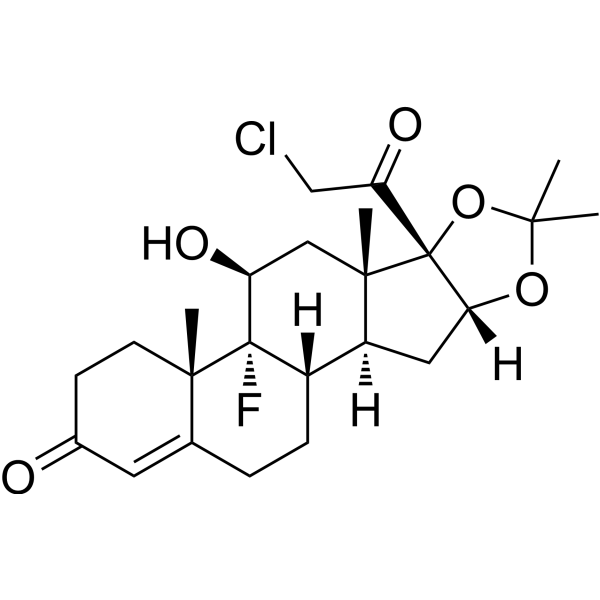
Halcinonide (SQ-18566) is an orally active Smoothened (Smo) agonist. Halcinonide activates the Hedgehog signaling pathway by binding to Smo and promoting its internalization and expression, thereby activating Gli transcription factors. Halcinonide not only stimulates cell proliferation, increases the expression of cyclin D2/CDK6 and inhibits the degradation of caspase-3, but also suppresses Bcl-2/Bax-mediated apoptosis, oxidative stress and inflammatory responses. Halcinonide activates RxRγ to upregulate the expression of myelin genes, thereby reducing cerebral infarction and improving behavioral deficits. Halcinonide has been used in studies related to multiple sclerosis and ischemic stroke .
loading...
    loading...
Cat. No.: HY-145387
CAS No.: 1263132-08-6
Purity:  99.85%
Target:  

Smo

Research Areas:  

Cancer

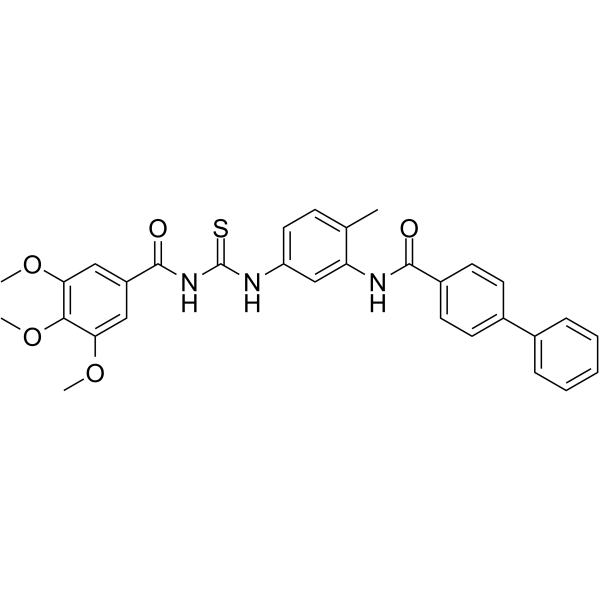
MRT-81 is a potent antagonist of human and rodent smoothened (Smo) receptors, with an IC50 value of 41 nM in the Shh-light2 cells. MRT-81 has potent hedgehog inhibiting activity. MRT-81 can be used for the research of cancer .
loading...
    loading...
Cat. No.: HY-182721
CAS No.: 2380013-55-6
Target:  

PI4K Hedgehog

Research Areas:  

Cancer

Pipinib is an ATP-competitive and selective phosphatidylinositol 4-kinase IIIb (PI4KB) inhibitor with an IC50 of 2.2 μM. Pipinib reduces intracellular PI4P levels. Pipinib inhibits GLI-mediated transcription, the expression of Hedgehog target genes, and blocks the trafficking of Smoothened to cilia. Pipinib can be used in the research of basal cell carcinoma and medulloblastoma .
loading...
    loading...
Cat. No.: HY-184494
Target:  

Gli PKC

Research Areas:  

Metabolic Disease Cancer

GLI-IN-1 is a potent, PKC-dependent Gli inhibitor. GLI-IN-1 binds to the C1 domain of PKC, forms hydrogen-bonding interactions with the M239 residue, and mediates the inhibition of downstream Gli via a PKC-mediated, Smoothened-independent mechanism. GLI-IN-1 can be used in studies of Gli-driven cancers and osteogenic differentiation .
loading...
    loading...

