14 Results for "

blue+light

" in MedChemExpress (MCE) Product Catalog:
Products (14)

14 Results for "blue+light" in MCE Product Catalog:

3
3 Cited Publications
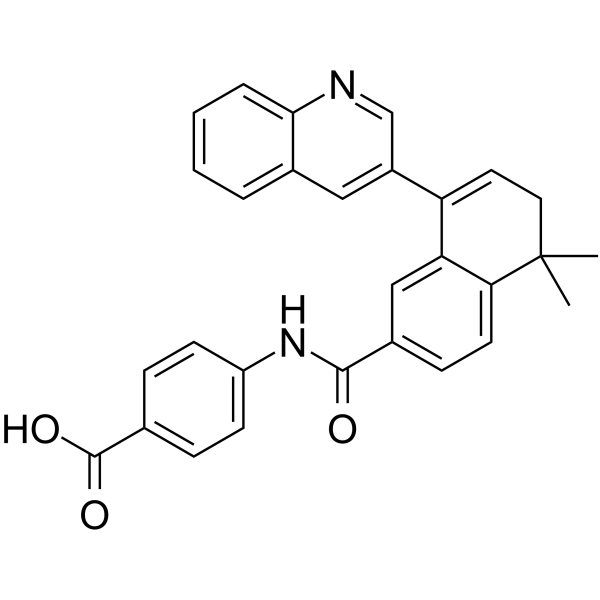
Cat. No.: HY-101259
CAS No.: 182135-66-6
Purity:  99.5%
Synonyms: BMS 614
BMS-195614 (BMS 614) is an orally active neutral RARα-selective antagonist with a Ki of 2.5 nM. BMS-195614 restores the expression of Bcl2. BMS-195614 inhibits the transactivation of NF-κB, AP-1 and PPAR. BMS-195614 downregulates the expression of IL-6 and VEGF. BMS-195614 reduces blue light-induced phototoxicity and inhibits cell migration. BMS-195614 modulates inflammation and angiogenesis .
2
2 Cited Publications
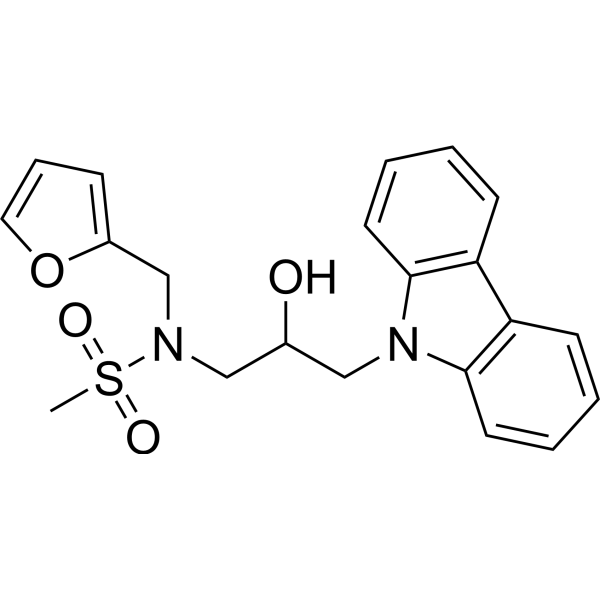
Cat. No.: HY-108468
CAS No.: 309928-48-1
Purity:  99.68%
Target:  

Cryptochrome

Research Areas:  

Metabolic Disease

KL001 is a first-in-class cryptochrome (CRY, a flavoproteins that are sensitive to blue light, and is involved in the circadian rhythms of plants and animals) stabilizer which specifically interacts with CRY1 and CRY2. KL001 prevents ubiquitin-dependent degradation of CRY, resulting in lengthening of the circadian period. KL001 has the potential to control fasting hormone-induced gluconeogenesis .
1
1 Cited Publications
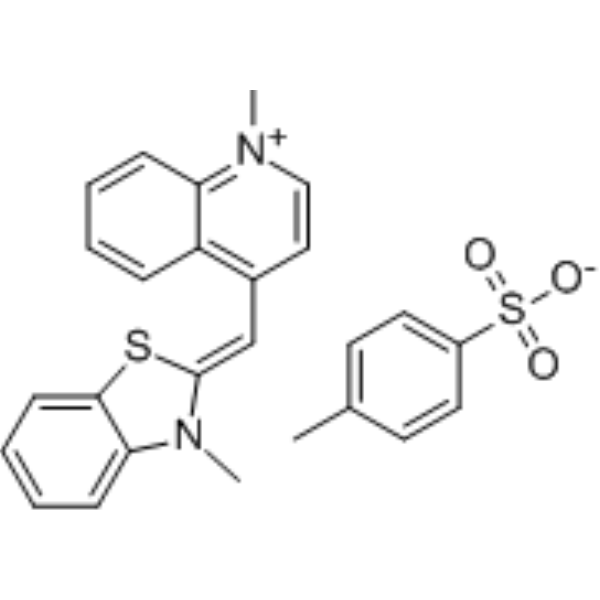
Cat. No.: HY-D0150
CAS No.: 107091-89-4
Thiazole Orange is an asymmetric anthocyanin dye that can be coupled with oligonucleotides (ONs) to prepare fluorescent hybridization probes. Thiazole Orange has been widely used in biomolecular detection and staining of DNA/ RNA in gels and can be used for reticulocyte analysis. Thiazole orange generates a significant fluorescence enhancement and high quantum yield when it binds with nucleic acids, especially RNA. Thiazole orange can permeate living cell membranes. Thiazole orange can use UV light for detection, but can also be detected with blue light. The excitation and emission of Thiazole orange are λex = 510 nm (488 nm and 470 nm also show strong excitation) and λem = 527 nm, respectively .
1
1 Cited Publications
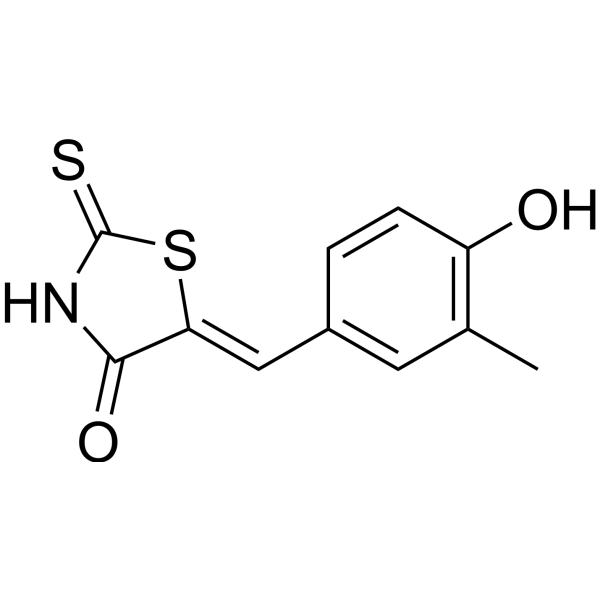
Cat. No.: HY-D1416
CAS No.: 1287651-36-8
HMBR is an analogue with an additional methyl group on the aromatic ring and is non-fluorescent. HMBR conjugated with Y-FAST emits yellow fluorescence under blue light excitation (Ex= 419 nm; Em= 525–539 nm). HMBR is non-toxic to zebrafish embryos. HMBR has high cell permeability .
Cat. No.: HY-118462
CAS No.: 70217-82-2
Purity:  99.70%
Synonyms: Coelenterazine 400a; Bisdeoxycoelenterazine
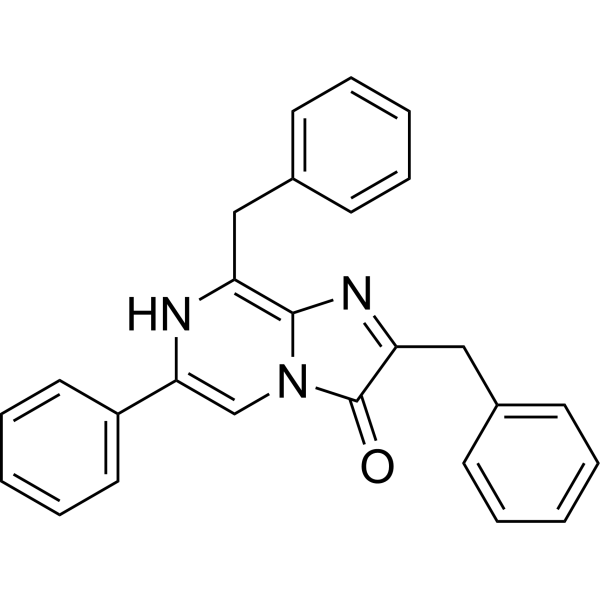
Coelenteramine 400a (Coelenterazine 400a), a derivative of Coelenterazine, is a Renilla luciferase (RLuc) substrate. In the presence of Coelenteramine 400a, RLuc can emit blue light at 395 nm . Coelenterazine 400a will causes color change in the bioluminescence reaction of Rluc by replacing the sulfur and oxygen heteroatoms of the methylene bridge. Coelenterazine 400a provides higher signal resolution and can be used in the research of bioluminescence resonance energy transfer (BRET) .
Cat. No.: HY-134928A
CAS No.: 1821308-73-9
Purity:  ≥90.0%
Synonyms: A2E TFA; N-retinylidene-N-retinylethanolamine TFA
Research Areas:  

Cancer

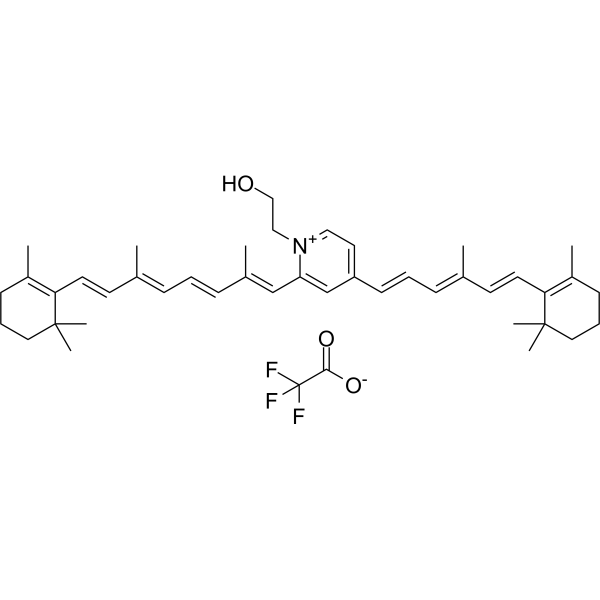
Pyridinium bisretinoid A2E (A2E) TFA is a fluorophore that can be isolated from lipofuscin in the retinal pigment epithelium (RPE). Pyridinium bisretinoid A2E TFA is an initiator of blue-light-induced apoptosis. Photoactivation of Pyridinium bisretinoid A2E TFA mediates autophagy and the production of reactive oxygen species. Pyridinium bisretinoid A2E TFA can be used in the study of retinal degenerative diseases .
Cat. No.: HY-134928
CAS No.: 173449-96-2
Synonyms: A2E
Research Areas:  

Cancer

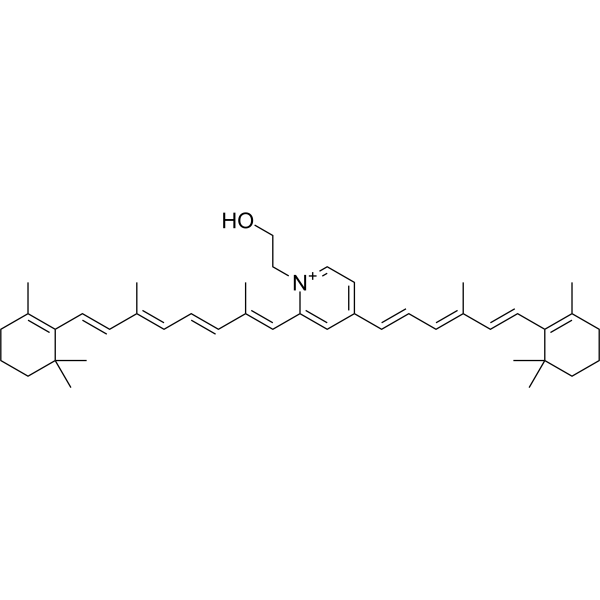
Pyridinium bisretinoid A2E (A2E) is a fluorophore that can be isolated from lipofuscin in the retinal pigment epithelium (RPE). Pyridinium bisretinoid A2E is an initiator of blue-light-induced apoptosis. Photoactivation of Pyridinium bisretinoid A2E mediates autophagy and the production of reactive oxygen species. Pyridinium bisretinoid A2E can be used in the study of retinal degenerative diseases .
Cat. No.: HY-134928AS
Purity:  ≥90.0%
Synonyms: A2E-d4 TFA
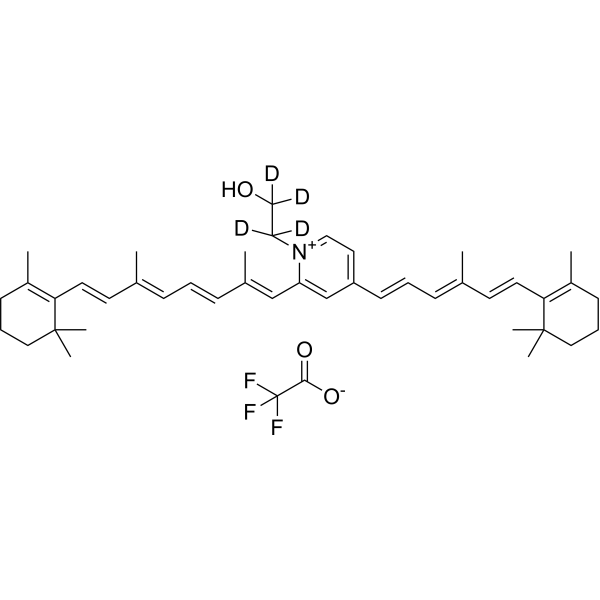
Pyridinium bisretinoid A2E-d4 TFA is the deuterium-labeled Pyridinium bisretinoid A2E (HY-134928). Pyridinium bisretinoid A2E (A2E)is an initiator of blue-light-induced apoptosis. Photoactivation of Pyridinium bisretinoid A2E mediates autophagy and the production of reactive oxygen species .
Cat. No.: HY-N11499
CAS No.: 132679-85-7
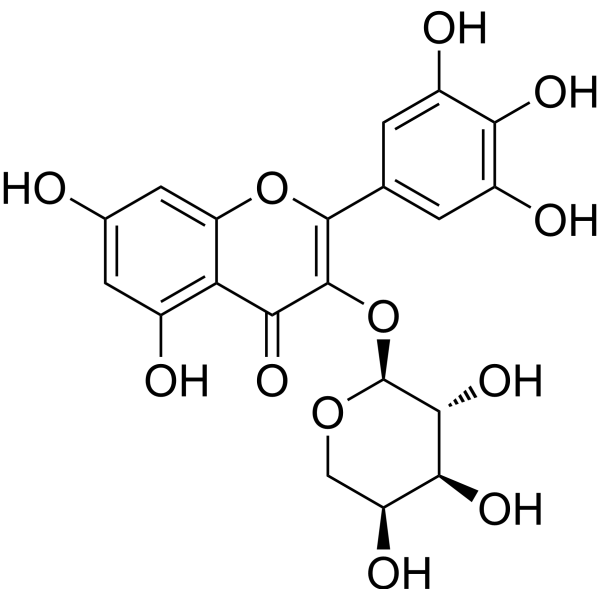
Myricetin 3-O-α-L-arabinopyranoside is a quercetin derivative and plant flavonoid with antioxidant, antibacterial and antiurease effects. Myricetin 3-O-α-L-arabinopyranoside inhibits A2E photooxidation-induced RPE cell death. Myricetin 3-O-α-L-arabinopyranoside is protective against retinal degeneration and protects against blue light (BL)-induced damage in RPE cells and mouse models .
Cat. No.: HY-118462A
CAS No.: 2320429-05-6
Synonyms: Coelenterazine 400a hydrochloride; Bisdeoxycoelenterazine hydrochloride
Target:  

Fluorescent Dye

Research Areas:  

Others

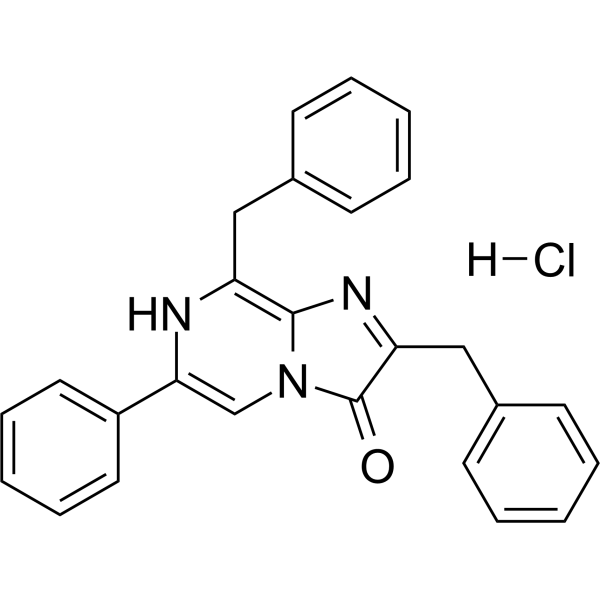
Coelenteramine (Coelenterazine) 400a hydrochloride, a derivative of Coelenterazine, is a Renilla luciferase (RLuc) substrate. In the presence of Coelenteramine 400a hydrochloride, RLuc can emit blue light at 395 nm . Coelenteramine 400a hydrochloride will causes color change in the bioluminescence reaction of Rluc by replacing the sulfur and oxygen heteroatoms of the methylene bridge. Coelenteramine 400a hydrochloride provides higher signal resolution and can be used in the research of bioluminescence resonance energy transfer (BRET) .
Cat. No.: HY-167632
CAS No.: 31272-50-1
Synonyms: (3R,3′S)-Zeaxanthin
meso-Zeaxanthin ((3R,3′S)-Zeaxanthin) is an orally active xanthophyll carotenoid. meso-Zeaxanthin inhibits CYP1A1, CYP1A2, CYP2B1/2, COX-2, TNF-α and iNOS, and enhances the activities of Uridine diphosphate glucuronosyltransferase and Glutathione-S-transferase. meso-Zeaxanthin quenches oxygen free radicals. meso-Zeaxanthin filters short-wavelength blue light, alleviates oxidative damage and visual abnormalities. meso-Zeaxanthin reduces tumor incidence, prolongs tumor latency and survival rate of tumor-bearing mice, and inhibits paw edema. meso-Zeaxanthin can be used in research related to sarcoma and age-related macular degeneration .
Cat. No.: HY-162825
Target:  

Photosensitizer

Research Areas:  

Cancer

Antitumor photosensitizer-7 (compound 15) is a photosensitizer with anti-cancer activity. Antitumor photosensitizer-7 exhibits significant cytotoxicity against the G361 melanoma cell line under 414 nm blue light irradiation .
Cat. No.: HY-108468R
CAS No.: 309928-48-1
Research Areas:  

Metabolic Disease

KL001 (Standard) is the analytical standard of KL001 (HY-108468). This product is intended for research and analytical applications. KL001 is a first-in-class cryptochrome (CRY, a flavoproteins that are sensitive to blue light, and is involved in the circadian rhythms of plants and animals) stabilizer which specifically interacts with CRY1 and CRY2. KL001 prevents ubiquitin-dependent degradation of CRY, resulting in lengthening of the circadian period. KL001 has the potential to control fasting hormone-induced gluconeogenesis .
Cat. No.: HY-DY1097
CAS No.: 107091-89-4
Thiazole Orange (solution) is an asymmetric anthocyanin dye that can be coupled with oligonucleotides (ONs) to prepare fluorescent hybridization probes. Thiazole Orange has been widely used in biomolecular detection and staining of DNA/ RNA in gels and can be used for reticulocyte analysis. Thiazole orange generates a significant fluorescence enhancement and high quantum yield when it binds with nucleic acids, especially RNA. Thiazole orange can permeate living cell membranes. Thiazole orange can use UV light for detection, but can also be detected with blue light. The excitation and emission of Thiazole orange are λex = 510 nm (488 nm and 470 nm also show strong excitation) and λem = 527 nm, respectively .
Solvent and concentration: DMSO: 10 mM
The 1 mL volume is defined as the base specification. All larger sizes correspond to incremental volumes of this base.
  • 1

