7 Results for "

cellular cytoplasm

" in MedChemExpress (MCE) Product Catalog:
Products (7)

7 Results for "cellular cytoplasm" in MCE Product Catalog:

2
2 Cited Publications
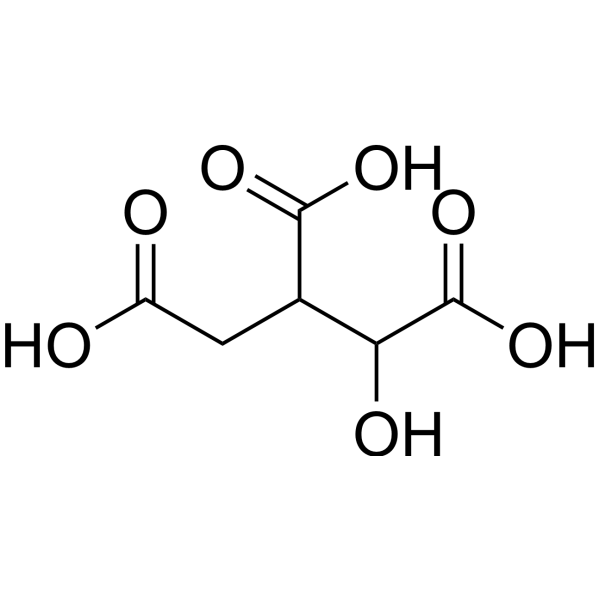
Cat. No.: HY-113228
CAS No.: 320-77-4
Purity:  99.14%
Target:  

Endogenous Metabolite

Research Areas:  

Neurological Disease

Isocitric acid is an endogenous metabolite present in Saliva and Cellular_Cytoplasm that can be used for the research of Alzheimer's Disease, Lewy Body Dementia and Anoxia .
loading...
    loading...
Cat. No.: HY-175739
CAS No.: 932992-44-4
TFAM activator 1 is a TFAM activator. TFAM activator 1 increases TFAM protein levels, promotes mitochondrial DNA stability, increases mitochondrial DNA copy number, and prevents mitochondrial DNA from escaping into the cytoplasm. TFAM activator 1 improves cellular energy metabolism in cybrid cells. TFAM activator 1 reduces fibrosis markers in fibroblasts. TFAM activator 1 can be used in the research of mitochondrial encephalomyopathy, lactic acidosis, and stroke-like episodes syndrome, systemic sclerosis, and autoimmune diseases .
loading...
    loading...
Cat. No.: HY-113228R
CAS No.: 320-77-4
Isocitric acid (Standard) is the analytical standard of Isocitric acid (HY-113228). This product is intended for research and analytical applications. Isocitric acid is an endogenous metabolite present in Saliva and Cellular_Cytoplasm that can be used for the research of Alzheimer's Disease, Lewy Body Dementia and Anoxia.
loading...
    loading...
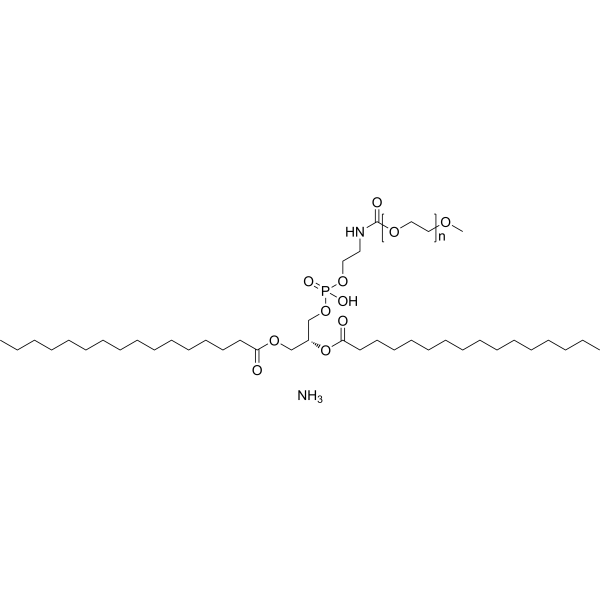
Cat. No.: HY-144012H
CAS No.: 474922-84-4
Synonyms: 16:0 PEG5000 PE; 1,2-Dipalmitoyl-sn-glycero-3-phosphoethanolamine-N-[methoxy(polyethylene glycol)-5000] ammonium
DPPE-PEG5000 (16:0 PEG5000 PE) is a polymer-lipid conjugate and LipoParticle stabilizer with a PEG chain of 5,000 g/mol molecular weight attached to its polar head, and it can be internalized by biological membranes. DPPE-PEG5000 enables LipoParticle to maintain colloidal stability after 20-fold dilution in PBS or cell culture medium, and prevents aggregate formation during lyophilization and rehydration. DPPE-PEG5000 helps enhance the non-cytotoxic property of LipoParticle formulations against human osteoblasts. DPPE-PEG5000 serves as a PEG lipid functional end group for synthesizing liposomes (LPs), is used in the design of conjugated polymer nanoparticles, and applies to research related to bone and joint infections .
loading...
    loading...
Cat. No.: HY-185057
CAS No.: 41656-56-8
Synonyms: S-Lactylglutathione; (R)-S-Lactoylglutathione
S-D-Lactoylglutathione (S-Lactylglutathione; (R)-S-Lactoylglutathione) is a multifunctional metabolic intermediate of the glyoxalase system. S-D-Lactoylglutathione activates K + efflux in bacteria by displacing inhibitory glutathione from KefGB channels, thereby acidifying the cytoplasm. In eukaryotic cells, S-D-Lactoylglutathione mediates S-glutathionylation as a substrate of glyoxalase 2. S-D-Lactoylglutathione serves as a sensitive metabolic biomarker for neodymium nitrate neurotoxicity; when used in combination with MSCs-exo, it upregulates glutathione levels, downregulates lactate dehydrogenase and Glo2 levels, and inhibits cellular inflammatory responses and pyroptosis. S-D-Lactoylglutathione can be used in research related to prostate cancer, breast cancer, non-small cell lung cancer, sepsis-associated encephalopathy, and neurotoxicity .
loading...
    loading...
Cat. No.: HY-P2742B
CAS No.: 9029-44-1
Target:  

Endogenous Metabolite

Research Areas:  

Metabolic Disease

Ascorbate oxidase, acremonium sp is a member of the multicopper blue oxidase family and primarily exists in plants as a free enzyme in the cytoplasm or bound to the cell wall. Ascorbate oxidase, acremonium sp has a high activity in catalyzing the oxidation of ascorbic acid to dehydroascorbic acid, regulating various cellular processes related to plant growth, protection, and development. Ascorbate oxidase, acremonium sp can be used to detect hydrogen peroxide .
loading...
    loading...
Cat. No.: HY-L060
2,283 compounds

The cytoskeleton is responsible for contraction, cell motility, movement of organelles and vesicles through the cytoplasm, cytokinesis, intracellular signal transduction, and many other functions that are essential for cellular homeostasis and survival. It accomplishes these tasks through three basic structures: F-actin, microtubules, and intermediate filaments (IFs). The cytoskeleton is a dynamic structure where the three major filaments and tubules are under the influence of proteins that regulate their length, state of polymerization, and level of cross-linking. Since cytoskeleton is involved in virtually all cellular processes, cytoskeletal protein aberrations are the underlying reason for many pathological phenotypes, including several cardiovascular disease syndromes, neurodegeneration, cancer, liver cirrhosis, pulmonary fibrosis, and blistering skin diseases.

MCE designs a unique collection of 2,283 cytoskeleton-related compounds mainly focusing on the key targets in the cytoskeleton signal pathway and can be used in the research of cytoskeleton signal pathway and related diseases.

