18 Results for "

cryptic

" in MedChemExpress (MCE) Product Catalog:
Products (18)

18 Results for "cryptic" in MCE Product Catalog:

1
1 Cited Publications
Cat. No.: HY-147007
CAS No.: 1005288-15-2
Purity:  96.58%
Target:  

β-catenin Wnt CDK

Research Areas:  

Cancer

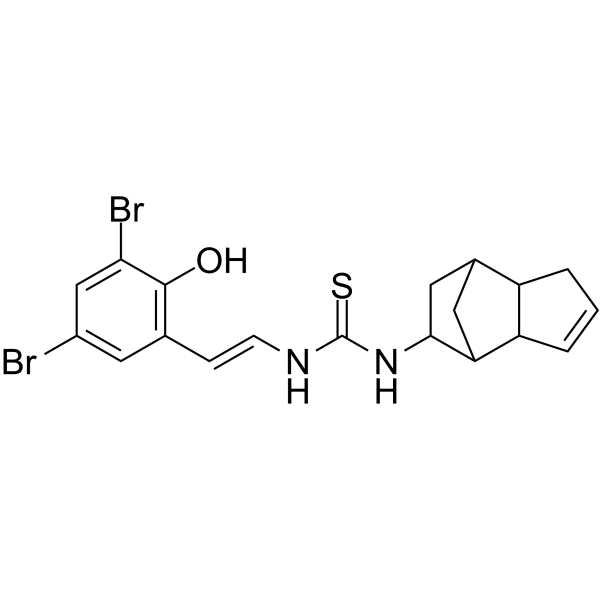
β-catenin-IN-3 (Compound C2) is a selective β-catenin inhibitor. β-catenin-IN-3 binds to allosteric site on the surface of β-catenin with K D calculated at 54.96 nM. β-catenin-IN-3 selectively inhibits β-catenin via targeting a cryptic allosteric modulation site, lowers its cellular load. β-catenin-IN-3 significantly reduces viability of β-catenin driven cancer cells, and triggers β-catenin degradation via proteasome system in β-catenin-overexpressing cancer cells .
Cat. No.: HY-159805
CAS No.: 2813260-27-2
Target:  

CDK

Research Areas:  

Cancer

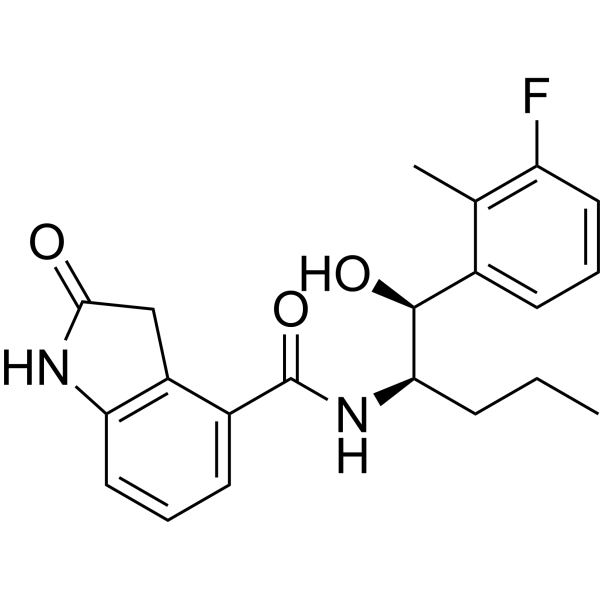
CDK2-IN-31 is a CCNE1:CDK2 complex inhibitor with an IC50 of 0.13 μM. CDK2-IN-31 binds to a cryptic allosteric pocket at the CCNE1:CDK2 interface, inducing structural rearrangements of the CDK2 A-loop that disrupt the kinase's active conformation and interfere with substrate binding. CDK2-IN-31 inhibits phosphorylation of retinoblastoma protein 1 (RB1) in CCNE1-dependent ovarian cancer cells. CDK2-IN-31 impairs coenrichment of protein PRC1 with CCNE1-N112C:CDK2 complexes. CDK2-IN-31 can be used for the research of ovarian cancer .
Cat. No.: HY-177360
CAS No.: 3067915-73-2
Target:  

DNA/RNA Synthesis

Research Areas:  

Neurological Disease Cancer

RNA splicing modulator-4 is an RNA splicing modulator. RNA splicing modulator-4 controls the inclusion or exclusion of specific exons in precursor mRNA (pre-mRNA) by regulating alternative splicing events, thereby altering the coding sequence and function of mature mRNA. RNA splicing modulator-4 shows promise for research into neurodegenerative diseases (such as Huntington's disease) and cancers .
Cat. No.: HY-175594
Target:  

DNA Methyltransferase

Research Areas:  

Cancer

DNMT2-IN-2 is a selective DNA methyltransferase 2 (DNMT2) inhibitor with a KD value of 3.04 μM. DNMT2-IN-2 targets to a cryptic allosteric binding site of DNMT2. DNMT2-IN-2 reduces m5C levels in MOLM-13 tRNA and synergizes with Doxorubicin (HY-15142A) to impair cell viability. DNMT2-IN-2 can be used for cancer research, such as cervical cancer and leukemia .
Cat. No.: HY-134858
CAS No.: 2406205-61-4
Purity:  99.77%
Synonyms: A1AT modulator 1
Target:  

Serpin Ser/Thr Protease

Research Areas:  

Metabolic Disease

GSK716 (A1AT modulator 1) is an orally active Z α1-antitrypsin (Z-A1AT) inhibitor with a pIC50 of 8.3. GSK716 binds a cryptic Z α1-antitrypsin pocket, stabilizes monomeric folding intermediates, blocks polymerization, and increases monomer secretion. GSK716 acts on select sensitive α1-antitrypsin variants but fails to affect resistant variants. GSK716 can be used for the research of α1-antitrypsin deficiency and α1-antitrypsin deficiency-associated liver disease .
Cat. No.: HY-P10503
CAS No.: 672333-56-1
S2-16 is a synthetic peptide from the S2 region of cardiac myosin. S2-16 is a cryptic epitope that induces myocarditis in Lewis rats. A cryptic epitope is an epitope that is not recognized by antibodies or T cells after the animal is immunized with the intact antigen. S2-16 can be used to study the mechanism of autoimmune myocarditis .
Cat. No.: HY-123853
CAS No.: 2101206-81-7
Target:  

Casein Kinase

Research Areas:  

Cancer

CAM4066 is a potent CK2α inhibitor, with an IC50 value of 300 nM. CAM4066 exhibits high selectivity, with IC50 values of 22.35, 43.55, and > 50 μM for HIPK3, DAPK3, and CLK2, respectively. CAM4066 shows no cell activity. CAM4066 can be used for the development of highly potent CK2 inhibitors .
Cat. No.: HY-RS02558
Research Areas:  

Others

CFC1 Human Pre-designed siRNA Set A contains three designed siRNAs for CFC1 gene (Human), as well as a negative control, a positive control, and a FAM-labeled negative control.

Cat. No.: HY-160789
CAS No.: 2415154-29-7
C3001a is a selective TREK-1 and TREK-2 channel activator with EC50 values of 12.81 μM and 11.31 μM, respectively. C3001a does not affect other two-pore domain K + (K2P) channels. C3001a binds to the cryptic binding site formed by P1 and TM4 in TREK-1. C3001a can be used for the study of pain and pancreatitis .
Cat. No.: HY-161940
Target:  

PCSK9

Research Areas:  

Cardiovascular Disease

PCSK9-IN-30 (Compound 3f) is a PCSK9 inhibitor. PCSK9-IN-30 interacts with a cryptic binding groove of PCSK9, inhibiting the binding of PCSK9 to the low-density lipoprotein receptor (LDLR) (IC50 = 537 nM), restoring the uptake of low-density lipoprotein (LDL) by liver cells, and ultimately reducing plasma cholesterol levels. PCSK9-IN-30 exhibits good bioavailability in mice and can be used for research in the field of cardiovascular diseases .
Cat. No.: HY-P11220
Research Areas:  

Infection

Hs02 is a cationic amphiphilic antibacterial peptide derived from human proteins, and it is the membrane-active module of the core chimeric peptide Chim2. Hs02 exhibits broad-spectrum and potent antibacterial activity against various human pathogenic bacteria with the MIC for Staphylococcus aureus and Escherichia coli of as low as 2 μM, and the MBC is 2-4 μM. Hs02 primarily kills bacteria by disrupting the integrity of the bacterial cell membrane, and it has a relatively low selectivity for eukaryotic cell membranes. Hs02 induces the release of IL-12 but does not induce the release of IL-6, indicating its potential for pro-inflammatory or immune activation. Hs02 can be used in antibacterial and immunomodulatory research .
Cat. No.: HY-P7892
Purity:  ≥ 95%, as determined by reducing SDS-PAGE.
Synonyms: rHucryptic, His; cryptic protein; cryptic family protein 1; CFC1
Species:  
Source:  
Cat. No.: HY-RS21309
Research Areas:  

Others

Cfc1 Mouse Pre-designed siRNA Set A contains three designed siRNAs for Cfc1 gene (Mouse), as well as a negative control, a positive control, and a FAM-labeled negative control.

Cat. No.: HY-182346
Target:  

FBPase

Research Areas:  

Metabolic Disease

FBPase-IN-7 is a fructose-1,6-bisphosphatase (FBPase) inhibitor with an IC50 of 0.75 μM. FBPase-IN-7 binds to a cryptic allosteric pocket of FBPase, induces conformational rearrangement of key residues, forms a hydrogen-bond network, and disrupts substrate catalysis. FBPase-IN-7 confirms cellular stabilizes HuFBPase in hepatic cells. FBPase-IN-7 has hypoglycemic activity. FBPase-IN-7 can be used for the research of type 2 diabetes .
Cat. No.: HY-163113
Category:  

Microorganisms Phenols

Target:  

Endogenous Metabolite

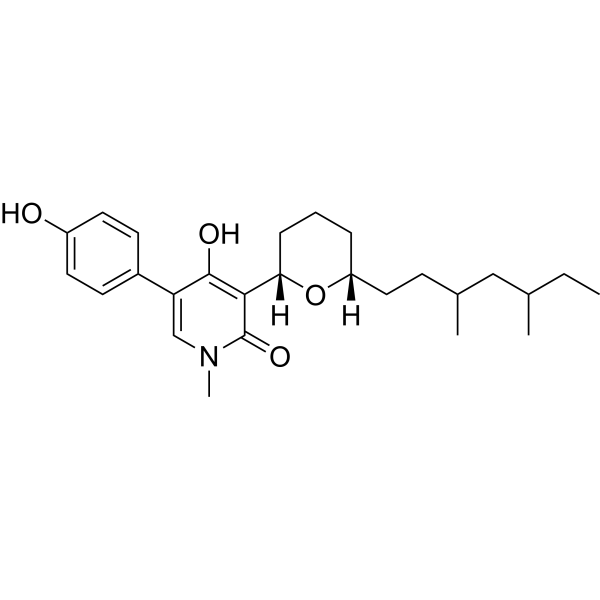
Anticancer agent 180 (compound 4) is a secondary metabolite present in fungal strains and extracted through physical interaction with Streptomyces sp. Anticancer agent 180 has potential anti-tumor activity and can inhibit the migration of MDA-MB-231 breast cancer cells .
Cat. No.: HY-180900
CAS No.: 2249005-28-3
Target:  

LAG-3

Research Areas:  

Inflammation/Immunology

Z3071585108 is a small molecule binder of the LAG-3 D1 domain with Kd values measured for the MST-TRIC channel and spectral shift detection of 59.2 and 56.1 μM respectively. Z3071585108 partially inhibits the binding of LAG-3 to MHCII, with an EC₅₀ of 42.9 μM. Z3071585108 can be used for the study of small molecule immunotherapies targeting LAG-3 .
Cat. No.: HY-L942
1802 compounds

Unlike highly conserved orthosteric sites, allosteric sites exhibit low conservation, high hydrophobicity, weak polarity, confined geometry, and dynamic cryptic properties. Rather than rigid keyhole-like cavities, they typically appear as flexible grooves, subunit interface clefts, or shallow depressions formed by protein conformational changes.

Based on the dynamic, hydrophobic, and elongated nature of allosteric pockets, MCE has carried out targeted fragment modification and screening under strict physicochemical criteria: MW 120–280 Da, HBD ≤ 2, HBA ≤ 3, PSA 30–80 Ų, rotatable bonds ≤ 2, cLogP 1–3.5. High 3D diversity was further ensured by PMI analysis, yielding fragments with excellent shape complementarity to allosteric pockets.

This library contains 1,800 structurally diverse, drug-like fragments, this library supports allosteric drug development and pocket optimization. It significantly improves screening hit rates and enables efficient, precise early-stage R&D of allosteric drugs.

Cat. No.: HY-L941
4315 compounds

Orthosteric sites are highly conserved, leading to poor subtype selectivity, off-target toxicity and drug resistance in traditional drugs. By contrast, allosteric sites show low conservation, high hydrophobicity, weak polarity, confined geometry and dynamic cryptic properties, granting modulators high selectivity, functional tunability and safety. Thus, allosteric therapy has become a major focus in drug discovery.

MCE curated nearly 1,000 clinical-stage allosteric modulators, analyzed PDB complex structures to identify key pharmacophores and privileged scaffolds, then designed and filtered compounds using rational “scaffold derivation + physicochemical screening” with strict property criteria. The resulting compounds show high rigidity and shape complementarity to shallow, dynamic, hydrophobic allosteric pockets.

This library comprises 4,315 diverse, lead-like compounds ideal for allosteric drug discovery and target screening, covering kinases, GPCRs and more. All are analogs of clinical-stage molecules with similarity > 0.6, combining high druggability and allosteric binding potential to support efficient early-stage R&D.

  • 1

