7 Results for "

dermal exposure

" in MedChemExpress (MCE) Product Catalog:
Products (7)

7 Results for "dermal exposure" in MCE Product Catalog:

1
1 Cited Publications
Cat. No.: HY-A0169A
CAS No.: 79416-27-6
Research Areas:  

Cancer

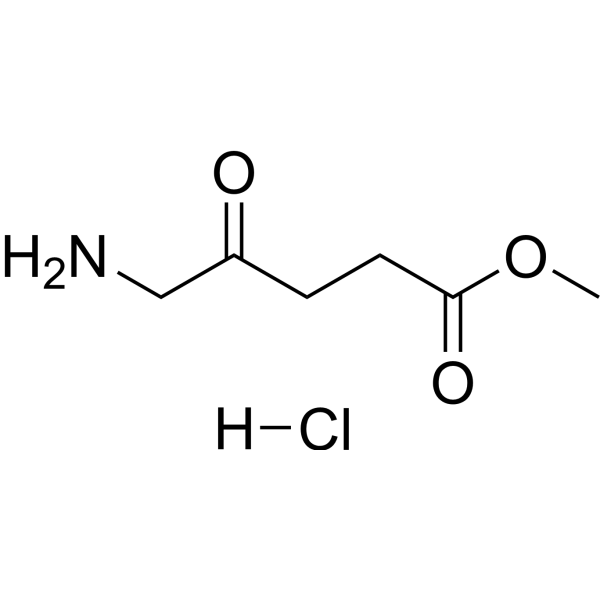
Methyl aminolevulinate hydrochloride is a sensitizer used in photodynamic therapy (PDT). Methyl aminolevulinate hydrochloride penetrates the skin and induces the production of photoactive porphyrins including protoporphyrin IX in cells; upon exposure to appropriate light, it generates ROS, which triggers cellular oxidation and cell death. Methyl aminolevulinate hydrochloride acts as a photo-damage reversing agent through epidermal reconstruction, cytokine-mediated activation of dermal fibroblasts, elastin breakdown, new collagen formation, and compression of dilated capillaries. Methyl aminolevulinate hydrochloride reduces the expression of the proliferation marker Ki-67 and the early skin carcinogenesis marker TP53. Methyl aminolevulinate hydrochloride delays the onset of ultraviolet-induced skin tumors and reduces tumor burden in hairless mice. Methyl aminolevulinate hydrochloride is applicable to research related to actinic keratosis and basal cell carcinoma .
loading...
    loading...
Cat. No.: HY-21197
CAS No.: 375-85-9
Synonyms: Perfluoroheptanoic acid; Tridecafluoroheptanoic acid; PFHpA
Perfluoroenanthic acid (Perfluoroheptanoic acid) is a kind of perfluoroalkyl carboxylic acid organic pollutant. Perfluoroenanthic acid has environmental persistence and bioaccumulation, and exposure can occur via oral, dermal and other routes. Perfluoroenanthic acid exhibits reproductive toxicity, neurotoxicity, hepatotoxicity, immunotoxicity and endocrine-disrupting effects. Perfluoroenanthic acid exerts definite adverse effects on development, spermatogenesis, neuronal activity and liver tissue .
loading...
    loading...
Cat. No.: HY-170448
PROTAC AR Degrader-9 is a topically applicable androgen receptor (AR) PROTAC degrader. PROTAC AR Degrader-9 recruits Cereblon (CRBN) E3 ubiquitin ligase to induce AR ubiquitination and proteasomal degradation in human dermal papilla cells (HDPCs) with a DC50 of 262.38 nM. PROTAC AR Degrader-9 possesses excellent skin retention, modulates androgenetic alopecia (AGA)-related downstream paracrine factors including TGF-β1 and β-catenin, promotes hair regeneration in mice. and exhibits favorable skin pharmacokinetics profiles with minimal systemic exposure. PROTAC AR Degrader-9 can be used for the study of androgenetic alopecia (AGA) .
loading...
    loading...
Cat. No.: HY-A0169
CAS No.: 33320-16-0
Research Areas:  

Cancer

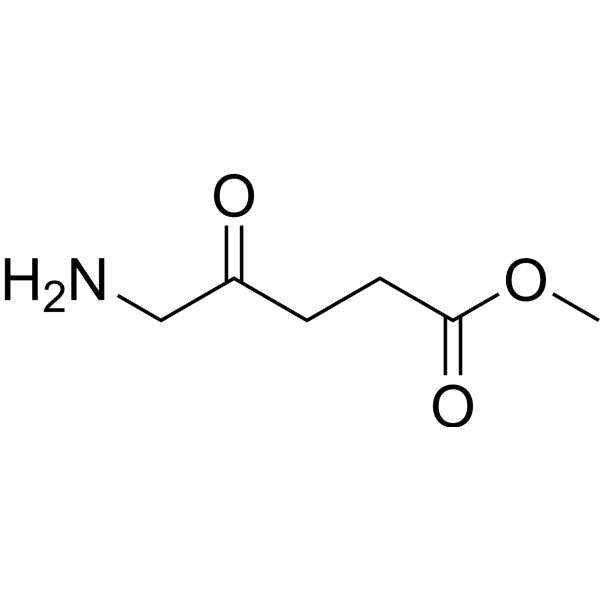
Methyl aminolevulinate is a sensitizer used in photodynamic therapy (PDT). Methyl aminolevulinate penetrates the skin and induces the production of photoactive porphyrins including protoporphyrin IX in cells; upon exposure to appropriate light, it generates ROS, which triggers cellular oxidation and cell death. Methyl aminolevulinate acts as a photo-damage reversing agent through epidermal reconstruction, cytokine-mediated activation of dermal fibroblasts, elastin breakdown, new collagen formation, and compression of dilated capillaries. Methyl aminolevulinate reduces the expression of the proliferation marker Ki-67 and the early skin carcinogenesis marker TP53. Methyl aminolevulinate delays the onset of ultraviolet-induced skin tumors and reduces tumor burden in hairless mice. Methyl aminolevulinate is applicable to research related to actinic keratosis and basal cell carcinoma .
loading...
    loading...
Cat. No.: HY-21197S
CAS No.: 2328024-55-9
Synonyms: Perfluoroheptanoic acid-13C4; Tridecafluoroheptanoic acid-13C4; PFHpA-13C4
Perfluoroenanthic acid- 13C4 (Perfluoroheptanoic acid- 13C4) is the 13C-labeled Perfluoroenanthic acid (HY-21197). Perfluoroenanthic acid (Perfluoroheptanoic acid) is a kind of perfluoroalkyl carboxylic acid organic pollutant. Perfluoroenanthic acid has environmental persistence and bioaccumulation, and exposure can occur via oral, dermal and other routes. Perfluoroenanthic acid exhibits reproductive toxicity, neurotoxicity, hepatotoxicity, immunotoxicity and endocrine-disrupting effects. Perfluoroenanthic acid exerts definite adverse effects on development, spermatogenesis, neuronal activity and liver tissue .
loading...
    loading...
Cat. No.: HY-187232
CAS No.: 2536-05-2
Synonyms: 2,2′-MDI
Target:  

Drug Isomer

Research Areas:  

Inflammation/Immunology

2,2'-Methylenediphenyl diisocyanate (2,2′-MDI) is a sensitizer and an isomer of methylenediphenyl diisocyanate (MDI). 2,2'-Methylenediphenyl diisocyanate induces contact sensitization upon skin contact. 2,2'-Methylenediphenyl diisocyanate is used in studies of allergic contact dermatitis .
loading...
    loading...
Cat. No.: HY-A0169AR
CAS No.: 79416-27-6
Methyl aminolevulinate hydrochloride (Standard) is the analytical standard of Methyl aminolevulinate hydrochloride. This product is intended for research and analytical applications. Methyl aminolevulinate hydrochloride is a sensitizer used in photodynamic therapy (PDT). Methyl aminolevulinate hydrochloride penetrates the skin and induces the production of photoactive porphyrins including protoporphyrin IX in cells; upon exposure to appropriate light, it generates ROS, which triggers cellular oxidation and cell death. Methyl aminolevulinate hydrochloride acts as a photo-damage reversing agent through epidermal reconstruction, cytokine-mediated activation of dermal fibroblasts, elastin breakdown, new collagen formation, and compression of dilated capillaries. Methyl aminolevulinate hydrochloride reduces the expression of the proliferation marker Ki-67 and the early skin carcinogenesis marker TP53. Methyl aminolevulinate hydrochloride delays the onset of ultraviolet-induced skin tumors and reduces tumor burden in hairless mice. Methyl aminolevulinate hydrochloride is applicable to research related to actinic keratosis and basal cell carcinoma .
loading...
    loading...

