1. Search Result
Search Result
Results for "

dose-dependent survival

" in MedChemExpress (MCE) Product Catalog:

16

Inhibitors & Agonists

5

Oligonucleotides

Cat. No. Product Name Target Research Areas Chemical Structure
  • HY-122678

    Survivin Apoptosis Cancer
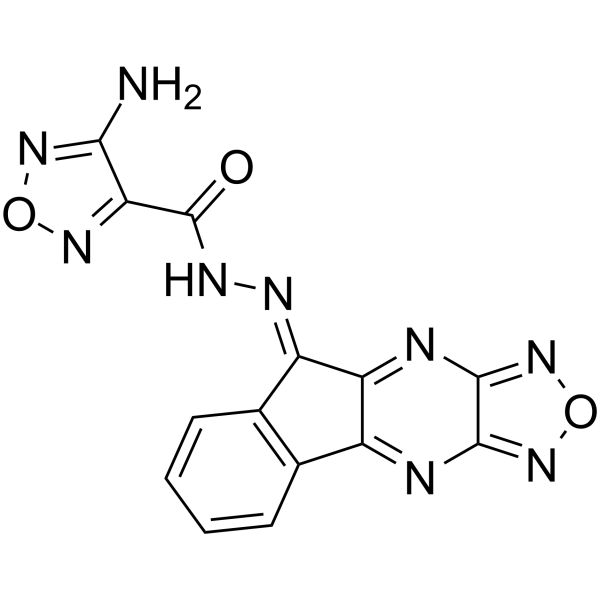
    LQZ-7F, a survivin dimerization inhibitor, induces spontaneous apoptosis and synergizes with Docetaxel in prostate cancer cells. LQZ-7F dose-dependently inhibits survival of both PC-3 and C4-2 cells with IC50s of 2.99 and 2.47 µM, respectively .
    LQZ-7F
  • HY-111527

    Calcium Channel Neurological Disease
    PPZ2 is a diacylglycerol (DAG)-activated TRPC3/TRPC6/TRPC7 channel activator with activity in promoting neuronal development and survival. PPZ2 activates recombinant TRPC3/TRPC6/TRPC7 channels in a dose-dependent manner without affecting other TRPC channels. PPZ2 elicits cation currents and calcium ion (Ca(2+)) influx in cultured central neurons. PPZ2 is able to induce BDNF-like neurite outgrowth and neuroprotection, an effect that disappears after TRPC3/TRPC6/TRPC7 knockdown or inhibition. PPZ2 also increases the activation of the calcium-dependent transcription factor cAMP response element binding protein. The effects of PPZ2 suggest that calcium signaling mediated by activation of DAG-activated TRPC channels plays an important role in its neurotrophic effects .
    PPZ2
  • HY-158821A

    TGF-beta/Smad Neurological Disease
    ISTH0036 sodium is a phosphorothioate LNA-modified antisense oligonucleotide gapmer that selectively targets and downregulates TGF-β2 mRNA. ISTH0036 sodium suppresses TGF-β2 expression, reduces choroidal neovascularization and vascular leakage, inhibits fibrosis, blocks epithelial-to-mesenchymal transition, and inhibits angiogenesis while promoting bleb survival. ISTH0036 sodium exhibits long-lasting, dose-dependent ocular tissue distribution and target engagement in rabbit and non-human primate eyes. ISTH0036 sodium can be used for the study of various ocular disorders, such as glaucoma and neovascular retinal diseases .
    ISTH0036 sodium
  • HY-158821

    TGF-beta/Smad Neurological Disease
    ISTH0036 is a phosphorothioate LNA-modified antisense oligonucleotide gapmer that selectively targets and downregulates TGF-β2 mRNA. ISTH0036 suppresses TGF-β2 expression, reduces choroidal neovascularization and vascular leakage, inhibits fibrosis, blocks epithelial-to-mesenchymal transition, and inhibits angiogenesis while promoting bleb survival. ISTH0036 exhibits long-lasting, dose-dependent ocular tissue distribution and target engagement in rabbit and non-human primate eyes. ISTH0036 can be used for the study of various ocular disorders, such as glaucoma and neovascular retinal diseases .
    ISTH0036
  • HY-10845

    Bacterial Others
    CGI-17341 is a 5-nitroimidazole antibacterial agent that has the activity of inhibiting sensitive and multidrug-resistant strains of Mycobacterium tuberculosis in vitro and prolonging the survival time of mice infected with Mycobacterium tuberculosis in vivo in a dose-dependent manner.
    CGI-17341
  • HY-178738

    Antibiotic Bacterial Topoisomerase DNA/RNA Synthesis Infection
    GC-072 is an orally active, 4-oxoquinolizine antibiotic that selectively inhibits bacterial DNA gyrase and Topo IV enzymes. GC-072 does not inhibit human topoisomerases I and II. GC-072 demonstrates strong antimicrobial activity against various bacterial strains, including Gram-positive, Gram-negative, and resistant bacteria. GC-072 also exhibits bactericidal activity against Burkholderia pseudomallei both extracellularly and intracellularly, leading to dose-dependent survival in mice exposed to lethal inhalational models of B. pseudomallei infection. GC-072 can be used for the research of melioidosis .
    GC-072
  • HY-119805

    Others Inflammation/Immunology
    YM 13650 is an orally active anti-nephritic agent. YM 13650 exhibits dose-dependent preventive and therapeutic effects in both the rat immune complex nephritis model and the mouse spontaneous lupus nephritis model. YM 13650 can inhibit the increase in urinary protein, improve serum cholesterol and urea nitrogen levels, alleviate renal pathological damage, and prolong the survival time of mice. YM 13650 can be used in the research of nephritic diseases .
    YM 13650
  • HY-105271

    S-(+)-S-312-d

    Calcium Channel Others
    S-312-d (S-(+)-S-312-d) is a calcium channel blocker with the activity of protecting the kidney from ischemic acute renal failure. S-312-d (0.01-0.1mg/kg b.wt. iv) administered before ischemia has a dose-dependent protective effect on ischemia-induced renal damage, improves the survival rate of ischemic rats, and reduces renal cortical edema and the increase in renal tissue calcium content.
    S-312-d
  • HY-170921

    Deubiquitinase Cancer
    USP1-IN-11 (compound 38-P2) is a selective, reversible, and noncompetitive USP1 (Ubiquitin-specific protease 1) inhibitor. USP1-IN-11 activates the DDR (DNA damage repair) pathway, induces cell cycle arrest and cell Apoptosis, and inhibits cell survival. USP1-IN-11 enhances the sensitivity of Olaparib (HY-10162)-resistant cells to Olaparib (HY-10162) and shows a synergetic effect with Andrographolide (HY-N0191) in BRCA-proficient cancer cells. USP1-IN-11 displays significant, dose-dependent antitumor efficacy in the MDA-MB-436 xenograft model .
    USP1-IN-11
  • HY-170576

    FLT3 STAT Apoptosis Cancer
    FLT3-IN-28 (Compound 12y) is an orally active FLT3 inhibitor with antitumor activity. FLT3-IN-28 selectively inhibits cancer cells harboring the FLT3 internal tandem duplication (ITD) mutation, with IC50 values of 85, 290, 130, 65, and 220 nM for BaF3-FLT3-ITD, BaF3-TEL-VEGFR2, MV4-11, MOLM-13, and MOLM-14 cell lines respectively (MV4-11 and MOLM-13/14 are acute myeloid leukemia (AML) cell lines carrying the FLT3-ITD mutation). Additionally, FLT3-IN-28 can downregulate the phosphorylation levels of FLT3 and STAT5 in MOLM-13 cells and induce cell cycle arrest and Apoptosis. FLT3-IN-28 has an oral bioavailability of 19.2% in SD rats and can prolong survival in a dose-dependent manner in NSG mice xenografted with MOLM-13 cells. FLT3-IN-28 holds promise for research in cancer fields related to FLT3-ITD .
    FLT3-IN-28
  • HY-182941

    EAAT Neurological Disease
    Parawixin10 (Compound 2) is an N-acylpolyamine. Parawixin10 fails to enhance glutamate uptake in radioligand uptake assays of EAAT1, EAAT2 or EAAT3. Parawixin10 exhibits no positive allosteric modulatory activity in radioligand uptake assays of EAAT1EAAT3, nor can it improve neuronal survival rates in mice in a dose-dependent and statistically significant manner. Parawixin10 has no neuroprotective activity .
    Parawixin10
  • HY-158821B

    TGF-beta/Smad Neurological Disease
    ISTH0036 sodium scrambled negative control is the sequence scrambled negative control of ISTH0036 sodium (HY-158821A). ISTH0036 sodium is a phosphorothioate LNA-modified antisense oligonucleotide gapmer that selectively targets and downregulates TGF-β2 mRNA. ISTH0036 sodium suppresses TGF-β2 expression, reduces choroidal neovascularization and vascular leakage, inhibits fibrosis, blocks epithelial-to-mesenchymal transition, and inhibits angiogenesis while promoting bleb survival. ISTH0036 sodium exhibits long-lasting, dose-dependent ocular tissue distribution and target engagement in rabbit and non-human primate eyes. ISTH0036 sodium can be used for the study of various ocular disorders, such as glaucoma and neovascular retinal diseases.
    ISTH0036 sodium scrambled negative control
  • HY-158821D

    Fluorescent Dye TGF-beta/Smad Neurological Disease
    Cy3 labled ISTH0036 sodium is a Cy3 labled ISTH0036 sodium (HY-158821A). ISTH0036 sodium is a phosphorothioate LNA-modified antisense oligonucleotide gapmer that selectively targets and downregulates TGF-β2 mRNA. ISTH0036 sodium suppresses TGF-β2 expression, reduces choroidal neovascularization and vascular leakage, inhibits fibrosis, blocks epithelial-to-mesenchymal transition, and inhibits angiogenesis while promoting bleb survival. ISTH0036 sodium exhibits long-lasting, dose-dependent ocular tissue distribution and target engagement in rabbit and non-human primate eyes. ISTH0036 sodium can be used for the study of various ocular disorders, such as glaucoma and neovascular retinal diseases.
    Cy3 labled ISTH0036 sodium
  • HY-158821C

    Fluorescent Dye TGF-beta/Smad Neurological Disease
    FAM labled ISTH0036 sodiumis a FAM labled ISTH0036 sodium (HY-158821A). ISTH0036 sodium is a phosphorothioate LNA-modified antisense oligonucleotide gapmer that selectively targets and downregulates TGF-β2 mRNA. ISTH0036 sodium suppresses TGF-β2 expression, reduces choroidal neovascularization and vascular leakage, inhibits fibrosis, blocks epithelial-to-mesenchymal transition, and inhibits angiogenesis while promoting bleb survival. ISTH0036 sodium exhibits long-lasting, dose-dependent ocular tissue distribution and target engagement in rabbit and non-human primate eyes. ISTH0036 sodium can be used for the study of various ocular disorders, such as glaucoma and neovascular retinal diseases.
    FAM labled ISTH0036 sodium
  • HY-183074

    CDK Interleukin Related Inflammation/Immunology
    RO8323 is an orally active, selective CDK8/CDK19 inhibitor, with an IC50 of 2 nM against CDK8 and 3 nM against CDK19. RO8323 promotes regulatory T cell differentiation, inhibits effector T cell generation, reverses the Teff/Treg ratio, upregulates IL-10 production in myeloid cells, and suppresses the production of TNF-α, IL-6 and IL-12. RO8323 enhances immune reconstitution and prolongs cardiac allograft survival in a dose-dependent manner. RO8323 can be used in the research of chronic graft-versus-host disease, cardiac allograft rejection, acute graft-versus-host disease and experimental autoimmune encephalomyelitis .
    RO8323
  • HY-182671

    PI3K Btk Apoptosis Cancer
    SRX3305 is an BTK/PI3K/BRD4 inhibitor with IC50s of 6.5 nM, 15 nM, and 4 nM toward BTK, PI3Kɑ and PI3Kδ, respectively. SRX3305 attenuates chronic lymphocytic leukemia (CLL) and mantle cell lymphoma (MCL) cell proliferation and promotes apoptosis in a dose-dependent fashion. SRX3305 yields potent anti-tumor effects but spares healthy bystander cells. SRX3305 inhibits the activation-induced proliferation of primary CLL cells in vitro and effectively blocks microenvironment-mediated survival signals. SRX3305 blocks CLL cell migration toward CXCL-12 and CXCL-13. SRX3305 maintains its anti-tumor effects in Ibrutinib (HY-10997)-resistant CLL cells. SRX3305 can be used for research in CLL, diffuse large B-cell lymphoma (DLBCL) and MCL .
    SRX3305

Inquiry Online

Your information is safe with us. * Required Fields.

Salutation


Country or Region *

Applicant Name *


Organization Name *

Department *


Email Address *


Product Name *

Cat. No.


Requested quantity *

Phone Number *


Remarks

Inquiry Online

Inquiry Information

Product Name:
Cat. No.:
Quantity:
MCE Japan Authorized Agent:

