1. Search Result
Search Result
Results for "

emulsion stabilization

" in MedChemExpress (MCE) Product Catalog:

10

Inhibitors & Agonists

8

Biochemical Assay Reagents

1

Peptides

1

Isotope-Labeled Compounds

2

Oligonucleotides

Cat. No. Product Name Target Research Areas Chemical Structure
  • HY-A0103

    Environmental Pollutants Biochemical Assay Reagents Inflammation/Immunology
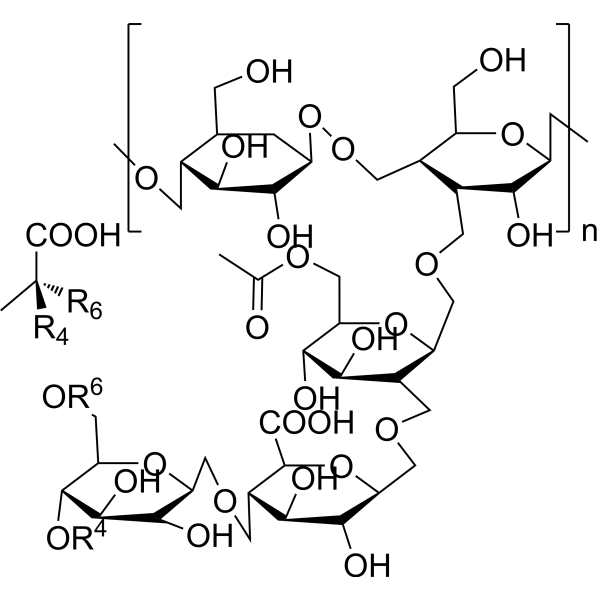
    Xanthan gum interacts with gelatin (HY-Y1365) via hydrogen bonds, thereby increasing the viscosity and stability of the hydrogel while promoting cell growth and creating a microenvironment conducive to cell differentiation [1][2]. Xanthan gum induces pro-inflammatory responses by increasing the levels of TNF-α, IL-6, and IL-10. Xanthan gum can be used for inflammation and immunology research .
    Xanthan gum
  • HY-W250166

    Environmental Pollutants Biochemical Assay Reagents Others
    Poly(ethylene glycol) (12) tridecyl ether is a nonionic surfactant belonging to the family of ethoxylated fatty alcohols. It is commonly used as an emulsifier, solubilizer, and wetting agent in a variety of industrial and personal care products. Poly(ethylene glycol)(12) tridecyl ether has various properties that make it suitable for these applications, including its low toxicity, high solubility in water and organic solvents, and ability to stabilize emulsions. In addition, it can be used as a raw material for the production of other surfactants and specialty chemicals.
    Polyoxyethylene tridecyl ether
  • HY-Y0850O

    PVA (Mw 31000-50000, 87-89% hydrolyzed); Poly(Ethenol) (Mw 31000-50000, 87-89% hydrolyzed)

    Environmental Pollutants Biochemical Assay Reagents Cancer
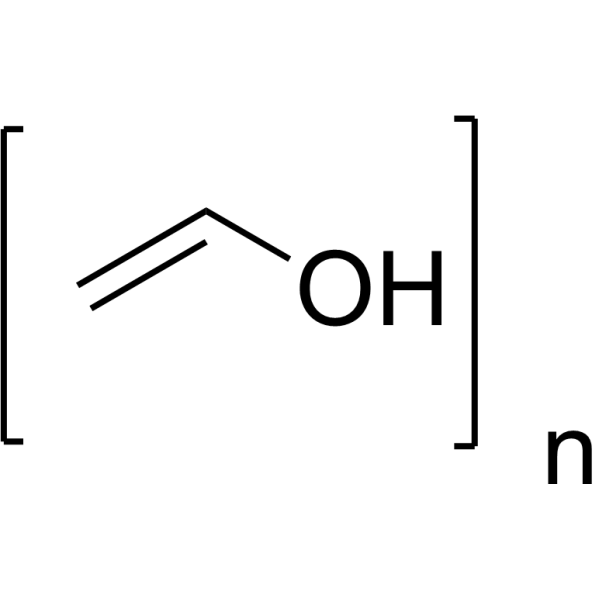
    Polyvinyl alcohol (PVA; Poly (Ethenol)) (Mw 31000-50000, 87-89% hydrolyzed) is a polymer with emulsifying and stabilizing properties, with a degree of hydrolysis of 87-89%. Polyvinyl alcohol (Mw 31000-50000, 87-89% hydrolyzed) mainly acts as a stabilizer in the preparation of nanomedicines; it not only maintains the structural integrity of PEGylated PLGA nanoparticles during double emulsion synthesis, but also facilitates the preparation of chitosan/matrine-PLGA nanoparticle aqueous solutions and lipid-polymer nanoparticles. Polyvinyl alcohol (Mw 31000-50000, 87-89% hydrolyzed) can be widely used in research related to fields such as breast cancer .
    Polyvinyl alcohol (Mw 31000-50000, 87-89% hydrolyzed)
  • HY-W127620

    Biochemical Assay Reagents Others
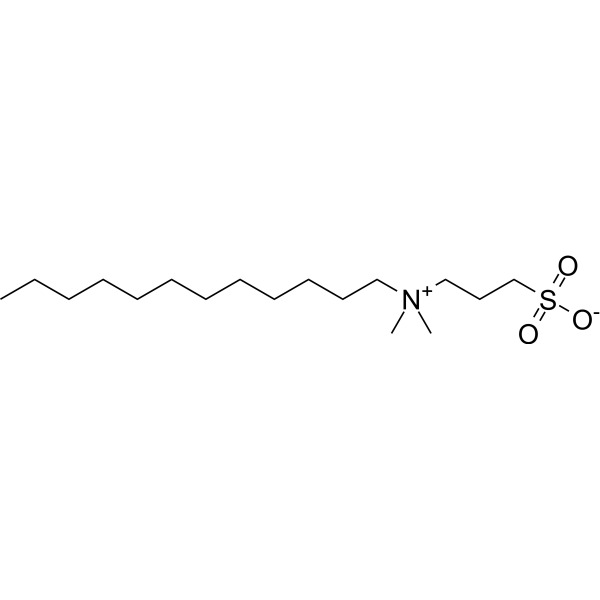
    Sulfobetaine-12is a zwitterionic surfactant, which means it has both positive and negative charges in its molecules. It is used as a detergent in various industries, including pharmaceuticals, cosmetics, and personal care products. Sulfobetaine-12Often used as a mild surfactant due to its non-irritating properties and ability to stabilize emulsions. Plus, it has antistatic properties that can be used to clean electronics and other static-prone surfaces.
    Sulfobetaine-12
  • HY-W250172

    Biochemical Assay Reagents Others
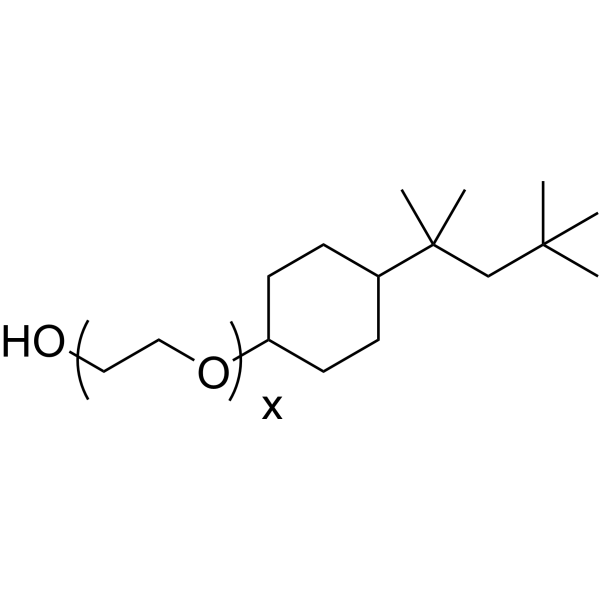
    Polyethylene glycol tert-octylphenyl ether X-405 (70% in H2O) is a nonionic surfactant commonly used in a variety of industrial and research applications. Polyethylene glycol tert-octylphenyl ether X-405 (70% in H2O) belongs to the family of polyethylene glycol (PEG) ethers with a hydrophilic head and lipophilic tail and is suitable for use in emulsions, detergents and solubilizers. Polyethylene glycol tert-octylphenyl ether X-405 (70% in H2O) is particularly useful in the study of membrane proteins, where it is used to solubilize and stabilize proteins for structural analysis techniques. It is also used in a variety of other applications, including drug delivery systems, nanotechnology, and diagnostic analysis. Additionally, Polyethylene glycol tert-octylphenyl ether X-405 (70% in H2O) is used in the production of microemulsions, salves and lotions due to its emulsifying and solubilizing properties. However, it can be toxic if ingested or inhaled, so proper handling and safety precautions are required.
    Polyethylene glycol tert-octylphenyl ether X-405 (70% in H2O)
  • HY-W099642

    Trimethyl-n-octylammonium bromide

    Biochemical Assay Reagents Others
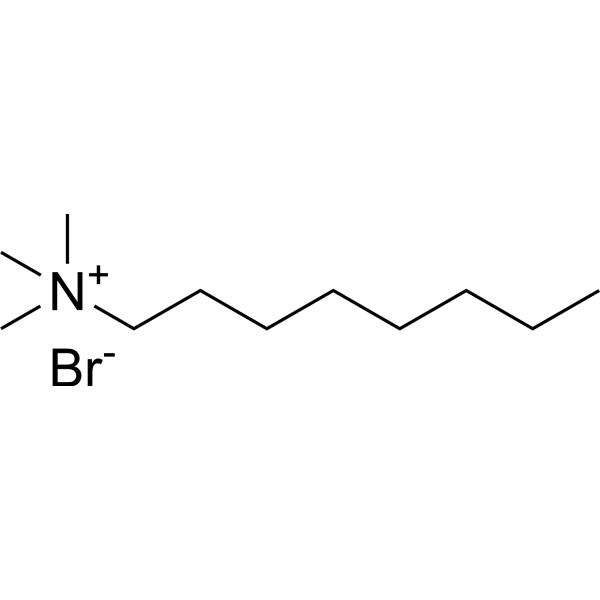
    Trimethyloctylammonium bromide (TOAB) is used as a surfactant and phase transfer catalyst in various chemical reactions. TOAB can be used in the synthesis of nanomaterials due to its ability to selectively transfer ions across interfaces and as a surfactant in the production of emulsions and foams. It is valued for its amphiphilic properties, which allow it to interact with water and oils, stabilizing and dispersing mixtures.
    Trimethyloctylammonium bromide
  • HY-W127621

    Biochemical Assay Reagents Others
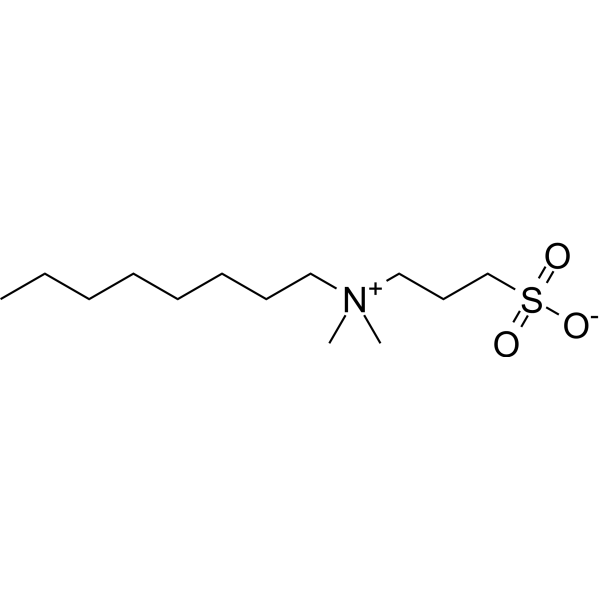
    Sulfobetaine-8is a zwitterionic surfactant, which means it has both positive and negative charges in its molecules. It is used as a detergent in various industries, including pharmaceuticals, cosmetics, and personal care products. Sulfobetaine-8Often used as a mild surfactant because of its non-irritating and ability to stabilize emulsions. Plus, it has antistatic properties that can be used to clean electronics and other static-prone surfaces.
    Sulfobetaine-8
  • HY-119554

    PFDB

    Biochemical Assay Reagents Others
    Perfluorodecyl bromide (PFDB), a Perflubron (PFOB, HY-B1724) analogue, is a high molecular weight lipophilic fluorocarbon. Perfluorodecyl bromide can be used to prepare phospholipid-stabilized fluorocarbon emulsions .
    Perfluorodecyl bromide
  • HY-159063

    Biochemical Assay Reagents Others
    Soy Polysaccharides are biochemical reagents that can be added to beverages, sauces, and dairy products as thickeners, emulsifiers, and dietary fiber ingredients. Soy Polysaccharides are non-toxic, hydrophilic, and biodegradable, allowing for widespread application in various food sectors. Additionally, Soy Polysaccharides serve as effective stabilizers in oil/water emulsions. Even under acidic conditions, Soy Polysaccharides can stabilize β-conglycinin-based emulsions to prevent flocculation .
    Soy Polysaccharides
  • HY-W700634

    Isotope-Labeled Compounds Biochemical Assay Reagents Others
    Sulfobetaine-12-d25 is the deuterium labeled Sulfobetaine-12 (HY-W127620). Sulfobetaine-12is a zwitterionic surfactant, which means it has both positive and negative charges in its molecules. It is used as a detergent in various industries, including pharmaceuticals, cosmetics, and personal care products. Sulfobetaine-12Often used as a mild surfactant due to its non-irritating properties and ability to stabilize emulsions. Plus, it has antistatic properties that can be used to clean electronics and other static-prone surfaces.
    Sulfobetaine-12-d25

Inquiry Online

Your information is safe with us. * Required Fields.

Salutation


Country or Region *

Applicant Name *


Organization Name *

Department *


Email Address *


Product Name *

Cat. No.


Requested quantity *

Phone Number *


Remarks

Inquiry Online

Inquiry Information

Product Name:
Cat. No.:
Quantity:
MCE Japan Authorized Agent:

