7 Results for "

gallbladder disease

" in MedChemExpress (MCE) Product Catalog:
Products (7)

7 Results for "gallbladder disease" in MCE Product Catalog:

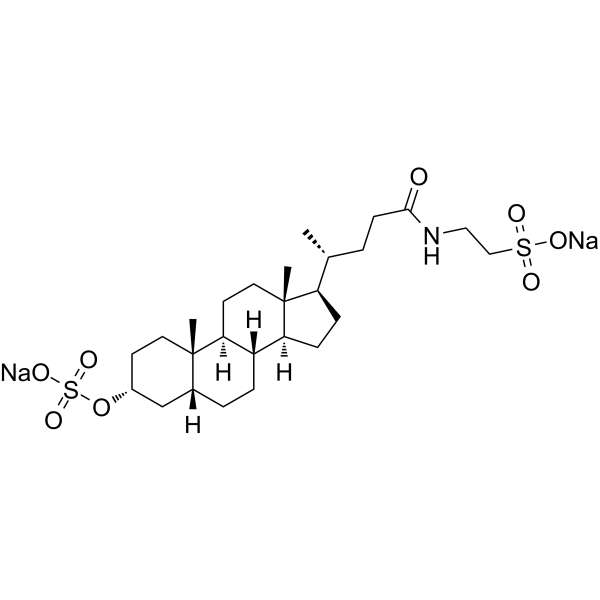
Cat. No.: HY-137255
CAS No.: 64936-83-0
Synonyms: 3-Sulfotaurolithocholic acid disodium
Taurolithocholic acid 3-sulfate disodium is a GPR39 agonist with EC50s of 71.6  and 69.4 (absence of Zn 2+) and 9 and 9.6 μM (presence of Zn 2+) in M39-20 and hGPR39-2 cells, respectively. Taurolithocholic acid 3-sulfate disodium stimulates GPR39 receptors to initiate intracellular calcium signaling, independent of Zn 2+ binding sites H17 and H19. Taurolithocholic acid 3-sulfate disodium can be used for the research of gallbladder disease .
loading...
    loading...
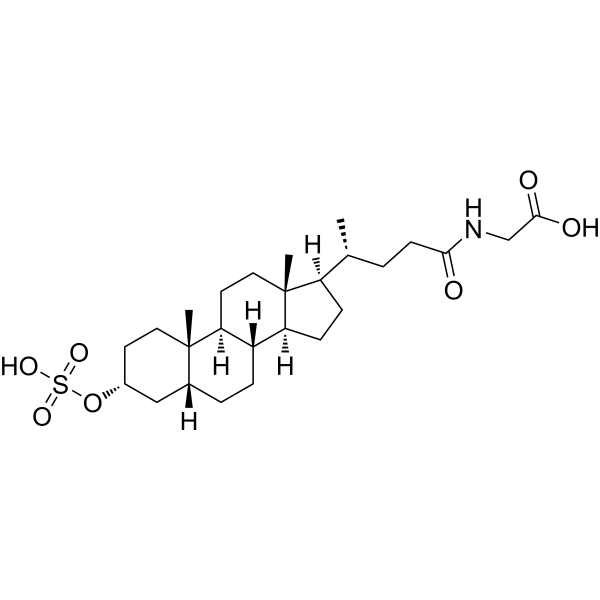
Cat. No.: HY-113074
CAS No.: 15324-64-8
Purity:  ≥98.0%
Synonyms: Glycolithocholate sulfate; Sulfolithocholylglycine; SLCG
Glycolithocholic acid 3-sulfate (SLCG) is a cholic acid derivative and a metabolite of glycolithocholic acid. Glycolithocholic acid 3-sulfate inhibits replication of HIV-1 in vitro. Glycolithocholic acid 3-sulfate can be used for the research of HIV infection and gallbladder disease .
loading...
    loading...
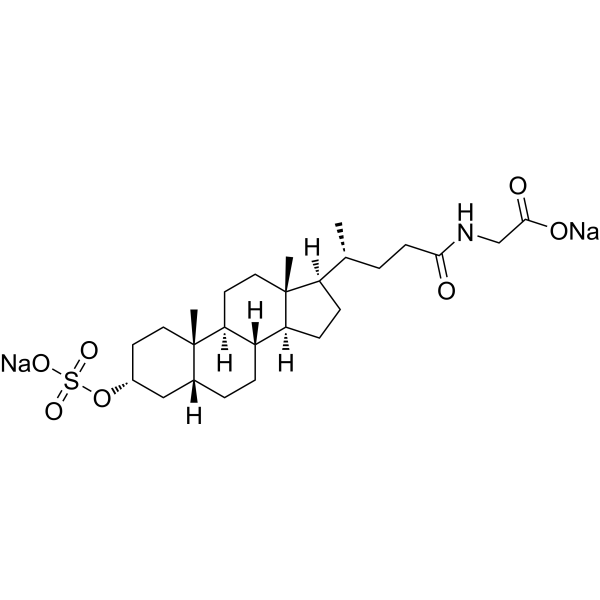
Cat. No.: HY-W587430
CAS No.: 64936-82-9
Synonyms: Glycolithocholate sulfate disodium; Sulfolithocholylglycine disodium; SLCG disodium
Target:  

HIV GPR39

Research Areas:  

Infection Inflammation/Immunology

Glycolithocholic acid 3-sulfate disodium is a GPR39 agonist with EC50s of 47.9  and 66.8 μM (absence of Zn 2+) and 8 and 8.7 μM (presence of Zn 2+) in M39-20 and hGPR39-2 cells, respectively. Glycolithocholic acid 3-sulfate disodium stimulates GPR39 receptors to initiate intracellular calcium signaling, independent of Zn 2+ binding sites H17 and H19. Glycolithocholic acid 3-sulfate disodium also inhibits replication of HIV-1 in vitro. Glycolithocholic acid 3-sulfate disodium can be used for the research of HIV infection and gallbladder disease .
loading...
    loading...
Cat. No.: HY-N15784
CAS No.: 2707415-29-8
Category:  

Lipids

Tauro-12-oxolithocholanoic acid sodium is a bile acid (BA) suitable to investigate BAs and their relatives’ behavior and correlation with liver, gallbladder, and bile ducts diseases.
loading...
    loading...
Cat. No.: HY-113074R
CAS No.: 15324-64-8
Synonyms: Glycolithocholate sulfate (Standard); Sulfolithocholylglycine (Standard); SLCG (Standard)
Propyzamide (Standard) is the analytical standard of Propyzamide. This product is intended for research and analytical applications. Propyzamide is a anti-microtubule herbicide .
loading...
    loading...
Cat. No.: HY-N15768
CAS No.: 1917340-42-1
Category:  

Lipids

Tauro-3β,5α,6β-trihydroxycholanoic acid sodium is a bile acid (BA) suitable to investigate BAs and their relatives’ behavior and correlation with liver, gallbladder, and bile ducts diseases.
loading...
    loading...
Cat. No.: HY-L208
62 compounds

Bile acids are a class of amphiphilic molecules derived from the metabolic breakdown of cholesterol, primarily synthesized in the liver, and play a crucial role in the intestines. Based on their structural characteristics, bile acids are mainly divided into two categories: free bile acids (including Cholic acid, Deoxycholic acid, Chenodeoxycholic acid) and conjugated bile acids (including Glycocholic acid, Glycochenodeoxycholic acid, Taurocholic acid, etc.). Bile acids play a significant role in the pathophysiological research of liver and gastrointestinal diseases and are closely associated with the occurrence of metabolic diseases such as obesity, type II diabetes, non-alcoholic fatty liver disease, and atherosclerosis. Bile acids maintain metabolic balance within the body by regulating sugar metabolism, lipid metabolism, and amino acid metabolism, and they influence the activity of metabolism-related enzymes and transporters. In addition, Bile acids can also be used to construct a bile acid metabolism research platform, which helps to delve into the metabolic pathways and dynamic changes of bile acids in living organisms and aids in identifying new biomarkers for certain diseases.

MCE included 62 bile acids, including Cholic acid, Deoxycholic acid, Glycocholic acid, etc., which are effective tools for the study of liver and gallbladder diseases.

