

1. Search Result
Search Result
Results for "

human lymphoma models

" in MedChemExpress (MCE) Product Catalog:

21

Inhibitors & Agonists

1

Peptides

9

Inhibitory Antibodies

Cat. No. Product Name Target Research Areas Chemical Structure
  • HY-150105

    BMF-219; Menin-MLL inhibitor 21

    Epigenetic Reader Domain Metabolic Disease Inflammation/Immunology Cancer
    Icovamenib (BMF-219) is a selective, orally active, irreversible Menin inhibitor. Icovamenib forms a stable and irreversible covalent bond with Menin. Icovamenib promotes selective and controlled proliferation of beta cells and improvement of beta cell function in ex vivo human islet cultures. Icovamenib enhances glycemic control in animal diabetic models. Icovamenib induces a dose-dependent enhancement in insulin secretion potentiated by the GLP-1 RA. Icovamenib can be used for the study of multiple hematologic malignancies, solid tumors, and diabetes mellitus, such as diffuse large B-cell lymphoma (DLBCL), multiple myeloma (MM) and chronic lymphocytic leukemia and type 2 diabetes .
    Icovamenib
  • HY-P99056

    PF 05082566

    TNF Receptor Inflammation/Immunology Cancer
    Utomilumab (PF 05082566) is a fully human IgG2 agonist monoclonal antibody that selectively binds to 4-1BB/CD137. Utomilumab can be used in the research of tumors such as follicular and other CD20 + non-Hodgkin lymphomas .
    Utomilumab
  • HY-P99272
    Ulocuplumab
    1 Publications Verification

    BMS 936564; MDX 1338; Anti-human CXCR4 Recombinant Antibody

    CXCR Cancer
    Ulocuplumab (Anti-Human CXCR4 Recombinant Antibody/BMS-936564/MDX1338) is a fully human IgG4 anti-CXCR4 antibody. Ulocuplumab induces apoptosis and inhibits CXCL12 mediated CXCR4 activation-migration of chronic lymphocytic leukemia (CLL). Ulocuplumab exhibits antitumor activity in established tumors including acute myeloid leukemia (AML), non-Hodgkin lymphoma (NHL), and multiple myeloma xenograft models .
    Ulocuplumab
  • HY-15163
    Zotiraciclib
    2 Publications Verification

    TG02; SB1317

    JAK CDK FLT3 Cancer
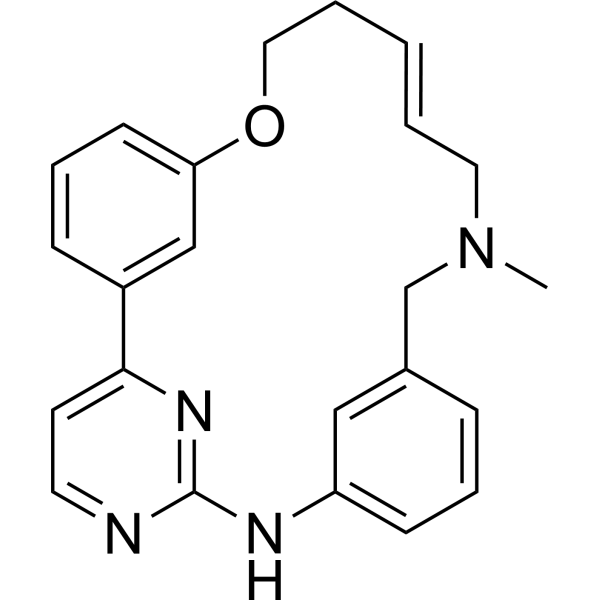
    Zotiraciclib (TG02; SB1317) is an orally active JAK2/FLT3/CDK2 inhibitor with IC50 values of 13 nM, 73 nM and 56 nM , respectively. Zotiraciclib inhibits cancer cell proliferation, tumor growth and the activity of CYP2D6. Zotiraciclib exhibits high plasma protein binding rate, Caco-2 permeability and tissue distribution capacity, as well as metabolic stability in human and canine liver microsomes. Zotiraciclib achieves tumor growth inhibition in nude mouse models of colon cancer and lymphoma xenografts. Zotiraciclib can be used for research related to colon cancer, B-cell lymphoma, advanced leukemia, acute leukemia and multiple myeloma .
    Zotiraciclib
  • HY-P991550

    CD22 Cancer
    RFB4 is an anti-CD22 monoclonal antibody. RFB4 can be fused with Pseudomonas aeruginosa exotoxin (PE38) via disulfide bonds to construct recombinant immunotoxins, such as RFB4 (dsFv)-PE38. RFB4 is applicable to the research of cancers including lymphoma .
    RFB4
  • HY-119715

    CDK Apoptosis Inflammation/Immunology Cancer
    AG-012986 is a pan-CDK inhibitor with Ki values of 44 nM (CDK1), 9.2 nM (CDK4), 94 nM (CDK2), and IC50 values of 22 nM (CDK5), 4 nM (CDK9). AG-012986 causes apoptosis of T-cells by targeting upstream kinases in the p38 Mitogen-activated protein kinase (MAPK) pathway and impairing cellular survival. AG-012986 induces cell cycle arrest, retinoblastoma protein hypophosphorylation, and reduces Ki-67 expression. AG-012986 exerts antiproliferative activity in tumor cells, demonstrates antitumor efficacy in human xenograft models, and causes retinal and peripheral neurotoxicity, plus immune cell toxicity. AG-012986 can be used for the research of colon carcinoma, non-small cell lung carcinoma, lung carcinoma, breast carcinoma, ovarian tumor, pancreatic carcinoma, osteosarcoma, lymphoma, leukemia, retinotoxicity .
    AG-012986
  • HY-P991057

    CD47 Cancer
    STI-6643 is a fully human IgG4 antibody that targets CD47. STI-6643 blocks CD47-SIRPα interaction, and enables macrophage-mediated phagocytosis of tumor cells. STI-6643 shows anti-tumor activity in mouse lymphoma xenograft models. STI-6643 can be used for the research of Burkitt's lymphoma, solid tumors, relapsed or refractory tumors, and lymphoma. The isotype control for STI-6643 can refer to Human IgG4 (S228P) kappa, Isotype Control (HY-P99003) .
    STI-6643
  • HY-18030A

    Anaplastic lymphoma kinase (ALK) Cancer
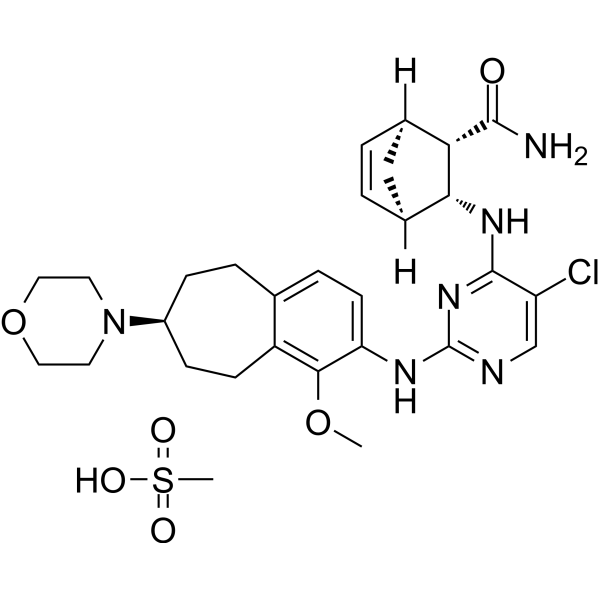
    CEP-28122 mesylate salt, a diaminopyrimidine derivative, is a potent, selective, and orally active ALK inhibitor with an IC50 value of 1.9 nM. CEP-28122 mesylate salt has antitumor activity in experimental models of ALK-positive human cancers. CEP-28122 mesylate salt has good pharmacodynamic and pharmacokinetic activity. CEP-28122 mesylate salt can be used for the study of ALK-positive anaplastic large-cell lymphoma (ALCL), non-small cell lung cancer (NSCLC), and neuroblastoma cells .
    CEP-28122 mesylate salt
  • HY-18030

    Anaplastic lymphoma kinase (ALK) Cancer
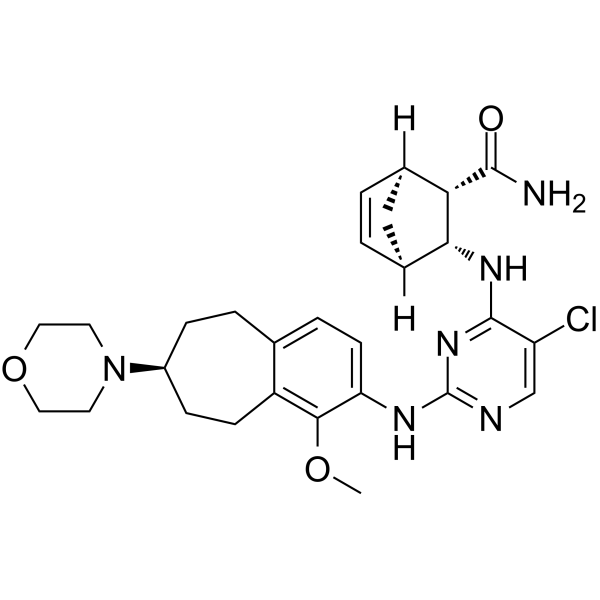
    CEP-28122, a diaminopyrimidine derivative, is a potent, selective, and orally active ALK inhibitor with an IC50 value of 1.9 nM. CEP-28122 has antitumor activity in experimental models of ALK-positive human cancers. CEP-28122 has good pharmacodynamic and pharmacokinetic activity. CEP-28122 can be used for the study of ALK-positive anaplastic large-cell lymphoma (ALCL), non-small cell lung cancer (NSCLC), and neuroblastoma cells .
    CEP-28122
  • HY-18030B

    Anaplastic lymphoma kinase (ALK) Others
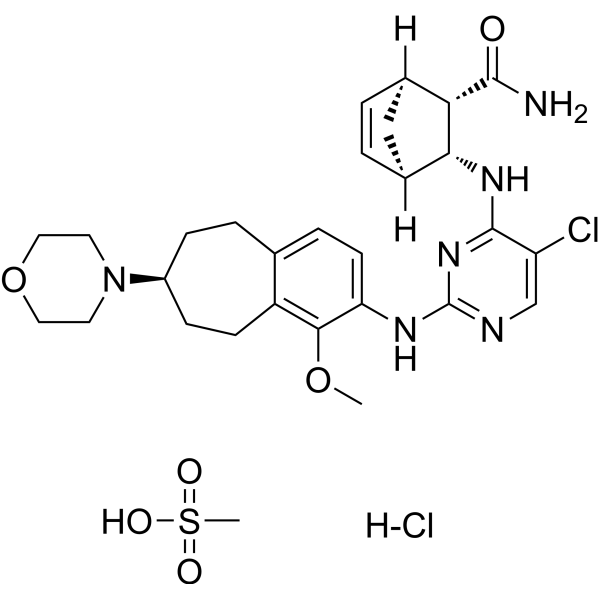
    CEP-28122 mesylate hydrochloride, a diaminopyrimidine derivative, is a potent, selective, and orally active ALK inhibitor with an IC50 value of 1.9 nM. CEP-28122 mesylate hydrochloride has antitumor activity in experimental models of ALK-positive human cancers. CEP-28122 mesylate hydrochloride has good pharmacodynamic and pharmacokinetic activity. CEP-28122 mesylate hydrochloride can be used for the study of ALK-positive anaplastic large-cell lymphoma (ALCL), non-small cell lung cancer (NSCLC), and neuroblastoma cells .
    CEP-28122 mesylate hydrochloride
  • HY-P992404

    TNF Receptor Cancer
    MDX-1401 is a fully human IgG1 (κ isotype) monoclonal antibody against CD30, with a Kd value of 0.83 nmol/L. MDX-1401 induces antibody-dependent cellular cytotoxicity in CD30-expressing cells and inhibits tumor growth in CD30 + lymphoma xenograft models. MDX-1401 can be used in research related to malignant lymphoma and Hodgkin lymphoma .
    MDX-1401
  • HY-183643

    DNA/RNA Synthesis Cancer
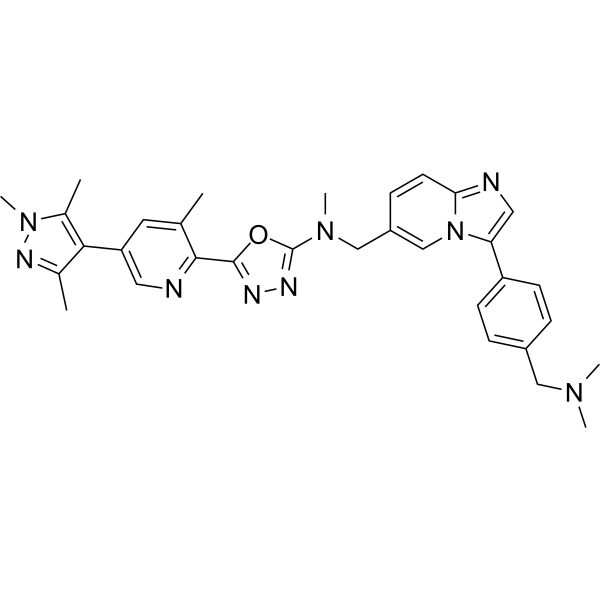
    RUVBL1/2-IN-1 is an orally active RUVBL1/2 complex inhibitor with an EC50 of 0.012 μM against human targets. RUVBL1/2-IN-1 impairs ATPase-related functions, thereby reducing nuclear MYC protein levels, impairing DNA damage response and inhibiting cancer cell proliferation. In a MYC-dependent Burkitt's lymphoma xenograft model, RUVBL1/2-IN-1 effectively inhibits tumor growth and suppresses the activity of RUVBL1 R117H mutant cells. RUVBL1/2-IN-1 has been applied in research related to MYC-dependent Burkitt's lymphoma .
    RUVBL1/2-IN-1
  • HY-P991902

    CD20 Cancer
    NAV006 is an anti-CD20 antibody variant of Rituximab (HY-P9913) with a Kd of 30.5 nM to CD20. NAV006 exhibits reduced interaction with CA125 and demonstrates enhanced antibody-dependent cellular cytotoxicity (ADCC) and complement-dependent cytotoxicity (CDC) activity. NAV006 displays antitumor activity against lymphoma and can be used in research on non-Hodgkin lymphoma .
    NAV006
  • HY-P992032

    BAY-943 antibody

    Interleukin Related Cancer
    TPP-9476 (BAY-943 antibody) is an anti-human IL3RA (CD123) monoclonal antibody with human IL3RA Kd of 11 nM and cynomolgus monkey IL3RA Kd of 16 nM. TPP-9476 binds specifically to human and cynomolgus monkey IL3RA, undergoes target-dependent internalization into lysosomes of IL3RA-positive cells.TPP-9476 exerts antiproliferative effects in IL3RA-expressing acute myeloid leukemia and classical Hodgkin lymphoma cells, reduces tumor burden, improves survival, and induces complete tumor remission in relevant xenograft mouse models .
    TPP-9476
  • HY-P992211

    Fc Receptor (FcR) Cancer
    Anti-CD32b/FCGR2B Antibody (2B6) is a human monoclonal antibody targeting CD32B. Anti-CD32b/FCGR2B Antibody (2B6) can be used for research on B-cell lymphoma .
    Anti-CD32b/FCGR2B Antibody (2B6)
  • HY-182922

    PROTACs STAT Cancer
    SD-965 is a selective STAT3 PROTAC degrader with a DC50 of 0.14 μM. SD-965 promotes the ubiquitination and degradation of STAT3. SD-965 induces rapid, complete and persistent depletion of STAT3 protein. SD-965 induces tumor regression in mouse xenograft models of leukemia and lymphoma .
    SD-965
  • HY-185150

    9-(2-Phosphonylmethoxy)ethylguanine

    DNA/RNA Synthesis CMV Infection Inflammation/Immunology Cancer
    PMEG is a nuclear DNA polymerases α, δ, and ε inhibitor that causes DNA chain termination, inhibits DNA synthesis, induces cytotoxicity in dividing cells. PMEG is an acyclic nucleotide phosphonate that forms an active phosphorylated metabolite, PMEG diphosphate, within cells. PMEG has activity against leukemia and melanoma in rodent models. PMEG has poor cell permeability; its prodrug is Rabacfosadine (GS-9219) (HY-13640). PMEG shows antiviral activity against against various DNA virus infections including murine cytomegalovirus (MCMV) and human cytomegalovirus (HCMV). PMEG can be used for the research of non-hodgkin's lymphoma [1][2].
    PMEG
  • HY-P11779

    Drug-Linker Conjugates for ADC Microtubule/Tubulin Cancer
    Ac-RKAA-PABC-MMAE is a Drug-Linker Conjugates for ADC. Ac-RKAA-PABC-MMAE consists of the ADC Cytotoxin MMAE (HY-15162) and a linker. Ac-RKAA-PABC-MMAE can be used for synthesis of ADCs .
    Ac-RKAA-PABC-MMAE
  • HY-182470

    CDK
    AG-012986 (dihydrochloride) is a pan-CDK inhibitor with Ki values of 44 nM (CDK1), 9.2 nM (CDK4), 94 nM (CDK2), and IC50 values of 22 nM (CDK5), 4 nM (CDK9). AG-012986 (dihydrochloride) causes apoptosis of T-cells by targeting upstream kinases in the p38 Mitogen-activated protein kinase (MAPK) pathway and impairing cellular survival. AG-012986 (dihydrochloride) induces cell cycle arrest, retinoblastoma protein hypophosphorylation, and reduces Ki-67 expression. AG-012986 (dihydrochloride) exerts antiproliferative activity in tumor cells, demonstrates antitumor efficacy in human xenograft models, and causes retinal and peripheral neurotoxicity, plus immune cell toxicity. AG-012986 (dihydrochloride) can be used for the research of colon carcinoma, non-small cell lung carcinoma, lung carcinoma, breast carcinoma, ovarian tumor, pancreatic carcinoma, osteosarcoma, lymphoma, leukemia, retinotoxicity .
    AG-012986 dihydrochloride
  • HY-185484

    BMS-936561

    Antibody-Drug Conjugates (ADCs) Transmembrane Glycoprotein Cancer
    MDX-1203 (BMS-936561) is an antibody-drug conjugate targeting CD70. MDX-1203 binds to CD70 and mediates the specific delivery of its conjugated cytotoxic payload to tumors. MDX-1203 delivers a DNA alkylating payload into cells. MDX-1203 can be used in research related to advanced clear cell renal cell carcinoma and relapsed/refractory B-cell non-Hodgkin lymphoma .
    MDX-1203
  • HY-P991935

    Apoptosis Cancer
    ANT1034 is humanized anti-CD52 antibody. ANT1034 directs antibody dependent and complement dependent cell cytotoxicity, induces Apoptosis when cross-linked or in the presence of a cross-linking antibody. ANT1034 leads to increased survival in a SCID CD52 tumour xenograft model. ANT1034 can be used for the research of B cell malignancies .
    ANT1034

Inquiry Online

Your information is safe with us. * Required Fields.

Salutation


Country or Region *

Applicant Name *


Organization Name *

Department *


Email Address *


Product Name *

Cat. No.


Requested quantity *

Phone Number *


Remarks

Inquiry Online

Inquiry Information

Product Name:
Cat. No.:
Quantity:
MCE Japan Authorized Agent:

