9 Results for "

lonidamine

" in MedChemExpress (MCE) Product Catalog:
Products (9)

9 Results for "lonidamine" in MCE Product Catalog:

18
18 Publications Verification
Cat. No.: HY-B0486
CAS No.: 50264-69-2
Synonyms: AF-1890; Diclondazolic Acid; DICA
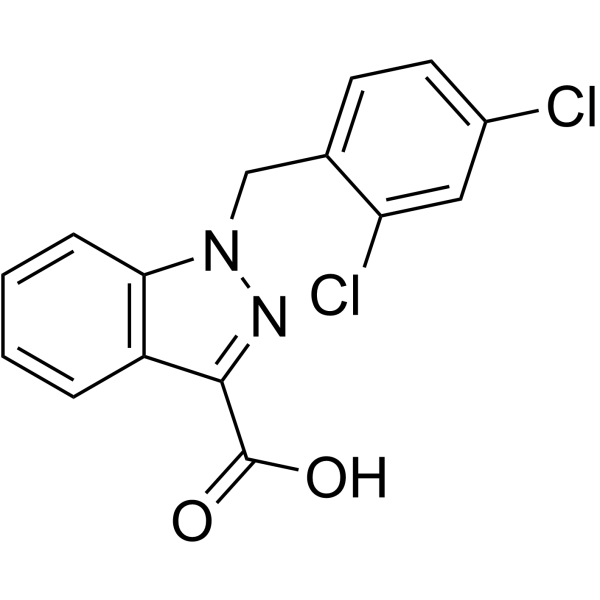
Lonidamine (AF-1890) is a hexokinase and mitochondrial pyruvate carrier inhibitor (Ki: 2.5 μM). Lonidamine also inhibits aerobic glycolysis in cancer cells. Lonidamine can be used in the research of mitochondrial metabolism and inflammation, such as pulmonary fibrosis .
loading...
    loading...
3
3 Cited Publications
Cat. No.: HY-134832
CAS No.: 2361564-49-8
Purity:  ≥97.0%
Synonyms: Mito-lonidamine
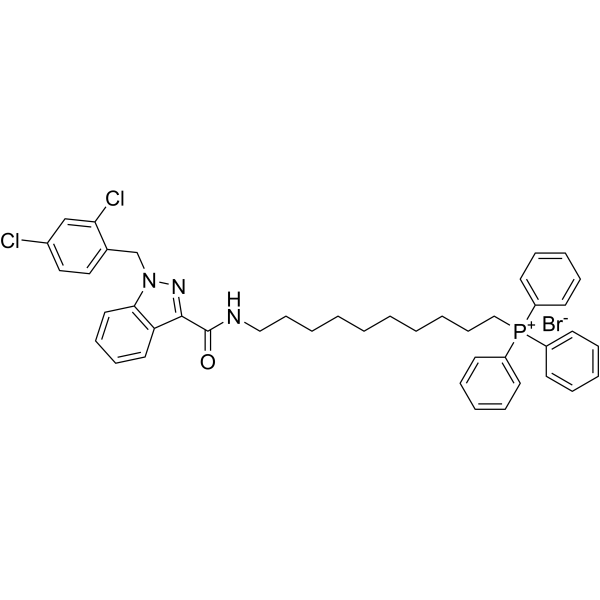
Mito-LND (Mito-Lonidamine) is an orally active and mitochondria-targeted inhibitor of oxidative phosphorylation (OXPHOS). Mito-LND inhibits mitochondrial bioenergetics, stimulates the formation of reactive oxygen species, and induces autophagic cell death in lung cancer cells .
loading...
    loading...
2
2 Cited Publications
Cat. No.: HY-155008
CAS No.: 3033812-84-6
Purity:  98.98%
Target:  

PROTACs Hexokinase

Research Areas:  

Cancer

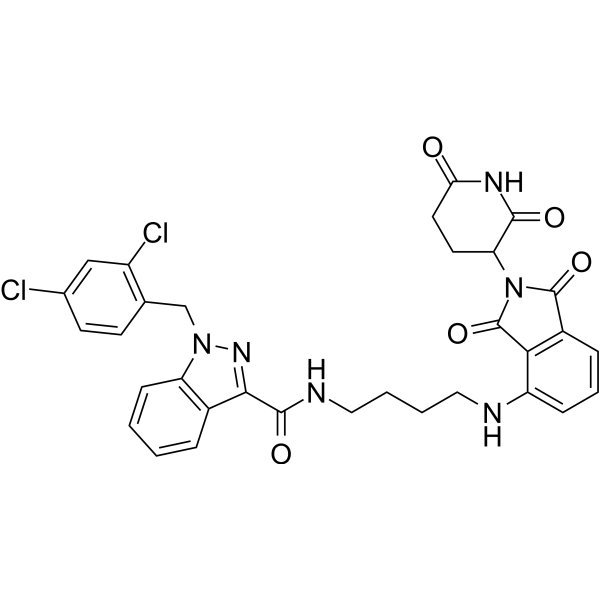
PROTAC HK2 Degrader-1 is a PROTAC consisting of Lonidamine (HY-B0486) as a target protein Hexokinase 2 (HK2) inhibitor and Thalidomide (HY-14658) as a CRBN ligand-linked PROTAC. PROTAC HK2 Degrader-1 selectively inhibits the proliferation of breast cancer cells by forming a ternary complex through the ubiquitin-proteasome system to degrade Hexokinase 2 (HK2) protein leading to mitochondrial damage and cell death. PROTAC HK2 Degrader-1 effectively inhibits breast tumor growth and reduces the colonic side effects of cisplatin for breast cancer research .
loading...
    loading...
Cat. No.: HY-B0486R
CAS No.: 50264-69-2
Synonyms: AF-1890 (Standard); Diclondazolic Acid (Standard); DICA (Standard)
Lonidamine (Standard) is the analytical standard of Lonidamine. This product is intended for research and analytical applications. Lonidamine (AF-1890) is a hexokinase and mitochondrial pyruvate carrier inhibitor (Ki: 2.5 μM). Lonidamine also inhibits aerobic glycolysis in cancer cells. Lonidamine can be used in the research of mitochondrial metabolism and inflammation, such as pulmonary fibrosis .
loading...
    loading...
Cat. No.: HY-169436
Target:  

PD-1/PD-L1

Lon-TK is a glycolysis inhibitor + linker conjugate of LTB (HY-169434). LTB is an intelligent responsive prodrug that connects Lonidamine (Lon) (HY-B0486) and a PD-L1 inhibitor (BMS-1, HY-19991) through a thioketal linker. It significantly inhibits the glycolytic metabolism of tumor cells and blocks the PD-1/PD-L1 immune escape pathway. Lon-TK shows potential for application in photodynamic-enhanced immunotherapy research .
loading...
    loading...
Cat. No.: HY-153911
CAS No.: 877768-84-8
Purity:  98.20%
Target:  

HSP CFTR

Research Areas:  

Endocrinology

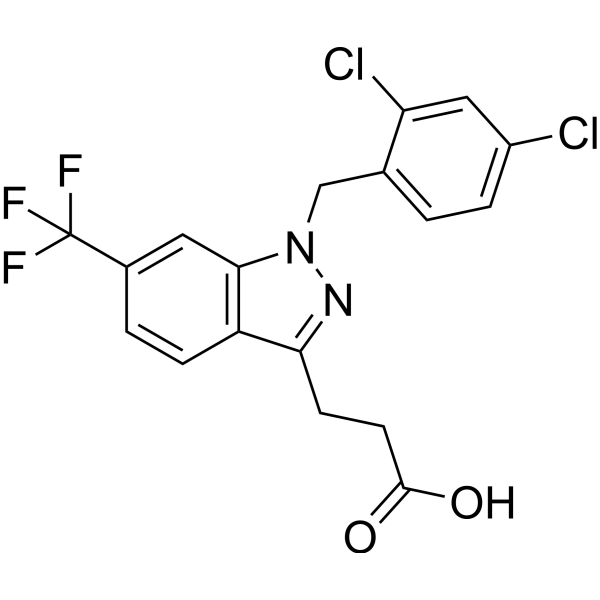
H2-Gamendazole is a derivative of Lonidamine that reduces cyst formation in polycystic kidney disease and is used in autosomal dominant polycystic kidney disease research .
loading...
    loading...
Cat. No.: HY-144769
CAS No.: 2921601-78-5
Target:  

Topoisomerase

Research Areas:  

Cancer

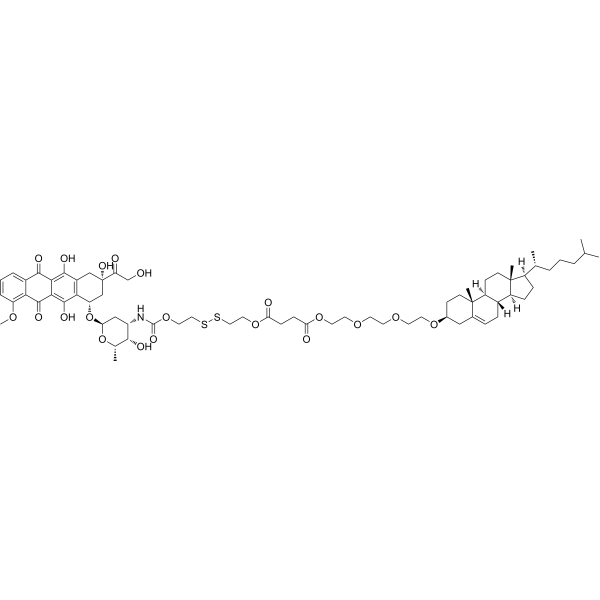
SDOX is the Doxorubicin (DOX) proagent. The loaded DOX proagents (SDOX) which can release the parent agents DOX triggered by excessive GSH in tumor cells, minimize the unexpected side effects on normal tissues without compromising the potency .
loading...
    loading...
Cat. No.: HY-169434
Synonyms: Lon-TK-BMS-1
Target:  

PD-1/PD-L1

Research Areas:  

Cancer

LTB is a prodrug formed by coupling glycolysis inhibitor (Lonidamine (HY-B0486)) with PD1/PDL1 blocker (BMS-1 (HY-19991)) by thioketal linkage. LTB can further encapsulate photosensitizer chlorine e6 (Ce6) (HY-13594) to construct a co-delivery photodynamic nanoplatform (LTB-6 NPs) by self-assembly .
loading...
    loading...
Cat. No.: HY-144825
Research Areas:  

Cancer

Chol-CTPP is a ligand with dual targeting effect on blood-brain barrier (BBB) and glioma cells. Lip-CTPP can be gained by Chol-CTPP and another mitochondria targeting ligand (Chol-TPP). Lip-CTPP is a promising potential carrier to exert the anti-glioma effect of doxorubicin (DOX) and lonidamine (LND) collaboratively. Lip-CTPP elevates the inhibition rate of tumor cell proliferation, migration and invasion, promote apoptosis and necrosis, and interfere with mitochondrial function .
loading...
    loading...

