



PROTAC HK2 Degrader-1
Based on 2 publication(s) in Google Scholar
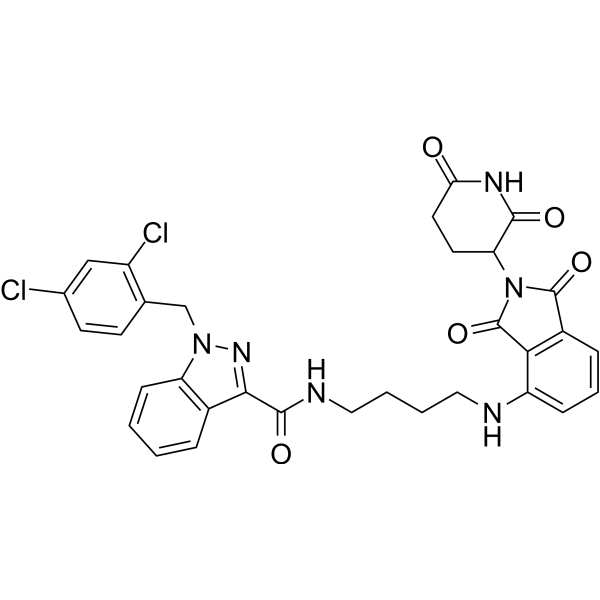
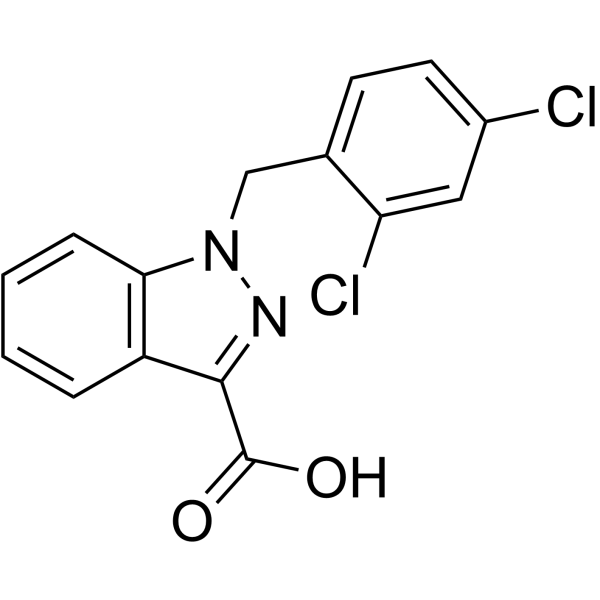
PROTAC HK2 Degrader-1 is a PROTAC consisting of Lonidamine (HY-B0486) as a target protein Hexokinase 2 (HK2) inhibitor and Thalidomide (HY-14658) as a CRBN ligand-linked PROTAC. PROTAC HK2 Degrader-1 selectively inhibits the proliferation of breast cancer cells by forming a ternary complex through the ubiquitin-proteasome system to degrade Hexokinase 2 (HK2) protein leading to mitochondrial damage and cell death. PROTAC HK2 Degrader-1 effectively inhibits breast tumor growth and reduces the colonic side effects of cisplatin for breast cancer research.
(Pink: Hexokinase 2 ligand (HY-B0486); Blue: Cereblon ligand (HY-103596); Black: linker).
For research use only. We do not sell to patients.
- Purity : 98.98%
- CAS No.: 3033812-84-6
- Formula: C32H28Cl2N6O5
- Molecular Weight:647.51
-
Storage:Powder -20°C, 3 years , 4°C, 2 years ; In solvent -80°C, 6 months , -20°C, 1 month

To place orders, for customer services and technical support, please contact: MedChemExpress USA
Tel: 609-228-6898 E-mail: [email protected] [email protected]


-
 Biological Activity
-
Chemical Information
-
Solvent & Solubility
- Purity & Documentation
- References
-
 Help & FAQs


Publications Citing Use of MedChemExpress (MCE) PROTAC HK2 Degrader-1
MoreAll PROTACs Isoforms
More

Biological Activity
Description
IC50 & Target
DC50: 2.56 μM (Hexokinase 2, HK2 in 4T1); 0.79 μM ((Hexokinase 2, HK2 in MDA-MB-231)
Cellular Effect
|
Cell Line

|
Type | Value | Description | References |
|---|---|---|---|---|
| 4T1 | IC50 |
5.08 μM
Compound: C-02
|
Antiproliferative activity against mouse 4T1 cells assessed as cell growth inhibition measured for 72 hrs by MTT assay
Antiproliferative activity against mouse 4T1 cells assessed as cell growth inhibition measured for 72 hrs by MTT assay
|
[PMID: 37376788] |
| 786-0 | IC50 |
34.07 μM
Compound: C-02
|
Antiproliferative activity against human 786-0 cells assessed as cell growth inhibition measured for 72 hrs by MTT assay
Antiproliferative activity against human 786-0 cells assessed as cell growth inhibition measured for 72 hrs by MTT assay
|
[PMID: 37376788] |
| HGC-27 | IC50 |
6.11 μM
Compound: C-02
|
Antiproliferative activity against human HGC-27 cells assessed as cell growth inhibition measured for 72 hrs by MTT assay
Antiproliferative activity against human HGC-27 cells assessed as cell growth inhibition measured for 72 hrs by MTT assay
|
[PMID: 37376788] |
| MCF7 | IC50 |
21.65 μM
Compound: C-02
|
Antiproliferative activity against human MCF7 cells assessed as cell growth inhibition measured for 72 hrs by MTT assay
Antiproliferative activity against human MCF7 cells assessed as cell growth inhibition measured for 72 hrs by MTT assay
|
[PMID: 37376788] |
| PANC-1 | IC50 |
31.53 μM
Compound: C-02
|
Antiproliferative activity against human PANC-1 cells assessed as cell growth inhibition measured for 72 hrs by MTT assay
Antiproliferative activity against human PANC-1 cells assessed as cell growth inhibition measured for 72 hrs by MTT assay
|
[PMID: 37376788] |
In Vitro
PROTAC HK2 Degrader-1 inhibits the proliferation of 786-O, 4T1, PANC-1, HGC-27, and MCF-1 with IC50s of 34.07 μM, 5.08 μM, 31.53 μM, 6.11 μM, and 21.65 μM, respectively[1].
PROTAC HK2 Degrader-1 degrades HK2 with DC50 values of was 2.56 μM (4T1) and 0.79 μM (MDA-MB-231), respectively[1].
PROTAC HK2 Degrader-1 (0.01-200 μM, 36 h) selectively suppresses breast cancer cell proliferation and stimulates HK2 protein degradation via the ubiquitin mediated proteasome pathway in a time and concentration dependent manner[1].
PROTAC HK2 Degrader-1 (10 μM for 4T1, 0.5 μM for MDA-MB-231, 24 h) degraded HK2 protein via the ubiquitin−proteasome system by forming a ternary complex[1].
PROTAC HK2 Degrader-1 (20 μM, 36 h) mediates degradation of HK2 that causing mitochondrial damage, releasing cytochrome C to activate caspase-3, then PROTAC HK2 Degrader-1 cleaves GSDME to trigger thermal coma and promotes cellular release of danger signals, such as ATP, HMGB1, CRT, etc., thus inducing cellular immune death[1].
PROTAC HK2 Degrader-1 (20 μM, 36 h) can induce PD-L1 protein to internalize from the cell membrane to the cytoplasm and reduce the total amount of PD-L1 protein[1].
MedChemExpress (MCE) has not independently confirmed the accuracy of these methods. They are for reference only.
-
Cell Line:4T1, MDA-MB-231, PUMC-HUVEC-T1
-
Concentration:20 μM
-
Incubation Time:72 h (MTT), 48 h (CCK-8)
-
Result:Showed the greatest impact on 4T1 and HGC-27 cells, with IC50 dosages of 5.08 and 6.11 μM.
Selectively suppressed breast cancer cell proliferation and stimulates HK2 protein degradation.
Prevented 4T1 cells to form a colony and had little influence on HUVECT-1.
-
Cell Line:4T1, MDAMB-231
-
Concentration:20 μM; 0.01, 0.05, 0.1, 0.5, 1.0, 2.0, 5.0, 10, 20, 50, 100, 150, 200 μM; 10 μM; 0.5 μM.
-
Incubation Time:36 h; 24 h
-
Result:Degraded 71.06% of HK2 at 20 μM in 4T1 and MDAMB-231 cells.
DC50=2.56 μM (4T1) and 0.79 μM (MDA-MB-231), respectivley.
Promoted the degradation of HK2 protein within 12 h, with the greatest degradation impact at 36 h in 4T1 cells and MDA-MB-231 cells.
Degradation capacity was reduced, because pretreatment with Tha and LND occupy the protein pocket and disrupt the formation of the ternary complex of HK2, CRBN and C-02.
Increased the expression of VDAC and Bax and decreased the level of Bcl-2 protein.
had lower levels of full-length caspase-3 and higher levels of cleaved caspase-3.
Cleaved GSDME through cleaved caspase-3, increasing the N-terminus of GSDME protein and thus triggering pyroptosis in 4T1 cells.
-
Cell Line:4T1 and MDA-MB-231
-
Concentration:20 μM
-
Incubation Time:36 h
-
Result:Caused the degradation of HK2 protein in a concentration dependent manner.
Significantly reduced the visual yellow fluorescence of HK2 protein.
In Vivo
PROTAC HK2 Degrader-1 (50 mg/kg, Intraperitoneal injection, bid, for nine times, six-weekold female BALB/c mice) can induce GSDME-dependent pyroptosis to realize tumor immune response and effectively inhibit breast tumor growth[1].
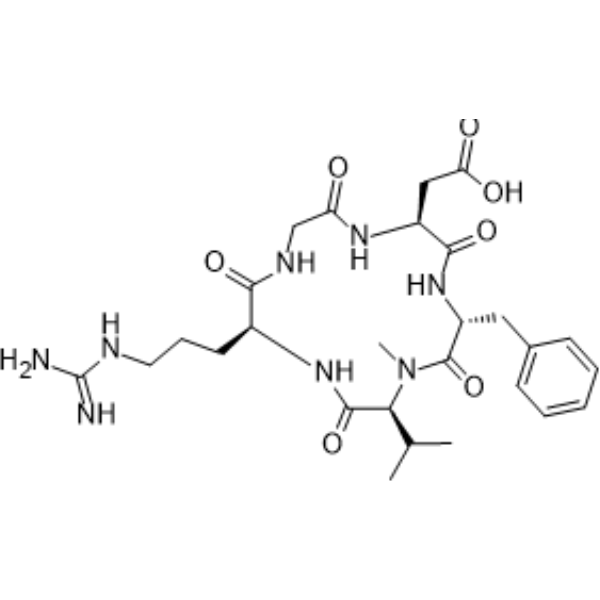
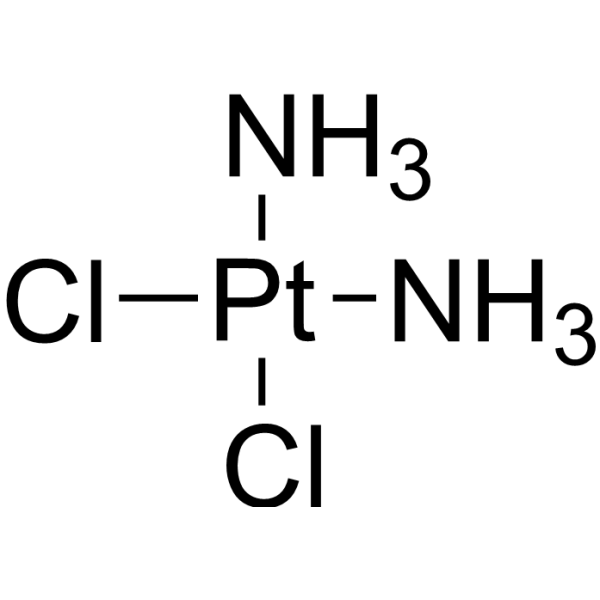
PROTAC HK2 Degrader-1 (Cisplatin (HY-17394) 10mg/kg, i.v., C-02 50mg/kg, i.p., 25 days, into six-weekold female BALB/c mice) can sensitize Cisplatin (HY-17394) while reducing the colon side effects of Cisplatin (HY-17394), which has potential clinical value[1].
MedChemExpress (MCE) has not independently confirmed the accuracy of these methods. They are for reference only.
-
Animal Model:xenograft models , into six-weekold female BALB/c mice[1]
-
Dosage:50 mg/kg
-
Administration:Intraperitoneal injection, bid, for nine times.
-
Result:Reduced proliferation and damaged nuclei in mouse models.
Increased the levels of Cytokines IL-1β, IFN-γ, and TNF-α significantly and decreased the level of TGF-β and IL-10.
Elevated levels of cleaved-Casp-3 and GSDME-N in tumor tissues of mouse.
-
Animal Model:breast tumor model in mice by injecting 4T1 cells subcutaneously into six-weekold female BALB/c mice[1]
-
Dosage:Cisplatin (HY-17394) 10mg/kg, 50mg/kg
-
Administration:Cisplatin (HY-17394) (10mg/kg, i.v.), 50mg/kg, i.p., 25 days
-
Result:Inhibited tumor growth and tumor volume.
Decreased HK2 protein level, while co- treated with Cisplatin (HY-17394).
Could alleviate Cisplatin (HY-17394) aggravated colon damage.


Chemical Information
-
CAS No. 3033812-84-6
-
Appearance Solid
-
Molecular Weight 647.51
-
Formula C32H28Cl2N6O5
-
Color Light yellow to yellow
-
SMILES
O=C(N1)CCC(N(C(C2=C3C=CC=C2NCCCCNC(C4=NN(C5=C4C=CC=C5)CC6=C(C=C(C=C6)Cl)Cl)=O)=O)C3=O)C1=O
-
Shipping
Room temperature in continental US; may vary elsewhere.
-
Storage
Powder -20°C 3 years 4°C 2 years In solvent -80°C 6 months -20°C 1 month


Publications (2)
-
Journal Impact Factor
-
Most Recent
-
Acta Pharm Sin B
ASF1A-dependent P300-mediated histone H3 lysine 18 lactylation promotes atherosclerosis by regulating EndMT. [Abstract]2024 Jul;14(7):3027-3048. PMID: 39027248 -
Biomed Pharmacother
Paclitaxel-resistance facilitates glycolytic metabolism via Hexokinase-2-regulated ABC and SLC transporter genes in ovarian clear cell carcinoma. [Abstract]2024 Nov:180:117452. PMID: 39341074


Solvent & Solubility
In Vitro:
DMSO : 100 mg/mL (154.44 mM; Need ultrasonic; Hygroscopic DMSO has a significant impact on the solubility of product, please use newly opened DMSO)
Please refer to the solubility information to select the appropriate solvent. Once prepared, please aliquot and store the solution to prevent product inactivation from repeated freeze-thaw cycles.
Storage method and period of stock solution: -80°C, 6 months; -20°C, 1 month. When stored at -80°C, please use it within 6 months. When stored at -20°C, please use it within 1 month.
Please refer to the solubility information to select the appropriate solvent. Once prepared, please aliquot and store the solution to prevent product inactivation from repeated freeze-thaw cycles.
Storage method and period of stock solution: -80°C, 6 months; -20°C, 1 month. When stored at -80°C, please use it within 6 months. When stored at -20°C, please use it within 1 month.
Concentration (start) × Volume (start) = Concentration (final) × Volume (final)
In Vivo:
Select the appropriate dissolution method based on your experimental animal and administration route.
- For the following dissolution methods, please ensure to first prepare a clear stock solution using an In Vitro approach and then sequentially add co-solvents:
- To ensure reliable experimental results, the clarified stock solution can be appropriately stored based on storage conditions. As for the working solution for In Vivo experiments, it is recommended to prepare freshly and use it on the same day.
- The percentages shown for the solvents indicate their volumetric ratio in the final prepared solution. If precipitation or phase separation occurs during preparation, heat and/or sonication can be used to aid dissolution.
Add each solvent one by one: 10% DMSO 40% PEG300 5% Tween-80 45% Saline
Solubility: 1.3 mg/mL (2.01 mM); Clear solution; Need ultrasonic
This protocol yields a clear solution of 1.3 mg/mL.
Taking 1 mL working solution as an example, add 100 μL DMSO stock solution (13.0 mg/mL) to 400 μL PEG300, and mix evenly; then add 50 μL Tween-80 and mix evenly; then add 450 μL Saline to adjust the volume to 1 mL.
Preparation of Saline: Dissolve 0.9 g sodium chloride in ddH₂O and dilute to 100 mL to obtain a clear Saline solution.
In Vivo Dissolution Calculator
Please enter the basic information of animal experiments:
-
-
-
-
Recommended: Prepare an additional quantity of animals to account for potential losses during experiments.
Please enter your animal formula composition:
-
%DMSO +
Recommended: Keep the proportion of DMSO in working solution below 2% if your animal is weak.
-
%+
-
+%Tween-80 + +
-
%Saline +
The co-solvents required include: DMSO, . All of co-solvents are available by MedChemExpress (MCE). , Tween 80. All of co-solvents are available by MedChemExpress (MCE).
Working solution concentration: 0.22 mg/mL
Method for preparing stock solution: mg drug dissolved in μL DMSO. Stock solution concentration: mg/mL.
1. Take μL DMSO stock solution;
2. Add μL .
μL , mix evenly;
3. Then add μL Tween 80, mix evenly;
4. Then add μL
Please ensure that the stock solution in the first step is dissolved to a clear state, and add co-solvents in sequence. You can use ultrasonic heating (ultrasonic cleaner, recommended frequency 20-40 kHz), vortexing, etc. to assist dissolution.


Purity & Documentation
-
Data Sheet (282 KB)
-
SDS (251 KB)
- English - EN (251 KB)
- Français - FR (251 KB)
- Deutsch - DE (251 KB)
- Norwegian - NO (251 KB)
- Español - ES (251 KB)
- Swedish - SV (251 KB)
- Italian - IT (251 KB)
- Korean - KR (251 KB)
- Portuguese - PT (251 KB)
-
Handling Instructions (2659 KB)
References


Complete Stock Solution Preparation Table
Please refer to the solubility information to select the appropriate solvent. Once prepared, please aliquot and store the solution to prevent product inactivation from repeated freeze-thaw cycles.
Storage method and period of stock solution: -80°C, 6 months; -20°C, 1 month. When stored at -80°C, please use it within 6 months. When stored at -20°C, please use it within 1 month.
| Optional Solvent | Concentration Solvent Mass | 1 mg | 5 mg | 10 mg | 25 mg |
|---|---|---|---|---|---|
| DMSO | 1 mM | 1.5444 mL | 7.7219 mL | 15.4438 mL | 38.6094 mL |
| 5 mM | 0.3089 mL | 1.5444 mL | 3.0888 mL | 7.7219 mL | |
| 10 mM | 0.1544 mL | 0.7722 mL | 1.5444 mL | 3.8609 mL | |
| 15 mM | 0.1030 mL | 0.5148 mL | 1.0296 mL | 2.5740 mL | |
| 20 mM | 0.0772 mL | 0.3861 mL | 0.7722 mL | 1.9305 mL | |
| 25 mM | 0.0618 mL | 0.3089 mL | 0.6178 mL | 1.5444 mL | |
| 30 mM | 0.0515 mL | 0.2574 mL | 0.5148 mL | 1.2870 mL | |
| 40 mM | 0.0386 mL | 0.1930 mL | 0.3861 mL | 0.9652 mL | |
| 50 mM | 0.0309 mL | 0.1544 mL | 0.3089 mL | 0.7722 mL | |
| 60 mM | 0.0257 mL | 0.1287 mL | 0.2574 mL | 0.6435 mL | |
| 80 mM | 0.0193 mL | 0.0965 mL | 0.1930 mL | 0.4826 mL | |
| 100 mM | 0.0154 mL | 0.0772 mL | 0.1544 mL | 0.3861 mL |


PROTAC HK2 Degrader-1 Related Classifications
HY-155008 Related Classifications
 Powered by Bioz