4 Results for "

milieu

" in MedChemExpress (MCE) Product Catalog:
Products (4)

4 Results for "milieu" in MCE Product Catalog:

1
1 Cited Publications
Cat. No.: HY-16350
CAS No.: 197723-00-5
Synonyms: NKP-1339; IT-139; KP-1339
Research Areas:  

Cancer

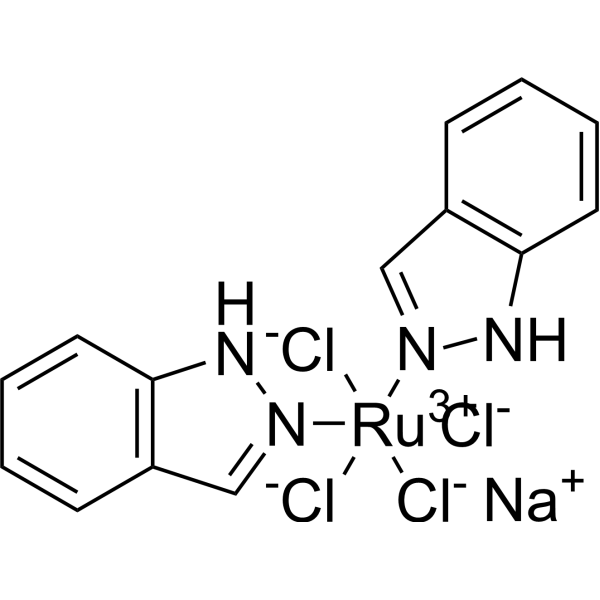
BOLD-100 (NKP-1339; IT-139) is the first-in-class ruthenium-based anticancer agent in development against solid cancer with limited side effects. BOLD-100 induces G2/M cell cycle arrest, blockage of DNA synthesis, and induction of apoptosis via the mitochondrial pathway. BOLD-100 has a high tumor targeting potential, strongly binds to serum proteins such as albumin and transferrin and activates in the reductive tumor milieu .
loading...
    loading...
Cat. No.: HY-W014605
CAS No.: 886-38-4
Synonyms: Diphencyprone
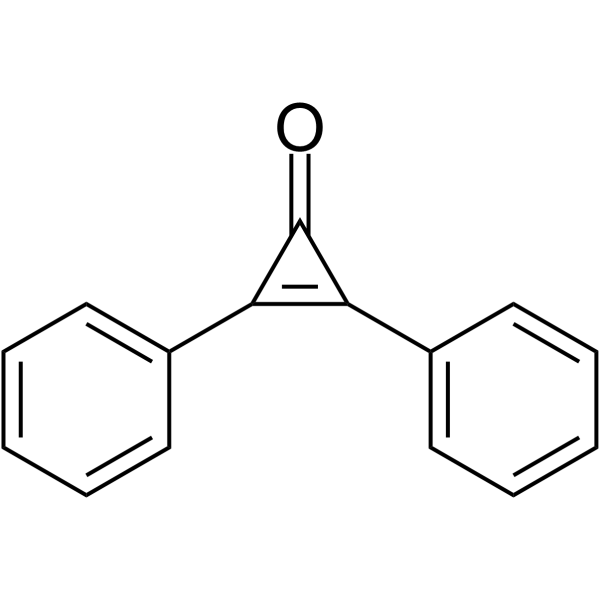
Diphenylcyclopropenone (Diphencyprone) is a potent hapten acting as a topical immunomodulatory agent, which induces an allergic contact dermatitis. Diphenylcyclopropenone induces an increase of cell-surface thiols in cells of a human monocytic cell line, THP-1. Diphenylcyclopropenone acts on the autoreactive T-lymphocytes within the follicular milieu to induce Apoptosis. Diphenylcyclopropenone can be used for alopecia areata research .
loading...
    loading...
Cat. No.: HY-117962A
CAS No.: 2740807-77-4
Target:  

Guanylate Cyclase

Research Areas:  

Metabolic Disease

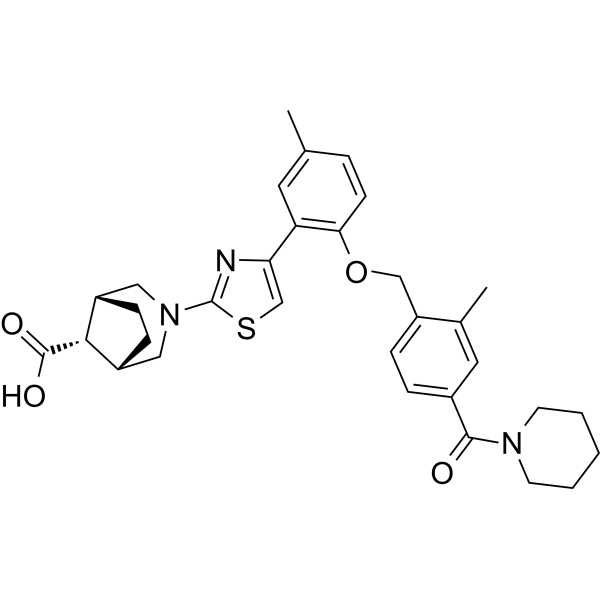
BI 703704 is a potent soluble guanylate cyclase (sGC) activator. BI 703704 inhibits the progression of diabetic nephropathy in the ZSF1 rat .
loading...
    loading...
Cat. No.: HY-178721
CAS No.: 2768690-22-6
Lithocholic amide-C2-N(didecane) (Compound LC10) is a Lithocholic acid (HY-B0172) analogue. Lithocholic amide-C2-N(didecane) can form lipid nanoparticles spontaneously in the aqueous milieu, permeate through the skin, penetrate the deeper dermal layers, and exert anti-inflammatory effects against psoriasis-like chronic skin inflammations. Lithocholic amide-C2-N(didecane) can inhibit abnormal proliferation of keratinocytes, downregulate the mRNA expression of the psoriasis-associated receptor EphA2 and reduce serum levels of multiple pro-inflammatory factors such as IL-1α, IL-1β, and IFN-γ by inhibiting activation of the Th17/Th2 inflammatory pathway .
loading...
    loading...

