9 Results for "

mitochondrial defects

" in MedChemExpress (MCE) Product Catalog:
Products (9)

9 Results for "mitochondrial defects" in MCE Product Catalog:

2
2 Cited Publications
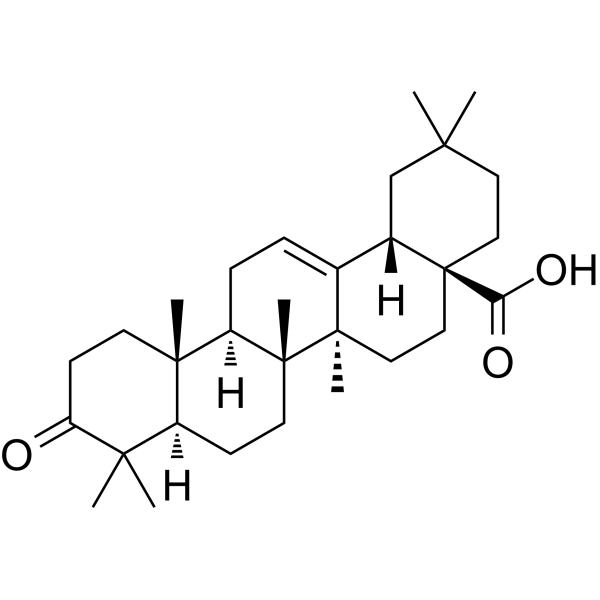
Cat. No.: HY-N1487
CAS No.: 17990-42-0
Synonyms: 3-Oxooleanolic acid
Oleanonic acid (3-Oxooleanolic acid) is an orally available triterpene that has anti-inflammatory and insecticidal properties. In vitro, oleanonic acid can improve oxidative stress, autophagy defects, ferroptosis, mitochondrial damage, and endoplasmic reticulum stress induced by Amyloid-β, and in vivo, it can alleviate myocardial hypertrophy in rats .
loading...
    loading...
Cat. No.: HY-176568
LCL768 is a ceramide analog. LCL768 attenuates PARKIN succination to promote PARKIN activation and mitophagy. LCL768 induces CerS1-mediated endogenous C18-ceramide accumulation in mitochondria to mediate mitophagy, which is dependent on DRP1 activation via nitrosylation at C644. LCL768 alters mitochondrial metabolism, resulting in fumarate depletion and leading to tumor suppression. LCL768 improves sensorimotor defects in neurodegenerative diseases like ALS .
loading...
    loading...
Cat. No.: HY-162904
CAS No.: 2198977-68-1
Research Areas:  

Cardiovascular Disease

BPU17 binds to PHB1 and causes mild defects in mitochondrial function by defects in the PHB1-PHB2 interaction. This impairment inhibits the SRF/CArG-box-dependent transcription, resulting in the suppression of epithelial-mesenchymal transition (EMT) of retinal pigment epithelial cells (RPEs). BPU17 exhibits antifibrotic activity in vivo. BPU17 is promising for research of anti-neovascular age-related macular degeneration (nAMD) agent .
loading...
    loading...
Cat. No.: HY-143736
CAS No.: 2690367-19-0
Purity:  98.87%
Target:  

RAD51

Research Areas:  

Cancer

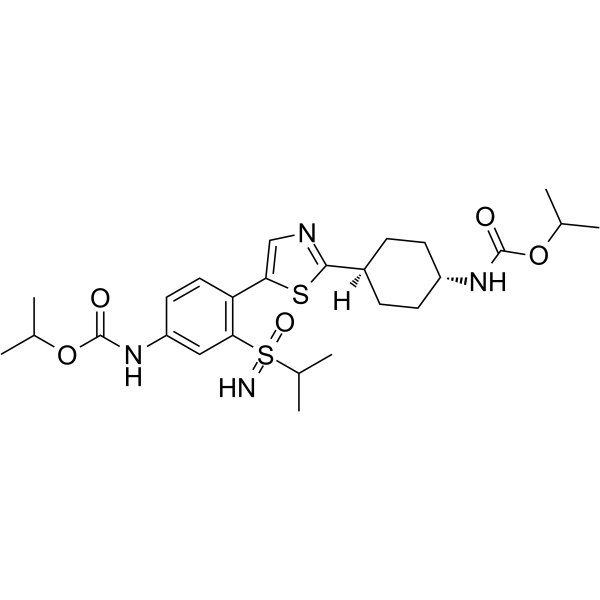
RAD51-IN-5 is a potent inhibitor of RAD51. RAD51 is a eukaryote gene. RAD51-IN-5 has the potential for the research of conditions involving mitochondrial defects (extracted from patent WO2021164746A1, compound 3) .
loading...
    loading...
Cat. No.: HY-143737
CAS No.: 2690367-57-6
Target:  

RAD51

Research Areas:  

Cancer

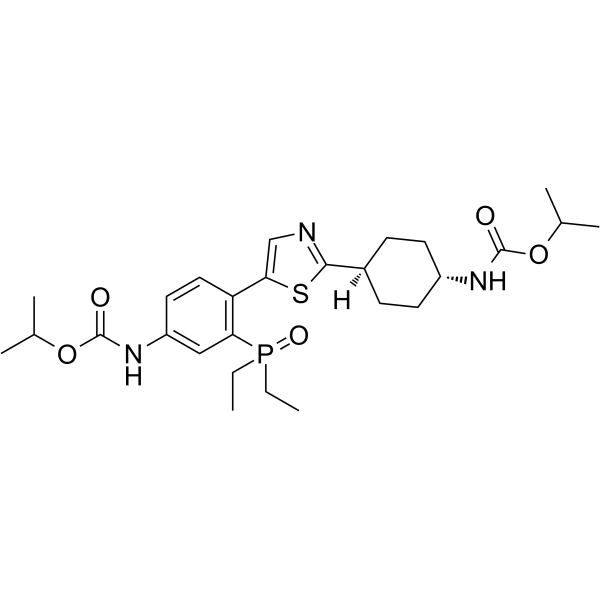
RAD51-IN-6 is a potent inhibitor of RAD51. RAD51 is a eukaryote gene. RAD51-IN-6 has the potential for the research of conditions involving mitochondrial defects (extracted from patent WO2021164746A1, compound 23) .
loading...
    loading...
Cat. No.: HY-143741
CAS No.: 2690368-52-4
Target:  

RAD51

Research Areas:  

Cancer

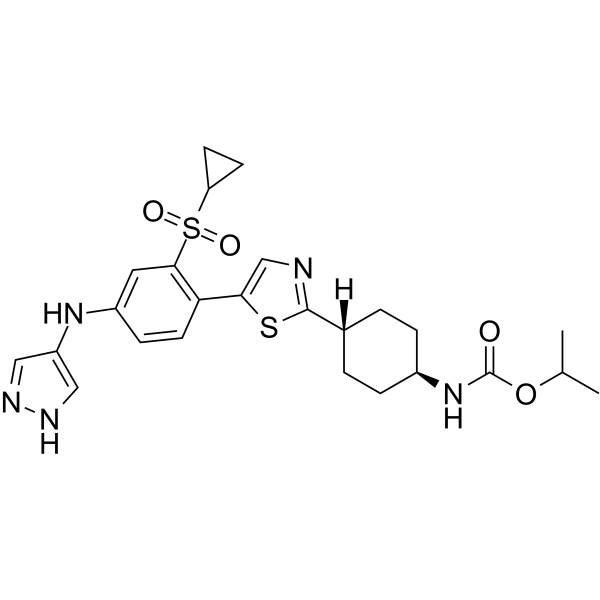
RAD51-IN-7 is a potent inhibitor of RAD51. RAD51 is a eukaryote gene. RAD51-IN-7 has the potential for the research of conditions involving mitochondrial defects (extracted from patent WO2021164746A1, compound 71) .
loading...
    loading...
Cat. No.: HY-143735
CAS No.: 2267336-26-3
Target:  

RAD51

Research Areas:  

Cancer

RAD51-IN-4 is a potent inhibitor of RAD51. RAD51 is a eukaryote gene. RAD51-IN-4 has the potential for the research of conditions involving mitochondrial defects (extracted from patent WO2019014315A1, compound R12) .
loading...
    loading...
Cat. No.: HY-186017
Target:  

Clathrin

Research Areas:  

Infection

Pitstop 2c is a clathrin terminal domain inhibitor with an IC50 of 1.8 μM. Pitstop 2c blocks the binding of epsin 1 to the clathrin terminal domain and impairs epsin 1-mediated membrane curvature formation at the early stage of clathrin-mediated endocytosis (CME). Pitstop 2c enhances the clathrin-independent endocytosis of galectin-3 and alters its intracellular distribution. Pitstop 2c causes mild defects in lysosomal acidification, as well as a slight increase in mitochondrial number but a reduction in average mitochondrial size. Pitstop 2c can be used in studies related to vesicular stomatitis virus infection .
loading...
    loading...
Cat. No.: HY-128795
CAS No.: 2095304-61-1
KH176m is the major active metabolite of KH176 (HY-121577). KH176m is a microsomal prostaglandin E synthase-1 (mPGES-1) inhibitor that can cross the blood-brain barrier, with an IC50 of 0.16 µM against mouse mPGES-1 and 1.51 µM against human mPGES-1. KH176m blocks LPS- or IL-1β-induced PGE2 production, scavenges ROS, inhibits lipid peroxidation, accelerates NADPH consumption, suppresses the growth of prostate cancer spheroids, reduces the CD44 + CD24 prostate cancer stem cell population, and protects fibroblasts with oxidative phosphorylation defects from redox stress-induced death. KH176m can be used in research related to mitochondrial diseases, inflammatory pain, inflammatory neurological diseases, inflammatory cancers, and prostate cancer .
loading...
    loading...

