14 Results for "

nanotechnology

" in MedChemExpress (MCE) Product Catalog:
Products (14)

14 Results for "nanotechnology" in MCE Product Catalog:

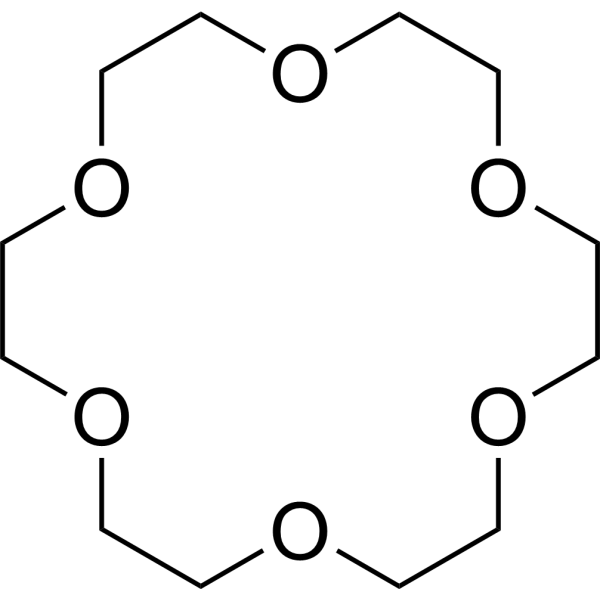
Cat. No.: HY-D0180
CAS No.: 17455-13-9
Synonyms: 18C6; 1,4,7,10,13,16-Hexaoxacyclooctadecane
18-Crown-6-ether is a type of crown ether compound and a specific structure dissociating agent. 18-Crown-6-ether can compete with K + for binding to G-quadruplexes, disrupting their stable structure to regulate the functions of related systems. 18-Crown-6-ether combines with K + and other metal ions to achieve precise ion transmembrane transport. 18-Crown-6-ether can act as an "susceptibility substrate" for the multi-drug efflux pump EmrE (a bacterial multidrug resistance transporter), ultimately inhibiting bacterial growth. 18-Crown-6-ether can be used in microcapsule controlled release and the research on developing antibacterial enhancers .
loading...
    loading...
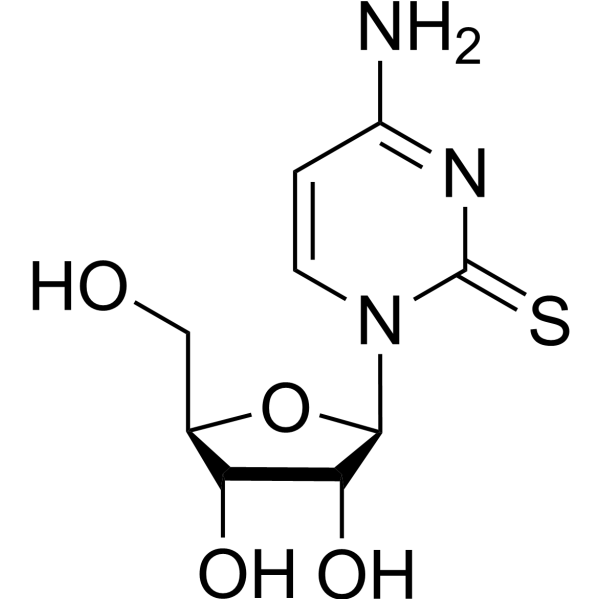
Cat. No.: HY-W244398
CAS No.: 13239-97-9
2-Thiocytidine is a natural thionucleoside in prokaryotic tRNA, which is biosynthesized under the catalysis of intracellular sulfur transferase systems and possesses multiple activities such as metal coordination and nucleic acid conformation regulation. 2-Thiocytidine forms stable Zn 2+ and Cd 2+ complexes via its (C2) S group, with partial involvement of N3; metal binding acidifies the deprotonation process of (C4) NH2. 2-Thiocytidine can be used in related research in various fields including nanotechnology and click chemistry for interstrand DNA crosslinking .
loading...
    loading...
Cat. No.: HY-W451406C
CAS No.: 956496-54-1
Research Areas:  

Others

NH2-PEG2000-NH2 is a PEG (MW = 2000) derivative with NH2 groups at both ends. NH2-PEG-NH2 can be used as a crosslinking agent in bioconjugation, hydrogel preparation, and nanotechnology, and can form stable amide bonds with active carboxyl groups or NHS ester groups .
loading...
    loading...
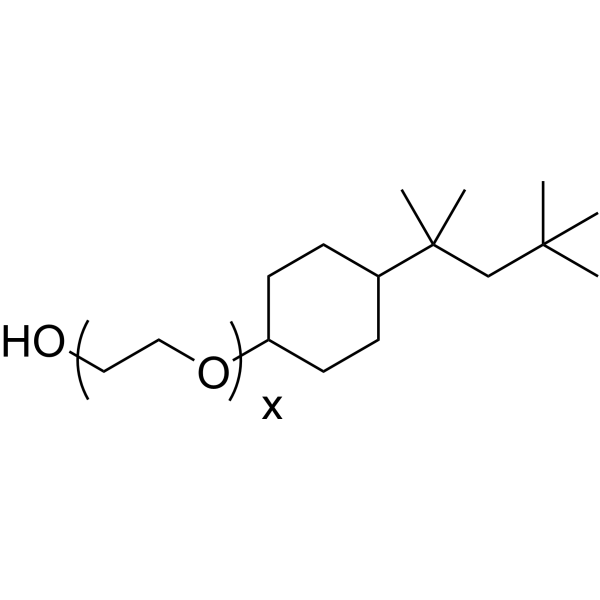
Cat. No.: HY-W250172
CAS No.: 92046-34-9
Polyethylene glycol tert-octylphenyl ether X-405 (70% in H2O) is a nonionic surfactant commonly used in a variety of industrial and research applications. Polyethylene glycol tert-octylphenyl ether X-405 (70% in H2O) belongs to the family of polyethylene glycol (PEG) ethers with a hydrophilic head and lipophilic tail and is suitable for use in emulsions, detergents and solubilizers. Polyethylene glycol tert-octylphenyl ether X-405 (70% in H2O) is particularly useful in the study of membrane proteins, where it is used to solubilize and stabilize proteins for structural analysis techniques. It is also used in a variety of other applications, including drug delivery systems, nanotechnology, and diagnostic analysis. Additionally, Polyethylene glycol tert-octylphenyl ether X-405 (70% in H2O) is used in the production of microemulsions, salves and lotions due to its emulsifying and solubilizing properties. However, it can be toxic if ingested or inhaled, so proper handling and safety precautions are required.
loading...
    loading...
Cat. No.: HY-W451406B
CAS No.: 956496-54-1
Research Areas:  

Others

NH2-PEG1000-NH2 is a PEG (MW = 1000) derivative with NH2 groups at both ends. NH2-PEG-NH2 can be used as a crosslinking agent in bioconjugation, hydrogel preparation, and nanotechnology, and can form stable amide bonds with active carboxyl groups or NHS ester groups .
loading...
    loading...
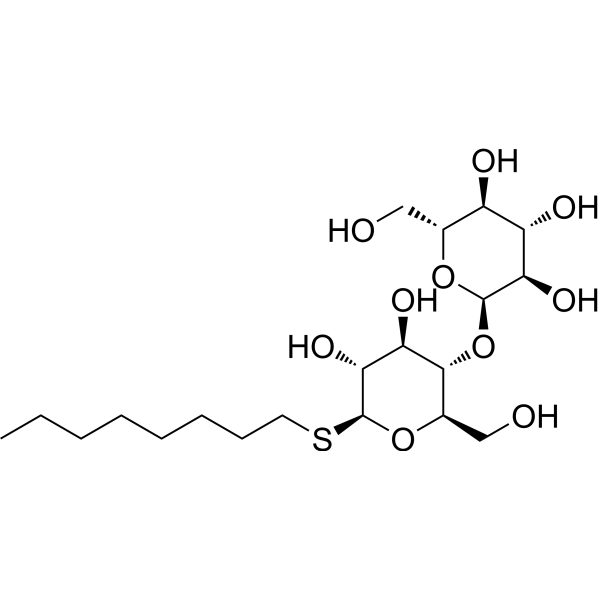
Cat. No.: HY-W250181
CAS No.: 148616-91-5
Synonyms: Octyl β-D-thiomaltopyranoside
Octyl thiomaltoside (OTM) is a nonionic detergent commonly used in the purification and crystallization of membrane proteins. It belongs to the family of maltoside detergents and has a hydrophilic head group and a lipophilic tail group, enabling it to interact with water-soluble and membrane-bound proteins. OTMs are known for their ability to solubilize integral membrane proteins without disrupting their structure or function, making them an invaluable tool in biochemical and biophysical research. In addition to protein research, OTMs are used in a variety of other applications, including drug delivery systems, nanotechnology, and diagnostic analysis.
loading...
    loading...
Cat. No.: HY-151782
CAS No.: 2250437-45-5
Target:  

ADC Linkers

Research Areas:  

Others

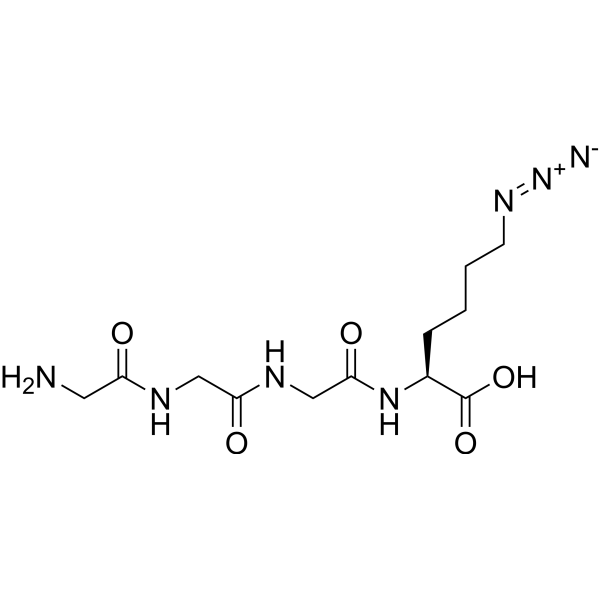
The azide function is widely used for coupling to alkyne-containing fragments via the renowned Click reaction. Polyglycine fragments containing up to 7 glycines are reported to bind to surfaces and have potential application in nanotechnology constructs: constructs of Gly7-NHCH2-fragment containing peptides bind on mica surface in aqueous solution . It contains an azide group and can undergo copper-catalyzed azide-alkyne cycloaddition (CuAAc) with molecules containing alkyne groups. It can also undergo ring strain-promoted alkyne-azide cycloaddition (SPAAC) with molecules containing DBCO or BCN groups.
loading...
    loading...
Cat. No.: HY-W103245
CAS No.: 14098-24-9
Synonyms: B18C6
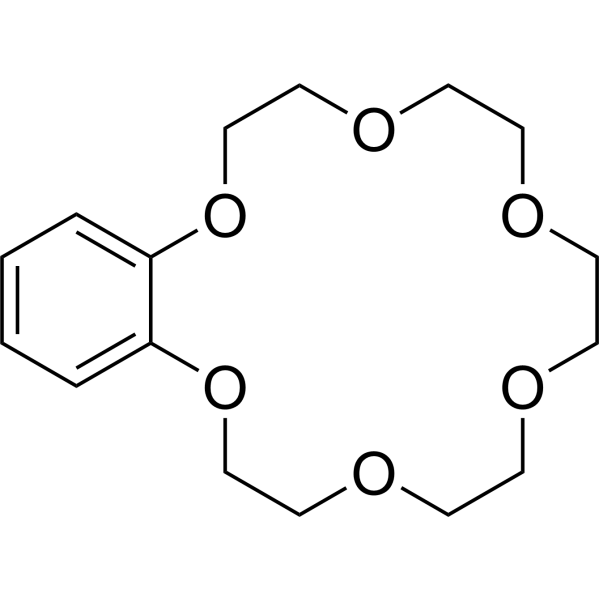
Benzo-18-crown-6-ether (B18C6) is a crown ether compound. Benzo-18-crown-6-ether can be applied to the research of biological materials, analytical chemistry and other fields .
loading...
    loading...
Cat. No.: HY-W451406A
CAS No.: 956496-54-1
Research Areas:  

Others

NH2-PEG5000-NH2 is a PEG (MW = 5000) derivative with NH2 groups at both ends. NH2-PEG-NH2 can be used as a crosslinking agent in bioconjugation, hydrogel preparation, and nanotechnology, and can form stable amide bonds with active carboxyl groups or NHS ester groups .
loading...
    loading...
Cat. No.: HY-W451406D
Research Areas:  

Others

NH2-PEG10000-NH2 is a PEG (MW = 10000) derivative with NH2 groups at both ends. NH2-PEG-NH2 can be used as a crosslinking agent in bioconjugation, hydrogel preparation, and nanotechnology, and can form stable amide bonds with active carboxyl groups or NHS ester groups .
loading...
    loading...
Cat. No.: HY-W250187
CAS No.: 15163-30-1
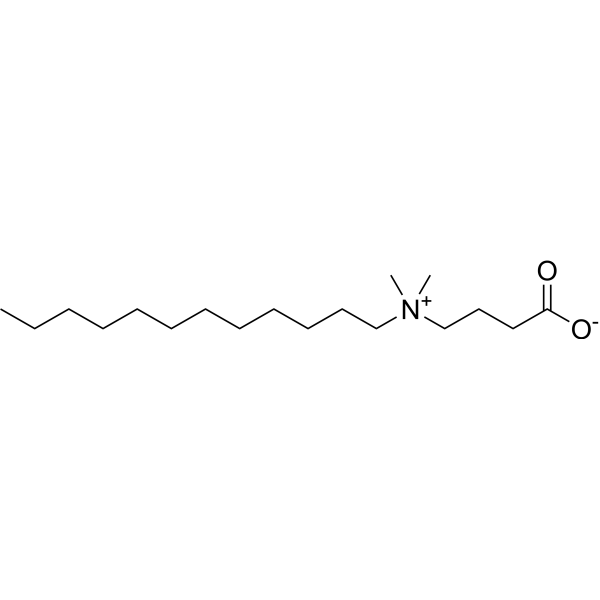
DDMAB, or didodecyldimethylammonium bromide, is a cationic surfactant commonly used in a variety of industrial and research applications. It belongs to the family of quaternary ammonium compounds and has a positively charged head and a hydrophobic tail, which allows it to be used as a detergent, emulsifier and antimicrobial. Known for its ability to disrupt cell membranes, DDMAB is commonly used in microbiology to selectively isolate and identify bacteria. It is also used in nanotechnology to synthesize metal nanoparticles and other materials. In addition, DDMAB has the ability to interact with and penetrate cell membranes, which has potential applications in drug delivery, gene therapy, and other medical fields.
loading...
    loading...
Cat. No.: HY-W250179
CAS No.: 5168-91-2
Synonyms: Polyoxyethylene (6) cetyl ether
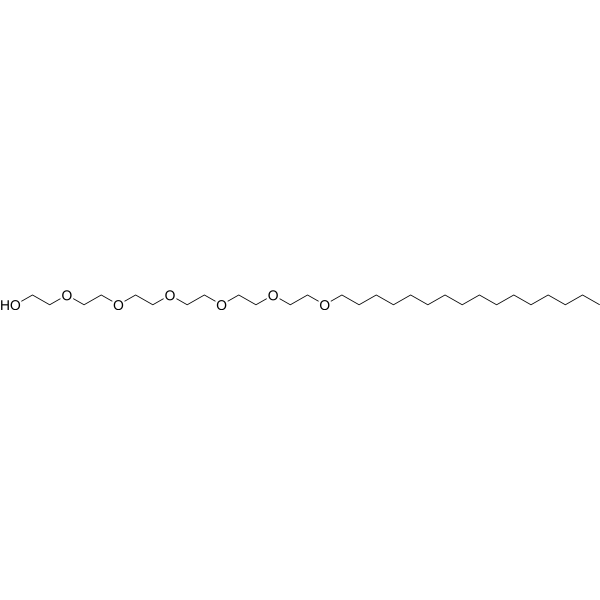
Hexaethylene glycol monohexadecyl ether, is a nonionic surfactant belonging to the polyethylene glycol (PEG) ether family. It has a hydrophilic head and a lipophilic tail, which makes it suitable for a wide range of applications. Specifically, Hexaethylene glycol monohexadecyl ether is commonly used in membrane protein research, for solubilization and stabilization of proteins, and for structural analysis techniques such as X-ray crystallography and electron microscopy. Additionally, Hexaethylene glycol monohexadecyl ether is used in a variety of other industrial and research applications, including drug delivery systems, nanotechnology, and diagnostic analysis. Its unique properties make it ideal for facilitating interactions between molecules with different physicochemical properties.
loading...
    loading...
Cat. No.: HY-P11691
CAS No.: 2101661-88-3
Research Areas:  

Others

Fmoc-PNA-D (tetraBoc)-OH is an Fmoc/Boc-protected diaminopurine peptide nucleic acid (PNA) monomer suitable for standard Fmoc solid-phase synthesis. Fmoc-PNA-D (tetraBoc)-OH carries Boc-protected exocyclic amino groups and can be incorporated into pseudo-complementary PNA oligomers for applications in antigenic peptide nucleic acid and DNA nanotechnology research .
loading...
    loading...
Cat. No.: HY-W451406H
CAS No.: 956496-54-1
Research Areas:  

Others

NH2-PEG400-NH2 is a PEG (MW = 400) derivative with NH2 groups at both ends. NH2-PEG-NH2 can be used as a crosslinking agent in bioconjugation, hydrogel preparation, and nanotechnology, and can form stable amide bonds with active carboxyl groups or NHS ester groups .
loading...
    loading...
  • 1

