

1. Search Result
Search Result
Results for "

pain modulation

" in MedChemExpress (MCE) Product Catalog:

13

Inhibitors & Agonists

3

Peptides

1

Natural
Products

Cat. No. Product Name Target Research Areas Chemical Structure
  • HY-B0561
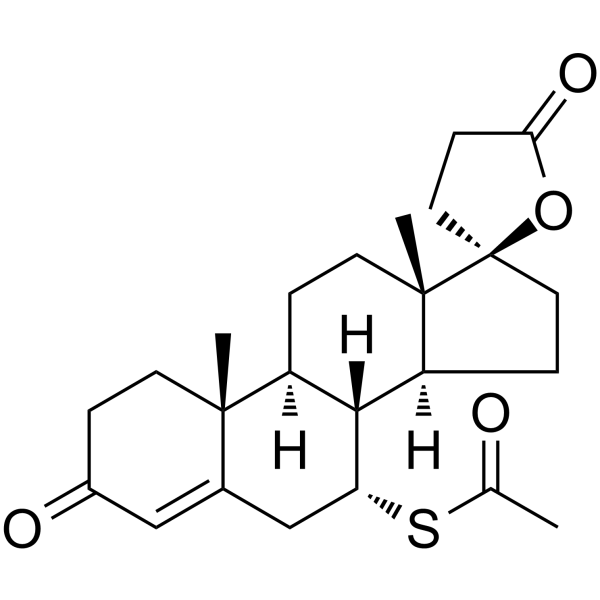
    Spironolactone
    5+ Cited Publications

    SC9420

    Mineralocorticoid Receptor Androgen Receptor Autophagy Calcium Channel Cardiovascular Disease Metabolic Disease Endocrinology Cancer
    Spironolactone is an aldosterone antagonist that acts on the aldosterone mineralocorticoid receptor (IC50=24 nM) and androgen receptor (IC50=77 nM), promotes podocyte autophagy and regulates pain. Spironolactone improves hypertension-related vascular hypertrophy and remodeling by reducing angiotensin II (Ang II)-induced inflammation, reduces aldosterone-induced vascular and soft tissue calcification through PIT1-dependent signaling, and alleviates vascular dysfunction in type II diabetic mice by reducing oxidative stress and restoring NO/GC signaling; at low concentrations, it and its metabolites can interfere with aldosterone biosynthesis in the adrenal cortex and inhibit voltage-dependent Ca 2+ channels to exert antihypertensive effects .
    Spironolactone
  • HY-139644

    Adenosine Receptor Neurological Disease
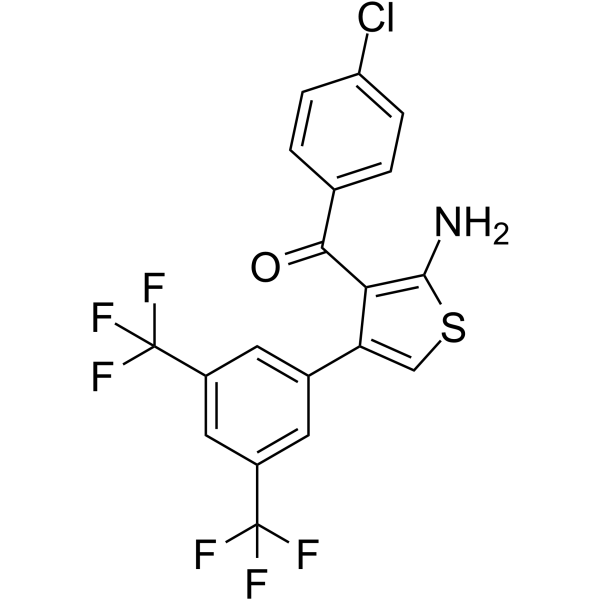
    MIPS521 is a positive allosteric modulator of adenosine A1 receptor (A1AR). MIPS521 also has a lower A1R allosteric affinity (pKB=4.95; KB=11 μM). MIPS521 exhibits pain-relieving effects in vivo through modulation of the increased levels of endogenous adenosine .
    MIPS521
  • HY-164795

    Neurotensin Receptor Arrestin iGluR ERK Sodium Channel Neurological Disease
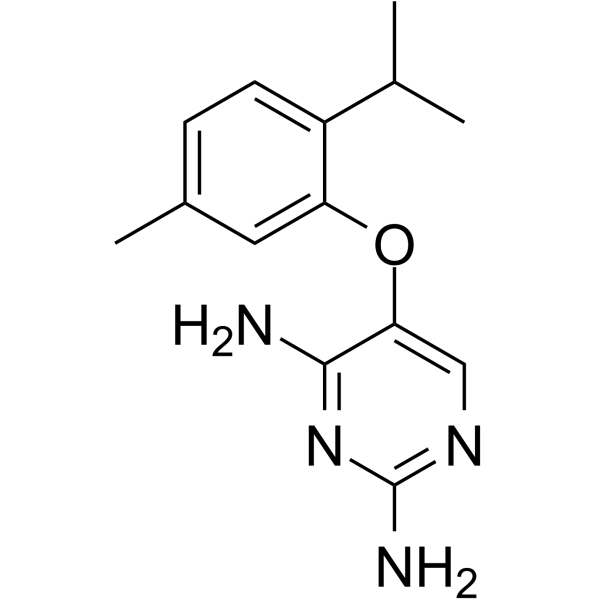
    SBI-810 is a blood-brain barrier-permeable NTSR1 modulator. SBI-810 promotes the recruitment of β-arrestin-2 to NTSR1 and antagonizes NTSR1-mediated Gq activation. SBI-810 inhibits excitatory synaptic transmission, NMDA receptor and extracellular signal-regulated kinase (ERK) signaling in spinal nociceptive neurons, reduces surface expression of Nav1.7 and action potential firing in primary sensory neurons, and attenuates C-fiber responses. SBI-810 effectively alleviates acute and chronic pain in various rodent models through peripheral and central modulation. SBI-810 is applicable to research related to multiple pain disorders .
    SBI-810
  • HY-164795A

    Neurotensin Receptor Arrestin iGluR ERK Sodium Channel Neurological Disease
    SBI-810 hydrochloride is a blood-brain barrier-permeable NTSR1 modulator. SBI-810 hydrochloride promotes the recruitment of β-arrestin-2 to NTSR1 and antagonizes NTSR1-mediated Gq activation. SBI-810 hydrochloride inhibits excitatory synaptic transmission, NMDA receptor and extracellular signal-regulated kinase (ERK) signaling in spinal nociceptive neurons, reduces surface expression of Nav1.7 and action potential firing in primary sensory neurons, and attenuates C-fiber responses. SBI-810 hydrochloride effectively alleviates acute and chronic pain in various rodent models through peripheral and central modulation. SBI-810 hydrochloride is applicable to research related to multiple pain disorders .
    SBI-810 hydrochloride
  • HY-P1073

    Calcium Channel Potassium Channel Sodium Channel TRP Channel Neurological Disease Cancer
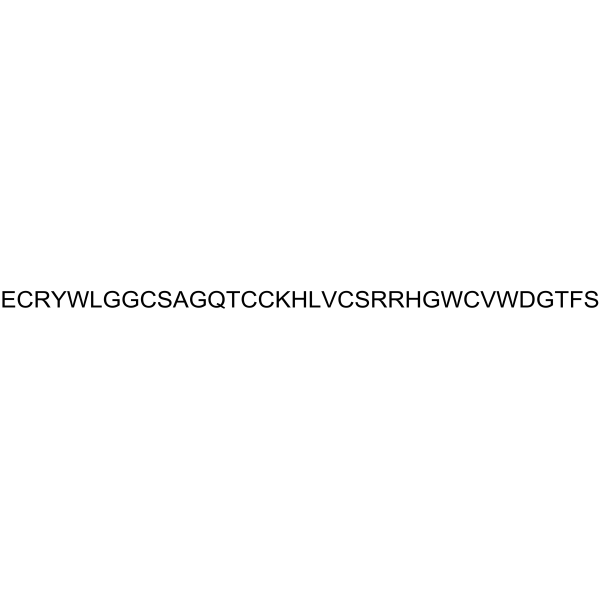
    ProTx-I is a toxin derived from Thrixopelma pruriens and a peptide inhibitor targeting TTX-resistant sodium channels. ProTx-I interacts with voltage sensors of multiple domains such as NaV1.7, reduces neuronal excitability through allosteric modulation of channel gating and alteration of voltage dependence. The IC50 values of ProTx-I against human NaV1.7, NaV1.2, NaV1.6, and NaV1.5 are 95 nM, 104 nM, 21 nM, and 358 nM, respectively; ProTx-I also potently inhibits Ba 2+ currents of hCav3.1, while its inhibitory potency against hCav3.2 is approximately 160-fold lower. ProTx-I is applicable to the research of chronic pain .
    ProTx-I
  • HY-P3843

    Mas-related G-protein-coupled Receptor (MRGPR) Neuropeptide Y Receptor Neurological Disease
    Neuropeptide AF (cattle), an amidated octadecapeptide, is RFamide neuropeptide. Neuropeptide AF (cattle) acts as a ligand of Mas-related gene receptor A4 (MrgprA4) (Mas-related G-protein-coupled Receptor (MRGPR)) (EC50 of ~60 nM) and MrgprC11 (EC50 of ~300 nM). Neuropeptide AF (cattle) also activate to the G protein-coupled receptors NPFF1 (Neuropeptide Y Receptor) (EC50 of ~25-325 nM) and NPFF2 (EC50 of ~1-5 nM). Neuropeptide AF (cattle) shows anti-opiate and related pain modulation effects .
    Neuropeptide AF (cattle)
  • HY-14406

    Neurokinin Receptor Neurological Disease Cancer
    L-733060 is a selective neurokinin-1 (NK-1) receptor antagonist. L-733060 mainly regulates pain transmission and neural plasticity by blocking the binding of Substance P (P substance) to the NK-1 receptor. L-733060 blocks the promoting effect of Substance P on long-term potentiation (LTP) in the hippocampus. L-733060 reverses the orofacial hyperalgesia induced by experimental occlusal interference (EOI) in rats. L-733060 hydrochloride inhibits neurogenic plasma extravasation at a dose that does not cause adverse cardiovascular effects in rodents, and also acts as an anti-tumor agent. L-733060 can be used for the study of chronic orofacial pain .
    L-733060
  • HY-P3945

    Neuropeptide FF Receptor Neurological Disease
    Prolactin-Releasing Peptide (12-31), bovine is a peptide fragment of prolactin-releasing peptide (PrRP). PrRP is RF-amide peptides expressed in brain areas involved in pain modulation. Prolactin-Releasing Peptide (12-31), bovine can be used for the research of nervous system disease .
    Prolactin-Releasing Peptide (12-31), bovine
  • HY-108668

    P2X Receptor Others
    TC-P 262 is a potent P2X3 inhibitor. TC-P 262 shows inhibition by bindings to hP2X3. TC-P 262 has the potential for the research of rheumatoid arthritis, cough, and pain .
    TC-P 262
  • HY-121239

    NF-κB Neurological Disease Inflammation/Immunology Cancer
    Lemnalol is a potent agent for neuropathic pain. Lemnalol possesses potent anti-inflammatory, analgesic and anti-tumor activities. Lemnalol has the capacity to attenuate hyperalgesia and allodynia by modulation of neuroinflammatory processes in neuropathy. Lemnalol modulates LPS-induced alterations of left atrial (LA) calcium homeostasis and blocks the NF-κB pathways, which may contribute to the attenuation of lipopolysaccharide (LPS)-induced arrhythmogenesis and neuropathic pain. Lemnalolis a ylangene-type sesquiterpenoid compound, isolated from Lemnalia cervicorni .
    Lemnalol
  • HY-17012

    RPR 100893

    Neurokinin Receptor Inflammation/Immunology
    Dapitant (RPR 100893) is a non-peptide Substance P antagonist with high affinity for the human NK1 receptor. It belongs to the 7,7,4-trimethylperhydroisoindole class of compounds. Dapitant inhibits the binding of Substance P to NK1 receptors, thereby blocking its neurokinin-mediated effects. This novel antagonist represents a potential therapeutic option for conditions involving Substance P, such as neurogenic inflammation and pain modulation .
    Dapitant
  • HY-178720

    Opioid Receptor Neurological Disease
    SHR0687 is a selective tetrapeptide kappa opioid receptor (KOR) agonist with an EC50 of 0.53 pM. SHR0687 displays high potency and selectivity over MOR and DOR, with negligible blood-brain barrier penetration. SHR0687 activates KOR specifically, leading to potential modulation of neurological pathways without significant central nervous system effects. SHR0687 can be used for the research of pain .
    SHR0687
  • HY-159923

    Opioid Receptor Neurological Disease
    BPRMU191 is a μ-opioid receptor (MOR) modulator that converts small-molecule morphinan antagonists into G protein-biased MOR agonists, thereby inducing MOR-dependent activation and analgesic effects. Co-administration of BPRMU191 with morphinan antagonists provides analgesia while reducing side effects such as gastrointestinal dysfunction, antinociceptive tolerance, and dependency-related adverse effects. BPRMU191, in combination with morphinan antagonists, offers a potential strategy for studying severe pain management and G protein-coupled receptor modulation .
    BPRMU191

Inquiry Online

Your information is safe with us. * Required Fields.

Salutation


Country or Region *

Applicant Name *


Organization Name *

Department *


Email Address *


Product Name *

Cat. No.


Requested quantity *

Phone Number *


Remarks

Inquiry Online

Inquiry Information

Product Name:
Cat. No.:
Quantity:
MCE Japan Authorized Agent:

