1. Search Result
Search Result
Results for "

radiate

" in MedChemExpress (MCE) Product Catalog:

6

Inhibitors & Agonists

1

Fluorescent Dyes

3

Natural
Products

Cat. No. Product Name Target Research Areas Chemical Structure
  • HY-N2403
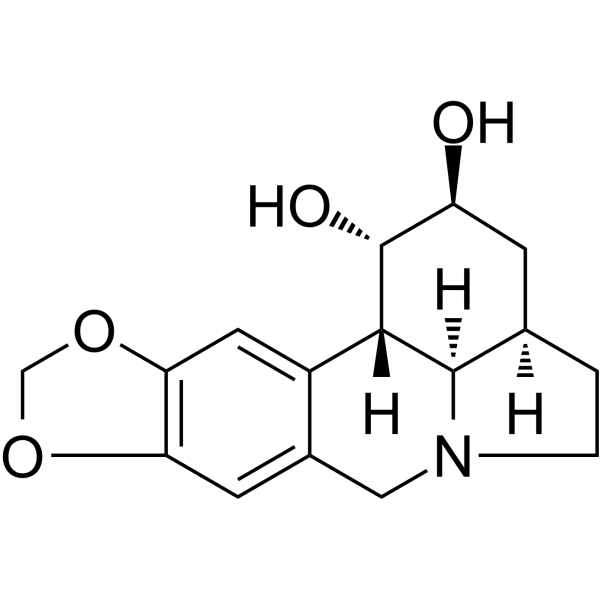
    Dihydrolycorine
    1 Publications Verification

    Others Neurological Disease
    Dihydrolycorine, isolated from Lycoris radiate Herb, is an inhibitor of protein synthesis in eukarytic cells by inhibiting the peptide bone formation step .
    Dihydrolycorine
  • HY-N1753

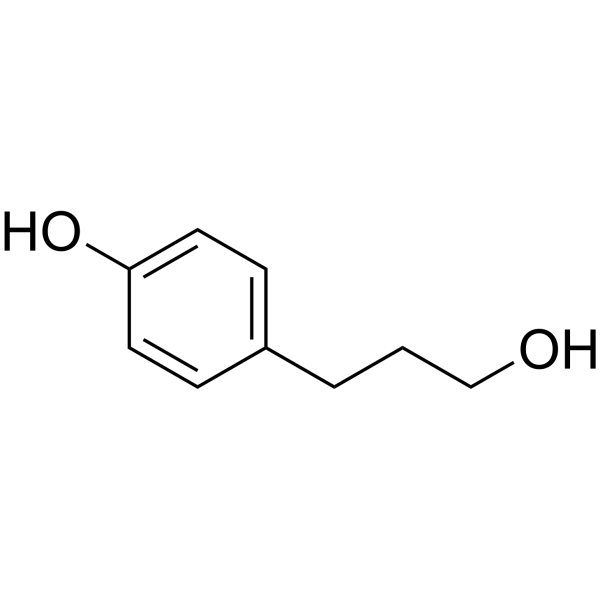
    Dihydro-p-coumaryl alcohol; 3-(p-Hydroxyphenyl)propyl alcohol

    Endogenous Metabolite Others
    3-(4-Hydroxyphenyl)-1-propanol (Dihydro-p-coumaryl alcohol) is a metabolite. 3-(4-Hydroxyphenyl)-1-propanol can be isolated from P. radiate callus cultures. 3-(4-Hydroxyphenyl)-1-propanol is associated with CAD activity .
    3-(4-Hydroxyphenyl)-1-propanol
  • HY-N6619A

    Cholinesterase (ChE) Neurological Disease
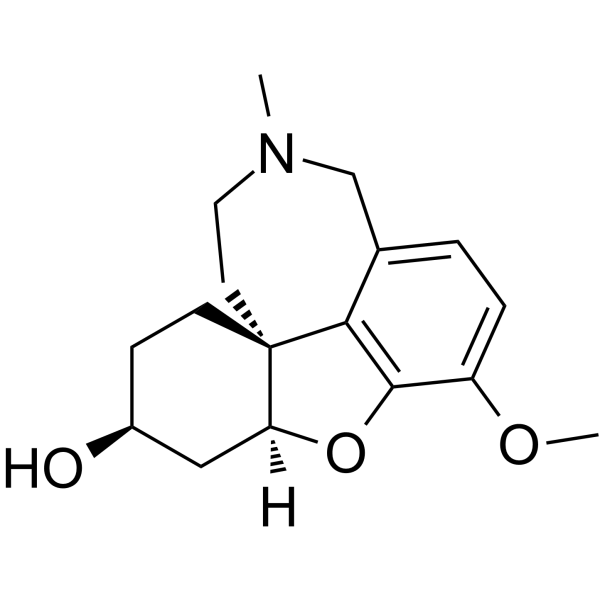
    Lycoramine, a dihydro-derivative of galanthamine, is isolated from Lycoris radiate. Lycoramine is a potent acetylcholinesterase (AChE) inhibitor .
    Lycoramine
  • HY-N6619

    Cholinesterase (ChE) Neurological Disease
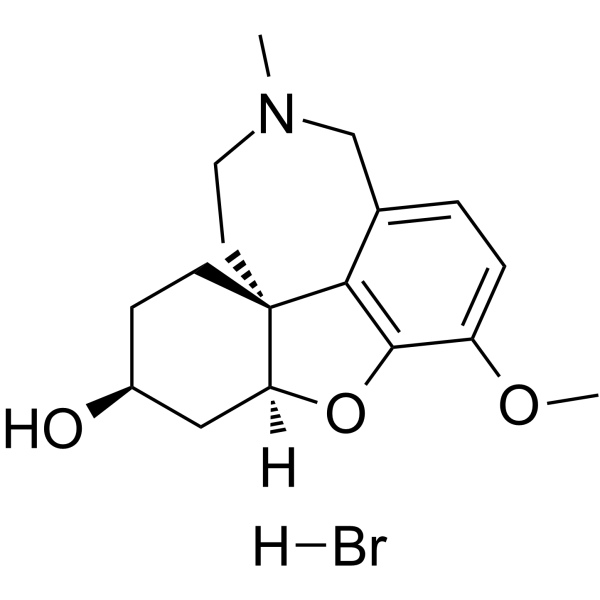
    Lycoramine hydrobromide, a dihydro-derivative of galanthamine, is isolated from Lycoris radiate. Lycoramine hydrobromide is a potent acetylcholinesterase (AChE) inhibitor .
    Lycoramine hydrobromide
  • HY-N1753R

    Dihydro-p-coumaryl alcohol (Standard); 3-(p-Hydroxyphenyl)propyl alcohol (Standard)

    Reference Standards Endogenous Metabolite Others
    3-(4-Hydroxyphenyl)-1-propanol (Standard) is an analytical standard of 3-(4-Hydroxyphenyl)-1-propanol (HY-N1753). This product is intended for research and analytical applications. 3-(4-Hydroxyphenyl)-1-propanol (Dihydro-p-coumaryl alcohol) is a metabolite. 3-(4-Hydroxyphenyl)-1-propanol can be isolated from P. radiate callus cultures. 3-(4-Hydroxyphenyl)-1-propanol is associated with CAD activity .
    3-(4-Hydroxyphenyl)-1-propanol (Standard)
  • HY-D3250

    Fluorescent Dye NO Synthase Cardiovascular Disease
    PYSNO is a lysosome-targeted fluorescent probe based on a pyridazinone skeleton (λem=515-565 nm, λex=405 nm) that can be used to track nitric oxide (NO) production in vivo. PYSNO exhibits a rapid, highly sensitive and highly selective "turn-on" response to endogenous and exogenous NO by blocking photoinduced electron transfer and regulating radiative decay rates. PYSNO enables precise in vivo monitoring in a mouse model of myocardial fibrosis and can be applied to the research of related diseases .
    PYSNO

Inquiry Online

Your information is safe with us. * Required Fields.

Salutation


Country or Region *

Applicant Name *


Organization Name *

Department *


Email Address *


Product Name *

Cat. No.


Requested quantity *

Phone Number *


Remarks

Inquiry Online

Inquiry Information

Product Name:
Cat. No.:
Quantity:
MCE Japan Authorized Agent:

