
1. Search Result
Search Result
Results for "

radical polymerization

" in MedChemExpress (MCE) Product Catalog:

21

Inhibitors & Agonists

2

Fluorescent Dye

6

Biochemical Assay Reagents

3

Isotope-Labeled Compounds

Cat. No. Product Name Target Research Areas Chemical Structure
  • HY-W017330
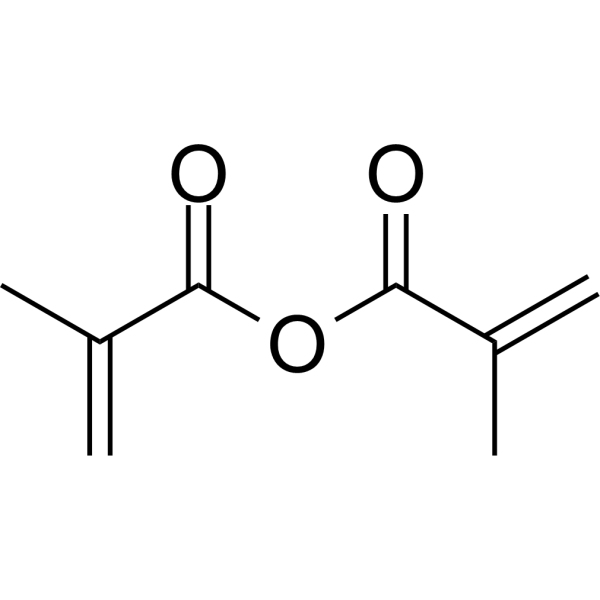
    Methacrylic anhydride
    1 Publications Verification

    Biochemical Assay Reagents Others
    Methacrylic anhydride is a typical polymerizable 1,6-diolefin. Methacrylic anhydride can form a soluble csyclopolymer by free-radical initiation. Methacrylic anhydride can spontaneously polymerize through the vinyl group and justifies the use of 2-6-di-tert-butyl4-methylphenol as an inhibitor .
    Methacrylic anhydride
  • HY-W002004

    4-Amino-2,2,6,6-tetramethylpiperidine-1-oxyl

    Biochemical Assay Reagents Inflammation/Immunology
    4-Amino-TEMPO (4-Amino-2,2,6,6-tetramethylpiperidine-1-oxyl) is a stable nitroxide radical and N-nucleophile based on TEMPO. 4-Amino-TEMPO has superoxide dismutase-mimetic activity, can protect cells from oxidative damage, and has radioprotective effects. 4-Amino-TEMPO is widely used in fields such as biomedicine, materials science, and industrial production. 4-Amino-TEMPO can be used as a spin label to detect free radicals, an oxidation catalyst in industrial production, and an antioxidant stabilizer for polymers, among others .
    4-Amino-TEMPO
  • HY-W087905

    Biochemical Assay Reagents Others
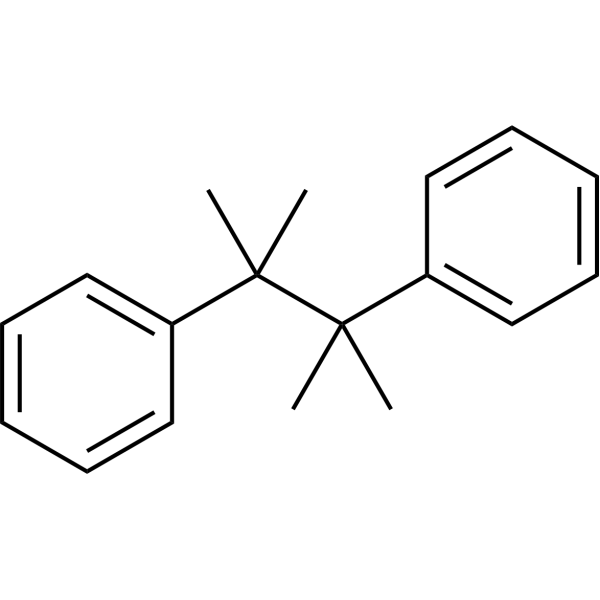
    2,3-Dimethyl-2,3-diphenylbutane is a minor product formed during the thermal decomposition of dicumyl peroxide (DCP) in cumene, generated through radical coupling reactions. As an initiator capable of producing free radicals, 2,3-dimethyl-2,3-diphenylbutane promotes cross-linking or decomposition processes via initiating free radical reactions in fields such as polymer polymerization (e.g., modification of polyphenylene oxide processing), organic synthesis (e.g., DCP decomposition reactions), and coal processing (e.g., oxidation stabilization of coal tar pitch), thereby enhancing material properties or reaction efficiency .
    2,3-Dimethyl-2,3-diphenylbutane
  • HY-172380A

    Biochemical Assay Reagents Others
    PCL-PEG-PCL diacrylate (MW 800) is an amphiphilic triblock copolymer composed of PEG and two polycaprolactones (PCL). PCL-PEG-PCL diacrylate (MW 800) can be cross-linked by free radical polymerization and/or photopolymerization to form a cross-linked hydrogel network .
    PCL-PEG-PCL diacrylate (PCL average Mn800, PEG average Mn4000)
  • HY-W099538

    Dilauryl 3,3'-Thiodipropionate

    Environmental Pollutants Biochemical Assay Reagents Others
    Dilauryl thiodipropionate (DLTDP), which is a sulfur-containing antioxidant commonly used to stabilize polymers and plastics against degradation caused by heat, oxygen, and UV light, acts to scavenge free radicals and others that may cause polymer chain scission and cross-linked active substances, in addition, DLTDP has been used as an additive to lubricants, oils and other industrial fluids to improve their oxidation stability, the long hydrocarbon chain in DLTDP makes it low volatility and compatible with many materials and Good compatibility with substrates.
    Dilauryl thiodipropionate
  • HY-W011875

    Biochemical Assay Reagents Others
    2-Isopropylthioxanthone is a photoinitiator that is widely used in printing ink of packaging materials. 2-Isopropylthioxanthone triggers the radical polymerization of the acrylic component of inks, thus causing the liquid ink film to dry .
    2-Isopropylthioxanthone
  • HY-W110166

    Biochemical Assay Reagents Others
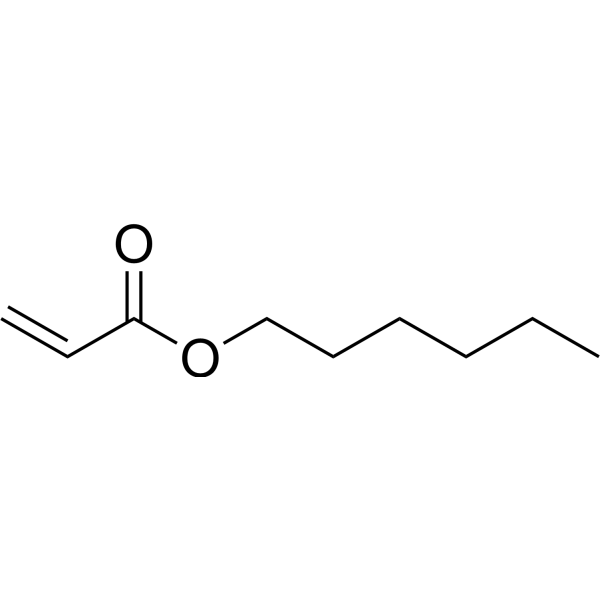
    Hexyl acrylate is a photoinitiator. Hexyl acrylate undergoes self-polymerization via piCVD under 254 nm UV radiation. Hexyl acrylate can be polymerized by atom transfer radical polymerization technology .
    Hexyl acrylate
  • HY-172380

    Biochemical Assay Reagents Others
    PCL-PEG-PCL diacrylate (MW 800) is an amphiphilic triblock copolymer composed of PEG and two polycaprolactones (PCL). PCL-PEG-PCL diacrylate (MW 800) can be cross-linked by free radical polymerization and/or photopolymerization to form a cross-linked hydrogel network .
    PCL-PEG-PCL diacrylate (PCL Average Mn 200, PEG Average Mn 1000)
  • HY-W076778

    Biochemical Assay Reagents Others
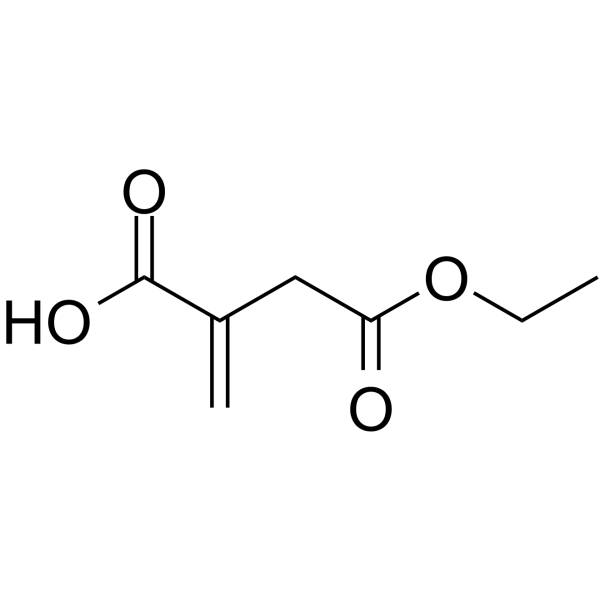
    Monoethyl itaconate is a free radical can be used for polymerization .
    Monoethyl itaconate
  • HY-W130177

    Biochemical Assay Reagents Cancer
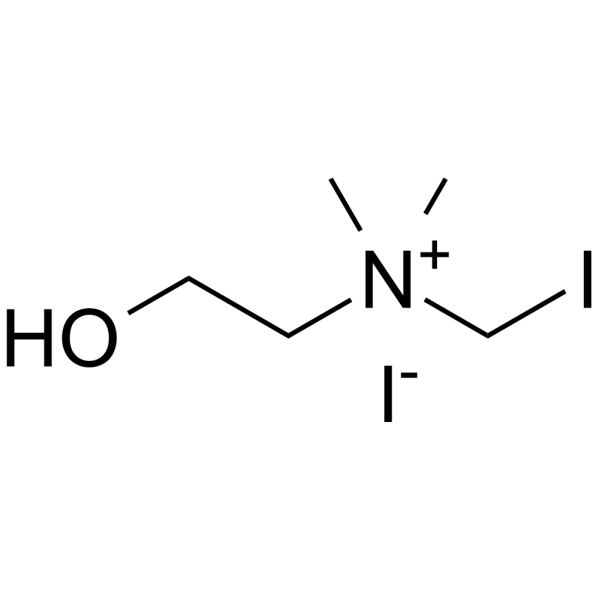
    Iodocholine iodide is a non-toxic, metabolizable "green" catalyst that can catalyze the free radical polymerization of functional polymers. Iodocholine iodide is also the non-radioactive iodide of Carbon-11 choline. C-11 Choline can be used in PET imaging and non-informative bone scintigraphy, CT or MRI to monitor various types of cancer .
    Iodocholine iodide
  • HY-W086630

    2,3-Bornanedione

    Biochemical Assay Reagents Others
    Camphorquinone (2,3-Bornanedione) is a photoinitiator. Camphorquinone enhances free radical production under visible light (VL) irradiation and exhibits minimal cytotoxicity to HPF cells. Camphorquinone is used in the research of dental resin polymers .
    Camphorquinone
  • HY-W002004S1

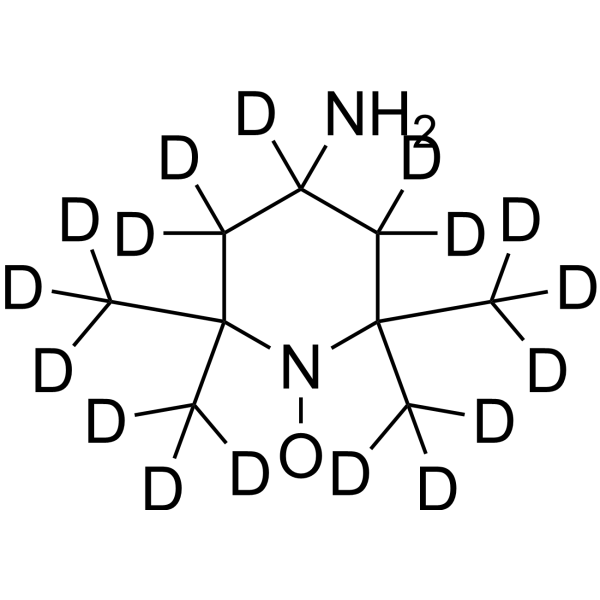
    4-Amino-2,2,6,6-tetramethylpiperidine-1-oxyl-d17

    Isotope-Labeled Compounds Biochemical Assay Reagents Inflammation/Immunology
    4-Amino-TEMPO-d17 (4-Amino-2,2,6,6-tetramethylpiperidine-1-oxyl-d17) is the deuterium labeled 4-Amino-TEMPO (HY-W002004). 4-Amino-TEMPO (4-Amino-2,2,6,6-tetramethylpiperidine-1-oxyl) is a stable nitroxide radical and N-nucleophile based on TEMPO. 4-Amino-TEMPO has superoxide dismutase-mimetic activity, can protect cells from oxidative damage, and has radioprotective effects. 4-Amino-TEMPO is widely used in fields such as biomedicine, materials science, and industrial production. 4-Amino-TEMPO can be used as a spin label to detect free radicals, an oxidation catalyst in industrial production, and an antioxidant stabilizer for polymers, among others .
    4-Amino-TEMPO-d17
  • HY-119987

    SOG

    Fluorescent Dye Others
    Sudan orange G is an azo dye. Sudan orange G, after enzymatic oxidation, generates oligomers and even polymers through free radical coupling reactions .
    Sudan orange G
  • HY-119987R

    SOG (Standard)

    Fluorescent Dye Reference Standards Others
    Sudan orange G (Standard) is the analytical standard of Sudan orange G. This product is intended for research and analytical applications. Sudan orange G is an azo dye. Sudan orange G, after enzymatic oxidation, generates oligomers and even polymers through free radical coupling reactions .
    Sudan orange G (Standard)
  • HY-W076778R

    Biochemical Assay Reagents Reference Standards Others
    Monoethyl itaconate (Standard) is the analytical standard of Monoethyl itaconate. This product is intended for research and analytical applications. Monoethyl itaconate is a free radical can be used for polymerization[1].
    Monoethyl itaconate (Standard)
  • HY-W099538R

    Dilauryl 3,3'-Thiodipropionate (Standard)

    Biochemical Assay Reagents Reference Standards Others
    Dilauryl thiodipropionate (Standard) is the analytical standard of Dilauryl thiodipropionate. This product is intended for research and analytical applications. Dilauryl thiodipropionate (DLTDP), which is a sulfur-containing antioxidant commonly used to stabilize polymers and plastics against degradation caused by heat, oxygen, and UV light, acts to scavenge free radicals and others that may cause polymer chain scission and cross-linked active substances, in addition, DLTDP has been used as an additive to lubricants, oils and other industrial fluids to improve their oxidation stability, the long hydrocarbon chain in DLTDP makes it low volatility and compatible with many materials and Good compatibility with substrates.
    Dilauryl thiodipropionate (Standard)
  • HY-W002004S

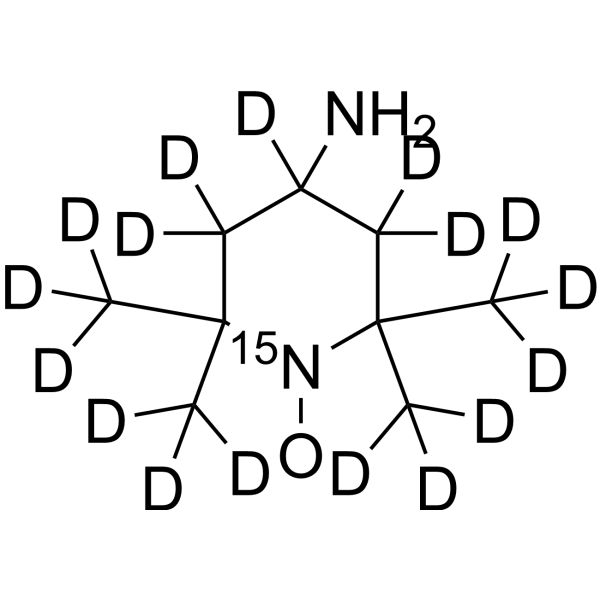
    4-Amino-2,2,6,6-tetramethylpiperidine-1-oxyl-d17,15N

    Isotope-Labeled Compounds Biochemical Assay Reagents Inflammation/Immunology
    4-Amino-TEMPO-d17, 15N (4-Amino-2,2,6,6-tetramethylpiperidine-1-oxyl-d17, 15N) is the deuterium labeled 4-Amino-TEMPO-d17 (HY-W002004S1). 4-Amino-TEMPO (4-Amino-2,2,6,6-tetramethylpiperidine-1-oxyl) is a stable nitroxide radical and N-nucleophile based on TEMPO. 4-Amino-TEMPO has superoxide dismutase-mimetic activity, can protect cells from oxidative damage, and has radioprotective effects. 4-Amino-TEMPO is widely used in fields such as biomedicine, materials science, and industrial production. 4-Amino-TEMPO can be used as a spin label to detect free radicals, an oxidation catalyst in industrial production, and an antioxidant stabilizer for polymers, among others .
    4-Amino-TEMPO-d17,15N
  • HY-W019888

    Ferrofloc

    Environmental Pollutants Others
    Iron (II) chloride (Ferrofloc) is an active radical polymerization initiator, which is a transition metal chloride composed of Fe 2+ and Cl ions. The ion association constant logKFeCl2 of Iron (II) chloride is −0.89. In acidic aqueous solutions, Iron (II) chloride forms solvated Fe 2++2Cl ions as well as FeCl ++Cl ion pairs. Without the addition of aluminum compounds, Iron (II) chloride drives the living radical polymerization of methyl methacrylate by generating transient radical growing species through homolytic reversible cleavage of the carbon-halogen end groups of organic halide initiators .
    Iron(II) chloride
  • HY-W101527

    Biochemical Assay Reagents Others
    Benzoin isopropyl ether is a photoinitiator. Benzoin isopropyl ether can be used for the photopolymerization of Methyl methacrylate .
    Benzoin isopropyl ether
  • HY-79587

    Biochemical Assay Reagents Others
    Benzil is a 1,2-diketone compound with multiple functions including photo-peroxidation initiator, crosslinking initiator and pattern-forming agent, and is commonly used as a precursor for photodegradable network crosslinkers. In oxygen-purged polymer films or glassy matrices, Benzil reacts with molecular oxygen under illumination at wavelengths greater than 370 nm or 400 nm, and converts to benzoyl peroxide in nearly quantitative yield. Subsequently, the generated benzoyl peroxide groups produce free radicals via thermal or photochemical decomposition, thereby enabling crosslinking of polymer chains, grafting of new monomers, and preparation of patterned polymers on solid surfaces using mask irradiation. Benzil also induces crosslinking of photodegradable poly (phenyl vinyl ketone) to form a stable photodegradable polymer network .
    Benzil
  • HY-W011875S

    Isotope-Labeled Compounds Biochemical Assay Reagents Others
    2-Isopropylthioxanthone-d7 is the deuterium labeled 2-Isopropylthioxanthone (HY-W011875). 2-Isopropylthioxanthone is a photoinitiator that is widely used in printing ink of packaging materials. 2-Isopropylthioxanthone triggers the radical polymerization of the acrylic component of inks, thus causing the liquid ink film to dry .
    2-Isopropylthioxanthone-d7

Inquiry Online

Your information is safe with us. * Required Fields.

Salutation


Country or Region *

Applicant Name *


Organization Name *

Department *


Email Address *


Product Name *

Cat. No.


Requested quantity *

Phone Number *


Remarks

Inquiry Online

Inquiry Information

Product Name:
Cat. No.:
Quantity:
MCE Japan Authorized Agent:

