1. Search Result
Search Result
Results for "

stable intermediate

" in MedChemExpress (MCE) Product Catalog:

15

Inhibitors & Agonists

2

Biochemical Assay Reagents

2

Peptides

2

Natural
Products

2

Click Chemistry

2

Oligonucleotides

Targets Recommended:
Cat. No. Product Name Target Research Areas Chemical Structure
  • HY-W591424

    mPEG2000-SC; mPEG2000-Succinimidyl ester

    Biochemical Assay Reagents MMP Cancer
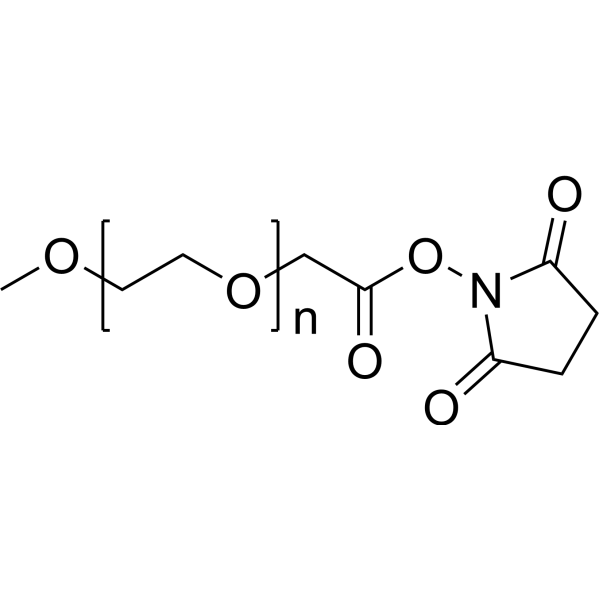
    m-PEG2000-NHS ester (mPEG2000-SC) is a reagent with both cell adhesion inhibition and peptide conjugation functions. The NHS ester group of m-PEG2000-NHS ester forms stable amide bonds with primary amine-containing molecules (e.g., the N-terminus of MMP-2-cleavable octapeptide) to generate mPEG-peptide intermediates for liposome surface modification. When m-PEG2000-NHS ester is immobilized on a cystamine-modified gold surface, it can construct an in vitro model for cell adhesion kinetic studies, and higher PEG density and thicker layers correlate with lower cell adhesion rates. m-PEG2000-NHS ester can synthesize MMP-2-responsive PEGylated lipid conjugates to achieve MMP-triggered dePEGylation in the tumor microenvironment. m-PEG2000-NHS ester can be used in studies related to colon cancer and other conditions .
    m-PEG2000-NHS ester
  • HY-135700

    Calcineurin Ras HMG-CoA Reductase (HMGCR) Metabolic Disease Inflammation/Immunology
    Mevalonolactone is an intermediate metabolite in the eukaryotic mevalonate pathway, serving as the stable δ-lactone form of mevalonate with oral activity. Mevalonolactone exhibits binding affinity for ZNF384 (Ka = 12.6 μM) and inhibitory activity against aconitase (aconitase). Mevalonolactone promotes the nuclear localization of ZNF384 and enhances its binding to the GGPPS promoter. Mevalonolactone induces insulin resistance, disrupts glucose and lipid metabolism, enhances the isoprenylation of K-Ras, and inhibits the activation of the insulin signaling pathway. Mevalonolactone inhibits polypeptide synthesis of HMG-CoA reductase in isolated rat hepatocytes, promotes its degradation, and reduces its enzymatic activity. Mevalonolactone impairs mitochondrial function in rat brains. Mevalonolactone promotes the development of metabolically unhealthy obesity. Mevalonolactone can be used in research related to metabolically abnormal obesity, mevalonic aciduria, HMGCR-related limb-girdle myopathy, and statin-induced myopathy .
    Mevalonolactone
  • HY-115411A

    NO Synthase Others
    L-Hydroxy arginine dihydrochloride is an intermediate in the catabolism of L-arginine, and is a substrate for NO synthase .
    L-Hydroxy arginine dihydrochloride
  • HY-151672

    ADC Linker Others
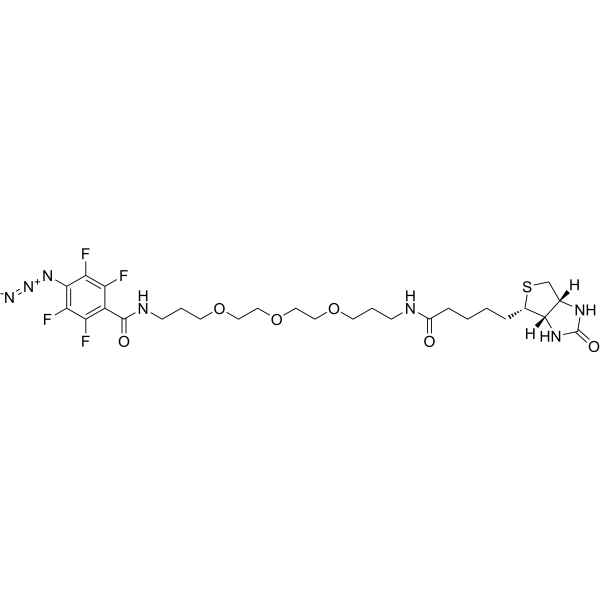
    Biotin-TEG-ATFBA is a click chemistry reagent containing a perfluorophenylazide group. Biotin-TEG-ATFBA forms a highly stable azene intermediate that undergoes insertion and addition reactions (non-intermolecular rearrangement) in moderate to good yields after photolysis. It contains an azide group and can undergo copper-catalyzed azide-alkyne cycloaddition (CuAAc) with molecules containing alkyne groups. It can also undergo ring strain-promoted alkyne-azide cycloaddition (SPAAC) with molecules containing DBCO or BCN groups.
    Biotin-TEG-ATFBA
  • HY-34439

    NSC 49139

    Environmental Pollutants Endogenous Metabolite Metabolic Disease
    2,5-Dimethylpyrazine (NSC 49139) is an endogenous metabolite. 2,5-Dimethylpyrazine in produced in food systems of two whey protein hydrolysates, obtained using either trypsin or proteinase from Aspergillus melleus. 2,5-Dimethylpyrazine can be qualitatively monitored using a stable isotope dilution assay. 2,5-Dimethylpyrazine can also be generated via microbial mechanisms using Bacillus subtilis. 2,5-Dimethylpyrazine can be oxidized to form 5-methylpyrazine-2-carboxylic acid, which is the intermediate in the synthesis of antilipoltic agent. 2,5-Dimethylpyrazine is a volatile compound that can give a roasted peanut flavor .
    2,5-Dimethylpyrazine
  • HY-44087

    Drug Intermediate Others
    Ethyl (E)-3-(1-pyrrolidinyl)crotonate is an organic synthetic intermediate of the enamine ester type. Ethyl (E)-3-(1-pyrrolidinyl)crotonate has a stable structure and strong reactivity, and is mainly used for the construction of heterocyclic compounds and drug molecules.
    Ethyl (E)-3-(1-pyrrolidinyl)crotonate
  • HY-21286

    Drug Intermediate Others
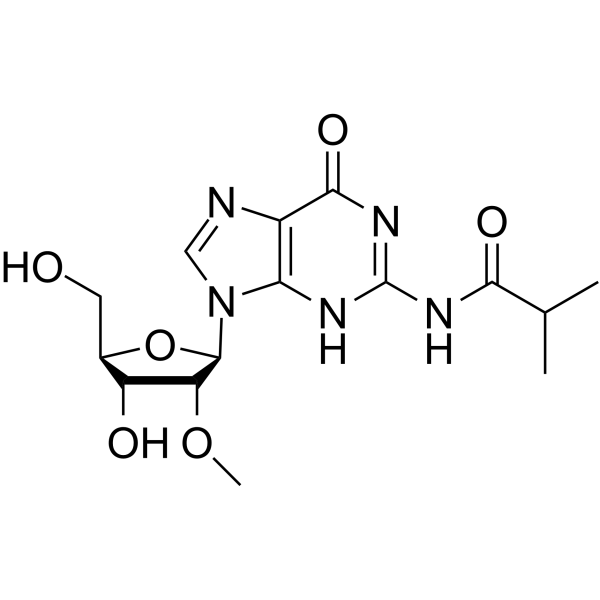
    N2-Isobutyryl-2'-O-methylguanosine is a nucleic acid synthesis intermediate (e.g., used in antisense oligonucleotides, mRNA modification), for example, it is a key monomer for the synthesis of 2'-O-methyl oligoribonucleotides. N2-Isobutyryl-2'-O-methylguanosine enables the final product to form stable double strands with complementary RNA and is not easily degraded by nucleases. N2-Isobutyryl-2'-O-methylguanosine is mainly used in molecular biology research, and can be used to prepare RNA hybridization probes or participate in related biochemical research such as pre-mRNA splicing mechanisms .
    N2-Isobutyryl-2'-O-methylguanosine
  • HY-W097018

    Biochemical Assay Reagents Others
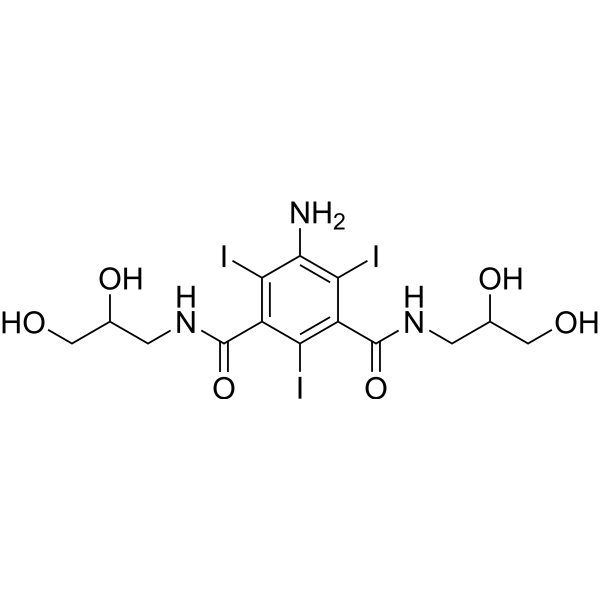
    Iomeprol intermediate-1 (compound 5) is an iodinated polysaccharide compound used in the synthesis of contrast agents. The amino group of Iomeprol intermediate-1 can be coupled to the carboxyl group of the D-glucuronide subunit of non-animal stable hyaluronic acid (NASHA), providing a water-soluble, radiopaque moiety .
    Iomeprol intermediate-1
  • HY-115411

    NO Synthase Others
    L-Hydroxy arginine acetate is an intermediate in the catabolism of L-arginine. L-Hydroxy arginine acetate is a substrate for NO synthase .
    L-Hydroxy arginine acetate
  • HY-W097018R

    Biochemical Assay Reagents Reference Standards Others
    Iomeprol intermediate-1 (Standard) is the analytical standard of Iomeprol intermediate-1. This product is intended for research and analytical applications. Iomeprol intermediate-1 (compound 5) is an iodinated polysaccharide compound used in the synthesis of contrast agents. The amino group of Iomeprol intermediate-1 can be coupled to the carboxyl group of the D-glucuronide subunit of non-animal stable hyaluronic acid (NASHA), providing a water-soluble, radiopaque moiety .
    Iomeprol intermediate-1 (Standard)
  • HY-176893

    ADC Linker Others
    Mm-C3-OSu (Methyl Maleate-C3-N-Hydroxysuccinimide Ester) is a structurally defined linker intermediate with a cis-configured methyl maleate (Mm) core and a C3 alkyl chain terminated by an N-hydroxysuccinimide (OSu) reactive group, designed for constructing stable antibody-drug conjugates (ADCs).
    Mm-C3-OSu
  • HY-I0169R

    Reference Standards Drug Metabolite Neurological Disease
    (R)-Amino-N-benzyl-3-methoxypropionamide (Standard) is the analytical standard of (R)-Amino-N-benzyl-3-methoxypropionamide. This product is intended for research and analytical applications. (R)-Amino-N-benzyl-3-methoxypropionamide is a stable intermediate of Lacosamide (an antiepileptic drug) .
    (R)-Amino-N-benzyl-3-methoxypropionamide (Standard)
  • HY-W205529

    Fluorescent Dye Neurological Disease
    RO 16-6491 Free base is a selective, reversible inhibitor of monoamine oxidase type B (MAO-B), exhibiting high affinity and specificity for binding sites in human frontal cortex mitochondria and platelet membranes. RO 16-6491 demonstrates a fast dissociation of bound radioactivity at 20 degrees C, indicating its dynamic binding properties. RO 16-6491 also acts as a substrate for MAO-B, suggesting that its oxidation may produce a stable intermediate responsible for its potent inhibitory effects. RO 16-6491 serves as an excellent radioligand probe for investigating the regional tissue distribution of MAO-B in various physiological and pathological states.
    RO 16-6491 free base
  • HY-181085

    DYRK Neurological Disease Inflammation/Immunology Cancer
    RD0448 is a potent inhibitor of DYRK1A, DYRK1B, and DYRK2. RD0448 selectively targets the non-native (folded intermediate) state of DYRK1A and DYRK1B. The binding site of RD0448 is hidden in the native state of DYRK1A and DYRK1B, and as a stabilizing binder, it binds tightly to both DYRK1A and DYRK1B, forming a stable complex with slow dissociation kinetics. In contrast, RD0448 targets the native state of DYRK2 without selectivity between its native and non-native states, acting as a weak binder with weaker binding affinity to DYRK2 and forming a rapidly dissociating complex .
    RD0448
  • HY-183137

    Fluorescent Dye Others
    Neotetrazolium chloride is a photoreducible tetrazolium dye. Neotetrazolium chloride undergoes photoreduction to form a stable red monoformazan via a transient tetrazolinyl radical-tetrazolium intermediate upon UV exposure. Neotetrazolium chloride can be as a UV dosimeter .
    Neotetrazolium chloride

Inquiry Online

Your information is safe with us. * Required Fields.

Salutation


Country or Region *

Applicant Name *


Organization Name *

Department *


Email Address *


Product Name *

Cat. No.


Requested quantity *

Phone Number *


Remarks

Inquiry Online

Inquiry Information

Product Name:
Cat. No.:
Quantity:
MCE Japan Authorized Agent:

