



Didox
Based on 13 publication(s) in Google Scholar
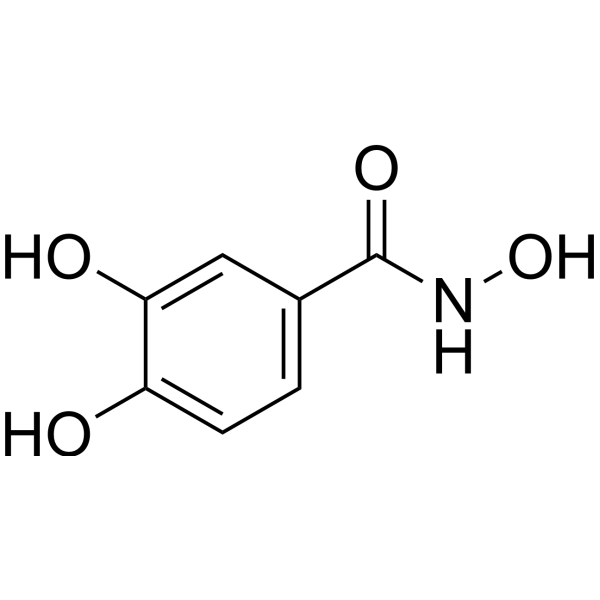
Didox (NSC-324360) is a synthetic ribonucleotide reductase (RR) inhibitor.
For research use only. We do not sell to patients.
- Purity : 98.03%
- CAS No.: 69839-83-4
- Formula: C7H7NO4
- Molecular Weight:169.13
-
Storage:Powder -20°C, 3 years , 4°C, 2 years ; In solvent -80°C, 6 months , -20°C, 1 month

To place orders, for customer services and technical support, please contact: MedChemExpress USA
Tel: 609-228-6898 E-mail: [email protected] [email protected]


-
 Biological Activity
-
Chemical Information
-
Solvent & Solubility
- Purity & Documentation
- References
-
 Help & FAQs


-
HY-10082
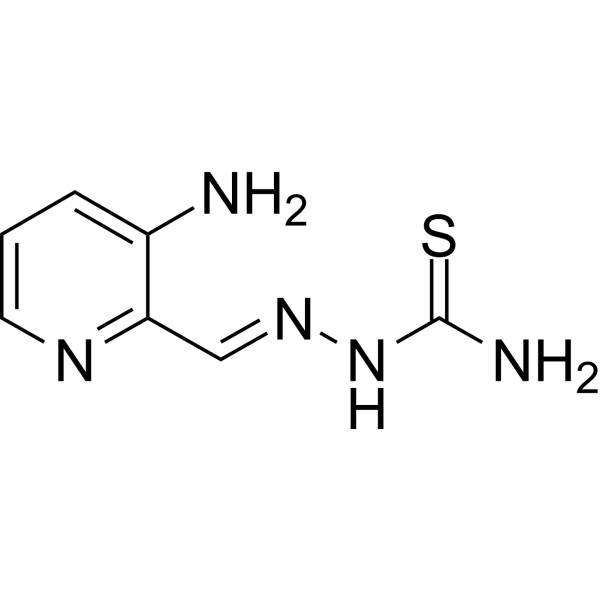
TriapineRibonucleotide Reductase Inhibitor -

HY-19387R
Didox (Standard)DNA/RNA Synthesis Inhibitor -
HY-D0187
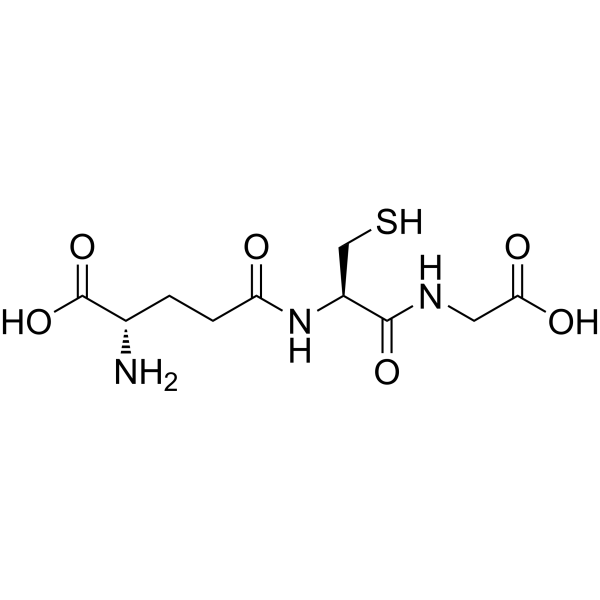
L-Glutathione reducedAntioxidant -

HY-D0187R
L-Glutathione reduced (Standard)Antioxidant -
HY-W001171
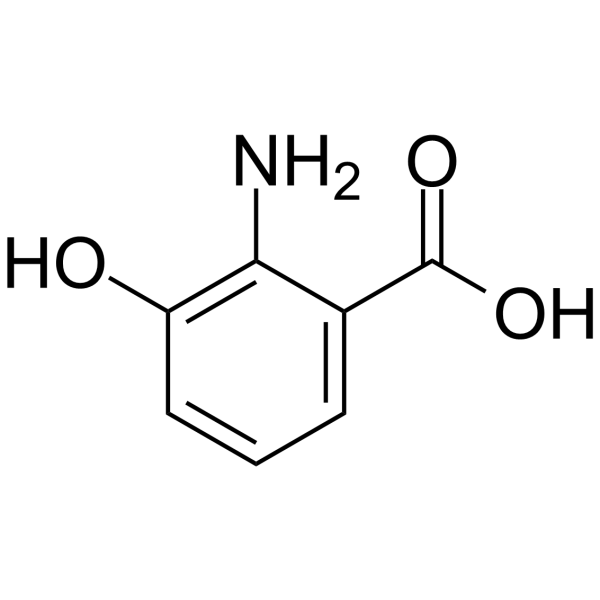
3-Hydroxyanthranilic acidTryptophan Metabolite -
HY-N0139
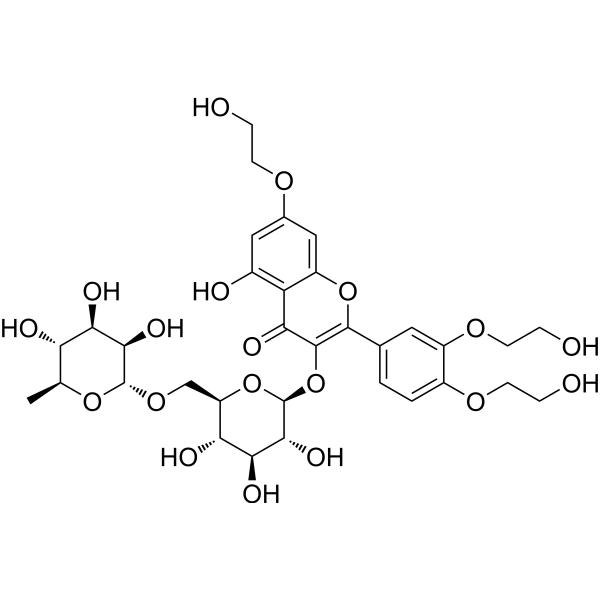
TroxerutinNOD-like Receptor (NLR) Inhibitor -
HY-100885
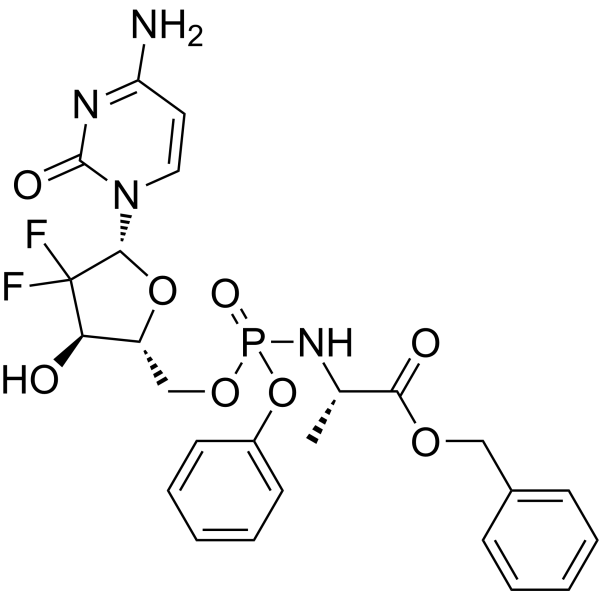
AcelarinNucleoside Analog -
HY-N0637
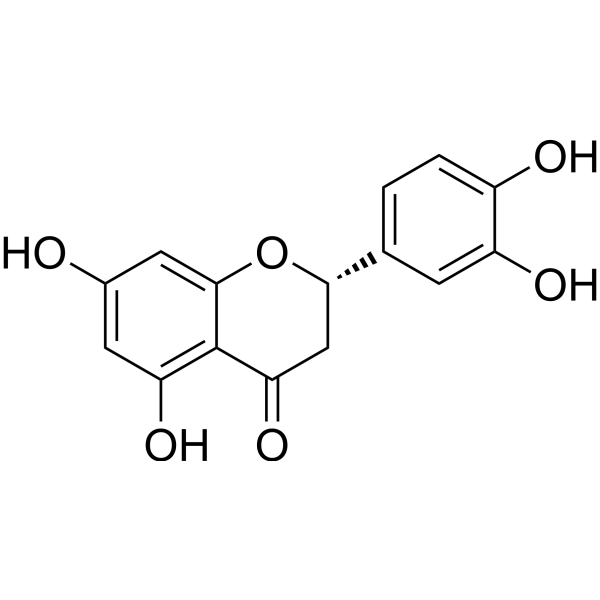
EriodictyolEndogenous Metabolite -
HY-W001171R
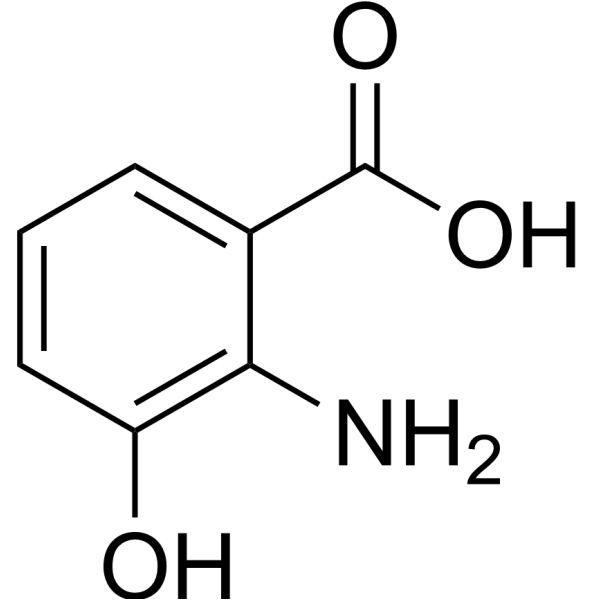
3-Hydroxyanthranilic acid (Standard) -
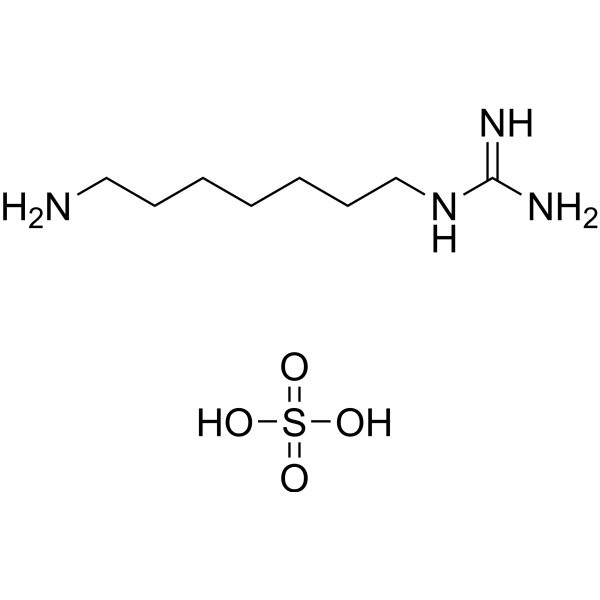
HY-108314A
GC7 SulfateDHPS Inhibitor -
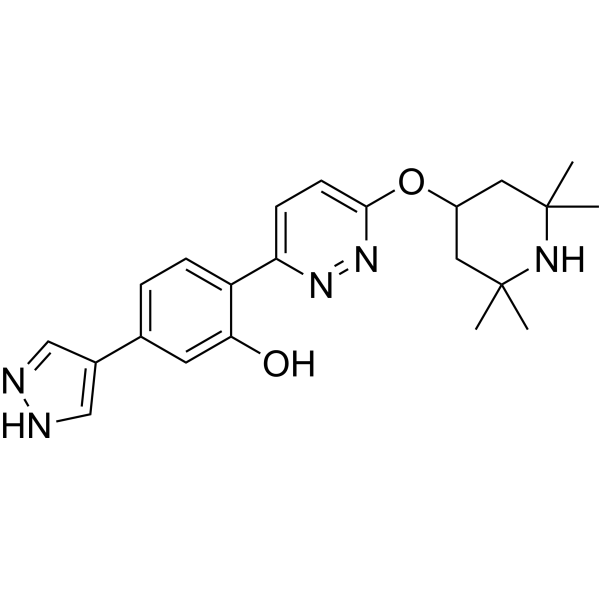
HY-19620
BranaplamSMN2 Splicing Modulator -
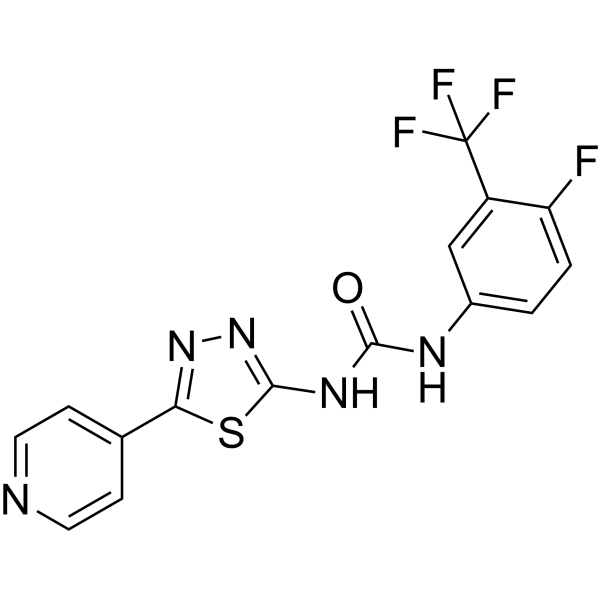
HY-12342
ML216BLM Helicase Inhibitor
Publications Citing Use of MedChemExpress (MCE) Didox
More- Phytother Res. 2022 Apr;36(4):1692-1707. [Abstract]
- Free Radic Biol Med. 2020 May 20:152:525-539. [Abstract]
- Chin Med. 2024 May 8;19(1):67. [Abstract]
- J Ethnopharmacol. 2025 Jan 30;337(Pt 3):118892. [Abstract]
- J Ethnopharmacol. 2022 Jan 30:283:114694. [Abstract]
- J Ethnopharmacol. 2018 Dec 5:227:166-175. [Abstract]
- J Ethnopharmacol. 2018 Jul 15:221:37-47. [Abstract]
- Biomolecules. 2022 Feb 12;12(2):299. [Abstract]
- J Nat Prod. 2020 Apr 24;83(4):1217-1228. [Abstract]
- Bioorg Med Chem. 2021 Jan 1:29:115854. [Abstract]
- Guidelines and Standards in Chinese Medicine. 2024 September 12.
- Oxid Med Cell Longev. 2018 Mar 20:2018:7616852. [Abstract]
- BMC Complement Altern Med. 2016 Sep 13;16(1):360. [Abstract]
 Customer Validation & Images

-
WB
-
WB
All DNA/RNA Synthesis Isoforms
More

Biological Activity
Description
IC50 & Target
Ribonucleotide reductase[1]
Cellular Effect
|
Cell Line

|
Type | Value | Description | References |
|---|---|---|---|---|
| RAW264.7 | EC50 |
82.4 μM
Compound: Didox
|
Antiinflammatory activity in mouse RAW264.7 cells assessed as inhibition of LPS-induced nitric oxide production measured after 24 hrs by Griess assay
Antiinflammatory activity in mouse RAW264.7 cells assessed as inhibition of LPS-induced nitric oxide production measured after 24 hrs by Griess assay
|
[PMID: 29517238] |
In Vitro
Didox (NSC-324360) suppresses LPS-induced mRNA levels of iNOS, IL-6, IL-1, TNF-α, NF-κβ (p65), and p38-α, after 24 h of treatment. Treatment with Didox also suppresses the secretion of nitric oxide (NO), IL-6, and IL-10. Using mitochondrial dehydrogenase activity as a measure of cytotoxicity, the effects of Didox on cellular respiration in RAW264.7 are examined over a range of concentrations for 24 h. Cells exposures to 200 μM and below Didox, with and without LPS, do not exhibit significant cellular toxicity[1]. Didox (NSC-324360) is active against all human and murine acute myeloid leukemia (AML) lines tested with IC50 values in the low micromolar range (mean IC50 37 μM [range 25.89-52.70 μM])[2].
MedChemExpress (MCE) has not independently confirmed the accuracy of these methods. They are for reference only.
In Vivo
MedChemExpress (MCE) has not independently confirmed the accuracy of these methods. They are for reference only.


Chemical Information
-
CAS No. 69839-83-4
-
Appearance Solid
-
Molecular Weight 169.13
-
Formula C7H7NO4
-
Color Light yellow to khaki
-
SMILES
O=C(NO)C1=CC=C(O)C(O)=C1
-
Synonyms
NSC-324360
-
Shipping
Room temperature in continental US; may vary elsewhere.
-
Storage
Powder -20°C 3 years 4°C 2 years In solvent -80°C 6 months -20°C 1 month


Publications (13)
-
Journal Impact Factor
-
Most Recent
-
Phytother Res
The alleviative effect of flavonol-type Nrf2 activator rhamnazin from Physalis alkekengi L. var. franchetii (Mast.) Makino on pulmonary disorders. [Abstract]2022 Apr;36(4):1692-1707. PMID: 35129872 -
Free Radic Biol Med
Trans-4,4'-dihydroxystilbene ameliorates cigarette smoke-induced progression of chronic obstructive pulmonary disease via inhibiting oxidative stress and inflammatory response. [Abstract]2020 May 20:152:525-539. PMID: 31760092 -
Chin Med
Systematic investigation of the material basis, effectiveness and safety of Thesium chinense Turcz. and its preparation Bairui Granules against lung inflammation. [Abstract]2024 May 8;19(1):67. PMID: 38720376 -
J Ethnopharmacol
Cimicifuga heracleifolia kom. Attenuates ulcerative colitis through the PI3K/AKT/NF-κB signaling pathway. [Abstract]2025 Jan 30;337(Pt 3):118892. PMID: 39395768 -
J Ethnopharmacol
The ethanol extract of flower buds of Tussilago farfara L. attenuates cigarette smoke-induced lung inflammation through regulating NLRP3 inflammasome, Nrf2, and NF-κB. [Abstract]2022 Jan 30:283:114694. PMID: 34601084 -
J Ethnopharmacol
Protective effect of the ethanol extract from Ligusticum chuanxiong rhizome against streptozotocin-induced diabetic nephropathy in mice. [Abstract]2018 Dec 5:227:166-175. PMID: 30176347
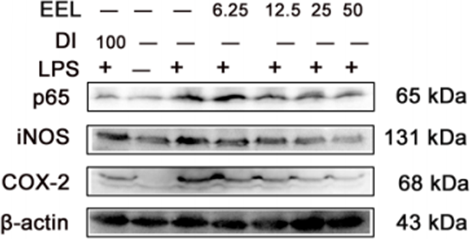
Didox purchased from MedChemExpress. Usage Cited in: J Ethnopharmacol. 2018 Dec 5:227:166-175. [Abstract]
The hepa 1c1c7 cells are treated with indicated doses of extracts along with LPS (1 μg/mL) for 24 h, and then the accumulation of nitrite from the supernatants is evaluated by Griess reagent. Didox (DI) is used as a positive control, and possessed an inhibitory rate of about 70% at 100 μM.
-
J Ethnopharmacol
Investigation of constituents from Cinnamomum camphora (L.) J. Presl and evaluation of their anti-inflammatory properties in lipopolysaccharide-stimulated RAW 264.7 macrophages. [Abstract]2018 Jul 15:221:37-47. PMID: 29660467 -
Biomolecules
RRM2 Alleviates Doxorubicin-Induced Cardiotoxicity through the AKT/mTOR Signaling Pathway. [Abstract]2022 Feb 12;12(2):299. PMID: 35204799 -
J Nat Prod
4β-Hydroxywithanolide E from Goldenberry (Whole Fruits of Physalis peruviana L.) as a Promising Agent against Chronic Obstructive Pulmonary Disease. [Abstract]2020 Apr 24;83(4):1217-1228. PMID: 32159343 -
Bioorg Med Chem
2021 Jan 1:29:115854. PMID: 33223464 -
-
Oxid Med Cell Longev
Ingredients from Litsea garrettii as Potential Preventive Agents against Oxidative Insult and Inflammatory Response. [Abstract]2018 Mar 20:2018:7616852. PMID: 29743984
Didox purchased from MedChemExpress. Usage Cited in: Oxid Med Cell Longev. 2018 Mar 20:2018:7616852. [Abstract]
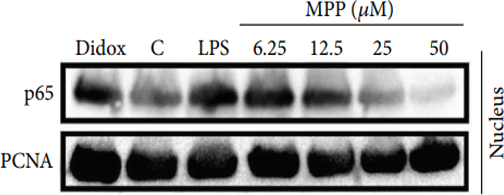
MPP inhibits the NF-κB-dependent luciferase activity. After being cotransfected with NF-κB firefly luciferase and TK-Renilla luciferase, cells are pretreated with MPP (25 μM) or Didox (100 μM) for 1 h and cotreated with LPS (1 μg/mL) for 16 h.
-
BMC Complement Altern Med
Screening of traditional Chinese medicines with therapeutic potential on chronic obstructive pulmonary disease through inhibiting oxidative stress and inflammatory response. [Abstract]2016 Sep 13;16(1):360. PMID: 27623767


Solvent & Solubility
In Vitro:
DMSO : 100 mg/mL (591.26 mM; Need ultrasonic; Hygroscopic DMSO has a significant impact on the solubility of product, please use newly opened DMSO)
Please refer to the solubility information to select the appropriate solvent. Once prepared, please aliquot and store the solution to prevent product inactivation from repeated freeze-thaw cycles.
Storage method and period of stock solution: -80°C, 6 months; -20°C, 1 month. When stored at -80°C, please use it within 6 months. When stored at -20°C, please use it within 1 month.
Please refer to the solubility information to select the appropriate solvent. Once prepared, please aliquot and store the solution to prevent product inactivation from repeated freeze-thaw cycles.
Storage method and period of stock solution: -80°C, 6 months; -20°C, 1 month. When stored at -80°C, please use it within 6 months. When stored at -20°C, please use it within 1 month.
Concentration (start) × Volume (start) = Concentration (final) × Volume (final)
In Vivo:
Select the appropriate dissolution method based on your experimental animal and administration route.
- For the following dissolution methods, please ensure to first prepare a clear stock solution using an In Vitro approach and then sequentially add co-solvents:
- To ensure reliable experimental results, the clarified stock solution can be appropriately stored based on storage conditions. As for the working solution for In Vivo experiments, it is recommended to prepare freshly and use it on the same day.
- The percentages shown for the solvents indicate their volumetric ratio in the final prepared solution. If precipitation or phase separation occurs during preparation, heat and/or sonication can be used to aid dissolution.
Add each solvent one by one: 10% DMSO 40% PEG300 5% Tween-80 45% Saline
Solubility: ≥ 2.75 mg/mL (16.26 mM); Clear solution
This protocol yields a clear solution of ≥ 2.75 mg/mL (saturation unknown).
Taking 1 mL working solution as an example, add 100 μL DMSO stock solution (27.5 mg/mL) to 400 μL PEG300, and mix evenly; then add 50 μL Tween-80 and mix evenly; then add 450 μL Saline to adjust the volume to 1 mL.
Preparation of Saline: Dissolve 0.9 g sodium chloride in ddH₂O and dilute to 100 mL to obtain a clear Saline solution.
Add each solvent one by one: 10% DMSO 90% (20% SBE-β-CD in Saline)
Solubility: ≥ 2.75 mg/mL (16.26 mM); Clear solution
This protocol yields a clear solution of ≥ 2.75 mg/mL (saturation unknown).
Taking 1 mL working solution as an example, add 100 μL DMSO stock solution (27.5 mg/mL) to 900 μL 20% SBE-β-CD in Saline, and mix evenly.
Preparation of 20% SBE-β-CD in Saline (4°C, storage for one week): 2 g SBE-β-CD powder is dissolved in 10 mL Saline, completely dissolve until clear.
In Vivo Dissolution Calculator
Please enter the basic information of animal experiments:
-
-
-
-
Recommended: Prepare an additional quantity of animals to account for potential losses during experiments.
Please enter your animal formula composition:
-
%DMSO +
Recommended: Keep the proportion of DMSO in working solution below 2% if your animal is weak.
-
%+
-
+%Tween-80 + +
-
%Saline +
The co-solvents required include: DMSO, . All of co-solvents are available by MedChemExpress (MCE). , Tween 80. All of co-solvents are available by MedChemExpress (MCE).
Working solution concentration: 0.22 mg/mL
Method for preparing stock solution: mg drug dissolved in μL DMSO. Stock solution concentration: mg/mL.
1. Take μL DMSO stock solution;
2. Add μL .
μL , mix evenly;
3. Then add μL Tween 80, mix evenly;
4. Then add μL
Please ensure that the stock solution in the first step is dissolved to a clear state, and add co-solvents in sequence. You can use ultrasonic heating (ultrasonic cleaner, recommended frequency 20-40 kHz), vortexing, etc. to assist dissolution.


Purity & Documentation
-
Data Sheet (279 KB)
-
SDS (393 KB)
- English - EN (393 KB)
- Français - FR (393 KB)
- Deutsch - DE (393 KB)
- Norwegian - NO (393 KB)
- Español - ES (393 KB)
- Swedish - SV (393 KB)
- Italian - IT (393 KB)
- Korean - KR (393 KB)
- Portuguese - PT (393 KB)
-
Handling Instructions (2659 KB)
References
[1]. Matsebatlela TM, et al. 3,4-Dihydroxy-benzohydroxamic acid (Didox) suppresses pro-inflammatory profiles and oxidative stress in TLR4-activated RAW264.7 murine macrophages. Chem Biol Interact. 2015 May 25;233:95-105. [Content Brief]
[2]. Cook GJ, et al. The efficacy of the ribonucleotide reductase inhibitor Didox in preclinical models of AML. PLoS One. 2014 Nov 17;9(11):e112619. [Content Brief]


Complete Stock Solution Preparation Table
Please refer to the solubility information to select the appropriate solvent. Once prepared, please aliquot and store the solution to prevent product inactivation from repeated freeze-thaw cycles.
Storage method and period of stock solution: -80°C, 6 months; -20°C, 1 month. When stored at -80°C, please use it within 6 months. When stored at -20°C, please use it within 1 month.
| Optional Solvent | Concentration Solvent Mass | 1 mg | 5 mg | 10 mg | 25 mg |
|---|---|---|---|---|---|
| DMSO | 1 mM | 5.9126 mL | 29.5631 mL | 59.1261 mL | 147.8153 mL |
| 5 mM | 1.1825 mL | 5.9126 mL | 11.8252 mL | 29.5631 mL | |
| 10 mM | 0.5913 mL | 2.9563 mL | 5.9126 mL | 14.7815 mL | |
| 15 mM | 0.3942 mL | 1.9709 mL | 3.9417 mL | 9.8544 mL | |
| 20 mM | 0.2956 mL | 1.4782 mL | 2.9563 mL | 7.3908 mL | |
| 25 mM | 0.2365 mL | 1.1825 mL | 2.3650 mL | 5.9126 mL | |
| 30 mM | 0.1971 mL | 0.9854 mL | 1.9709 mL | 4.9272 mL | |
| 40 mM | 0.1478 mL | 0.7391 mL | 1.4782 mL | 3.6954 mL | |
| 50 mM | 0.1183 mL | 0.5913 mL | 1.1825 mL | 2.9563 mL | |
| 60 mM | 0.0985 mL | 0.4927 mL | 0.9854 mL | 2.4636 mL | |
| 80 mM | 0.0739 mL | 0.3695 mL | 0.7391 mL | 1.8477 mL | |
| 100 mM | 0.0591 mL | 0.2956 mL | 0.5913 mL | 1.4782 mL |


Didox Related Classifications
HY-19387 Related Classifications
 Powered by Bioz