



SP-141
Based on 5 publication(s) in Google Scholar
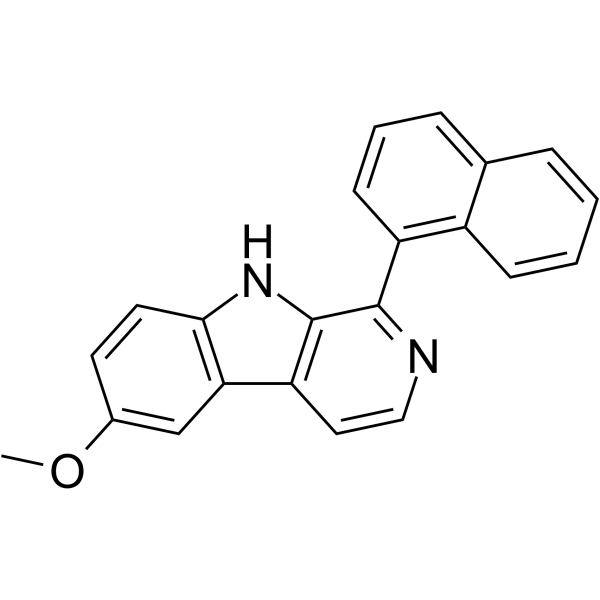
SP-141 is a specific inhibitor of MDM2. SP-141 promotes MDM2 auto-ubiquitination and degradation. SP-141 might be used for the research of pancreatic cancer and breast cancer cells.
Nur für Forschungszwecke. Wir verkaufen nicht an Patienten.
- Reinheit : 98.93%
- CAS. Nr.: 1253491-42-7
- Formel: C22H16N2O
- Molecular Weight:324.38
-
Speicherung:Powder -20°C, 3 years , 4°C, 2 years ; In solvent -80°C, 2 years , -20°C, 1 year

To place orders, for customer services and technical support, please contact: MedChemExpress USA
Tel: 609-228-6898 E-mail: [email protected] [email protected]


-
 Biologische Aktivität
-
Chemical Information
-
Lösungsmittel & Löslichkeit
- Protokoll
- Reinheit & Dokumentation
- Verweise
-
 Help & FAQs


-
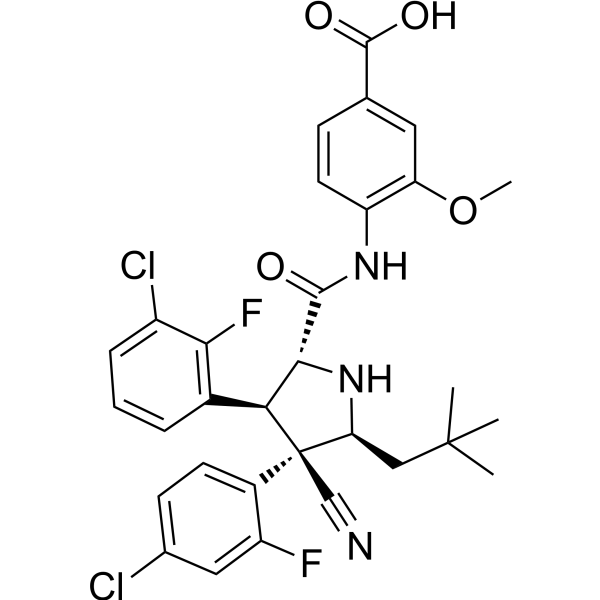
HY-15676
IdasanutlinMDM2 Inhibitor -
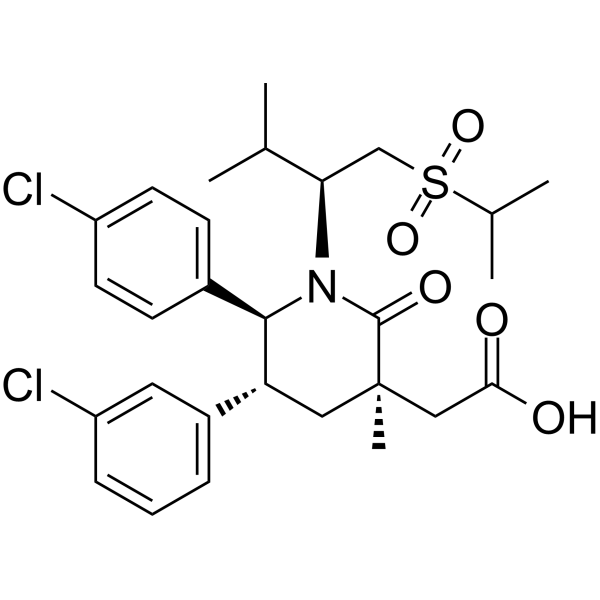
HY-12296
NavtemadlinMDM2-p53 Interaction Inhibitor -
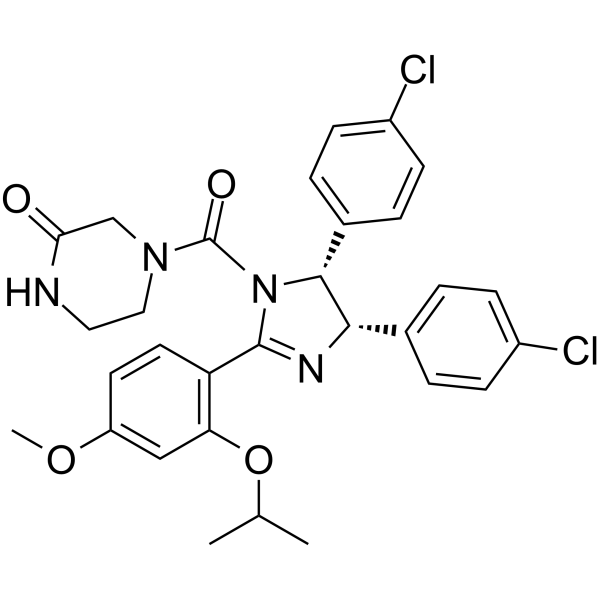
HY-10029
Nutlin-3aMDM2 Antagonist -
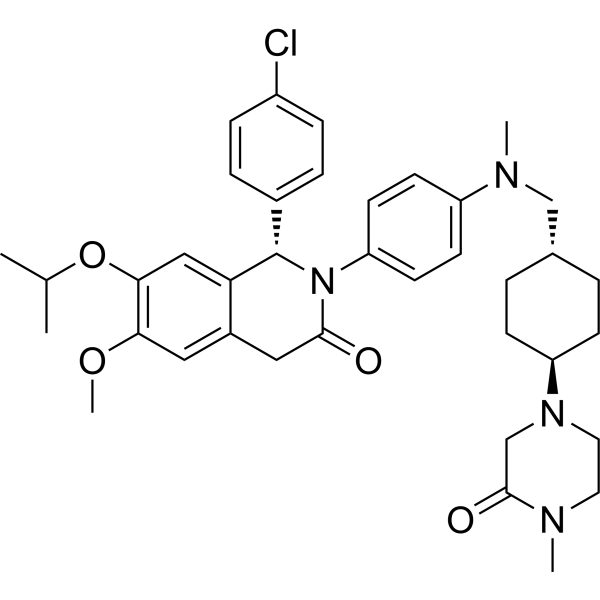
HY-15954
NVP-CGM097MDM2 Inhibitor -
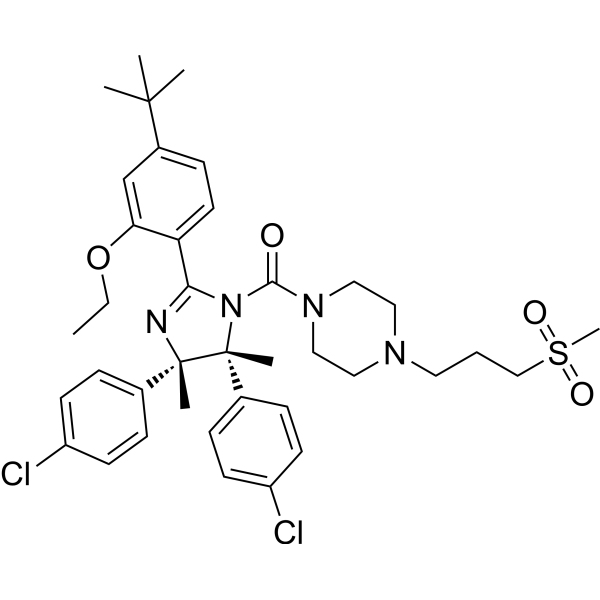
HY-10959
RG7112MDM2 Antagonist -
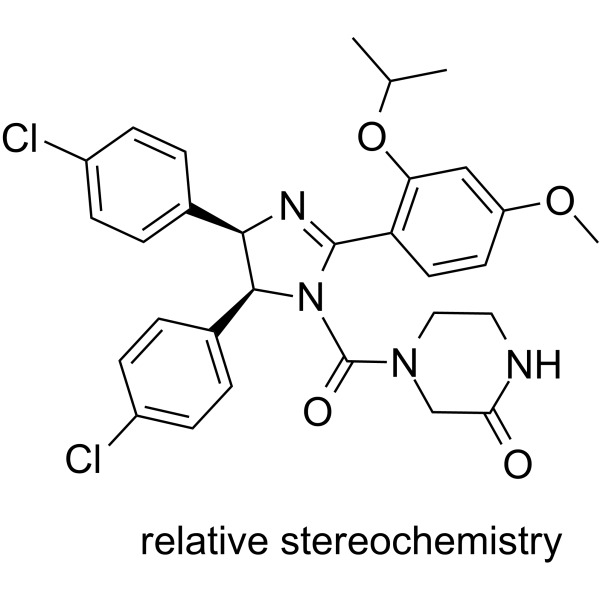
HY-50696
Nutlin-3p53-MDM2 Inhibitor -
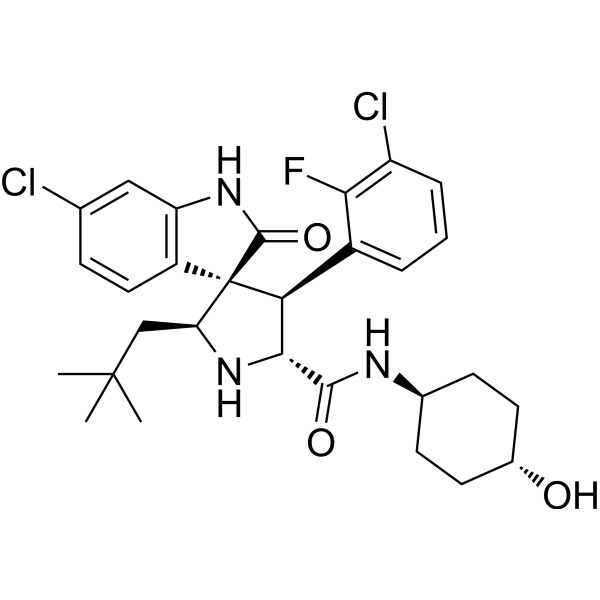
HY-18986
SAR405838MDM2-p53 Interaction Inhibitor -
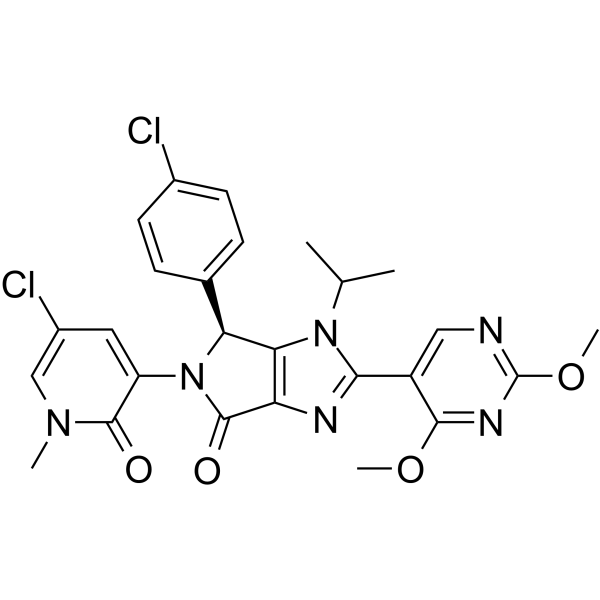
HY-18658
Siremadlinp53-MDM2 Inhibitor -
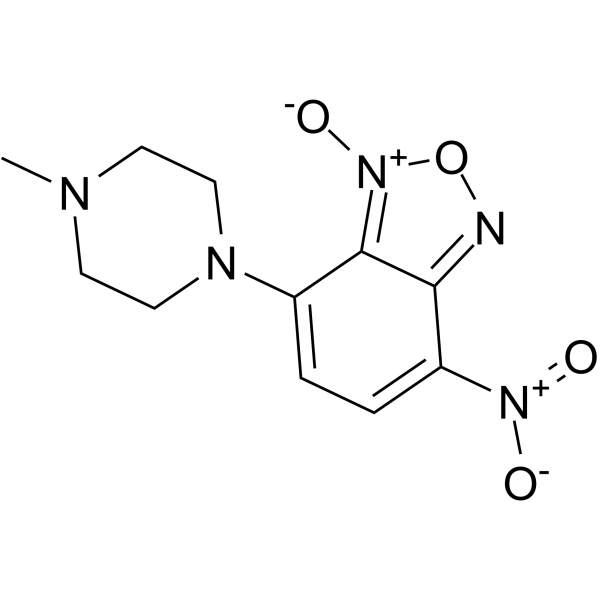
HY-14714
NSC-207895p53 Activator -
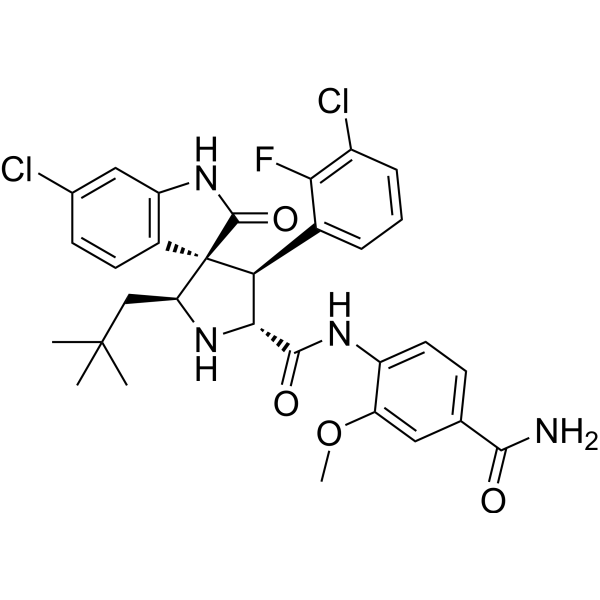
HY-16999
RO8994MDM2 Inhibitor -
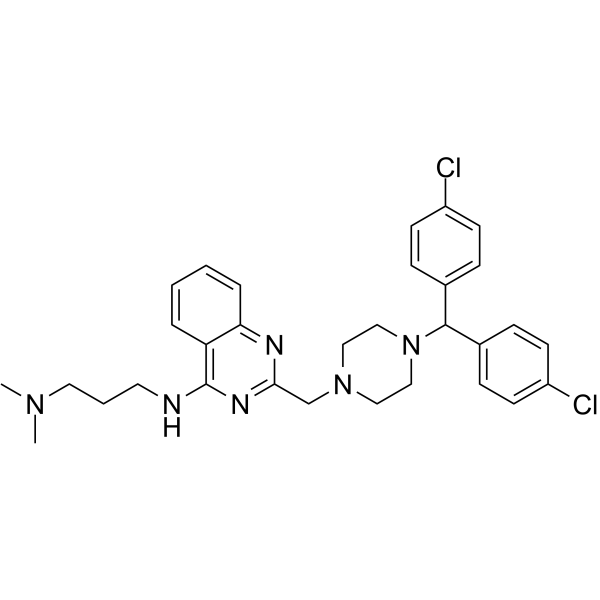
HY-110088
SCH529074P53 Activator -
HY-114312
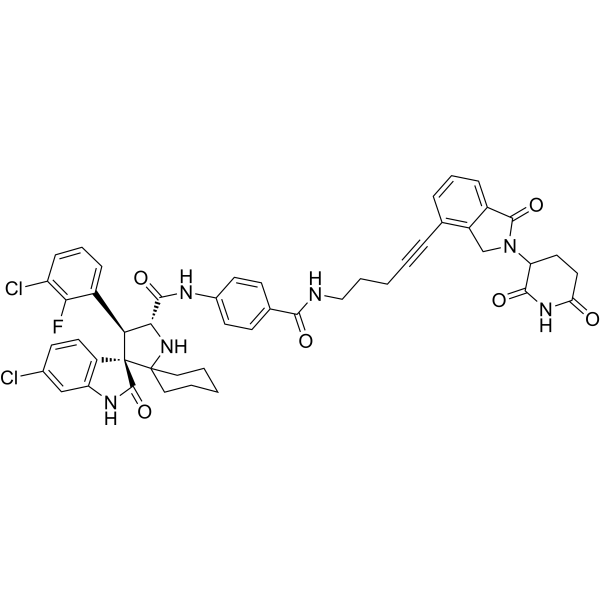
MD-224PROTAC MDM2 Degrader
Publications Citing Use of MedChemExpress (MCE) SP-141
More

Biologische Aktivität
Beschreibung
IC50 & Target
MDM2[1]
Cellular Effect
|
Cell Line

|
Type | Value | Description | References |
|---|---|---|---|---|
| ASPC1 | IC50 |
<0.5 μM
Compound: 38; SPI41
|
Downregulation of c-Myc protein expression level in human ASPC1 cells
Downregulation of c-Myc protein expression level in human ASPC1 cells
|
[PMID: 35581674] |
| Breast cancer cell line | IC50 |
0.39 μM
Compound: 217; SP-141
|
Cytotoxicity against human Breast cancer cell line measured after 72 hrs by MTT assay
Cytotoxicity against human Breast cancer cell line measured after 72 hrs by MTT assay
|
[PMID: 34332400] |
| PANC-1 | IC50 |
<0.5 μM
Compound: 38; SPI41
|
Downregulation of c-Myc protein expression level in human PANC-1 cells
Downregulation of c-Myc protein expression level in human PANC-1 cells
|
[PMID: 35581674] |
In Vitro
SP-141 (0.01-10 μM; 72 hours) inhibits human pancreatic cancer cell growth with IC50 values of less than 0.5 μM (0.38-0.50 μM) in a p53-independent manner. The IMR90 cells are much less sensitive to SP141 than the pancreatic cancer cells, suggesting that SP141 has a selective cytotoxicity for cancer cells[1].
?
SP141 induces MDM2 auto-ubiquitination and proteasomal degradation in both HPAC and Panc-1 cells[1].
MedChemExpress (MCE) has not independently confirmed the accuracy of these methods. They are for reference only. Further protocols information, click here.
-
Cell Line:HPAC, Panc-1, AsPC-1, and Mia-Paca-2 pancreatic cancer cell lines. Human primary fibroblasts (IMR90)
-
Concentration:0.01, 0.1, 1, and 10 μM
-
Incubation Time:72 hours
-
Result:IC50s of 0.38, 0.50, 0.36, 0.41, and 13.22 μM for HPAC, Panc-1, AsPC-1, Mia-Paca-2, and IMR90, respectively.
-
Cell Line:HPAC and Panc-1 cells
-
Concentration:0.5 μM
-
Incubation Time:120 minutes
-
Result:Reduced the MDM2 protein levels.
Increased the degradation rate of the MDM2 protein in the presence of Cycloheximide (15 μg/mL).
In Vivo
MedChemExpress (MCE) has not independently confirmed the accuracy of these methods. They are for reference only.
-
Animal Model:Nude mice bearing Panc-1 xenograft tumors[1]
-
Dosage:40 mg/kg
-
Administration:Administered by i.p. injection; 5 d/wk for about three weeks
-
Result:Significantly suppressed the growth of pancreatic xenograft tumors. On Day 18, the tumor volume in the treated group was reduced by 75% compared with that in the control group. There were no significant differences in the body weight compared with the control group.


Chemical Information
-
CAS. Nr. 1253491-42-7
-
Appearance Solid
-
Molecular Weight 324.38
-
Formel C22H16N2O
-
Color White to yellow
-
SMILES
COC1=CC2=C(NC3=C2C=CN=C3C4=C5C=CC=CC5=CC=C4)C=C1
-
Versand
Room temperature in continental US; may vary elsewhere.
-
Speicherung
Powder -20°C 3 years 4°C 2 years In solvent -80°C 2 years -20°C 1 year


Publications (5)
-
Journal Impact Factor
-
Most Recent
-
Nat Commun
The hybrid lipoplex induces cytoskeletal rearrangement via autophagy/RhoA signaling pathway for enhanced anticancer gene therapy. [Abstract]2025 Jan 2;16(1):339. PMID: 39747218 -
Clin Transl Med
Oncogenic driver and therapeutic target: Prolactin signalling axis in retroperitoneal sarcoma. [Abstract]2026 May;16(5):e70669. PMID: 42083506 -
Cell Rep
Macrophage autophagy deficiency-induced CEBPB accumulation alleviates atopic dermatitis via impairing M2 polarization. [Abstract]2023 Nov 13;42(11):113430. PMID: 37963021 -
Cells
PROTAC-Mediated Targeted Degradation of MDM2 Induces Tumor-Suppressive Signaling in Osteosarcoma Cells. [Abstract]2026 Mar 5;15(5):473. PMID: 41827906 -
Hum Cell
USF1-induced RPS6KB2 activation influences aggressive phenotype in B-cell non-Hodgkin lymphoma. [Abstract]2025 Aug 31;38(5):154. PMID: 40886264


Lösungsmittel & Löslichkeit
In Vitro:
DMSO : 125 mg/mL (385.35 mM; Need ultrasonic; Hygroscopic DMSO has a significant impact on the solubility of product, please use newly opened DMSO)
Please refer to the solubility information to select the appropriate solvent. Once prepared, please aliquot and store the solution to prevent product inactivation from repeated freeze-thaw cycles.
Storage method and period of stock solution: -80°C, 2 years; -20°C, 1 year. When stored at -80°C, please use it within 2 years. When stored at -20°C, please use it within 1 year.
Please refer to the solubility information to select the appropriate solvent. Once prepared, please aliquot and store the solution to prevent product inactivation from repeated freeze-thaw cycles.
Storage method and period of stock solution: -80°C, 2 years; -20°C, 1 year. When stored at -80°C, please use it within 2 years. When stored at -20°C, please use it within 1 year.
Konzentration (Stammlösung) × Volumen (Stammlösung) = Konzentration (Ziellösung) × Volumen (Ziellösung)
In Vivo:
Select the appropriate dissolution method based on your experimental animal and administration route.
- For the following dissolution methods, please ensure to first prepare a clear stock solution using an In Vitro approach and then sequentially add co-solvents:
- To ensure reliable experimental results, the clarified stock solution can be appropriately stored based on storage conditions. As for the working solution for In Vivo experiments, it is recommended to prepare freshly and use it on the same day.
- The percentages shown for the solvents indicate their volumetric ratio in the final prepared solution. If precipitation or phase separation occurs during preparation, heat and/or sonication can be used to aid dissolution.
Add each solvent one by one: 10% DMSO 40% PEG300 5% Tween-80 45% Saline
Solubility: ≥ 2.08 mg/mL (6.41 mM); Clear solution
This protocol yields a clear solution of ≥ 2.08 mg/mL (saturation unknown).
Taking 1 mL working solution as an example, add 100 μL DMSO stock solution (20.8 mg/mL) to 400 μL PEG300, and mix evenly; then add 50 μL Tween-80 and mix evenly; then add 450 μL Saline to adjust the volume to 1 mL.
Preparation of Saline: Dissolve 0.9 g sodium chloride in ddH₂O and dilute to 100 mL to obtain a clear Saline solution.
In Vivo Dissolution Calculator
Please enter the basic information of animal experiments:
-
-
-
-
Recommended: Prepare an additional quantity of animals to account for potential losses during experiments.
Please enter your animal formula composition:
-
%DMSO +
Recommended: Keep the proportion of DMSO in working solution below 2% if your animal is weak.
-
%+
-
+%Tween-80 + +
-
%Saline +
The co-solvents required include: DMSO, . All of co-solvents are available by MedChemExpress (MCE). , Tween 80. All of co-solvents are available by MedChemExpress (MCE).
Working solution concentration: 0.22 mg/mL
Method for preparing stock solution: mg drug dissolved in μL DMSO. Stock solution concentration: mg/mL.
1. Take μL DMSO stock solution;
2. Add μL .
μL , mix evenly;
3. Then add μL Tween 80, mix evenly;
4. Then add μL
Please ensure that the stock solution in the first step is dissolved to a clear state, and add co-solvents in sequence. You can use ultrasonic heating (ultrasonic cleaner, recommended frequency 20-40 kHz), vortexing, etc. to assist dissolution.

Protokoll
-
Breast Cancer Modeling
Breast cancer is a heterogeneous cancer, and it has been distinguished into four subtypes: luminal A, luminal B, HER2-positive and basal-like. Molecular mutations, epigenetic alterations, hormone exposure and immune microenvironment are related to the progression of breast cancer.


Reinheit & Dokumentation
-
Data Sheet (282 KB)
-
SDS (393 KB)
- English - EN (393 KB)
- Français - FR (393 KB)
- Deutsch - DE (393 KB)
- Norwegian - NO (393 KB)
- Español - ES (393 KB)
- Swedish - SV (393 KB)
- Italian - IT (393 KB)
- Korean - KR (393 KB)
- Portuguese - PT (393 KB)
-
Handling Instructions (2659 KB)
Verweise
[1]. Wei Wang , et al. Identification of a New Class of MDM2 Inhibitor That Inhibits Growth of Orthotopic Pancreatic Tumors in Mice. Gastroenterology. 2014 Oct;147(4):893-902.e2. [Content Brief]
[2]. Wei Wang, et al. The Pyrido[b]indole MDM2 Inhibitor SP-141 Exerts Potent Therapeutic Effects in Breast Cancer Models. Nat Commun. 2014 Oct 1;5:5086. [Content Brief]


Complete Stock Solution Preparation Table
Please refer to the solubility information to select the appropriate solvent. Once prepared, please aliquot and store the solution to prevent product inactivation from repeated freeze-thaw cycles.
Storage method and period of stock solution: -80°C, 2 years; -20°C, 1 year. When stored at -80°C, please use it within 2 years. When stored at -20°C, please use it within 1 year.
| Optional Solvent | Concentration Solvent Mass | 1 mg | 5 mg | 10 mg | 25 mg |
|---|---|---|---|---|---|
| DMSO | 1 mM | 3.0828 mL | 15.4140 mL | 30.8280 mL | 77.0701 mL |
| 5 mM | 0.6166 mL | 3.0828 mL | 6.1656 mL | 15.4140 mL | |
| 10 mM | 0.3083 mL | 1.5414 mL | 3.0828 mL | 7.7070 mL | |
| 15 mM | 0.2055 mL | 1.0276 mL | 2.0552 mL | 5.1380 mL | |
| 20 mM | 0.1541 mL | 0.7707 mL | 1.5414 mL | 3.8535 mL | |
| 25 mM | 0.1233 mL | 0.6166 mL | 1.2331 mL | 3.0828 mL | |
| 30 mM | 0.1028 mL | 0.5138 mL | 1.0276 mL | 2.5690 mL | |
| 40 mM | 0.0771 mL | 0.3854 mL | 0.7707 mL | 1.9268 mL | |
| 50 mM | 0.0617 mL | 0.3083 mL | 0.6166 mL | 1.5414 mL | |
| 60 mM | 0.0514 mL | 0.2569 mL | 0.5138 mL | 1.2845 mL | |
| 80 mM | 0.0385 mL | 0.1927 mL | 0.3854 mL | 0.9634 mL | |
| 100 mM | 0.0308 mL | 0.1541 mL | 0.3083 mL | 0.7707 mL |


SP-141 Related Classifications
HY-110182 Related Classifications
 Powered by Bioz