



Thiorphan
Based on 4 publication(s) in Google Scholar
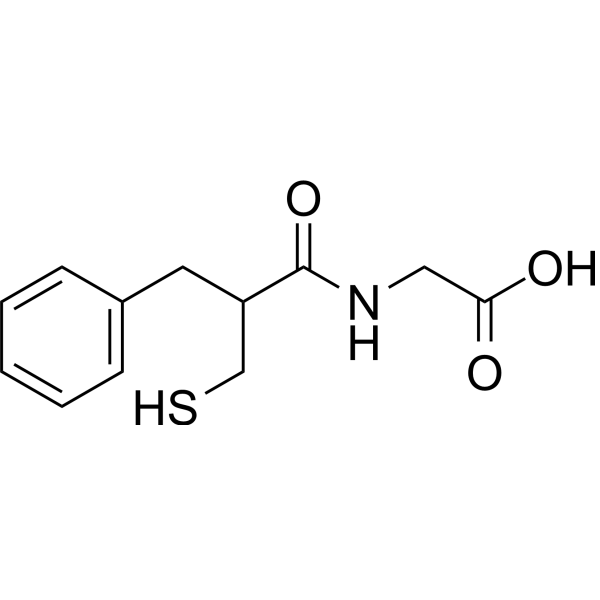
Thiorphan is a selective neprilysin (NEP) inhibitor with an IC50 of 6.9 nM. Thiorphan competitively binds to NEP and blocks its activity, preventing the degradation of neuropeptides such as substance P (SP) and neurokinin NKA. In the field of neonatal brain injury research, Thiorphan can increase the levels of SP and NKA, activate NK1 and NK2 receptors and downstream transduction pathways, and inhibit excessive activation of NMDA receptors. Thus, Thiorphan can protect neocortical neurons from excitotoxic cell death. Thiorphan may also inhibit NEP from enhancing bronchoconstriction and can be used in the study of respiratory diseases.
For research use only. We do not sell to patients.
- Purity : 99.94%
- CAS No.: 76721-89-6
- Formula: C12H15NO3S
- Molecular Weight:253.32
-
Storage:
-20°C, protect from light
* In solvent : -80°C, 6 months; -20°C, 1 month (protect from light)

To place orders, for customer services and technical support, please contact: MedChemExpress USA
Tel: 609-228-6898 E-mail: [email protected] [email protected]


-
 Biological Activity
-
Chemical Information
-
Solvent & Solubility
- Protocols
- Purity & Documentation
- References
-
 Help & FAQs


-
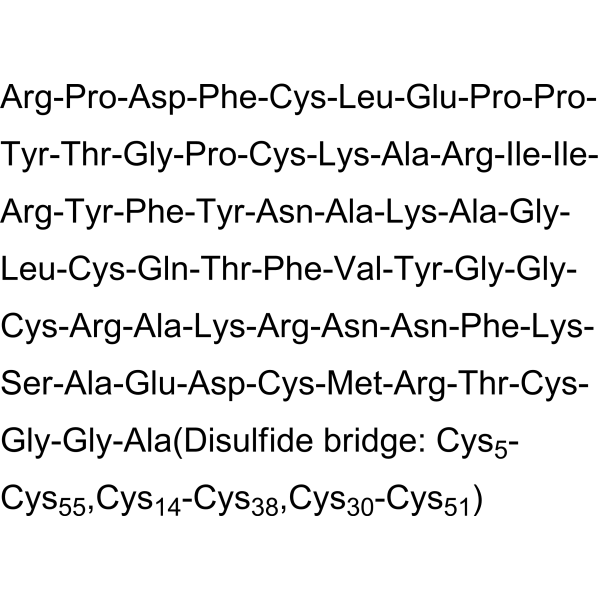
HY-P0017
AprotininBPTI Inhibitor -
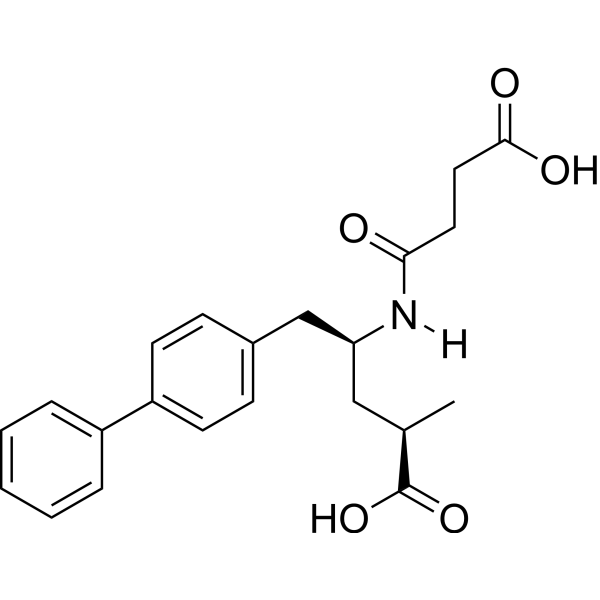
HY-17620
SacubitrilatNEP Inhibitor -
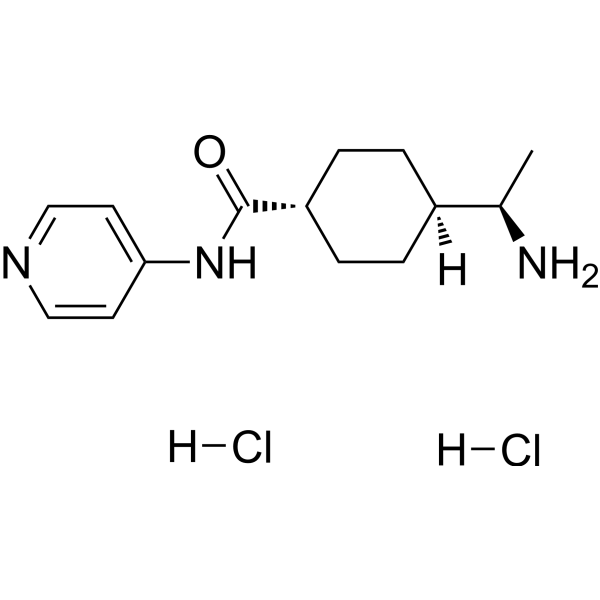
HY-10583
Y-27632 dihydrochlorideROCK Inhibitor -
HY-17399
RacecadotrilNEP -
HY-B0215
AcetylcysteineMucolytic Agent -
HY-100558
Bafilomycin A1V-ATPase Inhibitor -
HY-10071
Y-27632ROCK Inhibitor -
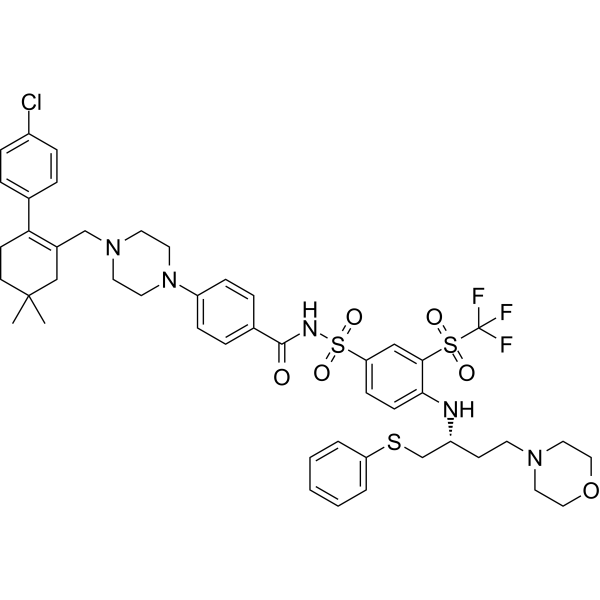
HY-10087
NavitoclaxBcl-2 Inhibitor -
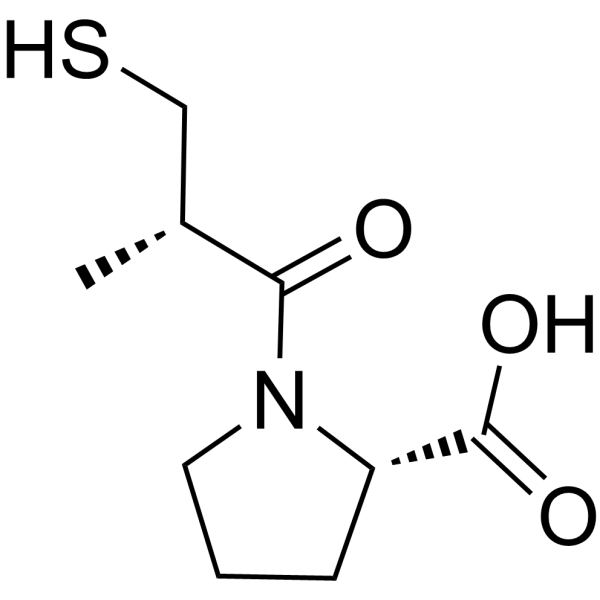
HY-B0368
CaptoprilACE Inhibitor -
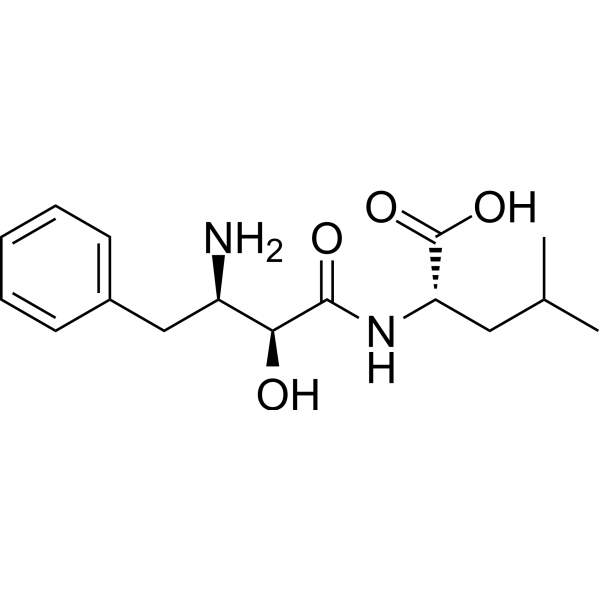
HY-B0134
BestatinAminopeptidase N/Leukotriene A4 Hydrolase Inhibitor -
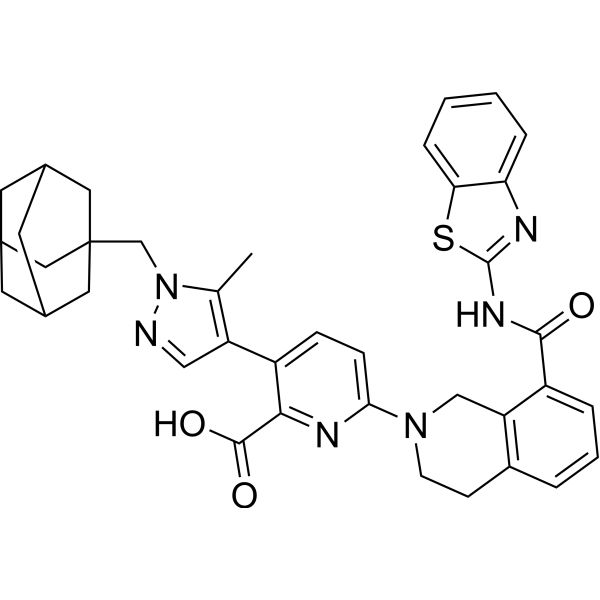
HY-19741
A-1331852Bcl-xL Inhibitor -
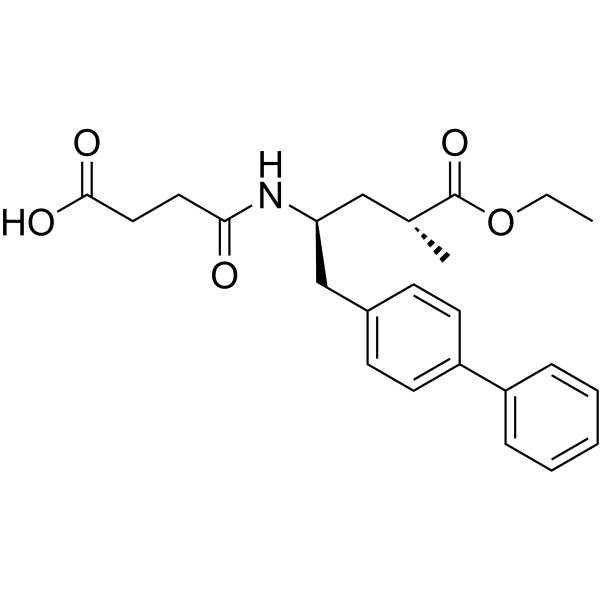
HY-15407
SacubitrilNEP Inhibitor
Publications Citing Use of MedChemExpress (MCE) Thiorphan
More

Biological Activity
Description
Cellular Effect
|
Cell Line

|
Type | Value | Description | References |
|---|---|---|---|---|
| KB 3-1 | IC50 |
4.87 mM
Compound: thiorphan
|
Cytotoxicity against human KB-3-1 cells incubated for 72 hrs by MTT assay
Cytotoxicity against human KB-3-1 cells incubated for 72 hrs by MTT assay
|
[PMID: 21657271] |
| KB-V1 | IC50 |
2.84 mM
Compound: thiorphan
|
Cytotoxicity against drug-resistant human KBV1 cells expressing P-gp incubated for 72 hrs by MTT assay
Cytotoxicity against drug-resistant human KBV1 cells expressing P-gp incubated for 72 hrs by MTT assay
|
[PMID: 21657271] |
| Vero | CC50 |
>100 μM
Compound: 6
|
Cytotoxicity against African green monkey Vero cells by MTT assay
Cytotoxicity against African green monkey Vero cells by MTT assay
|
[PMID: 38917665] |
In Vitro
Thiorphan (5 μM; 12 h) protects neurons from excitotoxic stimulation and blocks the neurodegradation of substance P (10 μM) in primary neuronal cultures exposed to 300 μM NMDA[3].
MedChemExpress (MCE) has not independently confirmed the accuracy of these methods. They are for reference only.
-
Cell Line:Primary neuronal cultures
-
Concentration:0.5-50 μM
-
Incubation Time:12 h (with 300 μM NMDA for the last 1 h), then an additional 8-72 h
-
Result:Significantly reduced the number per unit area of pycnotic nuclei in a dose-dependent and long-lasting manner. And prevented the breakdown of SP by the cultured neurons even during an 8-h exposure, as shown by a higher relative recovery of substrtate P (SP).
In Vivo
MedChemExpress (MCE) has not independently confirmed the accuracy of these methods. They are for reference only.
-
Animal Model:Newborn Swiss and C57Bl/6 mice (5-day-old)+Ibotenate-induced excitotoxic brain injury model[3]
-
Dosage:25 μg
-
Administration:Intracerebrally (diluted in PBS containing 5% ethanol-chloroform) or 50 mg/kg intraperitoneally (diluted in PBS containing 5% ethanol-chloroform); Single injection, once, immediately after ibotenate injection .
-
Result:Significantly reduced the size of ibotenate-induced cortical lesions when administrated intracerebrally at a dose of 25 μg or intraperitoneally at a dose of 50 mg/kg. Decreased cortical caspase-3 cleavage by up to 59%. This neuroprotective effect was long-lasting, and it was still observable when thiorphan was given 12 h after the insult. The effects of thiorphan were mimicked by substance P and neurokinin A.
The neuroprotective effects of thiorphan were inhibited by co-treatment with Win-51,708 (an NK1 receptor antagonist) and L-659,877 (an NK2 receptor antagonist).
Intracerebral injection of thiorphan protected grey matter against excitotoxic damage in NEP animals but not in NEP pups.
In addition, overall mortality was low in all groups, and thiorphan, substance P, neurokinin A or neurokinin B did not affect ibotenate-induced epileptic manifestations in terms of severity and frequency.


Chemical Information
-
CAS No. 76721-89-6
-
Appearance Solid
-
Molecular Weight 253.32
-
Formula C12H15NO3S
-
Color White to off-white
-
SMILES
SCC(C(NCC(O)=O)=O)CC1=CC=CC=C1
-
Shipping
Room temperature in continental US; may vary elsewhere.
-
Storage
-20°C, protect from light
* In solvent : -80°C, 6 months; -20°C, 1 month (protect from light)


Publications (4)
-
Journal Impact Factor
-
Most Recent
-
Adv Mater
Noninvasive Optogenetics Realized by iPSC-Derived Tentacled Carrier in Alzheimer's Disease Treatment. [Abstract]2025 Aug;37(32):e2419768. PMID: 40434197 -
Neuropharmacology
Pharmacological and electrophysiological characterization of the novel Kv7 channel inhibitor racecadotril in Parkinson's disease. [Abstract]2025 Nov 1:278:110565. PMID: 40532787 -
-
bioRxiv
2025 Feb 20:2025.02.18.638921. PMID: 40027750


Solvent & Solubility
In Vitro:
DMSO : 175 mg/mL (690.82 mM; Need ultrasonic; Hygroscopic DMSO has a significant impact on the solubility of product, please use newly opened DMSO)
Please refer to the solubility information to select the appropriate solvent. Once prepared, please aliquot and store the solution to prevent product inactivation from repeated freeze-thaw cycles.
Storage method and period of stock solution: -80°C, 6 months; -20°C, 1 month (protect from light). When stored at -80°C, please use it within 6 months. When stored at -20°C, please use it within 1 month.
Please refer to the solubility information to select the appropriate solvent. Once prepared, please aliquot and store the solution to prevent product inactivation from repeated freeze-thaw cycles.
Storage method and period of stock solution: -80°C, 6 months; -20°C, 1 month (protect from light). When stored at -80°C, please use it within 6 months. When stored at -20°C, please use it within 1 month.
Concentration (start) × Volume (start) = Concentration (final) × Volume (final)
In Vivo:
Select the appropriate dissolution method based on your experimental animal and administration route.
- For the following dissolution methods, please ensure to first prepare a clear stock solution using an In Vitro approach and then sequentially add co-solvents:
- To ensure reliable experimental results, the clarified stock solution can be appropriately stored based on storage conditions. As for the working solution for In Vivo experiments, it is recommended to prepare freshly and use it on the same day.
- The percentages shown for the solvents indicate their volumetric ratio in the final prepared solution. If precipitation or phase separation occurs during preparation, heat and/or sonication can be used to aid dissolution.
Add each solvent one by one: 10% DMSO 40% PEG300 5% Tween-80 45% Saline
Solubility: ≥ 2.08 mg/mL (8.21 mM); Clear solution
This protocol yields a clear solution of ≥ 2.08 mg/mL (saturation unknown).
Taking 1 mL working solution as an example, add 100 μL DMSO stock solution (20.8 mg/mL) to 400 μL PEG300, and mix evenly; then add 50 μL Tween-80 and mix evenly; then add 450 μL Saline to adjust the volume to 1 mL.
Preparation of Saline: Dissolve 0.9 g sodium chloride in ddH₂O and dilute to 100 mL to obtain a clear Saline solution.
Add each solvent one by one: 10% DMSO 90% (20% SBE-β-CD in Saline)
Solubility: ≥ 2.08 mg/mL (8.21 mM); Clear solution
This protocol yields a clear solution of ≥ 2.08 mg/mL (saturation unknown).
Taking 1 mL working solution as an example, add 100 μL DMSO stock solution (20.8 mg/mL) to 900 μL 20% SBE-β-CD in Saline, and mix evenly.
Preparation of 20% SBE-β-CD in Saline (4°C, storage for one week): 2 g SBE-β-CD powder is dissolved in 10 mL Saline, completely dissolve until clear.
In Vivo Dissolution Calculator
Please enter the basic information of animal experiments:
-
-
-
-
Recommended: Prepare an additional quantity of animals to account for potential losses during experiments.
Please enter your animal formula composition:
-
%DMSO +
Recommended: Keep the proportion of DMSO in working solution below 2% if your animal is weak.
-
%+
-
+%Tween-80 + +
-
%Saline +
The co-solvents required include: DMSO, . All of co-solvents are available by MedChemExpress (MCE). , Tween 80. All of co-solvents are available by MedChemExpress (MCE).
Working solution concentration: 0.22 mg/mL
Method for preparing stock solution: mg drug dissolved in μL DMSO. Stock solution concentration: mg/mL. * In solvent : -80°C, 6 months; -20°C, 1 month (protect from light)
1. Take μL DMSO stock solution;
2. Add μL .
μL , mix evenly;
3. Then add μL Tween 80, mix evenly;
4. Then add μL
Please ensure that the stock solution in the first step is dissolved to a clear state, and add co-solvents in sequence. You can use ultrasonic heating (ultrasonic cleaner, recommended frequency 20-40 kHz), vortexing, etc. to assist dissolution.


Purity & Documentation
-
Data Sheet (277 KB)
-
SDS (393 KB)
- English - EN (393 KB)
- Français - FR (393 KB)
- Deutsch - DE (393 KB)
- Norwegian - NO (393 KB)
- Español - ES (393 KB)
- Swedish - SV (393 KB)
- Italian - IT (393 KB)
- Korean - KR (393 KB)
- Portuguese - PT (393 KB)
-
Handling Instructions (2659 KB)
References
[1]. Whyteside AR, et al. Human neprilysin-2 (NEP2) and NEP display distinct subcellular localisations and substrate preferences. FEBS Lett. 2008 Jul 9;582(16):2382-6. [Content Brief]
[2]. Cheung D, et al. The effect of an inhaled neutral endopeptidase inhibitor, thiorphan, on airway responses to neurokinin A in normal humans in vivo. Am Rev Respir Dis. 1992 Jun;145(6):1275-80. [Content Brief]
[3]. Medja F, et al. Thiorphan, a neutral endopeptidase inhibitor used for diarrhoea, is neuroprotective in newborn mice. Brain. 2006 Dec;129(Pt 12):3209-23. [Content Brief]


Complete Stock Solution Preparation Table
Please refer to the solubility information to select the appropriate solvent. Once prepared, please aliquot and store the solution to prevent product inactivation from repeated freeze-thaw cycles.
Storage method and period of stock solution: -80°C, 6 months; -20°C, 1 month (protect from light). When stored at -80°C, please use it within 6 months. When stored at -20°C, please use it within 1 month.
| Optional Solvent | Concentration Solvent Mass | 1 mg | 5 mg | 10 mg | 25 mg |
|---|---|---|---|---|---|
| DMSO | 1 mM | 3.9475 mL | 19.7376 mL | 39.4753 mL | 98.6882 mL |
| 5 mM | 0.7895 mL | 3.9475 mL | 7.8951 mL | 19.7376 mL | |
| 10 mM | 0.3948 mL | 1.9738 mL | 3.9475 mL | 9.8688 mL | |
| 15 mM | 0.2632 mL | 1.3158 mL | 2.6317 mL | 6.5792 mL | |
| 20 mM | 0.1974 mL | 0.9869 mL | 1.9738 mL | 4.9344 mL | |
| 25 mM | 0.1579 mL | 0.7895 mL | 1.5790 mL | 3.9475 mL | |
| 30 mM | 0.1316 mL | 0.6579 mL | 1.3158 mL | 3.2896 mL | |
| 40 mM | 0.0987 mL | 0.4934 mL | 0.9869 mL | 2.4672 mL | |
| 50 mM | 0.0790 mL | 0.3948 mL | 0.7895 mL | 1.9738 mL | |
| 60 mM | 0.0658 mL | 0.3290 mL | 0.6579 mL | 1.6448 mL | |
| 80 mM | 0.0493 mL | 0.2467 mL | 0.4934 mL | 1.2336 mL | |
| 100 mM | 0.0395 mL | 0.1974 mL | 0.3948 mL | 0.9869 mL |


Thiorphan Related Classifications
HY-W013375 Related Classifications
 Powered by Bioz