



GW311616
Based on 11 publication(s) in Google Scholar
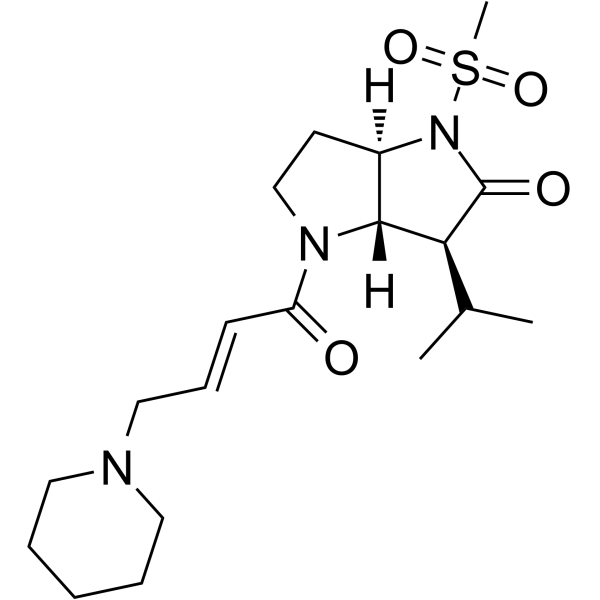
GW-311616 is a potent, orally bioavailable, long duration and selective human neutrophil elastase (HNE) inhibitor with IC50 value of 22 nM and Ki value of 0.31 nM.
For research use only. We do not sell to patients.
- Purity : 99.30%
- CAS No.: 198062-54-3
- Formula: C19H31N3O4S
- Molecular Weight:397.53
-
Storage:Pure form -20°C, 3 years , 4°C, 2 years ; In solvent -80°C, 2 years , -20°C, 1 year

To place orders, for customer services and technical support, please contact: MedChemExpress USA
Tel: 609-228-6898 E-mail: [email protected] [email protected]


-
 Biological Activity
-
Chemical Information
-
Solvent & Solubility
- Protocols
- Purity & Documentation
- References
-
 Help & FAQs


-
HY-100514
GSK484 hydrochloridePAD4 Inhibitor -
HY-15651
AlvelestatNeutrophil Elastase Inhibitor -
HY-17443A
Sivelestat sodium -
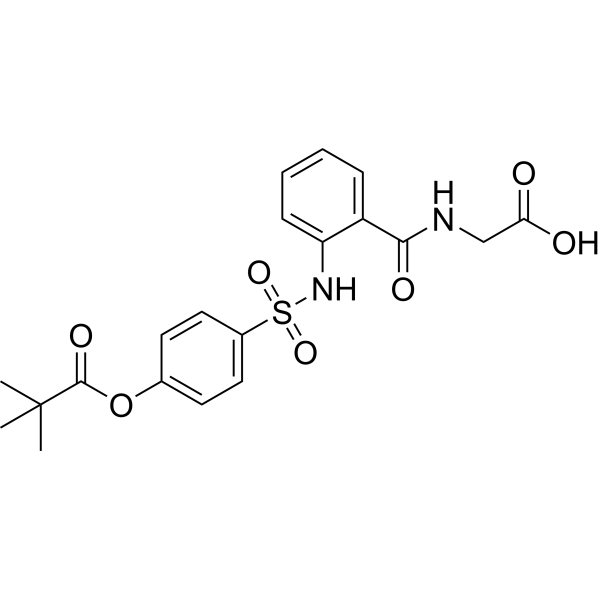
HY-17443
SivelestatElastase Inhibitor -
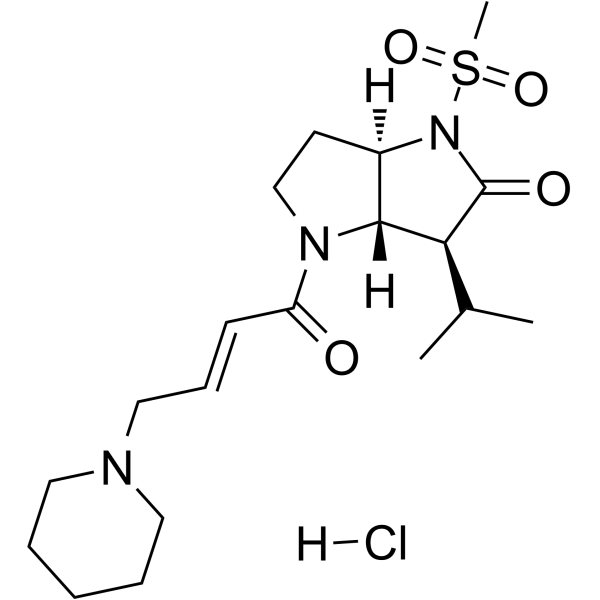
HY-15891A
GW311616 hydrochlorideHNE Inhibitor -
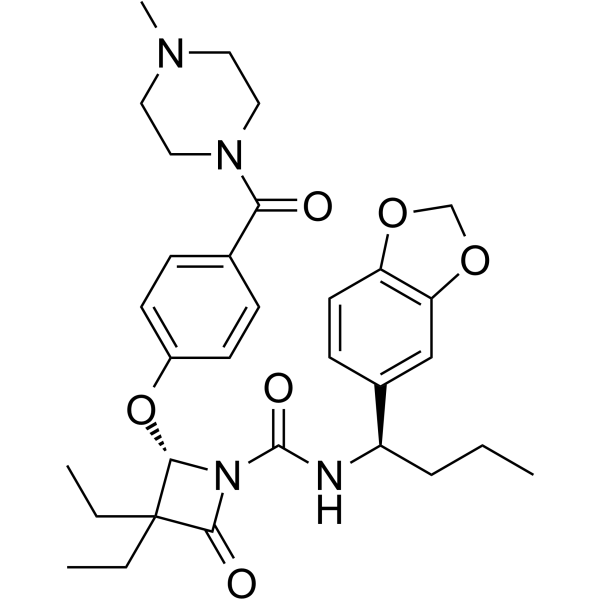
HY-75957
DMP 777Elastase Inhibitor -

HY-15651R
Alvelestat (Standard)Reference Standard -
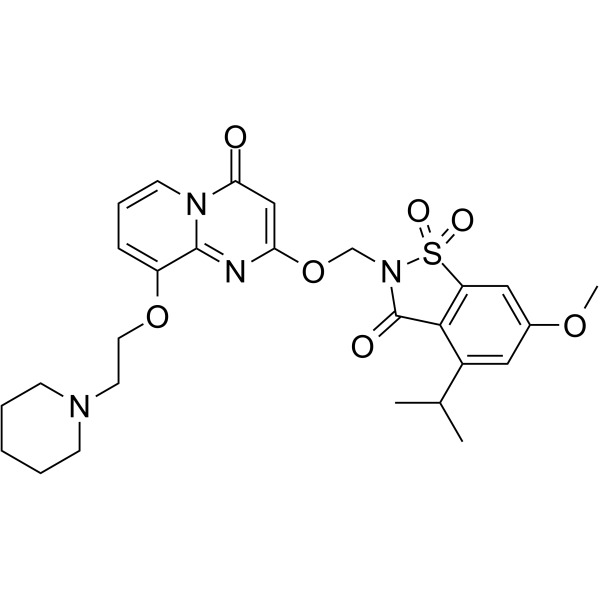
HY-103445
SSR69071Neutrophil Elastase Inhibitor -
HY-17443B
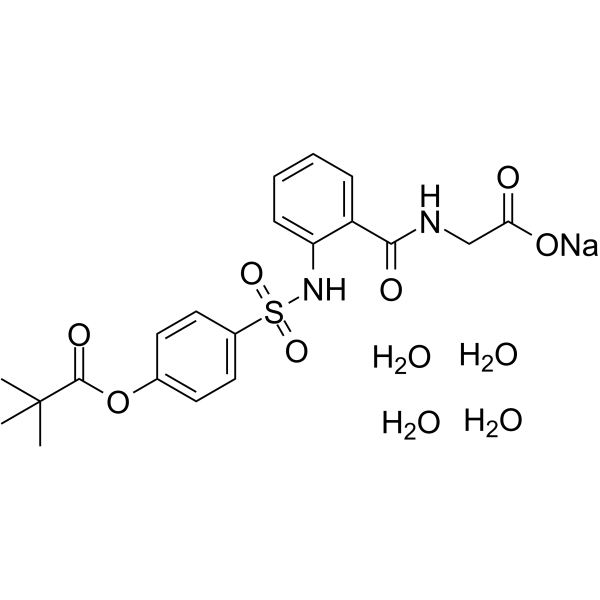
Sivelestat sodium tetrahydrateNeutrophil Elastase Inhibitor -
HY-111457A
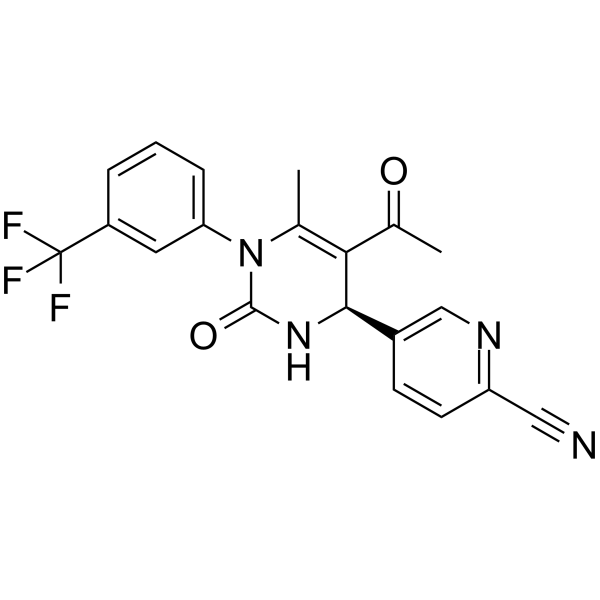
BAY-678 -
HY-19908
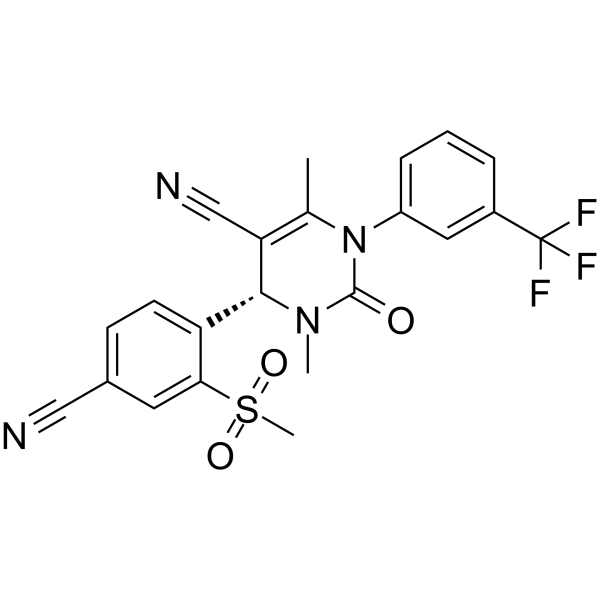
BAY-85-8501HNE Inhibitor -

HY-17443R
Sivelestat (Standard)Elastase Inhibitor
Publications Citing Use of MedChemExpress (MCE) GW311616
More- Adv Sci (Weinh). 2023 Aug;10(24):e2302613. [Abstract]
- J Invest Dermatol. 2020 Jul;140(7):1371-1378.e3. [Abstract]
- Life Sci. 2020 Feb 1:242:117229. [Abstract]
- EMBO Rep. 2023 Oct 9;24(10):e57032. [Abstract]
- Int Immunopharmacol. 2023 Jan:114:109537. [Abstract]
- Sci Rep. 2017 Nov 30;7(1):16628. [Abstract]
- Genes Immun. 2026 Jun 23. [Abstract]
- J Leukoc Biol. 2022 Dec;112(6):1427-1443. [Abstract]
- Cell Immunol. 2020 Jun:352:104101. [Abstract]
- BMC Immunol. 2025 Aug 30;26(1):63. [Abstract]
- Res Sq. 2025 Mar 30.


Biological Activity
Description
IC50 & Target
In Vitro
GW-311616 (150 μM; 48 hours) markedly suppresses NE activity in U937 and K562 cells lines[2].
GW-311616 (20-320 μM; 48 hours; U937 cells) treatment inhibits proliferation and induces apoptosis in leukemia cells[2].
GW-311616 (150 μM; U937 cells) treatment can increase the protein expression levels of Bax and decrease the expression of Bcl-2[2].
MedChemExpress (MCE) has not independently confirmed the accuracy of these methods. They are for reference only.
-
Cell Line:U937 and K562 cells
-
Concentration:150 μM
-
Incubation Time:48 hours
-
Result:Markedly suppressed NE activity.
-
Cell Line:U937 cells
-
Concentration:20 μM, 40 μM, 80 μM, 160 μM, 320 μM
-
Incubation Time:48 hours
-
Result:The rate of apoptosis was enhanced.
-
Cell Line:U937 cells
-
Concentration:150 μM
-
Incubation Time:48 hours
-
Result:Increased the protein expression levels of Bax and decreased the expression of Bcl-2.
In Vivo
MedChemExpress (MCE) has not independently confirmed the accuracy of these methods. They are for reference only.
-
Animal Model:Dogs (9-month-old)[3]
-
Dosage:0.22 mg/kg, 0.66 mg/kg and 2 mg/kg (Pharmacokinetic study)
-
Administration:Oral administration
-
Result:At 0.22 mg/kg, greater than 50% inhibition of elastase was achieved 6 hours after dosing, with activity returning towards control values. Single oral dose of 2 mg/kg rapidly abolished circulating enzyme activity, and greater than 90% inhibition was maintained for 4 days.


Chemical Information
-
CAS No. 198062-54-3
-
Appearance Oil
-
Molecular Weight 397.53
-
Formula C19H31N3O4S
-
Color Light yellow to brown
-
SMILES
O=C1[C@@H](C(C)C)[C@@](N(C(/C=C/CN2CCCCC2)=O)CC3)([H])[C@]3([H])N1S(=O)(C)=O
-
Shipping
Room temperature in continental US; may vary elsewhere.
-
Storage
Pure form -20°C 3 years 4°C 2 years In solvent -80°C 2 years -20°C 1 year


Publications (11)
-
Journal Impact Factor
-
Most Recent
-
Adv Sci (Weinh)
FGF19-Induced Inflammatory CAF Promoted Neutrophil Extracellular Trap Formation in the Liver Metastasis of Colorectal Cancer. [Abstract]2023 Aug;10(24):e2302613. PMID: 37345586 -
J Invest Dermatol
Differences in Staining for Neutrophil Elastase and its Controlling Inhibitor SLPI Reveal Heterogeneity among Neutrophils in Psoriasis. [Abstract]2020 Jul;140(7):1371-1378.e3. PMID: 31945345 -
Life Sci
Neutrophil elastase-mediated proteolysis of the tumor suppressor p200 CUX1 promotes cell proliferation and inhibits cell differentiation in APL. [Abstract]2020 Feb 1:242:117229. PMID: 31887298 -
EMBO Rep
2023 Oct 9;24(10):e57032. PMID: 37650863 -
Int Immunopharmacol
Inhibition of neutrophil elastase prevents cigarette smoke exposure-induced formation of neutrophil extracellular traps and improves lung function in a mouse model of chronic obstructive pulmonary disease. [Abstract]2023 Jan:114:109537. PMID: 36495695 -
Sci Rep
Mineral particles stimulate innate immunity through neutrophil extracellular traps containing HMGB1. [Abstract]2017 Nov 30;7(1):16628. PMID: 29192209 -
Genes Immun
Neutrophil extracellular traps formation driven by novel ELANE mutations in cyclic neutropenia patients. [Abstract]2026 Jun 23. PMID: 42337056 -
J Leukoc Biol
Epigallocatechin-3-gallate reduces neutrophil extracellular trap formation and tissue injury in severe acute pancreatitis. [Abstract]2022 Dec;112(6):1427-1443. PMID: 35983712 -
Cell Immunol
Early recruited neutrophils promote asthmatic inflammation exacerbation by release of neutrophil elastase. [Abstract]2020 Jun:352:104101. PMID: 32278493 -
BMC Immunol
Neutrophil expression of CD41/CD61 complex contributes to their adhesiveness in both healthy individuals and heart failure patients. [Abstract]2025 Aug 30;26(1):63. PMID: 40885916 -


Solvent & Solubility
In Vitro:
DMSO : 66.67 mg/mL (167.71 mM; Need ultrasonic; Hygroscopic DMSO has a significant impact on the solubility of product, please use newly opened DMSO)
Please refer to the solubility information to select the appropriate solvent. Once prepared, please aliquot and store the solution to prevent product inactivation from repeated freeze-thaw cycles.
Storage method and period of stock solution: -80°C, 2 years; -20°C, 1 year. When stored at -80°C, please use it within 2 years. When stored at -20°C, please use it within 1 year.
Please refer to the solubility information to select the appropriate solvent. Once prepared, please aliquot and store the solution to prevent product inactivation from repeated freeze-thaw cycles.
Storage method and period of stock solution: -80°C, 2 years; -20°C, 1 year. When stored at -80°C, please use it within 2 years. When stored at -20°C, please use it within 1 year.
Concentration (start) × Volume (start) = Concentration (final) × Volume (final)
In Vivo:
Select the appropriate dissolution method based on your experimental animal and administration route.
- For the following dissolution methods, please ensure to first prepare a clear stock solution using an In Vitro approach and then sequentially add co-solvents:
- To ensure reliable experimental results, the clarified stock solution can be appropriately stored based on storage conditions. As for the working solution for In Vivo experiments, it is recommended to prepare freshly and use it on the same day.
- The percentages shown for the solvents indicate their volumetric ratio in the final prepared solution. If precipitation or phase separation occurs during preparation, heat and/or sonication can be used to aid dissolution.
Add each solvent one by one: 10% DMSO 40% PEG300 5% Tween-80 45% Saline
Solubility: 2.5 mg/mL (6.29 mM); Clear solution; Need ultrasonic
This protocol yields a clear solution of 2.5 mg/mL.
Taking 1 mL working solution as an example, add 100 μL DMSO stock solution (25.0 mg/mL) to 400 μL PEG300, and mix evenly; then add 50 μL Tween-80 and mix evenly; then add 450 μL Saline to adjust the volume to 1 mL.
Preparation of Saline: Dissolve 0.9 g sodium chloride in ddH₂O and dilute to 100 mL to obtain a clear Saline solution.
Add each solvent one by one: 10% DMSO 90% (20% SBE-β-CD in Saline)
Solubility: 2.5 mg/mL (6.29 mM); Clear solution; Need ultrasonic
This protocol yields a clear solution of 2.5 mg/mL.
Taking 1 mL working solution as an example, add 100 μL DMSO stock solution (25.0 mg/mL) to 900 μL 20% SBE-β-CD in Saline, and mix evenly.
Preparation of 20% SBE-β-CD in Saline (4°C, storage for one week): 2 g SBE-β-CD powder is dissolved in 10 mL Saline, completely dissolve until clear.
In Vivo Dissolution Calculator
Please enter the basic information of animal experiments:
-
-
-
-
Recommended: Prepare an additional quantity of animals to account for potential losses during experiments.
Please enter your animal formula composition:
-
%DMSO +
Recommended: Keep the proportion of DMSO in working solution below 2% if your animal is weak.
-
%+
-
+%Tween-80 + +
-
%Saline +
The co-solvents required include: DMSO, . All of co-solvents are available by MedChemExpress (MCE). , Tween 80. All of co-solvents are available by MedChemExpress (MCE).
Working solution concentration: 0.22 mg/mL
Method for preparing stock solution: mg drug dissolved in μL DMSO. Stock solution concentration: mg/mL.
1. Take μL DMSO stock solution;
2. Add μL .
μL , mix evenly;
3. Then add μL Tween 80, mix evenly;
4. Then add μL
Please ensure that the stock solution in the first step is dissolved to a clear state, and add co-solvents in sequence. You can use ultrasonic heating (ultrasonic cleaner, recommended frequency 20-40 kHz), vortexing, etc. to assist dissolution.


Purity & Documentation
-
Data Sheet (283 KB)
-
SDS (251 KB)
- English - EN (251 KB)
- Français - FR (251 KB)
- Deutsch - DE (251 KB)
- Norwegian - NO (251 KB)
- Español - ES (251 KB)
- Swedish - SV (251 KB)
- Italian - IT (251 KB)
- Korean - KR (251 KB)
- Portuguese - PT (251 KB)
-
Handling Instructions (2659 KB)
References
[1]. Ohbayashi H,et al. Neutrophil elastase inhibitors as treatment for COPD. Expert Opin Investig Drugs. 2002 Jul;11(7):965-80. [Content Brief]
[2]. Jiang KL, et al. Neutrophil elastase and its therapeutic effect on leukemia cells. Mol Med Rep. 2015 Sep;12(3):4165-4172. [Content Brief]
[3]. Macdonald SJ, et al. The discovery of a potent, intracellular, orally bioavailable, long duration inhibitor of human neutrophil elastase--GW311616A a development candidate. Bioorg Med Chem Lett. 2001 Apr 9;11(7):895-8. [Content Brief]


Complete Stock Solution Preparation Table
Please refer to the solubility information to select the appropriate solvent. Once prepared, please aliquot and store the solution to prevent product inactivation from repeated freeze-thaw cycles.
Storage method and period of stock solution: -80°C, 2 years; -20°C, 1 year. When stored at -80°C, please use it within 2 years. When stored at -20°C, please use it within 1 year.
| Optional Solvent | Concentration Solvent Mass | 1 mg | 5 mg | 10 mg | 25 mg |
|---|---|---|---|---|---|
| DMSO | 1 mM | 2.5155 mL | 12.5777 mL | 25.1553 mL | 62.8883 mL |
| 5 mM | 0.5031 mL | 2.5155 mL | 5.0311 mL | 12.5777 mL | |
| 10 mM | 0.2516 mL | 1.2578 mL | 2.5155 mL | 6.2888 mL | |
| 15 mM | 0.1677 mL | 0.8385 mL | 1.6770 mL | 4.1926 mL | |
| 20 mM | 0.1258 mL | 0.6289 mL | 1.2578 mL | 3.1444 mL | |
| 25 mM | 0.1006 mL | 0.5031 mL | 1.0062 mL | 2.5155 mL | |
| 30 mM | 0.0839 mL | 0.4193 mL | 0.8385 mL | 2.0963 mL | |
| 40 mM | 0.0629 mL | 0.3144 mL | 0.6289 mL | 1.5722 mL | |
| 50 mM | 0.0503 mL | 0.2516 mL | 0.5031 mL | 1.2578 mL | |
| 60 mM | 0.0419 mL | 0.2096 mL | 0.4193 mL | 1.0481 mL | |
| 80 mM | 0.0314 mL | 0.1572 mL | 0.3144 mL | 0.7861 mL | |
| 100 mM | 0.0252 mL | 0.1258 mL | 0.2516 mL | 0.6289 mL |


GW311616 Related Classifications
HY-15891 Related Classifications
 Powered by Bioz