



Indapamide
Based on 1 publication(s) in Google Scholar
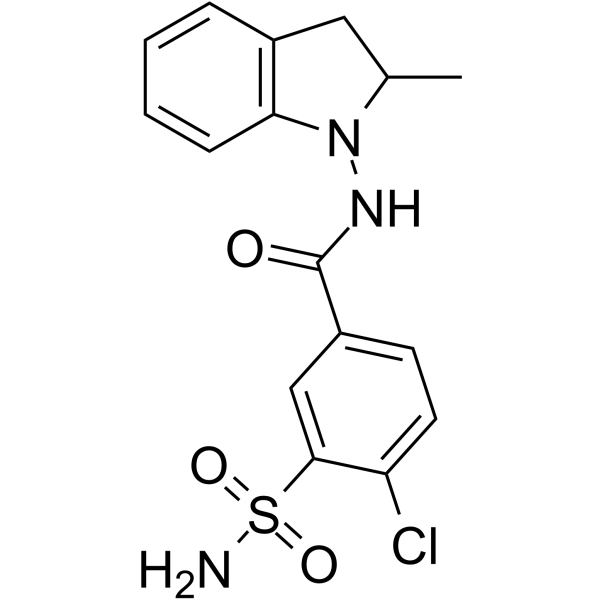
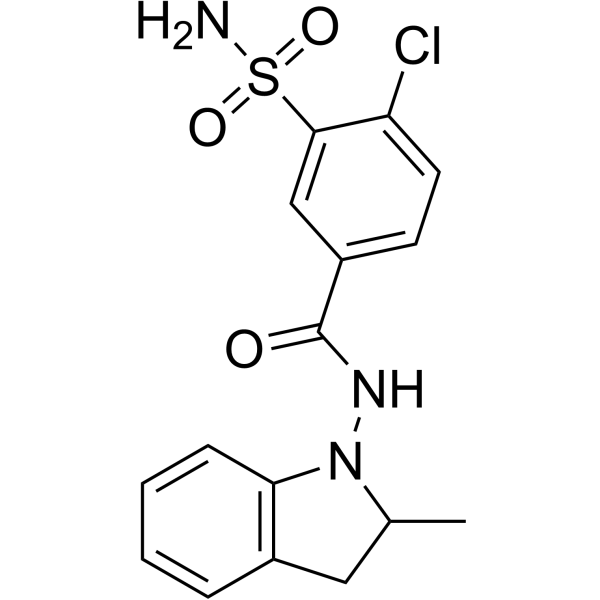
Indapamide is an orally active sulphonamide diuretic agent, that can reduce blood pressure by decreasing vascular reactivity and peripheral vascular resistance. Indapamide is also can reduce left ventricular hypertrophy.
For research use only. We do not sell to patients.
- Purity : 99.62%
- CAS No.: 26807-65-8
- Formula: C16H16ClN3O3S
- Molecular Weight:365.83
-
Storage:Powder -20°C, 3 years , 4°C, 2 years ; In solvent -80°C, 2 years , -20°C, 1 year

To place orders, for customer services and technical support, please contact: MedChemExpress USA
Tel: 609-228-6898 E-mail: [email protected] [email protected]


-
 Biological Activity
-
Chemical Information
-
Solvent & Solubility
- Purity & Documentation
- References
-
 Help & FAQs


-
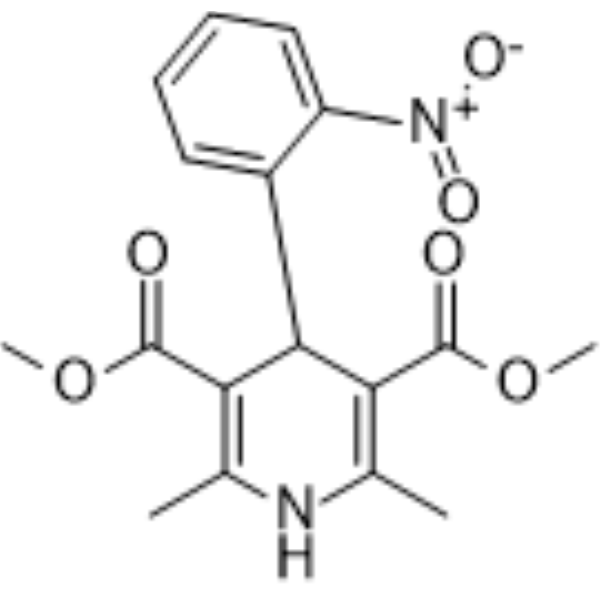
HY-B0284
NifedipineCalcium Channel Antagonist -
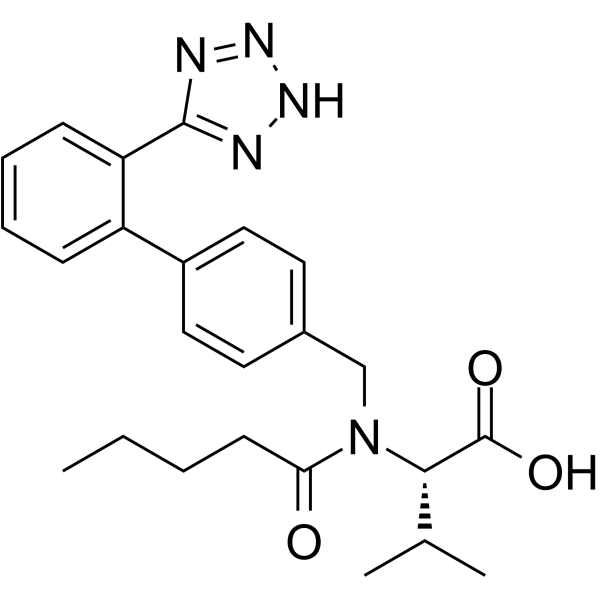
HY-18204
ValsartanAngiotensin II Receptor Antagonist -
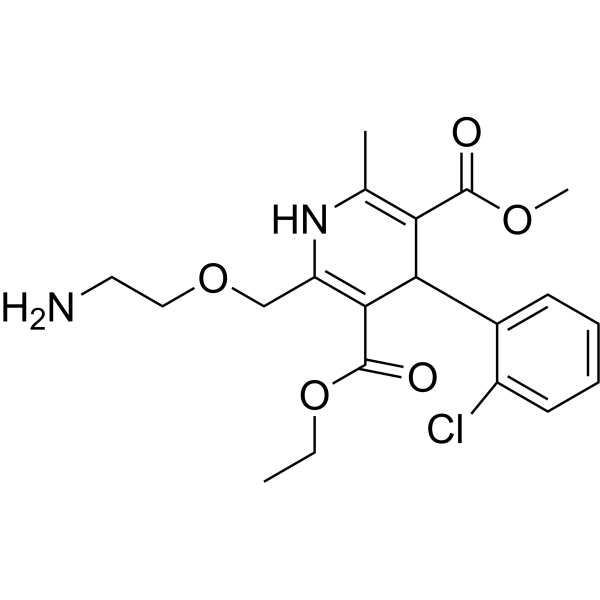
HY-B0317
AmlodipineCalcium Channel Blocker -
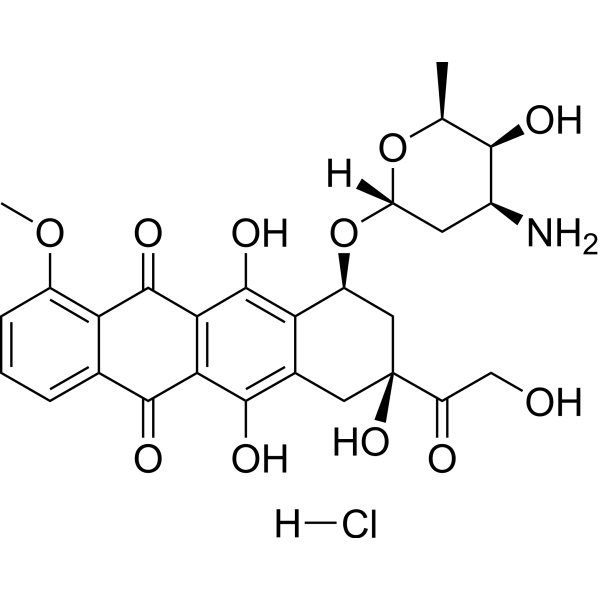
HY-15142
Doxorubicin hydrochlorideTopoisomerase Inhibitor -
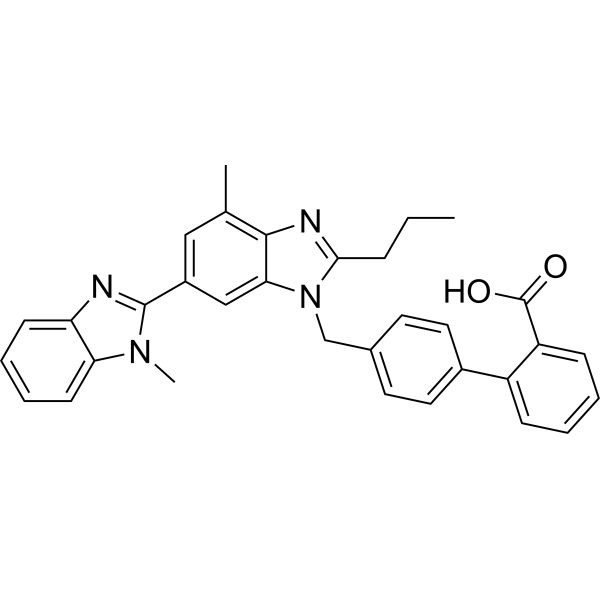
HY-13955
TelmisartanAngiotensin II Type 1 Receptor -
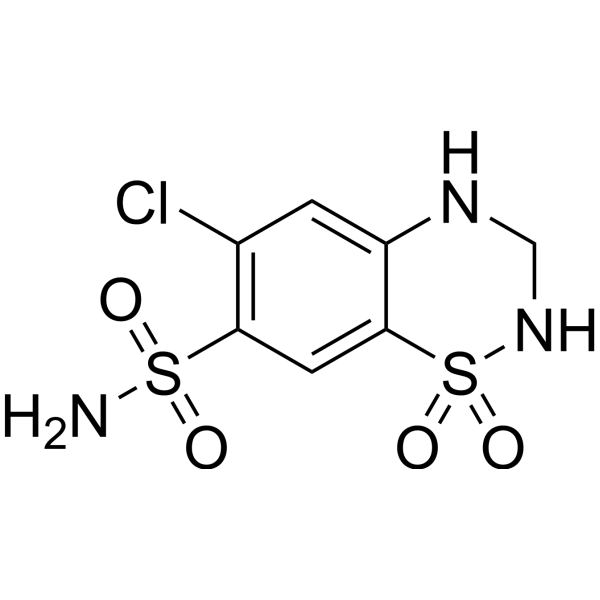
HY-B0252
HydrochlorothiazideTGF-beta/Smad Inhibitor -
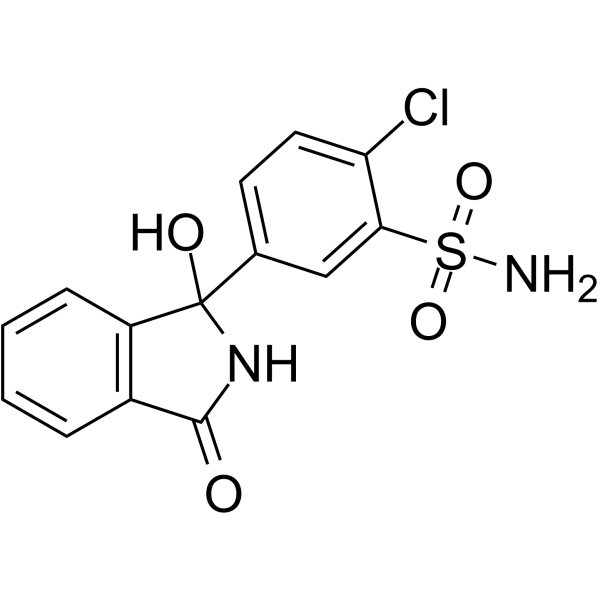
HY-15833
ChlorthalidoneThiazide-like Diuretic -
HY-B0259R
Indapamide (Standard) -
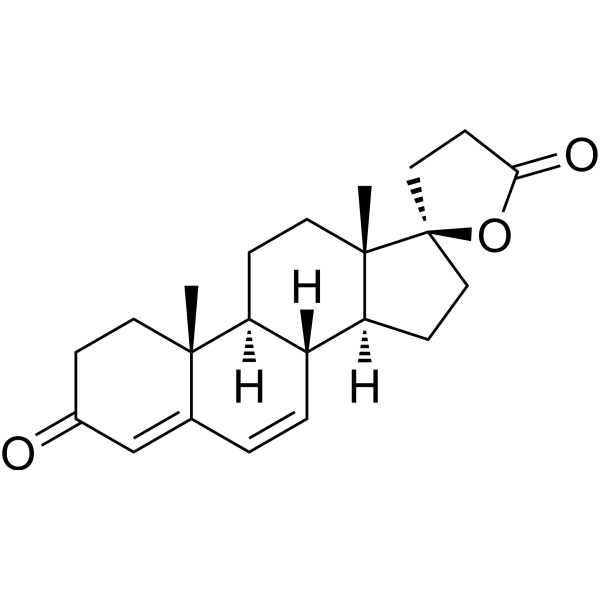
HY-B1438
CanrenoneEndogenous Metabolite -
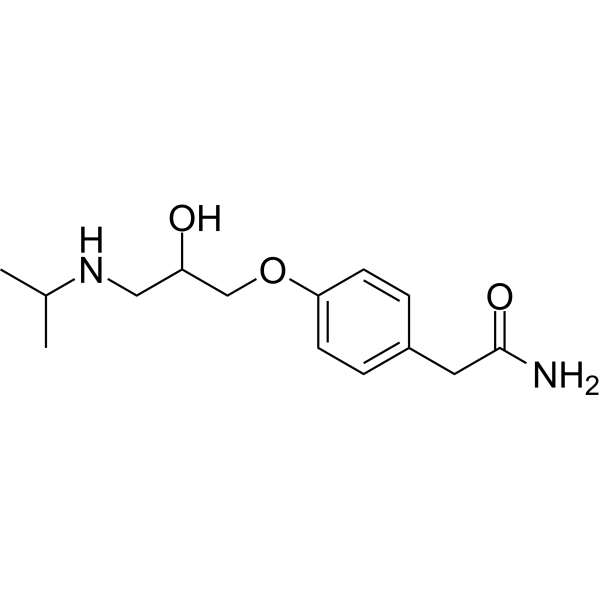
HY-17498
Atenololβ1-Adrenergic Receptor Blocker -
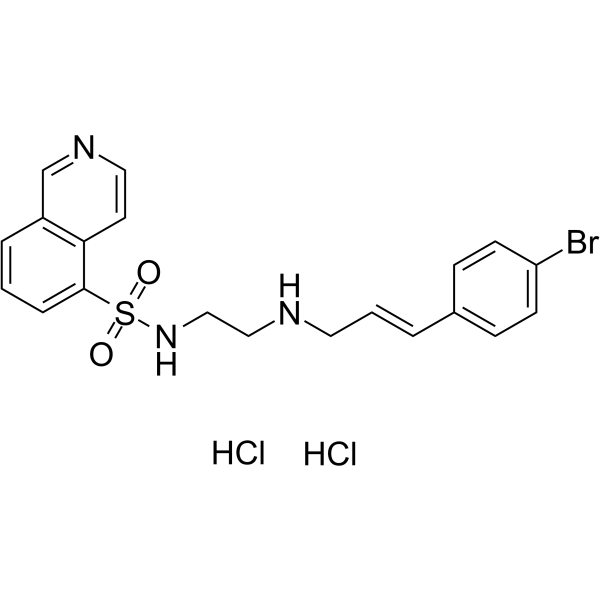
HY-15979A
H-89 dihydrochloridePKA Inhibitor -
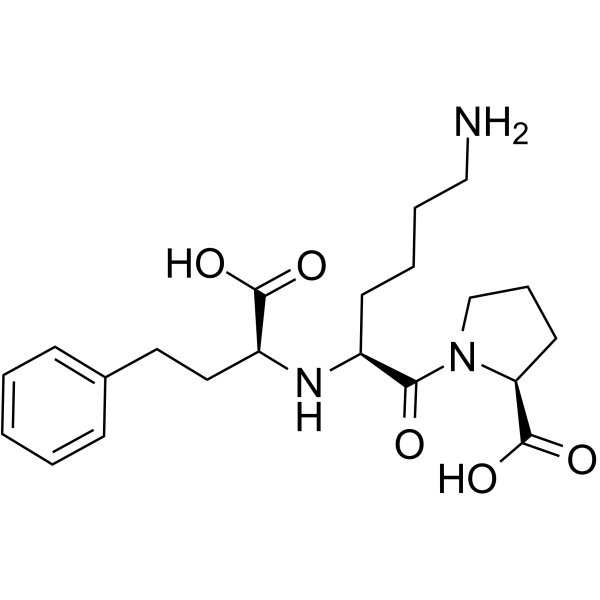
HY-18206
LisinoprilACE Inhibitor
Publications Citing Use of MedChemExpress (MCE) Indapamide
More

Biological Activity
Description
In Vitro
Indapamide (0.1-500 mg/L; 20min) reduces total insulin secretory response to glucose infusions in isolated perfused rat pancreas[2].
Indapamide (1-100 μM) increases osteoblast proliferation and decreased bone resorption[3].
MedChemExpress (MCE) has not independently confirmed the accuracy of these methods. They are for reference only. .
In Vivo
Indapamide (10 mg/kg/d) decreases pressor response to oxotremorine, noradrenaline, and tyramine in rats[1].
MedChemExpress (MCE) has not independently confirmed the accuracy of these methods. They are for reference only.
-
Animal Model:Male spontaneously hypertensive rats (11 weeks)[4]
-
Dosage:1 mg/kg
-
Administration:Gastric gavage per day for 8 weeks
-
Result:Decreased blood pressure by 16.9 mm Hg.
Increased the dp/dtmax, ejection fraction (EF) and fractional shortening (FS).
Clinical Trial
| NCT Number | Sponsor | Condition | Start Date |
Phase

|
|---|---|---|---|---|
| NCT01329991 | Plexxikon| | 2011-05 | PHASE1 |


Chemical Information
-
CAS No. 26807-65-8
-
Appearance Solid
-
Molecular Weight 365.83
-
Formula C16H16ClN3O3S
-
Color White to off-white
-
SMILES
O=C(NN1C(C)CC2=C1C=CC=C2)C3=CC=C(Cl)C(S(=O)(N)=O)=C3
-
Shipping
Room temperature in continental US; may vary elsewhere.
-
Storage
Powder -20°C 3 years 4°C 2 years In solvent -80°C 2 years -20°C 1 year


Publications (1)
-
Journal Impact Factor
-
Most Recent
-
Gynecol Oncol
TRIB3 promotes endometrial cancer progression through interacting with E2F1 and enhancing PKM2-mediated tumor glycolysis. [Abstract]2025 Sep 24:202:41-52. PMID: 40997650


Solvent & Solubility
In Vitro:
DMSO : ≥ 100 mg/mL (273.35 mM; Hygroscopic DMSO has a significant impact on the solubility of product, please use newly opened DMSO)
H2O : < 0.1 mg/mL (insoluble)
* "≥" means soluble, but saturation unknown.
Please refer to the solubility information to select the appropriate solvent. Once prepared, please aliquot and store the solution to prevent product inactivation from repeated freeze-thaw cycles.
Storage method and period of stock solution: -80°C, 2 years; -20°C, 1 year. When stored at -80°C, please use it within 2 years. When stored at -20°C, please use it within 1 year.
Please refer to the solubility information to select the appropriate solvent. Once prepared, please aliquot and store the solution to prevent product inactivation from repeated freeze-thaw cycles.
Storage method and period of stock solution: -80°C, 2 years; -20°C, 1 year. When stored at -80°C, please use it within 2 years. When stored at -20°C, please use it within 1 year.
Concentration (start) × Volume (start) = Concentration (final) × Volume (final)
In Vivo:
Select the appropriate dissolution method based on your experimental animal and administration route.
- For the following dissolution methods, please ensure to first prepare a clear stock solution using an In Vitro approach and then sequentially add co-solvents:
- To ensure reliable experimental results, the clarified stock solution can be appropriately stored based on storage conditions. As for the working solution for In Vivo experiments, it is recommended to prepare freshly and use it on the same day.
- The percentages shown for the solvents indicate their volumetric ratio in the final prepared solution. If precipitation or phase separation occurs during preparation, heat and/or sonication can be used to aid dissolution.
Add each solvent one by one: 10% DMSO 40% PEG300 5% Tween-80 45% Saline
Solubility: ≥ 2.5 mg/mL (6.83 mM); Clear solution
This protocol yields a clear solution of ≥ 2.5 mg/mL (saturation unknown).
Taking 1 mL working solution as an example, add 100 μL DMSO stock solution (25.0 mg/mL) to 400 μL PEG300, and mix evenly; then add 50 μL Tween-80 and mix evenly; then add 450 μL Saline to adjust the volume to 1 mL.
Preparation of Saline: Dissolve 0.9 g sodium chloride in ddH₂O and dilute to 100 mL to obtain a clear Saline solution.
Add each solvent one by one: 10% DMSO 90% (20% SBE-β-CD in Saline)
Solubility: ≥ 2.5 mg/mL (6.83 mM); Clear solution
This protocol yields a clear solution of ≥ 2.5 mg/mL (saturation unknown).
Taking 1 mL working solution as an example, add 100 μL DMSO stock solution (25.0 mg/mL) to 900 μL 20% SBE-β-CD in Saline, and mix evenly.
Preparation of 20% SBE-β-CD in Saline (4°C, storage for one week): 2 g SBE-β-CD powder is dissolved in 10 mL Saline, completely dissolve until clear.
In Vivo Dissolution Calculator
Please enter the basic information of animal experiments:
-
-
-
-
Recommended: Prepare an additional quantity of animals to account for potential losses during experiments.
Please enter your animal formula composition:
-
%DMSO +
Recommended: Keep the proportion of DMSO in working solution below 2% if your animal is weak.
-
%+
-
+%Tween-80 + +
-
%Saline +
The co-solvents required include: DMSO, . All of co-solvents are available by MedChemExpress (MCE). , Tween 80. All of co-solvents are available by MedChemExpress (MCE).
Working solution concentration: 0.22 mg/mL
Method for preparing stock solution: mg drug dissolved in μL DMSO. Stock solution concentration: mg/mL.
1. Take μL DMSO stock solution;
2. Add μL .
μL , mix evenly;
3. Then add μL Tween 80, mix evenly;
4. Then add μL
Please ensure that the stock solution in the first step is dissolved to a clear state, and add co-solvents in sequence. You can use ultrasonic heating (ultrasonic cleaner, recommended frequency 20-40 kHz), vortexing, etc. to assist dissolution.


Purity & Documentation
-
Data Sheet (280 KB)
-
SDS (396 KB)
- English - EN (396 KB)
- Français - FR (396 KB)
- Deutsch - DE (396 KB)
- Norwegian - NO (396 KB)
- Español - ES (396 KB)
- Swedish - SV (396 KB)
- Italian - IT (396 KB)
- Korean - KR (396 KB)
- Portuguese - PT (396 KB)
-
Handling Instructions (2659 KB)
References
[1]. Chaffman, M, et, al. Indapamide. Drugs 28, 189–235 (1984).
[2]. Furman BL, et, al. A further examination of the possible effects of indapamide on glucose tolerance and insulin secretion in the rat and mouse. J Pharm Pharmacol. 1981 Nov;33(11):735-7. [Content Brief]
[3]. Lalande A, et, al. Indapamide, a thiazide-like diuretic, decreases bone resorption in vitro. J Bone Miner Res. 2001 Feb;16(2):361-70. [Content Brief]
[4]. Ma F, et, al. Indapamide lowers blood pressure by increasing production of epoxyeicosatrienoic acids in the kidney. Mol Pharmacol. 2013 Aug;84(2):286-95. [Content Brief]


Complete Stock Solution Preparation Table
Please refer to the solubility information to select the appropriate solvent. Once prepared, please aliquot and store the solution to prevent product inactivation from repeated freeze-thaw cycles.
Storage method and period of stock solution: -80°C, 2 years; -20°C, 1 year. When stored at -80°C, please use it within 2 years. When stored at -20°C, please use it within 1 year.
| Optional Solvent | Concentration Solvent Mass | 1 mg | 5 mg | 10 mg | 25 mg |
|---|---|---|---|---|---|
| DMSO | 1 mM | 2.7335 mL | 13.6676 mL | 27.3351 mL | 68.3378 mL |
| 5 mM | 0.5467 mL | 2.7335 mL | 5.4670 mL | 13.6676 mL | |
| 10 mM | 0.2734 mL | 1.3668 mL | 2.7335 mL | 6.8338 mL | |
| 15 mM | 0.1822 mL | 0.9112 mL | 1.8223 mL | 4.5559 mL | |
| 20 mM | 0.1367 mL | 0.6834 mL | 1.3668 mL | 3.4169 mL | |
| 25 mM | 0.1093 mL | 0.5467 mL | 1.0934 mL | 2.7335 mL | |
| 30 mM | 0.0911 mL | 0.4556 mL | 0.9112 mL | 2.2779 mL | |
| 40 mM | 0.0683 mL | 0.3417 mL | 0.6834 mL | 1.7084 mL | |
| 50 mM | 0.0547 mL | 0.2734 mL | 0.5467 mL | 1.3668 mL | |
| 60 mM | 0.0456 mL | 0.2278 mL | 0.4556 mL | 1.1390 mL | |
| 80 mM | 0.0342 mL | 0.1708 mL | 0.3417 mL | 0.8542 mL | |
| 100 mM | 0.0273 mL | 0.1367 mL | 0.2734 mL | 0.6834 mL |


Indapamide Related Classifications
HY-B0259 Related Classifications
 Powered by Bioz