



Isoguvacine hydrochloride
Based on 2 publication(s) in Google Scholar
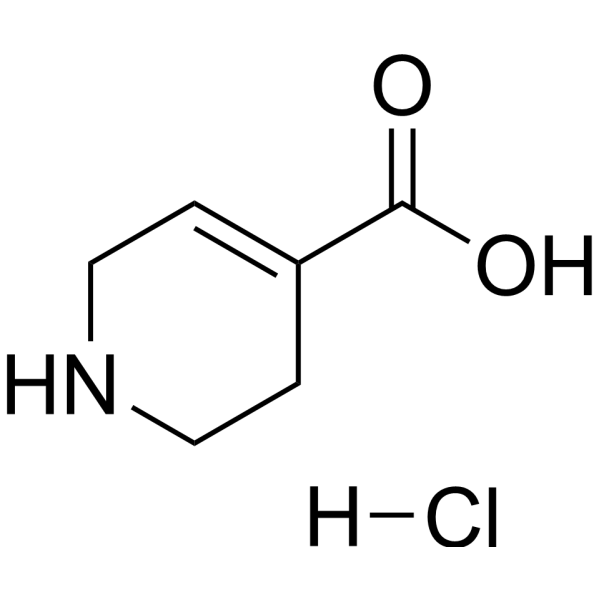
Isoguvacine hydrochloride is a GABA receptor agonist.
For research use only. We do not sell to patients.
- Purity : 99.81%
- CAS No.: 68547-97-7
- Formula: C6H10ClNO2
- Molecular Weight:163.60
-
Storage:
4°C, sealed storage, away from moisture
* In solvent : -80°C, 6 months; -20°C, 1 month (sealed storage, away from moisture)

To place orders, for customer services and technical support, please contact: MedChemExpress USA
Tel: 609-228-6898 E-mail: [email protected] [email protected]


-
 Biological Activity
-
Chemical Information
-
Solvent & Solubility
- Purity & Documentation
- References
-
 Help & FAQs


-
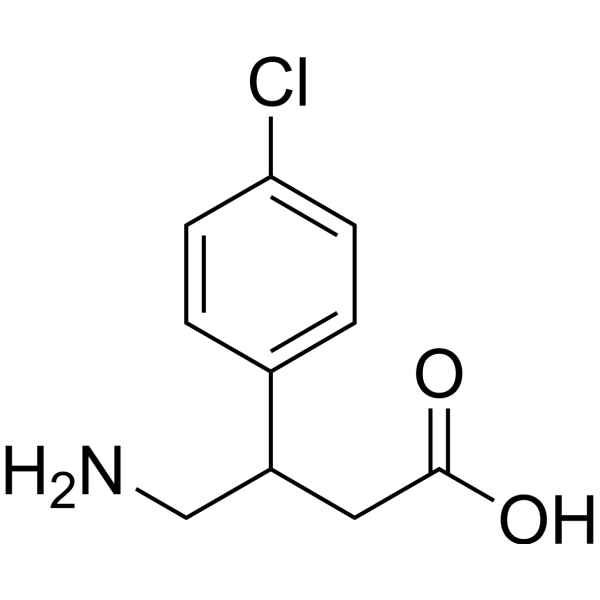
HY-B0007
BaclofenGABABR Agonist -
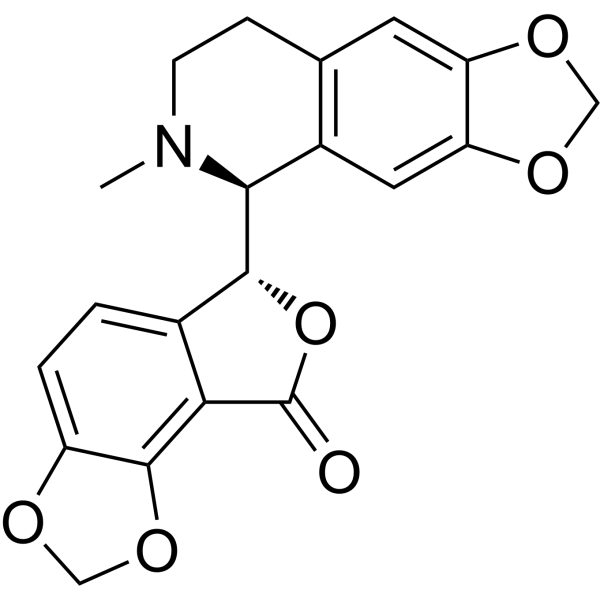
HY-N0219
BicucullineGABAA Receptor Antagonist -
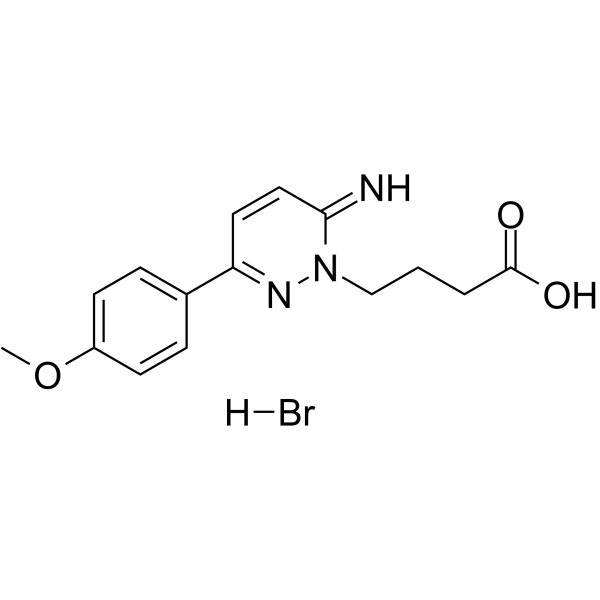
HY-103533
GabazineGABAA Antagonist -
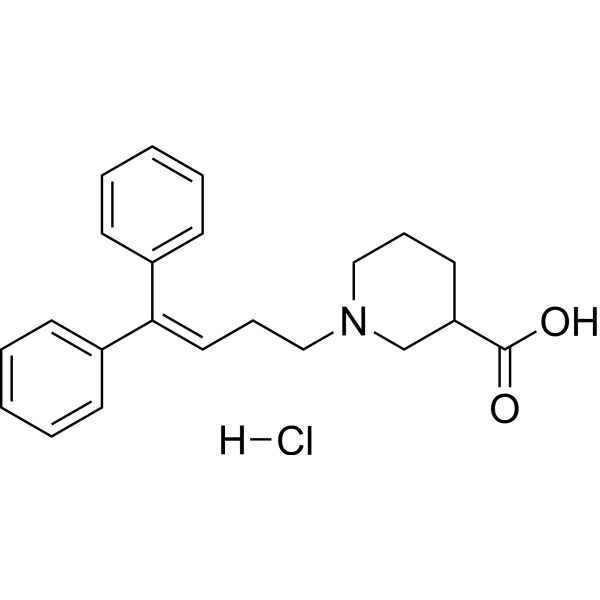
HY-100228A
SKF89976A hydrochlorideGAT-1 Inhibitor -
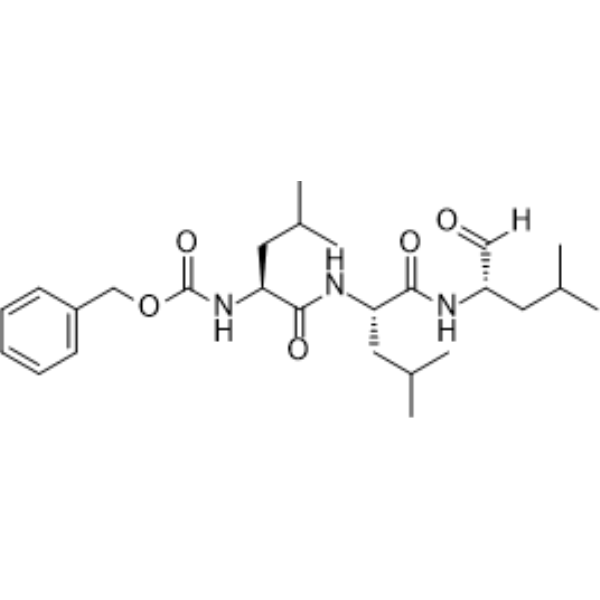
HY-13259
MG-132Proteasome Inhibitor -
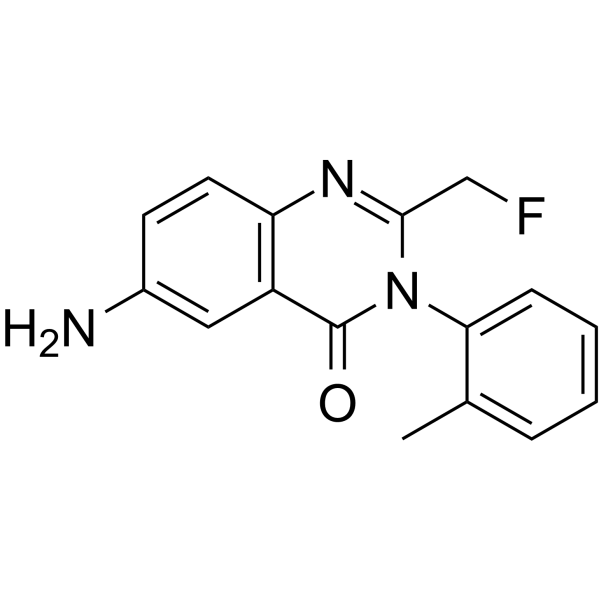
HY-B1833
AfloqualoneMuscle Relaxant Agent -
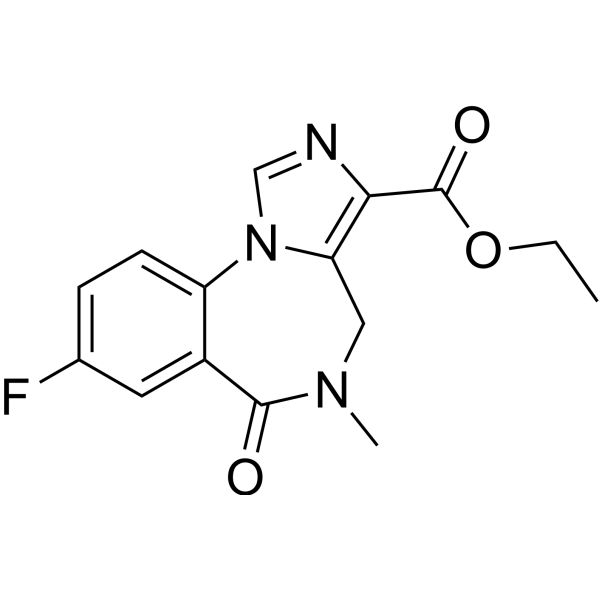
HY-B0009
FlumazenilGABA Receptor Antagonist -
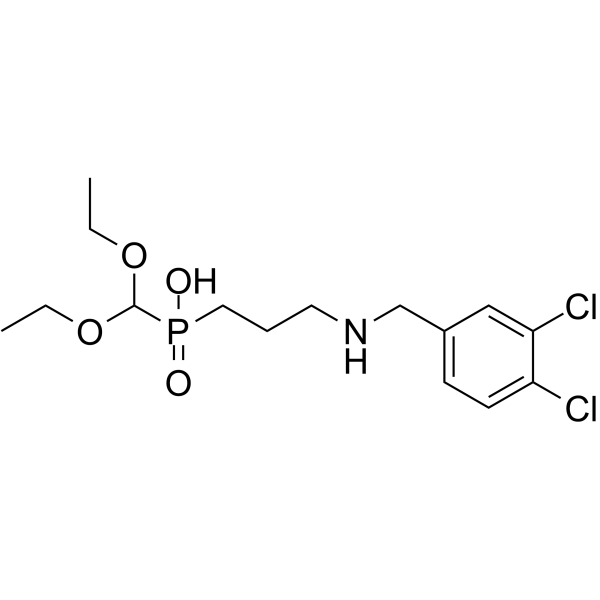
HY-103531
CGP52432GABAB Antagonist -
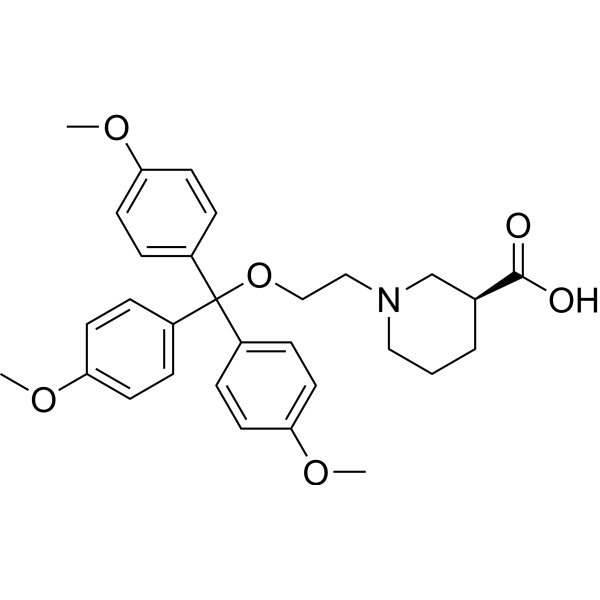
HY-103504
(S)-SNAP5114GABA Transporter Inhibitor -
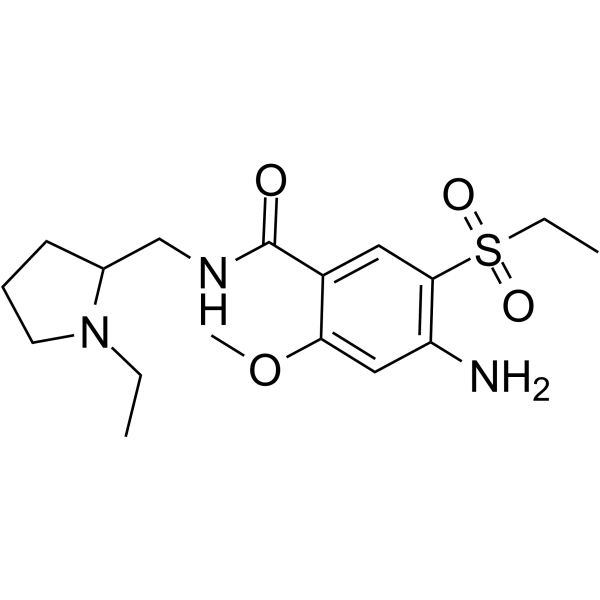
HY-14545
AmisulprideDopamine Receptor Antagonist -
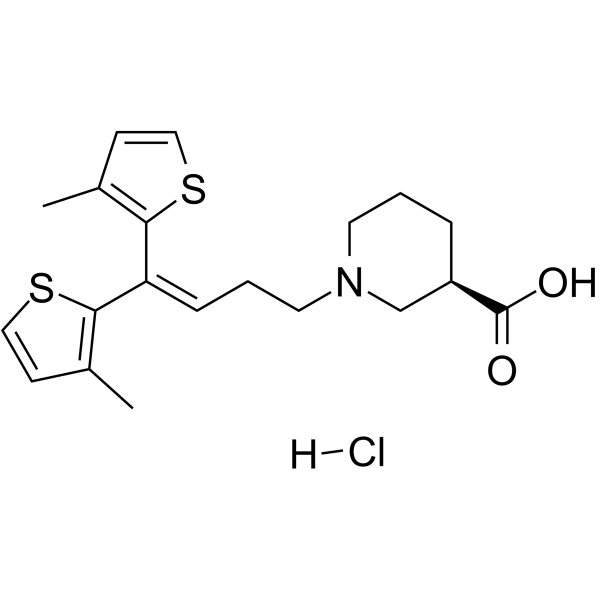
HY-B0696A
Tiagabine hydrochlorideGAT-1 Inhibitor
Publications Citing Use of MedChemExpress (MCE) Isoguvacine hydrochloride
More

Biological Activity
Description
IC50 & Target
GABA[1]
In Vitro
Isoguvacine binds to a mouse forebrain synaptic membrane preparation. The specific binding is displaceable by GABA, muscimol and bicuculline but not by picrotoxin or diaminobutyric acid. Kinetic data suggest two binding affinities. Highest levels of binding are observed in the cerebellum, cortex and hippocampus[1]. Isoguvacine binds to membrane preparations of rat forebrain with pharmacological characteristics similar to the postsynaptic GABA recognition site: that it is transported into synaptosomal preparations by an uptake system similar to the high-affinity GABA uptake system; and that recently accumulated isoguvacine is released in a Ca2+-dependent manner and by heteroexchange with external GABA[2]. Isoguvacine at a concentration of 50 μM blocks the seizure like events in 2 out of 6 organotypic hippocampal slice cultures. Isoguvacine inhibits the low magnesium induced seizure like events dose dependently[3].
MedChemExpress (MCE) has not independently confirmed the accuracy of these methods. They are for reference only. .


Chemical Information
-
CAS No. 68547-97-7
-
Appearance Solid
-
Molecular Weight 163.60
-
Formula C6H10ClNO2
-
Color White to light yellow
-
SMILES
O=C(C1=CCNCC1)O.[H]Cl
-
Shipping
Room temperature in continental US; may vary elsewhere.
-
Storage
4°C, sealed storage, away from moisture
* In solvent : -80°C, 6 months; -20°C, 1 month (sealed storage, away from moisture)


Publications (2)
-
Journal Impact Factor
-
Most Recent
-
Eur J Pharmacol
Loop diuretics mitigate juvenile immobilization treatment-induced hippocampal dysfunction. [Abstract]2025 Jun 5:996:177447. PMID: 40023355 -
J Neurochem
The GABAergic pathway from anterior cingulate cortex to lateral hypothalamus area regulates irritable bowel syndrome in mice and its underlying mechanism. [Abstract]2024 Sep;168(9):2814-2831. PMID: 38877776


Solvent & Solubility
In Vitro:
H2O : 100 mg/mL (611.25 mM; Need ultrasonic)
DMSO : 25 mg/mL (152.81 mM; Need ultrasonic; Hygroscopic DMSO has a significant impact on the solubility of product, please use newly opened DMSO)
Please refer to the solubility information to select the appropriate solvent. Once prepared, please aliquot and store the solution to prevent product inactivation from repeated freeze-thaw cycles.
Storage method and period of stock solution: -80°C, 6 months; -20°C, 1 month (sealed storage, away from moisture). When stored at -80°C, please use it within 6 months. When stored at -20°C, please use it within 1 month.
* Note: If you choose water as the stock solution, please dilute it to the working solution, then filter and sterilize it with a 0.22 μm filter before use.
Please refer to the solubility information to select the appropriate solvent. Once prepared, please aliquot and store the solution to prevent product inactivation from repeated freeze-thaw cycles.
Storage method and period of stock solution: -80°C, 6 months; -20°C, 1 month (sealed storage, away from moisture). When stored at -80°C, please use it within 6 months. When stored at -20°C, please use it within 1 month.
* Note: If you choose water as the stock solution, please dilute it to the working solution, then filter and sterilize it with a 0.22 μm filter before use.
Concentration (start) × Volume (start) = Concentration (final) × Volume (final)
In Vivo:
Select the appropriate dissolution method based on your experimental animal and administration route.
- For the following dissolution methods, please ensure to first prepare a clear stock solution using an In Vitro approach and then sequentially add co-solvents:
- To ensure reliable experimental results, the clarified stock solution can be appropriately stored based on storage conditions. As for the working solution for In Vivo experiments, it is recommended to prepare freshly and use it on the same day.
- The percentages shown for the solvents indicate their volumetric ratio in the final prepared solution. If precipitation or phase separation occurs during preparation, heat and/or sonication can be used to aid dissolution.
Add each solvent one by one: 10% DMSO 40% PEG300 5% Tween-80 45% Saline
Solubility: ≥ 2.08 mg/mL (12.71 mM); Clear solution
This protocol yields a clear solution of ≥ 2.08 mg/mL (saturation unknown).
Taking 1 mL working solution as an example, add 100 μL DMSO stock solution (20.8 mg/mL) to 400 μL PEG300, and mix evenly; then add 50 μL Tween-80 and mix evenly; then add 450 μL Saline to adjust the volume to 1 mL.
Preparation of Saline: Dissolve 0.9 g sodium chloride in ddH₂O and dilute to 100 mL to obtain a clear Saline solution.
Add each solvent one by one: 10% DMSO 90% (20% SBE-β-CD in Saline)
Solubility: ≥ 2.08 mg/mL (12.71 mM); Clear solution
This protocol yields a clear solution of ≥ 2.08 mg/mL (saturation unknown).
Taking 1 mL working solution as an example, add 100 μL DMSO stock solution (20.8 mg/mL) to 900 μL 20% SBE-β-CD in Saline, and mix evenly.
Preparation of 20% SBE-β-CD in Saline (4°C, storage for one week): 2 g SBE-β-CD powder is dissolved in 10 mL Saline, completely dissolve until clear.
For the following dissolution methods, please prepare the working solution directly:
It is recommended to prepare fresh solutions and use them promptly within a short period of time.
The percentages shown for the solvents indicate their volumetric ratio in the final prepared solution. If precipitation or phase separation occurs during preparation, heat and/or sonication can be used to aid dissolution.
Add each solvent one by one: PBS
Solubility: 100 mg/mL (611.25 mM); Clear solution; Need ultrasonic
In Vivo Dissolution Calculator
Please enter the basic information of animal experiments:
-
-
-
-
Recommended: Prepare an additional quantity of animals to account for potential losses during experiments.
Working solution concentration: 0.22 mg/mL
This product has good water solubility, please refer to the measured solubility data in water/PBS/Saline for details.


Purity & Documentation
-
Data Sheet (276 KB)
-
SDS (393 KB)
- English - EN (393 KB)
- Français - FR (393 KB)
- Deutsch - DE (393 KB)
- Norwegian - NO (393 KB)
- Español - ES (393 KB)
- Swedish - SV (393 KB)
- Italian - IT (393 KB)
- Korean - KR (393 KB)
- Portuguese - PT (393 KB)
-
Handling Instructions (2659 KB)
References
[1]. Morin AM, et al. The binding of 3H-isoguvacine to mouse brain synapticmembranes. Life Sci. 1980 Apr 14;26(15):1239-45. [Content Brief]
[2]. White WF, et al. Isoguvacine binding, uptake, and release: relation to the GABA system. J Neurochem. 1983 Jun;40(6):1701-8. [Content Brief]
[3]. Wahab A, et al. Effects of gamma-aminobutyric acid (GABA) agonists and a GABA uptake inhibitor on pharmacoresistant seizure like events in organotypic hippocampal slice cultures. Epilepsy Res. 2009 Oct;86(2-3):113-23. [Content Brief]


Complete Stock Solution Preparation Table
Please refer to the solubility information to select the appropriate solvent. Once prepared, please aliquot and store the solution to prevent product inactivation from repeated freeze-thaw cycles.
Storage method and period of stock solution: -80°C, 6 months; -20°C, 1 month (sealed storage, away from moisture). When stored at -80°C, please use it within 6 months. When stored at -20°C, please use it within 1 month.
| Optional Solvent | Concentration Solvent Mass | 1 mg | 5 mg | 10 mg | 25 mg |
|---|---|---|---|---|---|
| DMSO / H2O | 1 mM | 6.1125 mL | 30.5623 mL | 61.1247 mL | 152.8117 mL |
| 5 mM | 1.2225 mL | 6.1125 mL | 12.2249 mL | 30.5623 mL | |
| 10 mM | 0.6112 mL | 3.0562 mL | 6.1125 mL | 15.2812 mL | |
| 15 mM | 0.4075 mL | 2.0375 mL | 4.0750 mL | 10.1874 mL | |
| 20 mM | 0.3056 mL | 1.5281 mL | 3.0562 mL | 7.6406 mL | |
| 25 mM | 0.2445 mL | 1.2225 mL | 2.4450 mL | 6.1125 mL | |
| 30 mM | 0.2037 mL | 1.0187 mL | 2.0375 mL | 5.0937 mL | |
| 40 mM | 0.1528 mL | 0.7641 mL | 1.5281 mL | 3.8203 mL | |
| 50 mM | 0.1222 mL | 0.6112 mL | 1.2225 mL | 3.0562 mL | |
| 60 mM | 0.1019 mL | 0.5094 mL | 1.0187 mL | 2.5469 mL | |
| 80 mM | 0.0764 mL | 0.3820 mL | 0.7641 mL | 1.9101 mL | |
| 100 mM | 0.0611 mL | 0.3056 mL | 0.6112 mL | 1.5281 mL |
* Note: If you choose water as the stock solution, please dilute it to the working solution, then filter and sterilize it with a 0.22 μm filter before use.


Isoguvacine hydrochloride Related Classifications
HY-100810 Related Classifications
 Powered by Bioz