



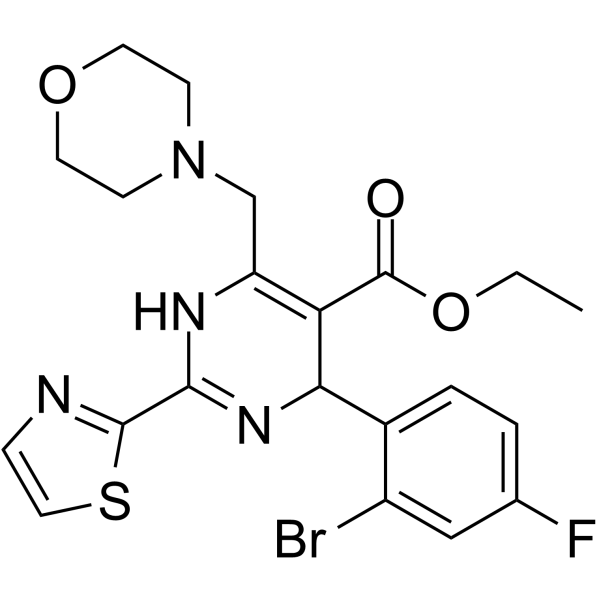
Morphothiadin
Based on 7 publication(s) in Google Scholar
Morphothiadin is a potent inhibitor on the replication of both wild-type and adefovir (HY-B1826)-resistant HBV with an IC50 of 12 nM.
For research use only. We do not sell to patients.
- Purity : 99.79%
- CAS No.: 1092970-12-1
- Formula: C21H22BrFN4O3S
- Molecular Weight:509.39
-
Storage:Powder -20°C, 3 years , 4°C, 2 years ; In solvent -80°C, 2 years , -20°C, 1 year

To place orders, for customer services and technical support, please contact: MedChemExpress USA
Tel: 609-228-6898 E-mail: [email protected] [email protected]


-
 Biological Activity
-
Chemical Information
-
Solvent & Solubility
- Purity & Documentation
- References
-
 Help & FAQs


-
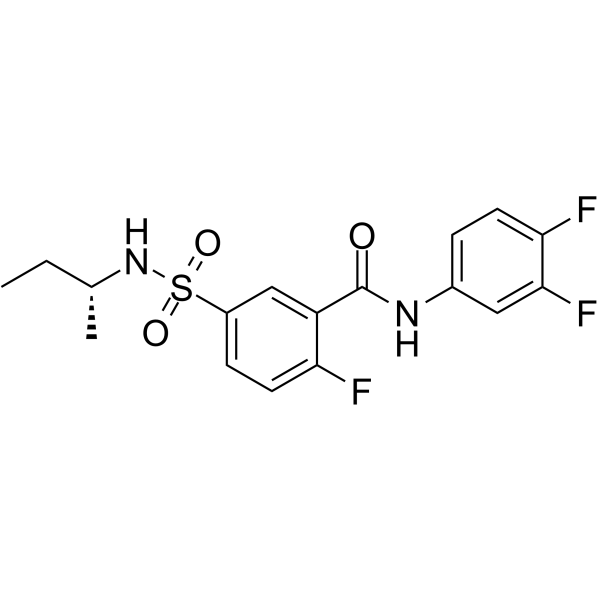
HY-112142
AB-423 -
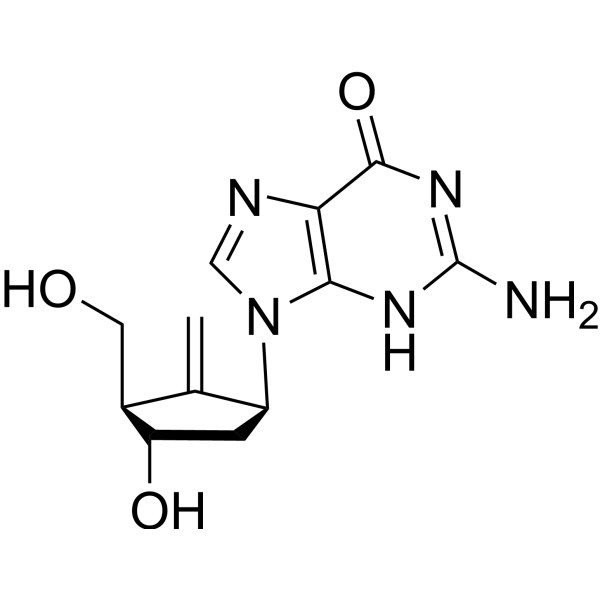
HY-13623
EntecavirHBV Inhibitor -
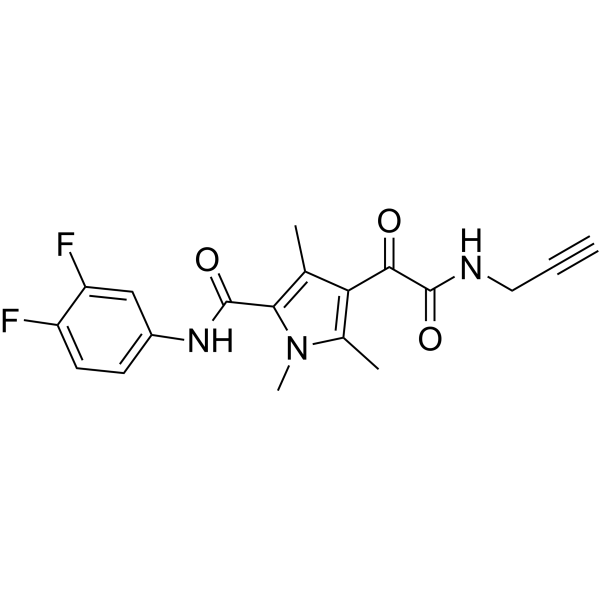
HY-124614
GLP-26HBV Capsid Effector -
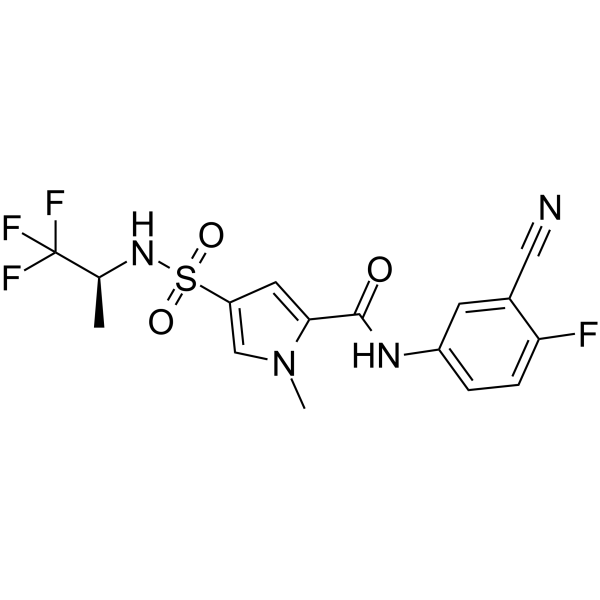
HY-109168
BersacapavirHBV Inhibitor -
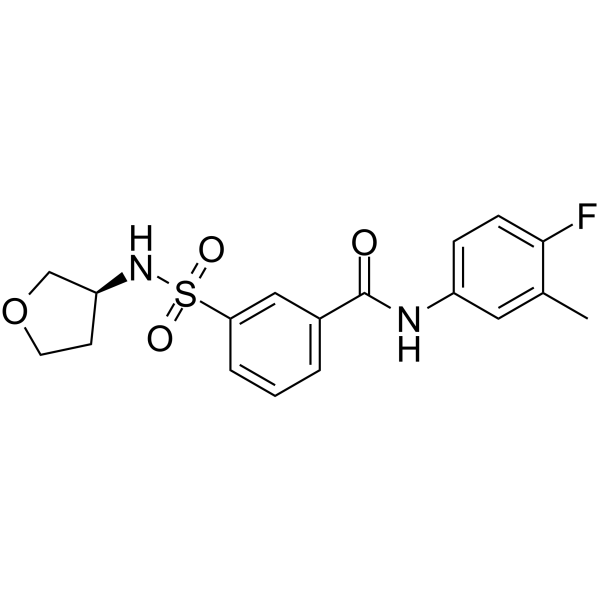
HY-112564
JNJ-632HBV CAM -
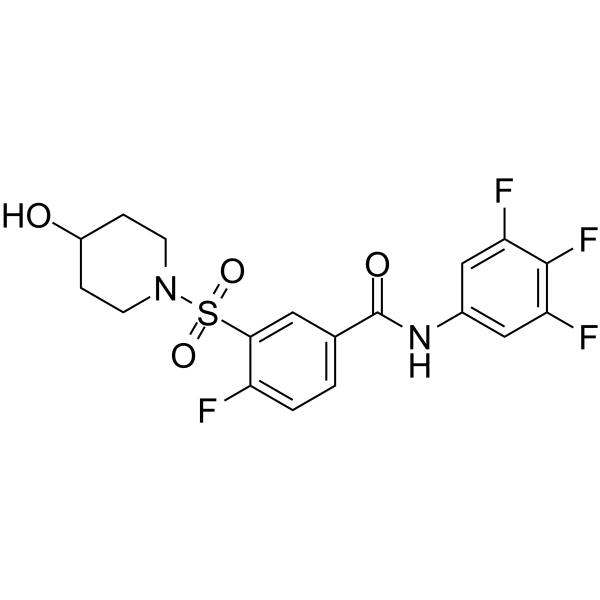
HY-124600
NVR 3-778HBV CAM -
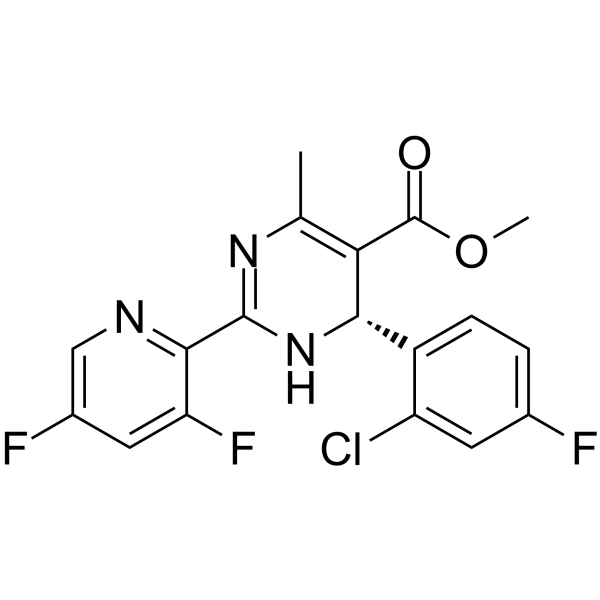
HY-100029
Bay 41-4109HBV Inhibitor -
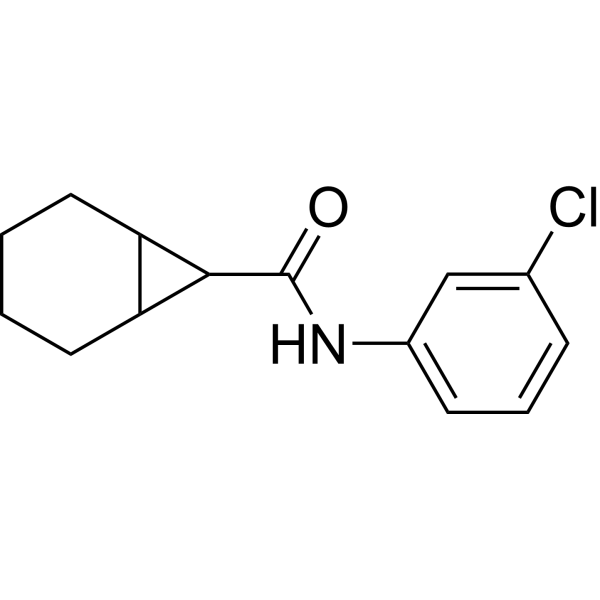
HY-114314
BA-53038BHBV Core Protein Allosteric Modulator -
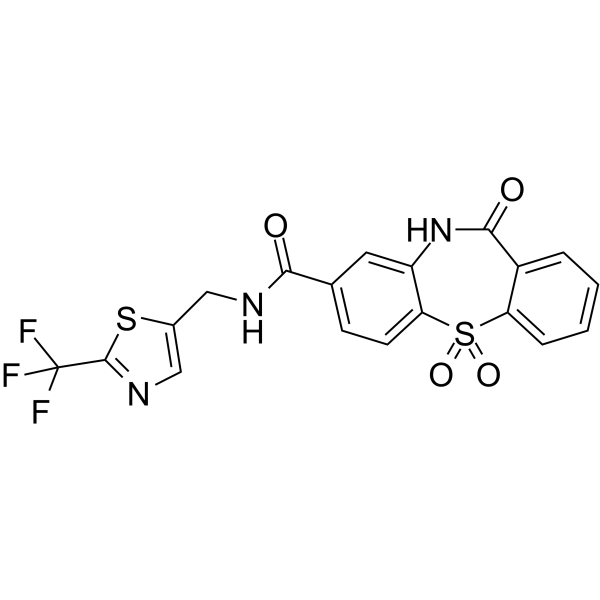
HY-109195
VebicorvirHBV Inhibitor -
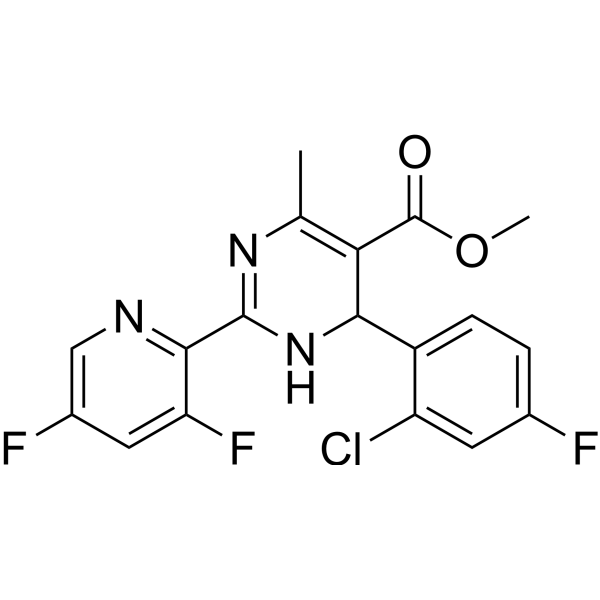
HY-100029A
Bay 41-4109 racemateHBV Inhibitor -
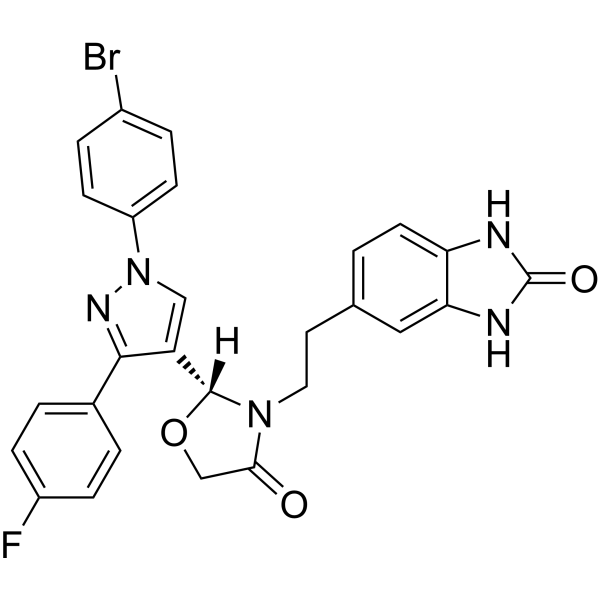
HY-147255
CanocapavirAntiviral Agent -
HY-117650A
RG7834HBV Inhibitor
Publications Citing Use of MedChemExpress (MCE) Morphothiadin
More- Cell Mol Gastroenterol Hepatol. 2022;13(4):1001-1017. [Abstract]
- Emerg Microbes Infect. 2021 Dec;10(1):37-50. [Abstract]
- PLoS Pathog. 2025 Aug 5;21(8):e1013391. [Abstract]
- PLoS Pathog. 2021 Aug 9;17(8):e1009838. [Abstract]
- J Virol. 2026 May 14:e0003526. [Abstract]
- J Virol. 2022 Nov 9;96(21):e0136222. [Abstract]
- Anal Methods. 2022 Jan 6;14(2):135-146. [Abstract]


Biological Activity
Description
IC50 & Target
IC50: 12 nM (HBV)[1]
Cellular Effect
|
Cell Line

|
Type | Value | Description | References |
|---|---|---|---|---|
| CCRF-CEM | CC50 |
68.7 μM
Compound: GLS4
|
Cytotoxicity against human CEM cells assessed as reduction in cell viability by MTT assay
Cytotoxicity against human CEM cells assessed as reduction in cell viability by MTT assay
|
[PMID: 33421915] |
| CCRF-CEM | CC50 |
69 μM
Compound: GLS4
|
Cytotoxicity against human CEM cells assessed as growth inhibition by CellTiter 96 non-radioactive cell proliferation colorimetric assay
Cytotoxicity against human CEM cells assessed as growth inhibition by CellTiter 96 non-radioactive cell proliferation colorimetric assay
|
[PMID: 28094179] |
| HEK293 | IC50 |
0.86 μM
Compound: GLS4; GLS4JHS
|
Inhibition of human ERG expressed in HEK293 cells at -80 mV holding potential by manual-patch-clamp electrophysiology assay
Inhibition of human ERG expressed in HEK293 cells at -80 mV holding potential by manual-patch-clamp electrophysiology assay
|
[PMID: 29381358] |
| HepaRG | CC50 |
>30 μM
Compound: GLS4
|
Cytotoxicity against human HepaRG cells assessed as effect on cell viability
Cytotoxicity against human HepaRG cells assessed as effect on cell viability
|
[PMID: 33062174] |
| HepG2 | CC50 |
>100 μM
Compound: GLS4
|
Cytotoxicity against human HepG2 cells assessed as growth inhibition by CellTiter 96 non-radioactive cell proliferation colorimetric assay
Cytotoxicity against human HepG2 cells assessed as growth inhibition by CellTiter 96 non-radioactive cell proliferation colorimetric assay
|
[PMID: 28094179] |
| HepG2 | CC50 |
>100 μM
Compound: GLS4
|
Cytotoxicity against human HepG2 cells assessed as reduction in cell viability by MTT assay
Cytotoxicity against human HepG2 cells assessed as reduction in cell viability by MTT assay
|
[PMID: 33421915] |
| HepG2 | CC50 |
49.2 μM
Compound: GLS4
|
Cytotoxicity in human HepG2 cells assessed as induction of cell killing
Cytotoxicity in human HepG2 cells assessed as induction of cell killing
|
[PMID: 32421339] |
| HepG2 | IC50 |
0.012 μM
Compound: 5; GLS4
|
Inhibition of HBV DNA replication in HepG2 cells by southern blot analysis
Inhibition of HBV DNA replication in HepG2 cells by southern blot analysis
|
10.1039/C4MD00521J |
| HepG2 2.2.15 | CC50 |
>45 μM
Compound: 8n
|
Cytotoxicity in human HepG2.215 cells assessed as reduction in cell viability after 5 days by CCK8 assay
Cytotoxicity in human HepG2.215 cells assessed as reduction in cell viability after 5 days by CCK8 assay
|
[PMID: 28082068] |
| HepG2 2.2.15 | EC50 |
0.0066 μM
Compound: GLS4
|
Antiviral activity against HBV infected in human HepG2.2.15 cells assessed as reduction in viral DNA levels incubated for 6 days by PCR analysis
Antiviral activity against HBV infected in human HepG2.2.15 cells assessed as reduction in viral DNA levels incubated for 6 days by PCR analysis
|
[PMID: 32421339] |
| PBMC | CC50 |
28 μM
Compound: GLS4
|
Cytotoxicity against human PBMC assessed as growth inhibition by CellTiter 96 non-radioactive cell proliferation colorimetric assay
Cytotoxicity against human PBMC assessed as growth inhibition by CellTiter 96 non-radioactive cell proliferation colorimetric assay
|
[PMID: 28094179] |
| PBMC | CC50 |
28.4 μM
Compound: GLS4
|
Cytotoxicity against human PBMC cells assessed as reduction in cell viability by MTT assay
Cytotoxicity against human PBMC cells assessed as reduction in cell viability by MTT assay
|
[PMID: 33421915] |
| Vero | CC50 |
17.7 μM
Compound: GLS4
|
Cytotoxicity against African green monkey Vero cells assessed as reduction in cell viability by MTT assay
Cytotoxicity against African green monkey Vero cells assessed as reduction in cell viability by MTT assay
|
[PMID: 33421915] |
| Vero | CC50 |
18 μM
Compound: GLS4
|
Cytotoxicity against African green monkey Vero cells assessed as growth inhibition by CellTiter 96 non-radioactive cell proliferation colorimetric assay
Cytotoxicity against African green monkey Vero cells assessed as growth inhibition by CellTiter 96 non-radioactive cell proliferation colorimetric assay
|
[PMID: 28094179] |
In Vitro
Morphothiadin is a potent inhibitor on the replication of both wild-type and adefovir-resistant HBV with an IC50 of 12 nM. Morphothiadin (GLS4) shows no toxicity up to 25 μM. The cytotoxic dose whereby 50% of cells die (CC50) for primary hepatocytes is 115 μM for Morphothiadin (P<0.001). The CC90 is 190 μM for Morphothiadin (P<0.01) in HepAD38 cells. Morphothiadin strongly inhibits virus accumulation in the supernatant of HepAD38 cells at 25 nM to 100 nM (P<0.02). Results show a concentration-dependent decrease of core protein in cells treated with Morphothiadin[2].
MedChemExpress (MCE) has not independently confirmed the accuracy of these methods. They are for reference only.
In Vivo
MedChemExpress (MCE) has not independently confirmed the accuracy of these methods. They are for reference only.


Chemical Information
-
CAS No. 1092970-12-1
-
Appearance Solid
-
Molecular Weight 509.39
-
Formula C21H22BrFN4O3S
-
Color Light yellow to yellow
-
SMILES
O=C(C1=C(CN2CCOCC2)NC(C3=NC=CS3)=NC1C4=CC=C(F)C=C4Br)OCC
-
Synonyms
GLS4
-
Shipping
Room temperature in continental US; may vary elsewhere.
-
Storage
Powder -20°C 3 years 4°C 2 years In solvent -80°C 2 years -20°C 1 year


Publications (7)
-
Journal Impact Factor
-
Most Recent
-
Cell Mol Gastroenterol Hepatol
2022;13(4):1001-1017. PMID: 34896285 -
Emerg Microbes Infect
Specific determination of hepatitis B e antigen by antibodies targeting precore unique epitope facilitates clinical diagnosis and drug evaluation against hepatitis B virus infection. [Abstract]2021 Dec;10(1):37-50. PMID: 33296295 -
PLoS Pathog
HBV capsid assembly modulators differentially modulate the assembly of wild-type and drug-resistant core protein chimeric nucleocapsids and empty capsids. [Abstract]2025 Aug 5;21(8):e1013391. PMID: 40763308 -
PLoS Pathog
Probing the spatiotemporal patterns of HBV multiplication reveals novel features of its subcellular processes. [Abstract]2021 Aug 9;17(8):e1009838. PMID: 34370796 -
J Virol
Generation of HBV cccDNA using single-stranded M13 phage DNA for authentic minichromosome functionality. [Abstract]2026 May 14:e0003526. PMID: 42132423 -
J Virol
Hepatitis B Virus Core Protein Is Not Required for Covalently Closed Circular DNA Transcriptional Regulation. [Abstract]2022 Nov 9;96(21):e0136222. PMID: 36226986 -
Anal Methods
An automated microfluidic platform for the screening and characterization of novel hepatitis B virus capsid assembly modulators. [Abstract]2022 Jan 6;14(2):135-146. PMID: 34918017


Solvent & Solubility
In Vitro:
DMSO : 62.5 mg/mL (122.70 mM; ultrasonic and warming and heat to 60°C; Hygroscopic DMSO has a significant impact on the solubility of product, please use newly opened DMSO)
Please refer to the solubility information to select the appropriate solvent. Once prepared, please aliquot and store the solution to prevent product inactivation from repeated freeze-thaw cycles.
Storage method and period of stock solution: -80°C, 2 years; -20°C, 1 year. When stored at -80°C, please use it within 2 years. When stored at -20°C, please use it within 1 year.
Please refer to the solubility information to select the appropriate solvent. Once prepared, please aliquot and store the solution to prevent product inactivation from repeated freeze-thaw cycles.
Storage method and period of stock solution: -80°C, 2 years; -20°C, 1 year. When stored at -80°C, please use it within 2 years. When stored at -20°C, please use it within 1 year.
Concentration (start) × Volume (start) = Concentration (final) × Volume (final)
In Vivo:
Select the appropriate dissolution method based on your experimental animal and administration route.
- For the following dissolution methods, please ensure to first prepare a clear stock solution using an In Vitro approach and then sequentially add co-solvents:
- To ensure reliable experimental results, the clarified stock solution can be appropriately stored based on storage conditions. As for the working solution for In Vivo experiments, it is recommended to prepare freshly and use it on the same day.
- The percentages shown for the solvents indicate their volumetric ratio in the final prepared solution. If precipitation or phase separation occurs during preparation, heat and/or sonication can be used to aid dissolution.
Add each solvent one by one: 10% DMSO 40% PEG300 5% Tween-80 45% Saline
Solubility: ≥ 3 mg/mL (5.89 mM); Clear solution
This protocol yields a clear solution of ≥ 3 mg/mL (saturation unknown).
Taking 1 mL working solution as an example, add 100 μL DMSO stock solution (30.0 mg/mL) to 400 μL PEG300, and mix evenly; then add 50 μL Tween-80 and mix evenly; then add 450 μL Saline to adjust the volume to 1 mL.
Preparation of Saline: Dissolve 0.9 g sodium chloride in ddH₂O and dilute to 100 mL to obtain a clear Saline solution.
In Vivo Dissolution Calculator
Please enter the basic information of animal experiments:
-
-
-
-
Recommended: Prepare an additional quantity of animals to account for potential losses during experiments.
Please enter your animal formula composition:
-
%DMSO +
Recommended: Keep the proportion of DMSO in working solution below 2% if your animal is weak.
-
%+
-
+%Tween-80 + +
-
%Saline +
The co-solvents required include: DMSO, . All of co-solvents are available by MedChemExpress (MCE). , Tween 80. All of co-solvents are available by MedChemExpress (MCE).
Working solution concentration: 0.22 mg/mL
Method for preparing stock solution: mg drug dissolved in μL DMSO. Stock solution concentration: mg/mL.
1. Take μL DMSO stock solution;
2. Add μL .
μL , mix evenly;
3. Then add μL Tween 80, mix evenly;
4. Then add μL
Please ensure that the stock solution in the first step is dissolved to a clear state, and add co-solvents in sequence. You can use ultrasonic heating (ultrasonic cleaner, recommended frequency 20-40 kHz), vortexing, etc. to assist dissolution.


Purity & Documentation
-
Data Sheet (286 KB)
-
SDS (252 KB)
- English - EN (252 KB)
- Français - FR (252 KB)
- Deutsch - DE (252 KB)
- Norwegian - NO (252 KB)
- Español - ES (252 KB)
- Swedish - SV (252 KB)
- Italian - IT (252 KB)
- Korean - KR (252 KB)
- Portuguese - PT (252 KB)
-
Handling Instructions (2659 KB)
References
[1]. Zhou X, et al. Effects of ketoconazole and rifampicin on the pharmacokinetics of GLS4, a novel anti-hepatitis B virus compound, in dogs. Acta Pharmacol Sin. 2013 Nov;34(11):1420-6. [Content Brief]
[2]. Wu G, et al. Preclinical characterization of GLS4, an inhibitor of hepatitis B virus core particle assembly. Antimicrob Agents Chemother. 2013 Nov;57(11):5344-54. [Content Brief]


Complete Stock Solution Preparation Table
Please refer to the solubility information to select the appropriate solvent. Once prepared, please aliquot and store the solution to prevent product inactivation from repeated freeze-thaw cycles.
Storage method and period of stock solution: -80°C, 2 years; -20°C, 1 year. When stored at -80°C, please use it within 2 years. When stored at -20°C, please use it within 1 year.
| Optional Solvent | Concentration Solvent Mass | 1 mg | 5 mg | 10 mg | 25 mg |
|---|---|---|---|---|---|
| DMSO | 1 mM | 1.9631 mL | 9.8157 mL | 19.6313 mL | 49.0783 mL |
| 5 mM | 0.3926 mL | 1.9631 mL | 3.9263 mL | 9.8157 mL | |
| 10 mM | 0.1963 mL | 0.9816 mL | 1.9631 mL | 4.9078 mL | |
| 15 mM | 0.1309 mL | 0.6544 mL | 1.3088 mL | 3.2719 mL | |
| 20 mM | 0.0982 mL | 0.4908 mL | 0.9816 mL | 2.4539 mL | |
| 25 mM | 0.0785 mL | 0.3926 mL | 0.7853 mL | 1.9631 mL | |
| 30 mM | 0.0654 mL | 0.3272 mL | 0.6544 mL | 1.6359 mL | |
| 40 mM | 0.0491 mL | 0.2454 mL | 0.4908 mL | 1.2270 mL | |
| 50 mM | 0.0393 mL | 0.1963 mL | 0.3926 mL | 0.9816 mL | |
| 60 mM | 0.0327 mL | 0.1636 mL | 0.3272 mL | 0.8180 mL | |
| 80 mM | 0.0245 mL | 0.1227 mL | 0.2454 mL | 0.6135 mL | |
| 100 mM | 0.0196 mL | 0.0982 mL | 0.1963 mL | 0.4908 mL |


Morphothiadin Related Classifications
HY-108917 Related Classifications
 Powered by Bioz