



Others
-
Others Related Products (75347)
Related Products (75347)


-
Sodium dimethyl phosphate-d6
 0 Images
Sodium dimethyl phosphate-d6 is the deuterium labeled Sodium dimethyl phosphate (HY-W793531).
-
16:0 Monomethyl PE
 0 ImagesSynonyms: 1,2-NMeDPPE
16:0 Monomethyl PE (1,2-NMeDPPE) is an alkyl phosphate.
-
2-Bromo-2-methylpropanoic acid-d6
 0 ImagesSynonyms: α-Bromoisobutyric acid-d6
2-Bromo-2-methylpropanoic acid-d6 (α-Bromoisobutyric acid-d6) is the deuterium labeled 2-Bromo-2-methylpropanoic acid (HY-W017134).
-
D-Penicillamine disulfide
 0 Images
D-Penicillamine disulfide can be used in pharmacological studies.
-
Octisalate-d4
 0 ImagesCat. No.: HY-W714767CAS No.: 2469274-09-5Synonyms: Octyl salicylate-d4; 2-Ethylhexyl salicylate-d4
Octisalate-d4 (Octyl salicylate-d4; 2-Ethylhexyl salicylate-d4) is the deuterium labeled Octisalate (HY-B0929). Octisalate (Octyl salicylate) is an organic compound with high lipophilicity, which is used in sunscreens and cosmetics that absorbs UVB rays.
-
4-Aminobutyl-DOTA
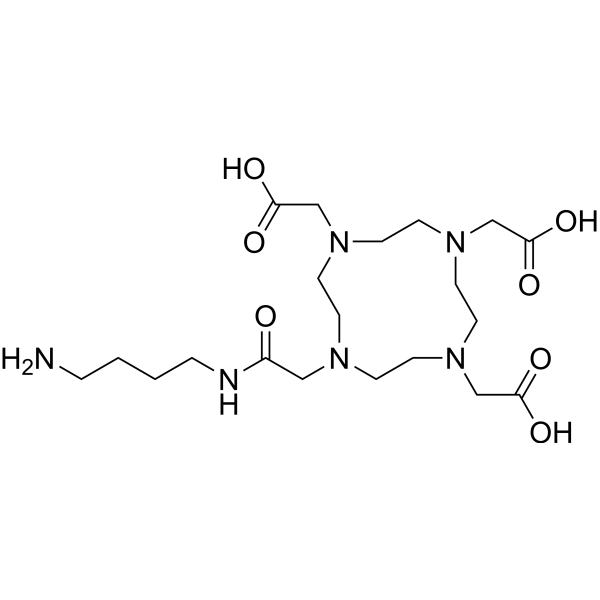 0 ImagesCat. No.: HY-W717779CAS No.: 753421-63-5
4-Aminobutyl-DOTAis a bifunctional chelator (Bifunctional Chelator; BFC) and a macrocyclic DOTA derivative used for tumor pre-targeting. 4-Aminobutyl-DOTA can be used for conjugation of peptides and radionuclides.
-
p-NH₂-Bn-DTPA hydrochloride
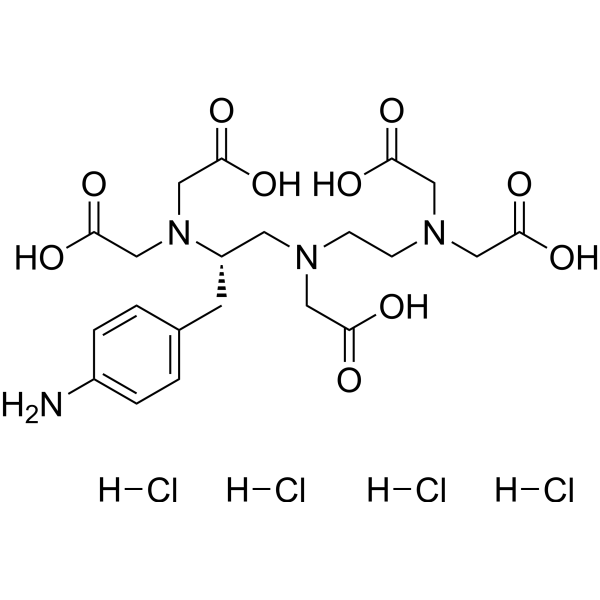 0 ImagesCat. No.: HY-W717781APurity: 98.55%
p-NH?-Bn-DTPA (hydrochloride)is a bifunctional chelator (Bifunctional Chelator; BFC) and a macrocyclic DPTA derivative used for tumor pre-targeting. p-NH?-Bn-DTPA (hydrochloride) can be used for conjugation of peptides and radionuclides.
-
NO2A-Azide trihydrochloride
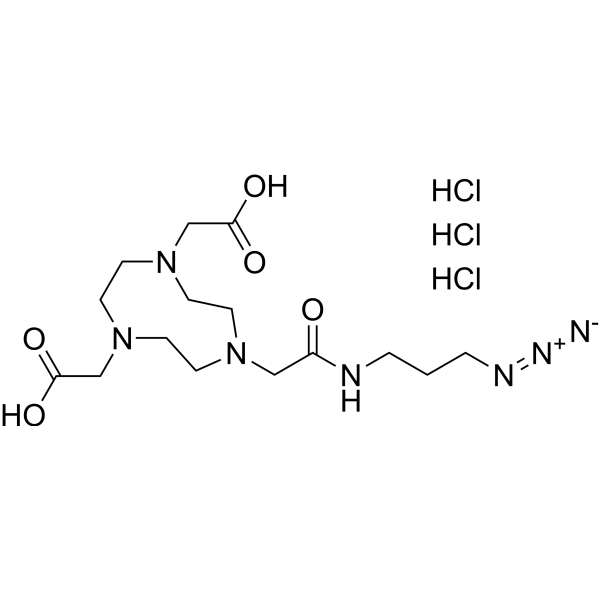 0 ImagesCat. No.: HY-W717800ACAS No.: 2435782-92-4
NO2A-Azide (trihydrochloride)is a bifunctional chelator (Bifunctional Chelator; BFC) and a macrocyclic NOTA derivative used for tumor pre-targeting. NO2A-Azide (trihydrochloride) can be used for conjugation of peptides and radionuclides.
-
Sedoheptulose
 0 Images
Sedoheptulose is a heptulose. Sedoheptulose, in the form of phosphate esters, functions as a metabolic intermediate in the pentose phosphate pathway. Sedoheptulose serves as a starting material for the chemical synthesis of pseudoaminosugars and chiral substituted furans.
-
1-Methyl-4-nitrosopiperazine-d11
 0 ImagesCat. No.: HY-W726845Synonyms: MNP-d11; MeNP-d11; N-Methyl-N'-nitrosopiperazine-d11
1-Methyl-4-nitrosopiperazine-d11 (MNP-d11) is the deuterium labeled 1-Methyl-4-nitrosopiperazine (HY-W663740). 1-Methyl-4-nitrosopiperazine (MNP; MeNP;N-Methyl-N'-nitrosopiperazine) is a potential impurity in sartans, non-steroidal anti-inflammatory drugs (NSAIDs), and thiazide diuretics.
-
Ergosterol acetate
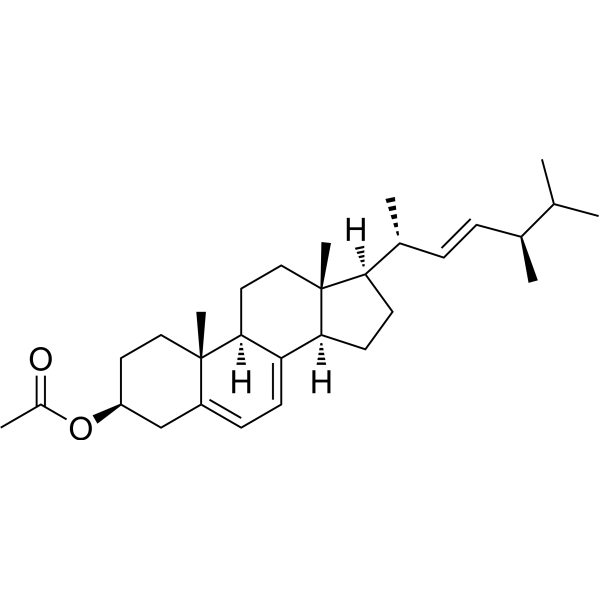 0 Images
Ergosterol acetate is a natural compound that can be isolated from fungi.
-
13-cis Retinoyl β-D-glucuronide
 0 ImagesCat. No.: HY-W740051CAS No.: 78147-42-9
13-cis Retinoyl β-D-glucuronide is a class of biochemical reagents used in glycobiology research. Glycobiology studies the structure, synthesis, biology, and evolution of sugars. It involves carbohydrate chemistry, enzymology of glycan formation and degradation, protein-glycan recognition, and the role of glycans in biological systems. This field is closely related to basic research, biomedicine, and biotechnology.
-
Rutin-d3
 0 ImagesCat. No.: HY-W740884
Rutin-d3 is a deuterated labeled Rutin-d3.
-
Clencyclohexerol-d10
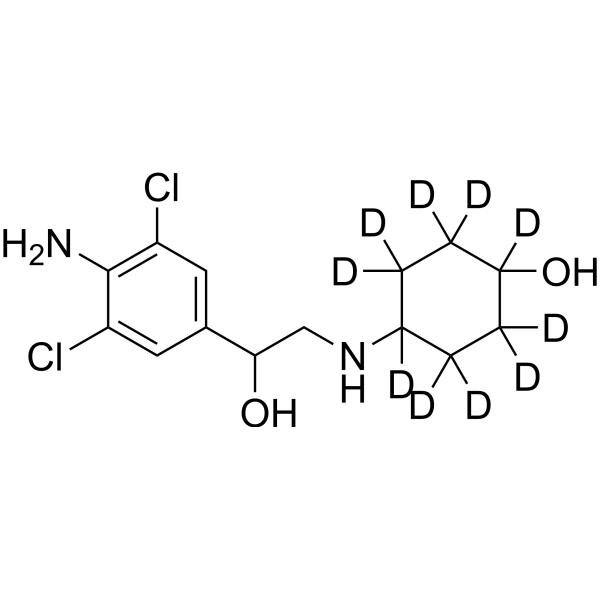 0 Images
Clencyclohexerol-d10 is the deuterium-labeled Clencyclohexerol (HY-117406). Clencyclohexerol-d10 is a β-agonist. Clencyclohexerol-d10 can be used as a growth promoter in animals.
-
1,6-Hexanediyl bismethanethiosulfonate
 0 Images
1,6-Hexanediyl bismethanethiosulfonate is a biochemical reagent.
-
Tetragalacturonic acid
 0 ImagesCat. No.: HY-W743822CAS No.: 24008-75-1
Tetragalacturonic acid is a biochemical assay reagent.
-
Nicotinamide-15N
 0 ImagesSynonyms: Niacinamide-15N; Nicotinic acid amide-15N
Nicotinamide-15N (Niacinamide-15N) is the deuterium labeled Nicotinamide (HY-B0150). Nicotinamide is a form of vitamin B3 or niacin. Nicotinamide Hydrochloride inhibits SIRT2 activity (IC50: 2 μM). Nicotinamide also inhibits SIRT1. Nicotinamide increases cellular NAD+, ATP, ROS levels. Nicotinamide inhibits tumor growth and improves survival. Nicotinamide also has anti-HBV activity.
-
Mono-carboxy-isooctyl phthalate-d4
 0 ImagesCat. No.: HY-W744984Purity: 98.25%
Mono-carboxy-isooctyl phthalate-d4 is the deuterium labeled Mono-carboxy-isooctyl phthalate.
-
N1,N12-Diacetylspermine-d6 dihydrochloride
 0 ImagesCat. No.: HY-W745057Synonyms: DiAcSpm-d6 dihydrochloride
N1,N12-Diacetylspermine-d6 (DiAcSpm-d6) dihydrochloride is the deuterium labeled N1,N12-Diacetylspermine dihydrochloride (HY-113374A).
-
Sebaleic acid
 0 Images
Sebaleic acid is a biochemical assay reagent.



