Others
-
Others Related Products (76572)
Related Products (76572)

-
DiI
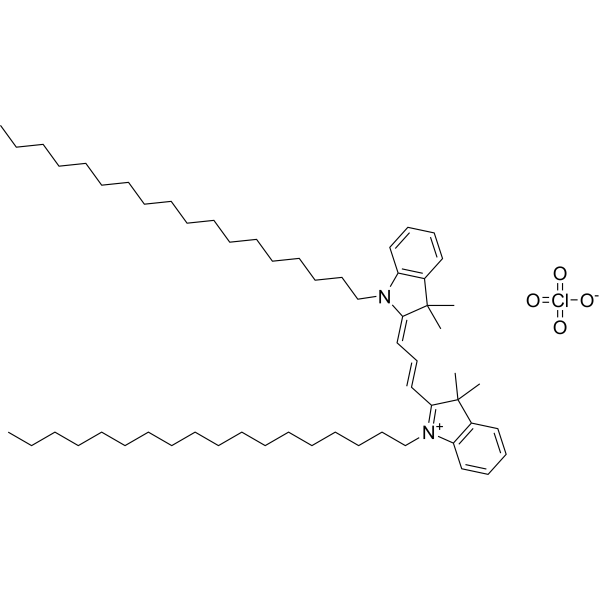 0 ImagesSynonyms: DiIC18(3)
DiI is a long-chain carbocyanine dye. Carbocyanine dyes are widely used as Di to label cells, organelles, liposomes, viruses and lipoproteins.
-
Collagenase IV, Clostridium histolytica
 0 ImagesCat. No.: HY-E70005DCAS No.: 9001-12-1Synonyms: Collagenase, Type IV
Collagenase, Type IV (EC 3.4.24.3) is a microbially derived matrix metalloproteinases (MMPs) and zinc peptidase. Collagenase, Type IV degrades type IV collagen and type VII collagen, the main components of the basement membrane, and can also decompose basement matrix and elastin.
-
2-NBDG
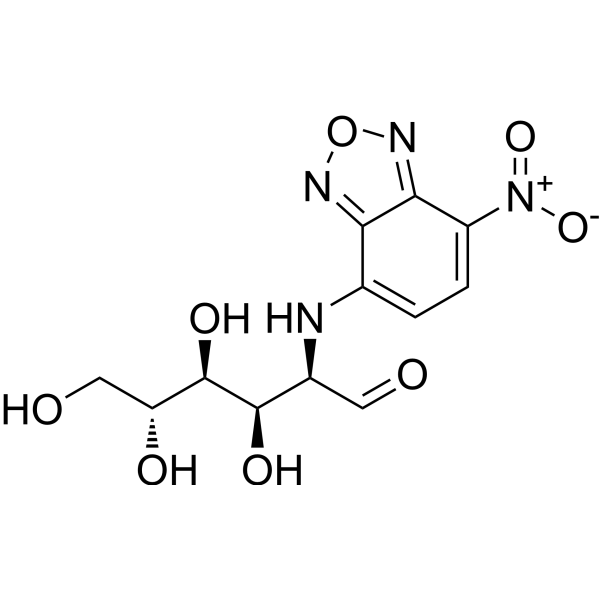 0 Images
2-NBDG is a fluorescently-labeled deoxyglucose analog that is used primarily to directly monitor glucose uptake by living cells and tissues. It is also used as a topical contrast reagent for the detection of neoplasia. 2-NBDG can be used in real-time confocal, high-resolution, or wide-field fluorescence microscopy as well as in flow cytometry. The probe can be excited by the Argon laser at 488 nm to give the environment-sensitive fluorescence. It has lower photostability than the rhodamine-based fluorescent probes.

-
IPTG
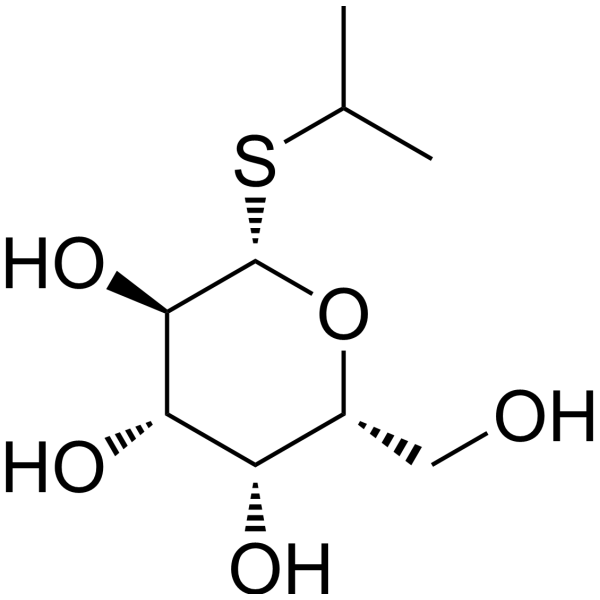 0 Images
IPTG is a molecular mimic of allolactose, a lactose metabolite that triggers transcription of the lac operon, and it is therefore used to induce protein expression where the gene is under the control of the lac operator.
-
FITC-Dextran (MW 4000)
 0 ImagesCat. No.: HY-128868ACAS No.: 60842-46-8
FITC-Dextran (MW 4000) is a fluorescent probe for fluorescein isothiocyanate (FITC) dextran (Ex=495 nm; Em=525 nm). FITC-Dextran (MW 4000) can be used as a marker to reveal heat shock-induced cell damage and to study the early and late stages of apoptosis. FITC-Dextran (MW 4000) can also be used for cell permeability studies, such as blood-brain barrier permeability and determination of the extent of blood-brain barrier disruption.
-
DSPC
 0 ImagesSynonyms: 1,2-Distearoyl-sn-glycero-3-PC; 1,2-Distearoyl-sn-glycero-3-phosphorylcholine
DSPC (1,2-Distearoyl-sn-glycero-3-phosphorylcholine) is a cylindrical-shaped lipid. DSPC is used to synthesize liposomes, and is the lipid component in the lipid nanoparticle (LNP) system.
-
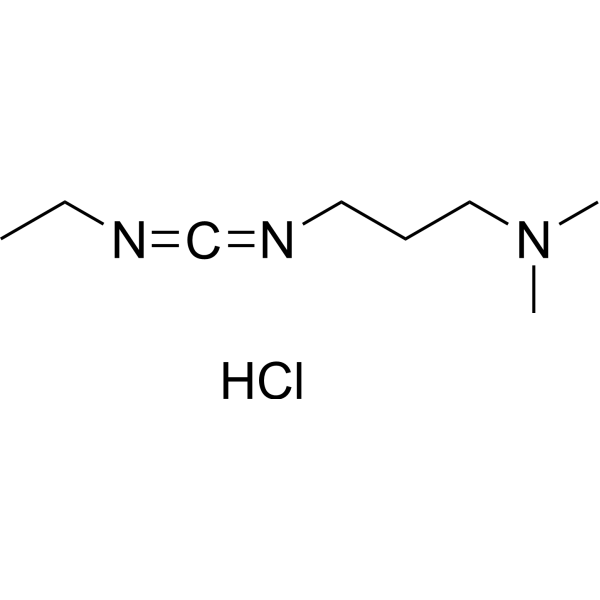
1-Ethyl-(3-dimethylaminopropyl)carbodiimide hydrochloride
 0 Images
1-Ethyl-(3-dimethylaminopropyl)carbodiimide hydrochloride is a carbodiimide reagent that can form nucleic acid and compounds with amide bonds. 1-(3-Dimethylaminopropyl)-3-ethylcarbodiimide hydrochloride accelerates the formation reaction of esters, amides, and peptides, as a condensing and dehydrating agent, which are often used for polynucleotide synthesis, anhydroxydation, lactonization and esterification.
-
Collagenase, Type II
 0 ImagesCat. No.: HY-E70005BCAS No.: 9001-12-1
Collagenase, Type II is a microbially derived matrix metalloproteinases (MMPs) and zinc peptidase. Collagenase, Type II breaksdown collagens1, 3, 5, 7, 8, 10, fibronectin, gelatin, aggrecann.
-
Cremophor EL-40
 0 ImagesSynonyms: Polyoxyethylene(40) Castor Oil; PEG-40 Castor Oil
Cremophor EL-40, a polyoxyethylene castor oil derivative, is a nonionic surfactant. Cremophor EL-40 is widely employed to improve dissolution and delivery of agents.
-
Pronase E (Activity ≥ 7000 U/g)
 0 Images
Pronase E (Activity ≥ 7000 U/g) is a mixture of proteolytic enzymes that is obtained from Streptomyces griseus and could digest protein into individual amino acids.
-
DiO
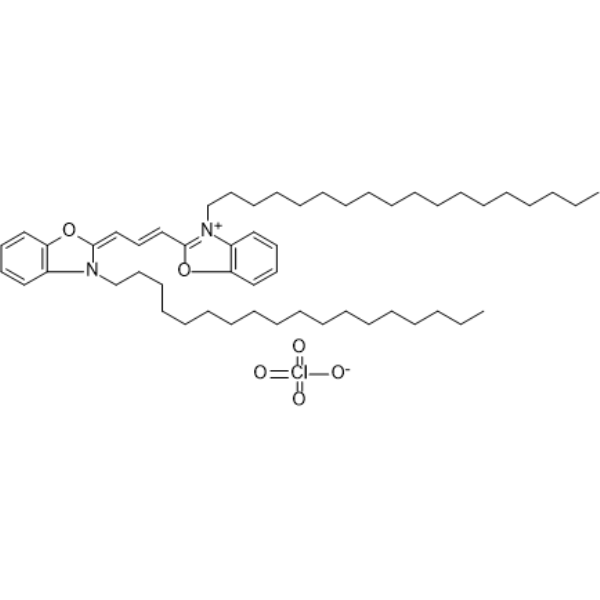 0 ImagesSynonyms: DiOC18(3); 3,3'-Dioctadecyloxacarbocyanine perchlorate
DiO is a long-chain carbocyanine dye. Carbocyanine dyes are widely used as Di to label cells, organelles, liposomes, viruses and lipoproteins.
-
DOTAP chloride
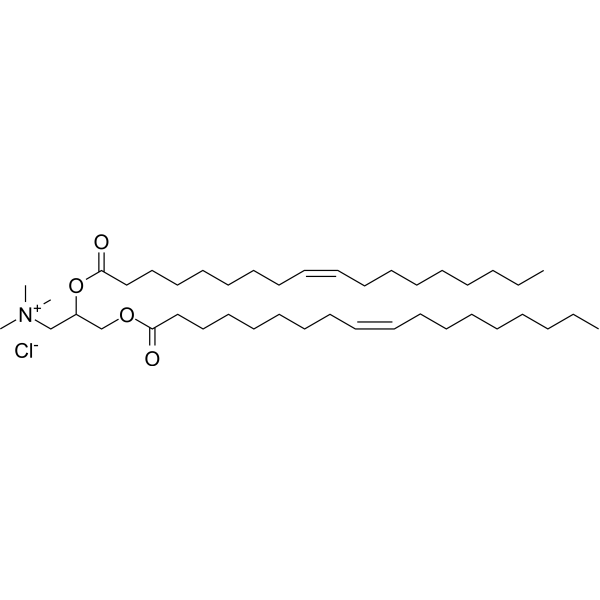 0 ImagesSynonyms: 1,2-Dioleoyl-3-trimethylammonium-propane chloride
DOTAP chloride is a useful and effective cationic lipid for transient and stable transfection DNA (plasmids, bacmids) and modified nucleic acids (antisense oligonucleotides) with out the use of helper lipid.
-
Collagenase, Type I
 0 ImagesCat. No.: HY-E70005ACAS No.: 9001-12-1Synonyms: EC 3.4.24.3
Collagenase, Type I is a microbially derived matrix metalloproteinases (MMPs) and zinc peptidase. Collagenase, Type I breaks down collagens 1, 3, 7, 8, 10, gelatin, proteoglycans, aggrecan.
-
Rhod-2 AM
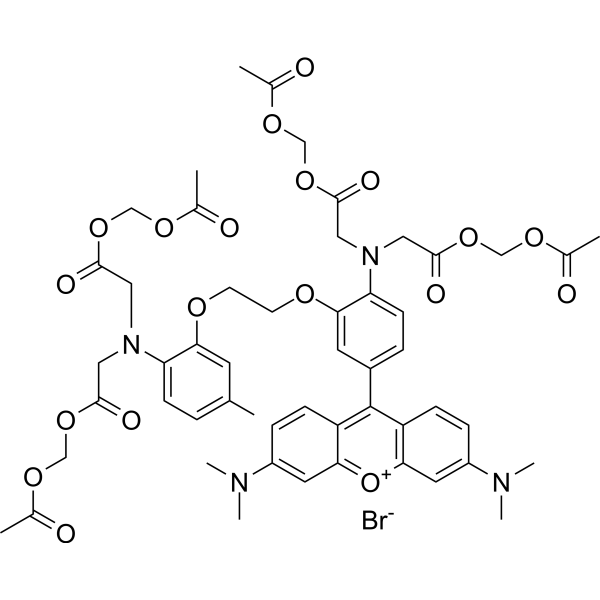 0 ImagesCat. No.: HY-D0989CAS No.: 145037-81-6
Rhod-2 is a high-affinity visible light excitation wavelength Ca2+ fluorescent probe, Rhod-2, AM is an acetyl methyl ester derivative of Rhod-2, which has cell membrane permeability and can easily enter cells with simple culture. Once it enters the cell, it is sheared by its lactesterase to produce Rhod-2 without membrane permeability, which remains in the cell to perform the corresponding physiological functions. Maximum excitation/emission wavelength: 549/578 nm.
-
PEG8000
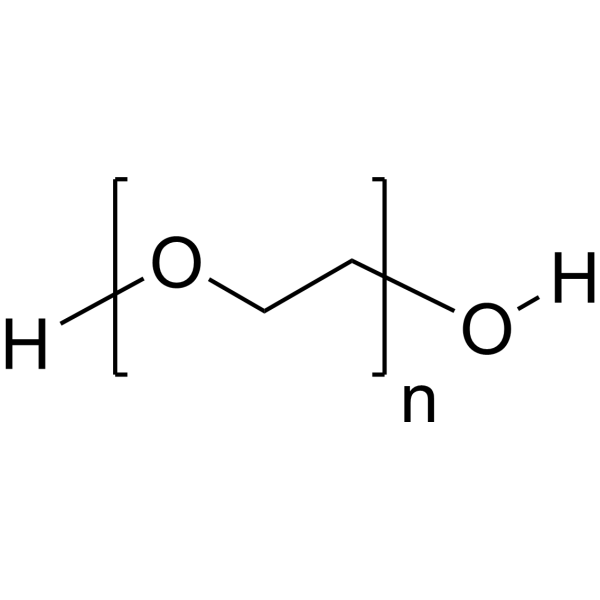 0 ImagesSynonyms: Polyethylene glycol 8000
PEG8000 can be used for phage precipitation, isolation of plasmid DNA, and promotion of flat end-junction reactions.
-
DiD perchlorate
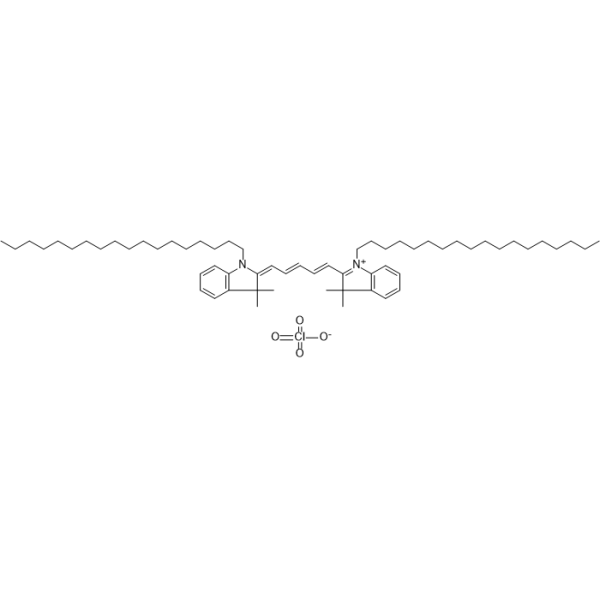 0 Images
DiD is a long-chain carbocyanine dye. Carbocyanine dyes are widely used as Di to label cells, organelles, liposomes, viruses and lipoproteins (Ex/Em = 633/665 nm).
-
TMRE
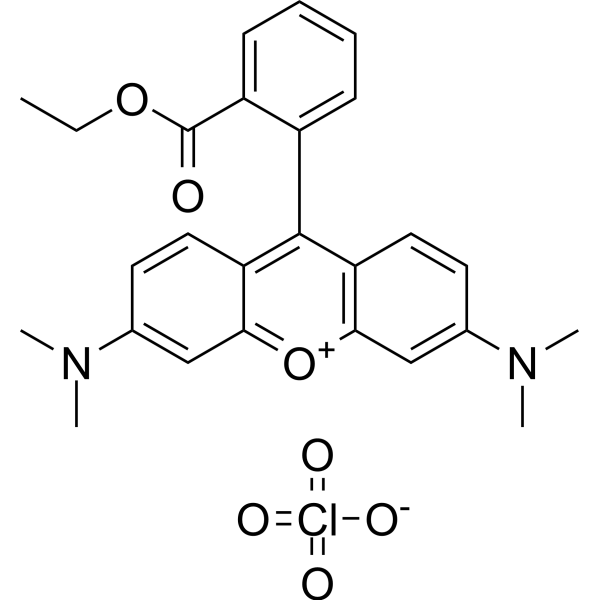 0 ImagesSynonyms: Tetramethylrhodamine ethyl ester perchlorate
Rhodamine dyes are membrane-permeable cationic fluorescent probes that specifically recognize mitochondrial membrane potentials, thereby attaching to mitochondria and producing bright fluorescence, and at certain concentrations, rhodamine dyes have low toxicity to cells, so they are commonly used to detect mitochondria in animal cells, plant cells, and microorganisms.