



Rolapitant

Based on 1 Customer Validation
Rolapitant (SCH619734) is a potent, selective, long-acting and orally active neurokinin 1 (NK1) receptor antagonist with a Ki of 0.66 nM. Rolapitant does not interact with CYP3A4. Rolapitant shows potent anti-emetic activity in a ferret emesis model.
For research use only. We do not sell to patients.
- Purity : 99.89%
- CAS No.: 552292-08-7
- Formula: C25H26F6N2O2
- Molecular Weight:500.48
-
Storage:Powder -20°C, 3 years , 4°C, 2 years ; In solvent -80°C, 2 years , -20°C, 1 year

To place orders, for customer services and technical support, please contact: MedChemExpress USA
Tel: 609-228-6898 E-mail: [email protected] [email protected]


-
 Biological Activity
-
Chemical Information
-
Solvent & Solubility
- Purity & Documentation
- References
-
 Help & FAQs


-
HY-10052
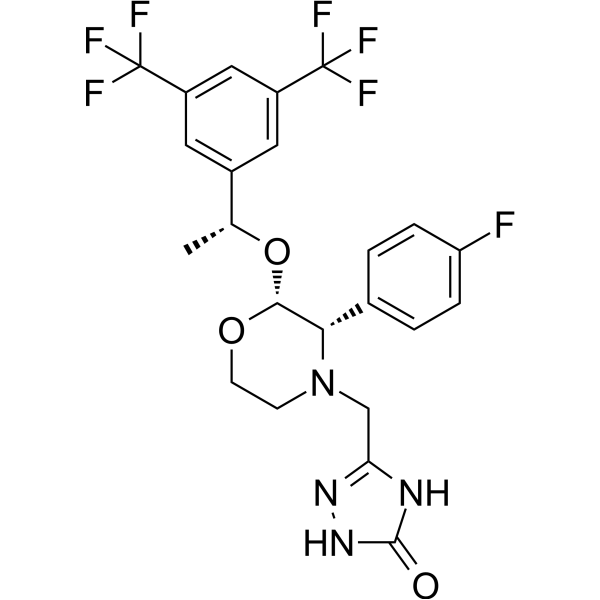
AprepitantNeurokinin 1 Receptor Antagonist -
HY-16346
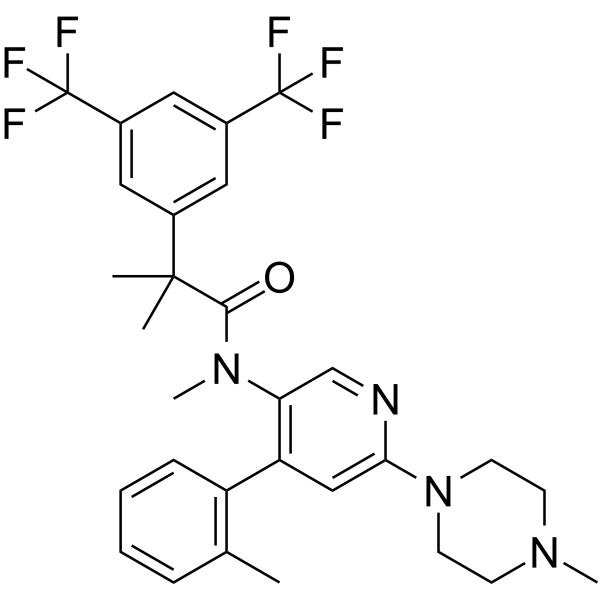
NetupitantNK1 Receptor Inhibitor -
HY-10053
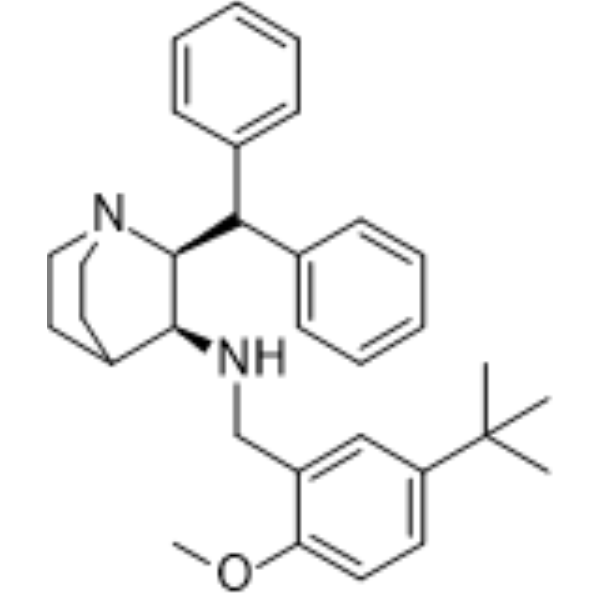
MaropitantNK1 Receptor Antagonist -
HY-14407A
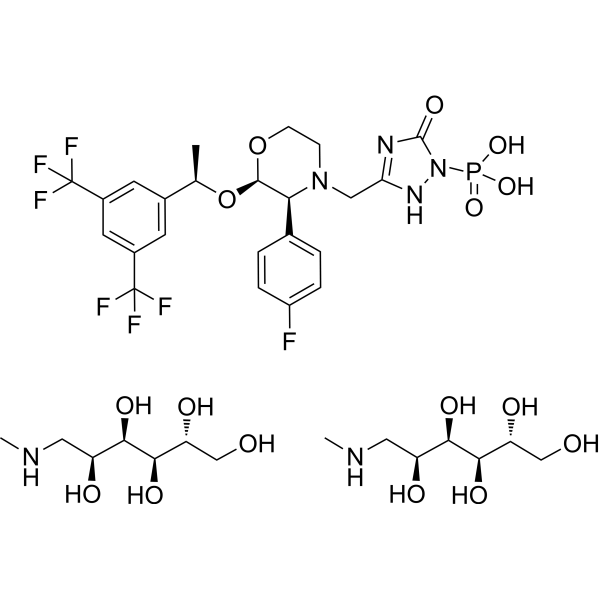
Fosaprepitant dimeglumineNeurokinin-1 Receptor Antagonist -
HY-P0201
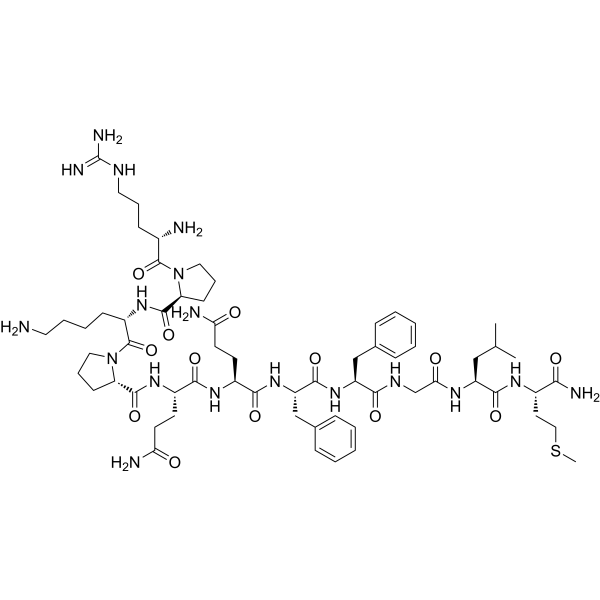
Substance PNeurotransmitter -
HY-10159
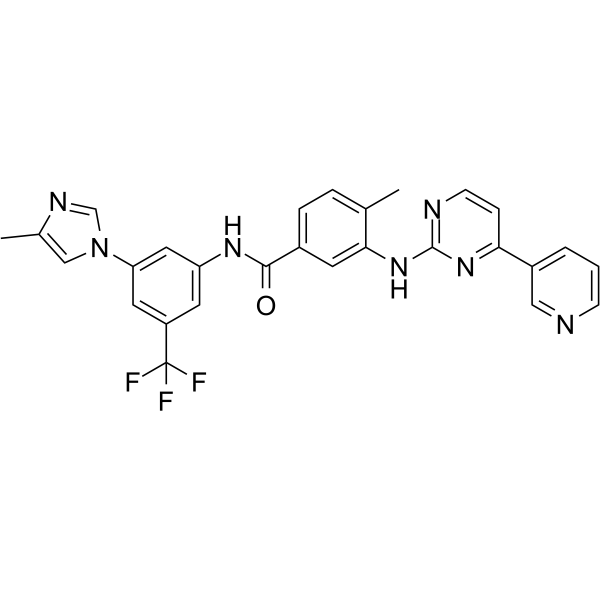
NilotinibBcr-Abl Inhibitor -
HY-15531
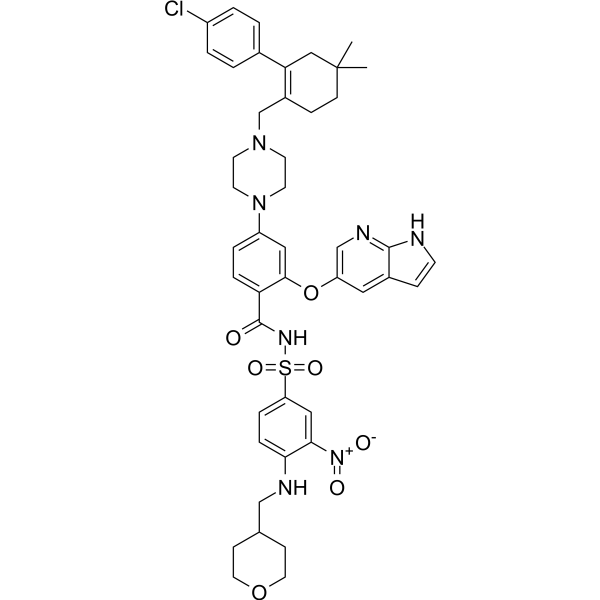
VenetoclaxBCL-2 Inhibitor -
HY-13613
Dutasteride5α-Reductase Isozyme Inhibitor -
HY-114370
SelpercatinibRET Kinase Inhibitor -
HY-13004
MaravirocCCR5 Antagonist -
HY-10981
LenvatinibVEGFR/FGFR Inhibitor -
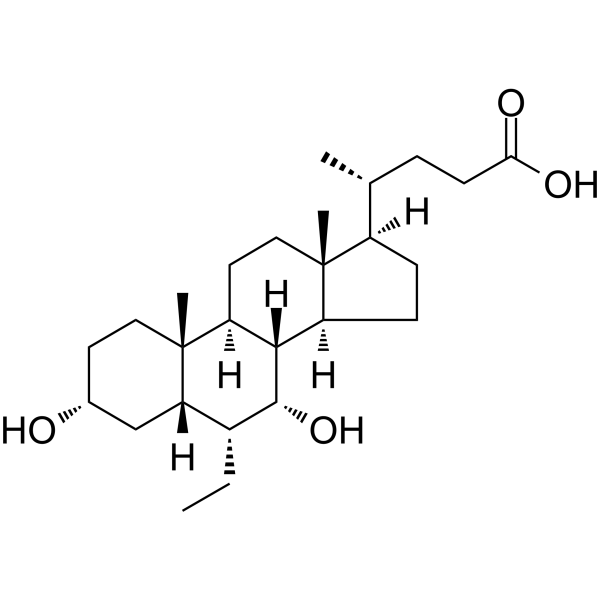
HY-12222
Obeticholic acidFXR Agonist


Biological Activity
Description
IC50 & Target
[1]|
human NK1 0.66 nM (Ki) |
gerbil NK1 0.13 nM (Ki) |
guinea pig NK1 0.72 nM (Ki) |
monkey NK1 2.5 nM (Ki) |
rabbit NK1 31.7 nM (Ki) |
rat NK1 78.6 nM (Ki) |
mouse NK1 60.4 nM (Ki) |
In Vitro
Rolapitant has high selectivity over the human NK2 and NK3 subtypes of more than 1000-fold, as well as preferential affinity for human, guinea pig, gerbil and monkey NK1 receptors over rat, mouse and rabbit[1].
Rolapitant (1-1000 nM) inhibits the GR-73632 (an NK1 receptor agonist)-induced calcium efflux with a concentration-dependent and competitive manner in CHO cells expressing the human NK1 receptor[1].
MedChemExpress (MCE) has not independently confirmed the accuracy of these methods. They are for reference only. .
In Vivo
Rolapitant (0.03-1 mg/kg; PO; single dosage; observed for 72 h) blocks acute emesis induced by both apomorphine and cisplatin in ferrets[1].
MedChemExpress (MCE) has not independently confirmed the accuracy of these methods. They are for reference only.
-
Animal Model:Female Mongolian Gerbils (30-60 g; anesthetized by inhalation of an oxygen:isofluorane mixture after 4 h PO or immediately after IV, then injected with 5 μl of 3 pmol solution of GR-73632 via ICV)[1]
-
Dosage:0.03, 0.1, 0.3 and 1 mg/kg for PO, 0.3 and 1 mg/kg for IV
-
Administration:PO or IV, single dosage
-
Result:Attenuated dose-dependently the GR-73632-induced foot-tapping response when administered PO 4 h before testing, with an ID90 of 0.3 mg/kg, and the inhibition in foot tapping for at least 24 h.
Blocked dose-dependently the foot tapping induced by GR-73632 when administered IV, with complete blockade observed at 1 mg/kg.
-
Animal Model:Ferrets (treated with subcutaneous administration of 0.125 mg/kg apomorphine or intraperitoneal administration of 10 mg/kg cisplatin)[1]
-
Dosage:0.03, 0.1, 0.3 and 1 mg/kg
-
Administration:PO; single dosage; observed for 72 h
-
Result:Blocked dose-dependently acute emesis induced by both apomorphine and cisplatin in ferrets.
Produced a robust decrease in retches and vomits in ferrets that was maintained throughout the 72 h observation period.


Chemical Information
-
CAS No. 552292-08-7
-
Appearance Solid
-
Molecular Weight 500.48
-
Formula C25H26F6N2O2
-
Color White to off-white
-
SMILES
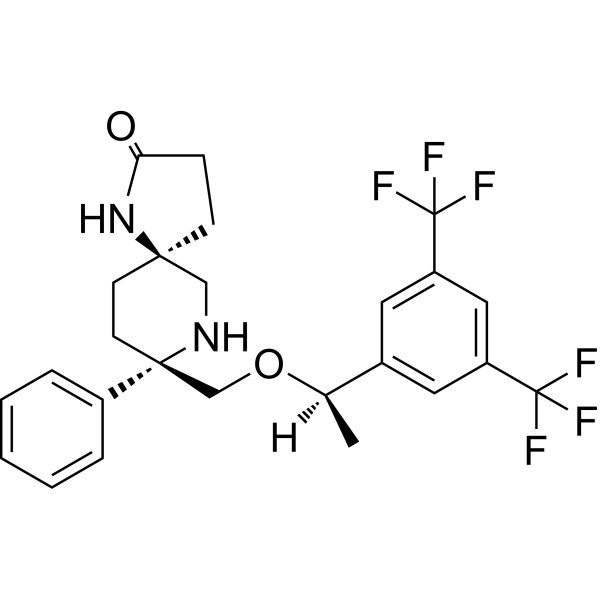
C[C@H](C1=CC(C(F)(F)F)=CC(C(F)(F)F)=C1)OC[C@@]2(C3=CC=CC=C3)CC[C@@]4(NC(CC4)=O)CN2
-
Synonyms
SCH619734
-
Shipping
Room temperature in continental US; may vary elsewhere.
-
Storage
Powder -20°C 3 years 4°C 2 years In solvent -80°C 2 years -20°C 1 year


Solvent & Solubility
In Vitro:
DMSO : ≥ 30 mg/mL (59.94 mM; Hygroscopic DMSO has a significant impact on the solubility of product, please use newly opened DMSO)
* "≥" means soluble, but saturation unknown.
Please refer to the solubility information to select the appropriate solvent. Once prepared, please aliquot and store the solution to prevent product inactivation from repeated freeze-thaw cycles.
Storage method and period of stock solution: -80°C, 2 years; -20°C, 1 year. When stored at -80°C, please use it within 2 years. When stored at -20°C, please use it within 1 year.
Please refer to the solubility information to select the appropriate solvent. Once prepared, please aliquot and store the solution to prevent product inactivation from repeated freeze-thaw cycles.
Storage method and period of stock solution: -80°C, 2 years; -20°C, 1 year. When stored at -80°C, please use it within 2 years. When stored at -20°C, please use it within 1 year.
Concentration (start) × Volume (start) = Concentration (final) × Volume (final)
In Vivo:
Select the appropriate dissolution method based on your experimental animal and administration route.
- For the following dissolution methods, please ensure to first prepare a clear stock solution using an In Vitro approach and then sequentially add co-solvents:
- To ensure reliable experimental results, the clarified stock solution can be appropriately stored based on storage conditions. As for the working solution for In Vivo experiments, it is recommended to prepare freshly and use it on the same day.
- The percentages shown for the solvents indicate their volumetric ratio in the final prepared solution. If precipitation or phase separation occurs during preparation, heat and/or sonication can be used to aid dissolution.
Add each solvent one by one: 10% DMSO 40% PEG300 5% Tween-80 45% Saline
Solubility: ≥ 2.5 mg/mL (5.00 mM); Clear solution
This protocol yields a clear solution of ≥ 2.5 mg/mL (saturation unknown).
Taking 1 mL working solution as an example, add 100 μL DMSO stock solution (25.0 mg/mL) to 400 μL PEG300, and mix evenly; then add 50 μL Tween-80 and mix evenly; then add 450 μL Saline to adjust the volume to 1 mL.
Preparation of Saline: Dissolve 0.9 g sodium chloride in ddH₂O and dilute to 100 mL to obtain a clear Saline solution.
In Vivo Dissolution Calculator
Please enter the basic information of animal experiments:
-
-
-
-
Recommended: Prepare an additional quantity of animals to account for potential losses during experiments.
Please enter your animal formula composition:
-
%DMSO +
Recommended: Keep the proportion of DMSO in working solution below 2% if your animal is weak.
-
%+
-
+%Tween-80 + +
-
%Saline +
The co-solvents required include: DMSO, . All of co-solvents are available by MedChemExpress (MCE). , Tween 80. All of co-solvents are available by MedChemExpress (MCE).
Working solution concentration: 0.22 mg/mL
Method for preparing stock solution: mg drug dissolved in μL DMSO. Stock solution concentration: mg/mL.
1. Take μL DMSO stock solution;
2. Add μL .
μL , mix evenly;
3. Then add μL Tween 80, mix evenly;
4. Then add μL
Please ensure that the stock solution in the first step is dissolved to a clear state, and add co-solvents in sequence. You can use ultrasonic heating (ultrasonic cleaner, recommended frequency 20-40 kHz), vortexing, etc. to assist dissolution.


Purity & Documentation
-
Data Sheet (277 KB)
-
SDS (393 KB)
- English - EN (393 KB)
- Français - FR (393 KB)
- Deutsch - DE (393 KB)
- Norwegian - NO (393 KB)
- Español - ES (393 KB)
- Swedish - SV (393 KB)
- Italian - IT (393 KB)
- Korean - KR (393 KB)
- Portuguese - PT (393 KB)
-
Handling Instructions (2659 KB)
References
[1]. Duffy RA, et al. Rolapitant (SCH 619734): a potent, selective and orally active neurokininNK1 receptor antagonist with centrally-mediated antiemetic effects inferrets. Pharmacol Biochem Behav. 2012 Jul;102(1):95-100. [Content Brief]
[2]. Rapoport B, et al. Study of rolapitant, a novel, long-acting, NK-1 receptor antagonist, for the prevention of chemotherapy-induced nausea and vomiting (CINV) due to highly emetogenic chemotherapy (HEC). Support Care Cancer. 2015 Nov;23(11):3281-8. [Content Brief]


Complete Stock Solution Preparation Table
Please refer to the solubility information to select the appropriate solvent. Once prepared, please aliquot and store the solution to prevent product inactivation from repeated freeze-thaw cycles.
Storage method and period of stock solution: -80°C, 2 years; -20°C, 1 year. When stored at -80°C, please use it within 2 years. When stored at -20°C, please use it within 1 year.
| Optional Solvent | Concentration Solvent Mass | 1 mg | 5 mg | 10 mg | 25 mg |
|---|---|---|---|---|---|
| DMSO | 1 mM | 1.9981 mL | 9.9904 mL | 19.9808 mL | 49.9520 mL |
| 5 mM | 0.3996 mL | 1.9981 mL | 3.9962 mL | 9.9904 mL | |
| 10 mM | 0.1998 mL | 0.9990 mL | 1.9981 mL | 4.9952 mL | |
| 15 mM | 0.1332 mL | 0.6660 mL | 1.3321 mL | 3.3301 mL | |
| 20 mM | 0.0999 mL | 0.4995 mL | 0.9990 mL | 2.4976 mL | |
| 25 mM | 0.0799 mL | 0.3996 mL | 0.7992 mL | 1.9981 mL | |
| 30 mM | 0.0666 mL | 0.3330 mL | 0.6660 mL | 1.6651 mL | |
| 40 mM | 0.0500 mL | 0.2498 mL | 0.4995 mL | 1.2488 mL | |
| 50 mM | 0.0400 mL | 0.1998 mL | 0.3996 mL | 0.9990 mL |


Rolapitant Related Classifications
HY-14751 Related Classifications
 Powered by Bioz