



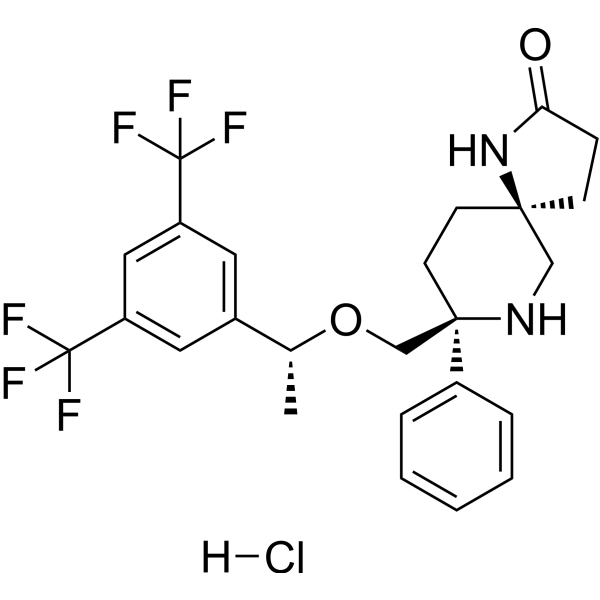
Rolapitant hydrochloride
Rolapitant (SCH619734) hydrochloride is a potent, selective, long-acting and orally active neurokinin 1 (NK1) receptor antagonist with a Ki of 0.66 nM. Rolapitant hydrochloride does not interact with CYP3A4. Rolapitant hydrochloride shows potent anti-emetic activity in a ferret emesis model.
For research use only. We do not sell to patients.
- CAS No.: 858102-79-1
- Formula: C25H27ClF6N2O2
- Molecular Weight:536.94
-
Storage:
Please store the product under the recommended conditions in the Certificate of Analysis.

To place orders, for customer services and technical support, please contact: MedChemExpress USA
Tel: 609-228-6898 E-mail: [email protected] [email protected]


-
 Biological Activity
-
Chemical Information
- Purity & Documentation
- References
-
 Help & FAQs


-
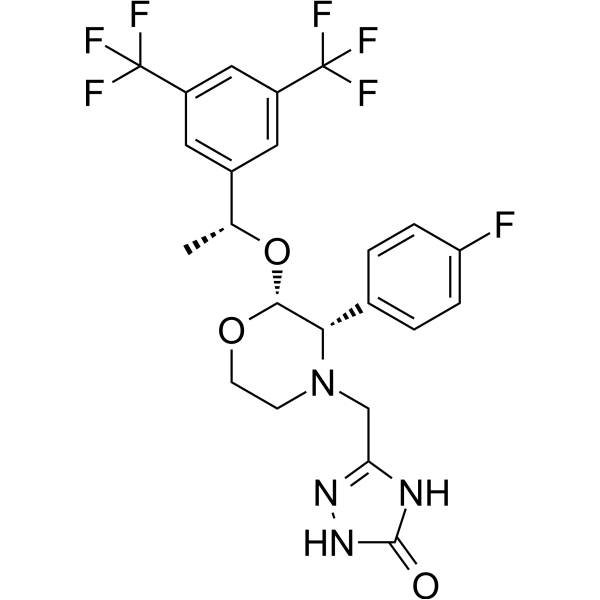
HY-10052
AprepitantNeurokinin 1 Receptor Antagonist -
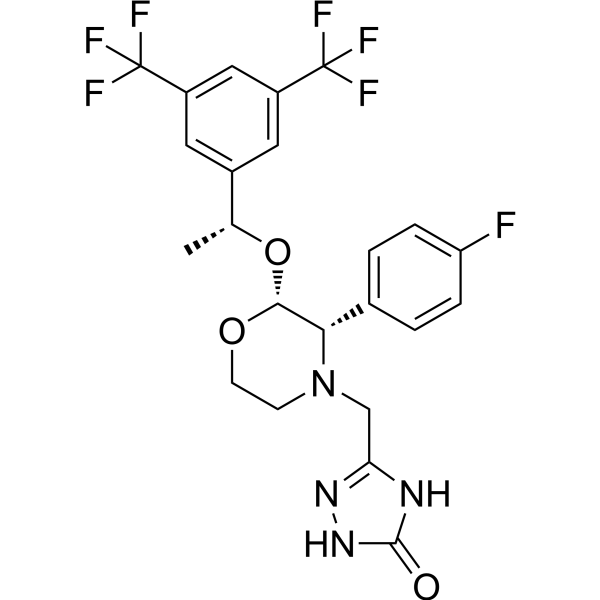
HY-10052R
Aprepitant (Standard)Neurokinin 1 Receptor Antagonist -
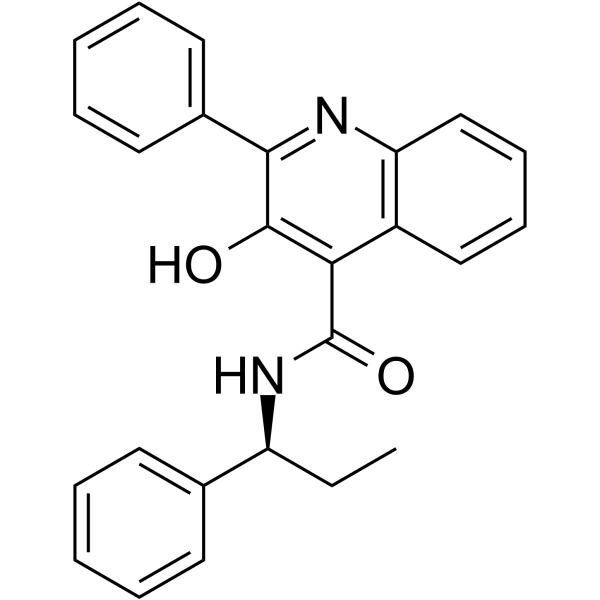
HY-14552
TalnetantNK3 Receptor Antagonist -
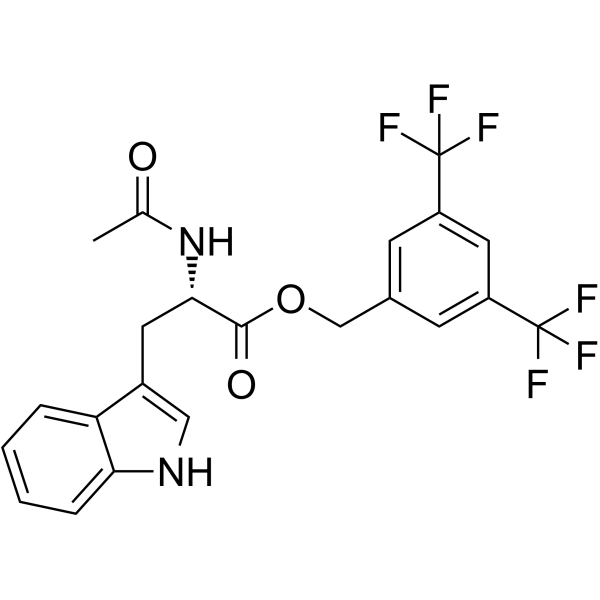
HY-101249
L-732138NK-1 Receptor Antagonist -
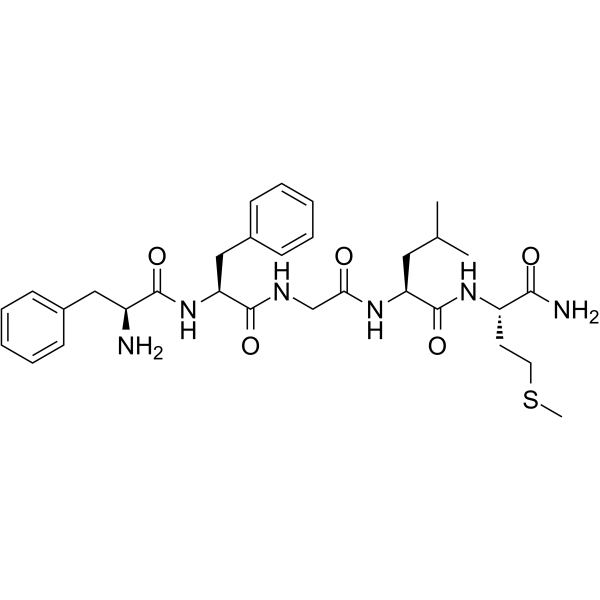
HY-P1492
Substance P (7-11)Active Compound -

HY-101249R
L-732138 (Standard)NK-1 Receptor Antagonist -
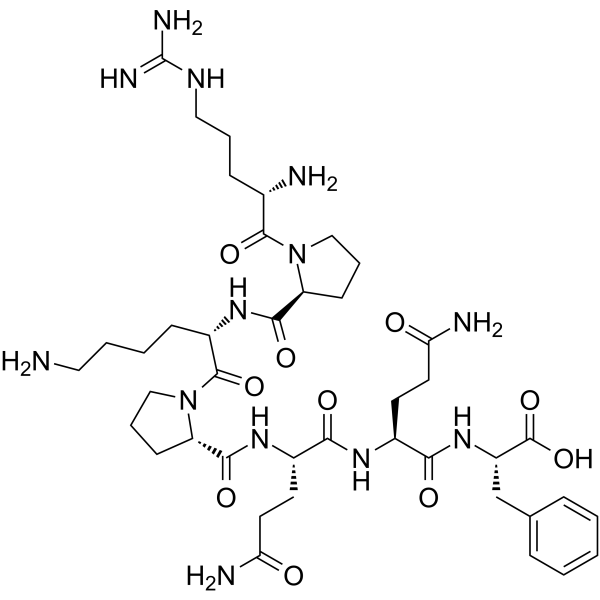
HY-P1485
Substance P(1-7) -
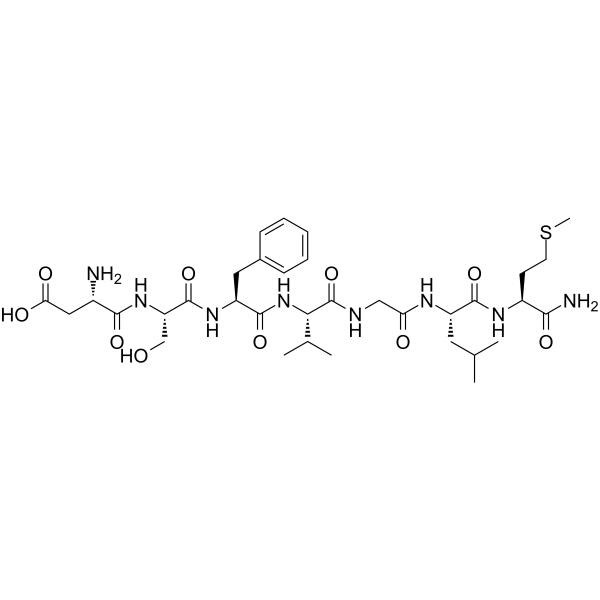
HY-P0236
Neurokinin A(4-10)Neurokinin Receptor Agonist


Biological Activity
Description
IC50 & Target
[1]|
human NK1 0.66 (Ki) |
gerbil NK1 0.13 (Ki) |
guinea pig NK1 0.72 (Ki) |
monkey NK1 2.5 (Ki) |
rabbit NK1 31.7 (Ki) |
rat NK1 78.6 (Ki) |
mouse NK1 60.4 (Ki) |
In Vitro
Rolapitant has high selectivity over the human NK2 and NK3 subtypes of more than 1000-fold, as well as preferential affinity for human, guinea pig, gerbil and monkey NK1 receptors over rat, mouse and rabbit[1].
Rolapitant (1-1000 nM) inhibits the GR-73632 (an NK1 receptor agonist)-induced calcium efflux with a concentration-dependent and competitive manner in CHO cells expressing the human NK1 receptor[1].
MedChemExpress (MCE) has not independently confirmed the accuracy of these methods. They are for reference only. .
In Vivo
Rolapitant (0.03-1 mg/kg; PO; single dosage; observed for 72 h) blocks acute emesis induced by both apomorphine and cisplatin in ferrets[1].
MedChemExpress (MCE) has not independently confirmed the accuracy of these methods. They are for reference only.
-
Animal Model:Female Mongolian Gerbils (30-60 g; anesthetized by inhalation of an oxygen:isofluorane mixture after 4 h PO or immediately after IV, then injected with 5 μl of 3 pmol solution of GR-73632 via ICV)[1]
-
Dosage:0.03, 0.1, 0.3 and 1 mg/kg for PO, 0.3 and 1 mg/kg for IV
-
Administration:PO or IV, single dosage
-
Result:Attenuated dose-dependently the GR-73632-induced foot-tapping response when administered PO 4 h before testing, with an ID90 of 0.3 mg/kg, and the inhibition in foot tapping for at least 24 h.
Blocked dose-dependently the foot tapping induced by GR-73632 when administered IV, with complete blockade observed at 1 mg/kg.
-
Animal Model:Ferrets (treated with subcutaneous administration of 0.125 mg/kg apomorphine or intraperitoneal administration of 10 mg/kg cisplatin)[1]
-
Dosage:0.03, 0.1, 0.3 and 1 mg/kg
-
Administration:PO; single dosage; observed for 72 h
-
Result:Blocked dose-dependently acute emesis induced by both apomorphine and cisplatin in ferrets.
Produced a robust decrease in retches and vomits in ferrets that was maintained throughout the 72 h observation period.


Chemical Information
-
CAS No. 858102-79-1
-
Molecular Weight 536.94
-
Formula C25H27ClF6N2O2
-
SMILES
O=C1N[C@]2(CN[C@@](C3=CC=CC=C3)(CO[C@@H](C4=CC(C(F)(F)F)=CC(C(F)(F)F)=C4)C)CC2)CC1.[H]Cl
-
Synonyms
SCH619734 hydrochloride
-
Shipping
Room temperature in continental US; may vary elsewhere.
-
Storage
Please store the product under the recommended conditions in the Certificate of Analysis.


Purity & Documentation
References
[1]. Duffy RA, et al. Rolapitant (SCH 619734): a potent, selective and orally active neurokininNK1 receptor antagonist with centrally-mediated antiemetic effects inferrets. Pharmacol Biochem Behav. 2012 Jul;102(1):95-100. [Content Brief]
[2]. Rapoport B, et al. Study of rolapitant, a novel, long-acting, NK-1 receptor antagonist, for the prevention of chemotherapy-induced nausea and vomiting (CINV) due to highly emetogenic chemotherapy (HEC). Support Care Cancer. 2015 Nov;23(11):3281-8. [Content Brief]

Calculators
Concentration (start) × Volume (start) = Concentration (final) × Volume (final)


Rolapitant hydrochloride Related Classifications
HY-14751A Related Classifications
 Powered by Bioz