



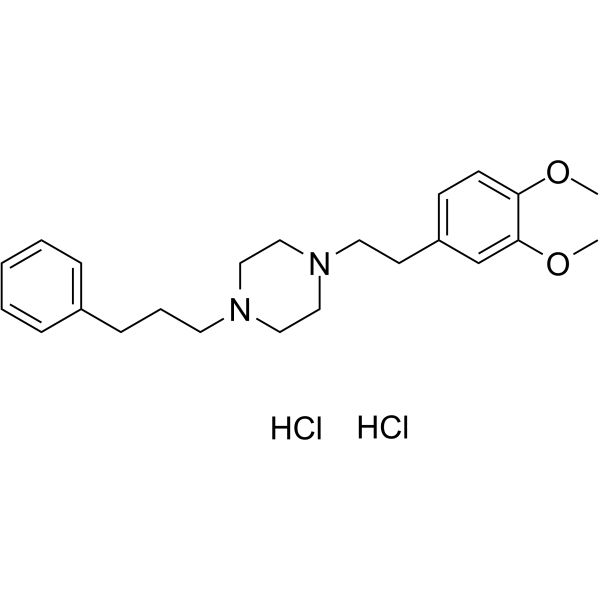
Cutamesine dihydrochloride
Based on 7 publication(s) in Google Scholar
Cutamesine (SA4503) dihydrochloride is a potent and selective sigma 1 receptor agonist with an IC50 of 17.4 nM in guinea pig brain membranes. Cutamesine dihydrochloride shows >100-fold less affinity for the sigma 2 receptor (IC50 of 1784 nM). Cutamesine dihydrochloride has antidepressant effects.
Nos produits utilisent uniquement pour la recherche. Nous ne vendons pas aux patients.
- Pureté : 98.05%
- CAS No.: 165377-44-6
- Formule: C23H34Cl2N2O2
- Masse moléculaire:441.43
-
Stockage:
4°C, sealed storage, away from moisture
* In solvent : -80°C, 6 months; -20°C, 1 month (sealed storage, away from moisture)

To place orders, for customer services and technical support, please contact: MedChemExpress USA
Tel: 609-228-6898 E-mail: [email protected] [email protected]


-
 Activité biologique
-
Chemical Information
-
Solvant et solubilité
- Protocole
- Pureté et documentation
- Références
-
 Help & FAQs


-
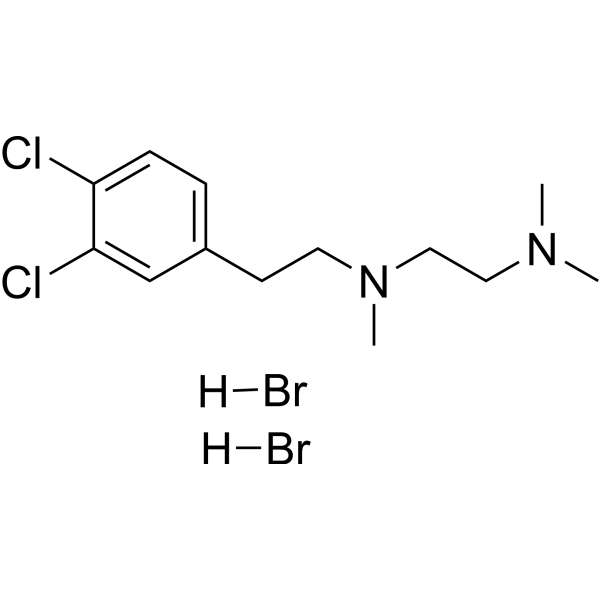
HY-16996A
BD-1047 dihydrobromideSigma-1 Receptor Antagonist -
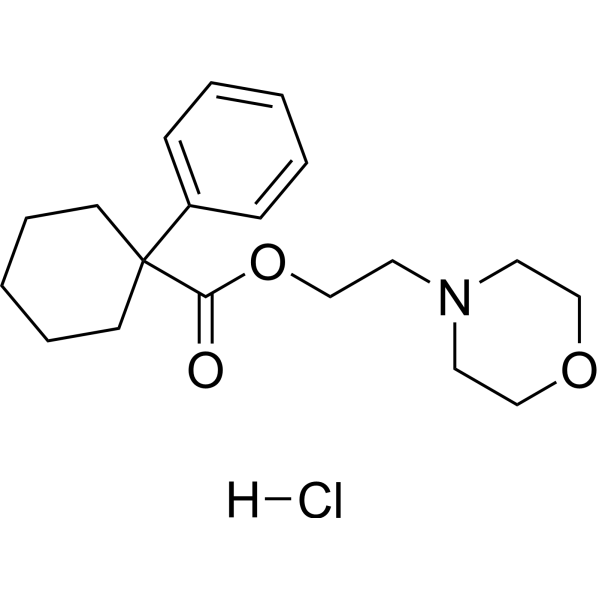
HY-18100A
PRE-084 hydrochlorideS1R Agonist -
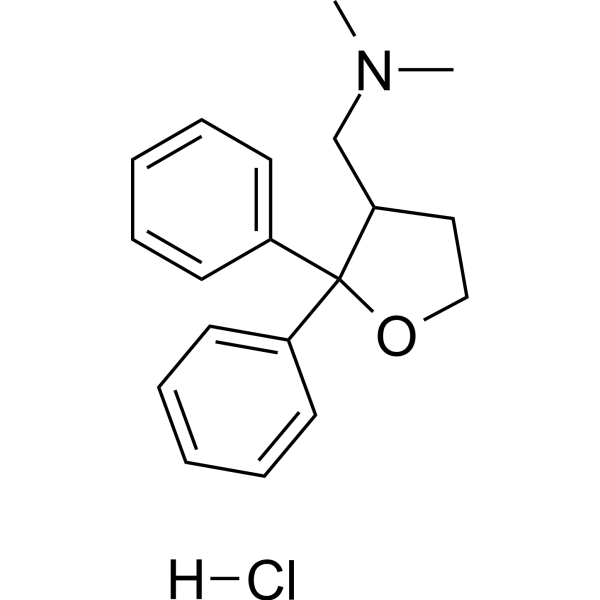
HY-101864
Blarcamesine hydrochlorideSigma-1 Receptor Agonist -
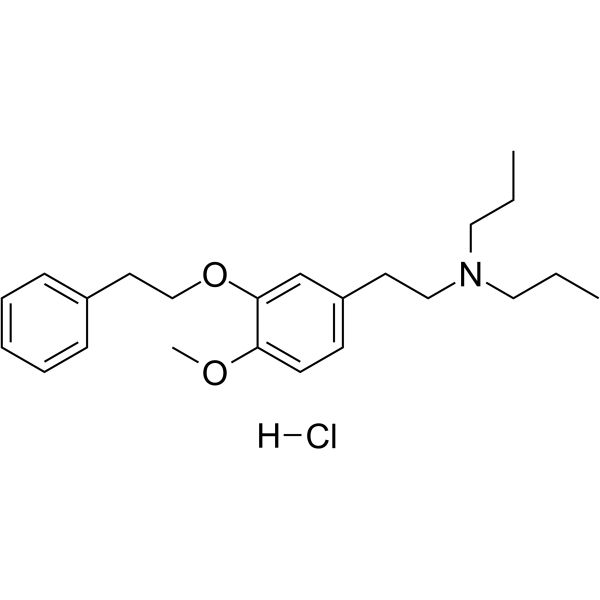
HY-101484A
NE-100 hydrochlorideSigma Receptor Antagonist -
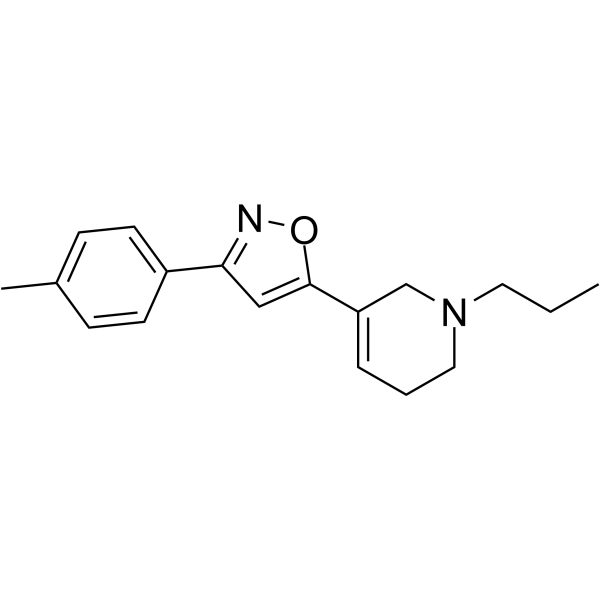
HY-108512
PD 144418σ1 Receptor Ligand -
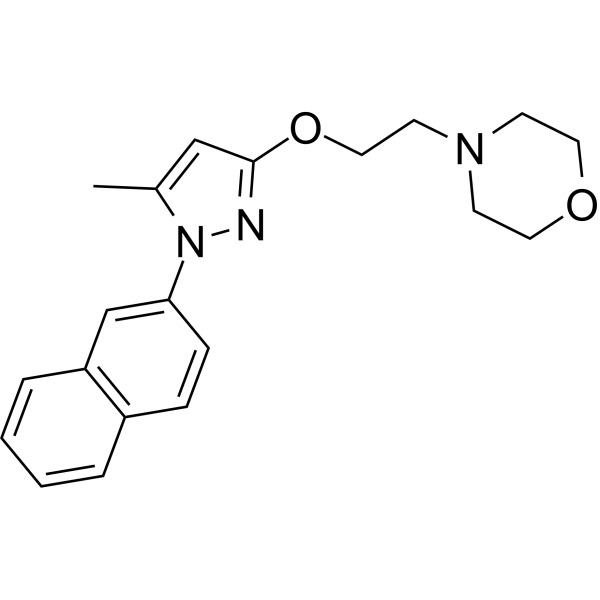
HY-18099
S1RAσ1R Antagonist -
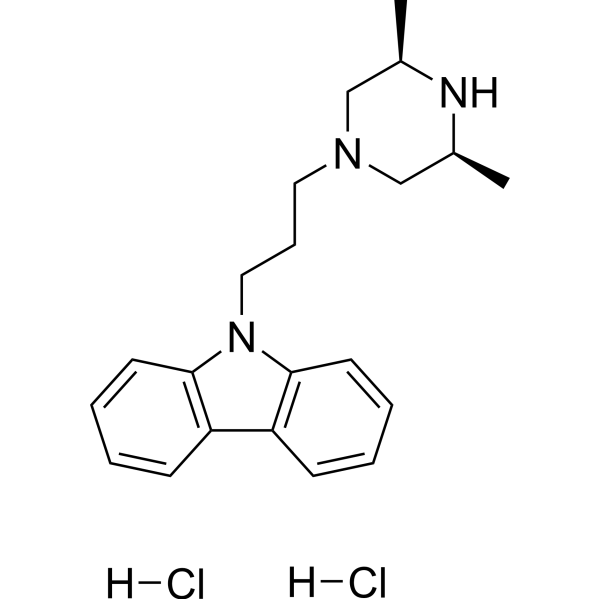
HY-108510
Rimcazole dihydrochlorideσ Receptor Antagonist -
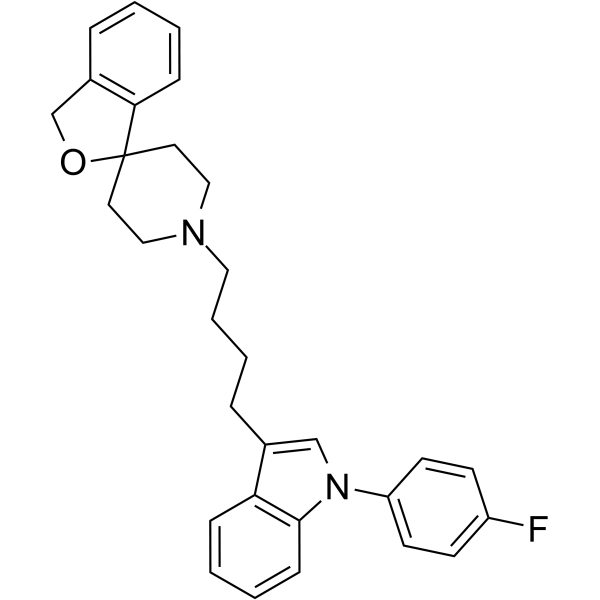
HY-14221
SiramesineSigma-2 Receptor Agonist -
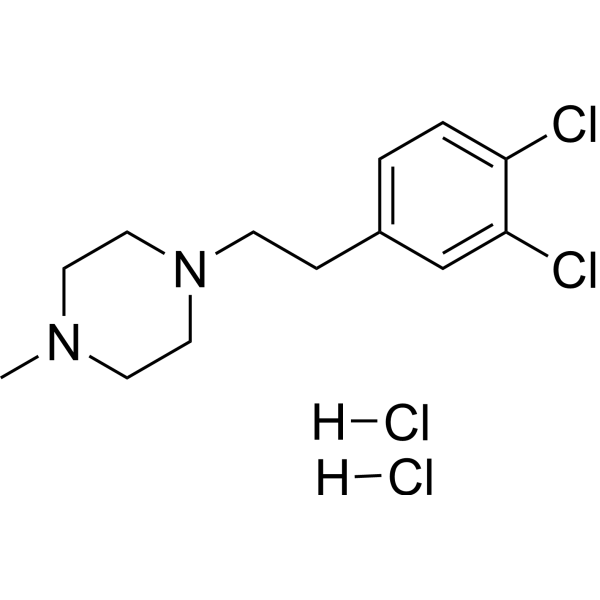
HY-18101A
BD-1063 dihydrochlorideσ-1R Antagonist -
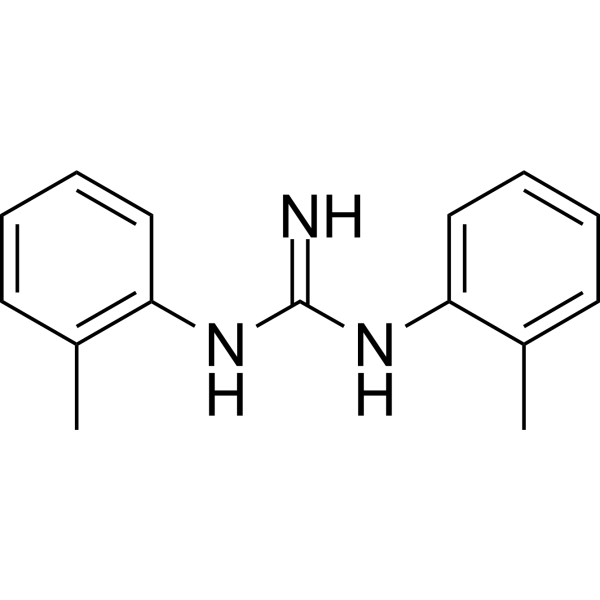
HY-14218
DitolylguanidineSigma Receptor Agonist -
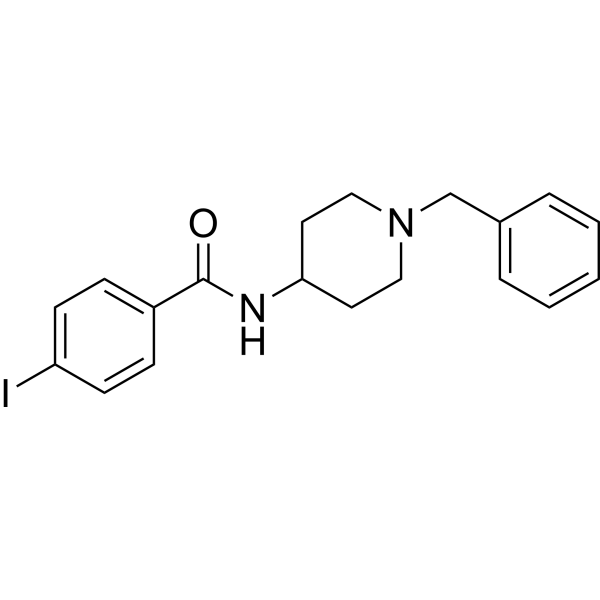
HY-100155
4-IBPσ1 Receptor Agonist -

HY-13510R
Cutamesine dihydrochloride (Standard)σ1R Agonist
Publications Citing Use of MedChemExpress (MCE) Cutamesine dihydrochloride
More- Cell Death Dis. 2025 Jul 2;16(1):485. [Abstract]
- Neural Regen Res. 2025 Aug 1;20(8):2325-2336. [Abstract]
- Pharmaceuticals (Basel). 2025 Mar 24;18(4):455. [Abstract]
- Eur J Pharmacol. 2023 May 5:946:175647. [Abstract]
- Mol Neurobiol. 2025 Nov 24;63(1):163. [Abstract]
- Mol Neurobiol. 2025 Jun 1. [Abstract]
- Neurochem Int. 2025 Mar:184:105937. [Abstract]
Voir tous les produits spécifiques à Isoform Sigma Receptor
More

Activité biologique
Description
IC50 & Target
[1]|
Sigma 1 Receptor 17.4 nM (IC50) |
Sigma 2 Receptor 1784 nM (IC50) |
In Vitro
Exposure of the neurons to H2O2 induced cell death, while pretreatment with Cutamesine dihydrochloride inhibits neuronal cell death. Cutamesine dihydrochloride also reduces the activation of the MAPK/ERK pathway and down-regulated the ionotropic glutamate receptor, GluR1[2].
MedChemExpress (MCE) has not independently confirmed the accuracy of these methods. They are for reference only. Further protocols information, click here.
In Vivo
A single injection of 1 mg/kg i.p. of Cutamesine dihydrochloride produced a significant decrease and increase in the number of spontaneously active SNC and VTA DA neurons, respectively[3].
The repeated administration (one injection per day for 21 days) of 0.3 and 1 mg/kg i.p. of Cutamesine dihydrochloride produced a significant increase in the number of spontaneously active VTA DA neurons[3].
MedChemExpress (MCE) has not independently confirmed the accuracy of these methods. They are for reference only.
Essai clinique
| NCT Number | Sponsor | Condition | Start Date |
Phase

|
|---|---|---|---|---|
| NCT01329991 | Plexxikon| | 2011-05 | PHASE1 |


Chemical Information
-
CAS No. 165377-44-6
-
Appearance Solid
-
Masse moléculaire 441.43
-
Formule C23H34Cl2N2O2
-
Color White to off-white
-
SMILES
COC1=CC=C(CCN2CCN(CCCC3=CC=CC=C3)CC2)C=C1OC.Cl.Cl
-
Synonyms
SA4503 dihydrochloride; AGY94806 dihydrochloride
-
Livraison
Room temperature in continental US; may vary elsewhere.
-
Stockage
4°C, sealed storage, away from moisture
* In solvent : -80°C, 6 months; -20°C, 1 month (sealed storage, away from moisture)


Publications (7)
-
Journal Impact Factor
-
Most Recent
-
Cell Death Dis
FGFR inhibitors promote the autophagic degradation of IFN-γ-induced PD-L1 and alleviate the PD-L1-mediated transcriptional suppression of FGFR3-TACC3 in non-muscle-invasive bladder cancer. [Abstract]2025 Jul 2;16(1):485. PMID: 40603902 -
Neural Regen Res
Hypidone hydrochloride (YL-0919) ameliorates functional deficits after traumatic brain injury in mice by activating the sigma-1 receptor for antioxidation. [Abstract]2025 Aug 1;20(8):2325-2336. PMID: 39359091 -
Pharmaceuticals (Basel)
Hypidone Hydrochloride (YL-0919), a Sigma-1 Receptor Agonist, Improves Attention by Increasing BDNF in mPFC. [Abstract]2025 Mar 24;18(4):455. PMID: 40283892 -
Eur J Pharmacol
Sigma-1 receptor agonist properties that mediate the fast-onset antidepressant effect of hypidone hydrochloride (YL-0919). [Abstract]2023 May 5:946:175647. PMID: 36898424 -
Mol Neurobiol
Presence of Astrocytic S1R/5-HT1A Heterocomplex in the mPFC: A Putative Link to S1R Activation Mediated Faster Antidepressant-Like Effects. [Abstract]2025 Nov 24;63(1):163. PMID: 41284099 -
Mol Neurobiol
Sigma-1 Receptor Activation Alleviates iBRB Dysfunction after I/R Injury by Inhibiting Endoplasmic Reticulum Stress-Dependent Autophagy. [Abstract]2025 Jun 1. PMID: 40450632 -
Neurochem Int
Sigma-1 receptor activation produces faster antidepressant-like effect through enhancement of hippocampal neuroplasticity: Focus on sigma-1-5-HT1A heteroreceptor complex. [Abstract]2025 Mar:184:105937. PMID: 39884578


Solvant et solubilité
In Vitro:
H2O : 100 mg/mL (226.54 mM; Need ultrasonic)
DMSO : 30 mg/mL (67.96 mM; Need ultrasonic and warming; Hygroscopic DMSO has a significant impact on the solubility of product, please use newly opened DMSO)
Please refer to the solubility information to select the appropriate solvent. Once prepared, please aliquot and store the solution to prevent product inactivation from repeated freeze-thaw cycles.
Storage method and period of stock solution: -80°C, 6 months; -20°C, 1 month (sealed storage, away from moisture). When stored at -80°C, please use it within 6 months. When stored at -20°C, please use it within 1 month.
* Note: If you choose water as the stock solution, please dilute it to the working solution, then filter and sterilize it with a 0.22 μm filter before use.
Please refer to the solubility information to select the appropriate solvent. Once prepared, please aliquot and store the solution to prevent product inactivation from repeated freeze-thaw cycles.
Storage method and period of stock solution: -80°C, 6 months; -20°C, 1 month (sealed storage, away from moisture). When stored at -80°C, please use it within 6 months. When stored at -20°C, please use it within 1 month.
* Note: If you choose water as the stock solution, please dilute it to the working solution, then filter and sterilize it with a 0.22 μm filter before use.
Concentration (start) × Volume (start) = Concentration (final) × Volume (final)
In Vivo:
Select the appropriate dissolution method based on your experimental animal and administration route.
- For the following dissolution methods, please ensure to first prepare a clear stock solution using an In Vitro approach and then sequentially add co-solvents:
- To ensure reliable experimental results, the clarified stock solution can be appropriately stored based on storage conditions. As for the working solution for In Vivo experiments, it is recommended to prepare freshly and use it on the same day.
- The percentages shown for the solvents indicate their volumetric ratio in the final prepared solution. If precipitation or phase separation occurs during preparation, heat and/or sonication can be used to aid dissolution.
Add each solvent one by one: 10% DMSO 40% PEG300 5% Tween-80 45% Saline
Solubility: ≥ 1 mg/mL (2.27 mM); Clear solution
This protocol yields a clear solution of ≥ 1 mg/mL (saturation unknown).
Taking 1 mL working solution as an example, add 100 μL DMSO stock solution (10.0 mg/mL) to 400 μL PEG300, and mix evenly; then add 50 μL Tween-80 and mix evenly; then add 450 μL Saline to adjust the volume to 1 mL.
Preparation of Saline: Dissolve 0.9 g sodium chloride in ddH₂O and dilute to 100 mL to obtain a clear Saline solution.
Add each solvent one by one: 10% DMSO 90% (20% SBE-β-CD in Saline)
Solubility: ≥ 1 mg/mL (2.27 mM); Clear solution
This protocol yields a clear solution of ≥ 1 mg/mL (saturation unknown).
Taking 1 mL working solution as an example, add 100 μL DMSO stock solution (10.0 mg/mL) to 900 μL 20% SBE-β-CD in Saline, and mix evenly.
Preparation of 20% SBE-β-CD in Saline (4°C, storage for one week): 2 g SBE-β-CD powder is dissolved in 10 mL Saline, completely dissolve until clear.
For the following dissolution methods, please prepare the working solution directly:
It is recommended to prepare fresh solutions and use them promptly within a short period of time.
The percentages shown for the solvents indicate their volumetric ratio in the final prepared solution. If precipitation or phase separation occurs during preparation, heat and/or sonication can be used to aid dissolution.
Add each solvent one by one: PBS
Solubility: 33.33 mg/mL (75.50 mM); Clear solution; Need ultrasonic
In Vivo Dissolution Calculator
Please enter the basic information of animal experiments:
-
-
-
-
Recommended: Prepare an additional quantity of animals to account for potential losses during experiments.
Working solution concentration: 0.22 mg/mL
This product has good water solubility, please refer to the measured solubility data in water/PBS/Saline for details.

Protocole
-
Cell Cytotoxicity Assay
Cytotoxicity assays are usually based on the assessment of cell membrane damage, which can also be indirectly detected by measuring cell viability. Detection methods include MTT assay, CKK-8 assay, LDH assay and ATP assay, etc.


Pureté et documentation
-
Fiche technique (276 KB)
-
SDS (393 KB)
- English - EN (393 KB)
- Français - FR (393 KB)
- Deutsch - DE (393 KB)
- Norwegian - NO (393 KB)
- Español - ES (393 KB)
- Swedish - SV (393 KB)
- Italian - IT (393 KB)
- Korean - KR (393 KB)
- Portuguese - PT (393 KB)
-
Instruction de manipulation (2659 KB)
Références
[1]. Lever JR, et al. Sigma1 and sigma2 receptor binding affinity and selectivity of SA4503 and fluoroethyl SA4503. Synapse. 2006 May;59(6):350-8. [Content Brief]
[2]. Tuerxun T, et al. SA4503, a sigma-1 receptor agonist, prevents cultured cortical neurons from oxidative stress-induced cell death via suppression of MAPK pathway activation and glutamate receptor expression. Neurosci Lett. 2010 Jan 29;469(3):303-8. [Content Brief]
[3]. Minabe Y, et al. Acute and chronic administration of the selective sigma1 receptor agonist SA4503 significantly alters the activity of midbrain dopamine neurons in rats: An in vivo electrophysiological study. Synapse. 1999 Aug;33(2):129-40. [Content Brief]


Complete Stock Solution Preparation Table
Please refer to the solubility information to select the appropriate solvent. Once prepared, please aliquot and store the solution to prevent product inactivation from repeated freeze-thaw cycles.
Storage method and period of stock solution: -80°C, 6 months; -20°C, 1 month (sealed storage, away from moisture). When stored at -80°C, please use it within 6 months. When stored at -20°C, please use it within 1 month.
| Optional Solvent | Concentration Solvent Mass | 1 mg | 5 mg | 10 mg | 25 mg |
|---|---|---|---|---|---|
| DMSO / H2O | 1 mM | 2.2654 mL | 11.3268 mL | 22.6536 mL | 56.6341 mL |
| 5 mM | 0.4531 mL | 2.2654 mL | 4.5307 mL | 11.3268 mL | |
| 10 mM | 0.2265 mL | 1.1327 mL | 2.2654 mL | 5.6634 mL | |
| 15 mM | 0.1510 mL | 0.7551 mL | 1.5102 mL | 3.7756 mL | |
| 20 mM | 0.1133 mL | 0.5663 mL | 1.1327 mL | 2.8317 mL | |
| 25 mM | 0.0906 mL | 0.4531 mL | 0.9061 mL | 2.2654 mL | |
| 30 mM | 0.0755 mL | 0.3776 mL | 0.7551 mL | 1.8878 mL | |
| 40 mM | 0.0566 mL | 0.2832 mL | 0.5663 mL | 1.4159 mL | |
| 50 mM | 0.0453 mL | 0.2265 mL | 0.4531 mL | 1.1327 mL | |
| 60 mM | 0.0378 mL | 0.1888 mL | 0.3776 mL | 0.9439 mL | |
| H2O | 80 mM | 0.0283 mL | 0.1416 mL | 0.2832 mL | 0.7079 mL |
| 100 mM | 0.0227 mL | 0.1133 mL | 0.2265 mL | 0.5663 mL |
* Note: If you choose water as the stock solution, please dilute it to the working solution, then filter and sterilize it with a 0.22 μm filter before use.


Cutamesine dihydrochloride Related Classifications
HY-13510 Related Classifications
 Powered by Bioz