



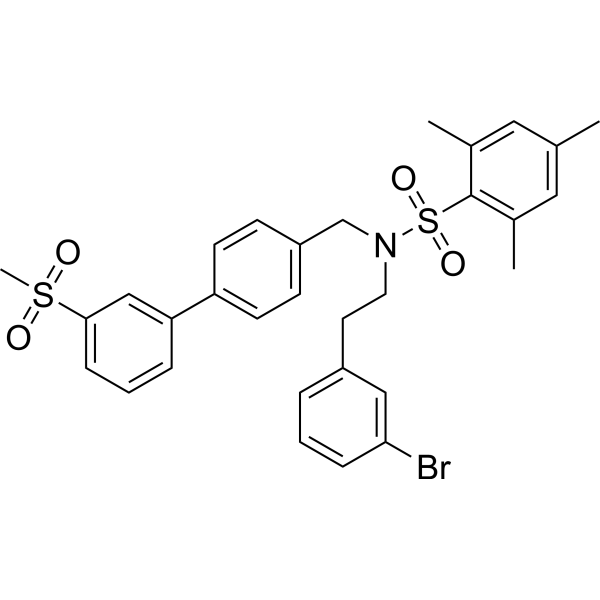
SR9243
Based on 8 publication(s) in Google Scholar
SR9243 is a liver-X-receptor (LXR) inverse agonist that induces LXR-corepressor interaction.
연구목적의 판매만을 진행합니다. 환자를 대상으로 한 판매는 하지 않습니다.
- Purity : 99.17%
- CAS No.: 1613028-81-1
- 화학식: C31H32BrNO4S2
- 분자량:626.62
-
보관:Powder -20°C, 3 years , 4°C, 2 years ; In solvent -80°C, 2 years , -20°C, 1 year

To place orders, for customer services and technical support, please contact: MedChemExpress USA
Tel: 609-228-6898 E-mail: [email protected] [email protected]


-
 Biological Activity
-
Chemical Information
-
용액&용해도
- 순도&문서
- References
-
 Help & FAQs


-
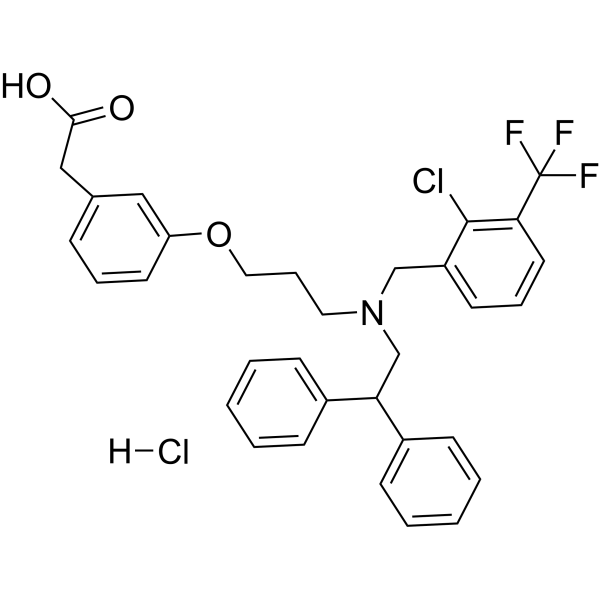
HY-10627A
GW3965 hydrochlorideLXR Agonist -
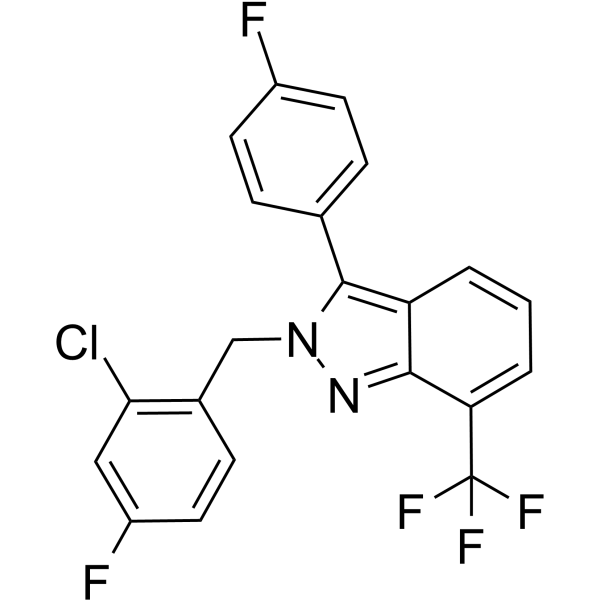
HY-10629
LXR-623LXRα/β Agonist -
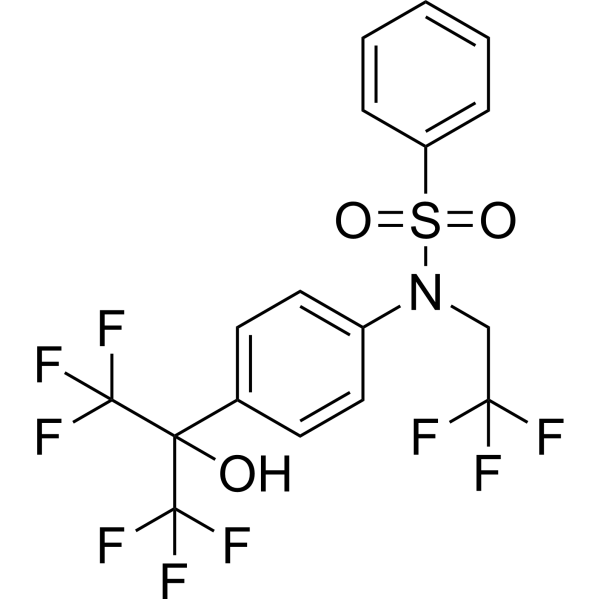
HY-10626
T0901317LXR Agonist -
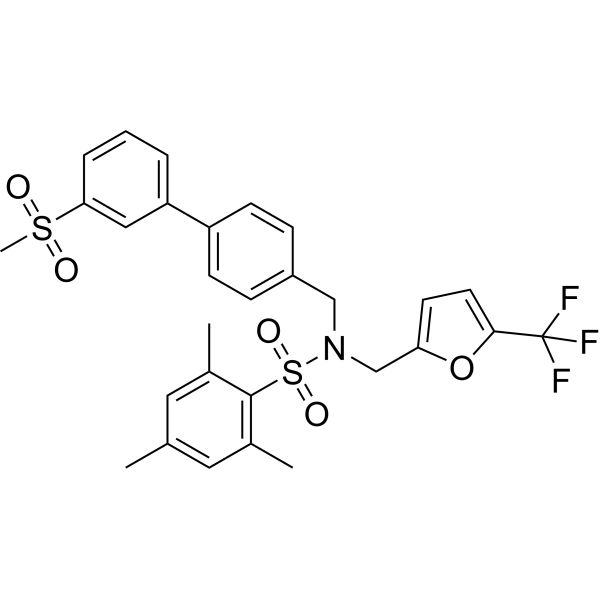
HY-108688
GSK2033LXR Antagonist -
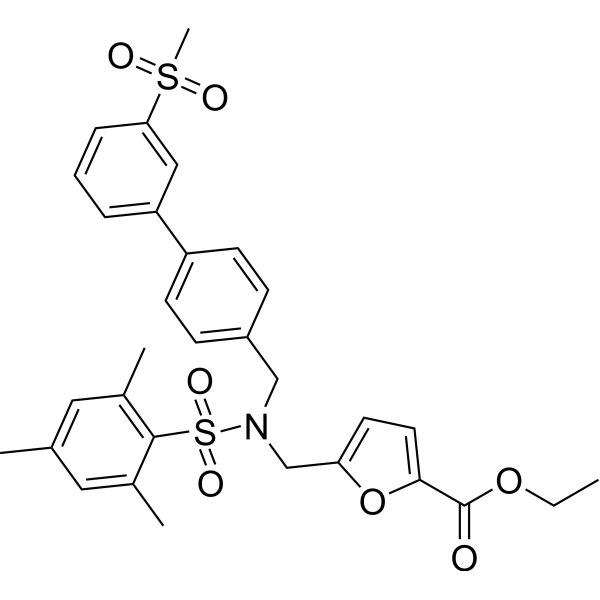
HY-101442
SR9238LXR Inverse Agonist -
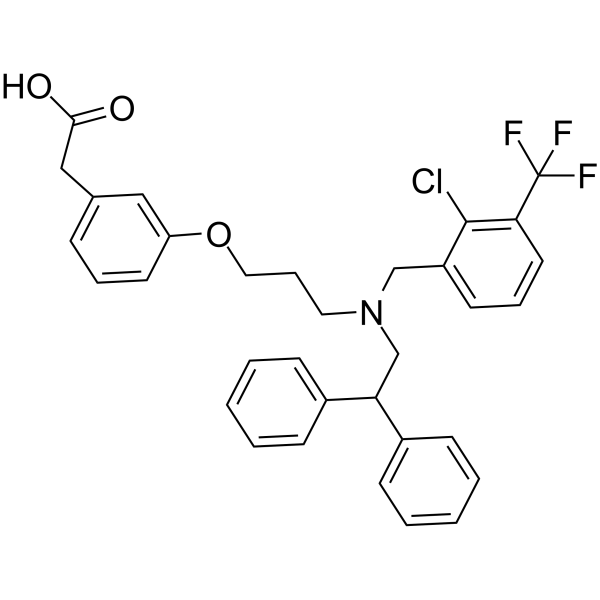
HY-10627
GW3965LXR Agonist -
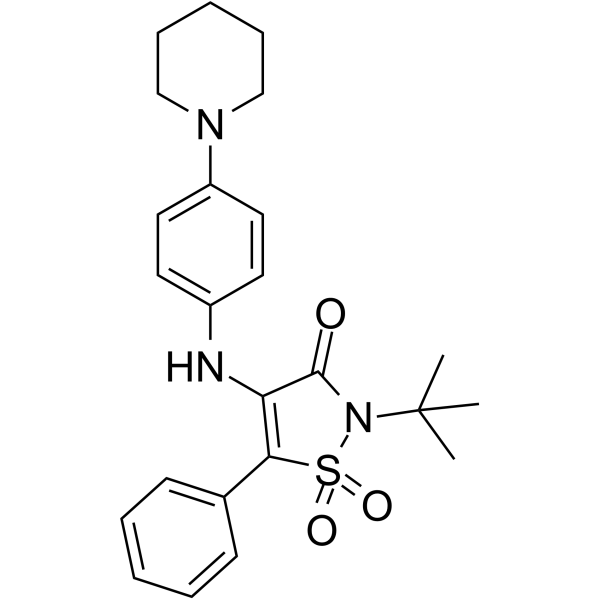
HY-18282
AZ876LXR Agonist -
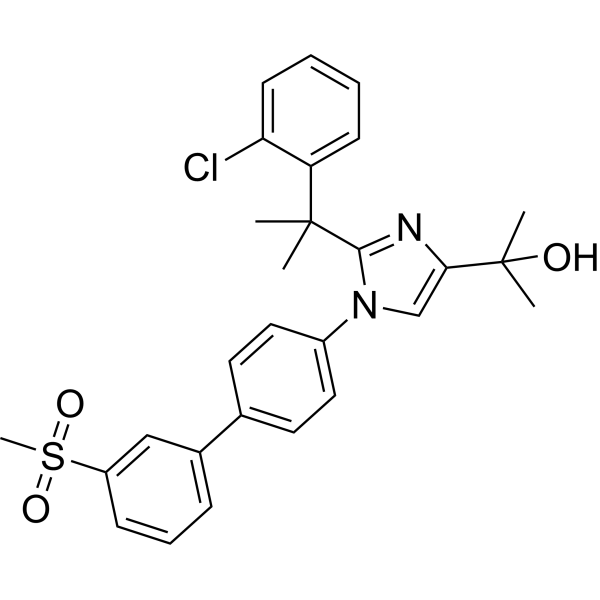
HY-19919
BMS-779788LXR Agonist -
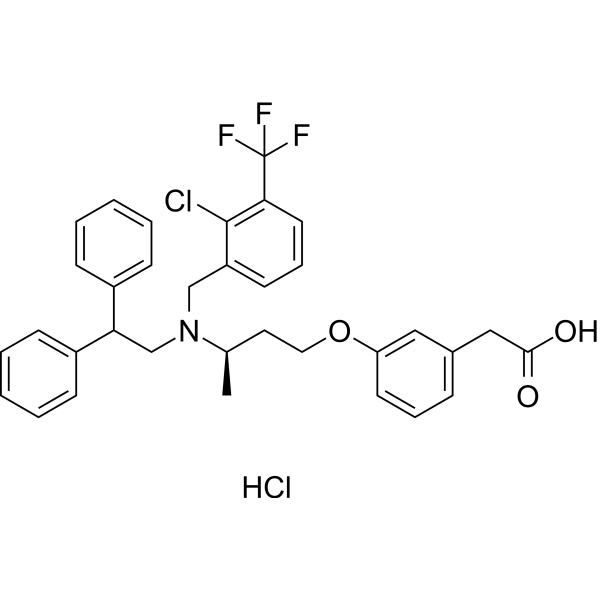
HY-111498
RGX-104 hydrochlorideLXR Agonist -
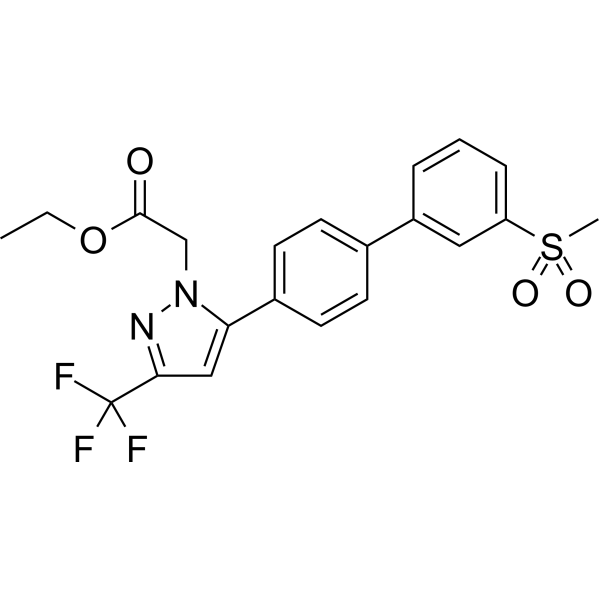
HY-109073
RovazolacLXR Modulator -
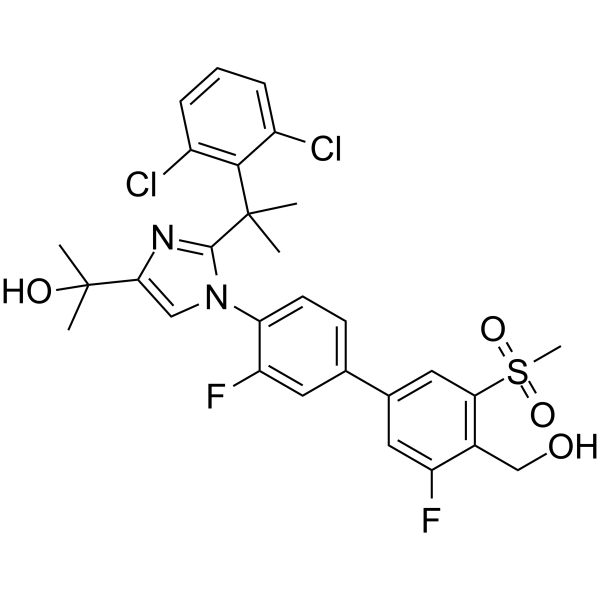
HY-101973
XL041LXRβ Agonist -
HY-12222
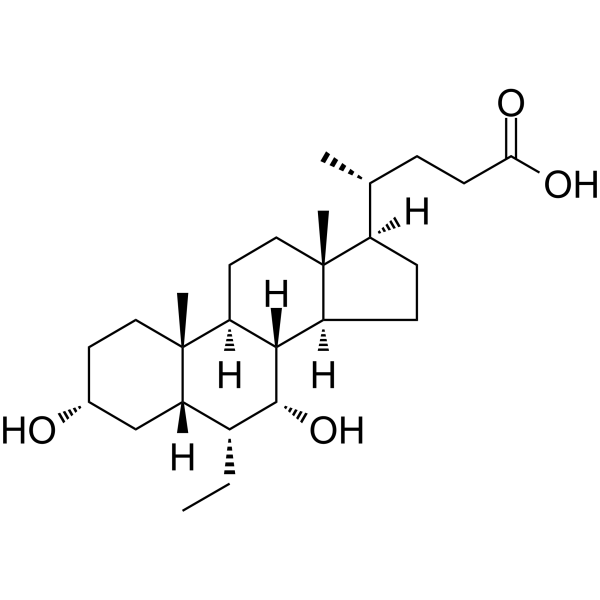
Obeticholic acidFXR Agonist
Publications Citing Use of MedChemExpress (MCE) SR9243
More- Mol Cell. 2025 Sep 18;85(18):3486-3504.e7. [Abstract]
- Cell Death Dis. 2019 May 28;10(6):416. [Abstract]
- Life Sci. 2025 Jun 1:370:123571. [Abstract]
- Int J Mol Sci. 2018 Sep 29;19(10):2980. [Abstract]
- One Health Adv. 2026 Apr 10;4(1):7.
- J Cell Mol Med. 2020 Mar;24(6):3384-3398. [Abstract]
- Viruses. 2022 Mar 3;14(3):514. [Abstract]
- Vet Microbiol. 2024 Jan:288:109948. [Abstract]
 Customer Validation & Images

-
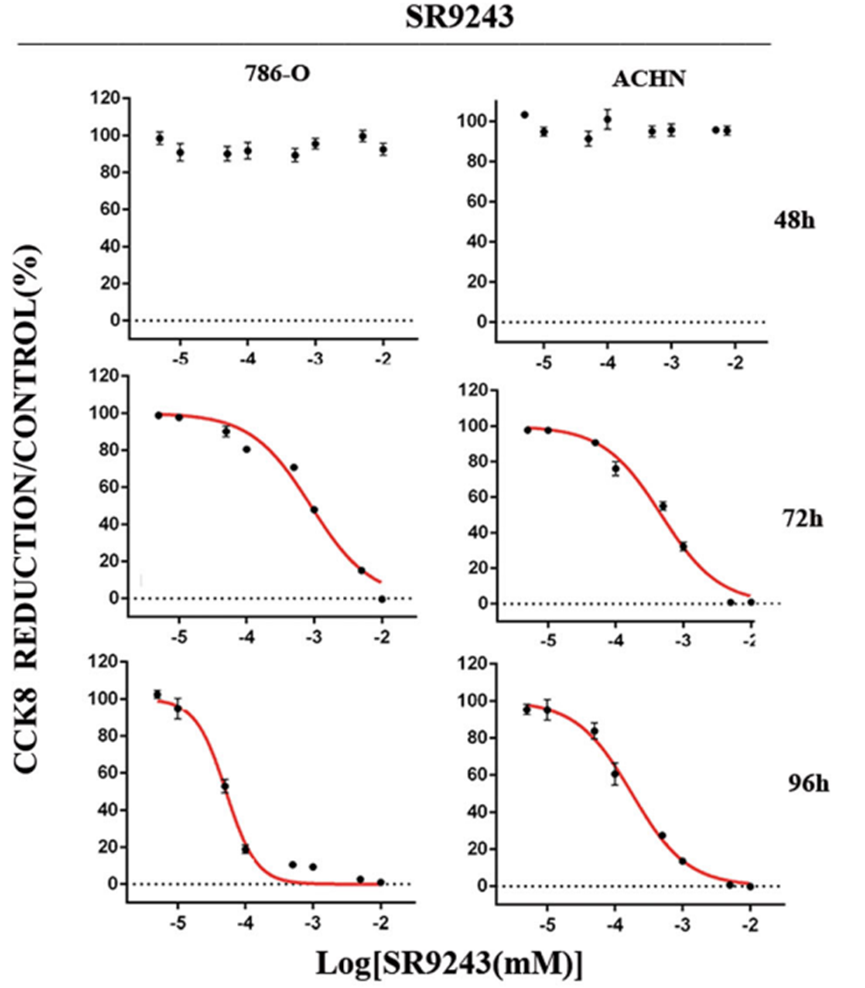
Cell Proliferation/Viability Assay
-
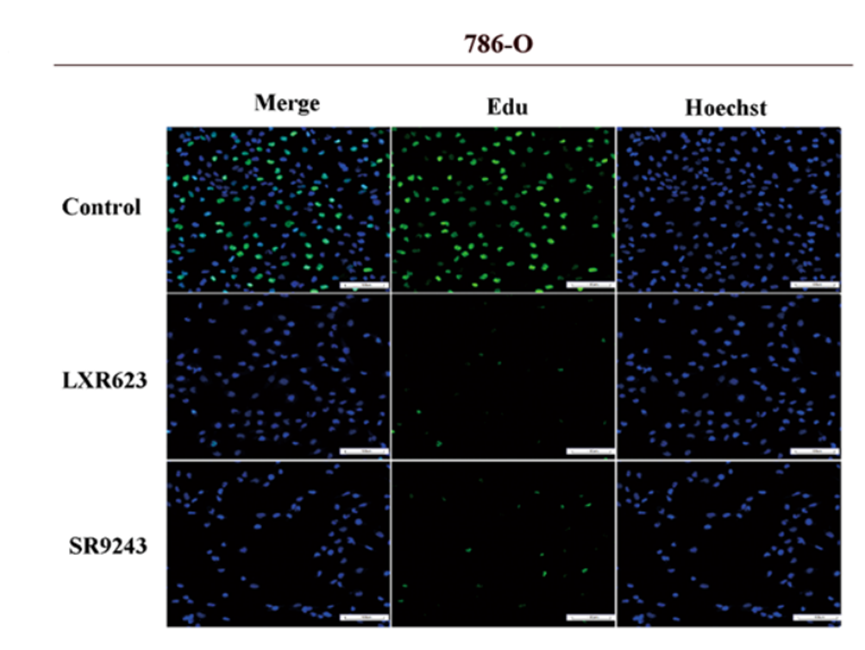
Cell Imaging/Staining
-
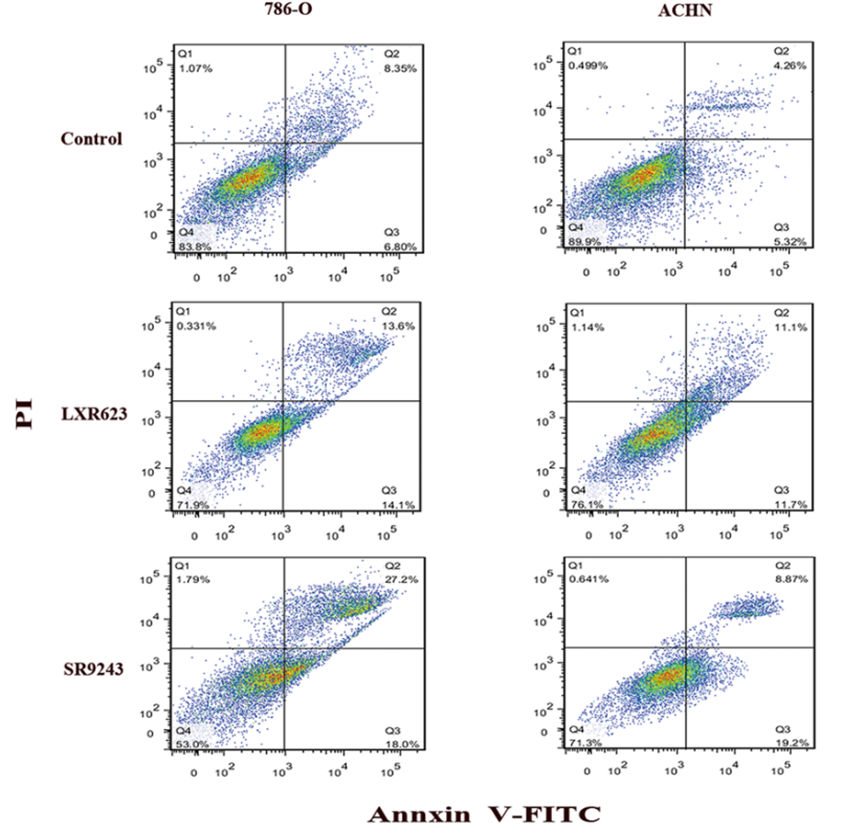
Flow Cytometry
-
WB
-
RT-PCR


Biological Activity
제품 설명
In Vitro
SR9243 specifically targets LXR and downregulates LXR-mediated gene expression, dose-dependently suppresses LXRα- and LXRβ-dependent transcription at nanomolar concentrations, and potently inhibits LXR-driven luciferase activity in cultured cancer cells. SR9243 potently reduces cancer cell viability at nanomolar concentrations (IC50 appr 15-104 nM) in prostate (PC3 and!DU-145), colorectal (SW620 and HT29), and lung (HOP-62 and NCI-H23) cancer cell lines. And the colony-forming capacity of cancer cells is also significantly loared by SR9243 in a dose-dependent manner. SR9243 is a potent inhibitor of lipogenic gene expression that selectively kills cancer cells by depleting intracellular lipids. Combination of cancer cell media with oleate, stearate, and palmitate in combination completely rescues cancer cell viability in cancer cells. Fatty acid supplementation also rescues the viability of SW620 cells in which glycolysis is substantially disrupted[1].
MedChemExpress (MCE) has not independently confirmed the accuracy of these methods. They are for reference only.
In Vivo
MedChemExpress (MCE) has not independently confirmed the accuracy of these methods. They are for reference only.


Chemical Information
-
CAS No. 1613028-81-1
-
Appearance Solid
-
분자량 626.62
-
화학식 C31H32BrNO4S2
-
Color White to off-white
-
SMILES
BrC1=CC(CCN(S(C2=C(C)C=C(C)C=C2C)(=O)=O)CC(C=C3)=CC=C3C4=CC(S(=O)(C)=O)=CC=C4)=CC=C1
-
선적
Room temperature in continental US; may vary elsewhere.
-
보관
Powder -20°C 3 years 4°C 2 years In solvent -80°C 2 years -20°C 1 year


Publications (8)
-
Journal Impact Factor
-
Most Recent
-
Mol Cell
mTOR inhibition reprograms cellular lipid homeostasis by inducing alternative lipid uptake and promoting cholesterol transport. [Abstract]2025 Sep 18;85(18):3486-3504.e7. PMID: 40972529 -
Cell Death Dis
Targeting the transcription factor receptor LXR to treat clear cell renal cell carcinoma: agonist or inverse agonist?. [Abstract]2019 May 28;10(6):416. PMID: 31138790
SR9243 purchased from MedChemExpress. Usage Cited in: Cell Death Dis. 2019 May 28;10(6):416. [Abstract]
CCK8 assays were used to detect the difference in viability of ccRCC cells (786-O and ACHN) after 48, 72 and 96 h of treatment with different doses of SR9243.
SR9243 purchased from MedChemExpress. Usage Cited in: Cell Death Dis. 2019 May 28;10(6):416. [Abstract]
786-O cells treated with 0.1 µM SR9243 or 1 µM LXR623 for 72 h by EdU assay.
SR9243 purchased from MedChemExpress. Usage Cited in: Cell Death Dis. 2019 May 28;10(6):416. [Abstract]
786-O and ACHN cells were stained with Annexin-V FITC/PI and analysed via flow cytometry. SR9243 (0.1 µM) and LXR623 (1 µM for 786-O cells, 5 µM for ACHN cells) acted on the two cell lines.
SR9243 purchased from MedChemExpress. Usage Cited in: Cell Death Dis. 2019 May 28;10(6):416. [Abstract]
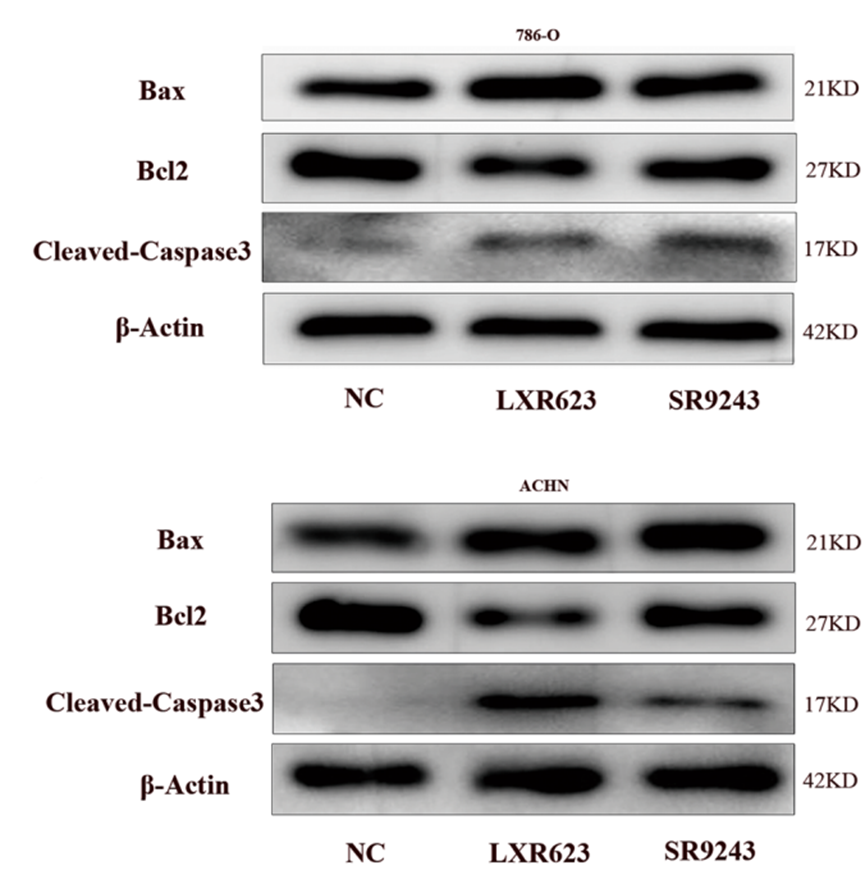
Western blotting experiments were performed by treating three groups of cells with DMSO, 0.1 µM SR9243 or LXR623 (786-O, 0.1 µM; ACHN, 1 µM) for 48 h and then extracting proteins. The protein levels of Bax, Bcl2, and Cleaved-Caspase3 were determined via immunoblotting.
SR9243 purchased from MedChemExpress. Usage Cited in: Cell Death Dis. 2019 May 28;10(6):416. [Abstract]
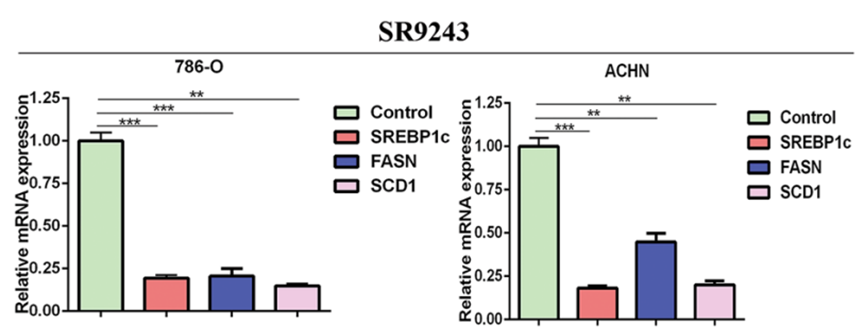
qRT-PCR showed differences in mRNA levels of SREBP1, FASN and SCD1 48 h after treatment of cells with SR9243.
-
Life Sci
CKN reduces TLR4-mediated inflammation and cerebral I/R injury by activating the LXRα/ABCA1 pathway in microglia. [Abstract]2025 Jun 1:370:123571. PMID: 40107493 -
Int J Mol Sci
MiR-205 Mediated Cu-Induced Lipid Accumulation in Yellow Catfish Pelteobagrus fulvidraco. [Abstract]2018 Sep 29;19(10):2980. PMID: 30274304 -
-
J Cell Mol Med
The marine-derived furanone reduces intracellular lipid accumulation in vitro by targeting LXRα and PPARα. [Abstract]2020 Mar;24(6):3384-3398. PMID: 31981312 -
Viruses
2022 Mar 3;14(3):514. PMID: 35336921 -
Vet Microbiol
The activation of liver X receptors in Madin-Darby bovine kidney cells and mice restricts infection by bovine viral diarrhea virus. [Abstract]2024 Jan:288:109948. PMID: 38113573


용액&용해도
In Vitro:
DMSO : 20 mg/mL (31.92 mM; Need ultrasonic; Hygroscopic DMSO has a significant impact on the solubility of product, please use newly opened DMSO)
Please refer to the solubility information to select the appropriate solvent. Once prepared, please aliquot and store the solution to prevent product inactivation from repeated freeze-thaw cycles.
Storage method and period of stock solution: -80°C, 2 years; -20°C, 1 year. When stored at -80°C, please use it within 2 years. When stored at -20°C, please use it within 1 year.
Please refer to the solubility information to select the appropriate solvent. Once prepared, please aliquot and store the solution to prevent product inactivation from repeated freeze-thaw cycles.
Storage method and period of stock solution: -80°C, 2 years; -20°C, 1 year. When stored at -80°C, please use it within 2 years. When stored at -20°C, please use it within 1 year.
Concentration (start) × Volume (start) = Concentration (final) × Volume (final)
In Vivo:
Select the appropriate dissolution method based on your experimental animal and administration route.
- For the following dissolution methods, please ensure to first prepare a clear stock solution using an In Vitro approach and then sequentially add co-solvents:
- To ensure reliable experimental results, the clarified stock solution can be appropriately stored based on storage conditions. As for the working solution for In Vivo experiments, it is recommended to prepare freshly and use it on the same day.
- The percentages shown for the solvents indicate their volumetric ratio in the final prepared solution. If precipitation or phase separation occurs during preparation, heat and/or sonication can be used to aid dissolution.
For the following dissolution methods, please prepare the working solution directly:
It is recommended to prepare fresh solutions and use them promptly within a short period of time.
The percentages shown for the solvents indicate their volumetric ratio in the final prepared solution. If precipitation or phase separation occurs during preparation, heat and/or sonication can be used to aid dissolution.
Add each solvent one by one: 15% Cremophor EL 85% Saline
Solubility: 10 mg/mL (15.96 mM); Suspended solution; Need ultrasonic
In Vivo Dissolution Calculator
Please enter the basic information of animal experiments:
-
-
-
-
Recommended: Prepare an additional quantity of animals to account for potential losses during experiments.
Please enter your animal formula composition:
-
%DMSO +
Recommended: Keep the proportion of DMSO in working solution below 2% if your animal is weak.
-
%+
-
+%Tween-80 + +
-
%Saline +
The co-solvents required include: DMSO, . All of co-solvents are available by MedChemExpress (MCE). , Tween 80. All of co-solvents are available by MedChemExpress (MCE).
Working solution concentration: 0.22 mg/mL
Method for preparing stock solution: mg drug dissolved in μL DMSO. Stock solution concentration: mg/mL.
1. Take μL DMSO stock solution;
2. Add μL .
μL , mix evenly;
3. Then add μL Tween 80, mix evenly;
4. Then add μL
Please ensure that the stock solution in the first step is dissolved to a clear state, and add co-solvents in sequence. You can use ultrasonic heating (ultrasonic cleaner, recommended frequency 20-40 kHz), vortexing, etc. to assist dissolution.


순도&문서
-
Data Sheet (278 KB)
-
SDS (393 KB)
- English - EN (393 KB)
- Français - FR (393 KB)
- Deutsch - DE (393 KB)
- Norwegian - NO (393 KB)
- Español - ES (393 KB)
- Swedish - SV (393 KB)
- Italian - IT (393 KB)
- Korean - KR (393 KB)
- Portuguese - PT (393 KB)
-
Handling Instructions (2659 KB)
References


Complete Stock Solution Preparation Table
Please refer to the solubility information to select the appropriate solvent. Once prepared, please aliquot and store the solution to prevent product inactivation from repeated freeze-thaw cycles.
Storage method and period of stock solution: -80°C, 2 years; -20°C, 1 year. When stored at -80°C, please use it within 2 years. When stored at -20°C, please use it within 1 year.
| Optional Solvent | Concentration Solvent Mass | 1 mg | 5 mg | 10 mg | 25 mg |
|---|---|---|---|---|---|
| DMSO | 1 mM | 1.5959 mL | 7.9793 mL | 15.9586 mL | 39.8966 mL |
| 5 mM | 0.3192 mL | 1.5959 mL | 3.1917 mL | 7.9793 mL | |
| 10 mM | 0.1596 mL | 0.7979 mL | 1.5959 mL | 3.9897 mL | |
| 15 mM | 0.1064 mL | 0.5320 mL | 1.0639 mL | 2.6598 mL | |
| 20 mM | 0.0798 mL | 0.3990 mL | 0.7979 mL | 1.9948 mL | |
| 25 mM | 0.0638 mL | 0.3192 mL | 0.6383 mL | 1.5959 mL | |
| 30 mM | 0.0532 mL | 0.2660 mL | 0.5320 mL | 1.3299 mL |


SR9243 Related Classifications
HY-16972 Related Classifications
 Powered by Bioz