



TAK-960 hydrochloride
Based on 2 publication(s) in Google Scholar
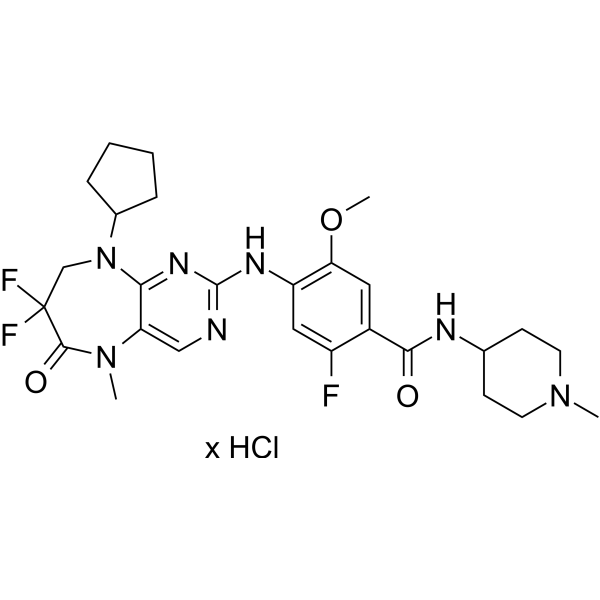
TAK-960 hydrochloride is an orally available, selective inhibitor of polo-like kinase 1 (PLK1), with an IC50 of 0.8 nM. TAK-960 hydrochloride also shows inhibitory activities against PLK2 and PLK3, with IC50s of 16.9 and 50.2 nM, respectively. TAK-960 hydrochloride inhibits proliferation of multiple cancer cell lines and exhibits significant efficacy against multiple tumor xenografts.
For research use only. We do not sell to patients.
- CAS No.: 1137868-96-2
- Formula: C27H34F3N7O3.ClH
-
Storage:
Please store the product under the recommended conditions in the Certificate of Analysis.

To place orders, for customer services and technical support, please contact: MedChemExpress USA
Tel: 609-228-6898 E-mail: [email protected] [email protected]


-
 Biological Activity
-
Chemical Information
- Protocols
- Purity & Documentation
- References
-
 Help & FAQs


-
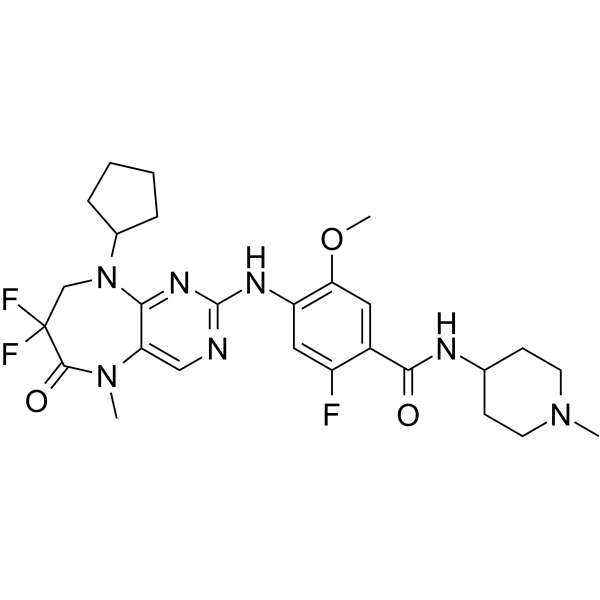
HY-15160
TAK-960PLK1 Inhibitor -
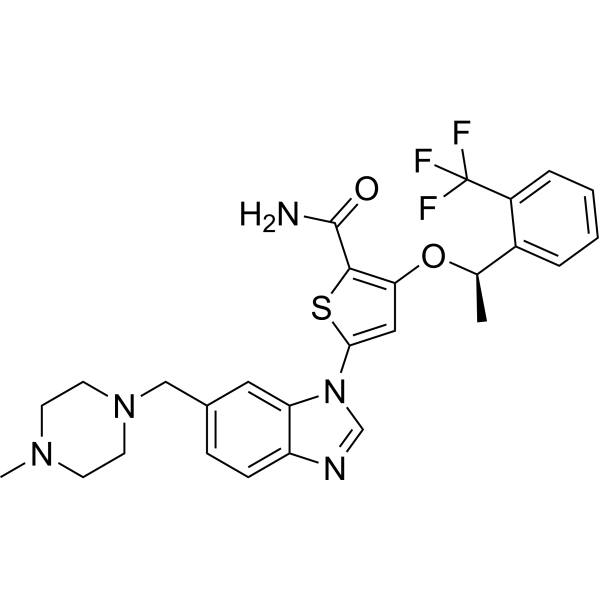
HY-50877
GSK461364PLK1 Inhibitor -
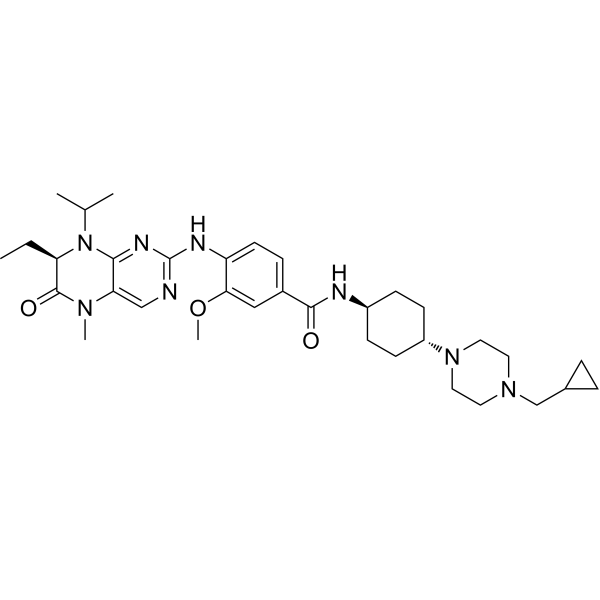
HY-12137
VolasertibPLK1 Inhibitor -
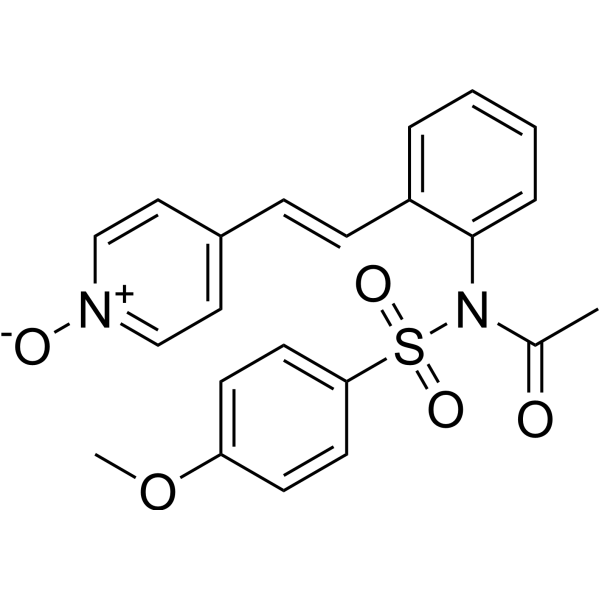
HY-12045
HMN-214PLK1 Inhibitor -
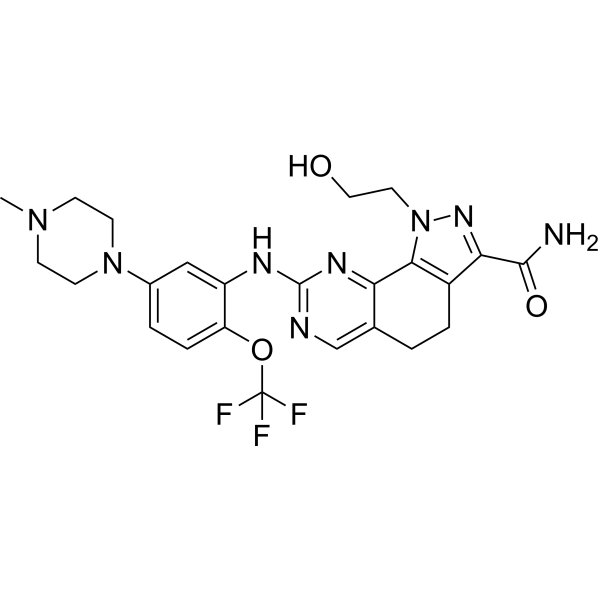
HY-15828
OnvansertibPLK1 Inhibitor -
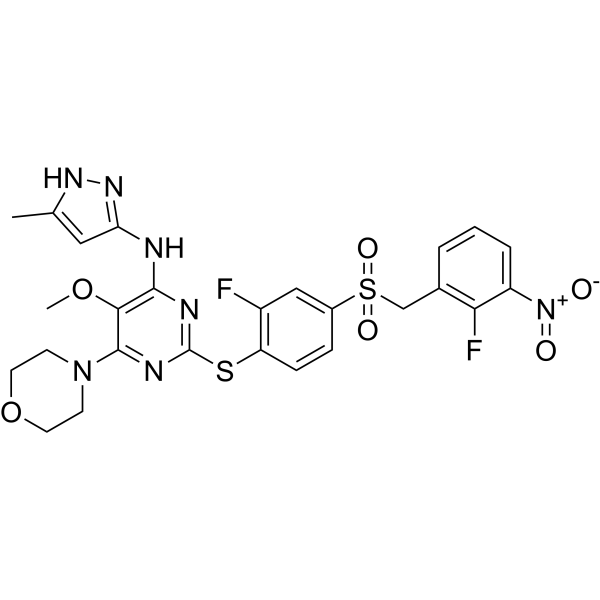
HY-18682
CentrinonePLK4 Inhibitor -
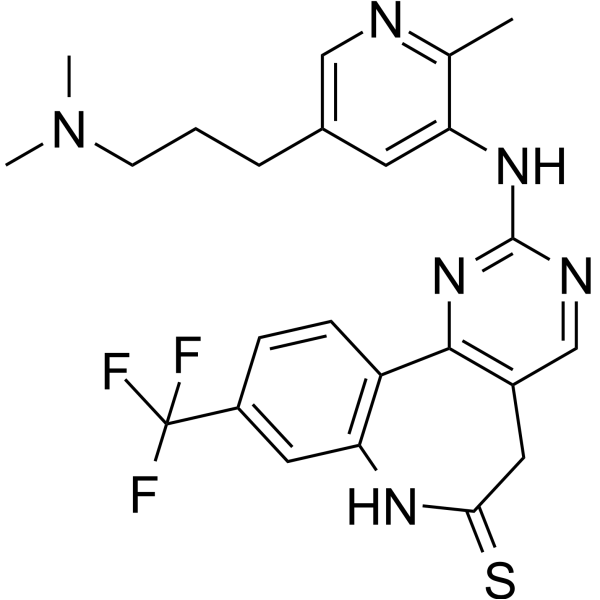
HY-15155
MLN0905PLK1 Inhibitor -
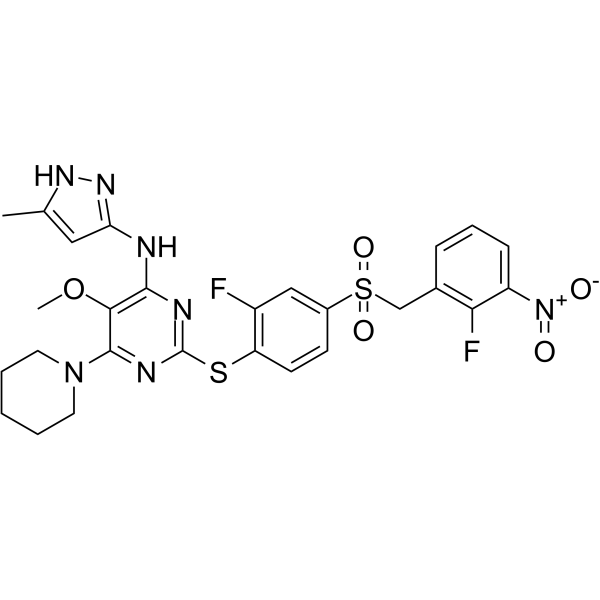
HY-18683
Centrinone-BPLK4 Inhibitor -
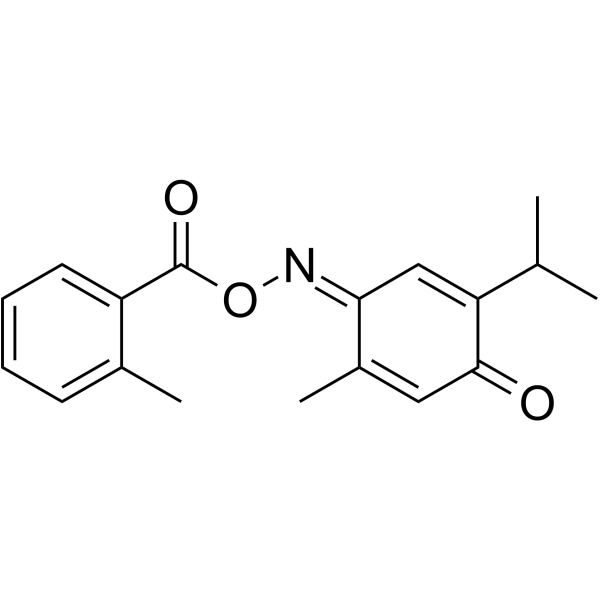
HY-12134
PoloxinPLK Inhibitor -
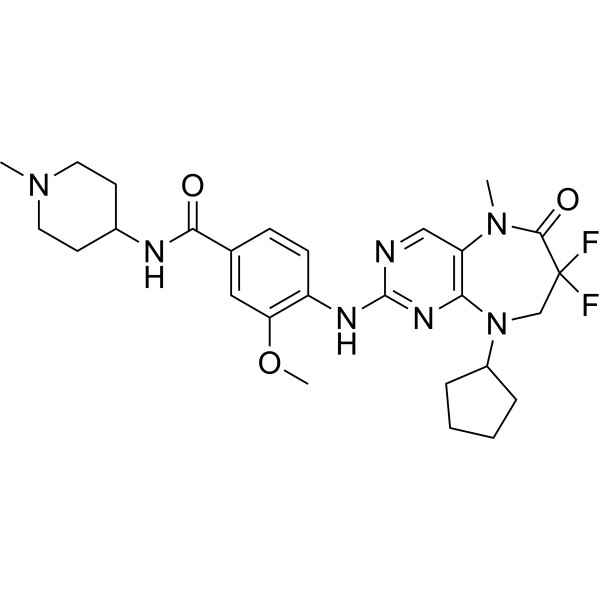
HY-15161
Ro3280PLK1 Inhibitor -
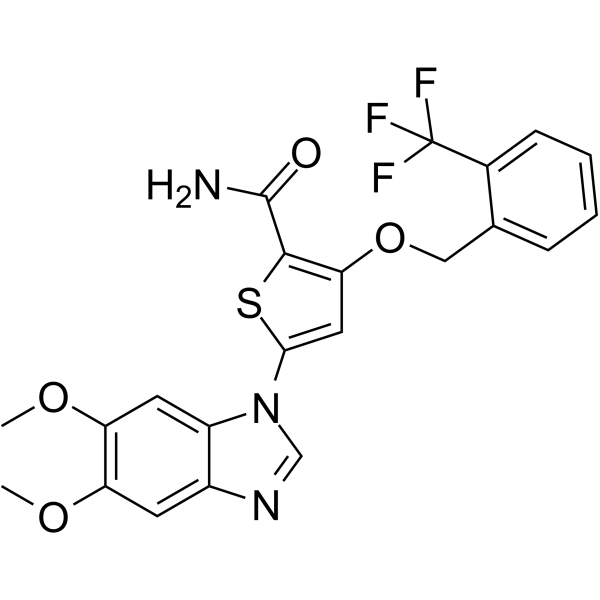
HY-11003
GW843682XPLK Inhibitor -
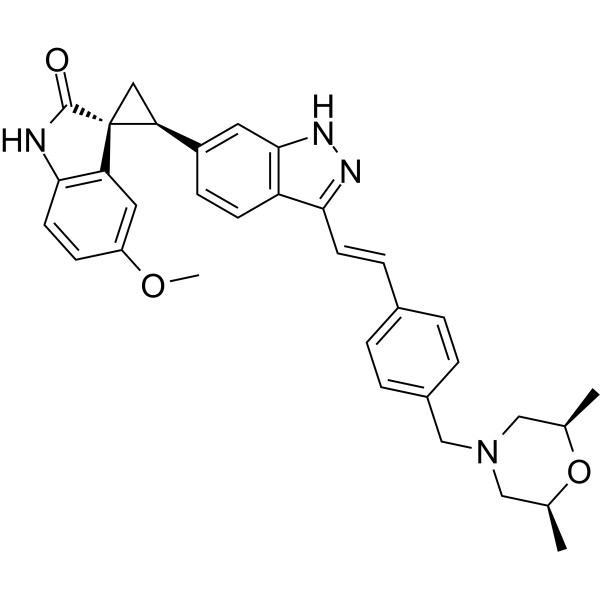
HY-12300
OcifisertibPLK4 Inhibitor
Publications Citing Use of MedChemExpress (MCE) TAK-960 hydrochloride
More

Biological Activity
Description
IC50 & Target
[1]|
PLK1 0.8 nM (IC50) |
PLK2 16.9 nM (IC50) |
PLK3 50.2 nM (IC50) |
FAK/PTK2 19.6 nM (IC50) |
MLCK/MYLK 25.6 nM (IC50) |
FES/FPS 58.2 nM (IC50) |
In Vitro
TAK-960 hydrochloride treatment causes accumulation of G2-M cells, aberrant polo mitosis morphology, and increased phosphorylation of histone H3 (pHH3). TAK-960 hydrochloride (2-1000 nM; 72 hours) inhibits proliferation of multiple cancer cell lines, with mean EC50 values ranging from 8.4 to 46.9 nM, but not in nondividing normal cells[1].
TAK-960 hydrochloride (8 nM) leads to G2/M cell cycle arrest without significant cytotoxicity in HeLa cells[2].
MedChemExpress (MCE) has not independently confirmed the accuracy of these methods. They are for reference only.
-
Cell Line:HT-29, HCT116, COLO320DM, HCT-15, RKO, SW480, K-562….Hela, DU 145 cells
-
Concentration:2-1000 nM
-
Incubation Time:72 hours
-
Result:Inhibited proliferation of human cancer cell lines regardless of TP53 and KRAS mutation and MDR1 expression status.
In Vivo
In animal models, TAK-960 hydrochloride (p.o.) increases pHH3 in a dose-dependent manner and significantly inhibits the growth of HT-29 colorectal cancer xenografts[1].
MedChemExpress (MCE) has not independently confirmed the accuracy of these methods. They are for reference only.
-
Animal Model:nude mice or SCID mice (bearing HCT116, PC-3, BT474, A549, NCI-H1299, NCI-H1975, A2780, and MV4-11 cells)[1]
-
Dosage:10 mg/kg
-
Administration:P.o.; once daily for 2 weeks
-
Result:Substantial antitumor activity and good tolerability.


Chemical Information
-
CAS No. 1137868-96-2
-
Formula C27H34F3N7O3.ClH
-
SMILES
O=C(NC1CCN(C)CC1)C2=CC(OC)=C(NC3=NC=C(N4C)C(N(C5CCCC5)CC(F)(F)C4=O)=N3)C=C2F.[x HCl]
-
Shipping
Room temperature in continental US; may vary elsewhere.
-
Storage
Please store the product under the recommended conditions in the Certificate of Analysis.


Publications (2)
-
Journal Impact Factor
-
Most Recent
-
Sci Transl Med
PP2A inhibition is a druggable MEK inhibitor resistance mechanism in KRAS-mutant lung cancer cells. [Abstract]2018 Jul 18;10(450):eaaq1093. PMID: 30021885 -
Cancer Lett
Inhibition of the mitotic kinase PLK1 overcomes therapeutic resistance to BET inhibitors in triple negative breast cancer. [Abstract]2020 Oct 28:491:50-59. PMID: 32735909


Purity & Documentation
References
[1]. Hikichi Y, et al. TAK-960, a novel, orally available, selective inhibitor of polo-like kinase 1, shows broad-spectrum preclinical antitumor activity in multiple dosing regimens. Mol Cancer Ther. 2012 Mar;11(3):700-9. [Content Brief]
[2]. Inoue M, et al. PLK1 blockade enhances therapeutic effects of radiation by inducing cell cycle arrest at the mitotic phase. Sci Rep. 2015 Oct 27;5:15666. [Content Brief]

Calculators
Concentration (start) × Volume (start) = Concentration (final) × Volume (final)


TAK-960 hydrochloride Related Classifications
HY-15160A Related Classifications
 Powered by Bioz