



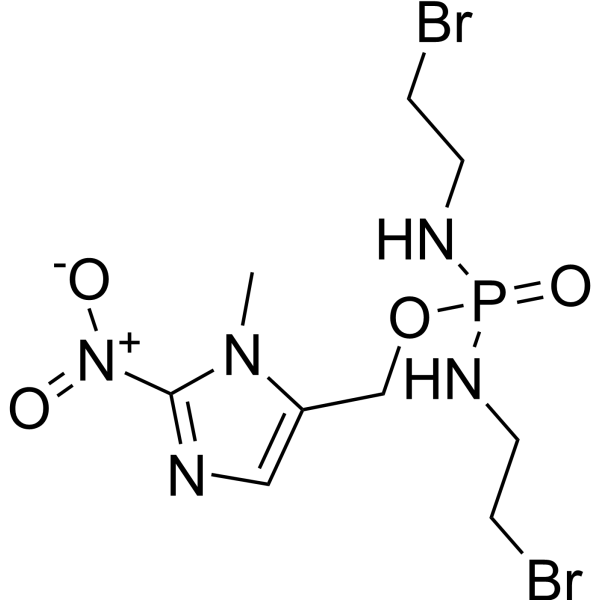
Evofosfamide
Based on 8 publication(s) in Google Scholar
Evofosfamide (TH-302) is a hypoxia-activated proagent with IC50 of 10 μM and 1000 μM in hypoxia (N2) and normoxia (21% O2), respectively.
Nur für Forschungszwecke. Wir verkaufen nicht an Patienten.
- Reinheit : 98.0%
- CAS. Nr.: 918633-87-1
- Formel: C9H16Br2N5O4P
- Molecular Weight:449.04
-
Speicherung:Powder -20°C, 3 years , 4°C, 2 years ; In solvent -80°C, 6 months , -20°C, 1 month

To place orders, for customer services and technical support, please contact: MedChemExpress USA
Tel: 609-228-6898 E-mail: [email protected] [email protected]


-
 Biologische Aktivität
-
Chemical Information
-
Lösungsmittel & Löslichkeit
- Protokoll
- Reinheit & Dokumentation
- Verweise
-
 Help & FAQs


-
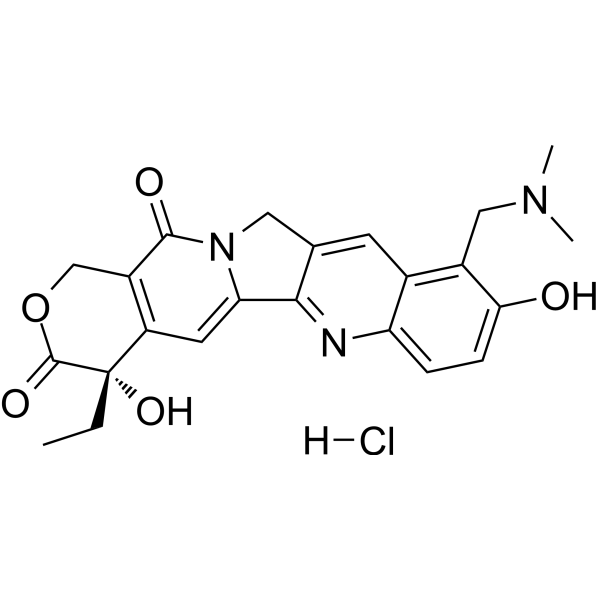
HY-13768A
Topotecan hydrochlorideTopoisomerase I Inhibitor -
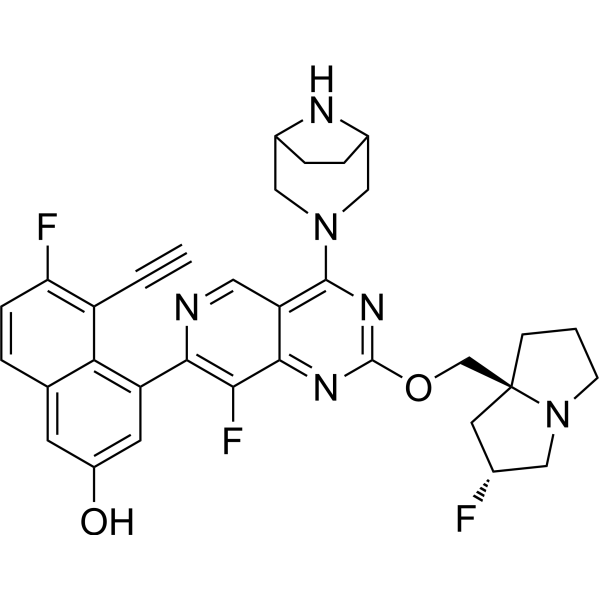
HY-134813
MRTX1133KRAS G12D Inhibitor -
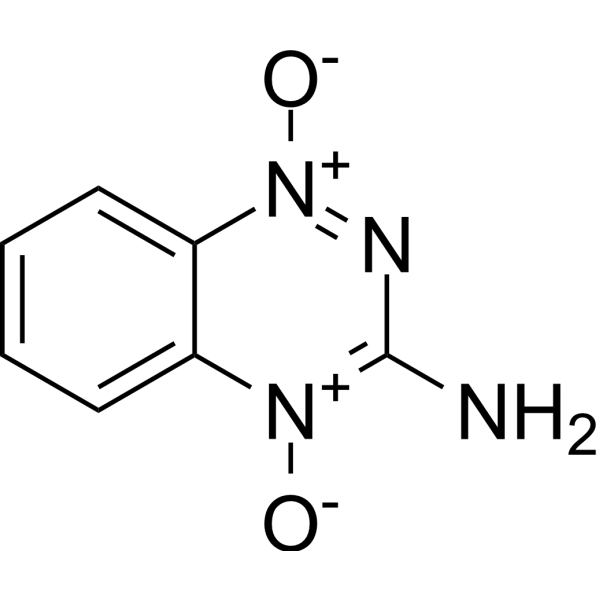
HY-13767
TirapazamineAnticancer Agent -
HY-13629
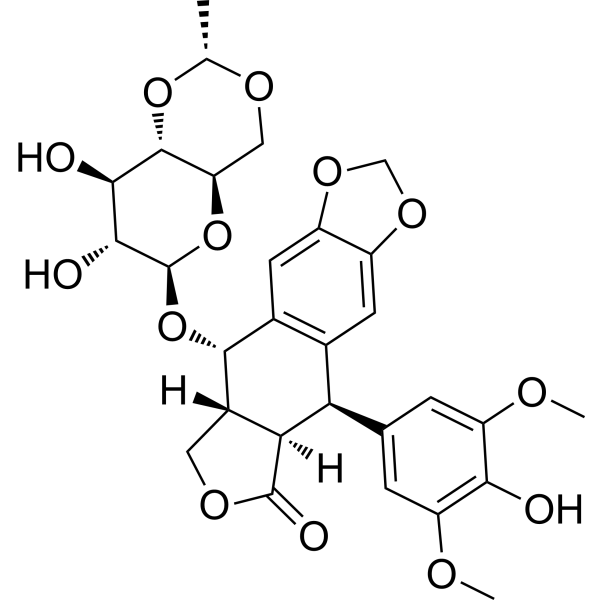
EtoposideTopoisomerase II Inhibitor -

HY-10535R
Evofosfamide (Standard)Reference Standard -
HY-16562
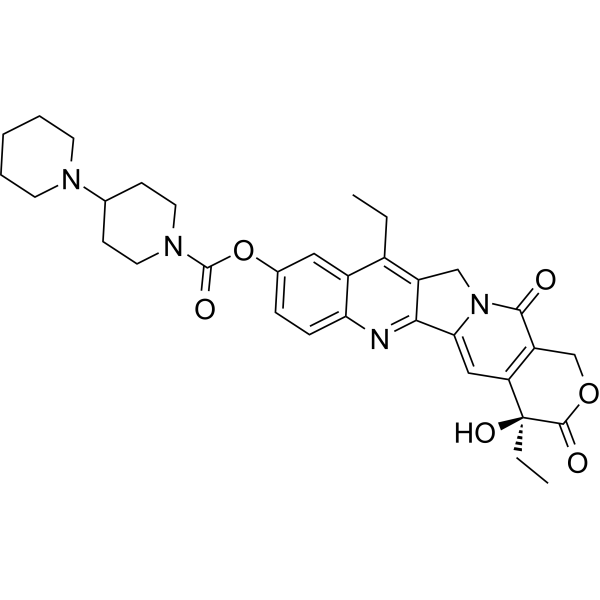
IrinotecanTopoisomerase I Inhibitor -
HY-14596
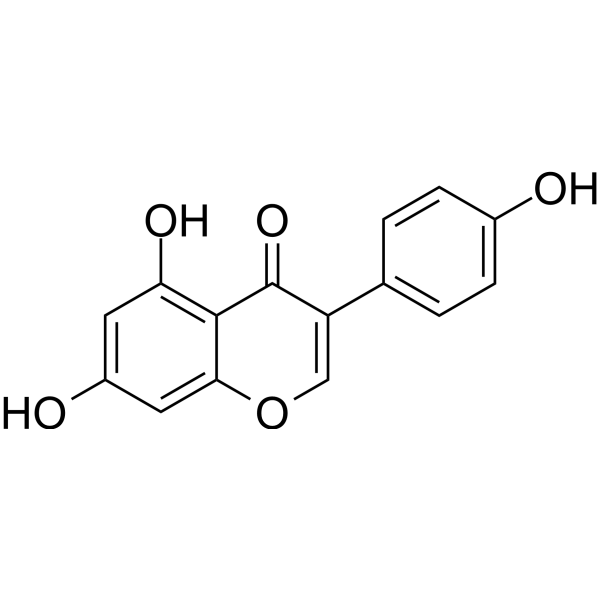
GenisteinAutophagy Inducer -
HY-B0183
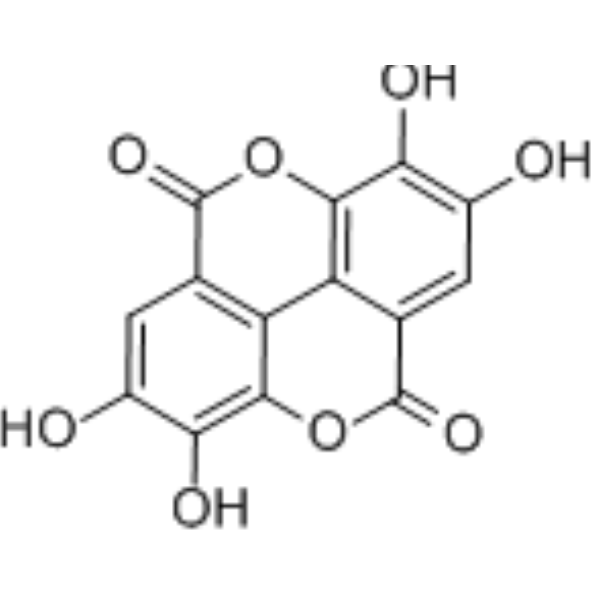
Ellagic acidSHP2 Inhibitor -
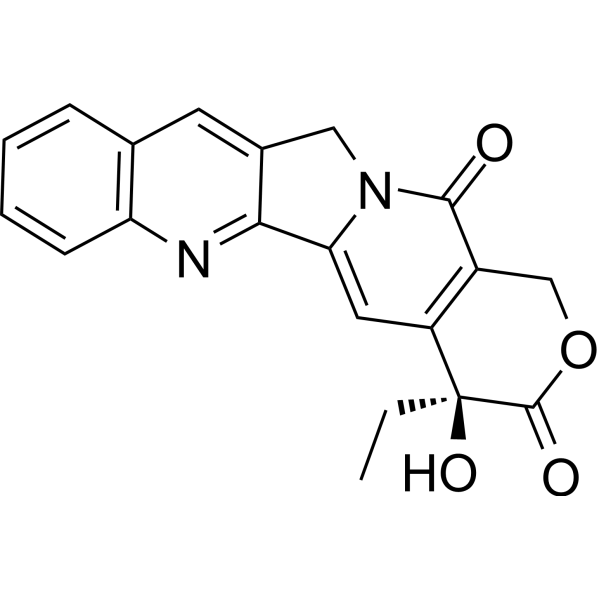
HY-16560
CamptothecinTopo I inhibitor -
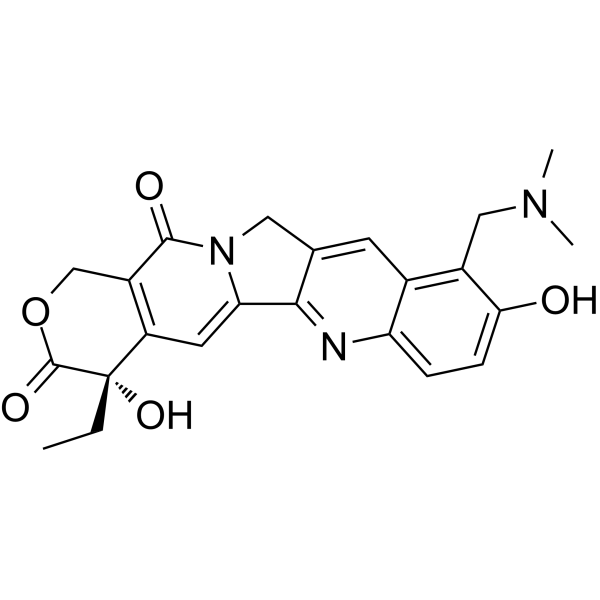
HY-13768
TopotecanTopo I Inhibitor -
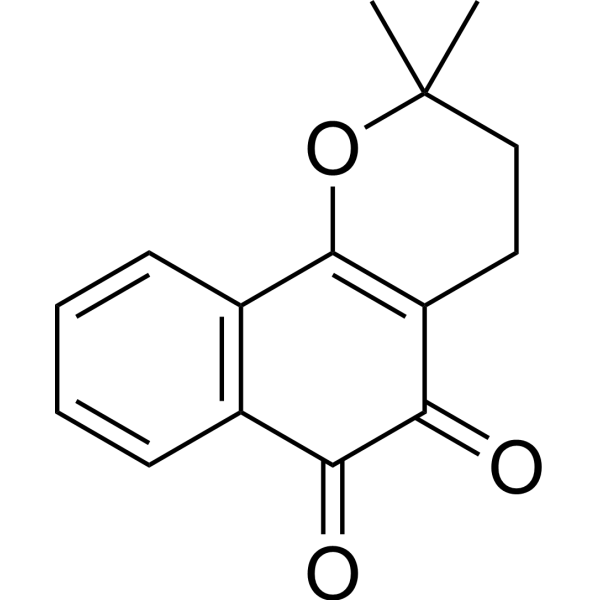
HY-13555
β-LapachoneAutophagy Inducer -
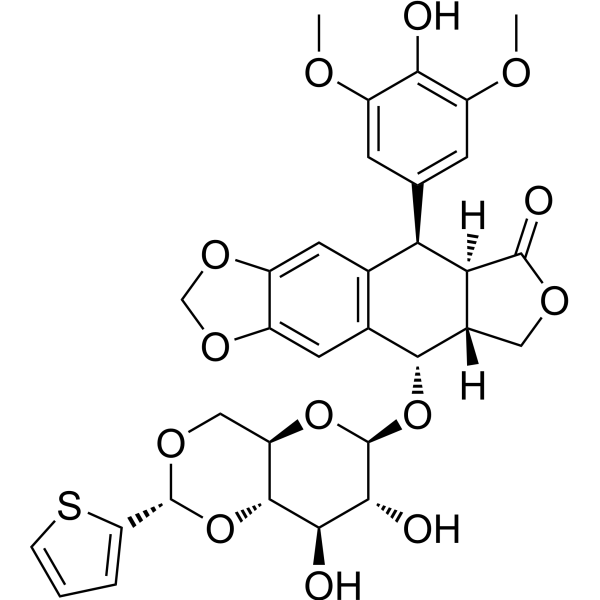
HY-13761
TeniposideTopoisomerase Inhibitor
Publications Citing Use of MedChemExpress (MCE) Evofosfamide
More- J Immunother Cancer. 2025 May 30;13(5):e011398. [Abstract]
- Anal Chem. 2026 May 24. [Abstract]
- ACS Med Chem Lett. 2015 Jun 22;6(8):948-52. [Abstract]
- Front Oncol. 2021 Apr 30:11:672047. [Abstract]
- SLAS Discov. 2023 Dec 13:100130. [Abstract]
- SLAS Discov. 2022 Jan;27(1):39-54. [Abstract]
- Clin Transl Oncol. 2025 Jun 14. [Abstract]
- bioRxiv. 2024 Nov 06.


Biologische Aktivität
Beschreibung
IC50 & Target
Hypoxia-activated prodrug[1]
Cellular Effect
|
Cell Line

|
Type | Value | Description | References |
|---|---|---|---|---|
| DU-145 | IC50 |
4.14 μM
Compound: 2; TH-302
|
Cytotoxicity against human DU145 cells incubated for 2 hrs under hypoxic condition measured after 72 hrs by Alamar blue assay
Cytotoxicity against human DU145 cells incubated for 2 hrs under hypoxic condition measured after 72 hrs by Alamar blue assay
|
[PMID: 29259746] |
| DU-145 | IC50 |
842 μM
Compound: 2; TH-302
|
Cytotoxicity against human DU145 cells incubated for 2 hrs under normoxic condition measured after 72 hrs by Alamar blue assay
Cytotoxicity against human DU145 cells incubated for 2 hrs under normoxic condition measured after 72 hrs by Alamar blue assay
|
[PMID: 29259746] |
| H-EMC-SS | IC50 |
0.13 μM
Compound: TH-302
|
Antiproliferative activity against human HEMC-SS cells treated for 24 hrs under hypoxic condition followed by compound wash-out and incubated under normoxic condition for 48 hrs by alamar blue assay
Antiproliferative activity against human HEMC-SS cells treated for 24 hrs under hypoxic condition followed by compound wash-out and incubated under normoxic condition for 48 hrs by alamar blue assay
|
[PMID: 30199705] |
| H-EMC-SS | IC50 |
2.9 μM
Compound: TH-302
|
Antiproliferative activity against human HEMC-SS cells treated for 24 hrs under normoxic condition followed by compound wash-out and incubated under normoxic condition for 48 hrs by alamar blue assay
Antiproliferative activity against human HEMC-SS cells treated for 24 hrs under normoxic condition followed by compound wash-out and incubated under normoxic condition for 48 hrs by alamar blue assay
|
[PMID: 30199705] |
| HT-29 | IC50 |
>100 μM
Compound: TH-302
|
Cytotoxicity against human HT-29 cells pretreated for 24 hrs under normoxic condition followed by compound washout measured after 72 hrs by MTT assay
Cytotoxicity against human HT-29 cells pretreated for 24 hrs under normoxic condition followed by compound washout measured after 72 hrs by MTT assay
|
[PMID: 28350997] |
| HT-29 | IC50 |
49.51 μM
Compound: TH-302
|
Cytotoxicity against human HT-29 cells pretreated for 24 hrs under hypoxic condition followed by compound washout measured after 72 hrs by MTT assay
Cytotoxicity against human HT-29 cells pretreated for 24 hrs under hypoxic condition followed by compound washout measured after 72 hrs by MTT assay
|
[PMID: 28350997] |
| MDA-MB-468 | IC50 |
0.0062 μM
Compound: TH-302
|
Cytotoxicity against human MDA-MB-468 cells incubated for 4 hrs under hypoxic condition followed by compound washout and measured after 5 days by SRB assay
Cytotoxicity against human MDA-MB-468 cells incubated for 4 hrs under hypoxic condition followed by compound washout and measured after 5 days by SRB assay
|
[PMID: 30885680] |
| MDA-MB-468 | IC50 |
4.403 μM
Compound: TH-302
|
Cytotoxicity against human MDA-MB-468 cells incubated for 4 hrs under aerobic condition followed by compound washout and measured after 5 days by SRB assay
Cytotoxicity against human MDA-MB-468 cells incubated for 4 hrs under aerobic condition followed by compound washout and measured after 5 days by SRB assay
|
[PMID: 30885680] |
| NCI-H460 | IC50 |
>100 μM
Compound: 266
|
Antiproliferative activity against human NCI-H460 cells
Antiproliferative activity against human NCI-H460 cells
|
[PMID: 30295477] |
| NCI-H460 | IC50 |
0.019 μM
Compound: 3b, TH-302
|
Cytotoxicity against human H460 cells under hypoxic condition after 2 hrs by Alamar blue staining assay
Cytotoxicity against human H460 cells under hypoxic condition after 2 hrs by Alamar blue staining assay
|
[PMID: 18257544] |
| NCI-H460 | IC50 |
2 μM
Compound: 266
|
Antiproliferative activity against human NCI-H460 cells in presence of N2
Antiproliferative activity against human NCI-H460 cells in presence of N2
|
[PMID: 30295477] |
| NCI-H460 | IC50 |
25 μM
Compound: 266
|
Antiproliferative activity against human NCI-H460 cells in presence of O2
Antiproliferative activity against human NCI-H460 cells in presence of O2
|
[PMID: 30295477] |
| NCI-H460 | IC50 |
5.1 μM
Compound: 3b, TH-302
|
Cytotoxicity against human H460 cells under normoxic condition after 2 hrs by Alamar blue staining assay
Cytotoxicity against human H460 cells under normoxic condition after 2 hrs by Alamar blue staining assay
|
[PMID: 18257544] |
| NCI-H460 | IC50 |
50.97 μM
Compound: TH-302
|
Cytotoxicity against human NCI-H460 cells pretreated for 24 hrs under normoxic condition followed by compound washout measured after 72 hrs by MTT assay
Cytotoxicity against human NCI-H460 cells pretreated for 24 hrs under normoxic condition followed by compound washout measured after 72 hrs by MTT assay
|
[PMID: 28350997] |
| NCI-H460 | IC50 |
6650 nM
Compound: TH-302
|
Cytotoxicity against human NCI-H460 cells after 24 hrs under normoxic condition by luminescence-based Cell-Titer Glo assay
Cytotoxicity against human NCI-H460 cells after 24 hrs under normoxic condition by luminescence-based Cell-Titer Glo assay
|
[PMID: 29079474] |
| NCI-H460 | IC50 |
9.08 μM
Compound: TH-302
|
Cytotoxicity against human NCI-H460 cells pretreated for 24 hrs under hypoxic condition followed by compound washout measured after 72 hrs by MTT assay
Cytotoxicity against human NCI-H460 cells pretreated for 24 hrs under hypoxic condition followed by compound washout measured after 72 hrs by MTT assay
|
[PMID: 28350997] |
| NCI-H460 | IC50 |
9.3 nM
Compound: TH-302
|
Cytotoxicity against human NCI-H460 cells after 24 hrs under hypoxic condition by luminescence-based Cell-Titer Glo assay
Cytotoxicity against human NCI-H460 cells after 24 hrs under hypoxic condition by luminescence-based Cell-Titer Glo assay
|
[PMID: 29079474] |
| PC-3 | IC50 |
6.49 μM
Compound: 2; TH-302
|
Cytotoxicity against human PC3 cells incubated for 2 hrs under hypoxic condition measured after 72 hrs by Alamar blue assay
Cytotoxicity against human PC3 cells incubated for 2 hrs under hypoxic condition measured after 72 hrs by Alamar blue assay
|
[PMID: 29259746] |
| PC-3 | IC50 |
687 μM
Compound: 2; TH-302
|
Cytotoxicity against human PC3 cells incubated for 2 hrs under normoxic condition measured after 72 hrs by Alamar blue assay
Cytotoxicity against human PC3 cells incubated for 2 hrs under normoxic condition measured after 72 hrs by Alamar blue assay
|
[PMID: 29259746] |
| SW-620 | IC50 |
0.052 μM
Compound: TH-302
|
Cytotoxicity against human SW620 cells incubated for 4 hrs under hypoxic condition followed by compound washout and measured after 5 days by SRB assay
Cytotoxicity against human SW620 cells incubated for 4 hrs under hypoxic condition followed by compound washout and measured after 5 days by SRB assay
|
[PMID: 30885680] |
| SW-620 | IC50 |
20.6 μM
Compound: TH-302
|
Cytotoxicity against human SW620 cells incubated for 4 hrs under aerobic condition followed by compound washout and measured after 5 days by SRB assay
Cytotoxicity against human SW620 cells incubated for 4 hrs under aerobic condition followed by compound washout and measured after 5 days by SRB assay
|
[PMID: 30885680] |
In Vitro
Evofosfamide (TH-302) induces γH2AX and apoptosis. Evofosfamide displays hypoxia-selective and concentration-dependent cytotoxic activity that is comparable in both p53-proficient and -deficient cells. Treatment with Evofosfamide (TH-302) alone causes an accumulation of G2/M cells. Inhibition of Chk1 by PF47736 in cells treated with Evofosfamide reduces Evofosfamide (TH-302)-mediated G2/M arrest under both normoxia and hypoxia[1].
MedChemExpress (MCE) has not independently confirmed the accuracy of these methods. They are for reference only. Further protocols information, click here.
In Vivo
MedChemExpress (MCE) has not independently confirmed the accuracy of these methods. They are for reference only.
Clinical Trial
| NCT Number | Sponsor | Condition | Start Date |
Phase
|
|---|---|---|---|---|
| NCT01329991 | Plexxikon| | 2011-05 | PHASE1 |


Chemical Information
-
CAS. Nr. 918633-87-1
-
Appearance Solid
-
Molecular Weight 449.04
-
Formel C9H16Br2N5O4P
-
Color White to yellow
-
SMILES
O=P(NCCBr)(OCC1=CN=C(N1C)[N+]([O-])=O)NCCBr
-
Synonyms
TH-302
-
Versand
Room temperature in continental US; may vary elsewhere.
-
Speicherung
Powder -20°C 3 years 4°C 2 years In solvent -80°C 6 months -20°C 1 month


Publications (8)
-
Journal Impact Factor
-
Most Recent
-
J Immunother Cancer
Neovascular pruning by IDO1 inhibitors can potentiate immunogenic cytotoxicity of ischemia-targeted agents to synergistically enhance anti-PD-1 responsiveness. [Abstract]2025 May 30;13(5):e011398. PMID: 40447318 -
Anal Chem
A Dual-Channel Self-Calibrated Fluorescent Probe for the Correlation of Nitroreductase Activity and DNA Damage. [Abstract]2026 May 24. PMID: 42178687 -
ACS Med Chem Lett
High-Throughput Screening of Patient-Derived Cultures Reveals Potential for Precision Medicine in Glioblastoma. [Abstract]2015 Jun 22;6(8):948-52. PMID: 26288699 -
Front Oncol
Monitoring Treatment Efficacy of Antiangiogenic Therapy Combined With Hypoxia-Activated Prodrugs Online Using Functional MRI. [Abstract]2021 Apr 30:11:672047. PMID: 33996599 -
SLAS Discov
Reprint of: Detection and Impact of Hypoxic Regions in Multicellular Tumor Spheroid Cultures formed by Head and Neck Squamous Cell Carcinoma Cells Lines. [Abstract]2023 Dec 13:100130. PMID: 38101574 -
SLAS Discov
Detection and impact of hypoxic regions in multicellular tumor spheroid cultures formed by head and neck squamous cell carcinoma cells lines. [Abstract]2022 Jan;27(1):39-54. PMID: 35058175 -
Clin Transl Oncol
TH-302 (evofosfamide) monotherapy exerts anticancer activity in Ewing's sarcoma cells under hypoxia. [Abstract]2025 Jun 14. PMID: 40515777 -


Lösungsmittel & Löslichkeit
In Vitro:
DMSO : 94 mg/mL (209.34 mM; Need ultrasonic and warming; Hygroscopic DMSO has a significant impact on the solubility of product, please use newly opened DMSO)
H2O : 4.35 mg/mL (9.69 mM; ultrasonic and warming and heat to 60°C)
Please refer to the solubility information to select the appropriate solvent. Once prepared, please aliquot and store the solution to prevent product inactivation from repeated freeze-thaw cycles.
Storage method and period of stock solution: -80°C, 6 months; -20°C, 1 month. When stored at -80°C, please use it within 6 months. When stored at -20°C, please use it within 1 month.
* Note: If you choose water as the stock solution, please dilute it to the working solution, then filter and sterilize it with a 0.22 μm filter before use.
Please refer to the solubility information to select the appropriate solvent. Once prepared, please aliquot and store the solution to prevent product inactivation from repeated freeze-thaw cycles.
Storage method and period of stock solution: -80°C, 6 months; -20°C, 1 month. When stored at -80°C, please use it within 6 months. When stored at -20°C, please use it within 1 month.
* Note: If you choose water as the stock solution, please dilute it to the working solution, then filter and sterilize it with a 0.22 μm filter before use.
Konzentration (Stammlösung) × Volumen (Stammlösung) = Konzentration (Ziellösung) × Volumen (Ziellösung)
In Vivo:
Select the appropriate dissolution method based on your experimental animal and administration route.
- For the following dissolution methods, please ensure to first prepare a clear stock solution using an In Vitro approach and then sequentially add co-solvents:
- To ensure reliable experimental results, the clarified stock solution can be appropriately stored based on storage conditions. As for the working solution for In Vivo experiments, it is recommended to prepare freshly and use it on the same day.
- The percentages shown for the solvents indicate their volumetric ratio in the final prepared solution. If precipitation or phase separation occurs during preparation, heat and/or sonication can be used to aid dissolution.
Add each solvent one by one: 10% DMSO 40% PEG300 5% Tween-80 45% Saline
Solubility: ≥ 2.5 mg/mL (5.57 mM); Clear solution
This protocol yields a clear solution of ≥ 2.5 mg/mL (saturation unknown).
Taking 1 mL working solution as an example, add 100 μL DMSO stock solution (25.0 mg/mL) to 400 μL PEG300, and mix evenly; then add 50 μL Tween-80 and mix evenly; then add 450 μL Saline to adjust the volume to 1 mL.
Preparation of Saline: Dissolve 0.9 g sodium chloride in ddH₂O and dilute to 100 mL to obtain a clear Saline solution.
Add each solvent one by one: 10% DMSO 90% (20% SBE-β-CD in Saline)
Solubility: ≥ 2.5 mg/mL (5.57 mM); Clear solution
This protocol yields a clear solution of ≥ 2.5 mg/mL (saturation unknown).
Taking 1 mL working solution as an example, add 100 μL DMSO stock solution (25.0 mg/mL) to 900 μL 20% SBE-β-CD in Saline, and mix evenly.
Preparation of 20% SBE-β-CD in Saline (4°C, storage for one week): 2 g SBE-β-CD powder is dissolved in 10 mL Saline, completely dissolve until clear.
For the following dissolution methods, please prepare the working solution directly:
It is recommended to prepare fresh solutions and use them promptly within a short period of time.
The percentages shown for the solvents indicate their volumetric ratio in the final prepared solution. If precipitation or phase separation occurs during preparation, heat and/or sonication can be used to aid dissolution.
Add each solvent one by one: 50% PEG300 50% Saline
Solubility: 10 mg/mL (22.27 mM); Clear solution; Need ultrasonic
In Vivo Dissolution Calculator
Please enter the basic information of animal experiments:
-
-
-
-
Recommended: Prepare an additional quantity of animals to account for potential losses during experiments.
Please enter your animal formula composition:
-
%DMSO +
Recommended: Keep the proportion of DMSO in working solution below 2% if your animal is weak.
-
%+
-
+%Tween-80 + +
-
%Saline +
The co-solvents required include: DMSO, . All of co-solvents are available by MedChemExpress (MCE). , Tween 80. All of co-solvents are available by MedChemExpress (MCE).
Working solution concentration: 0.22 mg/mL
Method for preparing stock solution: mg drug dissolved in μL DMSO. Stock solution concentration: mg/mL.
1. Take μL DMSO stock solution;
2. Add μL .
μL , mix evenly;
3. Then add μL Tween 80, mix evenly;
4. Then add μL
Please ensure that the stock solution in the first step is dissolved to a clear state, and add co-solvents in sequence. You can use ultrasonic heating (ultrasonic cleaner, recommended frequency 20-40 kHz), vortexing, etc. to assist dissolution.

Protokoll
-
Cell Cytotoxicity Assay
Cytotoxicity assays are usually based on the assessment of cell membrane damage, which can also be indirectly detected by measuring cell viability. Detection methods include MTT assay, CKK-8 assay, LDH assay and ATP assay, etc.


Reinheit & Dokumentation
-
Data Sheet (286 KB)
-
SDS (393 KB)
- English - EN (393 KB)
- Français - FR (393 KB)
- Deutsch - DE (393 KB)
- Norwegian - NO (393 KB)
- Español - ES (393 KB)
- Swedish - SV (393 KB)
- Italian - IT (393 KB)
- Korean - KR (393 KB)
- Portuguese - PT (393 KB)
-
Handling Instructions (2659 KB)
Verweise
[1]. Meng F, et al. Enhancement of hypoxia-activated prodrug TH-302 anti-tumor activity by Chk1 inhibition. BMC Cancer. 2015 May 21;15:422. [Content Brief]
[2]. Zhang X, et al. MR Imaging Biomarkers to Monitor Early Response to Hypoxia-Activated Prodrug TH-302 in Pancreatic Cancer Xenografts. PLoS One. 2016 May 26;11(5):e0155289. [Content Brief]
[3]. Peeters SG, et al. TH-302 in Combination with Radiotherapy Enhances the Therapeutic Outcome and Is Associated with Pretreatment [18F]HX4 Hypoxia PET Imaging. Clin Cancer Res. 2015 Jul 1;21(13):2984-92. [Content Brief]


Complete Stock Solution Preparation Table
Please refer to the solubility information to select the appropriate solvent. Once prepared, please aliquot and store the solution to prevent product inactivation from repeated freeze-thaw cycles.
Storage method and period of stock solution: -80°C, 6 months; -20°C, 1 month. When stored at -80°C, please use it within 6 months. When stored at -20°C, please use it within 1 month.
| Optional Solvent | Concentration Solvent Mass | 1 mg | 5 mg | 10 mg | 25 mg |
|---|---|---|---|---|---|
| H2O / DMSO | 1 mM | 2.2270 mL | 11.1349 mL | 22.2697 mL | 55.6743 mL |
| 5 mM | 0.4454 mL | 2.2270 mL | 4.4539 mL | 11.1349 mL | |
| DMSO | 10 mM | 0.2227 mL | 1.1135 mL | 2.2270 mL | 5.5674 mL |
| 15 mM | 0.1485 mL | 0.7423 mL | 1.4846 mL | 3.7116 mL | |
| 20 mM | 0.1113 mL | 0.5567 mL | 1.1135 mL | 2.7837 mL | |
| 25 mM | 0.0891 mL | 0.4454 mL | 0.8908 mL | 2.2270 mL | |
| 30 mM | 0.0742 mL | 0.3712 mL | 0.7423 mL | 1.8558 mL | |
| 40 mM | 0.0557 mL | 0.2784 mL | 0.5567 mL | 1.3919 mL | |
| 50 mM | 0.0445 mL | 0.2227 mL | 0.4454 mL | 1.1135 mL | |
| 60 mM | 0.0371 mL | 0.1856 mL | 0.3712 mL | 0.9279 mL | |
| 80 mM | 0.0278 mL | 0.1392 mL | 0.2784 mL | 0.6959 mL | |
| 100 mM | 0.0223 mL | 0.1113 mL | 0.2227 mL | 0.5567 mL |
* Note: If you choose water as the stock solution, please dilute it to the working solution, then filter and sterilize it with a 0.22 μm filter before use.


Evofosfamide Related Classifications
HY-10535 Related Classifications
 Powered by Bioz