



CHKα
CHKα (choline kinase alpha, CHKA) catalyzes the ATP-dependent phosphorylation of choline to phosphocholine, the first committed step of the CDP-choline pathway that drives phosphatidylcholine biosynthesis and membrane phospholipid production[1][2]. CHKα functions as a central regulator of choline metabolism and supports the generation of phospholipid intermediates required for cellular growth, proliferation, and membrane remodeling[1][3]. Mechanistically, CHKA encodes two alternatively spliced isoforms, CHKα1 and CHKα2, whereas the related CHKB gene encodes CHKβ, establishing distinct choline kinase isoforms with different biochemical and biological functions[2]. Compared with CHKβ, CHKα is the predominant mammalian isoform and is more strongly associated with phosphocholine accumulation and phosphatidylcholine biosynthesis in proliferating cells[2][4]. In disease settings, CHKα overexpression and hyperactivation are frequently observed in multiple human malignancies, including hepatocellular carcinoma, ovarian cancer, prostate cancer, colorectal cancer, and other solid tumors, where elevated phosphocholine metabolism correlates with tumor progression and aggressive cellular phenotypes[3][5][6]. Experimental studies further demonstrate that CHKα contributes to oncogenic signaling networks, including interactions with growth factor and mTOR-associated pathways that support tumor cell proliferation and survival[3][5]. Therefore, selective CHKα inhibition has emerged as a research strategy for suppressing aberrant choline metabolism, and multiple small-molecule CHKα inhibitors have been developed as pharmacological tools for cancer biology and therapeutic investigation[3][7].
References:
- [1]. Uniprotkb.
- [2]. Prabhu AV, et al. DHCR7: A vital enzyme switch between cholesterol and vitamin D production. Prog Lipid Res. 2016 Oct;64:138-151. [Content Brief]
- [3]. Lacal JC, et al. Choline Kinase: An Unexpected Journey for a Precision Medicine Strategy in Human Diseases. Pharmaceutics. 2021 May 25;13(6):788. [Content Brief]
- [4]. Kong M, et al. Choline Kinase Alpha Is a Novel Transcriptional Target of the Brg1 in Hepatocyte: Implication in Liver Regeneration. Front Cell Dev Biol. 2021 Aug 6;9:705302. [Content Brief]
- [5]. Granata A, et al. Choline kinase-alpha by regulating cell aggressiveness and drug sensitivity is a potential druggable target for ovarian cancer. Br J Cancer. 2014 Jan 21;110(2):330-40. [Content Brief]
- [6]. CHKα gene information from NCBI.
- [7]. Zech SG, et al. Novel Small Molecule Inhibitors of Choline Kinase Identified by Fragment-Based Drug Discovery. J Med Chem. 2016 Jan 28;59(2):671-86. [Content Brief]
All Product Categories
-
CHKα Related Products (3)
Related Products (3)

-
V-11-0711
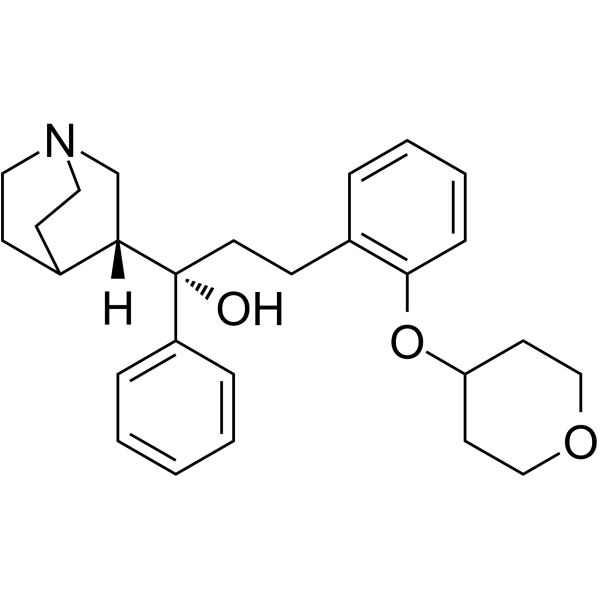 0 ImagesV-11-0711 is a potent and selective Chk-α (IC50 = 20 nM) inhibitor. V-11-0711 can significantly reduce PCho levels. V-11-0711 causes a reversible growth arrest. V-11-0711 induces apoptosis at high concentrations. V-11-0711 can be used for the study of cervical cancer and triple-negative breast cancer.
-
CK37
 0 ImagesCat. No.: HY-101145CAS No.: 1001478-90-5CK37 is a competitive choline kinase-α inhibitor. CK37 inhibits purified recombinant human choline kinase-α activity. CK37 suppresses MAPK and PI3K/AKT signaling, disrupts actin cytoskeletal organization. CK37 diminishs activating phosphorylations of ERK. CK37 exhibits anticancer activity against cervical cancer, melanoma, Lewis lung carcinoma, lung adenocarcinoma, breast cancer, and leukemia.
-
Chk2-IN-1
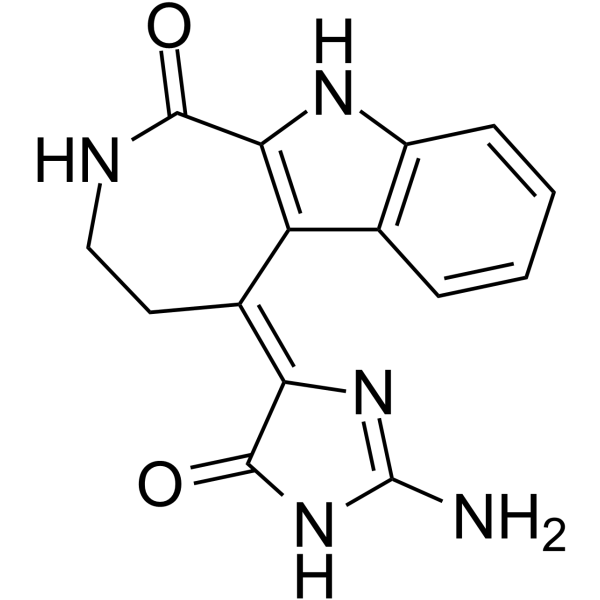 0 ImagesCat. No.: HY-112477CAS No.: 724708-21-8Synonyms: Hymenialdisine analogue-1Chk2-IN-1 (compound 1) is a potent and selective inhibitor of checkpoint kinase 2 (Chk2), with IC50s of 13.5 nM and 220.4 nM for Chk2 and Chk1, respectively. Chk2-IN-1 can elicit a strong ataxia telangiectasia mutated (ATM)-dependent Chk2-mediated radioprotection effect.



