



HPPD
4-Hydroxyphenylpyruvate dioxygenase
4-Hydroxyphenylpyruvate dioxygenase (HPPD) is an Fe(II)-dependent, non-heme oxygenase that catalyzes the conversion of 4-hydroxyphenylpyruvate to homogentisate. HPPD catalyzes the second step in the pathway for the catabolism of tyrosine, that is common to essentially all aerobic forms of life. In plants this pathway has an anabolic branch from homogentisate that forms essential isoprenoid redox cofactors such as plastoquinone and tocopherol.he transformation catalyzed by HPPD has both agricultural and therapeutic significance
All Product Categories
-
HPPD Related Products (37)
Related Products (37)

- 1
- 2
-
Nitisinone
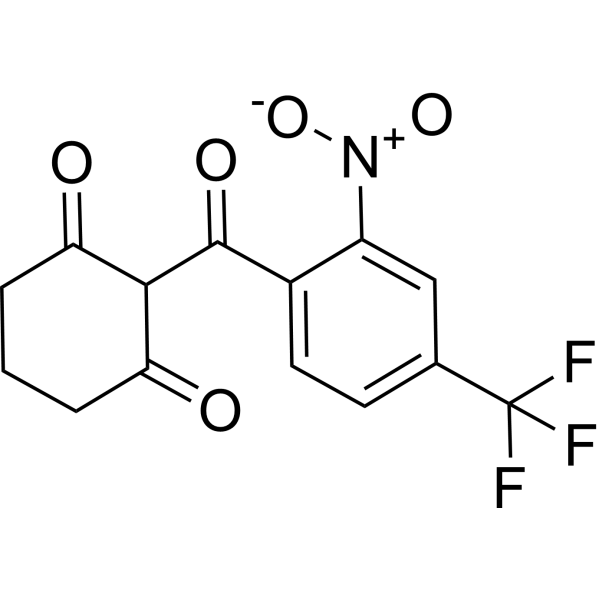 0 ImagesSynonyms: NTBC; Nitisone; SC0735Nitisinone is an orally active, competitive and reversible 4-hydroxyphenylpyruvate dioxygenase (4-HPPD) inhibitor with an IC50 of 173 nM. Nitisinone promotes tyrosine accumulation in a dose-dependent manner. nitisinone can be used in studies of hereditary tyrosinemia type 1 (HT-1) (a rare genetic disorder) and albinism.
-
Bicyclopyrone
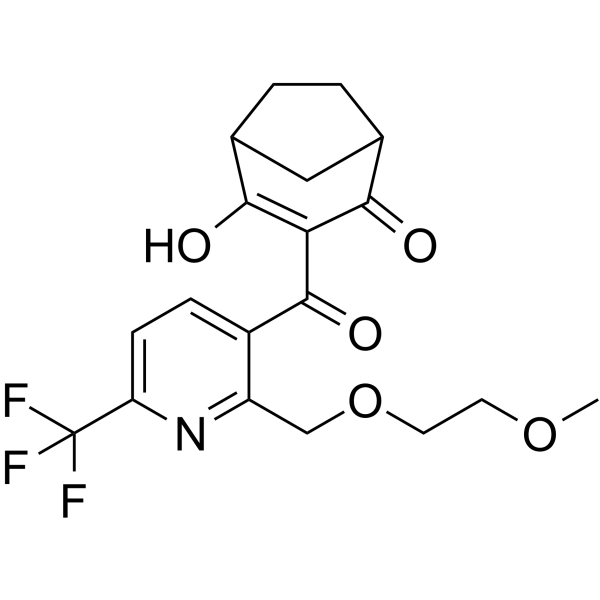 0 ImagesBicyclopyrone is an inhibitor of 4-hydroxyphenylpyruvate dioxygenase (Hpd).
-
Benzobicyclon
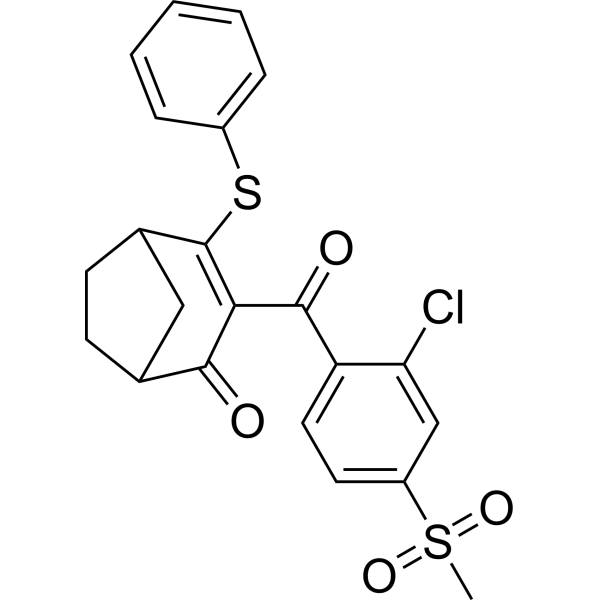 0 ImagesBenzobicyclon is a 4-HPPD inhibitor and herbicide that reacts with water to form a hydrolysate of the active herbicide benzobicycline, causing bleaching and death of weeds. Benzobicyclon is effective against grass, sedge and broadleaf weeds. Benzobicyclon effectively targets sulfonylurea herbicide-resistant biotypes as well as wild-type weeds.
-
Tembotrione
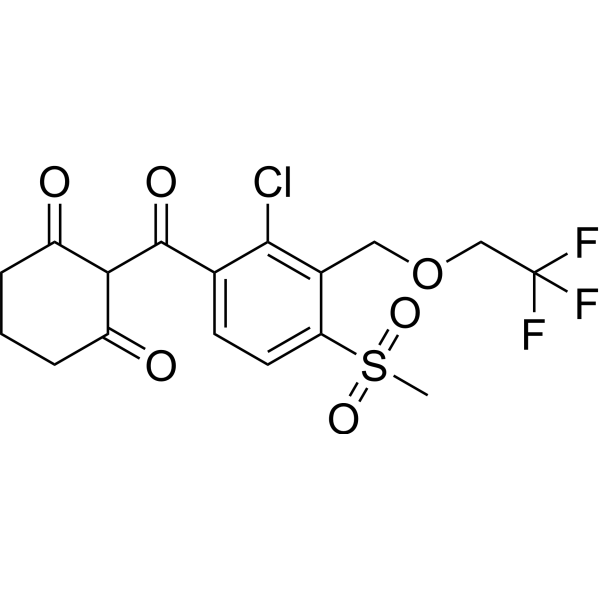 0 ImagesTembotrione is a herbicide belonging to the HPPD (dioxygenase) inhibitor class with crop selectivity. Tembotrione effectively controls a variety of weeds including broadleaf and gramineous species by disrupting carotenoid synthesis, which leads to chlorophyll degradation and leaf whitening. Mixing Tembotrione with isoxaflutole or adding surfactants optimizes its efficacy and reduces phytotoxicity, with no residual impact on subsequent cruciferous crops, thus helping to increase maize grain yield. The activity of Tembotrione decreases under drought conditions, and under specific conditions (such as double-dose treatment), it may cause reversible yellowing and even yield reduction in crops such as poppy.

-
Quinclorac
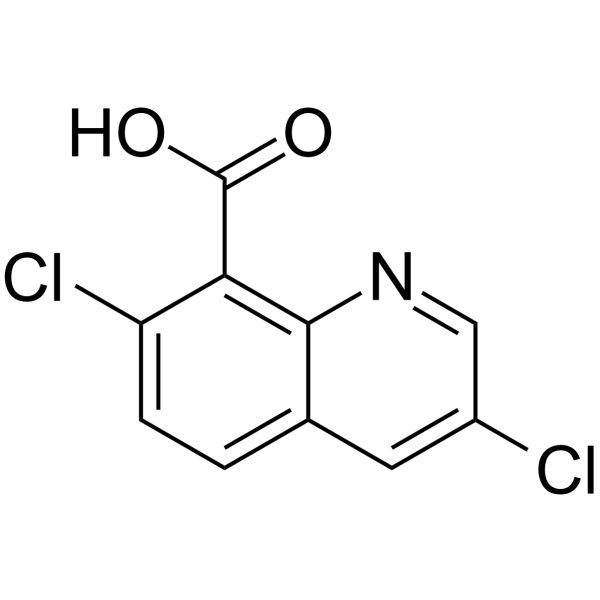 0 ImagesQuinclorac is a highly selective quinoline carboxylic acid synthetic auxin herbicide. Quinclorac weakly inhibits HPPD, accompanied by a transient decrease in carotenoids. Quinclorac upregulates ACC synthase (ACS), leading to the co-accumulation of ethylene and cyanide, while increasing the ABA/IAA ratio, which induces ROS burst, membrane lipid peroxidation (MDA) and lethal growth inhibition. Residual Quinclorac in soil can cause abnormal growth of subsequent tobacco crops. In calli of Phaseolus vulgaris, Quinclorac induces oxidative stress (increased MDA and decreased RGR), but cells after stepwise pressurized acclimation acquire a constitutive antioxidant state, which remains stable after de-acclimation and tolerates oxidative damage caused by Quinclorac. Quinclorac can be used in studies related to herbicide action mechanisms, bioremediation of soil residues, and adaptive responses of plant cells to oxidative stress.
-
Quinclorac-13C
 0 ImagesCat. No.: HY-B0871SQuinclorac-13C is the 13C-labeled Quinclorac (HY-B0871). Quinclorac is a highly selective quinoline carboxylic acid synthetic auxin herbicide. Quinclorac weakly inhibits HPPD, accompanied by a transient decrease in carotenoids. Quinclorac upregulates ACC synthase (ACS), leading to the co-accumulation of ethylene and cyanide, while increasing the ABA/IAA ratio, which induces ROS burst, membrane lipid peroxidation (MDA) and lethal growth inhibition. Residual Quinclorac in soil can cause abnormal growth of subsequent tobacco crops. In calli of Phaseolus vulgaris, Quinclorac induces oxidative stress (increased MDA and decreased RGR), but cells after stepwise pressurized acclimation acquire a constitutive antioxidant state, which remains stable after de-acclimation and tolerates oxidative damage caused by Quinclorac. Quinclorac can be used in studies related to herbicide action mechanisms, bioremediation of soil residues, and adaptive responses of plant cells to oxidative stress.
-
HPPD-IN-10
 0 ImagesCat. No.: HY-184988CAS No.: 3123222-14-7HPPD-IN-10 is an inhibitor of Arabidopsis thaliana 4-hydroxyphenylpyruvate dioxygenase (HPPD), with an IC50 of 0.06 μM and a Kd of 0.265 μM. HPPD-IN-10 blocks the HPPD-mediated catalytic conversion of 4-hydroxyphenylpyruvate, downregulates the biosynthesis of plastoquinone and tocopherol, induces weed bleaching, and inhibits root and shoot growth. HPPD-IN-10 can be used in herbicide-related research on gramineous and broadleaf weeds in farmlands, such as barnyard grass and purslane.
-
HPPD-IN-3
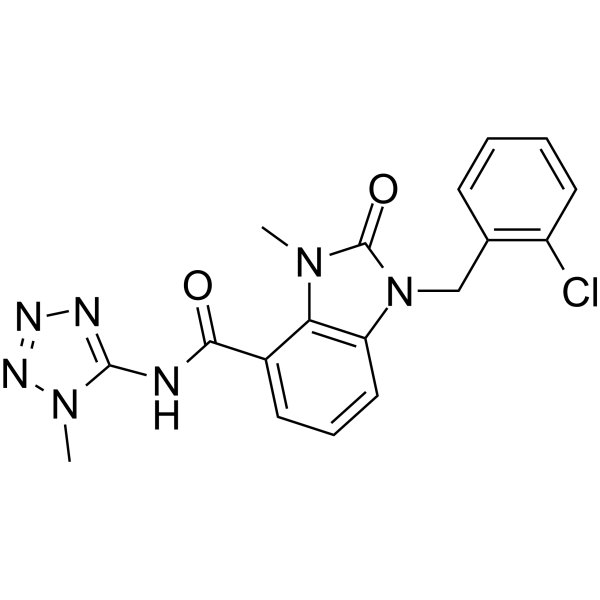 0 ImagesHPPD-IN-3 (compound 25) is a potent inhibitor of 4-Hydroxyphenylpyruvate dioxygenase (HPPD), with IC50 of 10 nM, more potency than Mesotrione (HY-12853).
-
Cypyrafluone
 0 ImagesSynonyms: HuanbifucaotongCypyrafluone is a 4-hydroxyphenylpyruvate dioxygenase (4-HPPD) inhibitor that prevents the homogentisic acid (HGA) production. Cypyrafluone can control weed in wheat fields.
-
Fenquinotrione
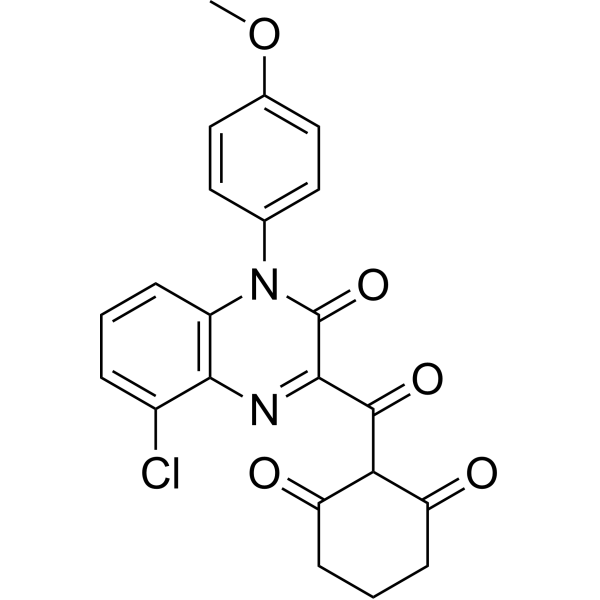 0 ImagesCat. No.: HY-111957CAS No.: 1342891-70-6
-
Iptriazopyrid
 0 ImagesSynonyms: NC-656Iptriazopyrid is a 4-hydroxyphenylpyruvate dioxygenase (HPPD) inhibitor, with a Ki value of 24.3 nM against Arabidopsis thaliana and 33.3 nM against Oryza sativa. Iptriazopyrid binds to the active pocket of HPPD, occupies the catalytic site, inhibits carotenoid biosynthesis, prevents chloroplast formation, and induces albino and chlorotic symptoms in sensitive plants. Used as a herbicide, Iptriazopyrid can control barnyardgrass when applied alone, and its efficacy does not decrease when mixed with labeled residual herbicides. When Iptriazopyrid is mixed with 2,4-D or triclopyr, its barnyardgrass control effect shows an antagonistic effect. Iptriazopyrid is a triazole carboxamide herbicide that exhibits selectivity for Oryza sativa over Echinochloa crus-galli, and has partial tank-mix compatibility with synthetic auxin herbicides registered for rice.
-
Isoxaflutole
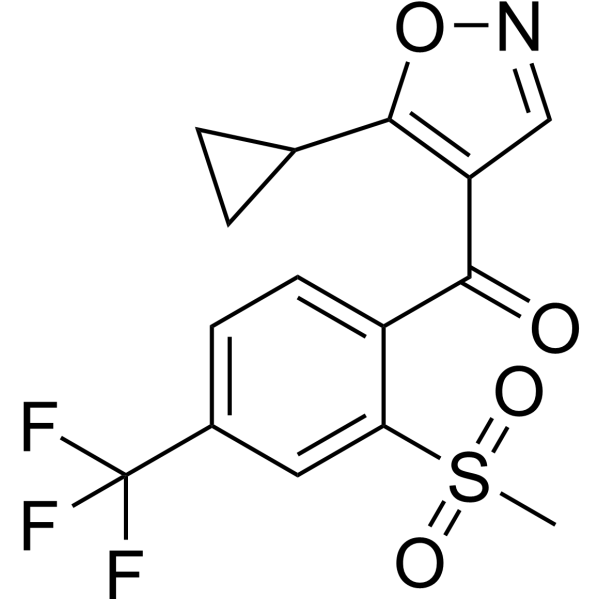 0 ImagesSynonyms: Merlin; RP-201772
-
Nitisinone (Standard)
 0 ImagesSynonyms: NTBC (Standard); Nitisone (Standard); SC0735 (Standard)Nitisinone (Standard) is the analytical standard of Nitisinone. This product is intended for research and analytical applications. Nitisinone is an orally active, competitive and reversible 4-hydroxyphenylpyruvate dioxygenase (4-HPPD) inhibitor with an IC50 of 173 nM. Nitisinone promotes tyrosine accumulation in a dose-dependent manner. nitisinone can be used in studies of hereditary tyrosinemia type 1 (HT-1) (a rare genetic disorder) and albinism.
-
HPPD-IN-4
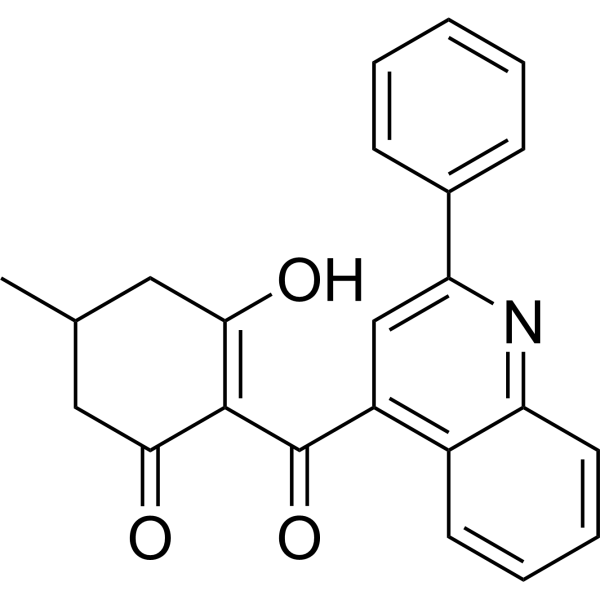
 0 ImagesCat. No.: HY-163559CAS No.: 3028731-23-6HPPD-IN-4 (Compound III-29) is a selective inhibitor of HPPD with anIC50 of 0.19 μM. HPPD-IN-4 is primarily used in the study of high-efficiency herbicides.
-
HPPD-IN-1
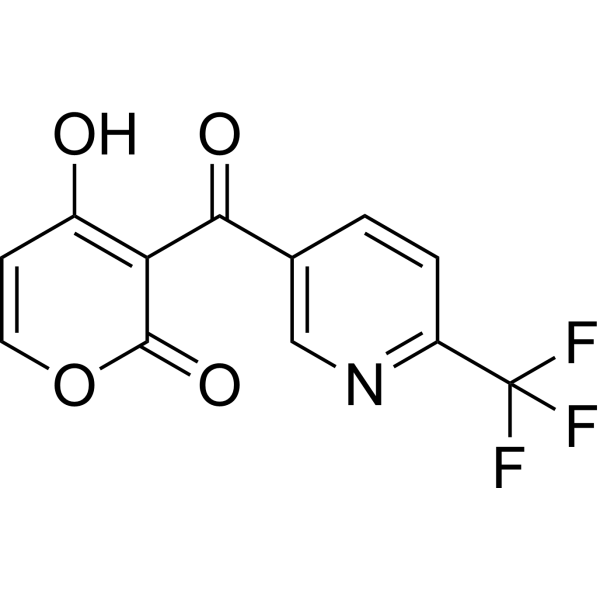 0 ImagesCat. No.: HY-155135CAS No.: 2950190-99-3HPPD-IN-1 (compound II-3) is a HPPD inhibitor. HPPD-IN-1 shows inhibitory activity of Arabidopsis thaliana HPPD (AtHPPD) with an IC50 value of 0.248 μM, which was superior to that of mesotrione (HY-12853) (0.283 μM) in vitro. HPPD-IN-1 shows excellent herbicidal activity against broadleaf and monocotyledonous weeds.

-
Bicyclopyrone (Standard)
 0 ImagesCat. No.: HY-135767RCAS No.: 352010-68-5Bicyclopyrone (Standard) is the analytical standard of Bicyclopyrone. This product is intended for research and analytical applications. Bicyclopyrone is an inhibitor of 4-hydroxyphenylpyruvate dioxygenase (Hpd).

- 1
- 2



