



HPPD Inhibitor
- 1
- 2
-
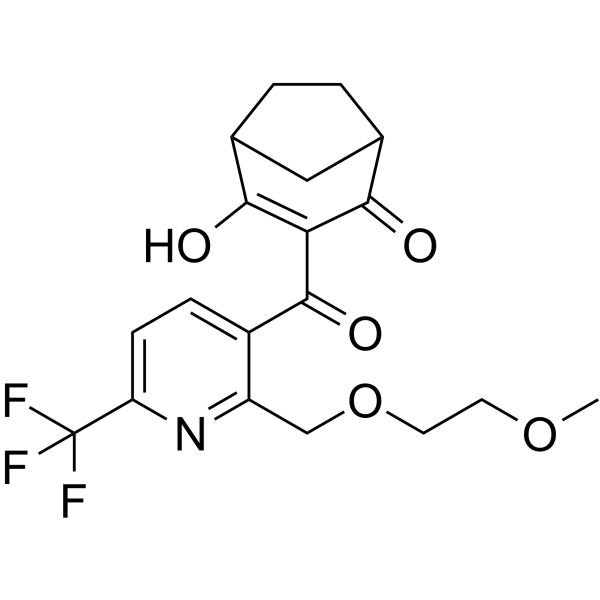
Bicyclopyrone
 0 Images
Bicyclopyrone is an inhibitor of 4-hydroxyphenylpyruvate dioxygenase (Hpd).
-
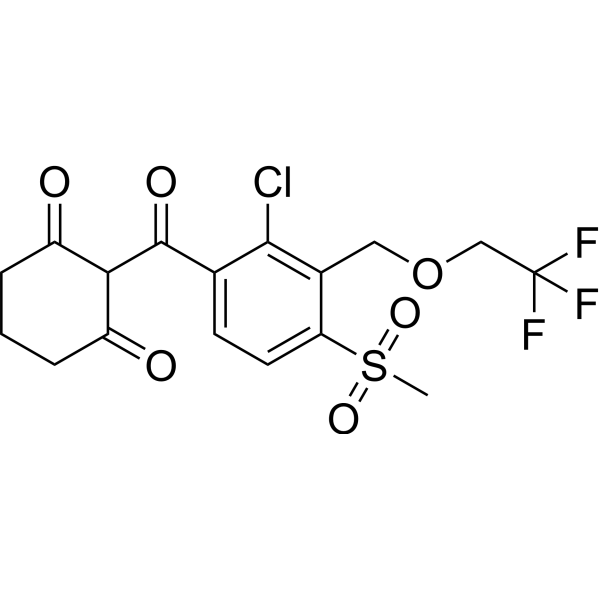
Tembotrione
 0 Images
Tembotrione is a herbicide belonging to the HPPD (dioxygenase) inhibitor class with crop selectivity. Tembotrione effectively controls a variety of weeds including broadleaf and gramineous species by disrupting carotenoid synthesis, which leads to chlorophyll degradation and leaf whitening. Mixing Tembotrione with isoxaflutole or adding surfactants optimizes its efficacy and reduces phytotoxicity, with no residual impact on subsequent cruciferous crops, thus helping to increase maize grain yield. The activity of Tembotrione decreases under drought conditions, and under specific conditions (such as double-dose treatment), it may cause reversible yellowing and even yield reduction in crops such as poppy.

-
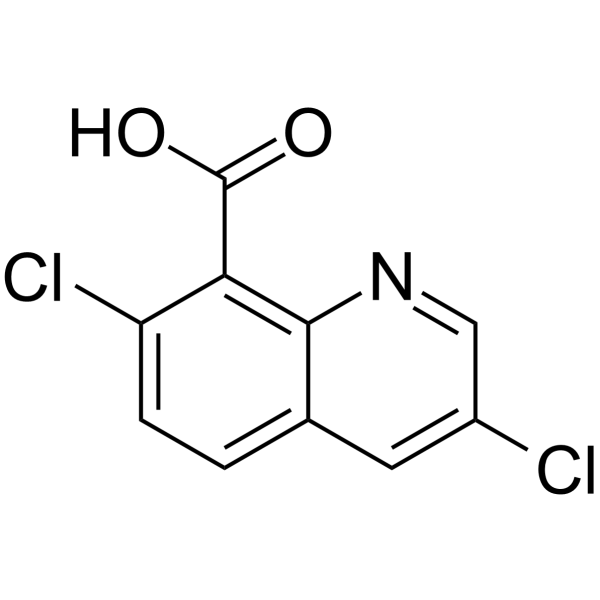
Quinclorac
 0 Images
Quinclorac is a highly selective quinoline carboxylic acid synthetic auxin herbicide. Quinclorac weakly inhibits HPPD, accompanied by a transient decrease in carotenoids. Quinclorac upregulates ACC synthase (ACS), leading to the co-accumulation of ethylene and cyanide, while increasing the ABA/IAA ratio, which induces ROS burst, membrane lipid peroxidation (MDA) and lethal growth inhibition. Residual Quinclorac in soil can cause abnormal growth of subsequent tobacco crops. In calli of Phaseolus vulgaris, Quinclorac induces oxidative stress (increased MDA and decreased RGR), but cells after stepwise pressurized acclimation acquire a constitutive antioxidant state, which remains stable after de-acclimation and tolerates oxidative damage caused by Quinclorac. Quinclorac can be used in studies related to herbicide action mechanisms, bioremediation of soil residues, and adaptive responses of plant cells to oxidative stress.

-
Quinclorac-13C
 0 ImagesCat. No.: HY-B0871S
Quinclorac-13C is the 13C-labeled Quinclorac (HY-B0871). Quinclorac is a highly selective quinoline carboxylic acid synthetic auxin herbicide. Quinclorac weakly inhibits HPPD, accompanied by a transient decrease in carotenoids. Quinclorac upregulates ACC synthase (ACS), leading to the co-accumulation of ethylene and cyanide, while increasing the ABA/IAA ratio, which induces ROS burst, membrane lipid peroxidation (MDA) and lethal growth inhibition. Residual Quinclorac in soil can cause abnormal growth of subsequent tobacco crops. In calli of Phaseolus vulgaris, Quinclorac induces oxidative stress (increased MDA and decreased RGR), but cells after stepwise pressurized acclimation acquire a constitutive antioxidant state, which remains stable after de-acclimation and tolerates oxidative damage caused by Quinclorac. Quinclorac can be used in studies related to herbicide action mechanisms, bioremediation of soil residues, and adaptive responses of plant cells to oxidative stress.
-
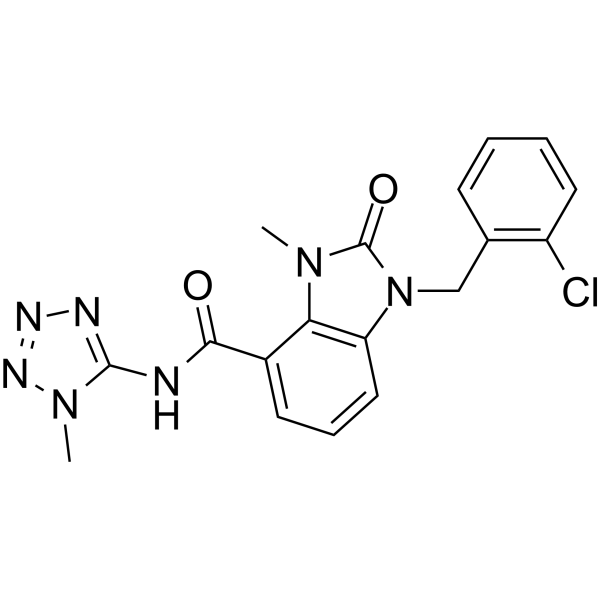
HPPD-IN-3
 0 Images
HPPD-IN-3 (compound 25) is a potent inhibitor of 4-Hydroxyphenylpyruvate dioxygenase (HPPD), with IC50 of 10 nM, more potency than Mesotrione (HY-12853).
-
Cypyrafluone
 0 ImagesSynonyms: Huanbifucaotong
Cypyrafluone (Huanbifucaotong) is a HPPD inhibitor and herbicide with an IC50 of 0.70 µM against AtHPPD. Cypyrafluone blocks the biosynthesis of plastoquinone and α-tocopherol through targeted inhibition of HPPD enzyme activity, thereby leading to the loss of photosynthetic pigments and triggering ROS-mediated photooxidative damage. Cypyrafluone can be used in research on agricultural herbicides.
-
Iptriazopyrid
 0 ImagesSynonyms: NC-656
Iptriazopyrid is a 4-hydroxyphenylpyruvate dioxygenase (HPPD) inhibitor, with a Ki value of 24.3 nM against Arabidopsis thaliana and 33.3 nM against Oryza sativa. Iptriazopyrid binds to the active pocket of HPPD, occupies the catalytic site, inhibits carotenoid biosynthesis, prevents chloroplast formation, and induces albino and chlorotic symptoms in sensitive plants. Used as a herbicide, Iptriazopyrid can control barnyardgrass when applied alone, and its efficacy does not decrease when mixed with labeled residual herbicides. When Iptriazopyrid is mixed with 2,4-D or triclopyr, its barnyardgrass control effect shows an antagonistic effect. Iptriazopyrid is a triazole carboxamide herbicide that exhibits selectivity for Oryza sativa over Echinochloa crus-galli, and has partial tank-mix compatibility with synthetic auxin herbicides registered for rice.
-
Isoxaflutole
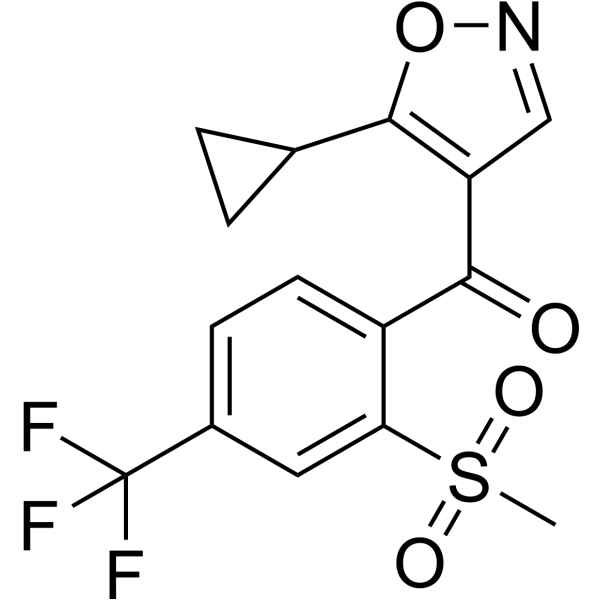 0 ImagesSynonyms: Merlin; RP-201772
-
HPPD-IN-10
 0 ImagesCat. No.: HY-184988CAS No.: 3123222-14-7
HPPD-IN-10 is an inhibitor of Arabidopsis thaliana 4-hydroxyphenylpyruvate dioxygenase (HPPD), with an IC50 of 0.06 μM and a Kd of 0.265 μM. HPPD-IN-10 blocks the HPPD-mediated catalytic conversion of 4-hydroxyphenylpyruvate, downregulates the biosynthesis of plastoquinone and tocopherol, induces weed bleaching, and inhibits root and shoot growth. HPPD-IN-10 can be used in herbicide-related research on gramineous and broadleaf weeds in farmlands, such as barnyard grass and purslane.
-
HPPD-IN-13
 0 ImagesCat. No.: HY-189010
HPPD-IN-13 is a potent herbicide targeting HPPD, with an IC50 value of 0.132 μM against EcHPPD. HPPD-IN-13 primarily forms bidentate coordination with the ferrous ion in the active site of HPPD, and competitively blocks HPPA metabolism via π-π stacking and multiple hydrogen bonds, ultimately leading to plant albinism and death. HPPD-IN-13 can be used in the research and development of novel bleaching herbicides.
-
HPPD-IN-14
 0 ImagesCat. No.: HY-189092CAS No.: 2776994-70-6
HPPD-IN-14 is an inhibitor of Arabidopsis thaliana 4-hydroxyphenylpyruvate dioxygenase (AtHPPD), with an IC50 of 0.188 μM and a Ki of 0.0077 μM. HPPD-IN-14 forms a stable complex through coordination with the active-site metal ion and multiple non-covalent interactions, thereby inhibiting the growth of target weeds, and exhibits high safety to wheat. HPPD-IN-14 can be used in herbicide-related research.
-
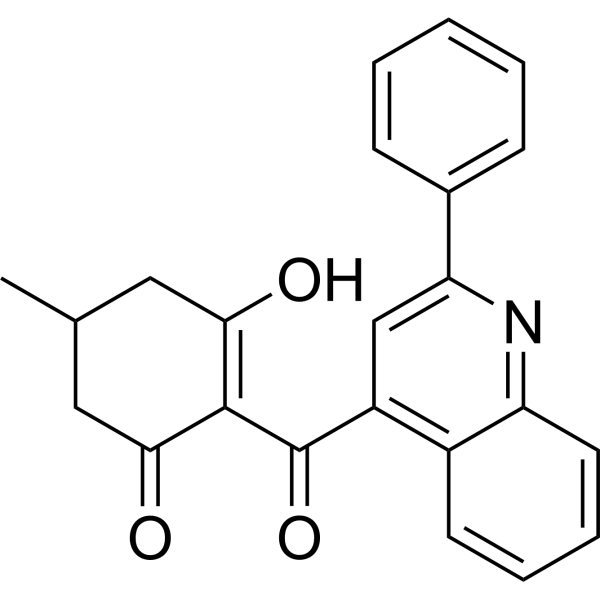
HPPD-IN-16
 0 ImagesCat. No.: HY-189229
HPPD-IN-16 is a potent HPPD inhibitor with an IC50 of 0.146 μM against AtHPPD. HPPD-IN-16 blocks HPPD enzymatic activity, interferes with the biosynthesis of plastoquinone and tocopherol, and causes plant death due to albinism resulting from the lack of photosynthetic pigments. HPPD-IN-16 can be used in herbicide research.
-
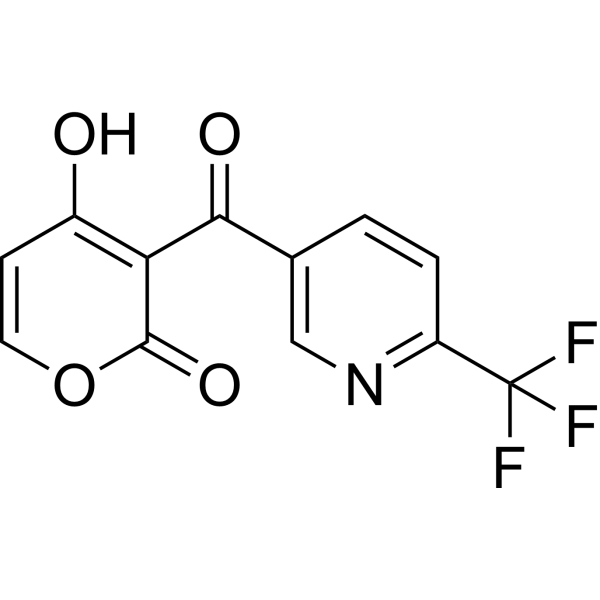
HPPD-IN-1
 0 ImagesCat. No.: HY-155135CAS No.: 2950190-99-3
HPPD-IN-1 (compound II-3) is a HPPD inhibitor. HPPD-IN-1 shows inhibitory activity of Arabidopsis thaliana HPPD (AtHPPD) with an IC50 value of 0.248 μM, which was superior to that of mesotrione (HY-12853) (0.283 μM) in vitro. HPPD-IN-1 shows excellent herbicidal activity against broadleaf and monocotyledonous weeds.

-
Bicyclopyrone (Standard)
 0 ImagesCat. No.: HY-135767RCAS No.: 352010-68-5
Bicyclopyrone (Standard) is the analytical standard of Bicyclopyrone. This product is intended for research and analytical applications. Bicyclopyrone is an inhibitor of 4-hydroxyphenylpyruvate dioxygenase (Hpd).

-
HPPD-IN-6
 0 ImagesCat. No.: HY-175641CAS No.: 3050609-32-7
HPPD-IN-6 (Compound IIy) is a HPPD inhibitor with high rice selectivity. HPPD-IN-6 has potent herbicidal activities against Echinochloa crus-galli and Leymus chinensis, including the herbicide-resistant biotypes with EC50s of 19.62-33.26 g of ai/ha. HPPD-IN-6 effectively controls the weeds in rice fields at 90-150 g of ai/ha. HPPD-IN-6 can be used for the development of herbicide.
- 1
- 2



