



Insecticide
Insecticide
Insecticides refer to any toxic substances used to kill insects, which exert toxic effects on pests through different mechanisms, thereby achieving the purpose of controlling pest populations and protecting crops and human health. Insecticides have both chemical and biological origins and can be classified into organochlorine insecticides, organophosphorus insecticides, carbamate insecticides, and mineral insecticides based on their chemical properties. Insecticides interact with different target and non-target sites, including receptors, enzymes, and many other known and unknown molecules. Most insecticides are neurotoxicants that target the nervous system, but they can also affect other organs and body systems. Insecticides are metabolized through different metabolic pathways and often serve as biomarkers of exposure in the form of their parent compounds or metabolites. The toxicity of insecticides can be acute, subacute, or chronic, depending on the duration of exposure and the dose involved. Therefore, selecting sensitive, accurate, and validated biomarkers of exposure, effects, and susceptibility appears to be a challenging task.
Insecticides are widely used in agriculture, horticulture, forestry, gardening, homes, offices, and other fields[1][2].
All Product Categories
-
Insecticide Related Products (521)
Related Products (521)

-
Silafluofen
 0 ImagesCat. No.: HY-W714217CAS No.: 105024-66-6Silafluofen is a hormone sensitive lipase (HSL) inhibitor. Silafluofen is an insecticide.

-
Metoxadiazone
 0 ImagesCat. No.: HY-W587768CAS No.: 60589-06-2Synonyms: S-21074Metoxadiazone is a type of insecticide that effectively controls a wide range of insects, including cockroaches and ants. Metoxadiazone exerts its insecticidal effect by impacting the nervous system of insects. Metoxadiazone can be used for research into its potential toxicity to humans and other non-target organisms.
-
Clothianidin-2-S-propanoic acid
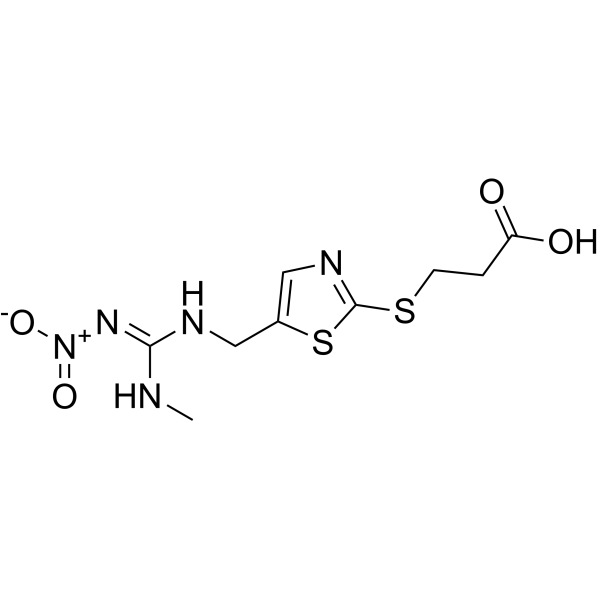 0 ImagesCat. No.: HY-157192CAS No.: 912270-45-2Clothianidin-2-S-propanoic acid is a clothianidin hapten. Clothianidin-2-S-propanoic can be used for the research of insecticide.
-
Cinerin II
 0 ImagesCat. No.: HY-W777618CAS No.: 121-20-0Synonyms: (+)-Cinerin IICinerin II ((+)-Cinerin II) is a pyrethrin ester found in Chrysanthemum cinerariifolium. Cinerin II is a safe pesticide with rapid degradation.
-
p,p'-DDD-d8
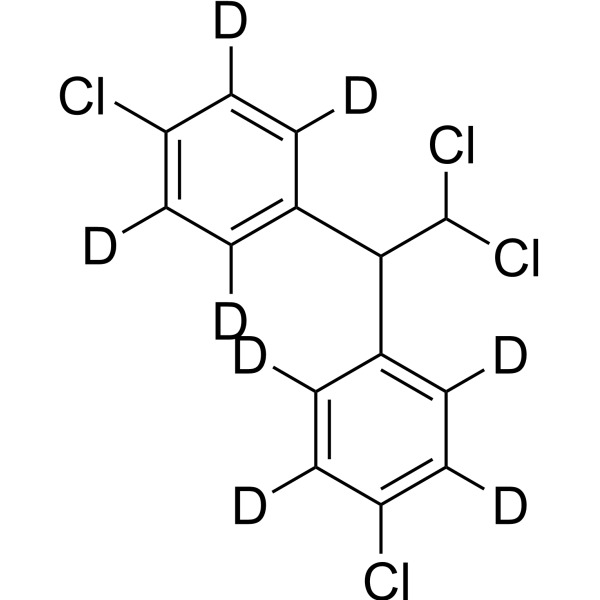 0 ImagesCat. No.: HY-B1984SCAS No.: 93952-20-6Synonyms: 4,4'-DDD-d8; p,p'-Dichlorodiphenyl dichloroethane-d8p,p'-DDD-d8 is the deuterium labeled p,p'-DDD[1]. p,p'-DDD (4,4’-DDD) is an organochlorine insecticide, a major metabolite of p,p'-DDT. p,p'-DDD is an agonist at estrogen receptor α(ERα) and ERβ. p,p'-DDD increases DNA damage, apoptosis and necrosis in peripheral blood. p,p'-DDD stimulates cell proliferation in SKBR3 cells. p,p'-DDD activates the AP-1 transcription factor. p,p'-DDD decreases sleep times of barbiturates and steroids in rats.
-
Propetamphos
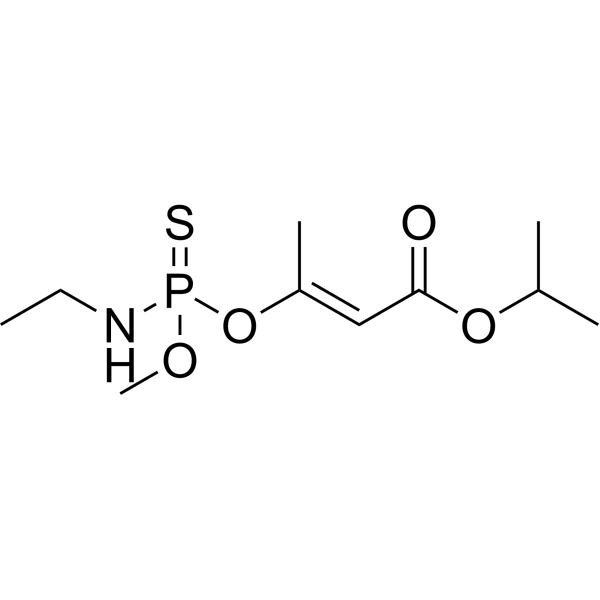 0 ImagesCat. No.: HY-119525CAS No.: 31218-83-4Propetamphos is an organophosphorus insecticide. Propetamphos causes cytotoxicity and oxidative stress.
-
Fenitrothion-d6
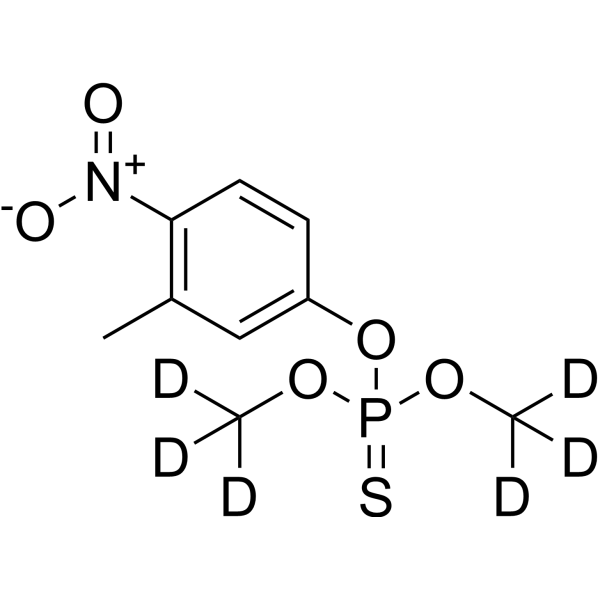 0 ImagesCat. No.: HY-B1885SCAS No.: 203645-59-4Fenitrothion-d6 is the deuterium labeled Fenitrothion (HY-B1885). Fenitrothion is a broad-spectrum and orally active insecticide/acaricide. Fenitrothion inhibits cholinesterase, AMPKα and IRS1/PI3K/AKT. Fenitrothion causes Apoptosis, reduces SOD activity. Fenitrothion shows insecticidal effect against Rhyzopertha dominica and Tribolium castaneum adults. Fenitrothion is widely used in cotton crops, vegetable crops, fruit crops and field crops, especially rice. Fenitrothion can be used for brain and spleen toxicology studies.
-
Tralomethrin-d5
 0 ImagesCat. No.: HY-W706237Tralomethrin-d5 is the deuterium labeled Tralomethrin (HY-126772). Tralomethrin is a pyrethroid insecticide used to control a wide range of pests in agriculture and public health.
-
Cinerin I
 0 ImagesCat. No.: HY-W777612CAS No.: 25402-06-6Cinerin I is a insecticidal ingredient of pyrethrins. Pyrethrins is a biogenic insecticide, that can be extracted from Chrysanthemum cinerariifolium.
-
2-Methylbenzaldehyde-13C
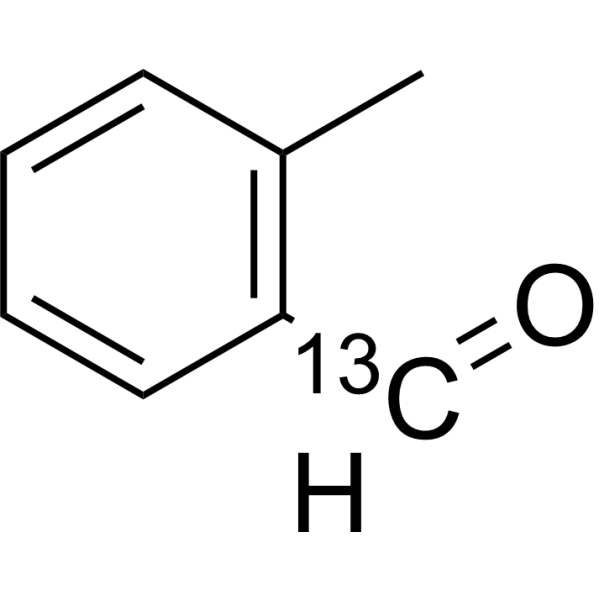 0 Images2-Methylbenzaldehyde-13C is the 13C labeled 2-Methylbenzaldehyde (HY-Y0442). 2-Methylbenzaldehyde is an acaricide found in Morinda officinalis. 2-Methylbenzaldehyde exerts fumigant and contact acaricidal activity against Dermatophagoides farinae, Dermatophagoides pteronyssinus, and Haemaphysalis longicornis. 2-Methylbenzaldehyde can be used for the research of severe fever with thrombocytopenia syndrome.

-
(+)-Licarin
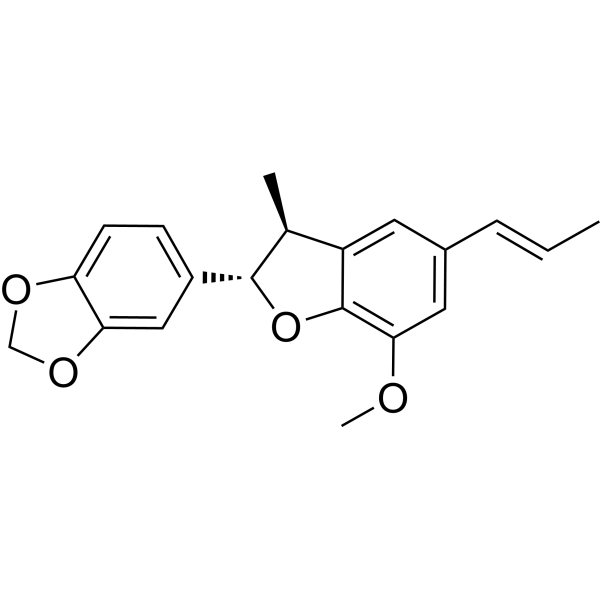 0 ImagesCat. No.: HY-N12338CAS No.: 42016-15-9(+)-Licarin (Compound 7) is a compound derived from Ocotea macrophylla Kunth. leaves octanoid neolignans.
-
Celangulin VII
 0 ImagesCat. No.: HY-N7869CAS No.: 337969-86-5Celangulin VII is a β-dihydroagarofuran sesquiterpene polyol ester present in the root bark of Celastrus angulatus. Celangulin VII exhibits insecticidal and narcotic activities against the 4th-instar larvae of Mythimna separata. Celangulin VII can be used in insecticide-related research.
-
Hypoglaunine A
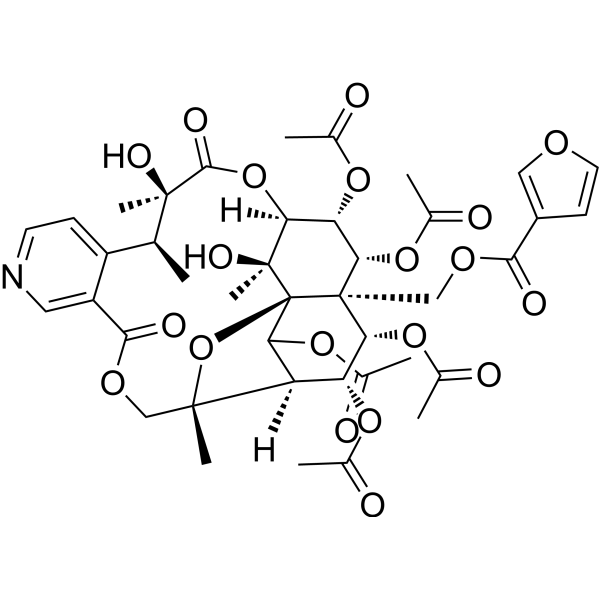 0 ImagesCat. No.: HY-N10682CAS No.: 228259-16-3Hypoglaunine A is a sesquiterpene pyridine alkaloid isolated from the bark of the roots of Tripterygium hypoglaucum, a traditional Chinese medicine often used as a cancer and insecticide research.
-
Celangulin XIX
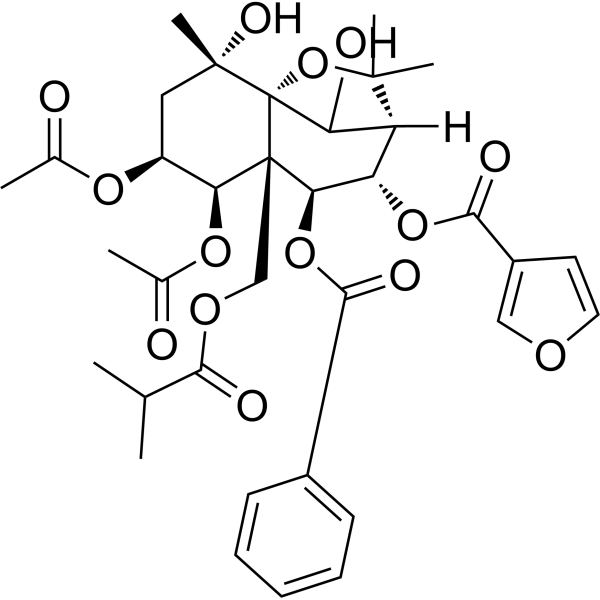 0 ImagesCat. No.: HY-N7939CAS No.: 403505-80-6Celangulin XIX is a insecticidal that can be isolated from Celastrus angulatu. Celangulin XIX has strong insecticidal activity against Mythimna separate with an ED50 of 73.3 μg/g.
-
Bovinic acid sodium
 0 ImagesCat. No.: HY-113162ACAS No.: 756499-04-4Bovinic acid sodium is a fatty acid (FA) extracted from the Indonesian coix seed (C. lacryma-jobi) variety Agrotis. Bovinic acid sodium is an insecticide with inhibitory activity against Leptinotarsa ??decemlineata.
-
SDH-IN-23
 0 ImagesCat. No.: HY-172212SDH-IN-23 (Compound B21) is an SDH inhibitor. SDH-IN-23 exhibits excellent nematicidal activity. SDH-IN-23 can inhibit the feeding, reproduction, and embryonic development of nematodes. Meanwhile, SDH-IN-23 exerts a lethal effect on nematodes by triggering oxidative stress, causing intestinal damage, and inhibiting SDH, among other mechanisms.
-
1,4-Dichlorobenzene-13C6
 0 ImagesCat. No.: HY-W750625CAS No.: 201595-59-71,4-Dichlorobenzene-13C6 is the 13C-labeled 1,4-Dichlorobenzene. 1,4-Dichlorobenzene is used as an intermediate product in the manufacture of pigments, pesticides and disinfectants. 1,4-Dichlorobenzene is also employed as a moth control agent.
-
Insecticidal agent 31
 0 ImagesCat. No.: HY-182041Insecticidal agent 31 is an insecticide targeting the γ-aminobutyric acid receptor (GABAR). Insecticidal agent 31 exhibits insecticidal activity against Plutella xylostella, Spodoptera frugiperda and Spodoptera exigua. Insecticidal agent 31 can serve as a lead compound for the design and synthesis of novel isoxazole-based insecticides.



