



Insecticide
Insecticide
Insecticides refer to any toxic substances used to kill insects, which exert toxic effects on pests through different mechanisms, thereby achieving the purpose of controlling pest populations and protecting crops and human health. Insecticides have both chemical and biological origins and can be classified into organochlorine insecticides, organophosphorus insecticides, carbamate insecticides, and mineral insecticides based on their chemical properties. Insecticides interact with different target and non-target sites, including receptors, enzymes, and many other known and unknown molecules. Most insecticides are neurotoxicants that target the nervous system, but they can also affect other organs and body systems. Insecticides are metabolized through different metabolic pathways and often serve as biomarkers of exposure in the form of their parent compounds or metabolites. The toxicity of insecticides can be acute, subacute, or chronic, depending on the duration of exposure and the dose involved. Therefore, selecting sensitive, accurate, and validated biomarkers of exposure, effects, and susceptibility appears to be a challenging task.
Insecticides are widely used in agriculture, horticulture, forestry, gardening, homes, offices, and other fields[1][2].
All Product Categories
-
Insecticide Related Products (529)
Related Products (529)

-
SDH-IN-23
 0 ImagesCat. No.: HY-172212SDH-IN-23 (Compound B21) is an SDH inhibitor. SDH-IN-23 exhibits excellent nematicidal activity. SDH-IN-23 can inhibit the feeding, reproduction, and embryonic development of nematodes. Meanwhile, SDH-IN-23 exerts a lethal effect on nematodes by triggering oxidative stress, causing intestinal damage, and inhibiting SDH, among other mechanisms.
-
1,4-Dichlorobenzene-13C6
 0 ImagesCat. No.: HY-W750625CAS No.: 201595-59-71,4-Dichlorobenzene-13C6 is the 13C-labeled 1,4-Dichlorobenzene. 1,4-Dichlorobenzene is used as an intermediate product in the manufacture of pigments, pesticides and disinfectants. 1,4-Dichlorobenzene is also employed as a moth control agent.
-
Insecticidal agent 31
 0 ImagesCat. No.: HY-182041Insecticidal agent 31 is an insecticide targeting the γ-aminobutyric acid receptor (GABAR). Insecticidal agent 31 exhibits insecticidal activity against Plutella xylostella, Spodoptera frugiperda and Spodoptera exigua. Insecticidal agent 31 can serve as a lead compound for the design and synthesis of novel isoxazole-based insecticides.
-
Chlorfenethol
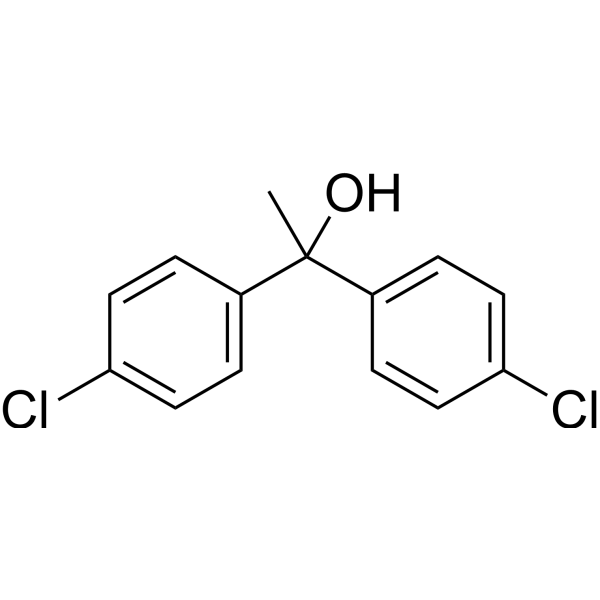 0 ImagesChlorfenethol is a dehydrochlorinase inhibitor. Chlorfenethol can be used as a synergist for insecticide DDT to increase its effect on resistant strains.
-
AG690
 0 ImagesCat. No.: HY-189053CAS No.: 303970-80-1AG690 is a phenoloxidase inhibitor and immunosuppressant. AG690 reduces the expression and activity of phenoloxidase, inhibits cellular immune responses including hemocyte phagocytosis, nodule formation and encapsulation, and suppresses the activities of superoxide dismutase (SOD), peroxidase and lysozyme, thereby enhancing the insecticidal toxicity of λ-cyhalothrin against Spodoptera litura larvae. AG690 can be used as an insecticide synergist in related research.
-
cis-Jasmone-d2
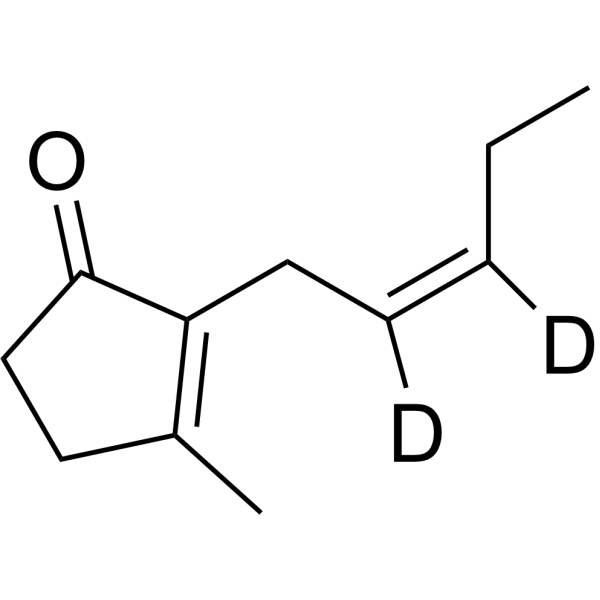 0 ImagesCat. No.: HY-N7058SCis-Jasmone-d2 is deuterated labeled Cis-Jasmone (HY-N7058). Cis-Jasmone is a plant-derived natural product. Cis-Jasmone is constitutively released by many flowers and sometimes by leaves as an attractant for pollinators or as a chemical cue for host location by insect flower herbivores. Cis-Jasmone treatment of crop plants not only induces direct defense against herbivores, but also induces indirect defense by releasing VOCs that attract natural enemies.
-
H-L-Cys(MDNPE)-OH
 0 ImagesCat. No.: HY-W736950CAS No.: 1551078-43-3HL-Cys(MDNPE)-OH (compound 2) is a genetically encoded photocaged cysteine compound that has the activity to activate TEV protease upon light exposure in mammalian cells.
-
(Z)-γ-Bisabolene
 0 ImagesCat. No.: HY-N11234ACAS No.: 13062-00-5(Z)-γ-Bisabolene is a monocyclic bisabolane-type sesquiterpene hydrocarbon found in the essential oil of Galinsoga parviflora, acting as a mosquito larvicide and oviposition deterrent. (Z)-γ-Bisabolene induces acute toxicity in larvae of six mosquito species. (Z)-γ-Bisabolene deters oviposition in gravid females of six mosquito species. (Z)-γ-Bisabolene can be used for the research of malaria, dengue, japanese encephalitis, zika virus.
-
Lansiumamide B
 0 ImagesCat. No.: HY-N20748CAS No.: 121817-37-6Lansiumamide B is a cinnamamide alkaloid, Antifungal agent and Insecticide. Lansiumamide B is isolated from the seeds of Clausena lansium. Lansiumamide B inhibits the phosphorylation of p38 MAPK, and decreases the protein and mRNA levels of TNF-α. Lansiumamide B induces abnormal mycelial growth, cell content leakage and cell wall degradation in Rhizoctonia solani. Lansiumamide B causes the death of early 4th-instar larvae of Aedes albopictus. Lansiumamide B exhibits anticonvulsant effects in epileptic rat models. Lansiumamide B can be used in studies related to plant fungal diseases.
-
Carbaryl-d3
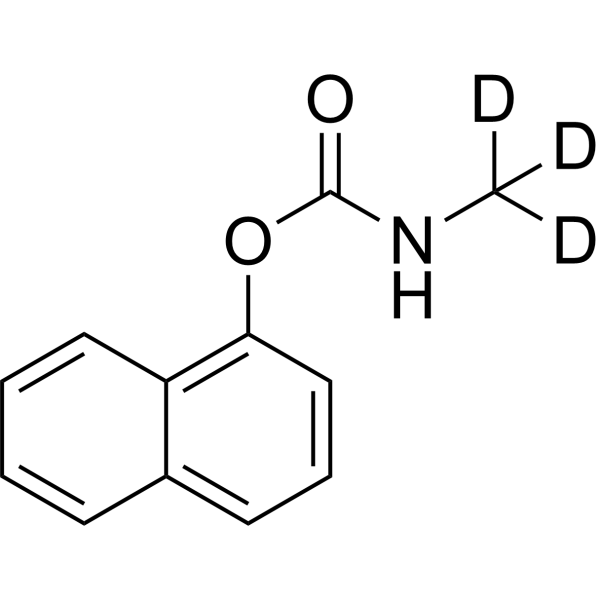 0 ImagesCat. No.: HY-B1315SCAS No.: 1433961-56-8
-
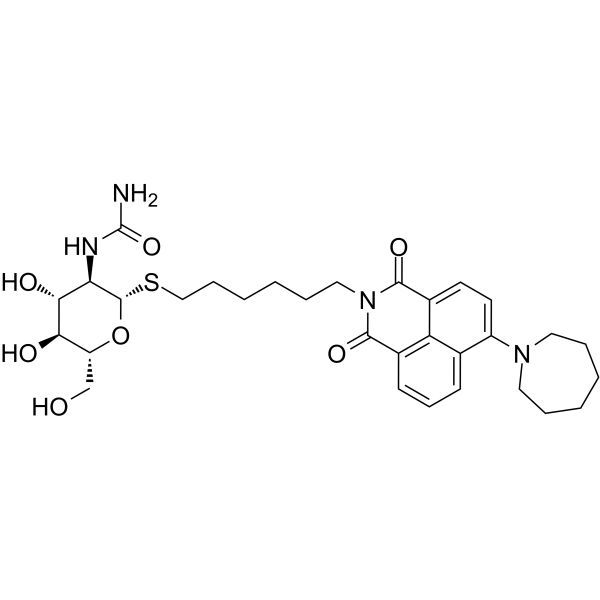
Ascr#10
 0 ImagesCat. No.: HY-171722CAS No.: 1355681-08-1Synonyms: Asc-C9Ascr#10 (Asc-C9) is an orally active thermogenesis inducer and insecticide that can be obtained from Monochamus alternatus. Ascr#10 binds to the insect adipokinetic hormone (AKH) receptor (Ka=272 µM) and stimulates mitochondrial biogenesis via the PGC1α-UCP4 axis. Consequently, Ascr#10 induces UCP4-mediated uncoupled respiration, reduces the ATP/ADP ratio and accelerates lipid mobilization, thereby driving the thermogenesis process. Ascr#10 delays pupation and exerts specific chemotaxis toward dispersive fourth-stage pinewood nematode LIV larvae. Ascr#10 promotes cold acclimation of Monochamus alternatus larvae through metabolic inhibition and cryoprotectant accumulation, enhancing their survival rate under cold stress. Ascr#10 also induces browning of white adipose tissue and activates brown adipose tissue in mice, thereby helping the body resist cold and tumor growth. Ascr#10 can be widely applied to research related to pine wilt disease, lung tumors and cold stress.
-
Aflavarin
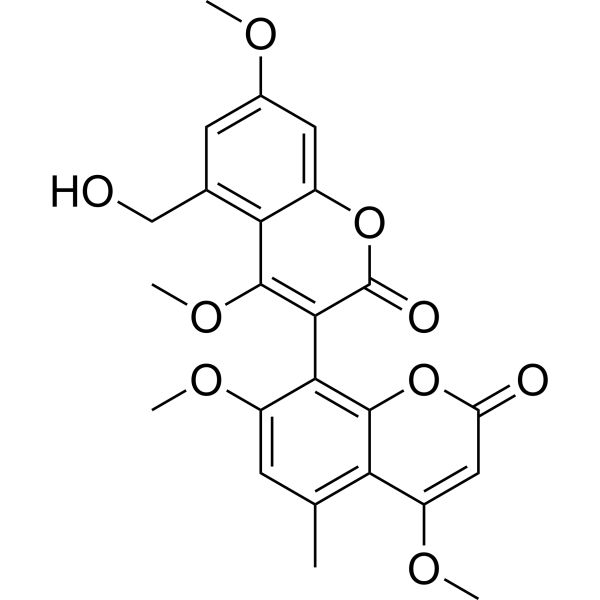 0 ImagesCat. No.: HY-116681CAS No.: 144429-67-4Aflavarin is produced from cluster 39 expressed mainly in sclerotia. Aflavarin exhibits anti-insectan activity .
-
Amobam (Standard)
 0 ImagesCat. No.: HY-130212RCAS No.: 3566-10-7Amobam (Standard) is the analytical standard of Amobam. This product is intended for research and analytical applications. Amobam is a pesticidal.
-
Azadirachtin I
 0 ImagesCat. No.: HY-N16479CAS No.: 134788-16-2Azadirachtin I is an insecticide targeting insect growth and development-related pathways (e.g., ecdysone signaling pathway, chitin synthesis pathway). Azadirachtin I inhibits chitin synthesis and disrupting intestinal function by interfering with the growth and development processes of insect larvae such as molting and pupation, increasing insect mortality and reducing adult fecundity. Azadirachtin I is promising for research of agricultural pests, such as Lepidoptera, Coleoptera.
-
Nimbolinin C
 0 ImagesCat. No.: HY-N18060CAS No.: 269741-37-9Nimbolinin C is an insect antifeedant present in the unripe fruits of Melia toosendan. Nimbolinin C exhibits weak activity against the feeding behavior of third-instar larvae of Spodoptera exigua at a concentration of 1000 ppm.
-
Litophynin A
 0 ImagesCat. No.: HY-117246CAS No.: 112500-87-5Litophynin A is a diterpenoid insect growth inhibitor. Litophynin A can be used in studies related to natural pesticides and insect development regulation.
-
ACD-10284
 0 ImagesCat. No.: HY-114680CAS No.: 16231-76-8ACD-10284 is an insecticide.
-
Anti-infective agent 13
 0 ImagesCat. No.: HY-183930CAS No.: 94015-46-0Anti-infective agent 13 is a naphthoquinone-based insecticide/acaricide. Anti-infective agent 13 exhibits insecticidal activity against Bemisia tabaci (sweetpotato whitefly) and Tetranychus urticae (two-spotted spider mite). Anti-infective agent 13 can be used in research related to insect and mite control.
-
Jasmolin II
 0 ImagesCat. No.: HY-W740651CAS No.: 1172-63-0Jasmolin II is an insecticide targeting voltage-gated sodium channels in insects. Jasmolin II leads to neuronal hyperexcitation and insect paralysis. Jasmolin II is promising for research of agricultural pests.



